· 17 min read
Best Ticket Tailor Alternatives

The best Ticket Tailor alternative depends on what you need beyond its flat ticketing fee. If your existing setup sells tickets reliably and your marketing tools work together, moving may add cost without improving the business.
We recommend Loopyah first for paid-event operators who want returning-buyer marketing and event finances connected to their ticket sales. Eventbrite is worth considering for discovery, TicketSpice for configurable admission, Humanitix for its charitable booking-fee model, and pretix for technical control. This guide explains what each option changes, what you give up, and when staying with Ticket Tailor makes more sense.
When is it worth switching from Ticket Tailor?
Start with the part of your event business that needs to improve. Perhaps you can sell to your existing audience but struggle to reach new buyers. Perhaps your next presale requires several tools to identify repeat customers and email them. Or your admission rules have become difficult to manage.
Those are different buying decisions. A marketplace might help with discovery, while a more configurable checkout might solve an admission problem. Neither automatically fixes the other.
Ticket Tailor already supports website embeds, reserved seating, attendee emails and integrations with email marketing services. Its payment setup connects to Stripe, PayPal or Square. Moving for one of those capabilities alone deserves a closer look at what your existing account can do.
Staying is reasonable when you bring your own audience, your connected tools handle customer marketing, and the combined bill works for you. Its flat platform charge can be particularly attractive on expensive tickets. Prepaid credits can reduce that charge further, although payment processing remains separate.
Switch when the replacement solves a specific problem well enough to justify its fees, the work of moving and any tools you will still need.
The best Ticket Tailor alternatives at a glance
Prices and product documentation checked on 17 November 2026. Dollar rates below are standard US schedules unless marked otherwise. Payment method, taxes, account terms and optional services can change the final cost.
Alternative | Best-fit situation | Relevant published price | Main limitation |
|---|---|---|---|
Loopyah | Repeat events needing customer marketing and event finances | US$1.15 + 4.75% per paid ticket, processing included | Can cost more than Ticket Tailor for general admission |
Eventbrite | Events seeking buyers through a discovery marketplace | 3.7% + US$1.79/ticket, plus 2.9% processing/order | Higher fees need to earn their keep through useful reach |
TicketSpice | Admission with conditional choices and add-ons | Standard US$0.99; Premium US$1.49/ticket, plus processing | Reserved seating and season passes require Premium or above |
Humanitix | Operators choosing a charitable booking-fee model | USD help-centre schedule: 5% + US$1.29/ticket, plus applicable tax | Gateway choice changes payout timing and processing costs |
pretix | Events needing custom technical and admission workflows | Hosted: 2.5% of ticket price excluding tax, capped at €15/ticket, plus processing | Self-hosting needs technical ownership; editions differ |
How we selected the alternatives
We researched official product pages, pricing schedules and help documentation. We have not run an event on every platform. Our recommendations focus on the switching decision for operators selling admission as a business, rather than free social gatherings or ticket resale marketplaces.
We compared transaction costs, payment arrangements, customer marketing, purchase rules, branding and event-day operations. A capability delivered through another service is different from one included in the ticketing product. We also checked which plan contains the workflow being recommended.
For the broader category decision, see our best event ticketing platforms guide. The alternatives below each address a reason someone might leave Ticket Tailor.
1. Loopyah: best for running a repeat event business
Choose Loopyah when you want the next event to benefit from the customers and financial information you built up on the last one. Our recommendation is strongest for operators who will use that connection regularly, rather than someone buying on ticketing fees alone.
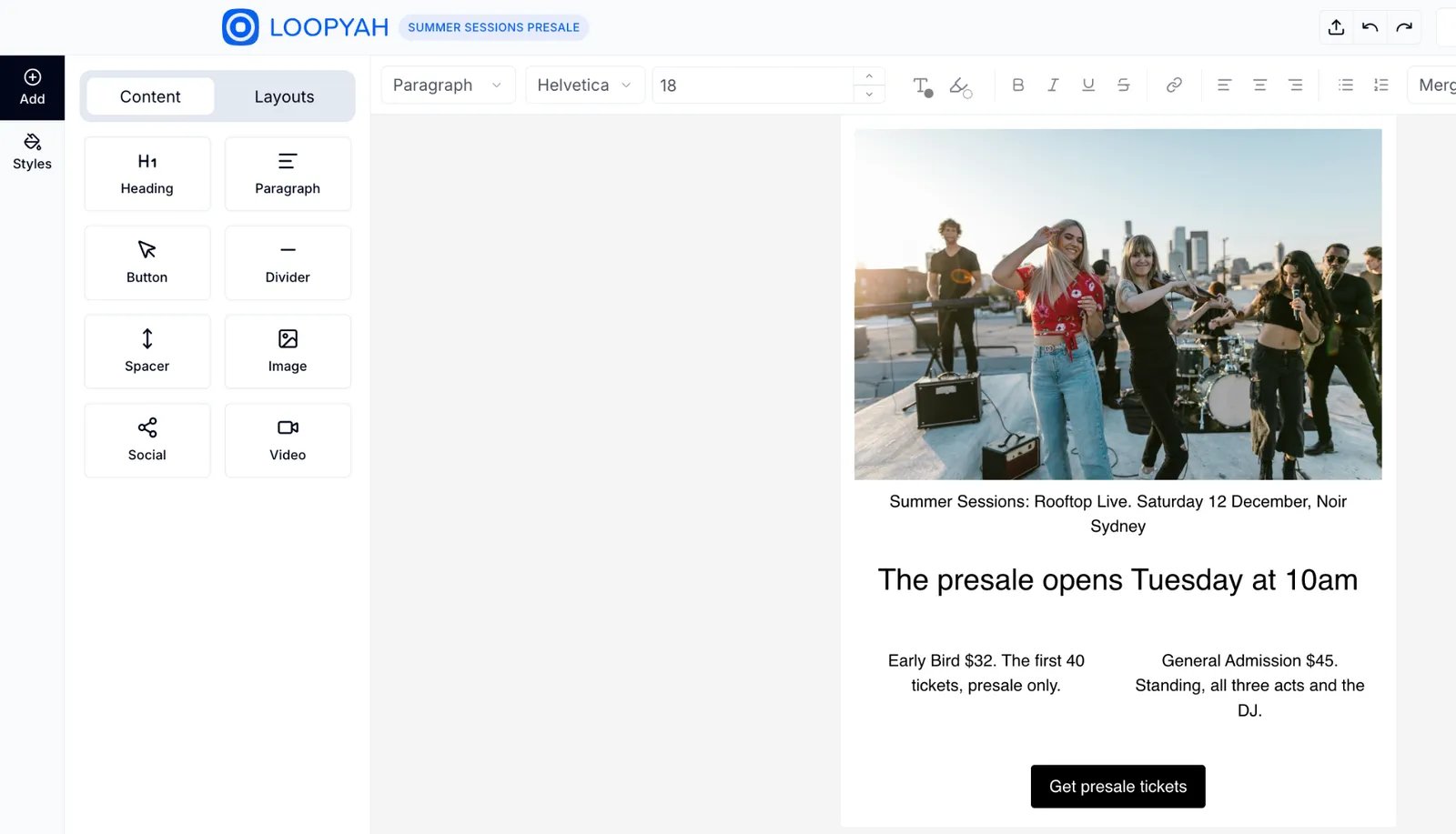
Our published pricing is US$1.15 + 4.75% per paid ticket in the US, with card processing included. Australian standard pricing is A$0.95 + 4.25%. There is no platform subscription, setup fee or minimum. Marketing includes 500 email sends a month; higher allowances cost extra. Sponsorship payments and Tap to Pay sales have separate charges.
Suppose you run a monthly live show. Before announcing the next date, you want to reach people who have returned several times and agreed to receive marketing. Loopyah's event CRM keeps one buyer record across events, with purchase history, spend and email permission. You can save an audience segment, send it a presale campaign and track the tickets that campaign sold.
Ticket Tailor's email integrations can already automate the transfer of buyer details to a separate marketing service. The reason to move is therefore the workflow you prefer: keeping that setup, or managing customer selection and campaigns alongside your ticket sales.
Loopyah also combines recorded event income with the costs you enter for profit and break-even planning. Those figures depend on your cost inputs. A busy sales dashboard cannot tell you the event's profit if supplier bills are missing.
Ticket payouts follow a weekly schedule. Before moving from your own Ticket Tailor processor, check account verification, any retained balance and bank arrival times against the dates you need to pay suppliers.
For paid acquisition, our AI Ads Manager uses connected Meta, Google and TikTok accounts, your budget and supplied creative to build and adjust campaigns. You pay the advertising platforms directly. Ad spend is separate from ticketing fees, and campaign automation does not guarantee additional sales.
The tradeoff is transaction cost. Ticket Tailor can leave you with more from the same general-admission sales. Loopyah needs to justify the difference through tools you use, other costs you avoid or additional profitable sales. The worked example below shows how to assess that without assuming a sales lift.
See Loopyah versus Ticket Tailor for the direct comparison.
2. Eventbrite: best for adding marketplace discovery
Eventbrite is worth considering when your main problem is reaching people beyond your own audience. Its discovery marketplace gives prospective buyers somewhere to encounter your event while browsing. That is a different reason to switch from wanting a cheaper checkout.

Eventbrite's published standard US schedule is a 3.7% + US$1.79 service fee per paid ticket, plus 2.9% payment processing per order. The processing percentage applies to the total order. Free tickets have no ticketing fee. Advertising and additional marketing services can add costs; rates vary by market and account arrangement.
Imagine a workshop business launching in a new city. Its mailing list may be useful at home but less helpful for the new location. Eventbrite's public listings and recommendations offer another way for local buyers to find the event.
That is a reason to investigate the marketplace, not a forecast of what it will sell. Look for comparable events in your city and category. Once you have your own results, use Eventbrite's reporting to examine the channels associated with purchases. A platform-wide audience figure cannot tell you how many people will buy your workshop.
Eventbrite also has email campaigns, embedded checkout, an Organizer app and mobile check-in. Moving does not mean you must abandon your website as a sales route. Its value needs to come from the combination you actually use, particularly if your current Ticket Tailor checkout and marketing connections already work.
The main loss is Ticket Tailor's flat platform-fee model and direct relationship with your chosen processor. Check the payout arrangement available to your Eventbrite account before planning supplier payments. Do not assume a new platform will release ticket money on your current processor's schedule.
We would shortlist Eventbrite for a discovery problem. For an organizer with strong direct demand and no need for another audience channel, Ticket Tailor may be the better fit. Our Loopyah versus Eventbrite comparison covers the two-product decision in more detail.
3. TicketSpice: best for configurable admission and sales-page rules
TicketSpice deserves a look when the buying process needs to respond to a customer's choices. Its page builder and conditional logic are useful starting points for admission with optional purchases or questions that only apply to certain tickets.
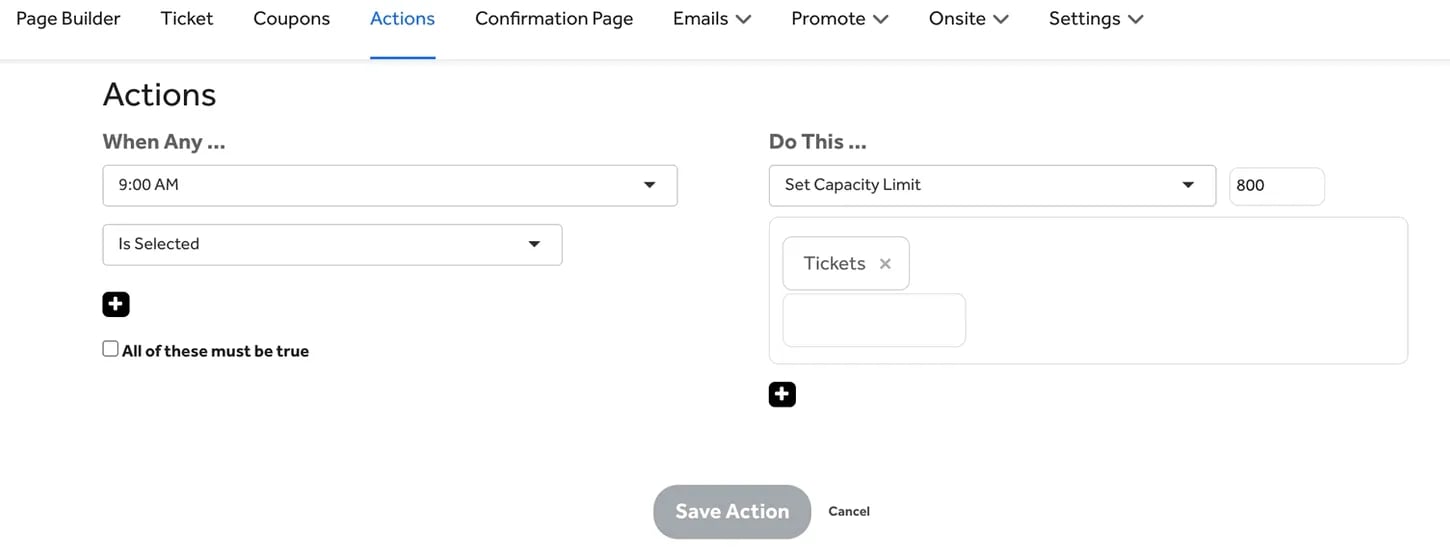
The published ticket fee is US$0.99 on Standard, US$1.49 on Premium and US$1.99 on Pro, per paid ticket. Webconnex Payments adds 2.9% + US$0.30 per transaction and currently supports USD and CAD card processing. A custom payment processor adds a 1% TicketSpice charge alongside that processor's own fees. Price the tier containing your required features.
Consider a paid attraction selling a timed visit with an optional activity. Some buyers need additional questions based on the admission they select. The useful evaluation is the complete transaction: date, ticket, extra activity, relevant questions, capacity and confirmation. A feature list cannot establish that your exact combination works.
TicketSpice Standard includes conditional logic, timed-entry pages and add-ons. Premium adds reserved seating, season passes, memberships and integrated waivers. The practical benefit is the configuration you can build on the appropriate plan, rather than a claim that Ticket Tailor cannot sell timed or seated events.
Its flat ticket fee also makes it a relevant comparison for someone who likes Ticket Tailor's pricing model. However, the headline rates are close enough that processor choice and plan requirements can change the result. Keeping an existing processor does not mean keeping the same total cost because of the custom-processor surcharge.
TicketSpice also lists customer CRM and box-office tools. Marketing and onsite inclusions vary by tier, so get a quote for the setup your staff will use. Confirm devices, door-sale charges and support arrangements in your market before moving.
We would choose it for a demonstrated admission workflow that handles your event better. If your Ticket Tailor configuration already does the job, a similar flat fee alone offers little reason to rebuild everything. Our guide to conditional registration questions can help you define the rules to demonstrate.
4. Humanitix: best for a charitable booking-fee model
Humanitix is worth considering when where the provider's profits go matters to your choice. It directs profits from booking fees to charitable projects. That can suit a commercial event business as well as a charity, provided the ticketing and payment arrangement works for the event.
Humanitix's currency-specific help centre lists the standard USD booking fee as 5% + US$1.29 per paid ticket, plus applicable taxes. Its AUD schedule is 4% + A$0.99, plus 10% GST. The US marketing page shows a different platform-plus-processing presentation. Confirm your currency, gateway and account rate together; connecting your own Stripe account adds separate processing charges.
A paid conference might choose Humanitix because the organizer values the charitable model. You can explain that preference to buyers without claiming that the whole fee is donated or promising a fixed donation from their purchase. The distinction matters: charitable profits are what remain after operating costs.
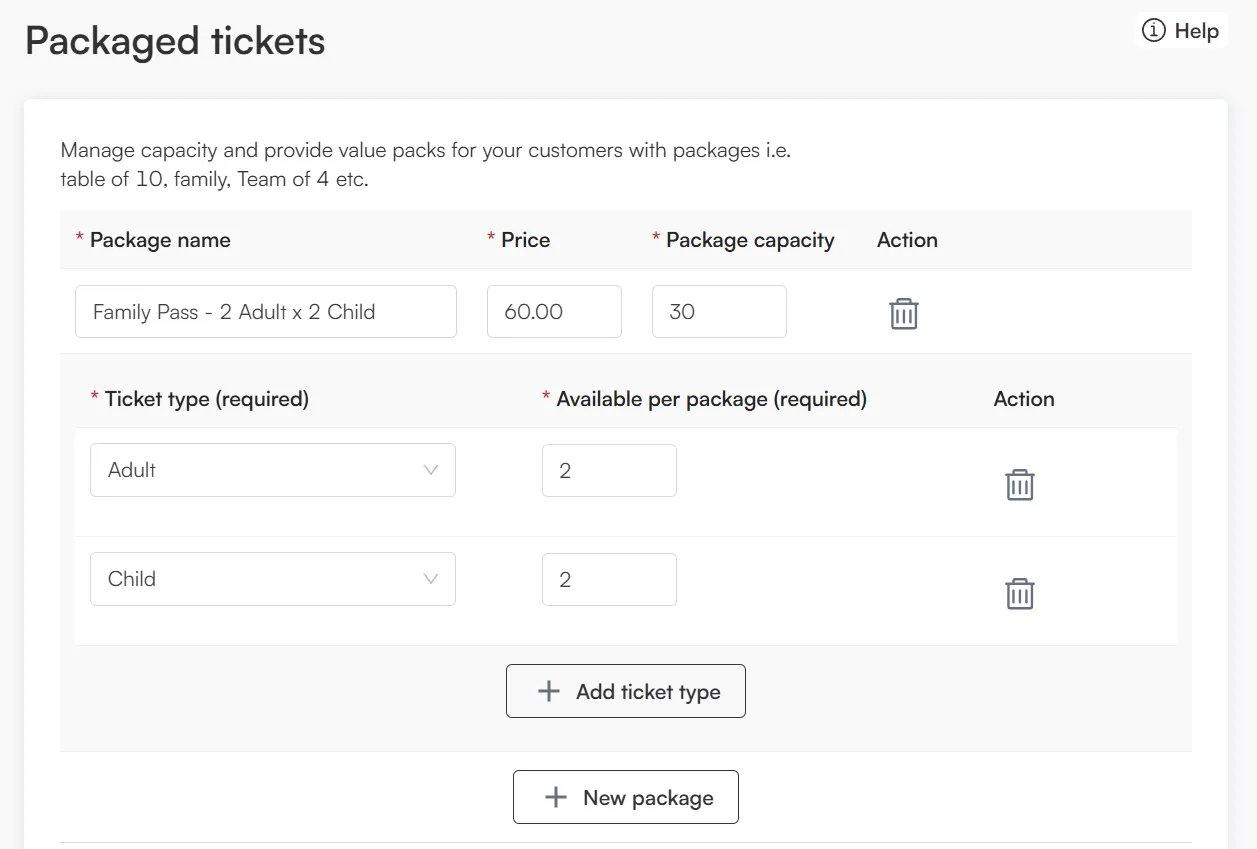
Its published tools include reserved seating, website embeds, merchandise, email campaigns, scanning and team permissions. Those cover substantial event work. They are also capabilities to compare against your existing setup, rather than automatic reasons to switch.
Payment timing is the more consequential change for someone coming from Ticket Tailor. Humanitix's default gateway generally pays within five business days after the event ends. A separate Stripe connection pays card sales into your Stripe account, where the bank payout schedule depends on that account. Stripe's processing fee is additional in that arrangement.
If ticket income funds supplier deposits before the event, settle the gateway choice before selling. Humanitix says sales already processed on its own gateway cannot later be transferred into your Stripe account. An early-payout request is subject to approval, so it should not become an assumed source of cash.
Humanitix makes sense when its mission and operating model fit your business. It is a weaker reason to move if your only goal is reducing the charge on each sale. See Loopyah versus Humanitix for the direct comparison.
5. pretix: best for technical control and complex admission
pretix is a useful alternative when you need control over how your ticketing works, including the option to run the software on your own server. Hosted pretix is also available for teams that need its admission tools without managing the infrastructure themselves.
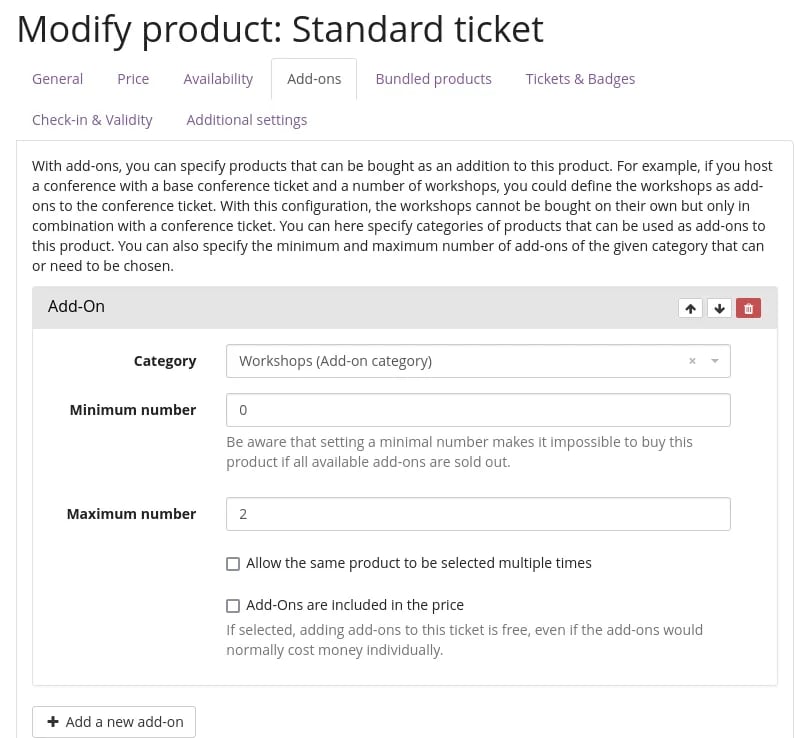
pretix Hosted charges 2.5% of the ticket price excluding tax, capped at €15 per ticket, plus payment-provider fees. Its published prices exclude VAT. The first 500 free tickets each year are free, and paid sales increase that allowance. Community has no software licence fee, but you pay for hosting, processing and technical work. Hosted, Community and Enterprise have different inclusions.
For example, a paid conference may sell general admission with workshops that can only be bought alongside that admission. pretix documents add-on products and capacity for different event tracks. Separate check-in lists can validate the same ticket independently at the main entrance and another activity.
That gives you a concrete workflow to evaluate: one purchase, the right entitlement for each activity, and the right result at each scanner. Its API also provides a route for custom connections. Ticket Tailor has an API too, so the reason to move needs to be the particular control or configuration you require.
The self-hosted option is a substantial difference. Someone on your team or a contracted provider must maintain the server and software. A free licence does not remove the cost of that responsibility, and Community does not include every capability in the paid editions.
Hosted pretix is the more practical starting point if you want its product structure without becoming responsible for the server. Check your required plugins, payment providers and support terms before deciding. Its currencies depend on the payment provider, and hosted fees are generally converted to euros for invoicing.
We would shortlist pretix for a specific technical or admission requirement. For a straightforward general-admission event whose existing checkout works, moving to a more configurable system can create work without a useful return.
What does switching cost compared with staying?
Ticket Tailor's flat platform fee means an alternative can cost more even when it removes a separate software bill. Start with transaction charges, then add the other costs that will actually change. Our total ticketing cost guide covers that wider calculation.
A US general-admission example
This hypothetical example uses a US$40 general-admission ticket, one ticket per order, a US domestic card and absorbed fees. The buyer pays US$40. We use Ticket Tailor's US$0.85 Pay as you go charge and Stripe's published 2.9% + US$0.30 standard domestic-card rate. Loopyah uses its published processing-inclusive rate. No tax, currency conversion, refunds, disputes or paid extras are included.
Cost per one-ticket order | Ticket Tailor with Stripe | Loopyah |
|---|---|---|
Buyer pays | US$40.00 | US$40.00 |
Platform fee | US$0.85 | US$3.05, processing included |
Separate card processing | US$1.46 | US$0.00 |
Total transaction charge | US$2.31 | US$3.05 |
Organizer receives before other costs | US$37.69 | US$36.95 |
The calculation is US$0.85 + 2.9% of US$40 + US$0.30 for Ticket Tailor with Stripe, versus US$1.15 + 4.75% of US$40 for Loopyah. Ticket Tailor leaves the organizer US$0.74 more from each sale under these assumptions. Across 500 identical orders, that is US$370.
To justify moving in this example, identify at least US$370 of value before migration costs. That might come from a software expense you can actually cancel, staff time you can use elsewhere, or profitable additional sales. If every extra ticket contributes US$25 after all relevant fees and extra delivery costs, 15 additional sales would contribute US$375. That is an illustration of the requirement, not a prediction that switching will generate those sales.
Already paying for an email service does not mean you can count its entire bill as a saving. You may still need it for another business activity, and Loopyah email sends above the included allowance cost extra.
Reserved seating changes the comparison
Ticket Tailor's seating guidance adds another usage charge per reserved seat. At the published US Pay as you go rate, the platform component for a paid seated ticket is US$1.70. With the same US$40 ticket, domestic card and absorbed-fee assumptions, that becomes US$3.16 including Stripe processing. The organizer receives US$36.84, compared with US$36.95 on Loopyah.
That is a small difference in this example, and prepaid credits could change it. Loopyah includes its seating chart tools without a separate seat-reservation charge. Compare the setup you will sell, including seats, rather than applying a general-admission rate to every event.
All examples above absorb fees. If buyers pay fees on top, calculate the new checkout total using each provider's method. Processing charged on the collected order can change the amount. A fee passed to the buyer still affects the price they see.
Which Ticket Tailor alternative should you choose?
Choose Loopyah when you will use the connection between buyer history, campaigns and event finances across repeated events. Compare the additional ticketing cost against the tools and work it replaces. Start with the customer group you want to reach at your next launch, then check that workflow using real requirements.
Choose Eventbrite when reaching new buyers is the main requirement and its marketplace is relevant to your city and category. Judge its cost against the sales it helps you achieve, rather than assuming all marketplace exposure has equal value.
Choose TicketSpice when a demonstration shows that its conditional purchase process or higher-tier admission tools solve your specific problem. Choose Humanitix when its charitable model matters to your decision and you have confirmed a suitable gateway and payout arrangement.
Choose pretix when the admission structure, integrations or self-hosting option address a requirement your current setup cannot meet comfortably. Include the person responsible for the technical work in that decision.
Stay with Ticket Tailor when your own audience, checkout, connected marketing tools and payment arrangements already serve the business well. There is no commercial benefit in changing a working setup without a clear improvement to pursue.
How to move without disrupting existing buyers
Use the next unsold event as your first move where possible. Rebuilding a page is easier than changing the system behind tickets people already hold. Our ticketing migration guide develops the process in more detail.
Export the records you need, including orders, attendees and recorded marketing permissions. Keep transaction history separate from a marketing contact list. Importing contacts does not automatically recreate old orders or validate issued tickets in the new system.
Rebuild one representative event. Check ticket releases, discount rules, questions, seats or timed capacity, confirmations and the refund route. Use the provider's supported test process and confirm any charge for test reservations.
Assign responsibility for existing tickets. If the old event stays on Ticket Tailor, retain access for check-in, changes and refunds. Do not expect two ticketing systems to synchronize capacity or reserved seats automatically.
Update purchase links in your website, embeds, ads, emails and promoter materials. Follow an old campaign link through to the destination so buyers do not arrive at the wrong sale.
Verify the first event's purchases, customer records, permissions and bank payments before moving the rest of the series. Our ticketing data migration checklist covers the records to reconcile.
Suggest a tool or send a correction. Include the relevant workflow and current supporting documentation. Inclusion and order remain editorial decisions.

Author: By the Loopyah Content Team
The Loopyah Content Team shares expert insights, practical guides, and industry updates to help event organizers create unforgettable experiences and stay ahead in the event planning world.