· 21 min read
Best Eventbrite Alternatives
The best Eventbrite alternative depends on what you want to change. A lower fee matters, but so do the buyers your event reaches, when ticket money arrives and how easily you can sell the next date to the same crowd.
We recommend Loopyah first for organizers who want ticketing, customer history, marketing and event finances connected. Ticket Tailor is worth comparing when transaction cost is the main issue. TicketSpice, Humanitix, DICE and Posh address more specific priorities. This guide compares six alternatives, explains when staying with Eventbrite makes sense and shows how to move without confusing people who already bought tickets.
When should you switch from Eventbrite?
Switch when you can name the improvement you need: lower total fees, a different payout arrangement, better use of previous-buyer data or a sales workflow your current setup handles poorly. Compare that requirement against the complete replacement, including any email account, payment processor or equipment you will still need.
Staying can make sense when Eventbrite brings buyers you would struggle to replace, your team knows the system and its costs work for the event. Its promotion tools already include email, advertising, tracking links and embedded checkout. The question is whether another setup serves your business better, not whether Eventbrite has those features.
The best Eventbrite alternatives at a glance
Published prices were checked on 9 November 2026. Rates below use standard US schedules unless specified. Taxes, payment method, paid extras and negotiated agreements can change the bill.
Alternative | Main reason to switch | Published ticketing price | Main tradeoff |
|---|---|---|---|
Loopyah | Connect ticket sales, returning buyers and event finances | US$1.15 + 4.75% per paid ticket, processing included | Less established marketplace reach; flat-fee options can cost less |
Ticket Tailor | Reduce platform charges while keeping your existing tools | US$0.85/ticket Pay as you go, plus processing | Separate processor and marketing accounts; extra usage for seats |
TicketSpice | Configure admission choices and sales-page rules | Standard US$0.99; Premium US$1.49/ticket, plus processing | Seats and other features require the relevant plan |
Humanitix | Use a booking-fee model whose profits support charity | 5% + US$1.29/ticket on its gateway, plus applicable tax | Default gateway pays after the event; other arrangements change costs |
DICE | Reach music audiences through an app-based discovery model | US self-sign-up: 13% outside commission on face value, processing included | App-led ticket delivery; terms differ by agreement and market |
Posh | Grow through attendee referrals and text messaging | 10% + US$0.99/ticket, processing included | Higher percentage fee; commissions and optional services add costs |
We selected these alternatives for organizers selling admission to their events. We researched official product, pricing and help pages; we have not run an event on every system. The comparisons focus on what changes when leaving Eventbrite. For a broader category comparison, see our best event ticketing platforms guide.
1. Loopyah: best for building a repeat event business
Choose Loopyah when the reason to leave Eventbrite extends beyond the fee on one ticket. If you run several dates, you need to know who keeps coming back, which promotion brings purchases and what each event earned after its costs. Those jobs are connected in Loopyah.
Our published ticketing rate is US$1.15 + 4.75% per paid ticket in the US, with processing included. Australian standard pricing is A$0.95 + 4.25%. There is no mandatory platform subscription. Additional email sends, sponsorship payments and Tap to Pay sales have their own charges.
What changes. The event CRM keeps one contact across your events, with purchase history, spend and marketing permission. You can select previous buyers for the next announcement, rather than treating every launch as a new audience. There are 500 marketing email sends included each month; higher allowances are paid.
Event finances combine recorded revenue with the costs you supply, so you can assess profit and break-even. Our AI Ads Manager works with connected Meta, Google and TikTok accounts, your creative and your budget. Advertising spend remains yours to fund; software cannot guarantee that paid promotion replaces marketplace sales.
Reserved seating is part of the product too. Seat charts can represent rows, tables, sections and standing areas, with reusable layouts and prices by ticket category. Moving for better customer or financial workflows does not require giving up a seated event setup. Ticket payouts follow the published weekly schedule, with no payout fee.
What you give up. You should not assume Eventbrite's marketplace audience follows you. Loopyah's commercial case is strongest when you will use the connected business tools and have a workable acquisition plan. Ticket Tailor can have lower transaction charges if your existing marketing setup already does the job.
Before moving. Bring a sample contact export with its recorded permissions, then check the imported fields. Loopyah supports CSV contact imports, but that does not mean old Eventbrite orders or issued tickets automatically become native Loopyah transactions. Use the Loopyah versus Eventbrite comparison for the detailed two-product decision.
2. Ticket Tailor: best for reducing fees with your own audience
Ticket Tailor is a strong alternative when your website, email list, venue reputation or promoters already generate the demand. Its attraction is a fixed platform charge combined with a payment processor you choose. You can keep an established marketing setup instead of replacing it alongside ticketing.
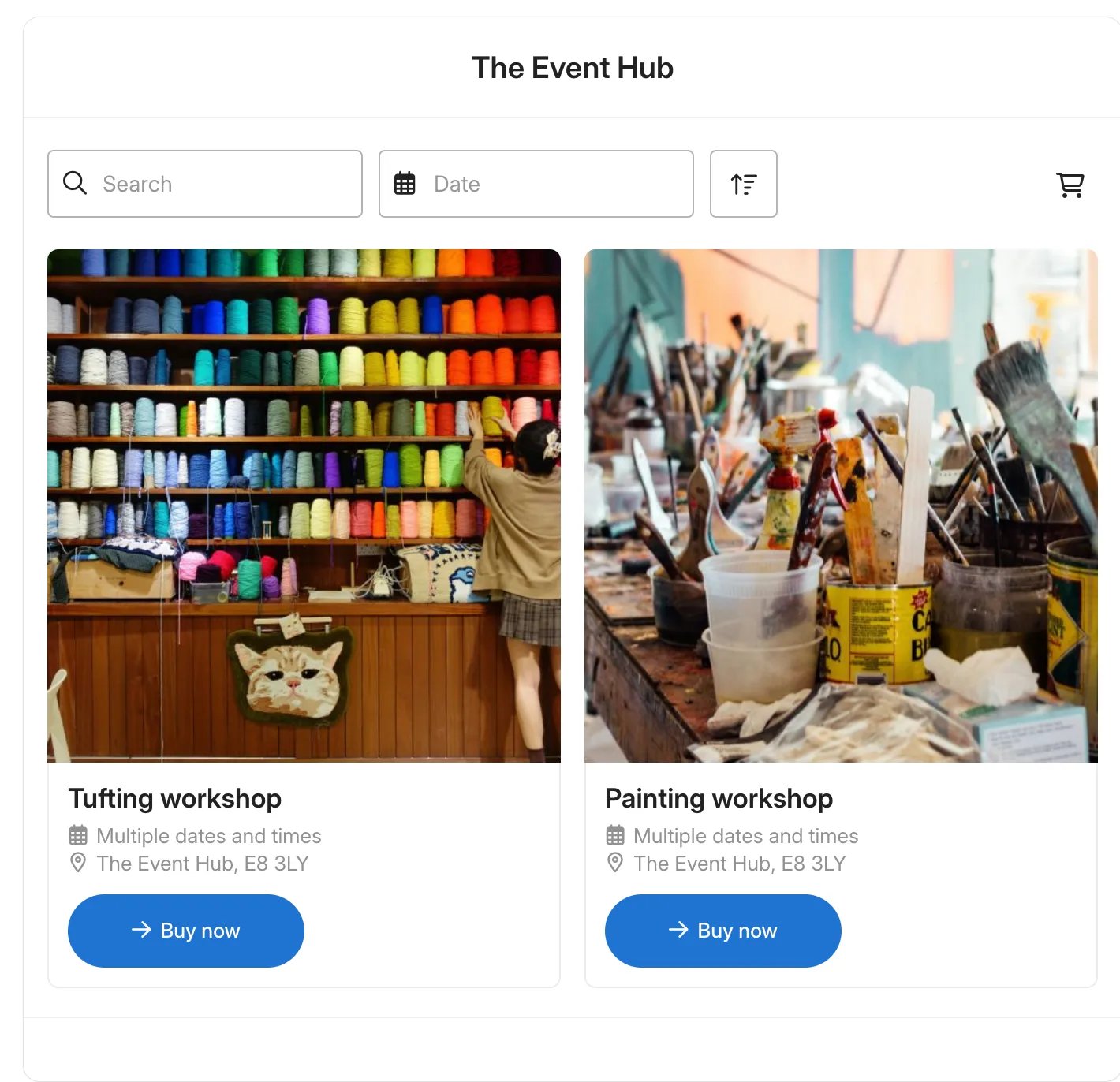
Its pricing separates platform usage from processing. The seating-fee guidance lists ordinary Pay as you go usage at US$0.85 or A$1.10. A paid reserved-seat ticket incurs that usage twice. Prepaid options can reduce the platform rate; processing remains separate.
What changes. Ticket Tailor's payment setup connects to providers such as Stripe, Square and PayPal. Your processor handles the payment relationship and bank schedule. Bank timing depends on that processor and your account; an available processor balance is not money already in your bank.
The website embed is useful if you want customers to begin on your own site. Built-in confirmations and event updates cover attendee communications. For segmented campaigns, its email guidance describes connections to tools such as Mailchimp, HubSpot and ActiveCampaign. Include those accounts in the total cost of the replacement.
What you give up. Ticket Tailor has an event directory, but its existence does not establish reach equivalent to Eventbrite's marketplace. A move motivated by lower fees still needs a plan for new customers. If your audience already comes directly, that tradeoff can be reasonable.
Before moving. Run a sample order through the payment method you intend to use, then follow it through the email integration and refund process. Its check-in app supports offline scanning and staff profiles, so check that setup with the people who will actually run the door. Compare both general-admission and seated fees if your event uses both.
See our Loopyah versus Ticket Tailor comparison for the direct choice.
3. TicketSpice: best for configurable admission workflows
TicketSpice is worth considering when you need the sales page to respond to what a buyer selects. Timed visits, different admission dates, add-ons and conditional questions can require more than a simple list of ticket types. The reason to switch is the purchase workflow you can configure.
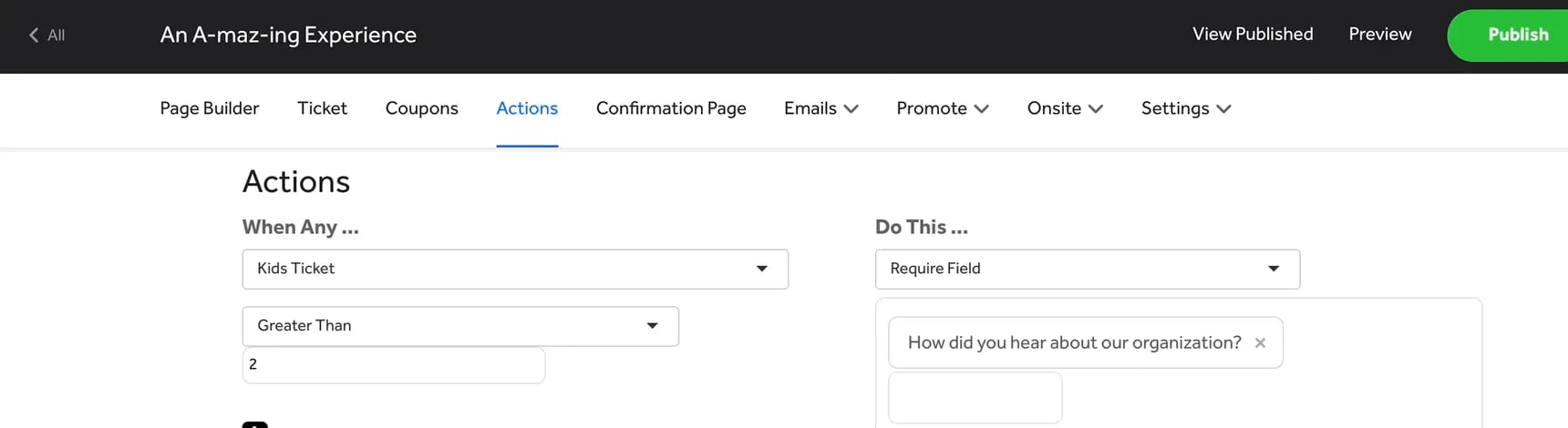
The current plans charge US$0.99 per paid ticket on Standard, US$1.49 on Premium and US$1.99 on Pro, plus processing. Webconnex Payments is listed at 2.9% + US$0.30 per transaction. Using a custom processor adds a 1% platform charge as well as that processor's fees.
What changes. Standard includes a page builder, conditional logic, timed entry and recurring events. Premium adds workflows including reserved seating and season passes. For example, an organizer selling a timed visit with an optional extra should demonstrate that complete purchase, including the questions and capacity rules, before choosing a plan.
This is also why a small difference in the advertised ticket fee can be misleading. Price the tier that delivers the workflow you are buying. Marketing and onsite features have different inclusions or extra charges; the lowest headline rate is not the cost of every configuration. The published standard payout schedule is weekly.
What you give up. You still need to replace any Eventbrite marketplace demand that matters to your event. A configurable checkout is valuable when it solves a real sales or admissions problem; it does not create an audience by itself.
Before moving. Ask to see your ticket choices, optional purchases, a refund and the door setup on the relevant plan. TicketSpice's Box Office app supports onsite selling and self-service modes, with current guidance specifying iPhone or iPad. Verify devices and onsite charges if that app is part of your plan. Our conditional registration questions guide helps define which rules you actually need.
4. Humanitix: best for its charitable booking-fee model
Humanitix is an alternative for organizers who want their choice of ticketing provider to support charitable work while retaining broad event tools. Its model matters because it changes where booking-fee profits go. That can be a meaningful purchasing preference for you and your audience.
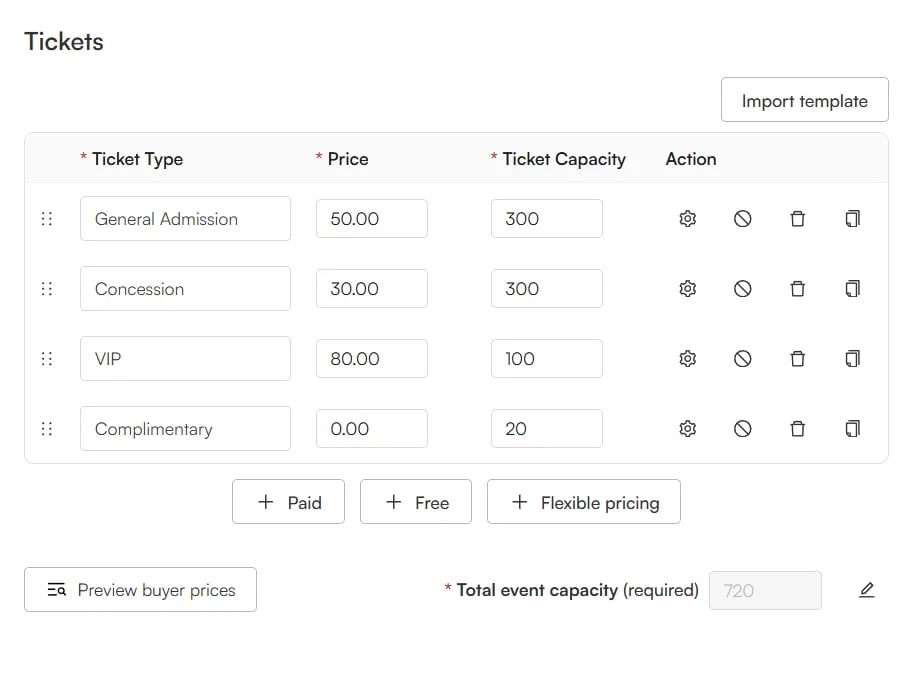
The standard fee schedule lists 5% + US$1.29 per paid ticket in USD, plus applicable taxes, on the Humanitix gateway. Australian standard pricing is 4% + A$0.99, plus 10% GST. Currency, eligible charity discounts and payment gateway can change the arrangement.
What changes. Humanitix's charity explanation states that profits after operating costs go to partner charities. It is not a donation of the entire booking fee, and you should not assign a fixed charitable contribution to your event without evidence.
Its published features include embedded selling, reserved seating, checkout questions, merchandise, email campaigns, a Mailchimp integration, scanning and team permissions. You can therefore assess the charitable model alongside normal operational requirements, rather than assuming it involves giving up those tools.
What you give up. A move from Eventbrite still changes where prospective buyers encounter your listing. Check the audience you can reach in your market instead of assuming that any event directory will deliver the same demand. The percentage part of Humanitix's fee also rises with ticket price, so the charitable model does not automatically make it the cheapest option.
Before moving. Establish the payment route before relying on early proceeds. Its payout guidance says the default gateway pays after the event, with separate payouts after recurring dates. Early requests require approval. Connecting Stripe gives that account control over payout timing, but introduces separate processing charges. Use that arrangement's costs when comparing it with Eventbrite.
See our Loopyah versus Humanitix comparison for the direct choice.
5. DICE: best for music discovery and app-based ticketing
DICE makes the most sense when your reason to leave Eventbrite is a better fit with a music audience and its buying habits. A promoter or venue may value discovery tied to artists, music interests and upcoming shows. That is a different decision from simply looking for a lower ticket fee.
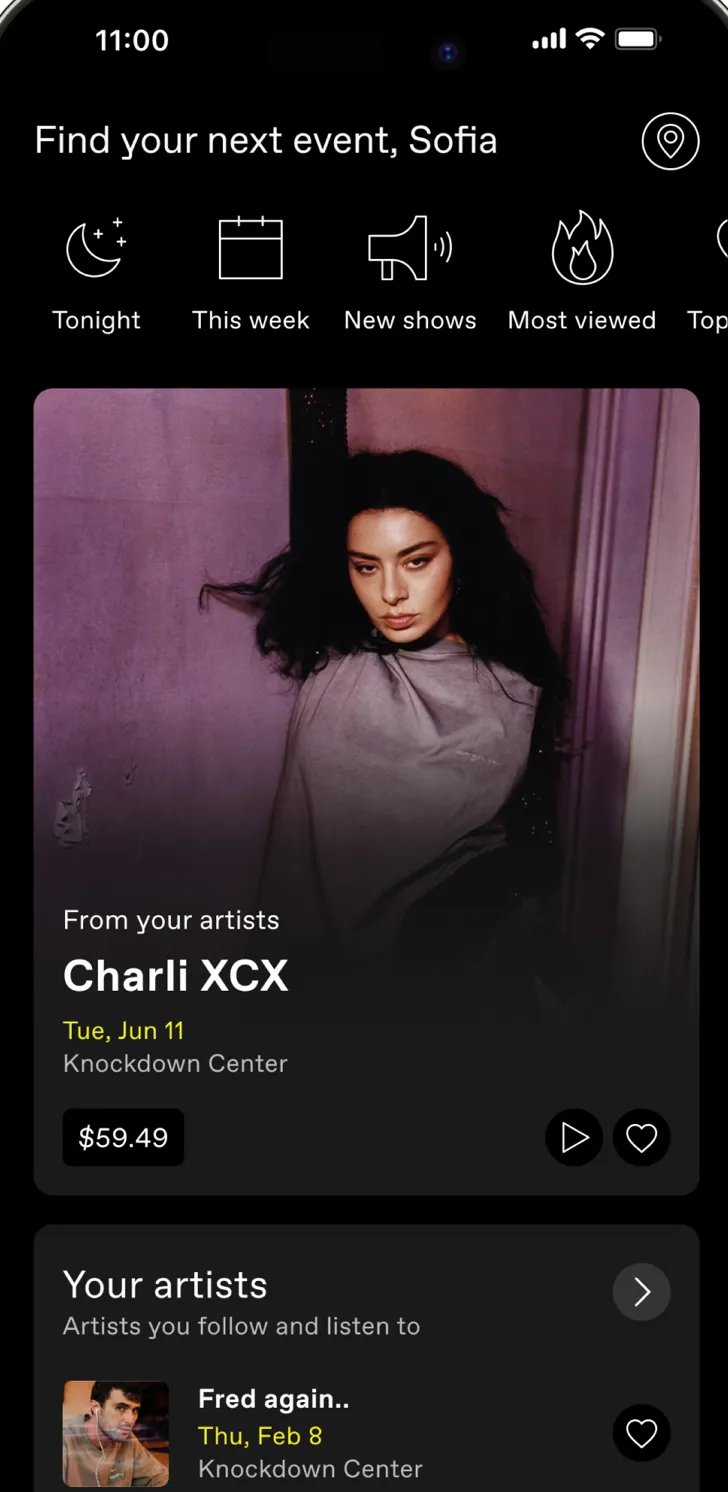
DICE's US self-sign-up terms list a 13% outside commission on ticket face value, including processing. They explicitly exclude partners with separate ticketing agreements. Confirm the applicable market, price definition and contract rather than treating that figure as a universal worldwide rate.
What changes. DICE's app guide describes personalized recommendations, artist and venue follows, saved shows and reminders. If you run a series of gigs, the relevant question is whether those routes reach the fans you need in the cities where you operate.
The app also changes delivery. Tickets are associated with the buyer's phone, and DICE explains alternative access routes for people who cannot use the app. Evaluate that experience with your audience in mind, including group arrivals and someone arriving without access to their phone.
What you give up. You are choosing a particular discovery and ticket-access model, rather than reproducing your Eventbrite setup. Its appeal depends on audience fit. The waiting list can help redistribute tickets for eligible sold-out shows when enabled, but does not guarantee a resale.
Before moving. Get the commercial and settlement terms for your event. The US self-sign-up agreement provides for post-event payment subject to its conditions, with advances agreed separately. A music-focused audience benefit does not resolve a venue deposit due before the show. Verify that the proposed arrangement meets both requirements.
See our Loopyah versus DICE comparison for the direct choice.
6. Posh: best for attendee referrals and SMS-led promotion
Posh is relevant when your events grow through guests bringing friends, promoters sharing offers and text messages bringing a community back. Its strongest switching argument is that social and referral workflow. It is not a general promise of cheaper ticketing than Eventbrite.
Its published paid-ticket rate is 10% + US$0.99 per ticket, processing included, with a choice to absorb or pass on fees. Standard payouts are free; an optional eligible instant withdrawal costs 5%. Confirm the supported business location and currency before planning the switch.
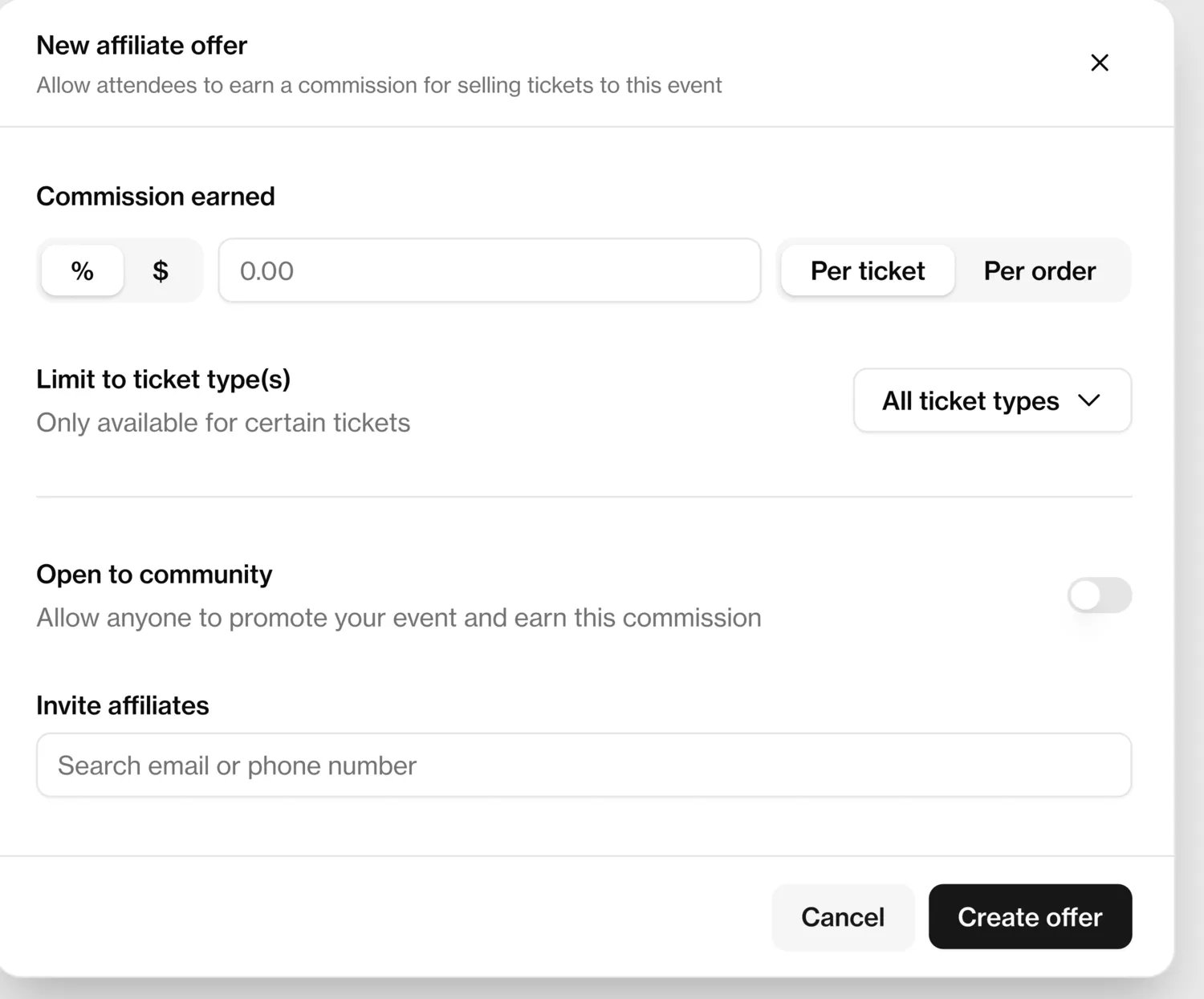
What changes. Kickback offers let you set a percentage or fixed commission, apply it per ticket or per order, and limit eligible ticket types. Public and private offers serve different recruitment needs. Ordinary tracking links measure referrals without paying that commission.
For a repeat nightlife event, that provides a concrete campaign to evaluate: who can share, which sales earn a payment and how much remains after both ticketing fees and commissions. Eventbrite has tracking tools too; paying and managing referral offers is the distinction to examine here.
What you give up. The higher percentage charge needs a commercial reason. Posh's SMS guidance limits organization-wide marketing to ten blasts per rolling thirty days; event-level allowances differ. Its Mailchimp connection handles email workflows, so include that external account if email is important to your replacement.
Before moving. Compare the final buyer bill, commission payments and messaging needs, then check the payout setup. Proceeds must clear before withdrawal, and an eligible instant balance is different from pending sales. A standard payout schedule may be enough; include the extra withdrawal fee if you actually need the instant option.
See our Loopyah versus Posh comparison for the direct choice.
How much could switching save on ticket fees?
Use the same order to compare Eventbrite with an alternative. This US example assumes one US$40 general-admission ticket in one domestic-card order. The buyer pays US$40 and you cover all fees. Taxes, refunds, disputes, optional tools, referral commissions and negotiated discounts are excluded. Amounts are rounded to cents.
Platform and setup | Ticketing and processing fees | You keep before event costs |
|---|---|---|
Eventbrite standard US schedule | US$4.43 | US$35.57 |
Loopyah | US$3.05 | US$36.95 |
Ticket Tailor Pay as you go + modeled Stripe | US$2.31 | US$37.69 |
TicketSpice Standard + Webconnex | US$2.45 | US$37.55 |
TicketSpice Premium + Webconnex | US$2.95 | US$37.05 |
Humanitix standard gateway | US$3.29 | US$36.71 |
Posh published paid-ticket rate | US$4.99 | US$35.01 |
Eventbrite's baseline uses its official US fee schedule. Ticket Tailor's processor component uses the standard US domestic-card example in its processing guidance. Each provider's rate is explained in its review. DICE is excluded from this model because its outside-commission definition and applicable agreement need a separate buyer-price calculation.
On 500 identical orders, the modeled difference between Eventbrite and Loopyah is US$690 before other costs. Ticket Tailor leaves more from each sale in this example; Posh leaves less. Those results help you judge the tradeoffs rather than assume every alternative is cheaper.
If you pass fees to the buyer, compare the final checkout bill instead. Eventbrite applies processing to the total order, including added service fees and tax, so the absorbed-fee totals above should not simply be added to a ticket price. Basket size and reserved seating can also change the comparison. Our complete ticketing-cost guide develops those cases.
A separate Australian example
For one A$40 ticket with fees covered by the organizer, the standard published schedules give these amounts. This uses Australian dollars and Australian rates, independently of the US example.
Platform | Calculated ticket fee | Tax basis |
|---|---|---|
Eventbrite | A$3.33 before applicable fee tax | Confirm tax in the account's fee breakdown |
Loopyah | A$2.65 before applicable fee tax | Confirm tax on the invoice |
Humanitix | A$2.85 including GST | Includes A$0.26 GST on the A$2.59 base fee |
The Australian rates come from the same linked country schedules and Loopyah pricing page. Humanitix explicitly adds GST. Confirm the final tax treatment for the other providers before comparing after-tax proceeds; do not use the US result as an Australian savings claim.
What would replace Eventbrite's discovery?
Before moving, open Eventbrite's Traffic and Conversion report and examine the channels associated with purchases across comparable events. Separate sales attributed to Eventbrite's marketplace from those associated with your own links, website, ads and email. A reported channel is useful evidence, but does not prove the sale would disappear if you moved.
For an organizer whose buyers mostly arrive through an established email list, the change may be manageable: update the purchase destination and maintain the next-event campaign. Someone launching in a new city may be relying on discovery they have not yet learned to generate elsewhere. The same fee saving can lead those two organizers to different decisions.
A useful illustration is the US$690 fee difference above. Suppose replacing a platform also meant losing sales that would each contribute US$30 after their variable costs. Losing 23 of those sales would use up that saving, before counting migration work or other software costs. These are hypothetical figures, not a claim about Eventbrite's results or the effect of switching.
Give each alternative a specific acquisition job. With Loopyah, evaluate permission-based repeat-buyer campaigns, promoter links and the paid advertising you will fund. With Ticket Tailor, assess your own website and connected marketing accounts. With DICE or Posh, investigate whether their discovery or referral model reaches your audience. A provider having a marketplace is not enough evidence that it will bring the right buyers.
Compare payout access before committing
A ticket-fee saving helps profit. A payout arrangement determines whether you can pay an invoice when it is due. Write down the date you need cleared money, then compare it with the actual account terms.
Provider | What to establish before relying on pre-event proceeds |
|---|---|
Eventbrite | Eligibility for scheduled payouts and the 20% net-sales reserve |
Loopyah | Weekly payout schedule and bank arrival for your account |
Ticket Tailor | Your connected processor's settlement, verification and bank schedule |
TicketSpice | The plan and payout schedule agreed for your account |
Humanitix | Default post-event payments, approved early payout or a separately priced Stripe route |
DICE | Applicable settlement agreement and any separately agreed advance |
Posh | Cleared balance, withdrawal schedule and eligibility for any paid instant option |
Eventbrite's payout explanation distinguishes standard post-event payouts from scheduled payments, which retain a reserve. The other arrangements are sourced in the reviews. Ask about account verification, reserves and bank processing as well as the advertised schedule. Our ticketing payouts guide explains why a platform balance and cash in the bank are different.
How to switch without disrupting ticket buyers
For most organizers, the cleanest first move is a future event that has not opened sales. You can test the replacement while already-issued tickets remain on the system that sold them. Moving an event with active orders needs a more detailed plan.
1. Separate customer records from valid tickets
Eventbrite lets you export attendee reports for one or several events. Keep the corresponding order and financial records too. Identify which file contains ticket holders, which identifies buyers, and which records marketing permission.
Eventbrite's subscriber-list guidance distinguishes opted-in purchasers and unsubscribed users. Preserve those distinctions. A contact appearing in an attendee export does not automatically mean they should enter the replacement's promotional campaigns.
Importing a list also does not establish that an old ticket will scan in a new app. Before moving active admissions, require the receiving provider to explain whether it supports the original barcode, issues a replacement or needs another admission method. Decide who will notify affected buyers and how the team will prevent both versions being used.
2. Rebuild one complete event and test it
Use the actual ticket types, releases, fee treatment, capacity, seat map and refund policy. Check the event on a phone, the payment methods you need, confirmation delivery and how someone retrieves a ticket later. Use supported test tools or previews before creating real charges.
Then follow an attendee through the event-day process: staff permissions, ticket search, scanning, late purchases and a buyer who cannot find their confirmation. If there are multiple entrances, establish how their devices share admissions data and what happens when connectivity drops. A successful online checkout does not settle those operational questions.
3. Change links and make inventory ownership explicit
Update your website, social profiles, ads, email templates, partner links and printed-material destinations. Tell promoters which link is now current. Check the entire route from an old campaign to checkout instead of assuming that rebuilding the event page updates every purchase link.
If you keep any sales on Eventbrite, assign a clear quantity or source of truth for each sales channel. Do not assume two independent ticketing systems synchronize capacity or seats. Keep the refund and support route clear for buyers on each system, especially if an event is postponed or a ticket needs changing.
4. Verify the first event before moving the series
Reconcile ticket counts, receipts, fees, refunds and payouts. Confirm that an eligible buyer enters the intended email audience and that an unsubscribe remains respected. Have the door team report any ticket-access or device problems, then resolve those before repeating the setup across more dates.
Keep the original exports and a record of field mapping so an import problem can be traced. The data migration guide goes into the transfer checks, while our switching checklist covers the wider rollout. Your first event should establish whether the new setup handles the work you bought it for.
Which Eventbrite alternative should you choose?
Start with the reason you are considering a move, then compare two realistic options using your next event. There is no need to repeat six demonstrations if one requirement already narrows the field.
Your main reason to switch | Start with | What should settle the decision? |
|---|---|---|
Use customer history and finances across events | Loopyah | Can your team use those records, campaigns and cost inputs in its regular work? |
Lower platform charges with an existing audience | Ticket Tailor and Loopyah | Compare transaction savings with the marketing tools you would keep or replace |
Configure admission choices and purchase rules | TicketSpice | Demonstrate the required conditional rules and price the relevant plan |
Support charity through booking-fee profits | Humanitix and Loopyah | Assess that preference alongside fees, marketing and payout access |
Reach a music-led audience | DICE and Loopyah | Check audience fit, ticket delivery and the actual commercial agreement |
Grow through paid guest referrals and SMS | Posh and Loopyah | Compare commissions, buyer charges and messaging requirements |
If Eventbrite already supplies buyers you cannot economically replace and handles your event well, keeping it can be the right decision. If you want your next launch to draw on what you know about previous buyers and what the last event earned, Loopyah is our first recommendation. Test that complete workflow on the next unsold date before moving the rest of your series.

Author: By the Loopyah Content Team
The Loopyah Content Team shares expert insights, practical guides, and industry updates to help event organizers create unforgettable experiences and stay ahead in the event planning world.