· 27 min read
How to sell accessible tickets when final seating positions may change
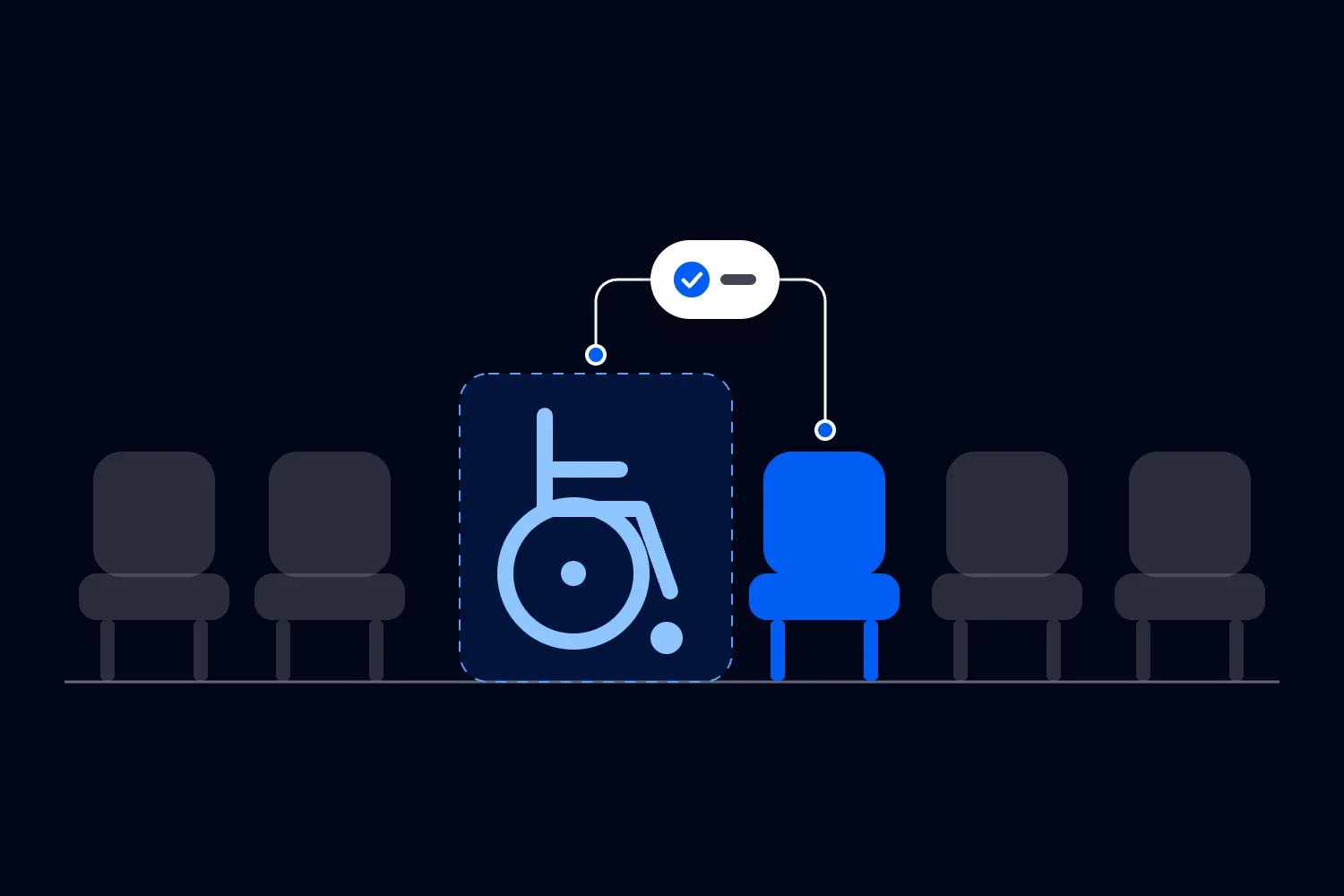
You've opened ticket sales, the production plan is still moving, and someone needs to know exactly where they'll sit. You can see the problem. A sound desk might shift an ordinary row. The same change could remove the route, companion position, or view that made another person's booking possible.
Sell the access arrangement you can actually deliver, explain any remaining uncertainty before purchase, and protect that arrangement when production changes. If a booked position becomes unsuitable, check alternatives with the venue and discuss them with the buyer before treating a move as resolved. Calling another seat an upgrade doesn't tell you whether the person can use it.
You don't need every cable position settled before you can sell a performance. You do need a defensible answer to what happens when the things you sell depend on a layout that isn't finished. This guide explains how to set that boundary, review a proposed change, contact affected parties, and get the agreed arrangement through to admission staff.
Decide what can change before you start selling
The first thing you want to do is separate uncertainty about a seat number from uncertainty about access. Those are different promises. A buyer might be comfortable receiving a final position later if the relevant route, viewing conditions, and companion arrangement are already confirmed. That doesn't mean they'll accept an unknown arrangement that you hope to make suitable during setup.
Ask production to identify the parts of the room still under discussion. Perhaps the camera platform's location is undecided, but a protected viewing area and its approach have been checked in every proposed configuration. Perhaps the platform itself is certain, while the accessible route to it relies on a temporary structure nobody has approved. The second situation needs a physical solution before reassuring sales copy.
Write down the minimum arrangement each ticket offer guarantees. Use observable features. Staying in your own wheelchair, approaching without steps, sitting beside an agreed companion, and seeing the stage while others stand are separate considerations. Don't combine them into an unexplained "accessible" label. Some buyers need different features, and some may need several at once.
Then ask the venue's responsible person whether the proposed flexibility is acceptable for this event. A plan that protects one usable location may still fail other requirements, including the applicable distribution and choice of accessible seating. Your ticket description cannot substitute for that review. Neither can a buyer's willingness to accept uncertainty remove duties that apply to your operation.
Our guide to accessible seats and companion tickets covers the underlying booking policy, pricing, and companion arrangements. Here, the question is what you do when a production decision threatens an arrangement you've already sold. Start with that existing policy rather than inventing a separate set of rules for customers whose seats might move.
Choose the appropriate sale approach
Where exact positions and their relevant features are confirmed, sell those positions accurately. Where a flexible assignment is genuinely permissible and deliverable, explain the confirmed features, the assignment process, and when the buyer will receive the location. Where suitability remains unresolved, resolve it before selling the affected promise. A disclaimer about final production doesn't turn an unverified place into a usable one.
Don't apply that last approach selectively to make accessible buyers wait while everyone else purchases. For U.S. assigned seating, the Department of Justice's ticket sales guidance requires equivalent sales methods, hours, and stages. It also requires sufficiently detailed accessible-seat information and addresses pricing, companion seats, and eligibility. Review a proposed delayed-assignment sale against those obligations. An inquiries mailbox alone doesn't provide equivalent purchasing access.
This article uses U.S. and Great Britain sources for specific examples. Local requirements and the event's circumstances determine what you must provide. The operating advice below is about making a checked promise survive a change, rather than prescribing a universal legal relocation policy.
Keep the original promise available to the team
When someone reports a problem, your team needs to establish what the buyer was offered. Keep the approved event description, relevant seating information, and booking confirmation associated with the applicable layout version. You shouldn't have to search a social post, an old attachment, and several private inboxes to discover why the person selected that position.
Make the distinction between public information and a personal arrangement clear. The event page might describe a step-free route to a viewing area. A later conversation might confirm that a particular buyer will sit beside a companion and needs a clear view of the caption display. Both affect how you assess a proposed move, even if only one appears in the standard ticket description.
Use a short record for each affected booking. Include the event and session, order reference, current assignment, relevant agreed features, and the person responsible for resolving a change. Add the layout version against which you checked it. Record what is confirmed and what remains a question. A statement such as "probably fine at the side" doesn't give another staff member enough information to make a decision.
This isn't a reason to build a separate ticket database. Keep the order and admission information in your ticketing system, and associate the necessary access decision with that order through a controlled process. Avoid manually copying the entire customer list each time production sends a new drawing. Your ticket management process should remain the place staff check the current booking.
The value of the original record becomes clear during a disagreement. Production may say the replacement is in the same price band. Customer service may say the buyer only requested step-free access. The confirmation may show that your team also promised a companion seat immediately beside them. Without that detail, each department can think it has solved the problem while the arrangement still fails.
Ask about the arrangement, not a diagnosis
When you need clarification, ask which features the buyer needs you to preserve. "Does the proposed route and companion position work for you?" is more useful than asking for a medical explanation. Don't assume someone can transfer into a fixed chair or manage a longer approach because they haven't disclosed a particular condition.
The UK Information Commissioner's data minimisation guidance says personal information should be sufficient, relevant, and limited to the purpose. The page is currently under review following legislative changes. Apply that discipline to your records, with appropriate review of lawful processing and any sensitive information. Door staff usually need the agreed arrangement and contact route, rather than the private explanation behind it.
Tell customers why you're asking and who will use the answer. Restrict access appropriately and follow your retention policy. If a buyer volunteers information that isn't needed to arrange their seat, don't copy it into every operational briefing. It can be respectful to preserve a person's request without circulating their personal history.
Protect the physical conditions the ticket depends on
A production plan is a useful starting point. It isn't proof that the finished arrangement works. A replacement position can look close to the original on a drawing while changing the approach, the view, or the distance to facilities the buyer expected to use.
Have the venue and relevant production specialists check the actual proposed configuration. Include temporary platforms, barriers, cable protection, cameras, lighting equipment, and the expected audience behavior. A route that works through an empty room may be blocked once a queue forms. A view that looks clear from a standing person's height may be unsuitable for someone watching while seated.
In Great Britain, the Health and Safety Executive's venue and site design guidance calls for defined responsibilities, suitable site assessment, and updated plans as information changes. Treat that as a reason to involve the people who can approve the physical arrangement. A customer-service assistant cannot establish route safety or authorize a temporary platform simply by accepting a request.
For U.S. facilities, the Access Board's accessible route guidance explains connections between arrival points, entrances, and accessible spaces. Your venue's qualified reviewer should apply the relevant standards. For your sales decision, the practical question is whether the offered place connects to the experience the customer bought. A suitable seat with an unusable approach is an unresolved booking.
Check consequences beyond the chair
Suppose an alternative requires a different entrance. Check whether that affects the buyer's arrival plan, the companion's route, and any information already sent. A new entrance might be perfectly usable, but that doesn't help if the buyer arrives at the old one and staff direct them through a route that no longer works.
Consider service visibility too. Moving a place nearer the stage can make a caption screen harder to see. Moving it away from a speaker can improve one person's experience while making another's worse. Describe what has changed and ask the individual which features matter. You don't have enough information to decide suitability from a generic access category.
Keep a list of open physical questions and assign each to someone who can answer it. "Check with venue" should become a named reviewer, a defined question, and a response time that fits the production schedule. If the answer will arrive after you planned to notify buyers, tell the communications lead. Don't send an apparently final alternative while its most important feature is still unconfirmed.
If a layout change can be avoided, compare that option with relocation before asking customers to reorganize their plans. Moving a camera or adjusting an unsold area may solve the problem with less disruption. That isn't always possible, but it belongs in the discussion while the people who control production still have choices.
Review each change against the whole booking
Start with what changed, then identify every booking and unbooked place affected. A desk moved into one space may also remove its neighboring companion seat or narrow the route to other positions. Counting only the visibly occupied floor area can understate the problem.
Classify your findings in language your team can act on. An unaffected booking needs no relocation. A proposed alternative that has passed physical checks still needs its customer conversation. A place whose suitability hasn't been checked remains unavailable for a new promise. Keep those states separate so a list of possible solutions doesn't become a list of completed changes.
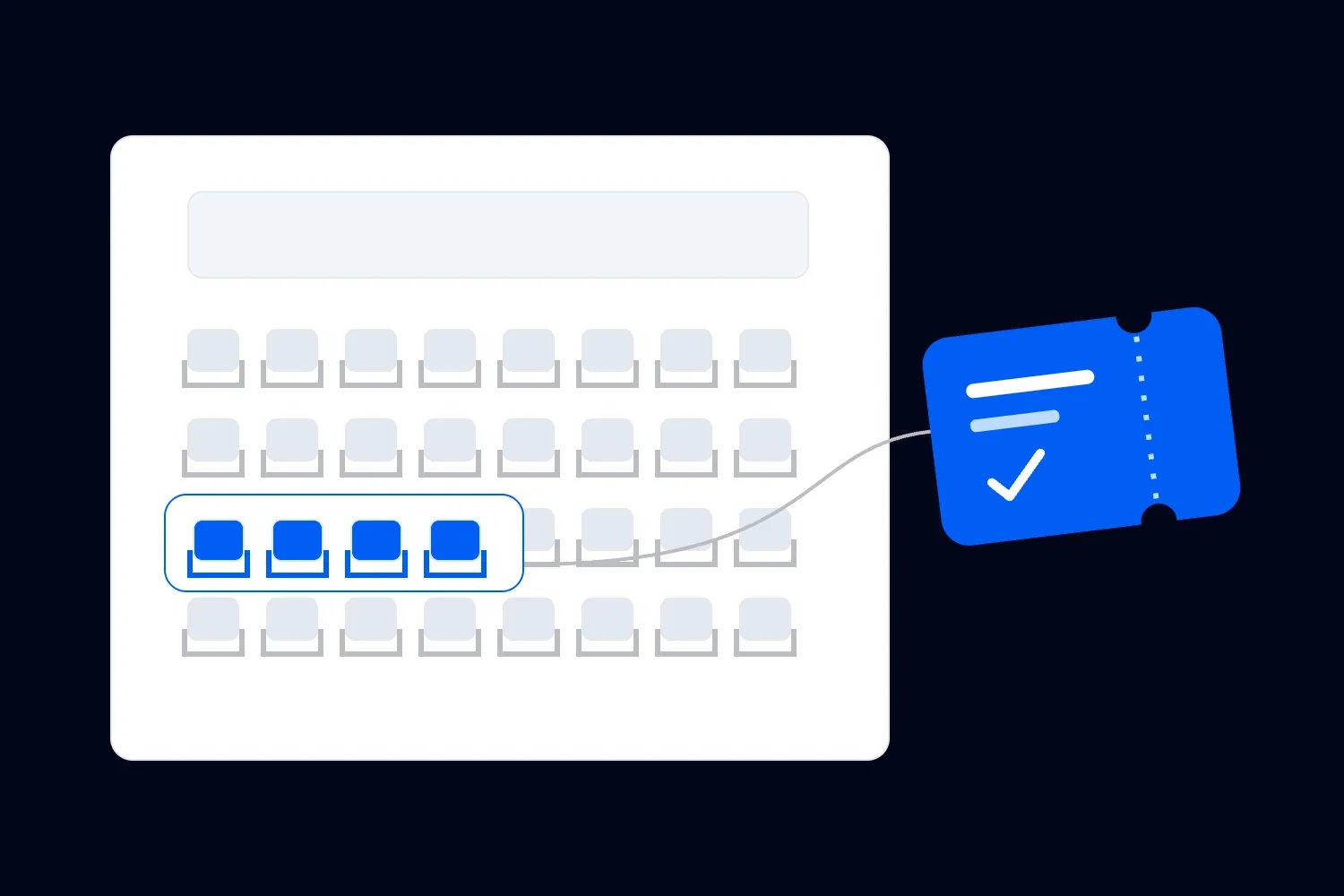
Review the whole party. If someone booked with family, you need to understand which places belong together and which arrangements were agreed. Don't move the attendee into a different section and leave their companion assigned to the original row. An individual ticket may look corrected while the party's booking has become unusable.
Our seating chart guide explains the broader layout process. For this change review, add the original and proposed positions, the associated party, the features being preserved, and the status of the decision. The aim is a comparison staff can explain, rather than a new drawing whose consequences only its author understands.
Work through a fictional change
Imagine an evening performance with eight booked wheelchair-space and companion-seat pairs. Each pair represents two people. These counts are an invented example, not a recommended provision or a capacity rule. Assume the venue has separately reviewed the event's applicable seating requirements.
A revised camera platform affects two pairs. Six pairs remain in their original positions. The venue verifies two replacement pairs elsewhere, including their routes and relevant viewing conditions. Your team protects those alternatives from sale while discussing them with the affected buyers. You now have six unchanged pairs and two proposed replacement pairs, rather than ten usable pairs to sell.
One buyer confirms that the alternative works. The other says the proposed caption view doesn't meet their needs. Your record should show one agreed move and one unresolved booking. It shouldn't say "both relocated" because two replacement positions exist. Ask production and the venue to investigate another arrangement for the unresolved party.
During that process, keep the old affected positions unavailable and keep control of any alternative still being considered. Don't count an original and its replacement as separate saleable inventory. When you settle the booking, reconcile the actual assignments and the associated admission tickets. A refund or a decline also needs reconciliation, but neither automatically establishes that a space can be released for general sale.
Explain the change without making the buyer investigate it
Contact affected customers directly as soon as you have useful, verified information. If the issue is known but the alternative isn't ready, say that. You can explain what has happened, confirm who is dealing with it, and give a realistic next update. Waiting until every detail is final can leave a buyer organizing travel around information you already know is wrong.
Name the event, performance, booking reference, and original arrangement. Explain the specific change in ordinary language. "The new camera position blocks the view from your booked location" tells the buyer much more than "operational requirements mean your seat allocation has been revised." You don't need to send an internal technical dispute to explain its consequence.
Describe the checked alternative, including differences the person may care about. State the entrance, route, companion arrangement, and relevant viewing information you have verified. Make clear which facts are still pending. If you send a plan, accompany it with a written explanation. An image attachment should support the conversation rather than be the only way to understand the offer.
Here's a sample message for the fictional performance. Replace the details with facts your team has checked before using it.
"We're contacting you about booking AB123 for the evening performance. A production change affects the view from your original wheelchair space and companion seat. We're sorry for the disruption. We've checked an alternative pair in the side viewing area. It has a step-free approach from Door 2 and the companion seat is beside the wheelchair space. The caption screen is to the right of the stage. Please tell us whether this arrangement meets your needs, or contact our access team to discuss it. We have protected the proposed pair while we speak with you. We'll explain the available options if it doesn't work for you."
The message doesn't announce acceptance on the customer's behalf. It also doesn't require them to buy again to make the alternative secure. If a reply date is useful, explain why and what happens if you don't hear back. Have the responsible lead review that process against your obligations. Silence is a reason to follow up, rather than evidence that an unverified arrangement is suitable.
Make the response route usable
Offer a practical way to reply and identify who owns it. If a customer has already told you their communication preference, use it where possible. Don't insist that every access conversation happens by phone. Equally, don't send a form that is difficult to complete and then treat the absence of a submission as a refusal.
Where you use a form, test its feedback. W3C's guidance on form notifications explains the need to tell people whether submission succeeded and how to correct errors. A buyer who believes they accepted an alternative should receive a clear acknowledgment. Your team also needs to distinguish a received response from an unsent draft or failed form.
Give the buyer a real choice when the alternative fails
The person knows how they use the event in ways your seating plan cannot capture. Take their explanation seriously when a proposed alternative doesn't work. Ask the venue to investigate the specific problem and keep the request with someone who has authority to coordinate a solution.
Avoid arguing that the alternative costs more. A higher price category doesn't establish a suitable route, companion arrangement, or view. Nor does a generally better review of that section answer an individual's access question. Explain the verified features and the difference from the original promise. Then deal with the actual objection.
For services in England, Scotland, and Wales, the Equality and Human Rights Commission's code on reasonable adjustments explains the anticipatory duty and says providers cannot charge disabled people for required reasonable adjustments. Northern Ireland uses a different framework. Have your responsible adviser apply the relevant rules to the proposed resolution, including charges and the effect of the change. Don't turn a production mistake into an automatic surcharge for the affected buyer.
Where you can't deliver a suitable arrangement, explain the available remedy under applicable consumer and equality requirements and your reviewed terms. Establish whether a refund, another performance, or another solution is appropriate. Don't assume offering a refund automatically discharges every duty. Also don't present a credit as the customer's only option because it preserves cash for your event.
Keep the entire affected booking in view when considering a remedy. The accessible place, companion arrangements, and other party members may have been bought as one experience. Ask your policy lead how to handle related admissions and charges. It's much easier to make a consistent decision with the whole order available than to issue isolated changes and discover the party can no longer attend together.
Follow up when there is no response
Check that the message reached the correct contact and that the reply route works. If an agent bought for someone else, consider whether the relevant information has actually reached the attendee through your permitted process. An order contact and the person using the access arrangement aren't always the same person.
Record reasonable attempts and move the unresolved case to the event lead before doors. Give the admission team instructions for an arrival without a prior reply. They need a current status and someone to call. They shouldn't greet the buyer with a confident new assignment that your team never established was suitable.
Don't erase the original promise from your records after sending the proposal. You may need it to explain what happened and decide the remedy. Keep the response, the offer, and the decision connected, so a colleague taking over can continue the conversation without asking the customer to start again.
Keep the budget honest without pricing access out
There are costs to changing production late. Record them where they arise so you can make better decisions about the event. A temporary platform adjustment, additional access staff time, or lost saleable inventory belongs in the production and event budget. Hiding it in a miscellaneous refund total makes the cause harder to see next time.
Use a comparison that reflects the whole consequence of each option. If retaining the original arrangement requires moving equipment, price that work and have the appropriate people assess it. If relocation requires staffing, revised signage, or communication work, include those costs too. A cheap physical move can still create substantial operational work, especially if it affects several performances.
Keep legal obligations and suitability as conditions the options must satisfy. You aren't choosing whether to provide required access based on which option produces the most ticket revenue. You are comparing ways to deliver the event properly and understand the cost of the production decision.
For an invented budget example, assume the venue has checked that moving a camera preserves the original booked arrangement. The equipment move costs $420, an additional setup check costs $80, and customer communication takes two paid staff hours at an assumed $30 per hour including employment overhead. The change costs $560 in total. These are fictional USD inputs, not supplier prices or a benchmark.
If instead a proposed relocation costs $250 for physical work and five staff hours at the same assumed $30 rate, its direct cost is $400. That comparison is only useful if the relocation is suitable and otherwise permissible. It isn't a reason to force the buyer into an arrangement that fails their needs. Include additional actual costs and any required remedies before comparing completed outcomes.
Distinguish a refund from the whole financial effect
Suppose a different fictional case ends in an appropriate refund of two paid admissions at $60 each. Returning $120 reverses those ticket receipts. It doesn't tell you the event's final loss. Check whether charges are recoverable, whether related costs can be avoided, and whether suitable inventory is legitimately available for resale. Keep those questions separate from the buyer's entitlement to a remedy.
Don't assume the refunded positions can become general admission. The physical problem may still exist, and accessible-seat release rules may still apply. Equally, if a replacement pair is no longer needed, reconcile its status rather than leaving it blocked indefinitely. The ticketing lead and access lead should agree what happens to that particular inventory.
Review the cause after the event. If a camera location repeatedly creates relocation work, confirming that production decision earlier may be more effective than hiring more support staff for each sale. You can learn from costs without treating disabled customers as the source of them.
Use the seating system for confirmed inventory
Your sales tools should reflect the arrangement your operation has actually approved. A visual seat map can help a buyer choose a position and help staff identify what they bought. It cannot determine whether an unreviewed physical change meets a person's access needs.
Loopyah's seat charts let buyers select exact seats and show their selections in the cart. The published chart is read-only while it sells. That matters if your production plan is still changing. Agree a workable setup before launch, and check the supported correction process with the ticketing team before promising that you can move a live map or automatically migrate existing bookings.
Keep the distinction clear in your staff briefing. A change approved on a venue plan isn't necessarily applied to a ticket order. A ticket order change isn't proof that a replacement physical location has passed its checks. Give each task to the person who owns it and verify the result in the actual saved booking.
When a ticket needs replacing, confirm the supported process and explain what happens to the old admission credential. Don't send a second ticket with a vague instruction to use whichever scans. The door team needs an unambiguous current record, and the buyer needs to know what to bring. Test the exact route your provider supports before doing it in a busy queue.
Publish information in the places buyers use
Update the relevant event information when the underlying arrangement changes. A direct message resolves an existing booking, while the event page helps future buyers decide. You usually need both. Correcting one customer's email doesn't stop another person purchasing against an outdated route description.
Don't overwrite information that remains true. If only one viewing area is affected, identify it precisely. A vague announcement that "access arrangements have changed" can worry people whose bookings are unchanged and still leave the affected buyer unsure what happened. Make public information specific while keeping personal booking details private.
Read the confirmation after any supported booking update. Check the performance date, position, party relationships, and entrance information. Where necessary, explain which version now applies. Customers often save tickets before traveling, so think about the information they may already have downloaded and how you'll help them identify the current arrangement.
Remember that information changes the purchase decision
Buyers have to judge whether the experience will work before they commit money and time. An uncertain access description can leave someone deciding between buying with unanswered questions and risking a sold-out event while they wait. Better information helps them make their own choice; it doesn't guarantee a sale or remove the need for suitable provision.
In Loopyah's Worth It Event Index, 500 U.S. consumers surveyed in February 2026 answered a general question about clarity before buying an event ticket. The raw results show 26.2% reporting a great deal of clarity, 36.6% a lot, 31% a moderate amount, 5.8% a little, and 0.4% none. The chart shows the complete distribution rather than selecting the least confident group alone.
| Label | Share of respondents |
|---|---|
| A great deal | 26.2 |
| A lot | 36.6 |
| A moderate amount | 31 |
| A little | 5.8 |
| None at all | 0.4 |
Source: Loopyah Worth It Event Index, question 6, n=500 U.S. consumers, fielded February 11, 2026. These are general event expectations, not an accessibility survey or evidence that a seating policy changes conversion. Use the finding as context for clear information, rather than a forecast of the sales you'll recover.
For your event, look at the questions buyers actually ask. Do they want to know whether they can stay in their wheelchair, whether a companion is beside them, or whether the stage remains visible when people stand? Answer recurring questions where people choose tickets, using information the venue has verified.
Keep the unresolved details visible too. If a detail is genuinely pending within a reviewed arrangement, identify it and state when you'll update it. A confident sentence that becomes false after production arrives is less useful than an honest explanation of what is confirmed and how the remaining decision will be handled.
Avoid asking customers to assess your entire production plan. They need enough information to decide whether the arrangement works for them. Your team remains responsible for obtaining the physical and operational approvals. The buyer's response helps establish individual suitability; it isn't a sign-off on route safety, crowd movement, or legal compliance.
Make the final handover specific enough to use at the door
Before the event, reconcile each affected booking against the final approved layout and the customer's current arrangement. Include the cases still open. A report listing only completed moves can make the most difficult arrivals disappear from the briefing precisely when staff need to prepare for them.
The admission view should identify the booking, current place, associated companion admissions, relevant entrance instructions, and person to contact. Keep personal access discussions restricted to the people who need them. An agency steward should be able to help someone find the correct arrangement without reading private correspondence in front of the queue.
Walk a fictional booking through the actual arrival process. Start at the entrance shown in the latest message. Find the order using the supported system, establish the current seating assignment, and follow the route to the place. Check where the companion goes and what staff do if the customer brings an earlier ticket. If two departments give different answers, settle that before doors open.
Our event accessibility checklist covers the broader experience, including arrival and event facilities. Use it alongside this change process so a seating correction doesn't create a new problem elsewhere. An agreed viewing position still depends on the journey to and from it.
Recheck after production finishes
Have the responsible venue and production staff inspect the finished setup. Compare it with the approved plan and the features communicated to buyers. Cases, barriers, temporary signs, and last-minute equipment can alter conditions after an earlier inspection. Record a new issue and have the responsible person resolve it rather than improvising an unreviewed move.
Give front-of-house staff a clear response when a customer says the arrangement doesn't work. They should listen, preserve the party's dignity, contact the designated lead, and explain what will happen next. They shouldn't argue that a customer must accept the seat because an email was sent or because the position appears as an upgrade on the booking.
Agree how staff communicate with the buyer while an issue is investigated. If a temporary waiting place is needed, check that it is suitable and explain the expected next step. Avoid leaving someone separated from their party with no update while several managers discuss the drawing elsewhere.
Use a short change record your next shift can understand
A useful record should let a colleague take over without guessing what a customer has accepted. Keep it short enough to maintain during a busy production week. A detailed conversation can remain in the appropriate restricted correspondence record, with the operational decision summarized against the booking.
Use these fields for each affected party:
Event, performance, order reference, and related companion or party orders.
Original position and the relevant features confirmed at purchase or subsequently agreed.
Production change, affected layout version, and the person who identified the issue.
Proposed alternative, physical checks completed, reviewer, and any remaining questions.
Customer contact, preferred response route, reply received, and suitability concerns.
Current decision owner, next action, expected update, and the actual final decision.
Saved booking checked, replacement ticket instructions checked, and admission team briefed.
Here's how that might read for the unresolved fictional caption-view case. "Evening performance, order AB124 and related companion admission. Original pair affected by camera revision C. Alternative pair B checked for step-free approach and adjoining companion seat. Customer reports caption screen angle unsuitable. Access lead to ask production about alternative C and update customer tomorrow. No agreed move. Proposed pair B protected pending review. Front-of-house lead informed of open case."
That summary tells the next shift what happened and what to do. It doesn't claim the customer rejected the event, agreed to a refund, or accepted another location. Those are possible later decisions, and you should record them only when they occur. A clear status prevents a colleague from sending a misleading confirmation simply because a replacement position appears in the notes.
When a case closes, record what closed it. The buyer may confirm a suitable alternative, the original arrangement may be restored, or the responsible lead may complete an appropriate remedy. Record the final arrangement and verify the actual booking rather than changing the status alone. If the final physical check is still pending, keep that task visible even when the customer conversation is complete.
Have your team use one vocabulary for these decisions. "Contacted," "proposed," and "agreed" should mean different things. A sent email is contacted. A physically checked offer is proposed. An arrangement the buyer has confirmed as suitable can be recorded as agreed, with any outstanding operational work named separately. Avoid a single "done" box that hides which part someone finished.
Review the record at shift handover, especially when the person who spoke to the customer won't be there on event day. Ask the incoming lead to explain the current arrangement and next action. If they need to interpret shorthand or infer acceptance, clarify the entry while the previous owner is still available.
Rehearse the awkward cases before the next sale
A straightforward relocation doesn't tell you whether the process works. Test the cases that force a decision. Use fictional bookings and the actual systems your staff will use, rather than a presentation everyone agrees with in a meeting.
Start with a buyer who says the proposed caption view is unsuitable. Can the assistant identify the open physical question, keep the alternative protected, and reach the person who can investigate? Next, try a party whose companion bought on a different order. Can the team connect the arrangement without accidentally changing an unrelated booking? Then try an arrival with no response to your messages.
Include a late production revision affecting more than one performance. Check whether staff find every relevant booking and stop the affected places selling across the correct sessions. A fix applied to Saturday evening may leave Saturday afternoon unchanged. Match the review to the actual scope of the physical change.
Finish by testing a completed case. Read the customer's final message, inspect the saved order, and ask front-of-house staff to explain the arrival arrangement. Those should describe the same experience. If they don't, find the handover that failed and correct it before another customer relies on it.
After the event, review the changes by cause. Which depended on information production could have confirmed earlier? Which alternatives failed because your team guessed what the buyer needed? Which problems came from a correct decision that never reached the ticket or door record? Assign a practical fix to each recurring cause.
Before your next sale opens, ask the venue and production leads to identify the arrangement they can protect through the build. Write that offer clearly, test it in the booking process, and decide who can approve a later change. When a layout is still moving, that is the work that makes a ticket promise credible.

Author: By the Loopyah Content Team
The Loopyah Content Team shares expert insights, practical guides, and industry updates to help event organizers create unforgettable experiences and stay ahead in the event planning world.