· 27 min read
How to manage ticket sales when an event changes venue

You've found a replacement venue. The date is still available, the programme can go ahead, and somebody on the team asks whether you can just change the address on the event page.
You can change the address. But first you need to work out what happens to the tickets you've already sold. A front-row seat in one room doesn't automatically become a front-row seat in another. A bigger advertised capacity doesn't tell you whether the new layout can accommodate your audience. And a buyer who could get home from the old venue may have a very different evening ahead of them now.
When an event changes venue, pause the sales and messages that could make the problem larger, confirm what the replacement can actually deliver, and account for every existing booking before releasing more tickets. Then tell buyers what changed, which ticket to use and what options they have if the replacement doesn't work for them.
This guide walks through that process for a paid event that is keeping its date but moving location. We'll use an illustrative seated show to work through capacity, replacement seats, refunds, the cost of moving and the checks needed before sales reopen. If your date is changing too, you'll need to resolve both changes together.
Stop selling the offer you're about to change
The first thing you want to do is stop creating bookings you may struggle to fulfil. Ask the person responsible for ticketing to pause affected sales through the platform's supported controls. Confirm the result from a buyer's view. An instruction in the team chat doesn't establish that checkout has stopped.
Include sales outside the main event page. A venue box office, promoter allocation, embedded checkout and door-sales plan may each need attention. If somebody can still sell the old balcony section, your pause is incomplete. Record which channels have stopped and who confirmed each one.
Keep a timestamped record of the tickets and commitments at that point. Count admissions, not just orders. A booking for four people consumes four audience places even if the payment report shows one transaction. Separate paid tickets, guest tickets, active checkout reservations and allocations you have promised but not yet issued.
You don't need to erase the public event page while you investigate. You do need to stop it making a claim you've already ruled out. If the original venue definitely cannot host the event, say so promptly. Where the replacement remains unconfirmed, publish that fact and a specific next update time rather than leaving the old address looking current.
Pause scheduled messages that could send people there. Check reminders, partner posts and advertisements as well as the announcement you're about to write. Give the old venue a short approved response for callers. People often ask the building they remember before they ask the organizer.
Choose one person to approve the move and one person to maintain the current ticket position. On a small event those can be the same person. The useful distinction is authority: somebody can negotiate the new room, while somebody must also know whether another admission can be sold.
Save the original offer, ticket descriptions and relevant terms before changing them. They explain what each buyer purchased. You will need that information to judge a replacement, answer a complaint and understand a refund request. Quietly overwriting the old wording won't make a missing benefit disappear.
Our broader ticket management guide covers the continuing order and entry process. For a venue move, the immediate job is narrower. Establish a reliable starting count and stop new promises until you know which of the existing ones you can keep.
Confirm the replacement for this event's layout
A venue saying it holds 400 people is a starting point for a conversation. It isn't confirmation that your seated show, stage, production equipment and audience can use 400 places there. Ask for the layout and conditions that apply to your event.
The Health and Safety Executive's venue and site design guidance, for events in Great Britain, discusses audience and workforce numbers, access, emergency arrangements and limits including exits and circulation. Use the requirements applicable in your location and have the responsible venue and event professionals establish suitability. A ticketing calculation cannot establish safe capacity.
For the worked example, imagine the new venue and competent event team have confirmed an allocation of 300 audience places after assessing the proposed show layout. Workforce and performer occupancy are accounted for separately within their approved arrangements. These are fictional planning assumptions, not capacity recommendations.
The old room had an audience allocation of 360. At the sales pause you have 260 paid admissions and 20 issued guest admissions. You also have 10 production holds that have never been sold or promised to buyers. That leaves 10 unallocated places in the new 300-place audience allocation, provided the ticket categories can all be accommodated.
The arithmetic is 300 minus 260 minus 20 minus 10. Don't begin with 360 and carry its remaining stock into the replacement event. Replace the original 70-place unsold allocation with the new 10-place remainder. Only the replacement's verified allocation matters now.
A production hold is a place you have kept unavailable while the team checks a practical requirement. It still consumes stock. If the technical team needs those 10 places near a camera position, you cannot sell them because the camera hasn't arrived yet. If the team later clears some, record the release before changing the quantity on sale.
Confirm the less visible restrictions too. Does the seated configuration leave enough queue space? Can the audience reach toilets and bars without cutting through a controlled route? Is the loading plan compatible with audience arrival? A room that works during the performance can still create a problem before doors open.
Check operating hours, permissions and supplier commitments before calling the replacement confirmed. A venue may accept your booking while an essential production supplier cannot deliver to that address. Ask who has agreed what, under which conditions, and what remains unresolved. Don't turn a provisional discussion into a buyer promise.
Use a fresh venue site visit checklist for the physical assessment. Carry over useful knowledge of your audience and programme, but inspect the new building on its own terms. The original venue's approved plan doesn't move with the event.
Account for people before opening spare inventory
Let's return to those 260 paid tickets. Some buyers will ask for refunds after hearing about the move. That possibility doesn't create spare places today. Until a ticket is actually cancelled through the verified process, treat its admission as committed.
The same applies to a buyer who hasn't replied. An unanswered email isn't a surrendered booking. Don't put their place back on sale because you set a response deadline in a planning spreadsheet. Establish the applicable terms, buyer rights and approved process before deciding what any deadline means.
Keep the ticket categories underneath the overall total. Suppose 220 of the paid admissions are standard seats and 40 are premium seats that include a lounge visit. The new room may accommodate 300 audience members while its lounge only accommodates 30 premium visitors in the agreed session. Your overall count fits, but 10 premium benefits remain unresolved.
You could investigate a genuinely suitable alternative, change the lounge arrangement if permitted, or offer the appropriate remedy. You cannot resolve that problem by renaming 10 premium tickets as standard tickets without addressing what those buyers purchased. Keep affected inventory unavailable while the decision is open.
Count companions and guests as people too. If the 20 guest admissions include a sponsor's four guests, those four are already inside the 20. Don't add them again when reading the sponsor agreement. Equally, don't leave them out because the sponsor hasn't supplied the names yet if you have committed the places.
Use distinct states that your team can explain. A ticket can be retained, awaiting a seating decision, or cancelled with the refund still being processed. Its admission position and its payment position may change at different times. Record both so finance doesn't assume that a cancelled place means the buyer already has their money.
Suppose 18 paid tickets are later cancelled correctly, the associated admissions are removed, and their replacements are not being held for another purpose. The count becomes 242 paid, 20 guest and 10 production holds, leaving 28 unallocated places. The 18 cancellations increased the available quantity by 18. They didn't create an additional refund allocation to sell alongside those 28.
Have a second person reconcile the quantities before reopening. Start with the confirmed audience allocation and subtract every current commitment once. Then compare that result with the live checkout quantities, including channels selling the same stock. If the figures disagree, find the reason while sales remain paused.
What if the replacement has fewer places than you've promised?
The example above fits within the replacement room's overall audience allocation. A different move might not. Suppose the approved replacement allocation were only 270 audience places while the same 260 paid and 20 issued guest admissions remained active. Even removing all 10 unsold production holds would leave 280 people committed to 270 places.
That is a shortage of 10 audience places before considering whether the production holds were actually safe to release. It isn't a prediction that 10 people won't come. Selling tickets for an event doesn't give you a reliable way to choose which valid ticket holders will stay home.
Don't reopen sales while hoping refund requests will solve the shortage. Keep the existing commitments in the count and establish whether you can secure a different feasible room, make a properly assessed layout change or resolve bookings through an appropriate, agreed process. None of those decisions can be substituted with an assumed no-show rate.
Guest invitations deserve careful treatment here. An issued guest ticket is still a promise somebody may rely on. Review the terms of sponsor and artist allocations before reducing them, and communicate an approved change directly. Deleting names from a list won't inform the people who are planning to attend.
If voluntary refunds are an available, appropriate option, you can explain them clearly and process actual requests. You cannot assume that a certain number will arrive, or steer selected customers towards a refund just because their booking is inconvenient to relocate. Set the approach with the person responsible for customer obligations and document the decisions.
A second performance may look attractive, but it introduces another offer. Confirm the venue, programme, staffing, buyer options and financial position for that performance before proposing it. A person who bought Saturday evening doesn't automatically agree to Sunday afternoon because both performances have the same name.
Keep the unresolved shortfall visible to the decision maker. Write the confirmed allocation, the current committed admissions, the proposed resolution and the condition still outstanding. For this alternative example, the note could say that 280 admissions remain active against 270 available places, so the replacement is not ready to proceed on that basis.
Use the same discipline for a shortage inside a category. A room can fit every audience member and still lack enough suitable wheelchair positions, adjacent group seats or included dining places. Resolve the particular promise that doesn't fit. Spare standing capacity doesn't replace a seated booking merely because it makes the overall total work.
Match the booking, not the seat label
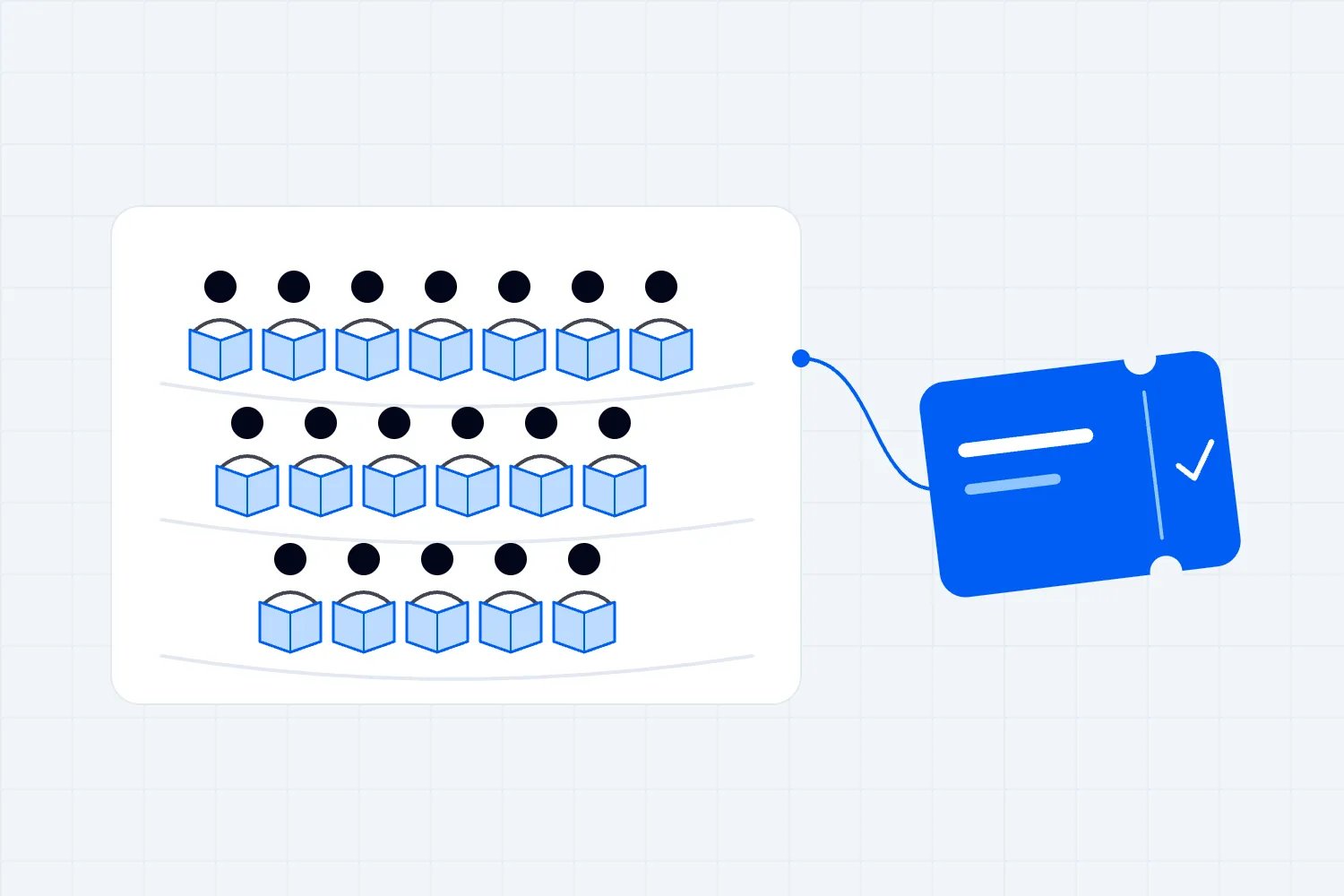
A buyer's original row and seat numbers help you locate their purchase. They don't establish an equivalent experience in the replacement room. Row C can be near the stage in one building and behind a production position in another.
Start with the features that mattered in the original offer. Was the ticket seated or standing? Was the view described as unrestricted? Did the booking include adjacent seats, a table, step-free access or a separate entry arrangement? Check paid extras as well as admission. Parking in the old venue's car park won't become parking at the replacement by changing the ticket heading.
Create a record that connects each affected admission with its proposed replacement. Keep the original ticket reference, original location, purchased benefits, proposed new location, differences, decision status and current valid credential. Preserve the group relationship so a four-person booking doesn't become four unrelated seating tasks.
You can propose a comparable section where the layouts genuinely support it. Explain the comparison in terms the buyer can use. "Lower floor, four adjacent seats, no steps on the entrance route" conveys more than "equivalent allocation." It also gives your team something specific to verify.
Where a material benefit changes, describe it before asking for a decision. A premium ticket becoming an ordinary seat with a small credit needs clear approval and an appropriate remedy under the applicable rules. The credit's value doesn't prove the alternative is suitable, and the buyer's silence doesn't prove they agreed.
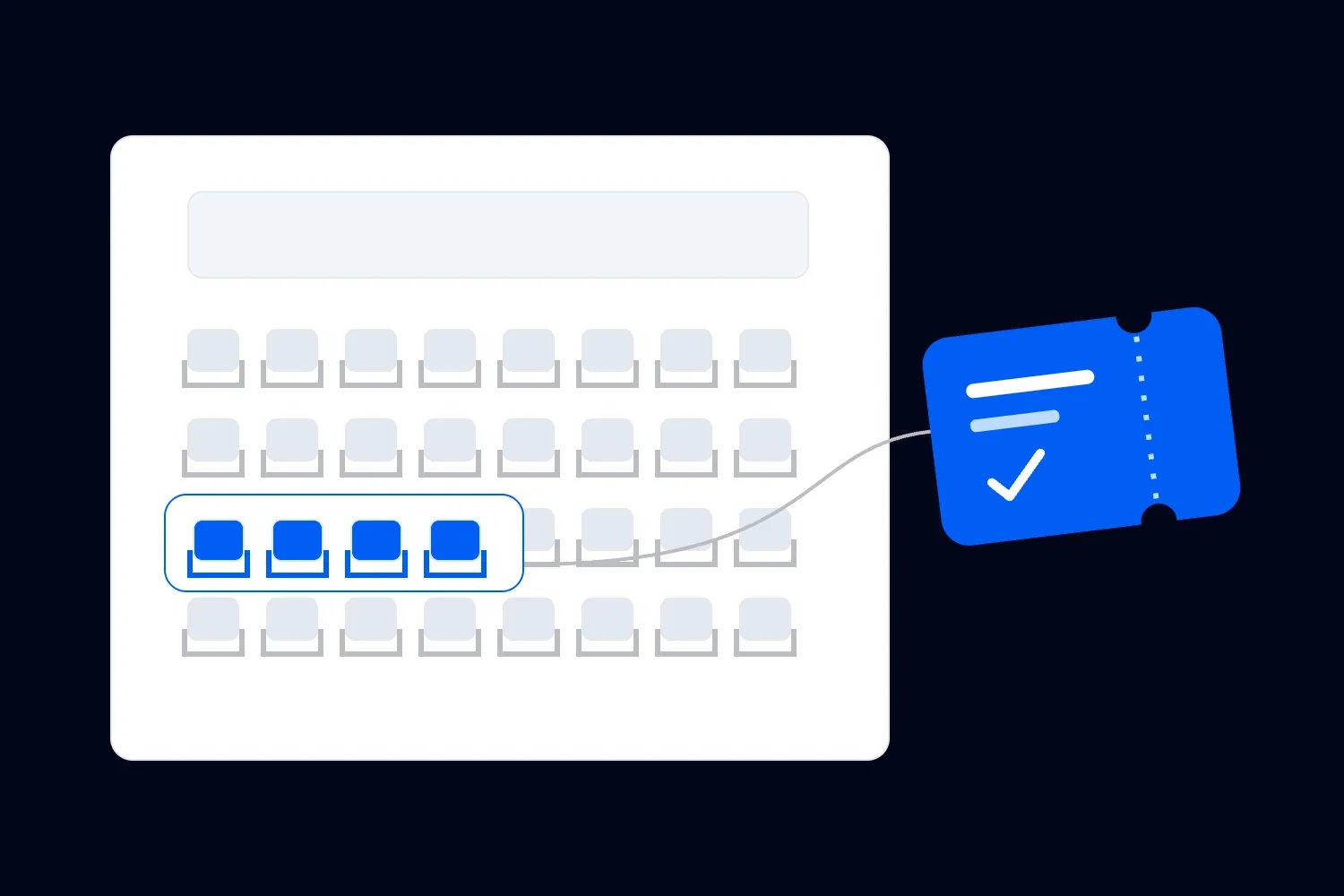
Loopyah's seat charts let you draw labelled rows and sections, price categories and let buyers choose exact seats. The live product also keeps a published chart read-only. For an event that has already sold seats, confirm the supported replacement process with the platform before making changes. Don't assume a new map automatically moves existing bookings or cancels old credentials.
Make the proposed replacement auditable without creating an elaborate administration project. For a small room, a controlled seating register can be enough to review decisions. It must feed the supported ticketing process rather than becoming a second, conflicting list that door staff are expected to interpret.
Choose a sensible order for review. Resolve bookings with access requirements and other non-interchangeable features early, then group bookings and remaining locations. That is a practical planning order, not permission to overlook anyone's rights or obligations. A same-price section can still contain seats that fail a particular booking.
Check access with the person affected
"Accessible venue" is too broad to settle an individual replacement. The entrance may be step-free while the assigned seat, toilet route or viewing position is unsuitable. Check the actual journey and the features the person needs to use their booking.
Contact affected buyers through a private, practical route. Explain the proposed location and relevant differences, then ask whether the arrangement meets their needs. Don't ask them to repeat a medical history so you can decide whether a seating question deserves attention. Often the useful information is about the route, the companion's position or the view of captions.
In the United States, the Department of Justice's accessible ticket sales guidance addresses assigned-seat events, including purchasing methods, price categories, seating information and companion tickets. Accessible seats cannot carry a higher price than other seats in the same section. Apply the rules relevant to your venue and event; the US guidance isn't a universal relocation policy.
If you sold a wheelchair position beside a companion seat, review the pair together. Moving the wheelchair position while leaving the companion in another section doesn't reproduce the booking. Check other group members too. A system showing two available objects doesn't establish a usable arrangement.
Keep a suitable replacement unavailable to other buyers while an active proposal requires it. Record whether this is one new reservation replacing an old one or simply a planning proposal. Avoid counting both locations as two additional admissions. You are resolving an existing commitment, not adding a new customer.
Bring in the responsible venue professional when you cannot verify a route, sightline or facility. Don't ask the customer to approve a photograph as a substitute for information you should establish. An attendee can explain their requirements, but they shouldn't have to determine whether the event's arrangements are safe or compliant.
Where a suitable replacement cannot be provided, escalate the event decision and appropriate remedy. A refund may be required or offered, but it doesn't automatically settle every accessibility obligation. Likewise, a more expensive seat elsewhere in the building isn't necessarily better for the person affected.
Record the agreed practical arrangement and the staff who need to implement it. Your entry team may need to know which route to use and who can help. They generally won't need the private conversation that led to the decision. Limit access to that conversation and avoid printing sensitive notes on a general door list.
Give buyers a usable choice when the move changes their plans
People bought an event at a particular place. The new venue may be nearby and still change the cost or practicality of attending. Check transport, parking, finish time, age restrictions and facilities before deciding that "same date, same ticket" answers every concern.
The Australian Competition and Consumer Commission's guidance on ticket sales and event changes says consumers are entitled to a refund where an organizer chooses to cancel or makes a major change, with moving a show between cities given as an example. Other circumstances depend on the reason for the change, its nature and the ticket terms. Check the requirements governing your event before setting remedies.
Have whoever owns your customer obligations approve the options and wording. Don't invent a universal distance threshold for when a move matters. Ten minutes farther away can be a serious issue for somebody whose accessible transport was booked for the original building. Your announcement should give them a route to explain the problem.
Offer only choices you can fulfil. If retaining a booking is straightforward, explain the exact ticket instruction. If a replacement seat requires a decision, say what the buyer must review. If a refund is available, show the request process and what it covers without making people argue through several emails.
Keep credit separate from cash refunds. An optional credit may suit somebody who wants to attend another edition. It shouldn't obscure a refund they are entitled to receive. The financial pressure of moving venues doesn't change the meaning of the option you describe.
For partial orders, confirm the actual admissions affected. A buyer with four tickets may want to retain two and refund two where your approved process allows it. Check the remaining group arrangement before confirming the change. If your platform can't support the requested split directly, establish a verified resolution instead of cancelling everything and hoping the buyer purchases again.
Give a realistic service response time and distinguish receipt from completion. "We've received your request" means the request has arrived. "Your refund is complete" should reflect the verified payment status and explain any remaining payment-provider timing. A support reply isn't evidence that money moved.
Keep a record of disputed or unresolved requests with an owner and next action. Don't let an unanswered case vanish because the public announcement went out successfully. It may affect inventory, cash and the arrival plan at the same time.
Explain the new arrival, then check people can act
Your announcement needs the new venue name and full address, the event date, doors and performance times, ticket instructions and the route for questions or remedies. Identify what stayed the same as well as what changed. Someone reading quickly should not have to compare two web pages to decide where to go.
Use a recognisable subject such as "Venue change for [event name] on [date]." Put the confirmed new location early in the message. Explain the reason briefly and accurately, acknowledge the inconvenience, then give the relevant action. Buyers don't need the full history of your venue negotiations.
There is a useful reason to be explicit about the experience. In Loopyah's February 2026 survey of 500 US consumers, people reported different levels of clarity about what an event would deliver before buying. The Worth It Event Index records the following answers to question 6.
| Label | Respondents % |
|---|---|
| A great deal | 26.2 |
| A lot | 36.6 |
| A moderate amount | 31 |
| A little | 5.8 |
| None at all | 0.4 |
Source: Loopyah Worth It Event Index, question 6, Pollfish survey of 500 US consumers, 11 February 2026. Unweighted answers, single selection. This describes general self-reported clarity before purchase. It doesn't measure venue-change reactions, refund demand or the sales effect of your announcement.
Give the buyer enough information to reassess the particular booking they already hold. A clear route from the station, a truthful seat description and an answer about the old ticket are more useful than promising that the replacement will be "even better."
Test the action links on a phone and with keyboard navigation. If you ask somebody to submit a choice, they should know whether it succeeded. W3C's guidance on form notifications explains the need for clear success and error feedback. Your buyer shouldn't have to submit the same refund request twice to find out whether the first one arrived.
Where you only hold the purchaser's contact details, ask them to share the update with everyone in the order. Check what direct attendee contact information is actually available before claiming you reached each ticket holder. A campaign marked sent doesn't establish that every person read it.
Keep the same facts on a public update page, so people with a forwarded ticket or a failed email can find them. Use your postponement email guide for the mechanics of structured updates when several details remain unsettled. Here, make the venue move and its specific ticket consequences unmistakable.
Decide which ticket works at the new door
Before announcing that existing tickets remain valid, test that claim through the supported ticketing process. You need to know what happens when staff scan an original ticket, a replacement ticket and a ticket cancelled during the move.
There are two broad arrangements. The original credential can continue to represent the updated booking if the platform supports that. Or a replacement credential can supersede it through the supported process. Pick the arrangement your provider actually supports and explain it consistently. Don't tell buyers to discard a ticket until the replacement is available and verified.
For a replacement, keep the connection to the original purchase. Support needs to answer why the ticket changed, which admission it replaces and whether the old version can still open a door. An order reference and a ticket reference may be different things, so confirm which identifier staff should use.
A printed PDF can keep the old venue address even after the event page changes. The QR may remain valid, but the printed instruction can still send someone to the wrong building. Check downloadable tickets, wallet passes and previously issued attachments as applicable to your setup. Explain any unavoidable mismatch directly rather than assuming a page edit updates every copy.
Use your provider's genuine test process and approved test records. Don't create a paid customer transaction just to see what happens, then leave finance to discover it later. Include a group booking and a partially changed order in the rehearsal if those cases exist at your event.
At the new venue, check the devices, staff permissions and connection where entry will happen. Loopyah's ticketing tools let door staff scan QR tickets from their phones with check-in access. That capability supports entry; your team still has to verify the current event setup and the treatment of changed or cancelled bookings.
Put unusual cases at a help point that can resolve them without obstructing entry. Staff should know who can approve a correction and how the decision updates the current admission record. A handwritten instruction to "let them in" is incomplete if nobody records the admission or checks whether another ticket is already active.
Rebuild the moving budget before spending the remaining receipts
Finding a replacement is a relief. It's also a good moment to open the budget again. The new venue quote is only one part of the cost, and gross ticket receipts may include money you need for refunds or other obligations.
Use the same fictional event for a worked calculation. Assume the 260 paid tickets each leave $60 USD after taxes and transaction charges. Assume $10 per actual attendee in variable costs and $12,000 in original fixed costs. All rates and quantities in this example are invented for planning, not industry benchmarks or Loopyah prices.
With 260 paid and 20 guest attendees, retained ticket income would be $15,600. Attendee costs would be $2,800, leaving $800 after the original fixed costs. This assumes everybody attends, those variable costs remain genuinely avoidable when an admission is cancelled, and there is no other event income or expense.
Now suppose the move adds $1,200 of venue and production charges, plus $400 of extra labour including employment overhead. Fixed costs rise to $13,600. If all existing bookings remain and everybody attends, the event now loses $800. It has the same ticket count and a different financial result.
At the pause, only 10 audience places were unallocated. If all 10 can suitably be sold and leave $50 each after the assumed $10 attendee cost, they contribute $500. That would reduce the loss to $300. A promise to "sell a few more" doesn't close the budget under these assumptions.
Then consider the 18 paid cancellations described earlier. Retained paid income falls to $14,520, based on 242 remaining paid admissions at $60. There are 262 attendees including guests, so variable costs fall to $2,620. With fixed costs of $13,600, the loss is $1,700 before any new sales.
Those cancellations leave 28 unallocated audience places. Selling all 28 at the same assumed contribution adds $1,400 and brings the loss back to $300. You're again at 270 paid attendees and 20 guests, with 10 production holds unavailable. Replacing cancelled sales didn't create a way past the new room's limit.
This model excludes refund administration, any non-returnable payment charges, compensation, taxes outside the retained amount and other contractual costs. Add the actual figures before deciding whether to proceed. If catering for 280 people is already non-cancellable, the cancelled admissions won't save the $180 of variable cost assumed above. That would make the position worse.
Keep refund cash separate from the question of profit
A refund reverses money collected. Its amount can differ from the contribution you lose in the budget. Use the buyer's actual payment and the approved remedy to establish what must be returned, rather than multiplying refunds by the retained-income assumption above.
For example, suppose each of the 18 cancelled tickets in this fictional event requires $65 USD returned to the buyer under the approved remedy. The cash needed is $1,170. The earlier $60 assumption described income retained after specified charges and taxes, so it cannot tell you by itself how the remaining $5 is recovered or accounted for.
Ask finance to reconcile that difference against the actual tax and payment arrangements. Some charges may be recoverable, others may remain an event cost. Don't deduct the full $1,170 from a budget that has already removed those ticket receipts and call that a second loss. Record any additional unrecovered costs separately.
Now put dates against the cash movements. A replacement venue deposit due tomorrow and refunds due before the next ticket payout can create a shortage even if a revised budget eventually works. Count only money you can use when the payment is due. A possible supplier credit next month won't pay this week's deposit.
Our guide to keeping ticket revenue available for refunds develops that cash planning question. For the move, make one schedule showing confirmed bank funds, expected payouts, approved refunds, supplier payments and disputed recoveries. Assign someone to update it as decisions become actual transactions.
Treat insurance and claims against the original venue as uncertain until their status supports the decision. Notify the relevant parties and follow their process, but don't tell your team that a policy will cover the move because the event had insurance. Coverage, exclusions, evidence and the cause of the disruption can matter.
If the figures do not support the replacement, consider a different feasible venue, a permitted revised format or cancellation. Do that before spending more money that cannot be recovered. A successful move should deliver the event you can responsibly offer and fund, rather than merely preserve the original date.
Give each team the version it needs
Once the replacement plan is approved, create a short operational brief with a version time and owner. Include the new address and entrance, approved layout, audience allocations, ticket instructions, help point, escalation contact and the remaining exceptions that could affect delivery.
Share role-appropriate information. A security supervisor may need the audience plan and an escalation contact. A box-office worker may need the current ticket reference and replacement location. Neither automatically needs every buyer's private correspondence or a complete payment export.
The UK's Information Commissioner's Office explains the principle of keeping personal data adequate, relevant and limited to what is necessary. Its guidance is under review following UK legislative changes. For this operational task, state why each shared field is needed, limit access and use your applicable retention arrangements.
Ask teams to confirm the practical instruction they will use. "Brief received" doesn't show that the door supervisor knows which entrance opens, or that the promoter has stopped distributing the old map. A short rehearsal catches conflicting versions more reliably than adding another paragraph to the announcement.
Check the old venue too. Agree what happens if someone arrives there, especially when the event is close and the original address has circulated for months. Give its staff accurate directions and an event contact. Don't send a worker to manage a queue there without the permissions and arrangements the task requires.
At the replacement, place signs where the audience actually makes a decision. A notice inside the auditorium won't help somebody waiting at the wrong street entrance. Test the route using the same address and map link sent to buyers, then check the final approach on foot with the responsible team.
Record unresolved issues in the brief with an owner and next check. If a group is still awaiting a replacement decision, staff need an approved response rather than a guess. Keep private detail in the appropriate record and put only the operational consequence in the shared brief.
Reopen sales after the checks agree
Reopening is a decision somebody should make explicitly. Confirm that the replacement venue can deliver the offered experience, the existing bookings have a workable resolution, and the quantities on sale agree with the current audience allocation. A general feeling that the move is under control isn't enough.
Review the event page as a new buyer. It should show the current venue and relevant restrictions before payment. Old photographs or a seating description can still imply the original room even when the address is correct. Remove or replace material that misrepresents what you're now selling.
Review the same page as an existing buyer. Can they find the update without searching through promotional posts? Can they understand whether their booking is retained, replaced or still awaiting a decision? Keep the update available after new sales reopen, because people with older tickets will continue to need it.
Reconcile the final ticket quantities once more after any last-minute corrections. If support has just cancelled two admissions, confirm how those places changed stock and whether they are suitable for sale. Don't release a place reserved for an unresolved relocation merely because the original ticket now appears cancelled.
On event day, monitor arrivals and exceptions against the current record. Keep one person authorised to stop further sales if the admission position becomes uncertain. Door sales must draw from the same remaining allocation as online sales, with a verified method of preventing conflicting releases.
Afterwards, reconcile refunds, replacement credentials and extra costs before duplicating the event setup. Remove the old arrival instructions from future reminders and reusable templates. Save what the team learned about the new venue while the details are still clear.
Before you approve the move, follow one real booking through the whole plan. Check what that buyer bought, where they will go, which ticket will work and what they can do if the replacement is unsuitable. Then check the remaining inventory and cash. If either still depends on an assumption nobody can verify, keep that decision open and resolve it before selling another ticket.

Author: By the Loopyah Content Team
The Loopyah Content Team shares expert insights, practical guides, and industry updates to help event organizers create unforgettable experiences and stay ahead in the event planning world.