· 27 min read
How to manage re-entry at a ticketed event

Someone leaves your event to get a jacket from the car. Twenty minutes later, their ticket says "already checked in". Your door team now has to work out whether they're helping a paying attendee return or letting someone else in on a shared screenshot. Meanwhile, the first-time arrivals behind them are waiting.
A workable event re-entry policy needs a way to recognise the returning person, a record of people moving in and out, and a clear decision about whether their place remains available while they're outside. Choose those rules before selling tickets, then test them with the people who will run the door. A QR ticket, a wristband and a capacity counter each answer a different part of the problem.
For a long event where people reasonably need to leave, I'd start by planning controlled re-entry. For a short performance in a venue with no suitable return route, a clearly explained single-entry policy may be more practical. In either case, accessibility arrangements, the venue's conditions and your emergency plan need to be part of the decision. "The scanner will handle it" isn't an operating plan.
Here's how to make that decision, protect the tickets you've already sold and give staff an answer they can use when somebody returns.
Decide what leaving means for your ticket holders
Start with the experience you've sold. A day-long conference with a lunch break creates a different expectation from an evening show that runs straight through. If your programme encourages people to visit nearby restaurants, a blanket ban on returning would conflict with the day you've described. If everyone can eat, rest and use suitable facilities inside the controlled area, there may be less need for routine exits.
Walk the attendee's journey with the venue manager. Where are the toilets, water, quiet space and smoking area? Which are inside the ticketed boundary? Can someone reach accessible transport or collect medication without leaving? A door drawn on a floor plan doesn't tell you whether a person has left the event. You need an agreed boundary that staff can point to.
Then choose a policy you can actually deliver. You might permit repeated returns during the same day, allow one return before a stated time, or make the ticket single entry with a staffed process for access needs and unusual circumstances. These are possible operating choices, not standard terms that fit every event. Your venue and security arrangements may rule some of them out.
Avoid a vague promise such as "re-entry subject to availability" when you also intend to keep selling tickets after people leave. A buyer may reasonably understand their day pass to cover the whole day. If your model permits selling access to different people at different times, explain that model clearly and get the capacity and consumer terms checked before launch. Don't improvise it when the room looks quiet.
For UK consumer events, the Competition and Markets Authority's guidance on fair and transparent contract terms is a useful starting point. Putting a restriction in the small print doesn't establish that it's fair. Other countries have their own requirements. Use appropriate local advice where a restriction substantially changes what the buyer can use.
There is also a commercial decision here. Re-entry can require staff, equipment and supervision. It may help people stay for later sessions because they can take a proper break. Neither effect tells you the final profit impact on its own. Price the extra work and look at what your particular audience needs rather than assuming that a stricter door automatically earns more money.
Write the decision in everyday language. Can this person leave? What must they do before leaving? Where can they return? What happens to their admission while they're outside? If you can't answer those questions yet, you aren't ready to promise re-entry on the event page.
Keep ticket sales, unique attendees and door movements separate
A ticket sale is a commercial record. A unique attendee is a person who has attended. An entry movement is a crossing into the controlled area, which may happen more than once for the same person. Occupancy is the number currently inside the boundary you're monitoring. Those figures can all be correct and still be different.
Consider a fictional event with an agreed operational allocation for 300 attendees. This is an example for explaining the records, not a recommended safe capacity. The venue's complete occupancy assessment must also account for staff, performers, contractors and anyone else included in its limits.
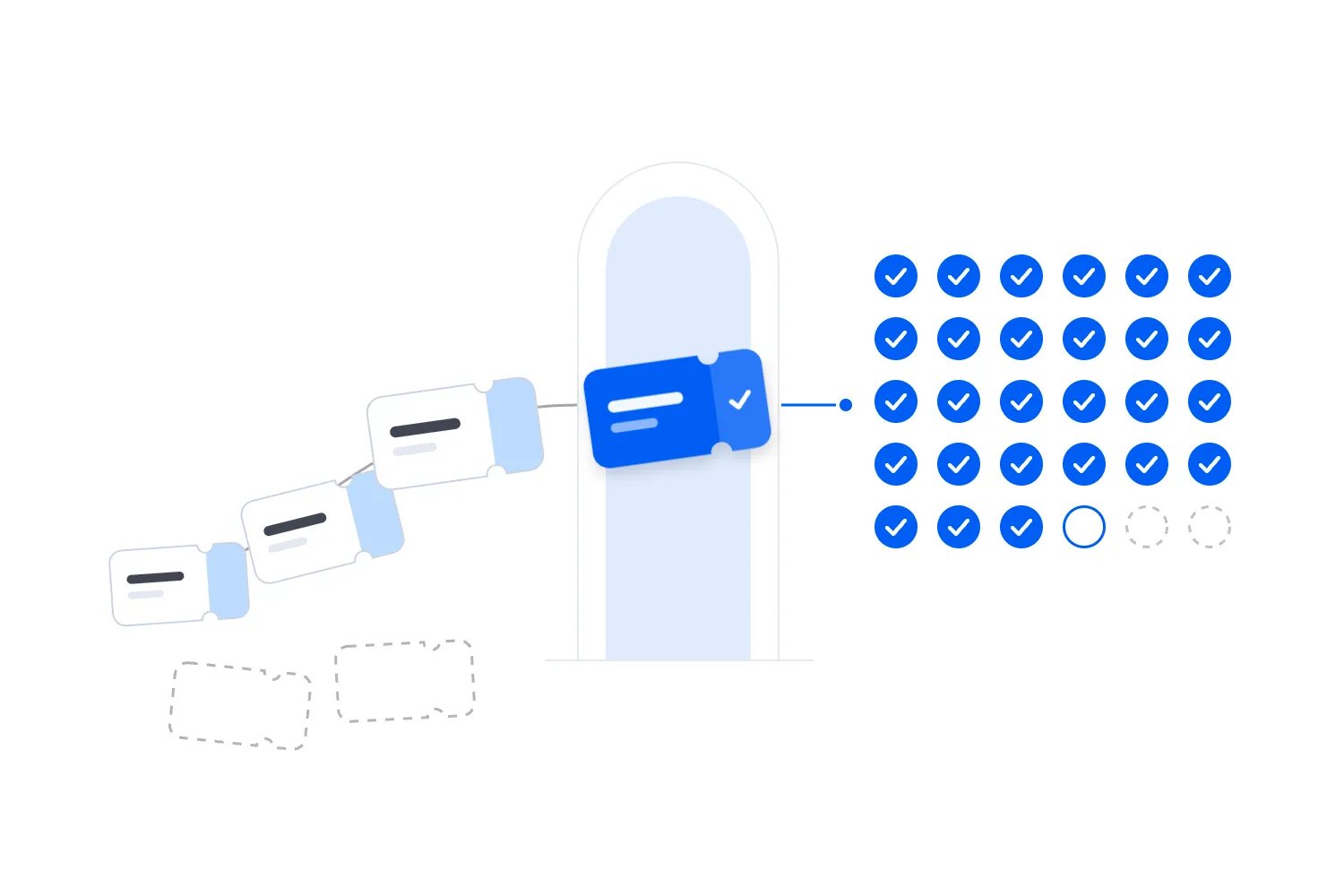
By the afternoon, 240 different attendees have entered. Of those, 60 have left through the controlled exit. Thirty of those 60 have since returned. There have therefore been 270 entry movements, 60 exit movements and 210 attendees currently inside. Unique attendance remains 240. Another return would increase entry movements and occupancy by one, while unique attendance would stay the same.
Notice what the numbers don't prove. They don't show that the other 30 people outside have surrendered their admission. They don't show that all 60 tickets not yet used will remain unused. If all 300 admissions remain valid for the day, the 90 attendee spaces currently empty aren't 90 new tickets you can safely sell. Some belong to people outside and some to buyers who haven't arrived.
For a straightforward day pass, protect those existing admissions throughout the promised period. If you want session-specific sales, build that into the original ticket model with controlled session boundaries and clear entitlements. Our guide to ticket management explains how ticket types and shared limits fit together; the additional re-entry job is keeping a temporary absence from becoming an accidental extra sale.
Your door dashboard may show "checked in" without showing current occupancy. It might count first admissions only, or display all accepted scans. Ask what the number means and test it. A label that looks self-explanatory can create a serious misunderstanding when a supervisor uses it to authorise more admissions.
The Health and Safety Executive in Great Britain recommends monitoring crowd numbers and their distribution. Entry and exit counts help estimate occupancy, while staff observation helps identify conditions the total misses. A room can have space overall while a particular staircase or popular area is crowded. Keep those two checks connected.
Choose credentials that answer the question at your door
The first question on a return is whether the person has a current right to enter. The next is whether they're the person entitled to use it. A visible wristband may help with recognition. A ticket record may establish the admission type and its status. An occupancy system establishes whether entry can proceed under the current operating conditions. Don't expect one check to do all of those jobs.
When a scan-out and return process makes sense
A digital process can be useful when it records that a specific ticket left and then accepts an authorised return. Before relying on it, test the actual software and settings. Does scanning at the exit change the ticket's state? Can every authorised entrance see that change? What happens if two devices are disconnected? How does a group order work when only one person leaves?
The sequence should preserve the original admission history. Repeatedly resetting a ticket to unused can erase the distinction between an attendee's return and their first arrival, depending on the system. It may also make a shared copy appear usable again. Use a provider's documented return process where available rather than asking every door worker to invent an override.
Keep security screening as a separate decision. A ticket that is allowed to return doesn't establish what the person has brought back from outside. Agree the screening arrangements with the venue and security lead. Tell attendees what to expect so somebody doesn't leave with the assumption that a wristband gives them a shortcut past the normal return checks.
When wristbands are useful
A securely fitted, single-use wristband can make it easier to recognise someone who has completed first admission. The details matter. Staff need to know the valid design for that event and day, how it should fit, and what a damaged or removed band looks like. A generic colour used at several events is a weak basis for a return decision.
Fit bands as part of the controlled first-entry process rather than handing loose bands to a group organiser. Secure unused stock and record who can issue replacements. If someone can carry an unused band outside and give it to a friend, your return lane has become a second admission route with no corresponding ticket sale.
A wristband does not count departures by itself. You still need an agreed way to record movements and monitor the occupied area. It also doesn't automatically establish age, access to a premium area or identity. Only treat it as evidence for the permissions your procedure actually checked when issuing it.
Provide an alternative for someone who cannot wear the standard band. Decide it before opening and explain it privately to the relevant staff. The alternative must let the attendee use their admission without exposing personal information to the queue. A supervisor-controlled credential check may be appropriate, depending on the event and the person's needs.
When a combined check is worth the work
Some events may choose a digital record plus a physical credential. That can be sensible where a day pass has repeated returns and several access areas. It also creates more work at first admission and more ways for records to disagree. Test whether the extra check solves a real problem before adding it.
At a small event with one controlled return point, a simple, supervised arrangement may be easier to run consistently. At a large site with several gates, disconnected handwritten notes can quickly become unreliable. Choose around the number of movements, the consequences of an error and the people available to run the process. There is no universal attendance threshold at which a wristband or scan-out system becomes the correct answer.
Design the return route around the people using it
Stand outside the intended return entrance when the surrounding area is busy. Can somebody find it without walking against a departing crowd? Is the approach accessible? Where will a queue form if returning attendees arrive at the same time as first-time buyers? What happens when it rains and people stop under the nearest covered doorway?
Returning attendees may arrive in a short burst after a break. That demand can overlap with late first arrivals or people buying at the door. A separate sign can help people choose the right queue, but it doesn't create processing capacity. The return point needs staff who can verify permission, carry out the agreed checks and contact someone when an exception occurs.
HSE's guidance on entrances, exits and crowd controls says queues should not block emergency access routes, and security checks should not create overcrowding risks. Apply that to the return route as well as the main entrance. A carefully controlled scanner position still fails if the waiting line blocks a safe exit.
There is a useful reason to give this attention before complaints arrive. In Loopyah's Event Attendee Insights Report, 500 US respondents surveyed through Pollfish on 11 November 2025 could select up to three event frustrations. Overcrowding was selected by 62.6%, and long lines or waiting times by 57%. These are general event experiences, not findings about re-entry lanes.
| Label | Respondents % |
|---|---|
| Overcrowding | 62.6 |
| Long lines / waiting | 57 |
| Expensive food / drinks | 55.8 |
| Poor sound / visibility | 36.8 |
| Safety concerns | 14 |
| Unclear information | 11 |
Source: Loopyah Event Attendee Insights Report, question 16, Pollfish survey of 500 US respondents, 11 November 2025. Unweighted respondent percentages; each person could choose up to three answers, so the figures do not total 100%. Labels shorten the original answer wording. The survey doesn't show that permitting re-entry reduces queues or overcrowding.
The practical question is whether your design avoids creating another predictable wait. Keep routine returns moving, with a suitable place for a supervisor to investigate exceptions without exposing somebody's order details to the line. That place must also be safe and accessible. "Step aside" isn't enough if the only available space is a vehicle route.
Treat a smoking area carefully. If it remains within your controlled event boundary, decide how access and occupancy are tracked without pretending every visit is a full event departure. If it is outside that boundary, apply the return procedure. The venue's licensing, fire and security arrangements determine what is possible; a rope and a sign don't establish that the area is suitable.
For staffing, build on your own timed rehearsal and arrival pattern. Our guide to planning check-in staff and lanes explains how to consider demand and processing work. Add the expected return workload to that plan. Don't reuse the first-entry staffing number and assume returns are free because those people already paid.
Write the policy before the first buyer needs it
Put the main rule where someone chooses their ticket. Repeat the practical details in the confirmation and pre-event information, then place clear signs before the exit decision. Someone should know how returning works while they can still speak to staff inside, rather than discovering a missing wristband after they've reached their car.
You don't need a page of threatening terms. You need enough information to prevent a predictable mistake. State which tickets allow return, whether the permission is for the same day only, the designated exit and return point, the final return time, the credential required and the help route. Mention any repeat screening that forms part of the procedure.
Here's a fictional example for an event that has tested the arrangement: "Your day ticket allows same-day re-entry until 8:30 pm through Gate B. Before leaving, visit the Gate B exit team so they can record your departure and check your fitted wristband. Keep your wristband on and your ticket available. Return checks still apply. If you need an alternative to the wristband, speak to the access team before leaving."
That wording is only suitable if you can deliver every part of it. If your system doesn't record departures, don't copy the scan-out instruction. If another gate handles accessible returns, describe the actual route and make sure the relevant staff remain there throughout the return period. Use a specific local time and the event date when an overnight programme could make the deadline ambiguous.
Now consider a single-entry event. You might explain: "Tickets are single entry. If you leave the ticketed area, routine return is not available. Please speak to the door supervisor before leaving if you need an access arrangement or help with an unexpected situation." This is a starting point for your own reviewed terms, not a way to avoid obligations or deny appropriate adjustments.
Keep a distinction between ordinary departures and emergency instructions. A no-re-entry statement must never encourage people to remain somewhere unsafe because they fear losing their ticket. In emergency communications, the priority is the event's safety procedure. Later readmission follows the authorised recovery plan, not a casual interpretation of the everyday ticket rule.
Staff need a more detailed version than attendees. Name who can approve an exception, what evidence they should check, how it is recorded and who changes the occupancy record. Give the team the same version number and time of issue. If the venue changes the gate before opening, update the public information and staff briefing together.
Plan exceptions without turning them into arguments
Most return problems will not fit a clean scanner demonstration. Somebody's phone is flat. A band has torn. A person needs to leave quickly to care for a child. Another attendee has a permission that the latest relief worker hasn't seen. If every problem depends on finding you personally, the operating plan isn't finished.
Give the door team a named supervisor and a way to reach them. The worker should be able to explain what they can check themselves and what needs approval. That protects attendees from arbitrary decisions and protects staff from pressure to make a judgement they weren't trained or authorised to make.
For a flat phone, check what alternative evidence your ticket process accepts. A supervisor might retrieve the current ticket record using booking details, then confirm the return permission and update the movement count. An order email on its own may not identify which of several tickets belongs to the returning person. Resolve that individual admission rather than admitting the whole order again.
For a damaged wristband, use a replacement process that accounts for the old credential. Verify the underlying admission, record the reason and issue the authorised replacement. If the old band can still be used, deal with that risk within the procedure. Staff shouldn't hand over spare bands merely because the person can quote the event name or point to a friend inside.
Where a person needs a disability-related arrangement, ask what would let them use the event rather than requiring them to explain medical details in public. The US Department of Justice explains that covered public-facing businesses must make reasonable modifications to policies and procedures when needed for access, subject to the applicable limits. That's US guidance; check the duties where your event takes place. Plan with the attendee and your access lead rather than treating every departure as a rule-breaking problem.
An appropriate arrangement may involve a companion, an alternative credential or a return route that avoids an inaccessible queue. It still needs to be communicated to the staff who carry it out. Record the operational permission in a way they can understand without copying somebody's diagnosis into the door log. Our event accessibility checklist can help you consider the wider journey.
Refused or withdrawn admission needs its own procedure. If a supervisor has removed somebody's permission to attend, a retained wristband doesn't restore it. Agree how authorised staff see that decision and what they do when the person returns. Keep the response within your security team's responsibilities and the event's welfare arrangements. Don't instruct a ticket checker to manage a confrontation alone.
The most useful rehearsal includes one legitimate exception and one attempted misuse. Ask staff to explain the difference using the records and permissions they have, without guessing someone's intent from their appearance. Then fix the missing instruction. A friendly team with a clear process is much easier to trust than a team that alternates between waving everybody through and refusing every unusual request.
Protect the places you've already promised
Let's return to the fictional 300-attendee event. There are 210 attendees inside, 30 temporarily outside and 60 valid admissions not yet used. Together, those groups account for all 300 places. If you sell another 30 unrestricted day tickets because the room looks quiet, you now have 330 people entitled to use a 300-attendee allocation.
They don't have to arrive at exactly the same second for this to become a problem. A popular final session can bring returning attendees and late arrivals together. You would then have to refuse or delay people whose existing tickets still give them a right to attend. The extra sales have created an obligation the original capacity plan didn't support.
A useful sales instruction is therefore to separate physical space from unsold admission inventory. The number inside can fall without any new ticket becoming available. Door staff should not release inventory from an occupancy counter. The person responsible for sales needs to know which admissions remain valid and what the event has actually promised those buyers.
If your event sells separate time slots, the calculation may be different. A morning ticket can expire at the end of its defined period if the published model and actual clearance process support it. But you need to verify that the morning audience has left the relevant area before admitting the next group. A wristband colour change doesn't physically clear a room.
Be equally careful with restricted areas. Permission to return to the overall festival doesn't establish that a person can re-enter a full workshop, a reserved seating section or a separately controlled lounge. Each area needs its own appropriate access and occupancy arrangements. Explain which limits relate to the whole event and which apply to an individual session.
The financial temptation is easy to see. Suppose the fictional event retains $40 from a new ticket after transaction costs and taxes, with $5 in additional attendee costs. Thirty extra sales appear to contribute $1,050 before any other costs. That's 30 multiplied by the $35 remaining per ticket. These are invented USD assumptions, not Loopyah fees or an industry benchmark.
That $1,050 isn't a justification for overselling. It assumes those admissions can be delivered. If they can't, the operator still faces the cost of resolving the failure, alongside the safety and customer consequences. Build a legitimate session model or retain the original inventory limit; don't put an unsupported extra-sales figure into the expected profit column.
You can improve commercial performance without selling the same promised place twice. Clear return information may reduce support work, a properly costed route may avoid unnecessary overtime, and a useful onsite offer can serve attendees who stay. Treat those as things to measure at your event. None is a guaranteed saving that you should book before you have evidence.
Test devices, handovers and connection failure
Before opening, run a complete journey with the actual devices, accounts and staff permissions. Use test tickets or another controlled method that cannot create unintended live admissions. Start with first entry, record the departure, return through another authorised gate and check what each worker can see. Then try the same credential again while the test attendee is still marked inside.
Check a group order one ticket at a time. One person returning shouldn't change the status of everyone on the booking. Test a ticket that has been refunded or otherwise invalidated using the provider's supported method. The question is whether the correct current admission can be used, not whether a barcode can be recognised by a camera.
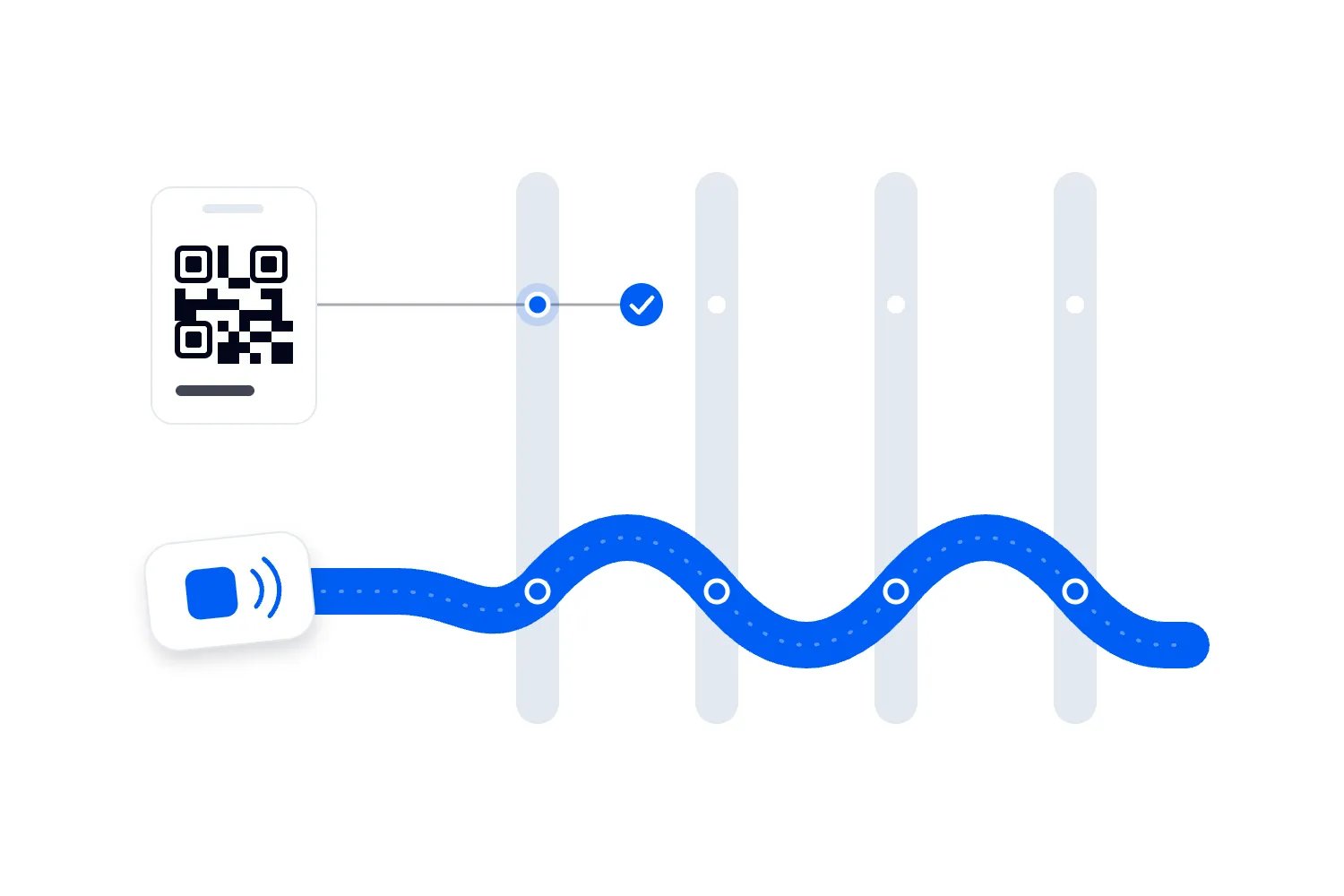
Loopyah's ticketing and door tools let organisers give door staff check-in access and scan QR tickets from their phones. That handles a verified first-entry job. Before choosing a digital re-entry procedure, confirm its specific scan-out, return and multi-device behaviour with the provider. Don't infer those capabilities from the existence of QR check-in, and don't design a policy around an unverified setting.
Connection loss needs a tested fallback. Find out whether the system supports any offline operation, which information remains available and how devices reconcile changes afterwards. Two devices accepting the same ticket without sharing current state can produce conflicting decisions. A cached attendee list isn't automatically a reliable record of who is currently outside.
Your fallback might narrow routine returns to one supervised point, supported by a controlled movement record, if the venue and security plan permit it. Or you may need to pause admissions while restoring a reliable count and current permissions. Choose that response in advance with the responsible people. Never change to "just show your wristband" if that removes a check your policy depended on.
Keep people informed while the supervisor resolves the issue. Tell them what is happening, where to wait safely and who is helping. A queue can become a separate problem while staff concentrate on the devices. Assign someone to watch the approach and maintain communication with event control rather than letting every worker gather around the failed scanner.
A shift handover is another point where a good system can fail. The outgoing lead should confirm the current policy, count, unresolved exceptions, any failed device and any temporary routing change. The incoming lead should repeat back what they understand. Use our event team briefing template to organise responsibilities, then add the specific return rules for your event.
Don't run the process entirely through private messages on somebody's phone. The next supervisor needs access to the current authorised instructions and the relevant records. If an exceptional permission has been approved, make it discoverable through the agreed process without making personal details visible to everyone who happens to work near the entrance.
Rehearse the decisions that a busy door makes difficult
Give the team a short set of test situations and ask them to demonstrate the action, including the count change. Reading the policy aloud is useful, but watching someone use it reveals where the instruction depends on information they don't have. Use fictional booking details and keep the exercise separate from live customer records.
First, an attendee leaves correctly and returns through the designated gate. Staff should find the valid permission, complete the return checks and record one inward movement. They should not create a new ticket sale or a second unique attendee. Ask the supervisor to show where that distinction appears in the final report, not just on the screen at the gate.
Next, somebody presents the same ticket while its holder is already inside. A successful barcode read doesn't settle that case. The worker should follow the duplicate or disputed-credential procedure and involve the supervisor where required. They shouldn't reset the admission merely to clear the message. Check that investigating the problem doesn't leave the normal return point unattended.
Then, an attendee says they left through a different door and missed the departure check. The record now conflicts with their account. Decide how a supervisor investigates and corrects a genuine missed movement without inventing a departure for every person who requests one. Record the reason for a correction so the next shift can understand why the total changed. Treat the correction as a documented decision, not an invisible edit.
Try a group booking with four tickets where one attendee goes outside. The team should be able to identify that individual's admission and leave the other three records alone. If everyone relies on the purchaser's phone, agree how an individual can return when the purchaser stays inside. Discovering that problem at the first exit gives you fewer options than finding it during preparation.
Finally, the return deadline arrives while people are already waiting in the authorised queue. Decide before the event how your published cutoff applies to that situation and make the decision clear to staff. A person who joined the correct queue on time should not receive a different answer simply because another worker interprets the deadline differently. Allow for disability-related arrangements and problems caused by your own operation when reviewing the rule.
Have a person unfamiliar with the plan attempt the journey after the briefing. Ask them to find the exit check and return gate using only the attendee information. If they head to the wrong place, improve the sign or instruction. Repeating the same wording more loudly won't fix a route that is hard to understand.
Decide what happens across different event days
A weekend pass needs a day boundary as well as a return rule. Someone arriving on Sunday after attending on Saturday is using a valid second day, if that's what their pass includes. That isn't necessarily the same process as leaving and returning on Saturday afternoon. Test both rather than asking staff to treat every previously scanned ticket as an ordinary return.
Agree how the credential identifies the current day and which records reset, if any. A Saturday-only ticket must not gain Sunday access because its wristband still looks intact. Equally, a weekend buyer should not lose a promised day because the first day's check-in remains visible. Where the system supplies a documented multi-day process, use it and confirm the permissions on the actual event configuration.
Explain overnight arrangements separately if people stay on site. Crossing between a campsite and the performance area may involve different boundaries, credentials and counts from leaving the whole event. Keep the instruction specific to the boundary being crossed. The person at that point needs to know which permission to check and which area their count describes.
Cost the return service and keep useful records
Re-entry is part of delivering the ticket you've sold, so include its costs before deciding the final event budget. Count the additional staffing hours, credential stock, supervisor cover and any equipment or connectivity required. If a worker is already paid for the shift, identify whether the return duty displaces another necessary job. An existing person isn't spare capacity simply because their wage is already in the budget.
Here's a fictional USD example. Two additional return workers for six paid hours each, at a fully costed $25 per hour, cost $300. Five hundred bands at $0.20 each add $100. Two extra hours of supervisor time at $35 per hour add $70. The total is $470. Include any further local employment costs, setup time or supplier minimums that those assumed rates leave out.
That calculation doesn't establish that every event needs those people or bands. It shows what to ask your own team and suppliers. If you issue bands only to attendees who leave, the volume and staffing work may differ. If fitting bands happens at first admission, it adds work there even if most attendees never go outside. Cost the arrangement you're actually running.
You can compare that expense with a credible alternative, such as providing suitable facilities inside the controlled boundary, but don't price access needs as optional extras. A cheaper operating choice still has to meet your obligations and deliver the advertised event. Nor should you assume that keeping people inside will automatically produce enough food or drink margin to offset the restriction.
Keep the event log useful and proportionate. For an exception, staff may need a ticket reference, time, gate, reason category, authorising person and the action taken. They rarely need a full account of someone's private circumstances. Restrict access to the people who need it, state the purpose and set a suitable retention period with your data responsibilities in mind.
The UK's Information Commissioner's Office describes data minimisation as keeping personal data adequate, relevant and limited to what is necessary. Its guidance is currently under review following changes in UK law. Use the principle to question unnecessary door notes, then verify the requirements applicable to your event. A capacity count generally doesn't need a list of medical explanations beside it.
After the event, compare unique attendance, accepted entry movements, recorded exits and any count corrections. If they disagree, investigate the boundary, device behaviour and handovers before blaming the audience. Our guide to reconciling ticket sales and actual attendance develops that wider reporting job. Keep a returning attendee out of the new-customer total and out of any claim about additional ticket revenue.
Keep emergency return separate from ordinary re-entry
An evacuation or other safety incident changes the situation. Routine return permission doesn't authorise anyone to go back into an affected area. Staff should follow the event's emergency plan and the responsible incident lead's instructions, including coordination with emergency services where relevant. Don't ask an attendee to complete a normal scan-out before moving away from danger.
HSE's guidance on planning for incidents and emergencies covers proportionate plans, clear responsibilities, communication and testing. Agree your recovery procedure with the venue and relevant specialists before opening. It needs to explain who can authorise reopening, how that decision reaches every gate and what attendees will be told while they wait.
Your occupancy records may need to be re-established after an incident. Someone may have used an emergency exit that bypasses the routine counter, or left the site altogether. Work out a controlled recovery process rather than assuming the pre-incident number still describes the building. A normal wristband can help recognise an attendee, but it isn't an instruction that the affected space is safe to reopen.
Before your next event goes on sale, take the proposed policy to the venue and door leads and walk one attendee through it. Let that person arrive, leave for a legitimate reason and return with an ordinary complication, such as a flat phone. Ask the team to show how they confirm permission, maintain the count and preserve the admission already sold. Finish that rehearsal with a written answer and named responsibilities, then publish the policy you have proved you can run.

Author: By the Loopyah Content Team
The Loopyah Content Team shares expert insights, practical guides, and industry updates to help event organizers create unforgettable experiences and stay ahead in the event planning world.