· 21 min read
How to reconcile tickets sold, check-ins and actual attendance
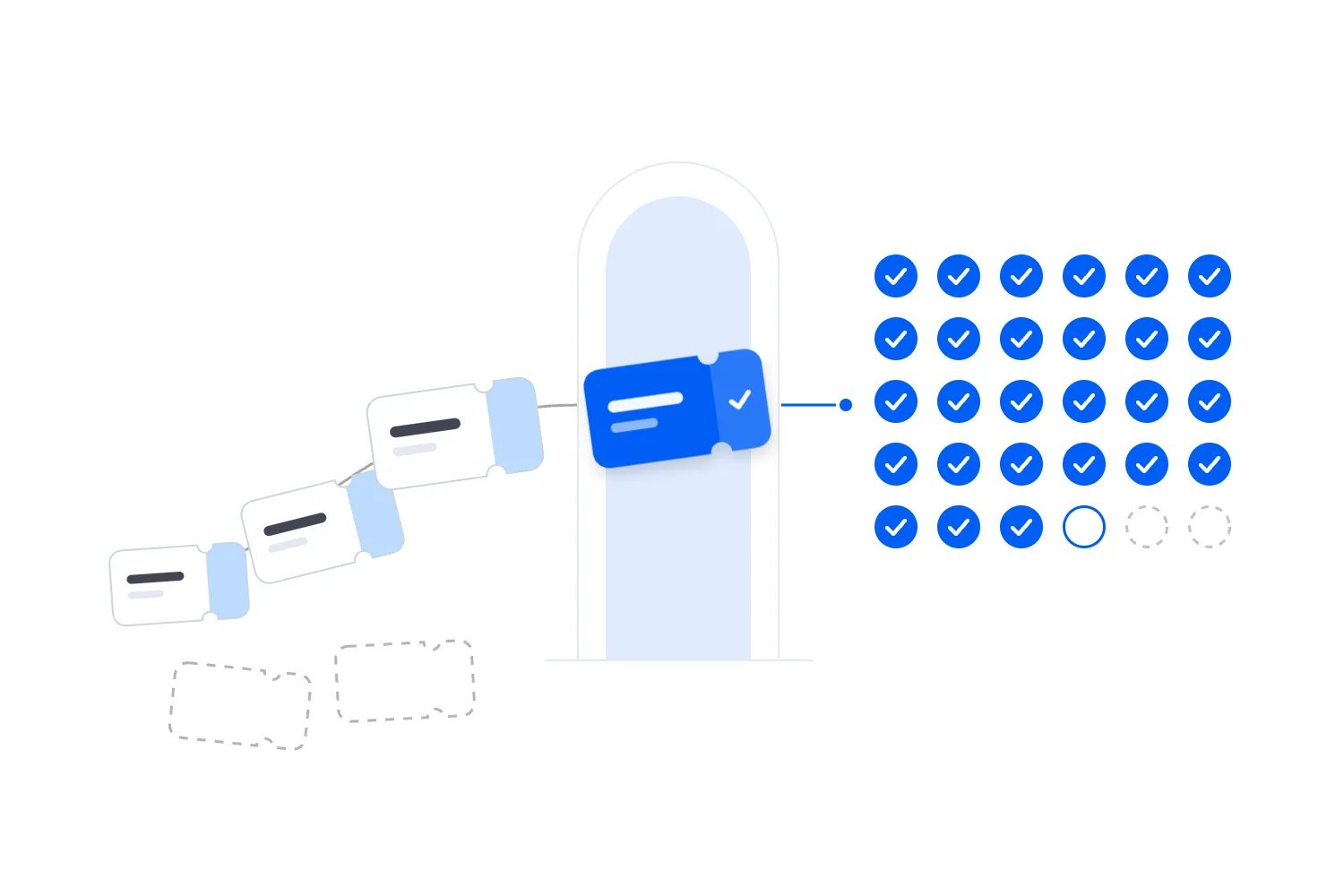
Your ticket report says one number. The door manager has another. Someone counted the room and insists both are wrong. Before you decide which figure to put in the event report, check what each person actually counted. Tickets purchased, accepted admissions and people inside at a particular moment can all produce different totals without anyone making a mistake.
To reconcile tickets sold, check-ins and actual attendance, agree on the audience and period first, then explain every adjustment between the ticket records and the admission records. Keep unresolved cases visible. Your final attendance figure should describe the people whose entry you can support with evidence, while your sales report continues to explain the tickets and money.
This matters when you review a paid event. An unexplained gap can distort your no-show rate, the audience figure you give a sponsor or the catering order for the next date. You don't fix it by choosing the largest number or forcing the totals to match. You fix it by finding what happened at the door and recording what you can establish.
Decide what your attendance figure means
Start with the question the report needs to answer. How many paying admissions were used? How many audience members came through the doors? How many people were inside during the headline performance? These are useful questions, but each needs a different count. A single figure labelled attendance leaves too much for the reader to guess.
For a single performance, a workable audience measure is one recorded first admission per valid audience entitlement, including supported manual admissions. Keep paid tickets and complimentary tickets separate before combining them. Staff, performers and suppliers belong in the appropriate operational count, even when their credentials look similar to audience tickets. They shouldn't increase the number you describe as paying attendees.
This approach assumes an admission entitlement corresponds to one audience member. A family ticket, a table booking or a group credential may cover several people. Check that relationship before counting rows. If your records support admissions but don't establish distinct identities across multiple tickets, call the result recorded audience admissions. Don't claim you have identified every unique person.
A door scan is an event in the system. It might represent successful first entry, a rejected duplicate, an exit or a later return. Find out which activities the report includes. Counting every scan attempt as another attendee can inflate your total even when the door team correctly prevented somebody using the same ticket twice.
Preserve the evidence before changing the report
The first thing you want to do is save the reports that produced the disagreement. Keep the ticket list, check-in activity, manual admission notes and any separate door tally. Record the event, performance, export time and reporting cutoff. Use the existing reports your systems provide rather than asking somebody to recreate every transaction in a new spreadsheet.
Ask the door lead about exceptions while the shift is still fresh. Which entrance had a device problem? Were any names checked on paper? Did somebody admit a group together? A short explanation tied to a time and entrance is more useful than a later recollection that the scanner was unreliable. Preserve the original note before interpreting it.
Choose one reporting time zone and keep the original timestamps available. A show that finishes after midnight can otherwise lose late admissions when somebody filters the report to the previous calendar day. The RFC 3339 timestamp specification describes timestamps with their relationship to UTC. For your reconciliation, the practical requirement is knowing which local event time each recorded activity represents.
Don't change the original ticket status simply to make a historical report balance. A later refund, correction or transfer may have changed the current record. You need to establish the relevant position at entry and explain subsequent changes separately. Keep the evidence that supports the report and restrict access to colleagues who need it for the investigation.
Establish the tickets that could legitimately be used
Begin with paid tickets issued for the intended performance. Count ticket quantities, not orders. One person buying four tickets creates one order and potentially four admissions. Add eligible walk-up sales recorded through the sales process. Exclude failed payment attempts and abandoned checkouts because they don't establish completed purchases or valid access.
Next, identify tickets cancelled before entry. Use the ticket history and cancellation reason where available. A payment refund and a cancelled admission are related decisions, but they aren't interchangeable facts. Someone may receive a partial refund and still attend. Someone may attend and receive a refund afterwards because the event didn't deliver what was promised.
Stripe's refund documentation distinguishes full and partial refunds and describes refunds that remain pending or fail. Use the actual payment state when checking money. For attendance, check whether the admission remained valid and whether entry occurred. A refund request alone doesn't tell you either of those things, and a later completed refund doesn't undo an earlier arrival.
Keep complimentary audience tickets in their own group. An unused sponsor allocation, a guest who collected a ticket and a staff pass may all have a zero price, but their meanings differ. Where a sponsor holds an allocation without individual tickets being issued, don't describe the whole allocation as people who were expected or recorded at the door.
Follow transfers and replacements without creating extra attendees
A transferred ticket can leave several records behind. There may be an original purchaser, a former holder, a new holder and a replacement code. Trace the valid admission entitlement through those changes. The replacement shouldn't become an additional sale or admission simply because it has a new reference. Preserve the relationship with the original ticket wherever the source supplies it.
The same applies when support replaces a damaged or inaccessible credential. Ask whether the old credential stopped working and which one recorded admission. If both show successful entry, investigate the circumstances before merging them. They might describe one person helped through the door, or they might reveal that two people entered against an entitlement intended for one.
Don't use matching names or email addresses as your only evidence. A buyer can purchase for friends, and two people can share contact details. A spelling correction can also make one holder look like two people. Start with ticket, order and replacement references, then use personal details only when the specific case requires them.
If the relationship is missing, record the case as unresolved and ask the person responsible for ticket support to check it. Choosing a likely match can make your total look neat while assigning attendance to the wrong customer. That error becomes harder to notice once someone uses the result to target follow-up messages or assess repeat attendance.
Separate first admissions from repeat activity
Once the eligible ticket population is clear, examine the check-in records. Count the first accepted audience admission for each entitlement within the agreed performance window. Retain later activity for the investigation. Don't delete repeat attempts from the underlying history just because you exclude them from the attendance total. They can explain complaints and access problems.
Look at the result of each activity. A duplicate warning tells you the ticket had already been used according to the system; it doesn't establish that another person entered. A failed scan may reflect an unreadable screen, an invalid ticket or a device problem. It needs the operational outcome before it belongs in an accepted admission count.
Re-entry deserves its own rule. If a valid attendee leaves and returns, the return can be a legitimate entry movement while adding nothing to the number of audience members who attended. Keep the first admission and the later return distinguishable. Otherwise an event allowing people outside will appear to attract a larger audience than one that doesn't.
For a weekend event, report attendance at the appropriate level. One pass used on both days can mean one pass holder attending the weekend and one admission on each day. Adding the daily counts answers how many daily admissions occurred. It doesn't establish the number of distinct weekend attendees. Session counts require the same care when people visit several rooms.
Handle group admission without losing the people count
A group arriving together can create a problem when one code represents several people. Ask how many people the door admitted against that entitlement. A successful scan of a table booking doesn't establish that every seat was occupied. Counting the scan as one person can understate attendance when the whole table entered. Use the recorded party size where the admission process captures it.
If the group arrives in parts, check that later arrivals used the remaining allowance rather than creating another group admission. The relevant evidence may be a remaining admission balance or an authorised note against the booking. Confirm the method with the door lead before interpreting repeated activity. Several accepted actions against one group credential can be legitimate while still needing careful counting.
For the report, preserve the distinction between the purchased group item and the people admitted against it. If the historical record only shows that the credential was used, say that the booking recorded attendance while the individual headcount is unconfirmed. Keep that limitation separate from the confirmed individual admissions. For the next event, agree how partial group arrivals will be recorded before doors open, then test whether the report retains the information your team needs. This is particularly useful when the same booking includes a host, guests and an allocation that was never fully taken up. The report should describe the arrival evidence rather than assume every allocated place became an attendee.
Resolve manual admissions with the person who authorised them
Manual entry is where an apparently strong scan report can miss genuine attendance. A guest may have been found on a paper list or admitted after a phone battery died. Ask for the ticket reference or enough information to find the entitlement, the entry time, the entrance and the staff member who approved admission.
Check whether that admission later appeared in the digital report. Some teams record the exception during the rush and update the system afterwards. Adding the paper entry to the updated digital count would count the same admission twice. Match the note to the admission first, then include it as a separate correction only when it isn't already represented.
A manual tally without ticket references can still provide useful evidence about the operation, but it supports a different conclusion. It may tell you a gate admitted a recorded number of people during a device outage. It may not tell you which tickets were used, whether the tally included returns or how it divided between paid guests and comps.
Be explicit about that limitation. You might report confirmed ticket-linked admissions alongside additional unlinked manual entries under investigation. Don't distribute those entries across ticket types in proportion to sales because that seems reasonable. An estimate can help plan a follow-up investigation, but it shouldn't quietly become a statement about named attendees or their purchase history.
Work through one complete reconciliation
Here's a hypothetical evening show so you can see how the numbers connect. These figures are invented for the calculation, not industry benchmarks or a customer result. The operator records 500 paid tickets sold across advance and walk-up sales. Before entry, 20 tickets are fully refunded and cancelled. That leaves 480 valid paid admissions for this performance.
The show also issues 30 complimentary audience tickets. Staff and performers use a separate access process and aren't included in these audience totals. There are therefore 510 valid audience entitlements across paid and complimentary tickets. The 500 originally sold remains a useful gross sales count, but it isn't the denominator for this show's valid paid ticket attendance rate.
The scan activity report contains 460 rows. Examination shows 440 accepted first admissions, 12 rejected duplicate attempts and eight accepted returns. The audience count supported by that report is 440 first admissions. The other 20 rows explain door activity. They don't establish 20 additional audience members, so the report keeps them out of the first admission total.
Of the 440 accepted first admissions, 418 relate to paid tickets and 22 to complimentary tickets. The door lead also provides notes for 15 manual audience entries. Ten of those tickets already have first admissions in the updated scan report. The remaining five are supported entries absent from that report, all against valid paid tickets.
The reconciled result is 423 recorded paid admissions and 22 recorded complimentary admissions, making 445 recorded audience admissions. There are 57 valid paid tickets and eight valid complimentary tickets without a recorded admission. Together those 65 unused or unrecorded entitlements account for the difference between 510 valid audience entitlements and 445 recorded admissions.
The paid ticket attendance rate is 423 divided by 480, or approximately 88.1%. The recorded attendance rate across paid and complimentary audience tickets is 445 divided by 510, approximately 87.3%. Both calculations are legitimate because their populations match. Neither measures the proportion of the original 500 paid sales represented by everybody who entered.
| Label | Recorded admission | No recorded admission |
|---|---|---|
| Paid tickets (423 of 480 admitted) | 423 | 57 |
| All audience tickets (445 of 510 admitted) | 445 | 65 |
Before calling the remaining 65 people no-shows, check whether the admission process covered every audience entrance and whether the door team has unresolved exceptions. If the records are complete, you can report tickets with no recorded admission under your stated rule. You still haven't learned why those holders didn't attend. That takes separate evidence.
Suppose the venue's final door tally is 448 audience entries. The difference from the reconciled 445 admissions is three. Keep that discrepancy open until the venue confirms whether its tally included returns, late manual entries or another category. The reconciliation remains useful while those three are unresolved, provided the report states exactly which total is confirmed and which is provisional.
Check what the missing scans can actually tell you
A missing scan is a useful starting point for investigation, but a poor explanation on its own. Ask whether the same ticket group, entrance or arrival period accounts for most of the gap. If every unexplained ticket belongs to one entrance during a device outage, the immediate concern is recording coverage. A general campaign asking why people stayed home would start from an unsupported assumption.
If the admission process is complete and the unused tickets are spread across the audience, consider a short follow-up that lets the holder explain. Keep the language neutral. Ask whether they attended and, if they didn't, what prevented them. Don't tell someone they missed the event when your own investigation still includes possible unrecorded entry. Their reply can identify a case to check, rather than automatically rewriting the count.
Use the result to choose a specific improvement. Confusion about location calls for clearer arrival information. A last-minute programme change requires reviewing what buyers were told and when. A holder who gave the ticket to a friend raises a transfer or identity question. These explanations can coexist, so avoid turning a small set of responses into one claim about the whole audience.
Use the room count to investigate, not overwrite
Someone who counted 390 people during the final performance hasn't disproved 445 recorded admissions over the evening. Some attendees may have left, moved elsewhere or arrived after the count. Establish the time, area and method before comparing that observation with the door report. A cumulative audience total and a momentary room count describe different things.
The UK's Health and Safety Executive explains that entry and exit counting systems can help estimate numbers inside a venue. It also calls for monitoring crowd distribution. That distinction matters operationally. A daily attendance total cannot tell the safety lead how many people currently occupy a particular room or where local crowding is developing.
Use the venue's agreed safety arrangements for live occupancy. The people who count toward that limit may include staff, performers and suppliers as well as the audience. After the event, compare the relevant records with their definitions attached. Don't remove operational personnel from a safety count merely to make it resemble your paid audience attendance figure.
If the room observation suggests a major unexplained difference, ask when the gap developed. Was one entrance operating without the agreed recording process? Did attendees leave early after a delay? Those possibilities lead to different follow-up work. A room estimate can direct the investigation, but it shouldn't replace individual admission evidence without a reason you can explain.
Keep financial reconciliation beside attendance reconciliation
Attendance helps explain delivery and audience behaviour. It doesn't establish the final money retained. A paying attendee can receive a later refund, and a ticket holder who stayed home may still have a valid completed purchase. Keep the money report tied to payments, refunds, fees and other relevant adjustments, rather than calculating it by multiplying attendance by the advertised price.
For our hypothetical show, suppose all 500 paid tickets cost $40 before any fees or taxes, and the 20 cancelled tickets receive full $40 refunds. Ticket charges after those refunds are $19,200. That calculation doesn't change because 423 paid admissions were recorded. Other refunds, discounts or deductions would need their own financial treatment rather than an attendance adjustment.
A bank deposit can still differ from that ticket charge total. Stripe's payout reconciliation report helps match transactions included in an automatic payout with the bank deposit. Use payment records to explain those differences. Don't alter attendance to force a relationship with cash received, especially when a payout contains activity beyond the single event you are reviewing.
Bring both reports into the event review. If ticket income looks healthy but recorded attendance is lower than expected, investigate the audience experience and unused tickets. If attendance is healthy but retained income disappoints, examine ticket mix, refunds and costs. Our guide to event KPIs and metrics places those measures within the wider commercial review.
Investigate discrepancies without assuming misconduct
An unexplained admission can be a process error, a reporting delay or an unauthorised entry. Find the evidence before assigning a cause. Start with the smallest useful question, such as why one entrance's manual notes contain tickets absent from the digital report. Ask the responsible colleague to explain what happened and preserve the answer with the affected records.
Prioritise issues by what they could change. A possible duplicate admission may require a door control review. An unexplained block of entries could affect the sponsor audience report. A missing timestamp may prevent you measuring arrival patterns while leaving total attendance supported. The investigation should reflect those consequences, rather than treating every discrepancy as the same kind of emergency.
Give each unresolved issue a reference, a short description, the affected count, an owner and a next check date. Add the source that would resolve it, such as the venue tally breakdown or a recovered device report. This can be a short exception list within your existing reporting process. You don't need a second database for every ticket.
When a correction arrives, show what changed and why. The ICO's guidance on accuracy of personal data stresses clarity about sources and status, including identifying mistakes as mistakes. For your attendance report, retain enough correction history to explain the result without circulating unnecessary personal information to everybody attending the commercial review.
Decide which source answers the disputed question
When two sources disagree, compare how each was created before deciding which to trust. An accepted ticket scan links an activity to an entitlement. A signed manual admission note records a staff decision. A clicker can count movements without identifying tickets. None of those sources automatically answers every question, and a more precise looking total doesn't make its underlying method more appropriate.
Check for independent evidence rather than repeated copies of the same record. A supervisor's summary copied from the ticket dashboard doesn't independently confirm the dashboard. A separate gate record may help, provided you know whether it counted first entry or every movement. Write down that relationship so a reviewer doesn't mistake two reports derived from one source for two separate confirmations.
Where the evidence cannot resolve a case, state what remains unknown. You might know that somebody entered but be unable to identify their ticket type. Include that supported entry in an appropriately labelled total while withholding the paid versus complimentary breakdown for that case. Don't claim more detail than you have simply because the final report has a column waiting to be filled.
Publish a report somebody else can reproduce
Your final report should let a colleague understand the count without asking you to remember the night. Name the event and performance, reporting cutoff, audience definition and source reports. Show gross paid tickets, pre-entry cancellations, valid paid admissions, complimentary entitlements and recorded first admissions separately. Include manual corrections and the unresolved difference, even when the headline total looks plausible.
In our example, the operational report would explain 445 recorded audience admissions against 510 valid audience entitlements. It would separately show the venue's tally of 448 and the unresolved difference of three. If the venue later confirms that its extra three entries were returns, document that explanation. Don't change recorded first admissions when the original count remains supported.
Keep provisional and final versions distinguishable. A preliminary report can help the team act while the door lead still remembers the shift. The final version should state which checks are complete and which uncertainty remains. A report can be final for a defined purpose while acknowledging that historical evidence cannot answer every question. Explain the limitation in the relevant measure.
Choose who signs off each part. The door lead confirms admission exceptions, ticket support checks transfers and replacements, finance confirms money, and the event owner accepts the audience figure for external use. On a small event, one person may hold several responsibilities. The requirement is that somebody checks the evidence for the job they actually understand.
Give sponsors the audience measure you actually agreed
Check the sponsorship agreement before sending the attendance figure. A package may refer to ticket buyers, event visitors, a session audience or a particular activation. Reconciled event attendance can support one part of that report, but it doesn't establish that everyone saw a sponsor's message, visited its stand or accepted contact. Match each claim to the relevant evidence.
For our hypothetical show, reporting 500 attendees because 500 paid tickets originally sold would overstate the 445 recorded audience admissions. Reporting 445 sponsor interactions would also be unsupported unless a separate process recorded those interactions. State the audience count, its method and any relevant uncertainty, then provide the activation results on their own basis. That gives the sponsor something they can use without guessing what you meant.
If an earlier provisional figure has already gone out, send a clear correction when the reconciliation materially changes it. Name the revised measure and explain the adjustment in ordinary language. You don't need to share ticket holders' personal details to explain that rejected scans were removed or supported manual entries were added. Keep the underlying records available for the colleague responsible for the agreement.
Make the next door report easier to finish
Most of the work should happen where tickets and admissions are already recorded. Loopyah event software connects ticket orders, the sold count and the door list, with door managers scanning QR tickets from their own phones. Start with those connected records. Your team still needs to explain an exception when somebody enters outside the normal recorded process.
Before the next performance, test the cases that caused trouble. Check a transferred ticket, a group purchase and a manual admission against the reports you plan to use. Give the door lead a clear way to record exceptions while helping people enter. A practical process survives the busiest arrival period because staff know what information matters and who can authorise access.
Our guide to choosing an event check-in app covers the operational questions to assess before relying on a tool. Use your own recent discrepancy list when you review the setup. Ask how the process will distinguish first admission, repeat entry and a ticket problem, and how the person preparing the report will see what happened.
Keep the improvement specific. If the problem was paper entries being added twice, agree who checks whether they already appear digitally. If an entrance lacked recording coverage, resolve that before opening it again. If the report mixed staff with audience tickets, separate the categories at issue. Each fix should remove a known source of uncertainty without slowing the entire door operation.
For the current event, finish with the count your evidence supports and the remaining discrepancy written beside it. Send the responsible person the exact unresolved records, then agree when the audience report can be accepted. The next venue booking, sponsor report or catering decision should use that explained result, with its limits still visible to whoever makes the commitment.

Author: By the Loopyah Content Team
The Loopyah Content Team shares expert insights, practical guides, and industry updates to help event organizers create unforgettable experiences and stay ahead in the event planning world.