· 20 min read
How to measure whether ticket giveaways produce paying customers
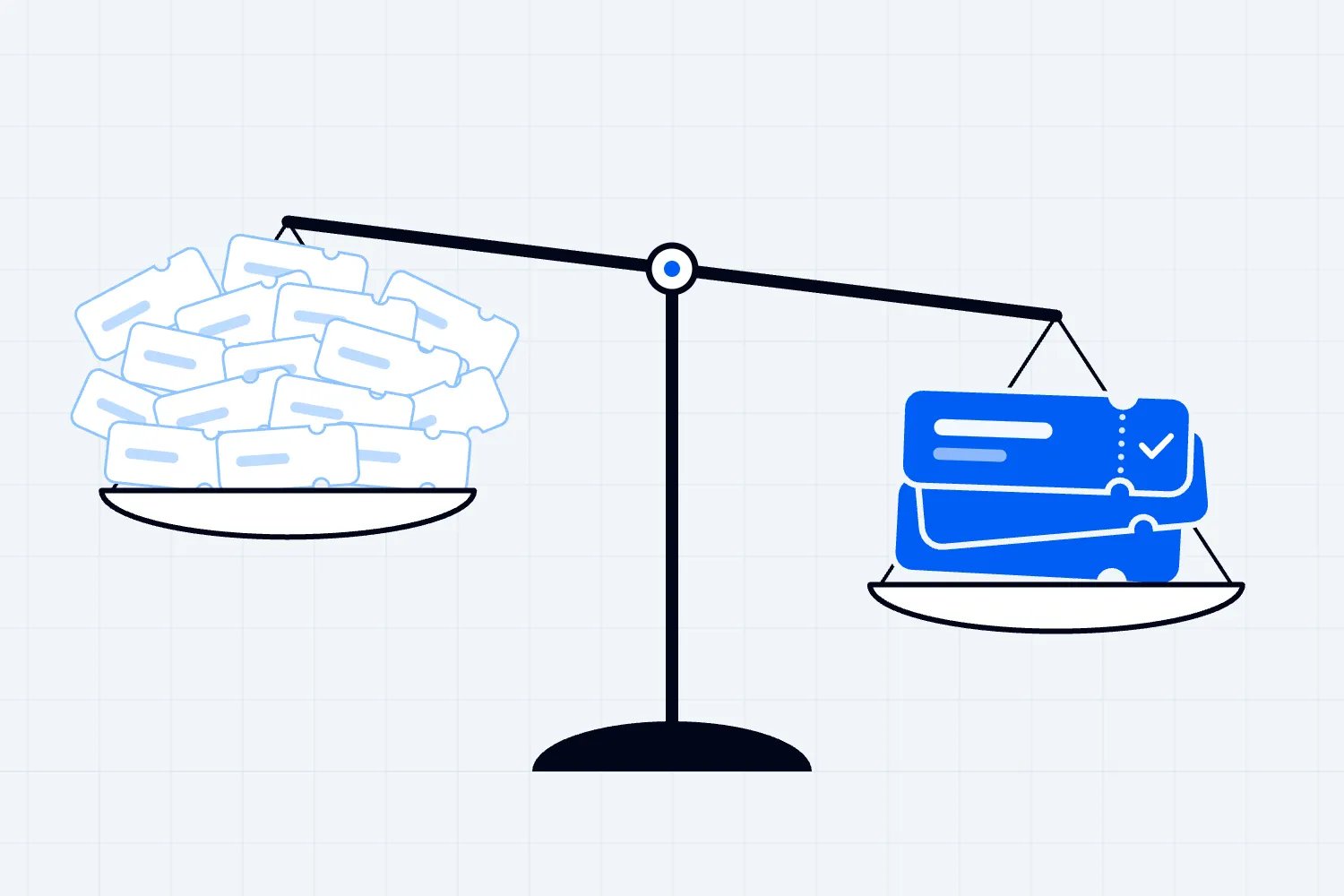
Measure a ticket giveaway by matching entrants to completed paid orders, separating new buyers from existing customers, and checking what those sales leave after costs. Then ask how many purchases would have happened without the giveaway. Entries tell you who wanted a chance to win. They don't tell you whether you've found a profitable way to sell tickets.
So you've run a competition, the comments are busy, and your follower count has jumped. Someone asks whether it worked. Your marketing report says yes. Your ticket sales report is less convincing. Which one do you believe?
Start with the ticket sales. You can value the attention too, but keep it separate from the claim that the giveaway produced paying customers. Otherwise, you'll repeat a campaign because it looked successful while the event budget quietly paid for the excitement.
This guide walks you through what to measure, how to connect entries with purchases, and how to decide whether another giveaway deserves your money. All the campaign numbers below are hypothetical worked examples. They're calculations you can follow, not industry benchmarks or reported customer results.
Decide what the giveaway is supposed to sell
The first thing you want to do is name the purchase you're trying to create. Is it a paid ticket to this event, an additional ticket bought by a winner, or a ticket to your next event after someone attends for free?
Those are different jobs. A competition that fills a late sales gap needs a result before doors open. A giveaway that introduces people to a recurring event needs time for another event to go on sale. Don't judge one against the other's timetable.
Write a sentence before you launch. For example, "We want first-time customers to buy a paid ticket to our October show before sales close." That sentence gives you a buyer definition, an event and a deadline. It also makes it harder to change the goal when the result disappoints you.
Next, set a spending limit and say what a worthwhile result would look like. Use the amount a paid order leaves you after costs, not the headline ticket price. If your audience normally buys pairs, consider order value and tickets per order as well as the number of buyers.
You can still have another purpose, such as rewarding your regulars. Just name it. Giving loyal customers something enjoyable can be a reasonable use of a marketing budget. Calling that activity new customer acquisition makes the report less useful.
Keep the giveaway within your wider complimentary ticket policy. A marketing team shouldn't be able to add unlimited free inventory because a post is performing well. Set the prize allocation before the entries arrive.
Count people, orders and tickets separately
A paying customer is a person who completes a purchase with a positive amount paid for tickets. A winner receiving a free pair isn't two customers. One entrant buying four tickets isn't four customers either.
Keep separate totals for unique paying buyers, paid orders and paid tickets. They answer different questions. Buyers show how many customer relationships you gained. Orders show purchasing activity. Tickets show how much paid inventory moved.
For this measurement, exclude wholly free orders and test transactions. Remove cancelled purchases and fully refunded orders from the final result. For partial refunds, keep the buyer if a paid ticket remains, and reduce the ticket and revenue totals accordingly.
Decide how to handle existing customers. Someone who bought your previous show may enter the draw and buy again. That's useful repeat business, but it isn't a new customer. Check the history you actually hold, and describe them as first-time buyers in your records rather than claiming they're new to every event you've ever run.
Also separate prize winners from other entrants. Winners may buy extra tickets for friends, upgrade where you offer a paid upgrade, or buy the next event. Record those purchases as paid activity. Keep the prize itself out of paid ticket revenue.
Here's the practical rule. One customer can appear in several useful reports, but the same order belongs once in your overall sales total. You can describe a purchase as both a first-time buyer's order and an email-assisted order without adding those reports together.
Create a record you can match to checkout
A giveaway only becomes measurable when you can connect an entry to a purchase. A list of social handles and a separate list of checkout emails usually leaves you guessing. Someone can enter as one name, buy with another, and bring a friend whose name never appeared online.
Choose the smallest entry record that supports the measurement and your giveaway administration. That might be a name, an email address, the campaign identifier, an entry date and the source that sent the entrant. Record permission for marketing separately from permission to administer the competition.
Use the contact or order records your tools already provide. Don't build a second customer database by hand if your ticketing platform can keep the relevant purchase history connected. Your responsibility is to decide which campaign and group a person belongs to, and what outcome you're checking.
Give the campaign a consistent name. "October ticket draw" should mean the same activity in your entry system, ticket reports and follow-up messages. When a partner runs a separate promotion, keep that source identifiable so you can compare the buyers each partner sends.
Before launching, enter with a test contact and follow the route to checkout. Check that the entry appears once, the campaign information survives, and the completed order shows the right buyer and amount. Keep test records out of the final campaign report.
Don't silently match people using information you didn't explain you would collect or use. Tell entrants what happens to their details, restrict access to the people doing the work, and follow the requirements that apply where you operate. Better measurement shouldn't depend on surprising your audience.
Use tracked links without giving them too much credit
Tracked links help you see which message sent someone to the event page. UTM parameters are labels added to a link so an analytics tool can identify the source, channel and campaign. They aren't a separate customer identity system.
Google's GA4 guidance on campaign URLs explains these labels and where campaign traffic appears in its reports. Use one consistent campaign name, with different source or content labels for a partner post, your own social post and the follow-up email.
Keep personal details out of those labels. A campaign name belongs in a URL. An entrant's email address doesn't. Use your customer records for identity matching, with appropriate access, rather than passing personal information through shared links.
A dedicated promo code can help identify purchases too. You don't have to attach a discount just to track a source if your platform provides campaign reporting. If you do offer a discount, include its cost in the calculation and remember that people can share the code beyond the entrant list.
Loopyah's ticketing reports sales by source, including posts and emails, and supports promo codes. That helps you follow the sales attached to a campaign. It doesn't, by itself, prove that those customers would have stayed away without the giveaway.
Keep both views. One tells you whether an entrant bought, even if they returned directly to the event page. The other tells you which tracked message received credit for an order. A buyer can belong to the giveaway group without their purchase receiving giveaway attribution.
Reconcile purchases with actual orders
Use completed order records as the final check on paid sales. An analytics event can be missing, duplicated or attached to the wrong amount. A purchase report that says twenty customers converted needs to agree with the transactions behind it.
Google's ecommerce measurement documentation describes purchase events with transaction identifiers, value and currency, and refund events linked to the relevant transaction. If you use website analytics, check those details against your ticketing records rather than treating every purchase event as another sale.
Pay particular attention to the thank-you page. Reloading it shouldn't create another paid order in your campaign totals. Nor should two reporting tools claiming the same transaction double your revenue. Deduplicate by order identifier before you work out whether the giveaway paid back its costs.
Where possible, match entrants using the same contact identifier captured at checkout. Be careful with changes of email address, shared addresses and manual corrections. An exact match can give you a reliable confirmed count; an assumed match needs a separate label.
Keep unmatched purchases out of your confirmed entrant total. You can add a separate estimate based on a survey or another method, but explain where that estimate came from. A neat number built from guesses is less useful than a smaller number you can stand behind.
If several partners promoted the same competition, one person may appear in several entry records. Apply your published entry rules, then count unique people for the buyer analysis. Multiple permitted entries affect their chance to win; they shouldn't manufacture additional customers in your report.
Choose a measurement window before seeing the results
Start the window when the campaign can first influence a purchase. Close the immediate sales window when sales for the target event end. Then set a later review date for refunds and any future-event purchases you're deliberately measuring.
For a recurring event, you might review the current show and then the next comparable show. For an annual festival, that second purchase takes much longer. Don't report a slow repeat cycle as zero customer value after a week, and don't treat possible future revenue as money already earned.
Give entrants the same opportunity to buy when comparing them. Someone entering on the last day has less time than someone entering at launch. You can report the full campaign result while also comparing people with a similar amount of time before sales close.
Keep the window fixed across channels. If the giveaway receives credit for purchases over a month but another campaign gets a week, the comparison is tilted before you do the arithmetic. Different tools may use different attribution windows, so check their settings and describe any mismatch.
Record when the draw closes, when winners hear from you and when follow-up marketing goes out. Purchases before the winner announcement answer a different question from purchases afterwards. Seeing that sequence can reveal whether the offer created demand or encouraged people to wait.
Once the window closes, stop quietly adding later orders to make the campaign look better. Put them in a later customer value report. A consistent closing date lets you compare the next giveaway fairly, including when it performs worse.
Calculate the conversion rates that answer your question
Start with entrant-to-buyer conversion. Divide unique entrants who completed a paid purchase during the window by all valid unique entrants in the measured group. Multiply by one hundred to express the result as a percentage.
In a hypothetical campaign, 1,000 valid entrants include 40 people who buy tickets. The entrant-to-buyer conversion rate is 4%. If those buyers place 42 orders and buy 76 tickets, report those totals separately. The customer count is still 40.
Now check how many were first-time buyers. Suppose 25 of the 40 haven't bought from you before, based on your available records. That's 25 first-time buyers, or 2.5% of the entrant group. The remaining 15 buyers are returning customers.
Measure marketing permission too, but use the right denominator. An entrant conversion rate counts all entrants. An opted-in follow-up conversion rate counts people eligible to receive that follow-up. A smaller denominator can produce a higher percentage without creating a single additional order.
Don't use social impressions as the denominator for entrant conversion. Impressions count displays, including repeat displays, and don't describe the group of people you matched to orders. Report reach and entry activity separately if you need to understand the campaign's reach.
The interesting part is what happens when you break the results down by source. A partner may send fewer entrants but more first-time paying buyers. Compare the cost and paid contribution from those buyers before awarding the next prize allocation to whoever delivered the biggest entry list.
Work out what the giveaway actually cost
Ticket face value is one way to describe the prize, but it isn't always the economic cost of giving it away. A seat that would otherwise stay empty creates a different cost from the last seat at a show likely to sell out.
Start with actual additional expenses. Include paid promotion, partner fees, staff time you would otherwise spend elsewhere, entry software if needed, email sending costs and any additional cost of serving prize attendees. Use reasonable internal costs for staff time and state the assumption.
Then consider paid sales displaced by the prize. If a free ticket takes a seat you would probably have sold, you lose what that paid ticket would have contributed after its variable costs. If you have ample spare capacity, don't automatically charge the campaign the full retail value of every prize ticket.
You won't always know whether a prize seat displaced a sale. Show that uncertainty. Calculate the campaign once with spare capacity and again assuming the prize seats would have sold. That gives you a decision you can understand instead of false precision.
Handle discounts carefully. If you calculate revenue using the discounted amount customers actually paid, the discount is already reflected there. Don't subtract it again as another campaign expense. Likewise, don't count the same attendee service cost in both the prize cost and the paid ticket cost.
Use an event profit and loss template to keep the categories consistent with your wider event budget. The giveaway report shouldn't use one definition of revenue while the budget uses another. Agree what includes taxes and fees before comparing the totals.
Put conversion and contribution together
Let's follow the hypothetical campaign with 40 paying buyers and 76 paid tickets. Assume each ticket brings you $50 of actual revenue after discounts and tax, and costs $10 in variable expenses, including fees you cover. That leaves $40 per paid ticket before campaign costs and the event's fixed expenses.
The 76 tickets therefore leave $3,040 before giveaway costs. Suppose advertising costs $400, staff time costs $180, software and sending costs $40, and serving the prize attendees costs $80. The campaign costs $700 before any displaced paid sales.
On that basis, paid orders associated with the entrant group leave $2,340 after campaign costs. That's useful information. It is not proof that the giveaway added $2,340 to your event, because some of those people might have bought without entering.
Suppose your separate comparison suggests only 20 of the 76 tickets were additional sales. Those tickets leave $800 before the $700 campaign cost. The estimated additional contribution is then $100, assuming the prize seats didn't displace paid purchases.
If the prize displaced another $160 of paid contribution, that same campaign falls to a $60 loss. Nothing changed about the comments, entries or follower count. What changed was your answer to whether the activity added enough paid business to justify its cost.
This is why revenue alone isn't the decision. You need the additional paid tickets, the amount each leaves you, and the full campaign cost. Your event still has fixed expenses to cover after that, so don't label campaign contribution as the profit of the whole show.
Separate attribution from additional sales
Attribution means assigning credit for a purchase to a marketing touchpoint, such as a link someone clicked. Incrementality means estimating purchases that happened because you ran the activity. It's the difference between "this buyer touched the campaign" and "this campaign created another sale."
A loyal attendee can enter a giveaway, lose, click your email and buy their usual tickets. The campaign may receive credit for that order. The order might still have happened without it. Equally, an entrant can buy through an untracked direct visit after the campaign convinced them to go.
Google's explanation of Conversion Lift describes controlled experiments comparing groups that see ads with groups that don't. The principle is useful here, although Google's product measures its advertising and isn't a ready-made test of your whole giveaway.
Where practical, randomly split a permissioned audience before launching. Send one group the giveaway campaign and keep the other on your usual promotion. Compare completed paid purchases over the same period. That tests the giveaway package against the activity you would otherwise have run.
Assign people before they choose whether to enter, and compare all people assigned to each group. Comparing entrants with non-entrants after launch is biased because entering already tells you something about their interests and willingness to participate. They weren't equivalent groups to begin with.
Keep the prize draw itself fair and follow its published rules. A measurement experiment shouldn't secretly change entrants' chances of winning. Decide what campaign exposure you're testing, make the entry conditions clear, and avoid a test design that conflicts with those conditions.
Read a comparison without pretending it proves everything
Imagine two randomly assigned groups of 1,000 eligible contacts. In the giveaway group, 60 people buy. In the usual-promotion group, 45 buy. The purchase rates are 6% and 4.5%, a difference of 1.5 percentage points.
That suggests 15 additional buyers among the 1,000 people assigned to the giveaway group. It doesn't mean every one of the 60 buyers was created by the giveaway. It also doesn't tell you ticket contribution until you compare paid revenue and variable costs across both groups.
| Label | Usual-promotion rate | Additional buyers |
|---|---|---|
| Giveaway group | 45 | 15 |
| Usual promotion | 45 | 0 |
Treat the estimate as uncertain. With only 105 buyers across both groups, that difference could easily be chance. Use it to plan another test, not claim a proven sales lift. A proper experiment needs enough purchases for a meaningful comparison and an assessment of statistical uncertainty.
Watch for people seeing both campaigns. A public competition may reach the comparison group through shares, partners or your social feed. Record that limitation. A contaminated comparison can underestimate or otherwise distort the difference, and a private email test won't necessarily predict a public social campaign.
If random assignment isn't practical, compare against a similar campaign or event and explain what changed. Ticket price, lineup, date, weather, audience size and the amount of other promotion can all affect sales. A before-and-after increase gives you a lead to investigate, not proof of cause.
For a small operator, confirmed entrant purchases and a clear cost calculation may be the most useful first report. You don't need to pretend you ran a scientific trial. Keep spending contained, report what you know, and improve the comparison before making a much bigger commitment.
Follow up without turning every entrant into a mailing list
A lot of organizers are missing this step. They plan the competition in detail, then send one rushed sales message to everyone who didn't win. The follow-up is where an interested entrant can become a paying customer, so give it the same attention as the launch.
Explain the event itself. What are they going to experience? Who is it for? Can they make the date, and what will a ticket cost them? Give them a direct route to buy. Someone who liked the prize may still need a reason to spend their own money.
Keep competition administration and marketing separate. For UK audiences, the ICO's electronic mail marketing guidance explains consent requirements and the limited existing-customer exception. Entering a competition shouldn't be treated as blanket permission to receive promotional emails. Check the rules applying to your own audience and campaign.
The UK's ASA prize draw guidance sets out the need to communicate significant conditions, including participation, closing dates, prizes and eligibility restrictions. Set those clearly before launch. Clean administration makes it easier to analyse a defined group and protects the experience you're inviting people into.
When eligible contacts are in Loopyah, attendee email marketing supports audience selection and campaign reporting with tickets and revenue from people who clicked. Promotions respect marketing permission and opt-outs. Use that connected reporting rather than rebuilding routine send and sales reports manually.
Keep your experimental groups intact during follow-up. If you're testing the whole giveaway campaign, the planned follow-up belongs in that campaign. If you're testing only a follow-up email, randomise that send separately and describe the narrower question. Otherwise, you'll answer something different from what your report claims.
Check whether prize attendees come back and pay
For a recurring event, the prize experience may be the beginning of the sale. Record whether winners claim their tickets, attend and later buy. Those steps help you identify why a giveaway brought people into the room without producing future paid orders.
A winner who never claims the prize hasn't experienced your event. An attendee who enjoys it but can't find the next date may never buy again. A future buyer who receives a discount every time may contribute less than your first report suggests.
Review the next purchase at the customer level. Count the first paid order after the prize, its paid tickets, actual revenue and contribution. Keep additional tickets bought for the prize event separate from future-event purchases so the timeline stays understandable.
Don't assign every later purchase forever to the original giveaway. Over time, the attendee may respond to new lineups, friends, emails or other advertising. You can report the group's later customer value without claiming the giveaway caused all of it.
Also compare prize attendees with your ordinary first-time paid attendees when enough records exist. The comparison is descriptive, because the groups chose different ways to attend. Still, it can help you see whether prize attendees buy again at all and whether their later orders cover the cost of introducing them.
Keep a report someone else can check
Save the campaign name, target event, launch date, entry deadline, purchase window and review date together. Add the entry rules and the buyer definition you used. Someone opening the report next season should understand what you counted without asking whoever ran the draw.
Keep the matched order identifiers behind the totals, with access restricted. Record which purchases were refunded, which buyers already existed in your records and which sources you couldn't identify. You want a report that can be corrected when an order changes, rather than a screenshot nobody can explain.
Finish with the total cost, the assumptions about prize seats and the comparison method. If you have no credible estimate of additional sales, say that directly. Write down one change for the next test and who owns it. That turns the result into an instruction, instead of another marketing document that gets opened once and forgotten before the next campaign starts.
Decide whether to repeat, change or stop
End the report with a decision. Keep the entry count, but lead with confirmed paying buyers, first-time buyers, paid tickets, retained revenue and the amount left after costs. Then state what evidence you have about additional sales and where that evidence is weak.
Repeat when the economics are promising and the result survives reasonable assumptions about displaced sales and purchases that would happen anyway. Increase the budget gradually. A profitable small draw doesn't guarantee a larger one will reach equally interested people.
Change the campaign when you can identify a specific failure. Plenty of qualified entrants but few checkout visits points towards the follow-up or event offer. Checkout visits without purchases suggests a purchase problem. Many orders with weak contribution suggests discounts or campaign costs need attention.
Stop when the only strong result is participation and the paid outcome keeps missing the budget requirement. You don't owe a giveaway another run because people enjoyed entering it. That money can fund a promotion whose purpose and sales result you can see.
The question to carry into the next campaign is simple. Did the giveaway help more people pay for tickets, and did those additional sales leave enough money to make the effort worthwhile? Build your report around that answer, and the follower count can stay where it belongs, as context.

Author: By the Loopyah Content Team
The Loopyah Content Team shares expert insights, practical guides, and industry updates to help event organizers create unforgettable experiences and stay ahead in the event planning world.