· 21 min read
Event profit and loss template: a worked example

An event profit and loss statement adds up the revenue your event earned, subtracts its costs and shows what you actually made. A useful template keeps your original budget, latest forecast and final result side by side, with ticket refunds, fees, unpaid supplier bills and a share of business overhead included.
So you've run the event. The room looked busy, the ticket dashboard looked healthy and people are asking when you're doing it again. Before you book another date, answer the less exciting question. After everyone gets paid, how much does your business keep?
That's what this guide helps you work out. We'll build the statement, fill it with a worked example, reconcile the money and use the result to decide what changes next time. You can copy the line items and formulas into your own spreadsheet. Every dollar amount below is a hypothetical USD example, not an industry benchmark, a Loopyah fee quote or a customer result.
What an event P&L should tell you
P&L is short for profit and loss. You'll also see it called an income statement. Australia's business.gov.au explains that a profit and loss statement lists sales and expenses and can contain actual or forecast figures, provided estimates are clearly labelled.
For an event business, give each date its own statement. That lets you see whether one successful show is supporting another that keeps losing money. You can then combine the dates into a business-wide view without losing the detail that explains the result.
Start with four questions. How much revenue belongs to this event? What did delivering it cost? What remains after its share of business overhead? How far did that result move from the plan you approved?
A sales dashboard answers part of the first question. It doesn't know about the extra security shift, the artist's final settlement or the office costs supporting your calendar. You need those figures before calling the event profitable.
Keep the scope visible at the top. Write the event name, date, currency, reporting period, last update and who prepared it. State whether the result is before financing costs and income tax. If you're reporting event operating profit, call it that. Don't label an incomplete figure net profit because the heading sounds better.
This guide uses an internal management statement that assigns earned revenue and incurred costs to the event. Your accountant should confirm how it connects to your formal accounts, including revenue timing and tax treatment. The point is to make a useful decision about the show without pretending a spreadsheet settles every accounting question.
Keep budget, forecast, actuals and cash separate
Your budget is the plan you approved before committing money. Your forecast is what you now expect to happen. Actuals are the revenue and costs you can support with records. Cash is what has entered or left your bank account.
They will often disagree. That's normal. Hiding the disagreement is the problem.
Imagine you've delivered the sponsorship package and the sponsor owes you $2,000 after the event. That earned amount belongs in the management P&L under the accounting basis used here, even if the sponsor hasn't paid. It doesn't belong in today's available cash. The unpaid amount needs a collection owner and a due date.
A production supplier can create the opposite situation. Its crew has done the work, but the final invoice hasn't arrived. Leaving the cost out makes the profit look better for no commercial reason. Put in a supported estimate, label it provisional and replace it when the invoice arrives.
The US Securities and Exchange Commission's guide to financial statements separates income statements, which report revenue and expenses over a period, from cash flow statements, which report cash movements. That's the distinction your event workbook needs too.
Use separate columns for budget, latest forecast and actual. Keep your cash schedule on another tab. Put the update date above the forecast, and keep a saved copy of the original budget. Otherwise, a revised forecast quietly becomes the plan and you lose the chance to learn what went wrong.
If you're still planning the event, start with our event budget guide. The P&L uses those assumptions, then follows them through to the final settlement. It doesn't replace the detailed supplier budget.
Build the event profit and loss template
Create a summary with one row for each revenue and cost category. Under it, keep the transaction detail supporting every row. You should be able to explain a total without searching five inboxes while someone waits on the phone.
Use these columns in the summary:
Line item, with consistent names across your events.
Original budget, frozen when the event is approved.
Latest forecast, dated and based on current information.
Actual, supported by a sale record, invoice or documented estimate.
Profit impact versus budget, showing whether the change helped or hurt.
Notes and owner, explaining the difference and who must resolve it.
Make the sign convention clear. For revenue, actual minus budget gives the profit impact. For costs, budget minus actual gives the profit impact. That way a positive number always helps profit and a negative number always hurts it. Calling everything a variance without defining the sign is a good way to misread a busy sheet.
Your revenue section can start with gross ticket sales, ticket refunds and ticket sales after refunds. Then add sponsorship, vendor or exhibitor fees, your bar share, merchandise sales and any other revenue the business actually earns from this event.
The cost section should include ticketing and payment costs borne by the organizer, venue, talent, production, staffing, safety services, marketing, attendee supplies, sponsor delivery, merchandise cost and other direct event costs. Keep a subtotal for direct costs. Subtract it from revenue to show the event surplus before shared overhead.
Then add the event's allocated share of business overhead. Subtract that to show event operating profit before financing and income tax. If you need a fuller net result, add the relevant financing and tax lines with your accountant. Don't invent an event tax percentage and present it as your actual liability.
Keep empty categories out of the reader-facing summary. A workshop doesn't need a bar row unless it earns bar income. A festival may need separate food, concession and camping lines. The categories should describe how your event earns and spends money, rather than force it into someone else's model.
A detailed transaction tab needs the category, supplier or customer, description, amount, evidence reference, payment status, due date and event code. Give adjustments their own records. That includes refunds, supplier credits and final settlement changes. When a number changes, you want to see why.
Fill the template with a worked example
Let's use a hypothetical one-night paid event. It issues 400 paid tickets at $40 each, refunds 10 of them in full and doesn't resell those refunded tickets. Another 20 guests receive complimentary admission. All prices and costs in the example use a consistent tax basis with no separate tax adjustment required.
The paid tickets generate $16,000 before refunds. The 10 refunds remove $400, leaving $15,600 in ticket sales after refunds. Complimentary admission generates no ticket revenue. We'll include its service cost in attendee supplies below.
The event also earns $3,000 from a sponsor and $1,000 as its contractual share of the bar. Total revenue is therefore $19,600. The sponsor's delivery costs appear separately in expenses, so we're showing gross sponsorship income here. We aren't subtracting those costs from sponsorship and then charging them again.
Here is the actual revenue section you can copy:
Gross ticket sales: $16,000.
Less ticket refunds: $400.
Ticket sales after refunds: $15,600.
Sponsorship revenue: $3,000.
Organizer's bar share: $1,000.
Total event revenue: $19,600.
Don't add the ticket subtotal and the gross ticket figure together. The subtotal replaces the gross figure after refunds. Formula rows need to be visibly different from input rows so a total doesn't count its own components twice.
Now enter the actual direct costs:
Organizer-borne ticketing and payment costs: $600.
Venue hire: $3,000.
Artist and talent costs: $3,500.
Production and crew: $2,000.
Event staffing and safety services: $1,500.
Advertising and creative: $1,200.
Attendee supplies: $1,230.
Sponsor package delivery: $500.
Other direct event costs: $470.
Total direct event costs: $14,000.
Attendee supplies assume $3 for each of 390 retained paid tickets and 20 complimentary guests. That's 410 people and $1,230. The 10 refunded tickets have no service cost in this example. If your catering order was already locked, your actual costs could behave differently. Use the supplier's agreement.
Subtract $14,000 of direct costs from $19,600 of revenue. The event has a $5,600 surplus before shared business overhead. Then subtract $1,600 of allocated overhead. Event operating profit before financing and income tax is $4,000.
The operating margin is operating profit divided by revenue. Here it's $4,000 divided by $19,600, or about 20.4%. Use the revenue figure matching the profit you're reporting. Dividing by gross ticket sales would answer a different question and ignore the event's other income.
That percentage doesn't establish a good industry margin. It's the result of this example. Whether it is enough for your business depends on the work required, the capital at risk, your overhead and the other events you run.
Reconcile ticket revenue before trusting the total
The ticket dashboard and the bank deposit can both be right while showing different figures. One may show sales before refunds. Another may show money after fees, or exclude a payout still on its way.
The first thing you want to do is pick a consistent starting point. In this template, record actual ticket prices paid before organizer-borne fees, then deduct refunds in the revenue section and fees in the cost section. Use actual discounted prices. A $40 ticket sold for $32 contributes $32 of sales before any further adjustments, not $40 followed by an imaginary full-price sale.
In the worked example, the ticket reconciliation is $16,000 of gross paid sales, less $400 of refunds and $600 of organizer-borne fees. That leaves $15,000 of ticket money after those deductions. It isn't profit. The event still has its venue, talent and other bills to pay.
If every ticket payout has reached the bank, with no reserve, adjustment or timing difference, the related deposits should total $15,000. If they don't, reconcile the gap. It may be a delayed payout, a separate refund transaction or an amount held back. Give each difference a reason rather than changing revenue until it matches the bank.
If you start with the $15,000 net receipt and deduct the $600 fee again, you understate the result. If you record $16,000 of sales and forget refunds and fees, you overstate it. Either approach can create a tidy-looking statement with the wrong answer.
Check whether a fee is charged per ticket or per order. Record the charges the settlement report actually applies, including which fees remain after refunds. Track disputed payments and related adjustments separately so the same lost sale isn't deducted as both a refund and a dispute.
Buyer-paid service fees need care as well. The full checkout amount isn't automatically your revenue. Use your agreement and accounting treatment to identify the money you earn and the charges collected for another party. The same applies to sales taxes you collect and remit. Keep the tax basis consistent with supplier costs, and get the treatment confirmed for your market.
Record only the non-ticket income you earn
A crowded bar can be brilliant for the venue and disappointing for you. If your agreement pays the organizer a share, enter that share as your revenue. Don't enter the venue's total bar takings and quietly omit its share of the costs.
In our example, the $1,000 bar income is already the organizer's contractual entitlement. The venue's wider bar business isn't part of this P&L. Keep the settlement document supporting your share, including the agreed calculation and any deductions.
Sponsorship has a similar trap. A proposal sent for $3,000 isn't $3,000 of earned revenue. Keep prospects in a separate sales view. In the forecast, label any assumption about an unsigned deal. In actuals, use the revenue treatment appropriate to the agreement and delivery, with money still owed tracked separately.
Put sponsor fulfilment costs where you can see them. A package can include signage, hospitality, content production and dedicated staffing. If you report the full package price as revenue, record those costs once in expenses. That lets you judge how much the package contributed after delivery.
A sponsor supplying equipment is different from one paying cash. Record the arrangement and any accounting entries your accountant requires. Don't treat the equipment's advertised value as spendable money. If it replaces a planned rental, update the avoided cost and explain the change.
For merchandise you sell, show sales and the related cost consistently. Stock bought for several dates needs a record of what this event used or sold. Charging the entire purchase to the first show can make that date look worse and the following ones look artificially profitable.
Include bills that haven't arrived and work you don't pay yourself for
Ask every cost owner whether the event has received all its final invoices. Production overtime, extra cleaning and artist settlement adjustments can arrive after your first review. A provisional result needs those known costs included as estimates.
For each estimated bill, record the supplier, work delivered, estimate basis and expected invoice date. Then replace the estimate with the invoice. Don't leave both in the total. If a final invoice is disputed, separate the agreed amount from the disputed portion and document how you're treating it.
Deposits are another common source of double counting. Suppose your $3,000 venue charge includes a $1,000 deposit already paid. The P&L cost is $3,000, not $4,000. The cash record shows the deposit and the remaining $2,000 on their payment dates.
A refundable damage deposit also needs its own treatment. It isn't automatically an event expense just because the bank balance went down. Keep it visible in the cash and deposit records. If the venue keeps part of it, document the reason and record the actual charge appropriately.
What about your time? If you pay yourself a salary and allocate part of it to the event, include that once. If you haven't paid yourself, a realistic allowance for your work can still help you decide whether the format deserves another date. Show that allowance as a separate management measure. Don't silently add it to your formal accounts as though an unpaid estimate were an invoice.
For example, you might show $4,000 of operating profit before a separate $1,000 allowance for unpaid owner time, leaving $3,000 after that allowance. That second figure answers whether the return compensates you for the work. Keep both labels visible so nobody mistakes the allowance for an actual cash payment.
Give shared business costs a fair home
An event can pay its direct bills while the business loses money. Someone still pays for year-round staff, software, bookkeeping and storage. If each event reports a surplus before those costs and nobody allocates them, the calendar looks healthier than the company.
Choose an allocation method before looking at which date you want to defend. You might allocate shared administration by event count when dates require similar work, or by recorded staff hours when one show consumes much more support. Use a method that reflects the cost you're sharing.
The example's $1,600 overhead allocation is a chosen assumption, not a recommended rate. Suppose the business has $6,400 of relevant shared costs and four comparable events in the period. An equal allocation gives each event $1,600. If one event needs twice the administration, a time-based allocation may tell a more useful story.
Show the direct event surplus and the result after allocated overhead separately. The first helps you understand the show itself. The second helps you assess whether the calendar supports the business. Neither should disappear because the other is more flattering.
Keep the allocation consistent across dates and reconcile the total back to the shared cost pool. If you change the method, record the reason and restate comparisons where needed. A method change shouldn't look like a sudden improvement in event performance.
Compare the actual result with the original plan
Now let's compare the same hypothetical event with its budget. The original plan expected $20,000 of revenue, $13,000 of direct costs and $1,500 of allocated overhead. That meant $5,500 of operating profit before financing and income tax.
Actual revenue finished at $19,600, direct costs at $14,000 and overhead at $1,600. Actual operating profit was $4,000, which is $1,500 below budget.
Break that difference into causes. Revenue reduced profit by $400. Direct cost increases reduced it by another $1,000. The larger overhead allocation reduced it by $100. Together they explain the full $1,500 gap.
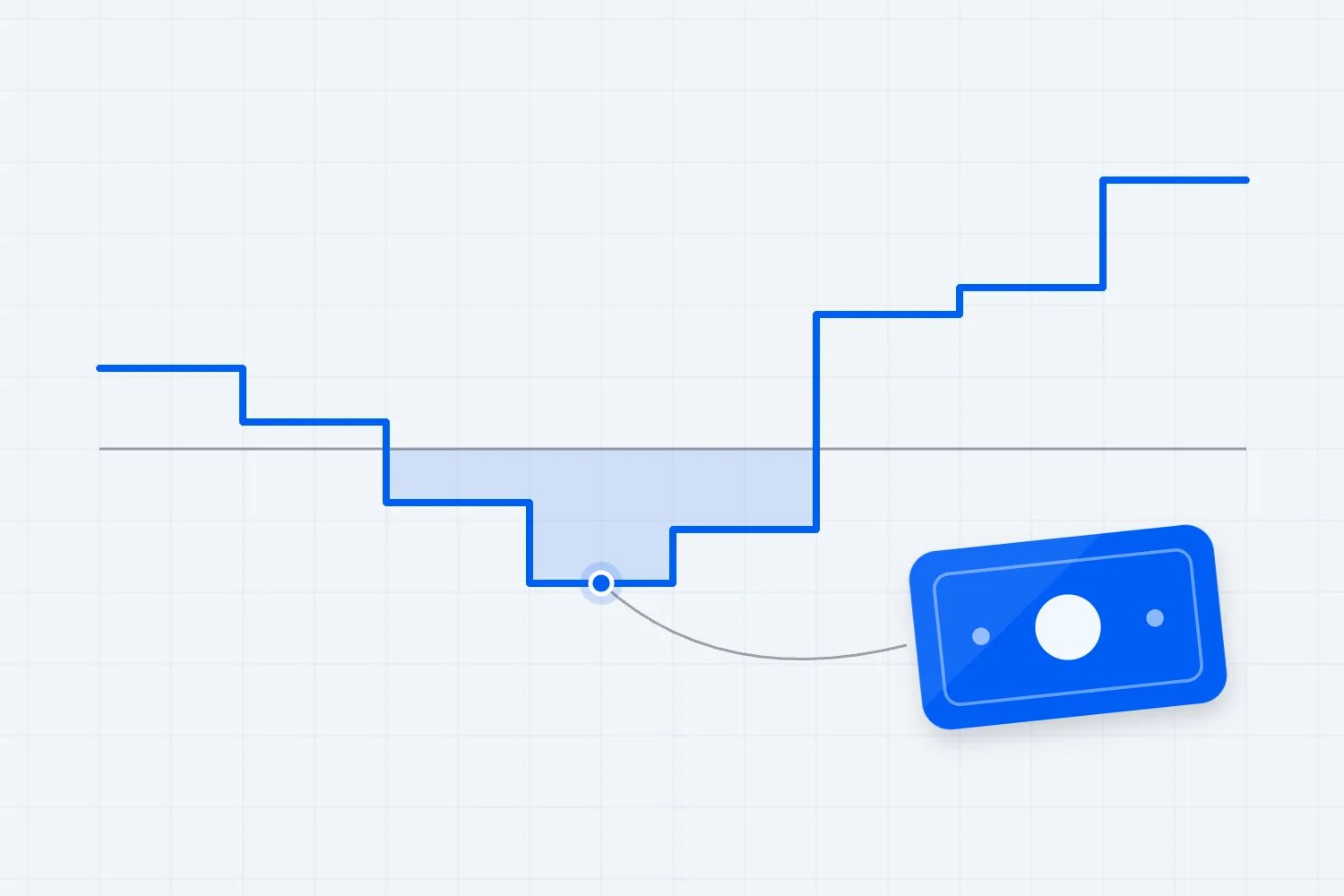
The chart makes the result easy to see. The notes make it useful. Find out whether the revenue gap came from fewer sales, a cheaper ticket mix or more refunds. Find out which supplier lines caused the cost increase. A broad note saying costs were higher won't improve your next budget.
Write a decision beside each material difference. Perhaps you need a production quote that includes the actual crew hours, or a tighter limit on complimentary allocations. Perhaps a sponsor package needs a higher price because delivery used more staff than expected. Assign an owner before approving another date.
Don't rewrite the original budget to make the variance smaller. Keep the latest forecast alongside it. If the forecast warned you of the extra $1,000 before the event, that shows the update process worked even though the original estimate was weak.
Use the statement while you can still change the outcome
A P&L becomes much more useful when you use its forecast before the event. Review the expected final result when sales, supplier commitments or the programme change. Don't wait for the settlement to discover the offer was too expensive to deliver.
The US Small Business Administration's break-even calculation divides fixed costs by price minus variable cost per unit. For a paid event, that means working out what each additional ticket contributes after the costs it creates. Our event break-even guide covers ticket releases, refunds, sponsorship and capacity in more detail.
Keep that calculation beside the forecast rather than using it to replace the P&L. The P&L shows the whole expected result. Break-even tests the sales requirement under specified assumptions. Neither proves that enough people will buy.
Suppose you're considering another $500 of advertising. Estimate the additional retained ticket revenue and additional service costs it could create. Then subtract the ad spend. Fifty more sales don't necessarily improve profit if discounts, fees and delivery costs consume the money they bring in.
Also revisit decisions with a deadline. A catering guarantee may become fixed before ticket sales are final. A production upgrade may be optional today and non-refundable tomorrow. Put those dates in the cost detail so the forecast can trigger an action while the option still exists.
Once costs are committed, a disappointing final forecast doesn't make them disappear. Compare the remaining choices using the future revenue and costs each creates. Keep the full-event loss visible too. A decision that reduces the loss can be sensible without turning the event into a profitable one.
Compare dates without fooling yourself
Once you have several completed statements, you'll want to know which event deserves another booking. Compare the results on the same basis. A show reporting profit after overhead shouldn't sit beside another reporting only ticket receipts minus venue hire. You'd be comparing different calculations.
Start with total operating profit, then look at the work and money required to earn it. A larger show can leave more dollars while taking much more staff time or tying up cash for longer. The smaller date may deserve a place in the calendar even with a lower total profit. Show the differences rather than declaring a winner from one percentage.
In the worked example, the $4,000 profit includes the $1,600 overhead allocation. Suppose another date shows $4,000 before shared overhead and has a comparable $1,600 allocation. Its comparable operating profit is $2,400. The matching headline figures hide a very different result.
Check whether a one-off item explains the difference. The first date might have paid for creative work used across several future shows. Another might have received a supplier credit that won't repeat. Keep the actual result intact, then explain any adjusted comparison separately. You still spent the money or received the credit. You're just showing which assumptions belong in the next forecast.
Avoid dividing every cost by attendance and assuming the result predicts the next event. A half-full room spreads fixed venue and production costs across fewer people. More buyers can improve that average, but they may also trigger another security team, room or catering minimum. Review the contract before projecting the cost per attendee forward.
Keep refunded buyers, retained ticket holders and checked-in attendees as separate counts. In our example, 400 original paid tickets become 390 retained paid tickets. Add 20 complimentary tickets and the service-cost assumption covers 410 people. If fewer people check in, ticket revenue doesn't fall automatically. Whether service costs fall depends on what you've already ordered.
Finally, test the next date with a less comfortable forecast. What happens if the sponsor doesn't renew? What happens if buyers choose the cheaper release? Use a separate scenario, with the changed assumption written above it. Don't quietly remove uncertain revenue from one date while keeping it in another and call that a fair comparison.
Give someone ownership of the final number
You don't need a large finance team to run this process. You do need one person responsible for the statement and clear owners for the information feeding it. Marketing supplies final spend. Production confirms the last crew invoice. Whoever manages sponsors confirms delivery and money owed.
Agree who can approve an estimate, who checks settlement differences and who signs off the final result. If the person preparing the statement also approved every expense, a second person should review the larger or unusual entries where practical. A fresh pair of eyes often spots a duplicated deposit faster than another formula does.
Keep formula cells separate from inputs and review the totals after adding a row. A new supplier line outside the total's range can make the sheet look complete while leaving the cost out. Once the event is closed, save the approved version and record later adjustments explicitly. You want the next budget to start from a result you can explain.
Close the event without losing the evidence
Set a provisional close date after the event, then a final close date after settlements and outstanding invoices are resolved. Your exact timing depends on the contracts. Mark the statement provisional while material amounts remain estimated or disputed.
At the provisional review, collect ticket sales and refund reports, payout statements, supplier invoices, sponsor agreements, bar settlements and receipts. The IRS's Publication 583 on keeping business records provides a recordkeeping reference for US businesses. Keep the evidence needed for your own jurisdiction and accounting system, not just the summary spreadsheet.
Compare the final event numbers with the accounting records. Resolve duplicated deposits, missing refunds and bills assigned to the wrong date. Check that every estimated cost has either become an invoice or has a documented reason to remain. Chase outstanding sponsor and partner payments separately.
Your team should be able to reproduce the statement from those records. If the answer depends on one person's memory, the next review will be painful. Use the same event code on every supporting record so another person can check. Make the approved result accessible to the people budgeting the next date. That record should survive staff changes and next season.
Ticket information is easier to reconcile when it comes from a connected sales record. Loopyah's ticket selling tools let you manage ticket types and sales in the same event workflow. Use those records as inputs to your event statement, then add the supplier costs and overhead your business must account for.
Finally, keep a separate cash forecast. Australia's business.gov.au has a cash flow statement template for tracking incoming and outgoing money. Our event cash-flow forecast guide applies that timing question to deposits, ticket receipts and event bills. A profitable result is useful, but you still need enough available money to meet the next payment deadline.
Before approving the next show, write down the actual operating profit, the largest difference from budget and the change you're making because of it. For our example, the answer is $4,000 before financing and income tax, against a $5,500 budget. Keep the original plan, show every deduction once and finish the settlement. Then decide whether the next date deserves your money and your time.

Author: By the Loopyah Content Team
The Loopyah Content Team shares expert insights, practical guides, and industry updates to help event organizers create unforgettable experiences and stay ahead in the event planning world.