· 16 min read
How to build an event cash-flow forecast
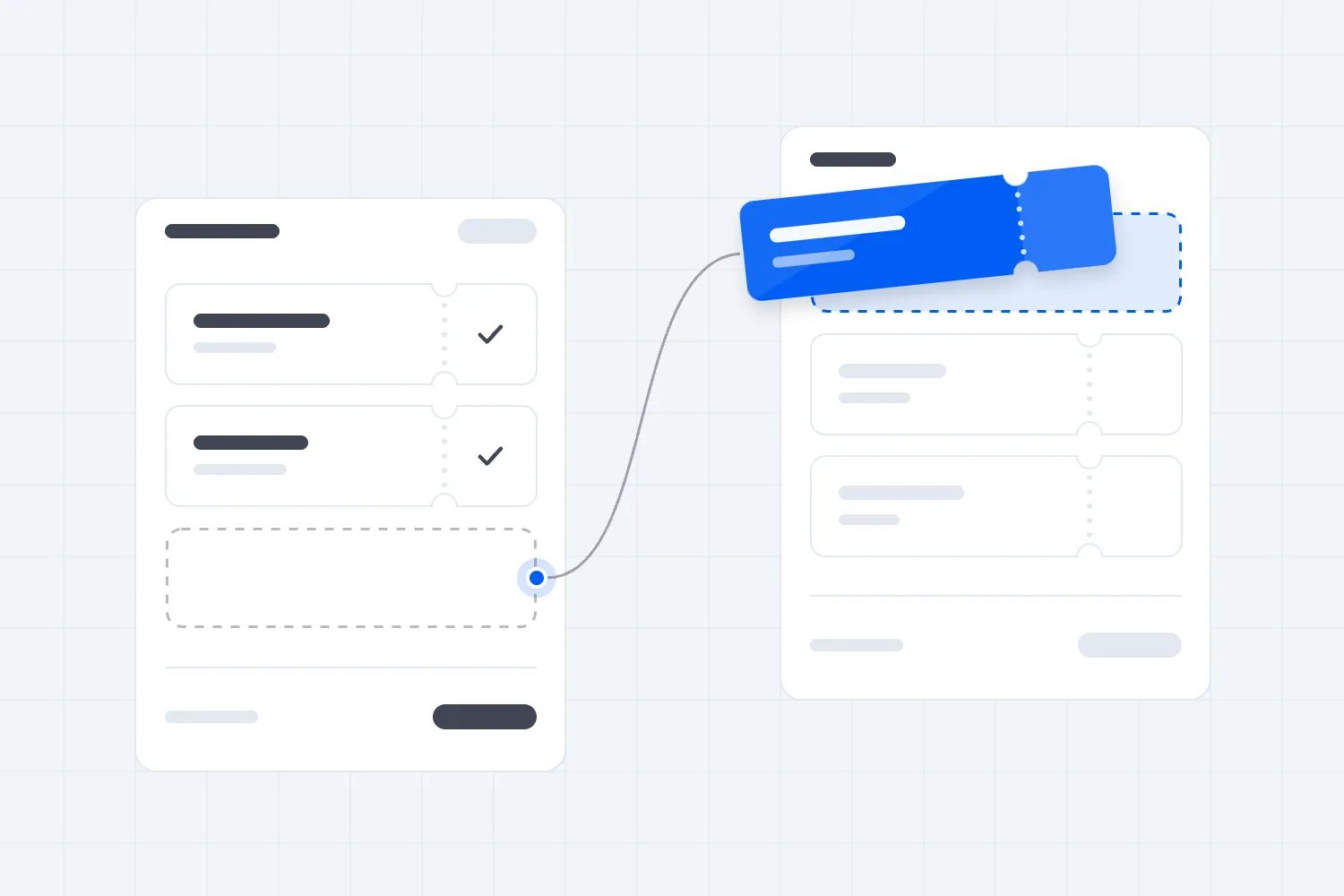
Build your event cash-flow forecast around the dates money reaches your bank and the dates bills need paying. Start with the cash you can use, add each week's expected receipts, subtract its payments, and carry the balance forward. Then move a few receipts later and see whether you can still pay everyone on time.
So your ticket sales are moving, a sponsor has signed, and the budget shows a profit. Good. Now the venue wants its balance on Friday. Your sponsor pays next month, and some ticket money hasn't reached your bank yet. Where does Friday's payment come from?
That's the question this forecast answers. We'll build it, work through one paid event, and find the point where a late payment becomes a problem. You'll also see how to calculate the extra cash you need and which decisions can reduce that amount.
Start with money you can actually use
The first thing you want to do is check your bank balance. Then check what that money already has to cover.
If the same account pays for several events, the entire balance doesn't belong to the event you're forecasting. Another show's production bill might be due tomorrow. Some money may also need to stay available for taxes, refunds or other commitments.
Write down the amount allocated to this event and available for its payments. That's your opening cash. Keep a separate record of anything you've set aside so you can reconcile the forecast to the bank account without quietly spending the same money twice.
Your event budget still matters. It helps you decide whether the event's expected income covers its costs. The cash forecast adds dates to that plan. Both need to work.
Before you start filling cells, get the records together: your current bank balance, ticket sales and payout information, sponsor agreements and invoices, supplier payment schedules, and the remaining event budget. You don't need a perfect forecast on day one. You do need to know which entries come from a contract and which are your best estimate.
For each estimate, write a short note beside it. "Based on the last event's sales at this point" is useful. "We need this much money by then" isn't evidence that it will arrive. Give uncertain dates a follow-up owner so they don't remain guesses right up to the payment deadline.
Business Queensland's budgeting guidance explains why the two can differ. A profit-and-loss budget may contain unpaid invoices, unpaid costs and noncash items. A cash forecast follows money coming in and going out. A sponsor can owe you money while your bank balance is still too low to pay a supplier.
For your working forecast, make the treatment of tax and refunds explicit. If you exclude reserved money from the opening balance, don't subtract that same reserve again as an expense. Track later movements consistently too. Get your accountant to check the treatment if your records mix gross ticket sales, deductions and bank receipts.
Put income on the date it reaches your bank
This is the step that makes the forecast useful. Every expected receipt needs an amount, a realistic bank date and a reason you believe that date.
Ticket sales and ticket payouts have different dates
A buyer pays on Tuesday. That doesn't automatically mean you can use the money on Tuesday.
Stripe's payout documentation distinguishes between funds becoming available, the schedule for sending them, and arrival at your bank. Changing the payout schedule doesn't make pending funds settle faster. Account conditions, weekends and banking delays can also affect timing.
Use your actual payout information when it's available. For future ticket sales, estimate the sales first, then place the resulting bank receipts in the appropriate periods. Don't paste your sales curve straight into the cash row.
Work from the ticket mix you expect to sell. Early tickets, standard tickets and group offers may leave you with different amounts per paid place. Complimentary tickets bring in no ticket money, even though those guests may still add delivery costs. If your forecast uses one average ticket amount, show how you calculated it.
For a first event, check that the payment account is set up and that you can see its expected payout dates before treating those receipts as dependable. Where timing remains uncertain, use a later-date scenario and flag the assumption. Don't build a venue payment around the earliest date you hope the money could arrive.
Choose one consistent way to handle deductions. If your receipts row contains the amount reaching the bank after withheld processing fees and refunds, don't subtract those same deductions again. Fees charged separately and refunds paid separately still need their own cash entries.
On Loopyah, the event CRM brings ticket and sponsor sales, refunds, fees and other connected event activity into the event's financial view. It also separates cash already paid out from money on the way. Use those records to check your forecast against what's happening. Future bank dates and supplier commitments still need to be checked against your actual arrangements.
A signed sponsorship isn't a bank receipt
For each sponsor, record the agreed payment amount, invoice status and expected receipt date. If payment comes in instalments, give each instalment its own date.
Check the practical details before relying on the money. Does the sponsor need a purchase order? Has its finance team accepted the invoice? Is someone waiting for your bank details? An agreement can be signed while the payment process hasn't started.
The Australian Government's payment terms guide recommends setting out how and when customers should pay in invoices and contracts. An earlier deposit or staged payment can help, but you have to agree it with the sponsor. Moving a number in your spreadsheet doesn't change the agreement.
Keep unconfirmed sponsorship separate from the forecast you're using to commit money. You can show what happens if a prospect signs. You also need a version you can deliver if they don't.
Put every payment on its due date
Next, work through your contracts, quotes and planned spending. Put payments where the money leaves, including deposits before the event and balances afterwards.
Don't enter the venue as one total if you pay it in stages. Don't spread production evenly across the calendar just because a smooth line looks more comfortable. Use the dates you've agreed.
Include advertising charges, staffing payments, insurance, equipment, artist deposits, production balances and sponsor delivery costs where they apply. Record expected refunds and taxes using the treatment you've chosen. A cost estimate with no payment date is unfinished.
Keep three details beside each payment: what it's for, whether the amount is confirmed, and the last date you can change or cancel the commitment. That last one matters. You want to find a shortage while you can still do something about it.
Our sponsorship packages guide walks through delivery costs. Bring those costs into this forecast too. Sponsor money can arrive before the event while the branded installation, extra crew and hospitality still need paying for.
Run the calendar beyond event day. Include final supplier bills, remaining payouts and expected post-event refunds. An event-day balance is only one point in the forecast.
Build the forecast one week at a time
Use one column per week, with actual date ranges. Start before the first payment you're still planning to make and continue until the remaining event receipts and payments have cleared.
Your working sheet needs these rows:
Opening cash available for the event.
Ticket money expected in the bank.
Sponsor money expected in the bank.
Other receipts, described separately.
Payments, split into the categories you need to manage.
Closing cash, followed by your chosen minimum balance.
The calculation is straightforward: closing cash = opening cash + receipts - payments. Next week's opening cash equals this week's closing cash. The Australian Government's cash-flow guide uses this method and recommends identifying estimates so you can explain how you arrived at them.
Keep supporting detail behind the weekly totals. You should be able to answer which payout or invoice makes up a receipt, and which supplier payments make up the money going out. A total that nobody can explain won't help when the date changes.
Weekly is a useful starting view. When balances get tight, check the individual days. A payment due Monday can't be funded by a receipt arriving Friday, even if the week ends above zero.
Keep the sheet small enough to maintain. You can group minor recurring payments while retaining the supporting detail, but leave large deposits and sponsor instalments visible. Those are the entries where one changed date can alter the decision. Forecast at the level that helps you act, then reconcile it to the full records.
Work through a paid-event example
Let's make this concrete. Everything in this example is hypothetical and in USD. These figures illustrate the method; they aren't typical event costs, a customer result or Loopyah payout terms.
You have $8,000 available before the first forecast week. Across the full period, you expect $30,000 in ticket bank receipts and a $6,000 sponsor payment. You also have $34,000 of cash payments to make.
The ticket receipts are after any deductions already withheld. The payment total includes all remaining operating payments for this simplified example. We assume no additional unpaid bills, tax payments or financing costs. In a real forecast, include any of those cash obligations that apply. Noncash expenses belong in the separate profit calculation.
What about a deposit you already paid before the opening week? Keep it in the event's total budget, but don't pay it again in the forecast. Its effect is already reflected in the cash you have left. The forecast starts where you are today. To assess the full event's profit, you also need the income and costs that happened before this starting point.
We're looking at six weeks before the event, event week and the following week. Actual receipt and payment dates determine which week each amount falls into.
The original payment schedule
Six weeks before: Open with $8,000. Receive nothing. Pay $5,000 in venue and production deposits. Close with $3,000.
Five weeks before: Open with $3,000. Receive $2,000 from ticket payouts. Pay $4,000 for talent and other booked services. Close with $1,000.
Four weeks before: Open with $1,000. Receive $3,000 from tickets and $6,000 from the sponsor. Pay $6,000 towards production and venue commitments. Close with $4,000.
Three weeks before: Open with $4,000. Receive $4,000 from tickets. Pay $7,000 in supplier balances and promotion costs. Close with $1,000.
Two weeks before: Open with $1,000. Receive $5,000 from tickets. Pay $3,000 towards staffing and event preparation. Close with $3,000.
One week before: Open with $3,000. Receive $6,000 from tickets. Pay $4,000 in remaining pre-event bills. Close with $5,000.
Event week: Open with $5,000. Receive $5,000 from tickets. Pay $4,000 for event delivery. Close with $6,000.
One week after: Open with $6,000. Receive the final $5,000 in ticket payouts. Pay $1,000 in final bills. Close with $10,000.
Check the whole period: $8,000 opening cash + $36,000 receipts - $34,000 payments = $10,000 closing cash.
Available cash increases by $2,000 in this simplified model. The $8,000 you started with isn't event revenue, and the $10,000 at the end isn't all profit. In your actual accounts, unpaid items, taxes and other accounting adjustments may change the profit figure.
Now look at the lowest balance. Twice, you finish a week with only $1,000. Whether that's workable depends on the payment dates inside those weeks and what else could go wrong. A positive final balance hasn't answered that question for you.
Even the $4,000 closing balance four weeks before the event could hide trouble. Suppose that week's $6,000 supplier payment falls on Monday, when you have $1,000, and the $9,000 of ticket and sponsor receipts arrives Friday. Monday's shortfall is $5,000. Friday still ends at $4,000. Same weekly totals, very different ability to pay the bill. Add the actual dates before deciding that week is covered.
Move the sponsor payment and find the shortfall
Suppose the sponsor's $6,000 arrives one week before the event instead of four weeks before. The sponsor still pays in full. Ticket receipts and supplier payments stay exactly as planned.
The closing balances now become $3,000, $1,000, minus $2,000, minus $5,000, minus $3,000, $5,000, $6,000 and $10,000.
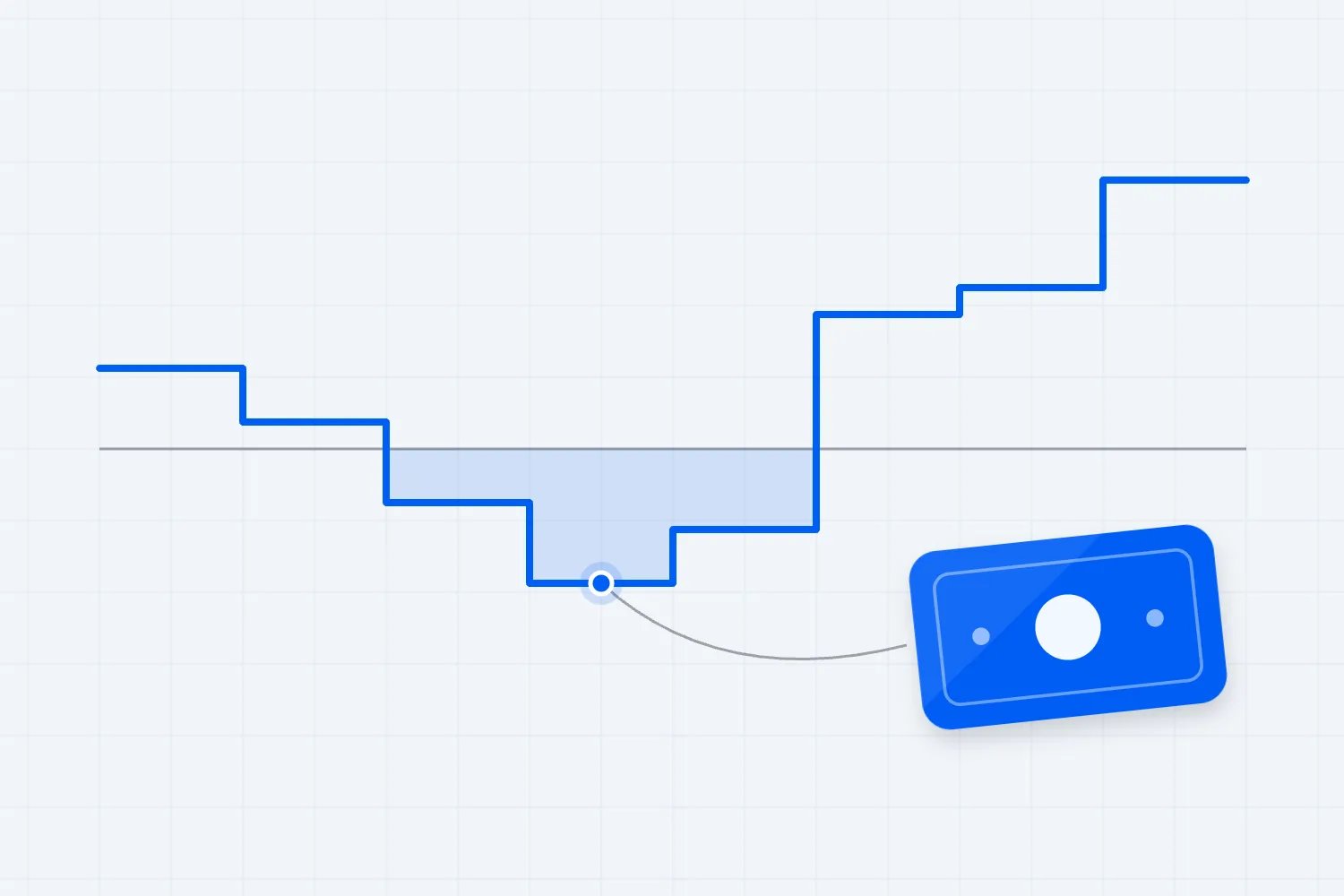
Your final cash is unchanged. But three weeks before the event, the forecast is $5,000 below zero. Without another source of cash or an agreed change to payments, the schedule cannot be paid as written.
This chart uses only the hypothetical calculations above. Negative balances show an unfunded shortfall. They don't assume your bank will allow an overdraft.
| Label | Original schedule | Sponsor pays later |
|---|---|---|
| 6 weeks before | 3000 | 3000 |
| 5 weeks before | 1000 | 1000 |
| 4 weeks before | 4000 | -2000 |
| 3 weeks before | 1000 | -5000 |
| 2 weeks before | 3000 | -3000 |
| 1 week before | 5000 | 5000 |
| Event week | 6000 | 6000 |
| 1 week after | 10000 | 10000 |
Test slower ticket sales separately. A late sponsor payment changes timing. Tickets that never sell reduce total receipts as well. Don't move missing sales into the last week just to make the forecast recover.
For a separate test, assume ticket bank receipts are 20% lower in every period and never catch up. Keep the sponsor on its original date and all payments unchanged. That percentage is a chosen test, not a prediction. Ticket receipts fall from $30,000 to $24,000, so you finish with $4,000 after starting with $8,000. The remaining bank balance is positive, but the forecast period has consumed $4,000 of your starting cash. It also falls $800 below zero three weeks before the event. Recalculate every week; the final balance won't reveal that earlier shortage.
| Label | Original schedule | Ticket receipts 20% lower |
|---|---|---|
| 6 weeks before | 3000 | 3000 |
| 5 weeks before | 1000 | 600 |
| 4 weeks before | 4000 | 3000 |
| 3 weeks before | 1000 | -800 |
| 2 weeks before | 3000 | 200 |
| 1 week before | 5000 | 1000 |
| Event week | 6000 | 1000 |
| 1 week after | 10000 | 4000 |
Use your own sales history where you have it, including when buyers paid and when the money reached you. For a new event, make the assumptions visible and check more than one outcome. Venue capacity alone tells you neither how many tickets you'll sell nor when you'll have the cash.
Calculate how much extra cash you need
Start with the lowest projected balance. In the late-sponsor example, that's minus $5,000. Another $5,000 available at the start would lift the lowest weekly closing balance to zero, assuming every other number stays unchanged.
Zero leaves no room for an unexpected payment. Set a minimum available balance based on the costs you may need to cover at short notice. The amount should come from your event, including its refund exposure and backup arrangements. This is extra headroom beyond money you've already set aside, so don't reserve the same refunds twice.
For this example, let's choose a $2,000 minimum. That's an illustrative decision, not an industry recommendation.
To lift minus $5,000 to positive $2,000, you need $7,000 extra, taking starting available cash from $8,000 to $15,000. On the original schedule, the lowest balance was positive $1,000, so another $1,000 would reach the same minimum.
Check the days inside those weeks before treating either number as sufficient. The actual requirement could be higher if a large bill comes before that week's receipts.
Fix the shortfall before you make the next commitment
Once you know the date and size of the gap, you can make a specific decision. Work through changes you can actually agree and deliver.
Bring a confirmed receipt forward
Ask whether the sponsor can pay a deposit earlier, with the rest tied to agreed milestones. Check its payment process before relying on the new date. Update the forecast when the revised arrangement is confirmed.
Earlier ticket sales may also help, but only after accounting for payout timing and what the offer costs you. Discounting tickets to solve next week's bill can reduce the money available for later bills. Recheck the event budget as well as the cash forecast.
Move or reduce a payment
Speak to suppliers while you still have time to negotiate. A staged payment or smaller initial scope might reduce the pre-event gap. Record any extra charges and the new due dates.
If a supplier agrees to move $3,000 from the week of your worst shortfall into a later week, rerun every subsequent balance. You may have moved the problem rather than removed it. Protecting event delivery still comes first.
Arrange funding or change the event plan
If a gap remains, decide whether you can fund it and what that funding will cost. The Business Development Bank of Canada's cash planning guidance recommends using forecasts to arrange financing before the money becomes urgent.
Only put funding into the working forecast once its availability and timing are confirmed. Include repayments and interest on their expected dates. A possible loan or an owner contribution nobody has agreed to make isn't available cash.
Sometimes the right decision is a smaller event, fewer commitments or a later date. Make that call before the next non-refundable payment. If cash is consistently short because ticket income won't cover the costs, changing payment dates won't fix the underlying budget.
Update the forecast as the event gets closer
Choose one person to own the working version. Each week, replace elapsed estimates with actual bank movements, reconcile the balance and update future dates. Keep the previous forecast so you can see what changed.
Start the review with the largest differences. Did fewer tickets sell? Did a payout arrive later? Did a supplier increase the invoice? Those need different responses. Carrying the same estimate forward without asking why it missed is how a forecast becomes wishful thinking.
Then check the next tight period and the commitments you're about to make. The useful output is a decision: follow up this invoice, confirm that payout, renegotiate this deposit or stop adding costs.
As payments bunch around event day, review the daily dates more often. If several events share one account, also check their combined cash position. Money allocated to one show cannot cover another show's gap at the same time.
Keep the forecast open after the event until the remaining receipts, bills and refund obligations are accounted for. Then compare the plan with what happened. That gives your next forecast a better starting point.
Know the tight week before it arrives
Your event cash-flow forecast should tell you how much money you can use, when it arrives and whether it covers the payments ahead. Build it from real dates, keep uncertain receipts visible and test what happens when they arrive late or don't arrive at all.
In our example, a $6,000 sponsor payment arriving later creates a $5,000 shortfall without changing the final result. Spotting that before you commit is the value of doing this work. You get time to agree a payment change, secure cash or rethink the plan while those choices are still available.

Author: By the Loopyah Content Team
The Loopyah Content Team shares expert insights, practical guides, and industry updates to help event organizers create unforgettable experiences and stay ahead in the event planning world.