· 13 min read
How to Ensure Event Strategy Aligns With Sponsorship Goals and Revenue Targets
You've worked out the ticket price and what the event will cost, but the budget still needs sponsorship to make it work. Now you need to give a brand a reason to spend its money on your event.
Take American Express at Wimbledon in 2026. Cardholders could relax in a dedicated lounge between matches or pick up a complimentary radio to follow the action, subject to capacity and availability. Those benefits gave Amex customers something useful because they held the card.
You can apply the same thinking at a smaller event. If a sponsor wants to reward its customers, a hosted reception or reserved hospitality could be worth paying for. That gives you something specific to sell. You can work out the cost of the space and staffing, agree how many guests you will accommodate and price the package so it contributes to your profit.
This guide explains how to work out what sponsorship could realistically contribute to your event. We'll look at how to build packages worth buying, price them so the deal works for you too, and show sponsors what they got for their money.
Why sponsorship belongs in the plan from the start
Sponsorship can help pay for an event without putting the whole bill on ticket buyers. But the amount a sponsor pays is only part of the calculation. A branded lounge may need furniture, power, staff and cleaning. A sponsored reception needs catering. Someone on your team has to sell the deal and deliver it.
Suppose you sell $150,000 of sponsorship and spend $30,000 delivering it, including sales commissions and payment fees. That leaves $120,000 to cover the rest of the event and contribute to profit. These are illustrative figures, but the distinction is critical: a bigger sponsorship deal can leave you with less money if it comes with expensive promises.
The strongest offers also improve the event for your audience. In Loopyah's February 2026 survey of 500 US consumers, 53.2% selected high price for unclear value as a reason an event did not feel worth buying. Sponsorship can help fund something people will use or enjoy, such as a shaded seating area, a useful workshop or a better hospitality experience.
Keep the reason people bought tickets in view. A conference session shouldn't turn into a sales presentation just because someone paid to sponsor it. Agree where the brand will appear and what it can influence before making the offer.
Step 1: Set a sponsorship target you can support
Start with the event budget. Estimate ticket sales and other income, include all the costs of running the event, and decide how much profit you need to make. The remaining gap tells you what sponsorship needs to contribute after its own costs.
For example, suppose the event costs $330,000 before sponsor-specific work, and you want $40,000 in profit. If tickets and other income bring in $250,000, sponsorship needs to contribute $120,000. Allowing $30,000 for delivering the sponsor packages means you need $150,000 in sponsorship sales. Total income would be $400,000 against $360,000 in total costs.
Now check whether that target is plausible. Start with what previous sponsors actually paid, which ones may renew, and conversations with new prospects. A first-time event will need evidence of its audience and a clear offer. An industry average cannot tell you what your sponsors will pay.
Keep donated goods and services separate from cash sponsorship. Free equipment helps the budget when it replaces equipment you would otherwise hire. Its advertised retail value cannot pay your venue deposit. Our guide to setting sponsorship goals explains how to divide a target between larger partners and smaller packages.
Track three amounts separately: what you hope to sell, what sponsors have agreed to pay, and what has reached your bank. A signed agreement with payment due after the event won't cover a supplier invoice due next week. Loopyah's event financial reporting brings sponsorship and ticket income together with fees and the costs you add, and shows cash separately from profit.
Step 2: Build packages around the sponsor's goal
Ask the sponsor what would make the deal worth renewing. A drinks brand may want people to try a new product. A software company may want meetings with potential customers. A local employer may want people to recognise its name. Those goals need different packages.
Before writing the proposal, ask who the sponsor wants to reach, which result matters most, how it will judge that result, and what budget it has available. Ask what its own team will contribute too. You may provide the space and audience while the sponsor provides samples, staff or a booking system.
Then make the offer specific. A product trial could include a staffed sampling point and a count of samples distributed. A customer reception could include a room, catering and an agreed guest allocation. An awareness package could include named positions on signs, event emails and social posts. List the quantities, dates and responsibilities so both sides know what is included.
Check each idea against the event schedule and site plan. Is there room for it? Will the right people pass through? Can staff run it at the promised times? Our sponsor activity ideas can help with the concept, but you still need to work out who will use it and how you will deliver it.
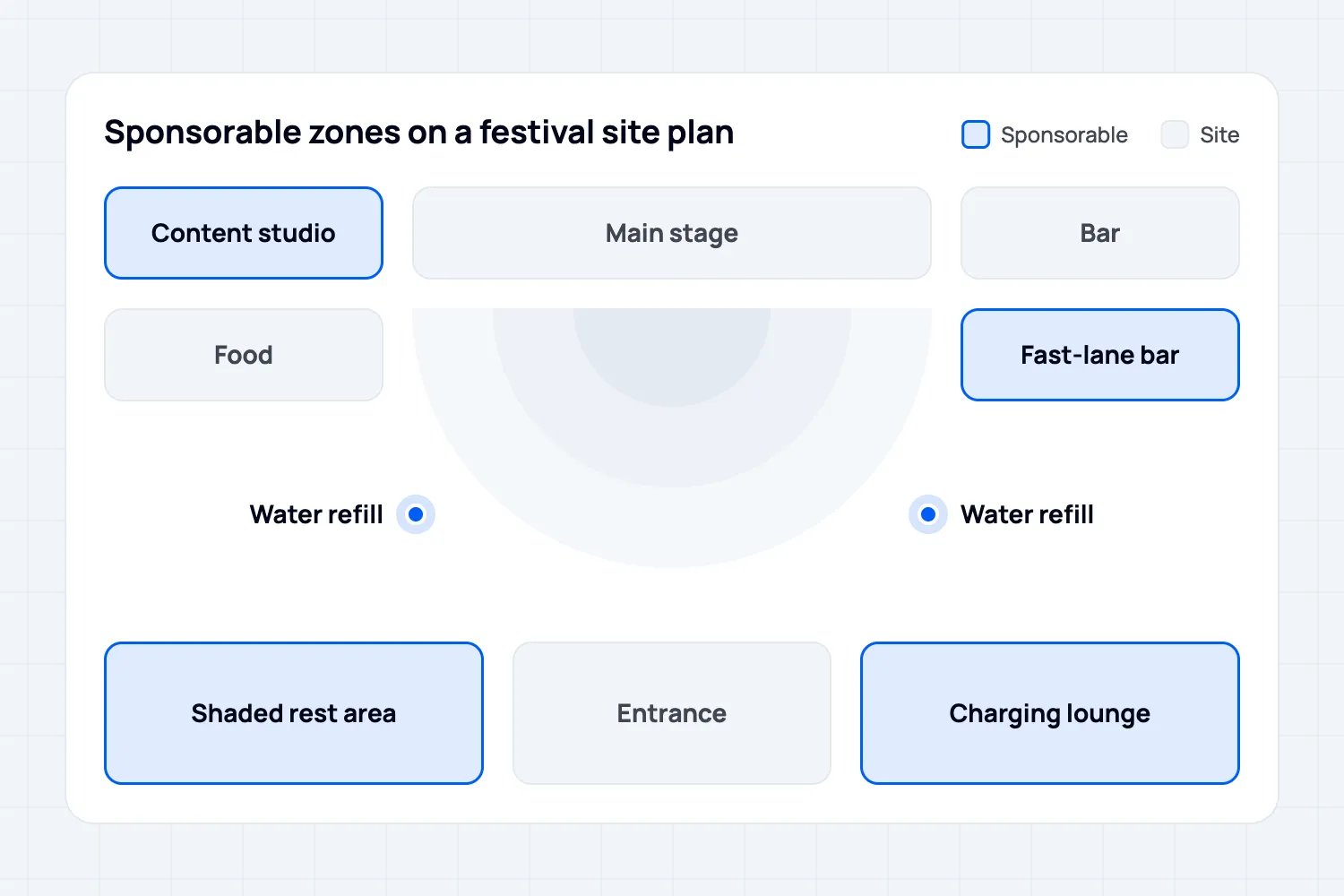
Start with problems your audience already notices. In our November 2025 survey of 500 US attendees, 62.6% selected overcrowding, 57% long lines and 55.8% expensive food and drinks among their biggest event frustrations. Water refills, shade or charging points may be useful things for a sponsor to support. Check that the space and staffing will improve the experience rather than create another queue.
Don't promise the whole attendee list as part of a package. Decide what information the sponsor needs, how it will be collected and what people will be told. If attendees can choose to hear from the sponsor, make that choice clear. Report totals where individual details are unnecessary.
Don't assume sponsor logos will increase ticket sales either. A sponsor may help promote the event, but agree on the posts, emails or other promotion it will provide before counting on that support.
Step 3: Price the packages and check the budget
Write down what every package will cost you. Include production, extra staffing, equipment, complimentary tickets, reporting, commissions and payment fees. If you promise a lounge that requires a new build, include the build. If a sponsor takes seats you could otherwise sell, account for that too.
Then consider the offer from the sponsor's side. Is this the audience it wants? How useful is the access you can provide? What evidence can you show from previous events? Use those answers to test the price in conversations with suitable brands. Your costs tell you what you need to charge; they don't prove someone will pay it.
For the $150,000 example, you could offer one headline package at $45,000, three packages at $20,000 and six at $7,500. That's ten deals averaging $15,000, with different benefits at different prices. You don't need ten identical parts of the event, and each package can combine several benefits.
That price list reaches the target only if everything sells. Run another version without the $45,000 headline deal, leaving $105,000 of sponsorship income, and remove any delivery costs you can avoid. Check what happens if smaller packages go unsold too. Decide which costs you would cut or which plans you would change before relying on a full sell-out.
Be precise about exclusivity. "Only one brand can buy this lounge package" is different from "no competing drinks brand can appear anywhere at the event." Define the category, locations and dates covered, and check the promise against venue agreements and other packages. Our sponsorship packages guide has examples you can adapt.
Step 4: Agree on the sales deadlines and payment dates
Ask each prospect when its budget is decided, who approves the deal and how long that takes. Work backwards from that answer and your own production deadlines. A sponsor that needs several departments to approve a national campaign will usually need more preparation than a local business buying a simple package.
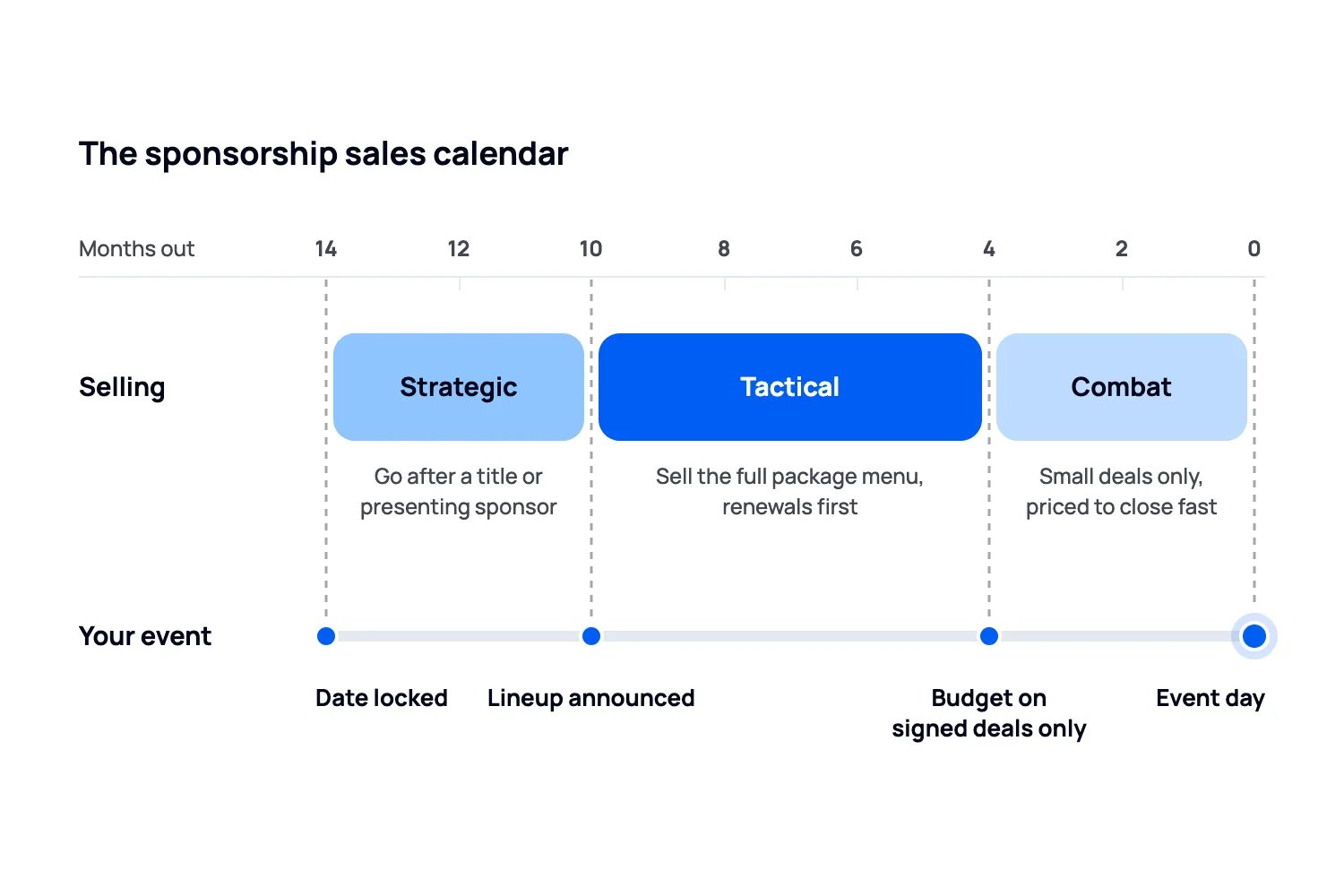
For larger annual events, Bruce Erley's 2022 Sponsor Doc column for the IFEA offers one planning example: approach major partners 14 to 10 months ahead, do most package selling 10 to 4 months ahead, then finish the remaining deals closer to the event. The graphic below uses his labels. Treat the dates as a guide to starting early, not a rule that makes a deal impossible after a particular month.
Build your own schedule around the decisions that need to happen:
Prepare the offer. Confirm the event date, likely audience, location, available space and benefits you can provide. Use evidence from previous events where you have it, and label attendance forecasts as forecasts.
Start conversations with likely partners. Speak to previous sponsors first, then suitable new prospects. Ask about their goals and approval process before sending the full proposal.
Agree the deal before production deadlines. Set dates for the contract, payment, logos, artwork, equipment and staffing details. Build these into your event marketing schedule so you only promise promotion you can deliver.
Check the payment schedule against your bills. If a supplier deposit depends on sponsorship money, allow time for the sponsor to pay and for the payout to reach you. Track overdue payments separately from deals still being discussed.
If you're starting late, focus on prospects that can decide in time and packages you can still deliver well. You can still discuss a larger deal if the sponsor has budget and can meet the deadlines. Don't promise printed branding after the print deadline, and don't cut a price without checking what the deal will leave you.
Review open conversations each week. For each prospect, record the package, proposed price, decision-maker, next action, expected decision date and payment date. Keep these potential deals separate from signed agreements and cash received. Set a date for reducing spending if enough sponsorship hasn't been secured.
With Loopyah event sponsorship, you can give each package a price, quantity and list of benefits, then share a private page with prospective sponsors. Choose whether brands can buy immediately or need your approval. Set the quantity to one when only one brand can buy that package.
After payment, sponsors can upload their logos and notes for the event. The dashboard tracks applications and payments, and you mark a sponsorship fulfilled once you have delivered it. Loopyah charges 4.5% when a sponsor pays, including card processing. Your share transfers to Stripe the following day and goes into your weekly payout alongside ticket sales. These terms were checked on 5 October 2026.
See how sponsorship packages work on LoopyahStep 5: Measure and report the results
Agree on the report before you sign the deal. The WFA and Lumency's 2025 sponsorship report recommends connecting sponsorship to business objectives and using measured results to guide future decisions. Ask which result the sponsor needs to show its own team, then decide what you will count and who will collect it.
Separate what you delivered from what happened afterwards. You can show that a sampling stand ran for the agreed hours and distributed a recorded number of samples. The sponsor may need its own research or sales records to tell whether that changed buying behaviour. Agree how you will combine the evidence instead of treating every interaction as a sale.
Show what you promised and what you delivered. List the agreed signs, posts, emails, spaces and activities, with photos or records where useful. Explain anything that was missed or changed.
Match the numbers to the goal. For a product trial, record samples distributed and relevant feedback. For a hosted reception, report attendance and the sponsor's feedback on the meetings. For awareness, report the agreed visibility and any research you both arranged.
Use email results carefully. Loopyah's email analytics report delivery, opens and clicks. They can help describe how a sponsored email performed, but they do not by themselves prove sales for the sponsor.
Include attendee feedback where it answers a useful question. Your post-event survey could ask whether people tried the product or used the sponsored area. State how many people answered so the sponsor can judge the result.
Agree on the next step. Review what worked, what needs changing and whether the sponsor wants to return. Give the next proposal a clear scope and price.
Give each measure an owner before the event. Brief the photographer on the sponsor photos you need, agree how staff will count activity, and test any links or sign-up forms. Our guide to measuring event performance can help you choose the numbers that matter.
Agree on a reporting date. Within 30 days can be a useful working target for the delivery report, with a later follow-up if business results take longer. If something was missed, say what happened and discuss a remedy. Use the results to propose the next deal while the sponsor still remembers the event.
When the numbers say no
If the sponsorship you can realistically sell won't cover the budget, change the plan before committing more money. A prospect saying "this looks interesting" is a reason to follow up, not a reason to book another stage.
Look at a smaller site, fewer stages, a shorter programme or other event costs you can reduce without breaking promises to ticket buyers. You can also change the sponsor offer if conversations show there is demand for something different. Keep a clear deadline for the decision, especially before signing supplier contracts you cannot afford without the deal.
A sponsor's payment date matters as much as the sale when you have bills due. Even a profitable event can run short of cash before it opens. Match expected receipts to supplier payment dates and arrange any necessary funding before you commit the spend.
The short version
Set the amount sponsorship needs to contribute after delivery costs, then check that your audience and offers can support the sales target.
Ask each sponsor what it wants to achieve and build a package that also fits the event people bought tickets for.
Price every package, define any exclusivity and check the budget with some packages unsold.
Agree on decision, production and payment dates. Keep possible deals, signed agreements and cash received separate.
Decide what you will measure before the event, collect it and send an honest report on the agreed date.
A good sponsorship plan should make sense to everyone involved. The sponsor can explain why the offer is worth buying, attendees get an event they want to be at, and you know what each deal contributes after its costs. For help finding and approaching brands, start with our guide to event sponsorship.

Author: By the Loopyah Content Team
The Loopyah Content Team shares expert insights, practical guides, and industry updates to help event organizers create unforgettable experiences and stay ahead in the event planning world.