· 16 min read
How to organise a music festival: budget, bookings and ticket sales
To organise a music festival, start with a crowd you can realistically sell to, a site you can operate safely and a budget that survives weaker ticket sales. Then secure the necessary approvals, book the programme within that budget and tie each new financial commitment to money you can actually access.
The lineup matters. So do the bills that arrive before the lineup has sold enough tickets. A festival can look profitable at full capacity and still run out of cash before the stage goes up.
This guide covers audience and capacity, festival economics, cash timing, bookings, approvals, ticket sales and delivery. It is written for independent operators running paid events. The financial examples are hypothetical US dollars, not supplier quotes. The regulatory section uses New South Wales, Australia, as a specific example; its requirements are not universal.
Define the festival people will pay for
Start with a proposition you can explain without listing every artist. Who is this day for, what connects the programme and why is it worth the ticket price and journey?
Choose the audience's likely travel area, the format and the date together. A local afternoon event has different transport, accommodation and staffing needs from a destination weekend. Every extra day or stage adds another set of production and operating decisions.
Look for evidence from comparable events you have run, your reachable customer list and the local buying history of proposed performers. Ask artist representatives for relevant market evidence. A national follower count does not tell you how many people will buy a ticket in your town.
Separate people you can reach from people you expect to buy. Your email audience, the venue's audience and the artists' followers may overlap. Adding them together as if everyone is a different customer makes the demand estimate look larger than it is.
Write a cautious sales case before negotiating major commitments. If you cannot explain where the first paying customers will come from, a bigger headliner is an expensive experiment.
For a first edition, make uncertainty visible. You may know what similar local shows charge without knowing how their audience will respond to your new event. Mark that difference in the forecast. Conversations with potential buyers can help you understand objections, but expressions of interest are not paid orders.
Choose a smaller deliverable format when the evidence cannot support the larger one. A coherent programme in a suitable venue gives you something concrete to price and sell. Adding camping, another stage or a second day before establishing demand adds obligations that ticket enthusiasm alone cannot pay.
Choose the site and the ticket capacity together
Walk the site with the people responsible for production and safety. Check access for trucks, setup time, power, water, toilets, accessible routes, emergency access and what happens if weather changes the usable ground.
A site that looks inexpensive can require extensive temporary infrastructure. Compare the complete operating cost with a venue that already has working services. Ask what the hire includes, who controls bar and food revenue, and who pays for cleanup, damage or overtime.
Establish the permitted attendance and how staff, artists, contractors and guests count toward it. Ticket inventory must fit that approved arrangement. Do not use the number of people you hope to accommodate as evidence that the site can accommodate them.
For the financial example below, assume the agreed plan allows an audience allocation of 1,000. We offer 900 paid tickets, allocate 50 complimentary tickets and keep 50 places unissued. Crew and performer requirements have already been accounted for separately within the site's overall approved limit.
Those 50 unissued places are not extra revenue in the budget. The complimentary allocation still creates service costs. If either allocation changes, update the ticket plan and the economics before giving anyone another pass.
Build the budget before making artist offers
Price the minimum festival you can deliver properly. Include the programme, site, production, safety, staffing, administration and marketing. Get written quotes for the things that determine whether the event is viable.
Separate costs you owe regardless of attendance from costs that rise with each guest. Some costs increase in steps: another operating area may require additional staff or facilities even if only a few more tickets are sold. Do not force those into a simple per-person estimate.
The event budget guide covers the full planning process. For a festival, pay particular attention to artist travel and hospitality, equipment requested by performers, setup and removal days, overnight security and restoring the site after the audience leaves.
Ask suppliers to separate what is included from what triggers an additional charge. Delivery, operators, fuel, testing, overtime and removal may change the final bill. Compare quotes against the same schedule and specification. Two sound-system quotes are not comparable if one includes engineers for the full day and the other supplies equipment only.
Assign each cost to one budget line so it is counted once. If the site package includes toilets, do not add them again without checking the capacity and service arrangement. If an artist quote excludes accommodation, add it explicitly rather than expecting the contingency to absorb it later.
Use one consistent financial example
Our illustrative single-day event has a $46,000 fixed-cost budget:
Artists, including agreed travel and hospitality: $16,000.
Stage, sound, lighting and production: $11,000.
Site hire and fixed site services: $6,000.
Safety services and staffing: $6,000.
Marketing: $3,000.
Licences, insurance and administration: $2,000.
A cost contingency assumed fully spent: $2,000.
These are invented planning inputs, not market prices or recommended spending shares. Replace them with quotes for your site and programme. The contingency is not a reason to leave known costs out.
Assume an additional $8 in services and consumables for every admitted audience member, including complimentary guests. All 50 complimentary guests attend in every scenario. There are no refunds, taxes, promoter commissions or bar profits in this simplified example; include applicable items in your real forecast.
The ticket plan sells 200 tickets at $40, then 500 at $60, then 200 at $80. Each release sells out before the next opens. The illustrative ticketing fee is $1 plus 5% of each paid ticket, absorbed by the organizer. This is a hypothetical calculation, not Loopyah's published rate.
Finally, assume $12,000 of confirmed sponsorship income, after its selling and fulfilment costs. No unsigned deals or in-kind contributions are counted as available money.
Check a weak result as well as a sell-out
At 900 paid tickets, ticket revenue is $54,000. Sponsorship brings total income to $66,000. Ticketing fees are $3,600, audience costs are $7,600 and fixed costs are $46,000. The projected surplus is $8,800 before any excluded items.
At 700 paid tickets, the first two releases produce $38,000. With sponsorship, income is $50,000. Costs total $54,600, leaving a $4,600 loss. At 500 paid tickets, income is $38,000 against $52,200 in costs, a $14,200 loss.
| Label | Total income | Total costs |
|---|---|---|
| 500 tickets | 38000 | 52200 |
| 700 tickets | 50000 | 54600 |
| 900 tickets | 66000 | 57200 |
This budget reaches break-even at 769 paid tickets under the stated release order. After 700 sales, another $4,600 must be covered. Each $80 ticket contributes $67 after its $5 fee and $8 audience cost, so 69 more are needed.
That is different from assuming every ticket earns the final release's price. Our event break-even guide explains the underlying calculation. If the cautious sales case loses more than you can fund, change the event before signing the contracts.
Check when the money arrives
A budget tells you whether the event is expected to make money. A cash plan tells you whether you can meet each payment date. You need both before deposits become non-refundable.
List deposits, balances and cancellation dates beside the money expected to clear into your bank. A ticket sold is not necessarily a payout received. A sponsor's signature is not the same as a settled invoice.
NSW's event documentation guide recommends financial scenarios and a cash-flow statement, including how lead-up bills will be paid before event income arrives. Apply that discipline to every substantial booking.
Map the payment milestones
Continue the same example, assuming the full 900 paid tickets eventually sell. The organizer supplies $20,000 of opening capital. This finances the event but is not event revenue.
At the deposit stage, the first $6,000 sponsorship instalment has cleared. Available cash is $26,000, and cumulative bills paid are $18,000, leaving $8,000.
At the next commitment date, the remaining $6,000 sponsor payment and $7,400 of net receipts from the first 200 tickets have cleared. Total cash received, including capital, is $39,400. Cumulative bills are $33,000, leaving $6,400.
Before opening, assume all $50,400 of net ticket receipts have cleared. Capital and sponsor cash bring cumulative receipts to $82,400. With $50,000 of non-ticketing bills paid, the bank holds $32,400.
After settlement, non-ticketing costs total $53,600. The remaining $28,800 consists of the original $20,000 capital plus the $8,800 surplus. Ticketing fees were already deducted from receipts, so they are not charged again in this cash plan.
| Label | Bank balance |
|---|---|
| Deposits paid | 8000 |
| Next commitments paid | 6400 |
| Before opening | 32400 |
| Final settlement | 28800 |
These receipt dates are assumptions, not a payout promise. If neither the remaining sponsor instalment nor early ticket receipts arrives by the second milestone, only $26,000 has come in against $33,000 due. You need to resolve that $7,000 gap before making the commitment.
Agree decision dates while you still have choices. Before a deposit or cancellation charge increases, review cleared cash, signed obligations, current sales and the cost of changing course. Your options might include negotiating timing, reducing an uncommitted part of the programme or obtaining funding you have actually secured. Do not count an unapproved loan or a possible sponsor as a solution.
Record the decision and who owns it. A sales target is useful only when missing it prompts a specific review. Keep refund obligations and the remaining cost of delivering the event visible when deciding how much of the bank balance is available to spend.
Sell sponsorship you can deliver profitably
The $12,000 in our example is net sponsorship income. In practice, start with the agreed payment and subtract everything you must spend to provide the package. Extra production, signage, hospitality, staffing and content delivery can turn a promising sale into a small contribution.
Offer rights that suit the site and audience. Confirm that a proposed branded area, product sampling activity or category exclusivity fits the venue agreement and operating permissions before selling it. Give every promised benefit a delivery owner and a cost.
Separate a cash payment from donated goods or services. A supplier providing equipment can reduce an expense you would otherwise pay, if the equipment meets the agreed requirement. It does not put money in the bank for an artist deposit. Avoid recording the same contribution as both cash income and a cost saving.
Set payment dates against your commitments and agree what evidence the sponsor receives after the festival. Keep applications, verbal interest and signed deals separate in your forecast. If the event only works with sponsorship, the point at which those deals must be confirmed belongs in your decision schedule.
Complimentary tickets promised to sponsors also need an allocation. In this example, they must fit inside the existing 50 complimentary places. Adding another package cannot quietly create more free admissions while the budget continues to assume the original count.
Book the programme your event can afford
Give the artist representative a clear brief: date, location, proposed set, event format, capacity and the offer you can support. Confirm availability and all costs before using the artist's name to sell tickets.
The fee is only part of the commitment. Ask about transport, accommodation, hospitality, required equipment, soundcheck, stage time and the production specification. A booking that forces a larger stage or another technical crew changes more than the talent line.
Record the fee structure, deposit, balance date, cancellation terms, performance obligations and agreed promotional use in the contract. Have suitable advisers review material commitments, particularly guarantees or revenue shares. A conversation about a possible date should not be treated as a confirmed booking.
Build the timetable with your production lead. Allow realistic changeovers, access and equipment checks. Confirm who supplies shared equipment and which requirements are specific to an act. Extra performances are useful only if the site and running time can support them.
Keep your budget for the whole programme visible during negotiations. Spending the reserve on one booking leaves less money for the production and audience services that every act depends on.
For Australian events, check the applicable OneMusic event licensing scheme. Its current material distinguishes ticketed music events and eligible temporary music events, with reporting guidance for different formats. Confirm the licence, fee basis and reporting obligations for your event instead of assuming the venue's usual arrangements cover it.
Confirm approvals and safety responsibilities early
Speak to the landowner and relevant authorities before treating a date as ready to announce. Ask which permissions apply to the actual site, audience, operating hours, structures, food service, alcohol and transport plan.
Keep an approvals register with the authority, required document, submission date, decision and responsible person. A venue booking does not answer every one of those questions.
A specific example for New South Wales
NSW's music festival definition and common questions describe a specific regulatory category. It includes ticketed music or dance events with a series of performers, a defined area and attendance of at least 2,000, excluding events that meet its concert definition.
Calling a smaller event a festival does not automatically put it in that category. Our financial example is below that attendance threshold. It still needs the permissions and safety arrangements applicable to its site and operation.
For events within the NSW music-festival framework, the government's planning guidance specifies early notification at least 120 days before the start. Festivals must operate with a Health and Medical Plan. Where NSW Health agreement is required, submission is normally at least 60 days before the festival, subject to the stated alternative-date provision.
The same guidance encourages early council engagement and identifies separate liquor, health, police and workplace-safety considerations. Check the current process with the relevant agencies for your event. Old templates referring to a Safety Management Plan may predate the amended framework.
Give safety decisions named owners
Use competent specialists to determine the arrangements your site needs. Agree who can stop a performance, suspend entry or start an evacuation, and how that decision reaches stage management, security and attendees.
NSW's event safety and security guidance covers weather planning, temporary structures, crowd management, noise and other operating risks. It calls for wind-management actions suited to the event. Get thresholds and actions from the responsible specialists; do not invent a universal wind speed for every structure.
Agree emergency access, medical locations, drinking water, accessible routes and lighting before placing vendors or sponsor installations. Keep those routes usable during setup and removal as well as public opening. Safety services are part of the cost of operating the chosen event, not spending to cut when sales disappoint.
Put tickets on sale with a clear plan
Launch once the event and its announced commitments are ready to support the offer. The ticket page needs the date, location, programme, entry conditions, accessibility information and refund policy. Publish what is confirmed and explain any material uncertainty honestly.
Set quantities from the approved ticket allocation. In our example, the three paid releases total 900. Complimentary tickets and unissued capacity remain separately controlled. Nobody should be able to increase public inventory casually because a campaign is working.
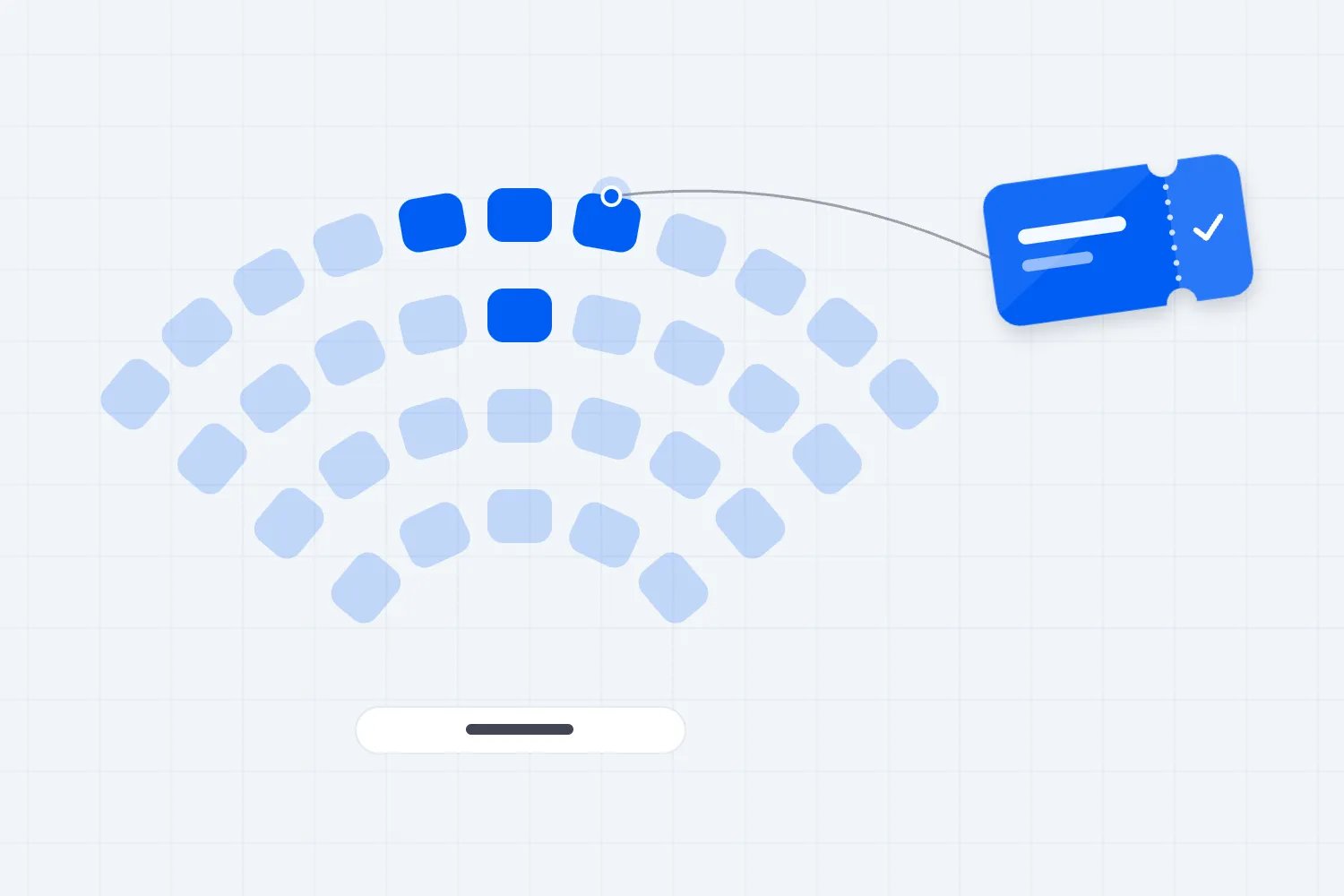
Loopyah ticketing lets a ticket type have releases with their own price and quantity, opening the next when one sells out. Use that to implement the agreed plan. Check the actual fees and payment settings for your country rather than copying the hypothetical fee in this guide.
Give every marketing activity a clear audience and ticket destination. Start with reachable buyers whose interests fit the programme. Coordinate the venue, artists and partners around the information they have agreed to share, including the live link and announcement timing.
Set review dates before your next spending commitments. Check tickets sold by release, money earned, source of sales and remaining inventory. If sales lag, investigate whether the problem is reach, the offer, purchase friction or an unrealistic forecast before offering another discount.
Loopyah's event CRM brings ticket, door and sponsorship sales, refunds, fees, promoter payments and AI Ads Manager spend into event finances. You add outside costs or copy them from a previous event. Use the resulting profit and cash views while keeping responsibility for supplier commitments and assumptions with your team.
Prepare the team for delivery and settlement
Turn the operating plan into a shared schedule covering setup, supplier arrivals, checks, doors, performances, changeovers, closing and removal. Give each task an owner and a contact route. Brief the people who will make decisions, not just the people who wrote the plan.
Before opening, confirm the site is ready with the responsible specialists. Test ticket scanning, communication equipment and the route for a buyer whose ticket cannot be found. Give door staff the access they need to check people in; Loopyah supports check-in access without sharing your organizer login.
Run one practical rehearsal of a difficult situation before doors open. For example, ask the entrance and stage teams what they do if entry must pause while the site remains open. Check who makes the decision, which channel carries it and who tells waiting customers. If the answers conflict, resolve them in the briefing. A written plan helps only when the people using it understand the same instruction and authority for that specific situation.
Keep the person controlling ticket inventory in contact with the entrance team. Track complimentary admissions as well as paid ones. Door sales are only available if your approved capacity, ticket plan and operating conditions allow them.
After the event, reconcile ticket income, fees, refunds, sponsor payments and supplier invoices. Check artist settlements against their agreements and complete required licensing reports. Investigate differences while the people involved still remember what happened.
Then record the decisions for another edition. Which bookings attracted paying customers? Which costs exceeded the quote? What should change about capacity, price, site layout or the sales schedule? A festival worth repeating needs a reason beyond having survived the first one.
Build the next commitment on evidence
Organise the festival in the order that keeps decisions affordable: establish demand and a workable site, test the budget, confirm cash timing, secure bookings and approvals, then sell and deliver the offer you made.
A sell-out is a useful upside case. The plan you sign should also tell you what happens when fewer people buy, money arrives late or a cost changes. That is the foundation of a festival business you can keep running.

Author: By the Loopyah Content Team
The Loopyah Content Team shares expert insights, practical guides, and industry updates to help event organizers create unforgettable experiences and stay ahead in the event planning world.