· 15 min read
How to organise a paid conference: budget, speakers and ticket sales

To organise a paid conference, start with a specific audience and a reason they would pay to attend, then build a budget that works at realistic ticket sales. Use that budget to choose the venue, shape the programme, agree speaker commitments and launch ticket sales, with clear owners for attendee communication, safety and delivery.
The expensive mistake is booking a room and filling an agenda before answering the commercial question. Who is buying, what do they need from the day, and how many of them can you realistically reach?
This guide walks through those decisions for an independently organised, paid conference. We'll use an illustrative 300-place conference to connect pricing, costs and cash, then work through speakers, registration, promotion and the event itself. The example figures are in USD and are planning assumptions, not conference industry benchmarks.
Define what someone is paying to attend
Start with the person who will use the ticket. "Business leaders" is too broad to help you choose a session or write a useful sales page. A conference for independent retail owners choosing their next growth investment has a clearer job to do.
Write down their situation, the decisions they need to make and what they should leave with. They might need to compare ways of opening a second location, question operators who have already done it, and meet suppliers who understand smaller businesses. That gives you something to build around.
Then identify the buyer. A delegate buying personally makes a different decision from an employee seeking a manager's approval. The latter may need the agenda, learning outcomes, price, invoice details and a clear explanation of how the day relates to their work. Make those easy to find.
Before committing substantial money, test the proposition with people who fit the audience. Ask what they paid to attend recently, what made the day useful and what would stop them travelling to yours. Show them a proposed topic, location and price range. A polite "sounds interesting" is weaker evidence than someone explaining how they would get the ticket approved.
For a first edition, keep the promise narrow enough to deliver. A strong single-track day is a sensible starting point when your audience shares the same problem. Extra tracks mean extra rooms, speakers, technicians and choices. Add them when the audience needs them and the budget supports them.
Your first planning document can be one page. Give it an audience, a promise, a likely ticket price, a paid-attendance target, a spending ceiling and an owner. Revisit it whenever a new idea adds cost.
Work backwards from the date using actual dependencies. You need a credible programme and confirmed venue before asking buyers to commit. Speakers need enough notice to prepare and travel. Your venue will set deadlines for final numbers, production and payment. Put those dates in the plan first, then fit your sales announcements around them. There is no universal number of planning months that makes a conference ready. A repeat edition with contracted suppliers has different work ahead from a first edition still testing its audience.
Build the budget around paid attendance
Count the tickets you can sell after reserving places for speakers, sponsor guests and other non-paying delegates. Work from the venue's approved layout and capacity arrangements; staff and contractors still matter to the overall occupancy plan even when they do not occupy delegate seats.
In our example, the layout provides 300 delegate places. You reserve 20, leaving 280 paid places. Fixed costs are $36,000, covering venue hire, production, speaker commitments, staffing, marketing, insurance and a contingency allowance. The allowance is included in every calculation below.
Each delegate costs another $50 in catering and other attendance-related costs. The 20 non-paying places therefore cost $1,000. Confirmed sponsor income is $6,000, and sponsor delivery costs are already included in the fixed budget. Do not add hopeful sponsorship to this number.
You expect to retain an average of $200 per paid ticket after applicable taxes and ticketing or payment charges. That leaves $150 per paid delegate towards the remaining costs. Your break-even calculation is $36,000 plus $1,000, minus $6,000, divided by $150. Rounded up, you need 207 paid delegates.
At 240 paid delegates, ticket receipts are $48,000. Add sponsorship and total income is $54,000. Fixed and delegate costs total $49,000, leaving $5,000 before business-level taxes or expenses outside this event budget. At 160 paid delegates, the same plan loses $7,000.
| Label | Income USD | Costs USD |
|---|---|---|
| 160 paid | 38000 | 45000 |
| 207 paid | 47400 | 47350 |
| 240 paid | 54000 | 49000 |
| 280 paid | 62000 | 51000 |
The chart keeps average retained ticket income at $200 in every scenario. Your real average will change if discounted tickets sell first or a premium option underperforms. Recalculate from the tickets actually sold and the remaining inventory.
Use our event budget guide to organise the individual costs. Then check whether the break-even attendance is believable for the audience you can reach. If it is not, change the cost, price or format before signing commitments.
Put payment dates beside every commitment
A conference can make money on paper and still run out of cash before the doors open. Deposits are due on specific dates. Ticket income becomes usable according to the payment and payout arrangements you have agreed.
Put each supplier deposit, balance, cancellation deadline and sponsor payment into a dated cash plan. Record the date money should reach your bank, rather than the date you hope someone will buy. Include any reserve or hold that applies to your payment account.
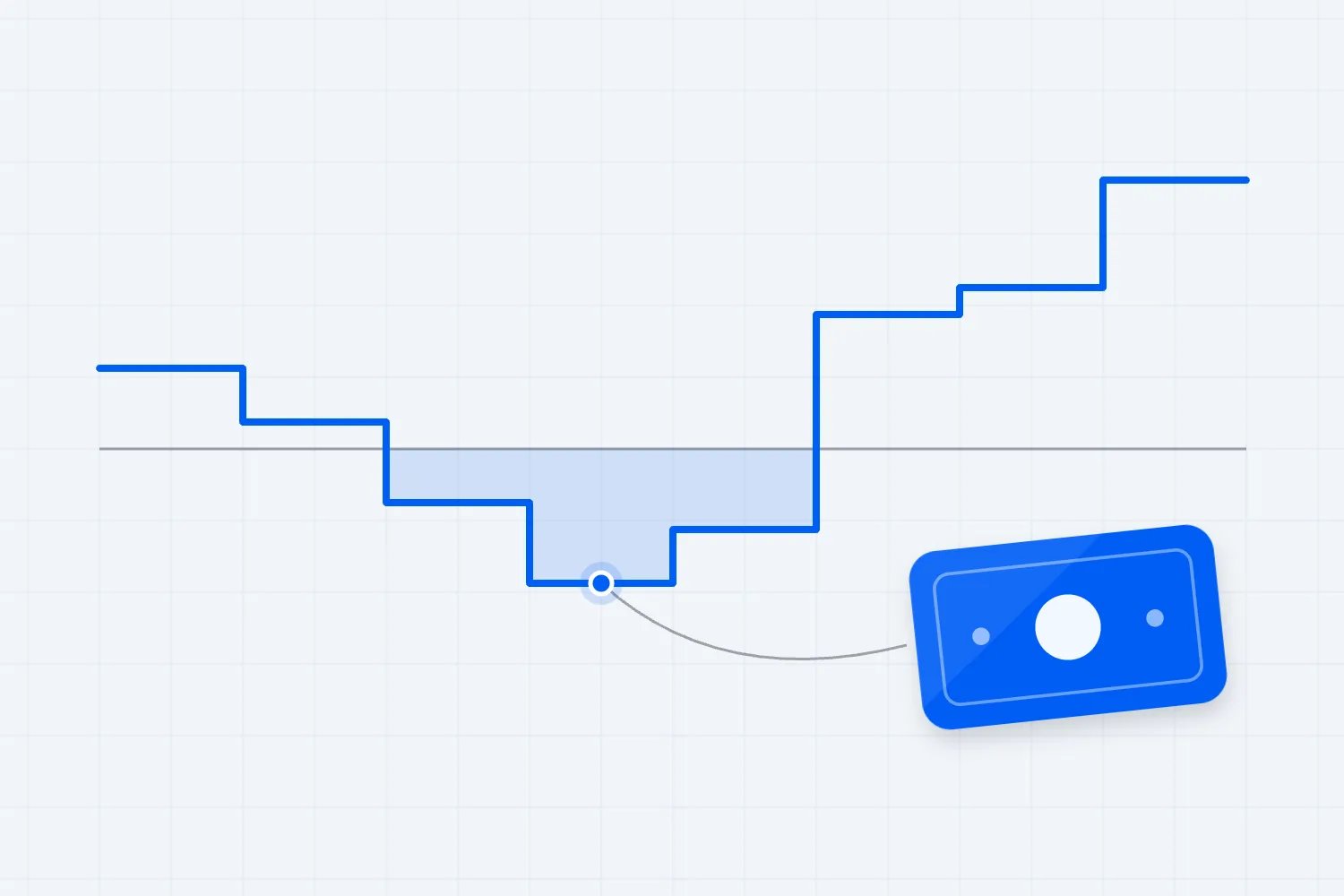
Here is the timing for our 240-ticket example. You start with $5,000 of available business cash. Sixteen weeks before the event, $12,000 of deposits is due, before any ticket or sponsor receipts. That creates a $7,000 funding gap immediately.
Later receipts can make the final result look healthy without fixing that earlier deadline. Across the remaining periods, retained ticket receipts total $48,000 and sponsor receipts total $6,000. Total event payments are $49,000. The projected closing balance is $10,000, comprising your original $5,000 and the event's $5,000 surplus.
| Label | Projected balance USD |
|---|---|
| Opening | 5000 |
| 16 weeks before | -7000 |
| 12 weeks before | -4000 |
| 8 weeks before | 2000 |
| 4 weeks before | 5000 |
| Event period | 10000 |
Negative balances in this illustration identify money you must arrange before committing. They are not permission to let your account become overdrawn. Additional funding also changes the final cash balance and may bring interest or other costs, which belong in the revised plan.
You could negotiate staged deposits, secure a sponsor payment earlier or reduce the first commitment. What matters is agreeing the solution before the payment falls due. Our event cash flow forecast guide explains how to keep this forecast current as sales and invoices change.
Schedule a commercial review before each commitment becomes more expensive to cancel. Bring the tickets sold, likely remaining sales, available cash and supplier terms into the same discussion. Decide whether to proceed, adjust the scope or exercise a contractual option while it still exists. Reducing an optional reception may preserve the core conference. Cutting a promised session after selling tickets is a different decision and needs careful handling of buyer commitments. Record the decision and who is responsible for telling affected suppliers or attendees.
Choose a venue that fits the programme and the numbers
Send venues the same brief so their quotes are comparable. Include dates, delegate places, room layouts, access and setup time, catering needs, production requirements and the hours your team needs to leave the building clear.
Ask what the headline hire price excludes. Additional microphones, technician hours, internet access, furniture changes, cleaning and late finishes can alter the total. Confirm whether you must use particular suppliers and whether minimum catering spend or guaranteed delegate numbers apply.
Walk the route a delegate will take. Check arrival, registration, toilets, refreshments and movement between rooms. A foyer that looks generous when empty may also need to hold a sponsor display, the coffee queue and everyone leaving the main session.
Ask about access at the booking stage. W3C's accessible events checklist covers entrances, rooms, stages, bathrooms, accessible materials and asking participants about requirements. Use it to structure the conversation with the venue and production team. A speaker needs access to the stage as well as the front door.
For catering, agree how requests reach the people preparing and serving food. In England, Wales and Northern Ireland, the Food Standards Agency's allergen guidance for food businesses explains the relevant information duties and practical handling. Get the caterer's process confirmed instead of promising an accommodation your team cannot verify.
Before signing, put the complete price, inclusions, payment schedule, permitted activities and cancellation terms in the agreement. Compare the actual room you can use with the paid places in your budget. A beautiful venue that makes your minimum attendance unrealistic is an expensive place to learn that lesson.
Build the programme before filling speaker slots
Give each session a job. One might explain the problem, another show a worked example, and a workshop let delegates apply it. If several speakers plan to give the same introductory talk, the programme needs editing.
Start with a small number of sessions that fulfil the promise, then choose people with relevant experience. Ask for a proposed session title, the questions it answers, examples they can share and what delegates should leave knowing. A senior job title does not tell you whether someone can teach a room.
Balance the day around attention and movement. Allow time for questions, breaks, room changes and conversations. If networking is part of the ticket's value, give it a purpose: a hosted discussion around a shared problem is easier to use than an unexplained gap in the agenda.
Agree speaker fees, travel, accommodation, cancellation arrangements, session length and preparation dates in writing. Set a deadline for slides and a short production call. Decide who can approve changes and what happens if a speaker becomes unavailable.
Handle recording separately. Agree whether you can film the session, share slides, edit clips and give buyers access afterwards. In the UK, the government's copyright permissions guidance explains that permission or another valid basis is needed to use protected material. A speaking booking should not be treated as automatic permission for every later use.
Give moderators their own brief. They need the audience context, pronunciation notes, timing signals and useful follow-up questions. Explain how to redirect a sales pitch and end a session on time without embarrassing the speaker.
For parallel sessions, check room capacity against likely interest before publishing free movement between tracks. If every delegate might choose the same workshop, the smaller room is a constraint you must manage. You may need session reservations, a repeat session or a different room allocation. Make any reservation requirement visible before purchase. Also decide what the ticket includes if you offer recordings later. Confirm the permissions, editing costs, accessibility work and delivery date before adding replay access to the sales promise.
Set ticket options that match the experience
Build the price from the budget, then check it against the value the audience can see. For a deeper calculation, use the event break-even guide. Matching another conference's price tells you little if its sponsors, venue terms and cost structure are different.
For our example, 80 tickets retaining $160 each and 160 retaining $220 each produce $48,000. That is the $200 average used earlier. These are amounts the organiser keeps after the specified deductions, not the prices a buyer necessarily sees at checkout.
Keep the total allocation inside the 280 paid places. Decide how many tickets belong in the initial release and what opens next. A premium ticket needs a real, costed difference, such as a separate workshop with limited places. Avoid adding options that staff cannot explain or deliver.
In Loopyah's ticketing, you can give a ticket type several releases with their own prices and quantities. When one sells out, the next opens automatically. You still decide the allocations and prices; the release change does not need someone watching the dashboard.
Your event page should state who the conference is for, what the programme covers, who is confirmed, when and where it runs, and what the ticket includes. Explain access arrangements, substitution and refund terms before payment. Distinguish confirmed sessions from plans that may change.
Run through the buying journey yourself. Check the total price, confirmation message and ticket delivery. If companies buy several places, explain how the purchaser gets the right information to delegates and how names can be corrected. Assign someone to handle those requests promptly.
Ask for information when it serves a defined purpose. A useful registration question might help you arrange an access requirement or identify the workshop a delegate intends to attend. A long list of questions for future sales research can make buying feel like work. Decide who can see each answer and how your team will act on it. If your ticket checkout does not collect a detail you need, arrange a clear follow-up process rather than assuming the information will appear in the registration list.
Sell the programme through people the audience trusts
Build the promotion plan around the reasons someone would attend. A useful speaker preview can answer one difficult question. A programme announcement can show how the day solves a problem. A buyer who needs approval may need a clear agenda and a forwardable explanation of the benefits.
Give speakers and partners a small, usable pack with the event link, approved description, dates, visuals and suggested posts. Agree what they will share and when. Do not base your forecast on the combined size of their follower lists; audiences overlap, and following someone does not mean buying a conference ticket.
Track visits and purchases from the channels you use. Review paid tickets sold, retained income, acquisition spend and the remaining places together. A campaign can generate activity without moving the conference towards break-even. Our conference marketing guide covers the promotion work in more detail.
Plan email with permission and relevance in mind. For UK campaigns, the ICO's direct marketing guidance distinguishes individual and corporate subscribers, explains when consent or an applicable exception is required, and requires a way to opt out. A work-related conference is not a reason to treat every address the same way.
For sponsors, sell specific deliverables that fit the audience and protect the programme. Define display space, passes, branding and any agreed session clearly. Keep attendee data arrangements explicit. In Loopyah's sponsorship tools, you can publish priced packages and collect sponsor assets, keeping the purchase and its requirements together.
Set a weekly review with someone who can make spending decisions. If sales fall behind, investigate the offer, audience and buying journey before automatically extending a discount. Each new promotion still has to work within the budget.
Give every part of the day an owner
Turn the public agenda into an operating document. Add setup, supplier arrival, speaker checks, registration, catering changes and pack-down. Name who makes each decision, who carries it out and how they communicate.
For events in Great Britain, HSE's event planning guidance calls for clear safety responsibilities, a risk assessment, suitable contractors and liaison with the venue and relevant agencies. Apply the requirements in your own jurisdiction and agree how your conference plan fits the venue's established procedures.
Work through realistic disruptions with the team. Who responds if a speaker is delayed, a delegate needs medical help, a room becomes unavailable or the building must be evacuated? Confirm the venue's contacts, routes and decision-making arrangements. Brief staff on their role before attendees arrive.
Use the run-of-show template as a starting point, then fill it with your actual people and timing. Share the current version in one place. Someone receiving an old schedule on the morning of the conference should be able to find the replacement immediately.
Rehearse the joins between teams. Test how a late speaker reaches the programme lead, how registration reports a ticket problem and who approves an unexpected supplier charge. Check presentations on the equipment that will run them, including any embedded video and sound. Give the person calling the programme a way to communicate with the room and production leads without leaving their position. These checks are useful because each task may work on its own while the handoff between people remains unclear.
Prepare delegates and close the event properly
Send practical information while people still have time to act on it. Include arrival instructions, registration times, the programme, access information, what to bring and a contact for questions. Keep last-minute changes easy to spot.
With Loopyah attendee emails, you can select attendees by ticket type and send or schedule messages. That lets a workshop ticket holder receive the relevant arrival details without making everyone else work out whether they apply. Check the selected audience and send yourself a test before the message goes out.
Afterwards, reconcile ticket income, refunds, sponsor receipts and supplier invoices against the budget. Separate tickets sold from people who attended. Review which sessions delivered the promised value, where queues formed and which questions repeatedly reached your team.
Send materials you agreed to provide and give sponsors evidence of the deliverables they bought. Ask delegates focused questions about the usefulness of the day. Save the final costs, attendance and lessons somewhere the next edition's planner can use them.
Keep the review specific enough to change a decision. Which session would delegates pay to see developed further? Which room or supplier expense did you underestimate? Did the early ticket allocation improve cash at a useful moment, or mainly reduce income from people who would have bought anyway? You may not be able to prove the last point from one event, but you can record the evidence and test a different allocation next time. Do not call the edition successful on ticket volume alone.
Organising a paid conference starts with a clear reason to attend and a budget that can survive realistic sales. Keep the programme, spending and attendee experience tied to that promise, and you give yourself a much stronger basis for running the next one.

Author: By the Loopyah Content Team
The Loopyah Content Team shares expert insights, practical guides, and industry updates to help event organizers create unforgettable experiences and stay ahead in the event planning world.