· 21 min read
How many check-in staff and lanes does your event need?
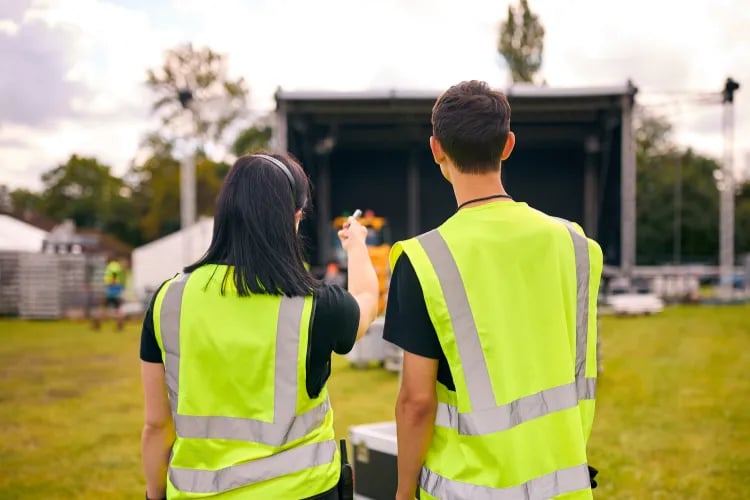
You've sold the tickets, booked the room and told everyone when the doors open. Now you need to decide how many people to put on check-in. Hiring against the total attendance feels straightforward, until most of those attendees turn up just before the first session.
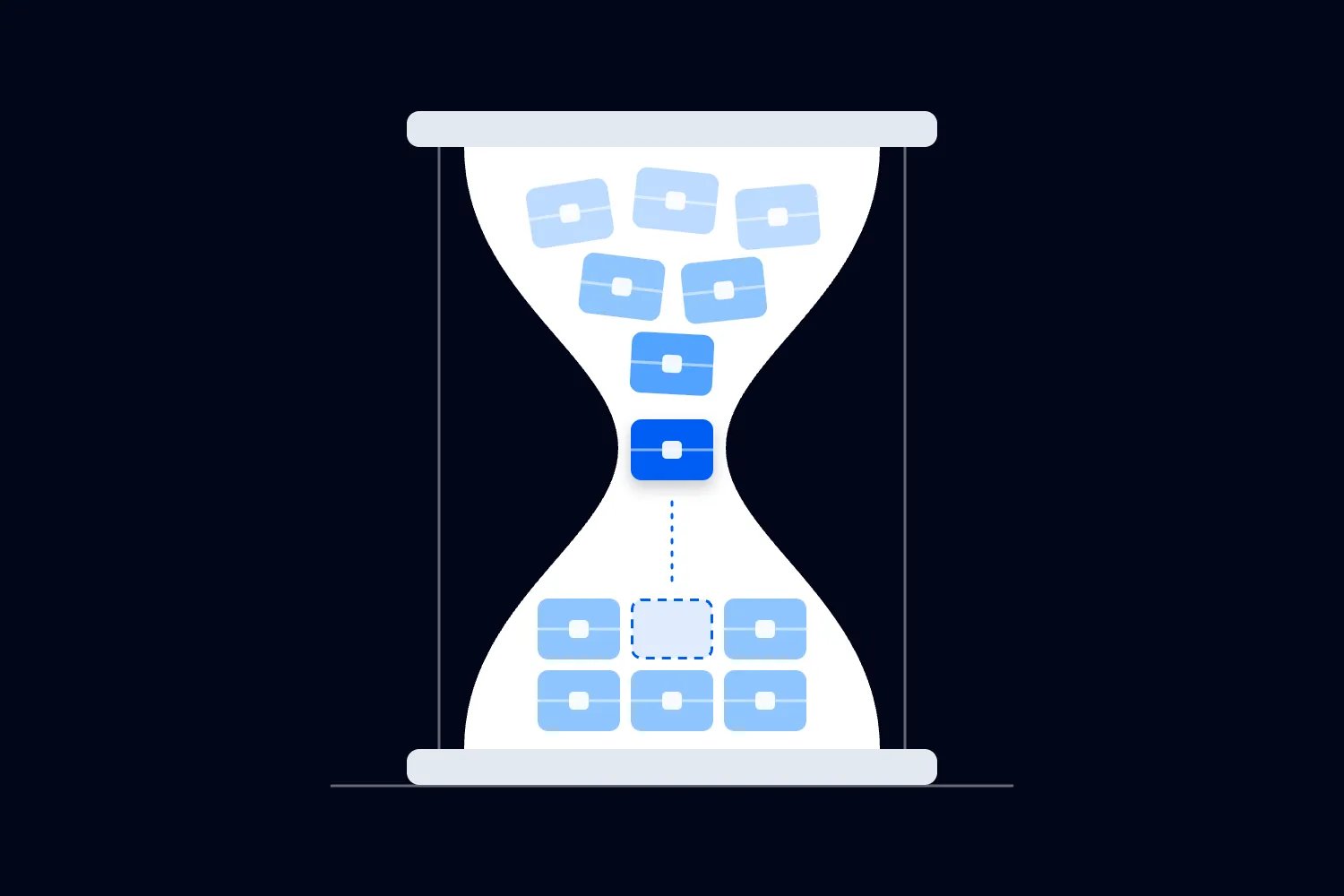
Start with how many people will arrive in your busiest short window, then divide that demand by the number each lane can actually admit during that window. That gives you a starting lane count. Your staffing plan also needs people for problems, queue direction, breaks and supervision, with enough spare capacity to recover when arrivals or service times change.
There's no universal event check-in staffing formula that turns a ticket total into a reliable entrance team size. But you can build a defensible calculation using your arrival forecast and a timed rehearsal. Here's how to do that without pretending a scanner's fastest result tells you what will happen at the door.
Start with the arrival window you need to handle
A paid conference with a fixed opening session has a different arrival problem from an exhibition people visit throughout the day. Even if both sell the same number of tickets, the demand at reception can look completely different. You need to know when people want to enter before deciding how quickly to admit them.
Write down the opening time, the first activity people care about and any practical reason they might arrive together. A train, a shuttle, a nearby parking release or a company delegation can send a group to the same entrance within minutes. An arrival forecast spread evenly across the whole opening period hides that pressure.
Use previous editions when the programme, venue and audience are comparable. Look at short arrival intervals rather than the final attendance total. If your records only show completed scans, remember that those timestamps describe when people got through check-in. A queue can make completed admissions look steadier than the demand that created it.
For a new event, build an explicit assumption and explain where it came from. Your transport plan, opening programme and attendee communications can inform it. Don't label a guess as historical behaviour. Ask the venue what they observed at comparable events, then check whether those audiences had the same reason to arrive early.
You might begin with a broad arrival schedule, then examine smaller intervals around the expected peak. The right interval depends on the event. It needs to be short enough to expose a burst that could fill the space you have for waiting, while still being useful for making staffing decisions.
Keep different entrances separate. If most people follow signs from the car park to one gate, unused capacity at another gate won't help unless you can redirect them safely. Likewise, splitting arrival appointments only helps if attendees understand the arrangement and your programme gives them a realistic reason to follow it. Our guide to choosing timed-entry intervals develops that scheduling decision.
Measure the whole check-in job
The number you want is the time between one attendee starting service and the lane becoming ready to serve the next. Include every action that occupies that lane. Finding the ticket, checking its status, confirming the right admission and handing over a credential all count when your process requires them.
A successful scan can happen quickly while the whole interaction takes much longer. Perhaps the attendee puts their phone away, asks which room to use and waits while someone attaches a wristband. If the next person can't start during that interaction, it belongs in your service time. Timing only the scan overstates capacity.
Use the actual devices, network arrangements, furniture and supplies you plan to use. Have the people who will work the event perform the test. A trainer demonstrating a familiar ticket at an empty desk tells you little about a new team serving arriving guests in the venue's lighting and noise.
Test the ordinary route and the cases that could interrupt it. Include a phone with low brightness, a ticket opened in the wrong email and a group whose tickets are on one person's device. Use test records rather than real attendee details where possible. Follow the platform's supported testing process so practice admissions don't corrupt event records.
Record a range of complete interactions. Keep the ordinary service times separate from cases you intend to send to a help desk, because you'll calculate that workload separately. Also record how long it takes to recognise the problem and hand the attendee over. Moving a complicated case elsewhere doesn't make that first interaction disappear.
You don't need to turn a small rehearsal into a scientific study. You do need enough observations to see whether your assumption represents the actual job. If repeated tests produce wildly different times, investigate the cause before taking an average. An unreliable printer or unclear instruction may be creating work that another scanner won't solve.
Calculate a starting lane count
Let's use a fictional paid conference to make the calculation concrete. Every number in this example is an assumption for planning, not an industry benchmark or a recommendation for your event. Suppose you expect 360 attendees to reach one entrance during the busiest 15 minutes, and rehearsal gives an ordinary service time of 20 seconds.
The theoretical capacity of one lane is 900 seconds divided by 20 seconds, which gives 45 admissions in that 15 minute window. Dividing 360 arrivals by 45 admissions gives eight lanes. That is the arithmetic minimum under the assumptions. It assumes continuous work, no lost time and an arrival pattern those lanes can handle.
You shouldn't book eight people and stop there. At that demand, all eight lanes would need to achieve their theoretical output throughout the window. There is no allowance for a slower interaction, an interruption or a short burst above the average. Even a team that works well can accumulate a queue under those conditions.
Choose a lower planning capacity and document why. For illustration, suppose this conference plans around 36 admissions per lane per window, rather than the theoretical 45. That is an explicit allowance in the fictional plan. It is not a claim that every event should run at that proportion of its theoretical capacity.
Now divide 360 by 36. You get ten lanes. The extra lanes create room for variation compared with the arithmetic minimum, but the result still needs testing against the arrival pattern, the venue and the rest of the process. A rounded lane count cannot promise a maximum wait.
Written plainly, the calculation is expected arrivals during the peak window divided by planned admissions per lane during that same window, rounded up. Keep the units consistent. Don't divide people arriving in a quarter hour by a lane rate measured per hour. And don't round down because you happen to have a convenient number of desks.
Leave room for the uneven bits
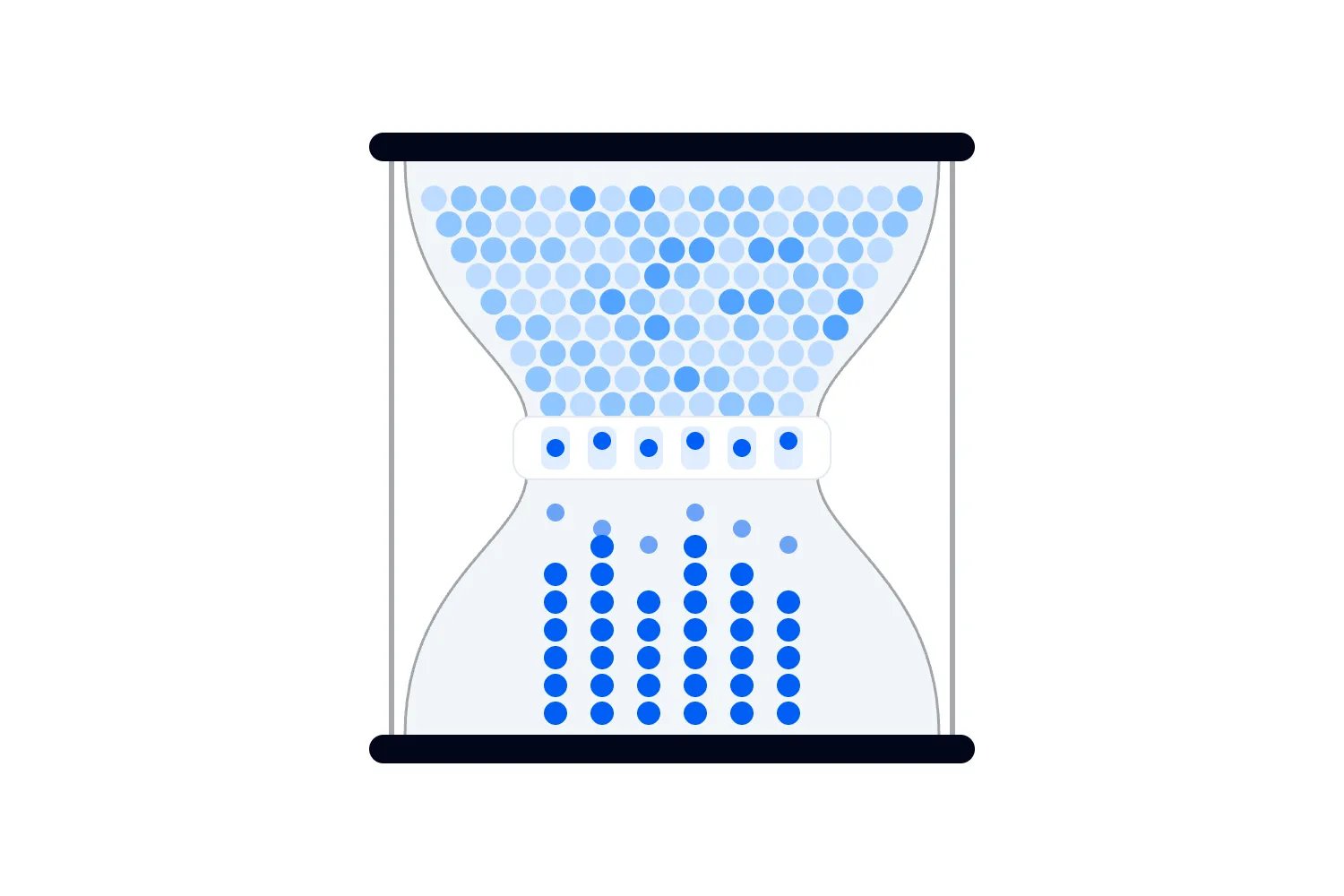
Why does spare capacity matter if average arrivals are below average capacity? Because attendees don't arrive at identical intervals and interactions don't take identical lengths of time. Several slow cases can overlap while another group joins the queue. The unused moments earlier in the morning can't serve people who haven't arrived yet.
MIT's discussion of waiting times in queues with variable arrivals and service times explains why those variations matter to queue performance. The practical implication for your entrance is simple. An average rate comparison is useful for sizing capacity, but it doesn't establish what any particular attendee will wait.
Return to the fictional conference. Ten lanes planning for 360 admissions across 15 minutes might look comfortable against a smoother forecast. But if a large share of those people arrive together near the end, the same total demand creates a different queue. Your plan needs to represent the burst, not only the completed window.
Test several plausible situations using the evidence you have. What happens if a shuttle arrives late? What happens if one lane closes? What happens if the opening speaker attracts more punctual arrivals than the previous edition? These are operating questions, so use assumptions the team can understand and challenge rather than adding an unexplained percentage.
Avoid treating a planning allowance as a second guarantee. If your measured admission rate already accounts for normal pauses and you reduce it again for the same pauses, you may be counting the allowance twice. Describe what your measured rate includes and what your additional reserve is intended to cover.
The useful outcome is a plan with a visible reason for each adjustment. You can then decide whether another lane is worth the cost or whether changing the work would help more. If you can't explain why a reserve exists, you won't know whether it's sufficient when the event changes.
Work out whether a queue will clear
A queue can grow during a short burst even when you have enough capacity over the morning. That isn't automatically a failed plan, provided the waiting area, attendee experience and programme can accommodate it. But you need to calculate how it clears. Saying arrivals will slow down later leaves the important part unanswered.
For another fictional calculation, suppose your staffed entrance admits 30 people per minute while 42 arrive each minute for five minutes. The difference is 12 people per minute. Starting with nobody waiting, the queue grows by 60 people over that period, assuming the stated rates hold and there are no other constraints.
Then arrivals fall to 18 people per minute while admissions remain at 30. You have room to clear 12 waiting people each minute. The accumulated queue would clear in five minutes under those simplified assumptions. Dividing the backlog by total admissions capacity would give the wrong answer because new arrivals still need serving.
| Label | People waiting |
|---|---|
| 0 min | 0 |
| 1 min | 12 |
| 2 min | 24 |
| 3 min | 36 |
| 4 min | 48 |
| 5 min | 60 |
| 6 min | 48 |
| 7 min | 36 |
| 8 min | 24 |
| 9 min | 12 |
| 10 min | 0 |
This clearance calculation tells you how long the backlog lasts after the surge, not the precise wait for each person. Service variation, lane allocation and the timing of individual arrivals affect that experience. Use observation or a suitable queue model if you need to estimate waits more closely. Don't present this simple arithmetic as a service guarantee.
Also check whether the venue can hold that queue safely. A backlog that clears before the opening session can still obstruct a public footpath or interfere with another entrance. The UK Health and Safety Executive's guidance on crowd controls calls for appropriate queuing arrangements and a safe way for people to leave a queue.
Have the venue and crowd management lead assess the physical arrangement against the demand you expect. A staffing calculation doesn't establish safe crowd capacity, emergency access or the suitability of a barrier layout. Those decisions need the people responsible for the site, with the entrance operation included in their plan.
Give exceptions their own capacity calculation
The help desk needs an actual workload estimate. Otherwise you move a slow interaction out of a scanning lane and create an unmanaged queue a few metres away. The attendee still needs help, and someone with the right access and authority still needs time to provide it.
Separate the kinds of problems you expect. A missing confirmation email is different from a disputed payment or an admission restriction. Some staff can find a record and explain the next step. Other cases require an authorised decision. Plan the route to that decision before everyone is asking the same supervisor at once.
Use another fictional assumption. Suppose 24 people need help within 15 minutes and their average complete help interaction takes three minutes. That's 72 staff minutes of work arriving in a 15 minute window. Dividing 72 by 15 gives 4.8 continuously occupied staff, so five is the theoretical rounded minimum for that workload.
Five help positions would leave little spare time under those assumptions, and uneven arrivals could still create waits. Perhaps that workload makes the proposed check-in process too expensive. You can improve pre-event instructions, resolve known booking issues or change which actions happen at the entrance. Rehearse the revised process before reducing the allocation.
Make the handover clear to the attendee. Explain where they're going and what the colleague can help with. Preserve their place in the resolution process so they aren't sent between desks repeating the same problem. A help desk that has no decision authority can consume time without resolving anything.
Company bookings deserve attention here. If one person controls every ticket, their colleagues may arrive separately without the information your team needs. Resolve the booking and ticket distribution process beforehand where possible. The guide to managing conference group bookings covers those arrangements in more detail.
Check what every lane shares
Ten scanning positions don't create ten independent routes through every task. If they all send attendees to one badge printer, that printer may determine the number who can finish registration. Increasing scan capacity then moves the queue downstream, where it may be harder for the team to see and manage.
Map the steps people must complete in order, then identify shared equipment and shared staff. Include security screening, credential collection and any bag storage that physically blocks the route. Ask the responsible supplier to demonstrate the required operating rate under your conditions. A quoted device speed may exclude handling, replenishment and faults.
Consider a fictional arrangement where check-in can complete 30 admissions per minute but a mandatory downstream step can only handle 20 people per minute. The complete route cannot sustain the higher rate. Continuing to send people forward at 30 per minute would add ten people per minute to the downstream queue while those rates persisted.
The answer might be more equipment, a different task sequence or better distribution of supplies. It might be reducing the workload at that point. Work with the security lead on security procedures rather than changing checks to hit a throughput target. Your staffing budget doesn't decide which protective measures the event requires.
Also test the failure condition. If a shared printer stops, can the other positions continue useful work or do they all stop? If a network connection fails, does the approved operating procedure support continued admissions? Get those answers from the system and venue owners, then rehearse the actual response.
Keep staffing for recovery distinct from replacement equipment. A spare device is useful only if somebody can configure it, knows who authorises the change and can do the swap while the entrance stays controlled. Check who covers that person's original task during the intervention. Otherwise your contingency quietly removes capacity somewhere else.
Turn the lane count into a roster
Now you can decide how many people to hire. A lane is a working position with the space, equipment, supplies and staff needed to admit attendees. Headcount is the number of people available across the operation. They are related, but you can't assume each additional person creates another usable lane.
Assign the ordinary admissions work first. If the rehearsed lane needs one person scanning and another handling credentials, include both. If one person can do the complete job within the service time you've measured, don't add another without a reason. Your own process determines the relationship between lanes and people.
Then name the work outside those lanes. Someone may need to direct arrivals before they choose a queue, handle exceptions, replenish supplies or supervise the whole entrance. Decide which roles can combine at quieter times and which must remain separate during the peak. One person cannot simultaneously cover two locations that need continuous attention.
The HSE's guidance on clear crowd management responsibilities emphasises assigning responsibility and communicating roles. Apply that principle to your roster. Write who can change a queue arrangement, request extra help and contact the person responsible for crowd safety. An unassigned decision can hold up several otherwise capable staff.
Include relief rather than assuming the peak team can stay in position indefinitely. Your opening period may overlap breaks, shift changes or other duties. Plan those times explicitly and meet the employment and contractual requirements that apply to your team. If a supervisor is the relief person, check who supervises while they cover a lane.
The wider event staff planning guide helps place this entrance team within the whole event roster. Keep your capacity calculation specific to admissions, though. Staff booked for stage management or another critical duty aren't spare entrance capacity simply because they appear on the same spreadsheet.
For the fictional conference, put the ten planned ordinary lanes into the actual entrance layout before converting them into a booking. Confirm each position has the equipment and working room assumed in the rehearsal. Then add the help provision your separate calculation requires. If the resulting operation won't fit, revise the process with the venue before hiring for an impossible arrangement.
Include opening preparation in that roster. Someone needs to check supplies, confirm staff access and get the positions ready before attendees arrive. A person scheduled to start exactly when doors open cannot also complete those checks beforehand. Make readiness a named responsibility, and allow enough paid time for the work you've assigned.
Check whether splitting the queue helps
A separate line can be useful when it has a different job and enough demand to justify the capacity you assign. Walk-up purchases, preprinted badge collection and ordinary ticket scanning may need different equipment or permissions. Keeping those jobs distinct can prevent one lengthy transaction from occupying a position intended for quick admissions.
But a label doesn't create capacity. Suppose your guests can choose among several ordinary scanning lanes. One line happens to include a booking problem while another moves faster. A shared queue feeding the next suitable available position may distribute that ordinary work better, provided the layout, access arrangements and crowd plan support it.
Treat that as a layout option to test, rather than a universal rule. Separate entrances may serve different ticket types or locations, and people need to reach the correct destination. A single queue that crosses another pedestrian route can introduce a problem your original arrangement avoided. Ask the venue and entrance lead to assess the complete movement.
Dedicated VIP capacity needs the same scrutiny. If you promise a separate arrival service, staff it to deliver that promise. Don't count its unused positions as ordinary capacity unless your rules allow other attendees to use them and somebody can direct the change. Conversely, don't reserve several ordinary lanes for a tiny group without considering the effect on everyone else.
Decide when the arrangement can change. A desk might handle prebooked collection during the peak and later support ticket sales. That only works if the staff have the necessary access, the signage changes and the original task remains covered. Document the handover so your capacity forecast matches what people will actually find.
Make every working route usable
Walk the actual route with the venue before confirming your layout. Look at how people reach the queue, move through it, communicate with staff and continue inside. A desk count on a floor plan doesn't show whether temporary barriers or waiting groups make the entrance difficult to use.
The US Access Board's guide to entrances, doors and gates explains access considerations including door clearances and routes around screening equipment. Use the relevant local requirements and qualified venue advice for your event. Don't assume a general staffing calculation answers those design and access questions.
Allow staff time to assist people who request help without making them explain personal circumstances in front of a queue. Give the team a clear way to contact the colleague who can provide assistance. If an alternative route requires a staff member, assign that work and check the person is available during the peak.
Keep communication practical. Signs should help people choose the right place before they reach a busy desk. Spoken instructions need a workable alternative for attendees who can't hear them clearly. Review the arrangements with people who understand access at the venue, including how someone leaves the queue or returns after resolving a problem.
Don't classify disability as an exception that automatically sends someone to a problem desk. People may need a different way to receive the same ordinary service. Build that into the entrance arrangement and staff briefing, while allowing attendees to tell you what help they need rather than guessing.
Rehearse the plan you intend to operate
A rehearsal should test whether the planned team can perform the whole job together. Set out the real stations, give people their roles and run through arrivals in groups. Include a problem that needs escalation and a supply replacement. Watch what stops when the supervisor becomes busy elsewhere.
Time the complete interactions again once everyone understands the process. If service takes longer than the number in your staffing plan, revise the calculation or change the task and retest. Don't keep the optimistic number because changing the booking would be inconvenient. The attendees will experience the process you operate, regardless of what the spreadsheet assumed.
Ask staff to explain their next action when something fails. Who decides whether a ticket is valid? Who handles someone arriving at the wrong entrance? Who contacts security? Clear answers reduce improvised conversations during a rush. If the answers depend on someone who isn't present, include that person in the rehearsal or arrange a dependable contact.
Agree what the entrance lead will monitor during operation. The HSE's guidance on monitoring crowds includes entrances, exits, queues and potential pinch points. For staffing decisions, also watch how many lanes are actually working and whether the help desk is clearing its cases. Completed scans alone won't show every developing problem.
Set a practical response for changing conditions with the relevant leads. Opening a prepared lane requires available staff and equipment. Redirecting arrivals requires a suitable route and clear communication. Identify those requirements beforehand so the team knows which actions are genuinely available when the forecast turns out to be wrong.
Keep a record you can use next time
After the event, compare the forecast with what the team observed. Record when the longest queues formed, which positions were open and what interrupted service. Separate time spent waiting for a decision from time spent working on a ticket. Those observations tell you which assumption needs changing before you book the next edition.
Retain the context with the numbers. A shorter queue might reflect earlier arrivals, fewer attendees or a simpler credential process. It doesn't prove that a new device caused the improvement. Likewise, a difficult opening doesn't automatically mean every lane was too slow. The problem may have started upstream when a delayed shuttle released a large group together.
Ask the people who worked the entrance what they repeatedly had to explain. A confusing ticket email can create the same conversation at every desk. Changing that message before the next event may remove more work than adding another person, but check the result in practice. Keep the revised instructions alongside the service assumptions so the next team knows what changed.
Spend on the constraint you can demonstrate
Compare the cost of extra entrance capacity with the specific problem it addresses. Include briefing time, equipment, setup and relief in the quote you approve. A low hourly rate can be misleading if the booking excludes the time needed to prepare the team or keep positions covered.
If the queue forms at badge collection, another scanner is a poor purchase. If the busiest gate is overloaded while another has spare capacity, better arrival directions may help more than another desk. If every lane is busy and arrivals keep exceeding admissions, you need more effective capacity or a credible change to demand.
Recalculate when the job changes. In the fictional example, increasing the ordinary service time from 20 seconds to 25 seconds reduces theoretical output from 45 to 36 admissions per lane in 15 minutes. Ten lanes would then be working at the arithmetic minimum for 360 arrivals, before allowing for variation. A small additional task can therefore consume the spare capacity you thought you had.
This is why adding a handout or another question at the last minute deserves an operational decision. Time the revised interaction, check the effect on the arrival plan and decide whether the task belongs there. Make that decision before the team briefs, while you can still change the instructions and arrange the necessary additional capacity.
Before confirming the roster, have the entrance lead explain the busiest arrival window, the measured job time and the available response if a position closes. Then check that the named people, equipment and space support that answer. That's the staffing plan worth paying for, because you can see what it is expected to handle.

Author: By the Loopyah Content Team
The Loopyah Content Team shares expert insights, practical guides, and industry updates to help event organizers create unforgettable experiences and stay ahead in the event planning world.