· 21 min read
RFID wristbands vs QR tickets: is the extra cost worth it?
You've got the ticket sales, the venue and a crowd arriving before the first act. Now you're looking at RFID wristbands and wondering whether a tap at the gate is worth the extra spend. The answer depends on what happens after that first admission, and on how much work you have to do before anyone can tap their wrist.
For a paid event where most people enter once, QR tickets are usually the sensible starting point. RFID becomes more interesting when the same attendee needs repeated entry, several access permissions or a wristband that also supports a properly specified payment system. Even then, the extra cost needs to solve a problem you can describe and test.
Don't buy a faster-looking entrance because another festival has one. Follow your attendee through ticket purchase, arrival, credential collection, entry, movement around the venue and departure. Then compare the full cost of delivering that experience with each option. That's how you find out whether RFID will help your event business or just add another supplier invoice.
What you're actually comparing
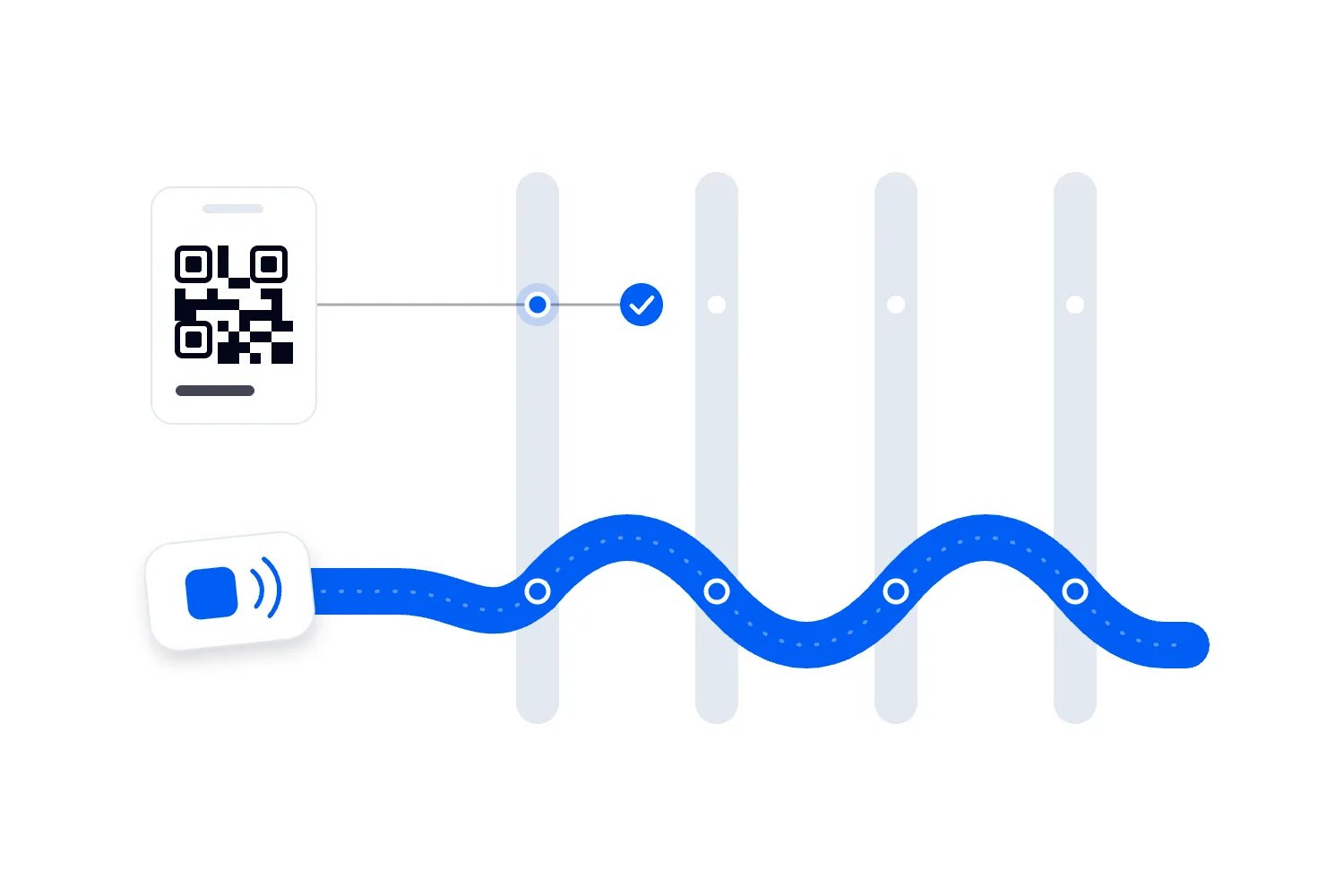
A QR ticket carries information in a visible code. A camera reads the code, and the ticketing software decides whether the ticket gives that person access. It might appear on a phone, a printed ticket or a badge. DENSO WAVE, which developed QR codes, explains their reading and error correction features. Those features help the code remain readable, but they don't decide your admission rules.
An RFID wristband contains a tag that a compatible reader can read using radio waves. RFID means radio frequency identification. Depending on the equipment, the attendee may bring the band close to a reader or pass through a designated reading area. The access software still has to decide what that credential permits.
There are different types of RFID, with different reading distances and capabilities. GS1's overview of RFID standards distinguishes several tag technologies. You can't take a claim about warehouse readers capturing distant tags and assume an event wristband works the same way. Ask what tag, reader and software the quoted event system actually uses.
The important distinction is that a credential and an admission decision are different things. A reader successfully detecting a wristband does not establish that its holder bought the right ticket. A camera successfully decoding a QR code doesn't establish that either. Your system must connect the credential to an entitlement, apply the current rules and record the result.
A plain wristband is another option altogether. You can scan a QR ticket at first admission and fit a conventional wristband so staff can recognise admitted guests. That doesn't give you electronically recorded reentry or zone decisions, but it may satisfy the actual requirement. Keep this cheaper alternative in your comparison when you're mainly buying visible proof of admission.
Start with the event you are running
Think about a ticketed concert with a single audience entrance, general admission and no reentry. Once someone is inside, your staff don't need to check that ticket again. Adding RFID would introduce wristband ordering, delivery, fitting and possibly linking each band to a ticket, largely to improve one transaction. You should need convincing evidence before accepting that extra work.
Now think about a festival over several days. Attendees leave to return to accommodation, come back the following morning, visit areas with different ticket permissions and may need a replacement credential. The same admission purchase supports several later checks. A band that is convenient to present can be useful here, provided the system manages those checks correctly.
Event size alone doesn't settle the decision. A large concert can have straightforward access, while a smaller paid retreat can have complicated attendance permissions. Count the decisions staff must make, how often they make them and what happens when they make the wrong one. Those details matter more than whether your attendance looks impressive on a supplier's sales presentation.
Write down the existing problem in a sentence. Perhaps returning campers repeatedly hold up the same entry lanes as first arrivals. Perhaps staff at a premium area can't reliably distinguish admission categories. Or perhaps the queue is slow because attendees aren't ready with their tickets. Each problem points towards a different remedy, and only some justify RFID.
Our QR code ticketing guide explains the selling and scanning workflow in more detail. Here, the decision is whether changing that workflow earns back the additional cost. If your present setup already admits the right people comfortably, the burden of proof belongs with the proposed replacement.
Include wristband collection in the queue calculation
The attractive part of an RFID demonstration is often the tap. The expensive part can happen earlier. Somebody has to receive the stock, prepare the bands, identify the attendee, issue the correct credential and attach it securely. If the band must connect to a ticket record, that connection also has to happen accurately.
Ask where that work occurs. Mailing bands ahead of the event moves some work away from the entrance, but introduces delivery charges, undelivered packages and last-minute purchasers. Collection before event day requires a staffed location and clear instructions. Collection on arrival puts another transaction between the attendee and the event they have paid to attend.
It's perfectly possible to make the final gate faster while making the overall arrival slower. Someone who waits at a collection desk, then joins a search queue, then taps into the venue hasn't experienced a faster arrival just because the final reader responded quickly. Measure the time from joining the first queue to entering the public area.
With QR tickets, the comparable work includes retrieving the ticket, presenting it, scanning it and resolving any exceptions. You may also need to fit a conventional wristband. Put that work into the QR option honestly. Comparing a complete RFID setup with an understaffed, badly organised QR entrance tells you very little about which technology your event needs.
Improve the obvious problems before arranging a technology trial. Send accurate arrival instructions. Ask people to have tickets ready before reaching the scanner. Separate ticket queries from normal admission where your site allows it. Make the correct queue clear. A staff member explaining directions repeatedly can hold up admission even when every scan works perfectly.
The UK's Health and Safety Executive discusses entrances, queues and security searches as connected crowd controls. Use that wider view when planning your entrance. A faster credential check is useful only within an arrival arrangement that your venue and crowd management team can operate safely.
Test the complete entrance, including the awkward cases
Ask both options to handle a realistic rehearsal using the people and devices you expect to deploy. A supplier's experienced demonstrator with a prepared credential is a useful introduction, but your temporary door team needs to operate the system too. Their instructions, confidence and response to an unexpected result are part of the performance.
Include attendees who arrive together under one booking, a valid late purchase and someone holding the wrong day's ticket. Include a ticket that has already been used, a replacement credential and a person who cannot find their confirmation email. For an RFID trial, include an unlinked band and a band assigned to the wrong access category.
Record how many people enter during each measured period and why others stop. Pay attention to the slowest cases as well as ordinary checks. If an exception requires a supervisor to walk across the site, its effect extends well beyond the seconds spent scanning. Keep the normal lane moving while an authorised colleague resolves the case.
Then include whatever your venue actually requires before admission, such as bag searches or age checks. If that stage determines how quickly the line moves, speeding up ticket validation may produce little improvement overall. RFID may still help elsewhere, but you shouldn't count entrance labour savings that the rest of the process prevents you from making.
Decide in advance what would constitute a useful improvement. You might need enough reliable capacity to manage a known arrival peak with the planned number of lanes. You might need reentry to stop interrupting first admissions. A vague target such as smoother entry is difficult to budget for and too easy to declare achieved after a neat demonstration.
Keep the rehearsal comparable. Use the same admission rules and a similar mixture of ordinary and problem cases. If one option has dedicated support and the other doesn't, include that support in its cost. You're choosing an operating arrangement for your event, so the test should include the arrangement you would actually pay for.
Reentry and restricted areas can change the answer
Repeated access is where the case for a wearable credential often becomes stronger. Asking someone to retrieve a phone ticket every time they return to a campsite or premium area can be inconvenient. A fitted wristband can make presentation easier, while electronic readers can apply permissions that would be difficult to recognise from colour alone.
But specify the rule before choosing the band. Does a returning guest need an exit recorded before they can come back? Can they enter a restricted area whenever it is open, or only for a booked session? Does tomorrow's ticket work today? Staff need a clear response to each case, whatever technology reads the credential.
Also distinguish admission history from current occupancy. A record that someone entered earlier doesn't tell you whether they are still inside. Where occupancy matters, you need a workable process for counting departures and handling missed exit checks. A wristband cannot supply information that no reader or member of staff captured.
For a multi-day event, ask the supplier to demonstrate a guest whose permissions change. That could be a cancelled booking, an approved upgrade or a replacement after a band breaks. Watch what happens at each relevant entrance after the change. The question is whether the right staff can apply the correct rule consistently across the event.
Be careful about selling restricted access that you can't staff. A reader can help check permission, but people still need directions, a clear entry route and someone to respond when access fails. Compare the cost of operating those checkpoints with the extra revenue or experience they support. Adding more controlled areas can increase staffing even if each check is quick.
A QR system may also support repeated checks or different ticket permissions, depending on its actual features. Verify those features with your provider. Don't assume every QR ticket is single-use or every RFID system handles complex access. The physical credential is only one part of the arrangement you're buying.
Security depends on the system and your rules
A static QR code can be copied as an image. That makes duplicate-use rules and the way devices share admission updates important. The ability to photograph a ticket doesn't by itself establish whether two people can enter with it. Ask what happens when the same ticket is presented at different entrances, including almost simultaneous attempts.
An RFID wristband can be harder to pass casually between people when its closure is designed to show removal. That is a physical deterrent, not a guarantee. The security of the electronic credential depends on the tag and authentication method. Ask whether the system merely reads an identifier or checks that the credential is genuine.
NIST's guidance on securing RFID systems treats security and privacy as matters for the whole system. It was published in 2007, so it isn't evidence about a current supplier's performance. Its useful lesson here is to assess the equipment, software, operating procedures and risks together rather than treating RFID as a security promise.
Work through replacement and cancellation as carefully as first entry. If staff issue a new band while leaving the old one valid, you've created another usable credential. If a refunded ticket remains active in a separate access system, changing its physical format hasn't solved the underlying problem. Ask to see the actual invalidation process and who can perform it.
Keep a clear record of manual overrides. Sometimes an authorised supervisor will admit a legitimate attendee when the normal check fails. Record the reason and credential involved so the team can explain the decision later. Broadly instructing door staff to wave people through when the system is slow defeats whichever security controls you paid to install.
Use your own records when assessing fraud losses. Count confirmed cases and their financial effect, then ask how the proposed system would have prevented them. Avoid valuing every disputed entry as a lost full-price ticket. Some incidents have a different cause, and some people would not have purchased another ticket under any circumstances.
Ask what happens when connectivity fails
RFID is a way to read a credential. It does not automatically keep separate entrances in agreement when their devices lose connection. QR is a way to read a credential too. Whether either system can validate tickets without a connection, and which decisions remain reliable, depends on the software and the event setup.
Ask for an outage demonstration rather than a general yes to offline operation. What information is available on each device before the connection fails? Which tickets can it accept? What happens to a booking bought or cancelled during the outage? Can two disconnected devices accept the same credential before either learns what the other has done?
When connectivity returns, ask how the system combines the admission records and flags conflicting decisions. That process is often called reconciliation. In plain terms, you need to know how the provider makes sense of the records when separate devices have been working without sharing updates. A claim that records upload later doesn't explain how conflicts are handled.
Your response will depend on the risks of your event. The written contingency plan should identify who can decide whether admission continues, which alternative checks are available and how capacity remains controlled. Agree that plan with the relevant venue and crowd management leads. Buying new readers doesn't remove the need to make these decisions before doors open.
Power is another practical constraint. Include charging arrangements, spare devices, protected power supplies where required and a way to replace faulty equipment. Test the procedure for moving an operator to a spare device. Your staff should know whether they can resume immediately or need someone to restore settings and access permissions first.
Get support details in writing. You need to know who answers during your event hours, what they can change remotely and whether somebody is available onsite. An attractive equipment quote becomes less useful when the person who understands the configuration finishes work before your headline act starts.
Payment and attendee data need their own business case
A wristband may be part of a payment system, but access control does not automatically include payments. If a supplier offers both, ask for separate specifications and costs. Find out how attendees add money or connect a payment method, how sellers accept payment, and what happens when a band is lost or a transaction fails.
Don't assume making payment more convenient guarantees higher bar revenue. A bar may be constrained by stock, service speed, menu clarity or its physical layout. If the queue ends at a busy bartender, changing how someone pays might help only a small part of the transaction. Test the whole service before forecasting additional sales.
Count extra profit carefully if you do expect a sales improvement. Deduct the cost of the additional drinks or merchandise, payment charges, any revenue share and additional staffing. Gross sales are not the amount available to pay for the wristband system. Keep the estimate separate from entrance labour savings so you can see which assumption makes the purchase worthwhile.
If the arrangement uses balances attendees top up, establish the refund process and the applicable terms before launch. Explain them clearly to buyers and confirm the supplier's obligations for your market. Ask who handles disputes, remaining balances and a cancelled event. An admission technology decision shouldn't leave you discovering payment responsibilities after the public has used it.
Extra data also deserves scrutiny. Recording a person at every checkpoint may be useful for a specific operational purpose, but more recorded movement isn't automatically better event insight. Decide what decision the information supports, who needs access and how long it should remain available. Avoid collecting identifiable movement histories simply because the equipment can produce them.
The UK's Information Commissioner's Office explains collecting only necessary personal data. Its guidance is being reviewed following legislative changes, and your obligations depend on where you operate. For this buying decision, ask the supplier to explain what information is stored, who processes it and how you can retrieve or delete it.
Compare the additional cost with your existing QR setup
Build the comparison around the difference between the options. Ticketing fees and entrance staff that you would pay either way should not make RFID look more expensive simply because they appear in its quote. Equally, don't pretend your QR operation is free if it requires devices, staffing, connectivity or hired support.
For RFID, include bands, spares, shipping, preparation, readers, software, configuration, training, collection staff and event support. Include any work connecting ticket records to the access system, with responsibility for late purchases and changes. Add the cost of returning hired equipment and settling the service afterwards. Ask which items change when attendance or event days increase.
For QR, include the devices and people required for the same access rules, plus any conventional wristbands you would still use. You may find RFID replaces some costs rather than adding all of them. The comparison must show those credits explicitly. Keep costs for payment or additional controlled areas separate unless both options include the same scope.
Here's a fictional budgeting example to show the calculation. These are invented amounts in US dollars, not supplier prices, industry benchmarks or Loopyah charges. A 2,000-attendee event expects RFID to cost $8,000 more than its planned QR arrangement before savings. Divide that additional cost into $3,000 for credentials, $2,000 for equipment, $1,500 for support and $1,500 for preparation and collection.
| Label | US dollars |
|---|---|
| Credentials | 3000 |
| Equipment | 2000 |
| Support | 1500 |
| Preparation and collection | 1500 |
Suppose the operator can actually remove $2,000 of paid labour and avoid $1,000 of replacement costs already included in the QR budget. The remaining additional spend is $5,000. Across 2,000 attendees, that is $2.50 each. It is a useful comparison figure, but it doesn't justify charging attendees another fee or prove they would accept one.
If the remaining justification is extra bar profit, the event needs $5,000 of additional contribution after associated costs. In this fictional example, if each extra purchase leaves $5 after those costs, it takes 1,000 additional purchases to cover the remaining spend. You now have a specific assumption to challenge rather than a vague promise of increased engagement.
Try the calculation with less favourable results. If the labour saving doesn't happen because collection requires the same staff hours, that $2,000 credit disappears. If only half the expected additional purchases occur, the financial result changes again. An event with tight margins should be comfortable with this weaker case before committing money it cannot readily recover.
Put the chosen amounts into your full event budget, including payment dates. Equipment deposits and wristband orders may be due before the event has collected all its ticket revenue. A system can appear affordable over the whole event and still create a cash shortage during preparation. Know when each invoice has to be paid.
Make arrival work for the people attending
Your admission plan should work for someone who cannot comfortably wear the proposed band or present it at the reader's position. Ask about an alternative credential and the route staff use to approve it. Test that route with your venue team before writing the attendee instructions. A convenient standard process still needs a practical alternative when the standard process doesn't suit somebody.
Phone tickets have their own exceptions. Someone may arrive with a flat battery, a damaged screen or no suitable phone. Explain which alternatives your ticketing setup accepts, and how staff can locate a valid booking. Loopyah's attendee check-in instructions describe scanning and manual check-in. Prepare staff to use the supported process rather than inventing one during a busy arrival period.
Group bookings deserve particular attention. A buyer may hold tickets for friends arriving separately, while a parent may manage admission for their family. Rehearse how each person gets the correct credential and what happens if the buyer arrives later. With RFID, decide whether bands are issued individually or collected together, and whether the chosen arrangement creates avoidable collection queries.
Don't surprise attendees with a collection requirement after they reach the venue. Put the relevant instructions in the confirmation information and reminders, including where collection happens and what they need to bring. If you offer advance collection, explain how someone who misses it can still attend. That alternative needs enough staff and stock to handle a realistic number of arrivals.
Train the team on the result they should act on, including any words, colours or sounds the device uses. A successful read and approved access may have different indications. Staff need to recognise a rejection without guessing what caused it, direct the attendee to help and know who can authorise an exception. Practise the conversation as well as the button presses.
Get a quote that covers the awkward changes
Ask the supplier what happens if ticket sales finish below your estimate. You may still owe for ordered bands, reserved equipment or booked support. Then ask about a sellout above the estimate, additional collection hours and another entrance. A quote based on an initial attendance number needs clear terms for these changes before you can put it into the budget.
Specify the division of responsibility between ticketing and access providers. Who notices a failed update? Who fixes it? Who can explain a rejected credential to your door supervisor? If the answer involves your team moving information manually, count that work and agree how often it happens. An unnamed responsibility usually becomes somebody's urgent job at the worst possible time.
Confirm what you keep after the event and what you must return. That includes equipment, usable records and access to reports needed for the review. If you plan several editions, ask which preparation can genuinely be reused and which costs recur. Don't spread a purchase across hypothetical future events simply to make this year's decision look affordable.
Finally, check the cancellation and postponement terms alongside your production schedule. A custom band order, a reader hire and an onsite support booking may each have different deadlines. Write those deadlines into the event plan so a date change doesn't trigger costs nobody expected. This is ordinary purchasing discipline, but the combined package makes it easy to overlook a commitment hidden inside another supplier's scope.
Keep a copy of the agreed scope with the quote, so your production lead can check a delivery against what you actually bought when the equipment reaches site.
Choose a setup your team can operate
For straightforward first admission, begin with a well-prepared QR operation and test it properly. Loopyah's ticketing setup sends buyers a confirmation email linking to their QR tickets. Door staff can receive check-in-only access and scan tickets from their phones. That gives you a concrete starting point for the comparison rather than assuming specialist readers are necessary.
If your event needs RFID, recorded reentry or offline admission, treat each as a separate requirement and ask the relevant provider to demonstrate it. These are specific operating capabilities; a QR ticket or wristband alone doesn't establish them. Compare the options after you have seen your event's actual rules work, including real changes and exceptions.
Before approving an RFID quote, get the full operating plan alongside it. Confirm who issues bands, who handles a replacement, who updates access after a refund and who supports your staff during the event. Agree the equipment quantities, delivery dates, training and contingency arrangements. Your team should be able to explain the arrival process without relying on the salesperson.
After the event, compare the result with the reason you approved the purchase. Check arrival delays, total paid staff hours, replacements, support incidents and the financial assumptions you used. Keep observations about attendee convenience separate from measured savings. Both matter, but they answer different questions when you decide whether to repeat the setup.
RFID is worth considering when repeated checks or more complicated access create enough real work to justify it. QR remains a strong choice when admission is straightforward and the existing process meets your needs. Take your actual entrance plan and cost comparison into the supplier conversation, then make them demonstrate the improvement your event needs before you sign.

Author: By the Loopyah Content Team
The Loopyah Content Team shares expert insights, practical guides, and industry updates to help event organizers create unforgettable experiences and stay ahead in the event planning world.