· 27 min read
How to sell and manage tickets for a speedway race night
Your presales look healthy, the weather looks doubtful, and someone has just asked whether their grandstand ticket gets them into the pits. Meanwhile, your gate team wants to know what happens when a family leaves to collect something from the car. These are ticketing decisions, and they need answers before race night.
The first thing you want to do is agree exactly what you're selling. Give each race date its own clear admission rules, protect the inventory already promised to other people, and decide what a postponement means for the buyer. Then build the checkout, entry process and customer messages around those decisions.
That sounds straightforward until the same person is a season-ticket holder, a sponsor's guest and a pit-pass buyer. Or a visiting series brings different conditions. Or the rain starts after some spectators have entered and others are still buying tickets. The system needs to reflect what staff can actually deliver in those situations.
This guide is for the operator responsible for paid spectator admission at a speedway, whether you're running a regular dirt-track programme or a special race meeting. The examples use fictional US dollar amounts. Racing rules, insurance conditions and consumer requirements depend on your location and event. We're concentrating on the commercial and admission work around the racing, with the relevant specialist decisions left to the people authorised to make them.
Start with the race night you're actually selling
A ticket buyer needs to know which meeting they're buying, when to arrive, where to enter and where they can watch. Your team needs the same information, plus the limits and exceptions. Start with a short event record that the ticketing lead, venue manager and race promoter approve together.
Include the advertised date, classes scheduled to race, spectator opening time, expected racing start, seating arrangement and public entrances. Distinguish the time spectators can enter from practice, qualifying and the first advertised race. If the programme is provisional, explain what may change without making the entire offer meaningless.
Be especially careful with a visiting series. Find out who sells admission, who holds customer payments, who controls complimentary tickets and who answers refund requests. A visiting promoter's announcement can send buyers to a different seller from the one your regular crowd uses. Two sellers cannot independently offer the same remaining seats without an agreed method of keeping availability accurate.
Write down which conditions take precedence when your usual rules differ from those of the series. That includes weather treatment, pit entry, photography access and season-ticket exclusions. Resolve it privately before the event goes on sale. A fan who bought from your official event link should not have to work out which organisation made the promise.
Treat the event page as a purchase decision. A regular might recognise the class names immediately; a first-time visitor might only want to know whether children need tickets and whether the stand has allocated seats. Explain those things where people choose their tickets. Don't make your busiest sales page depend on knowledge shared only by the regulars.
For the internal record, give every exception an owner. The person approving a sponsor hold may be different from the person approving a pit upgrade. Staff should know where to send the request and how to record the answer. Otherwise an informal promise made in the paddock becomes a dispute at the ticket window.
Set public inventory after you account for existing promises
The venue's approved capacity is your starting constraint. Public ticket quantity is a separate calculation. Some places may already be committed to season holders, sponsors, accessible seating arrangements, hospitality guests or other approved uses. Others may be unavailable because of the actual race-night layout.
Don't use the number printed on an old seating plan without a venue review. Ask the responsible venue and safety team to confirm the operating configuration, closed areas, usable routes and any restrictions for this meeting. Great Britain's Health and Safety Executive describes crowd management responsibilities and controls. It's a useful planning reference, with its legal context in Great Britain, rather than a capacity certificate for your track.
Here's a fictional inventory example. Suppose the venue team confirms 1,200 usable grandstand places for the chosen configuration. You have committed 150 to season holders and 50 to sponsors. That leaves 1,000 for public sale. The total remains 1,200; changing the ticket price or opening another sales channel doesn't create another place.
Keep the commitments visible even when their holders haven't collected tickets. A sponsor saying they'll send names later does not make their allocation available to sell today. Agree a release deadline, the person who can approve the release, and how the change reaches every sales channel. Until that happens, the places remain committed.
Complimentary admission still uses space. A child who doesn't pay can still affect the crowd count and, depending on your seating arrangement, need a seat. State your age bands and seating conditions clearly, then configure the appropriate admission record. Don't assume a free child ticket, lap-child arrangement or family bundle works the same way at every venue.
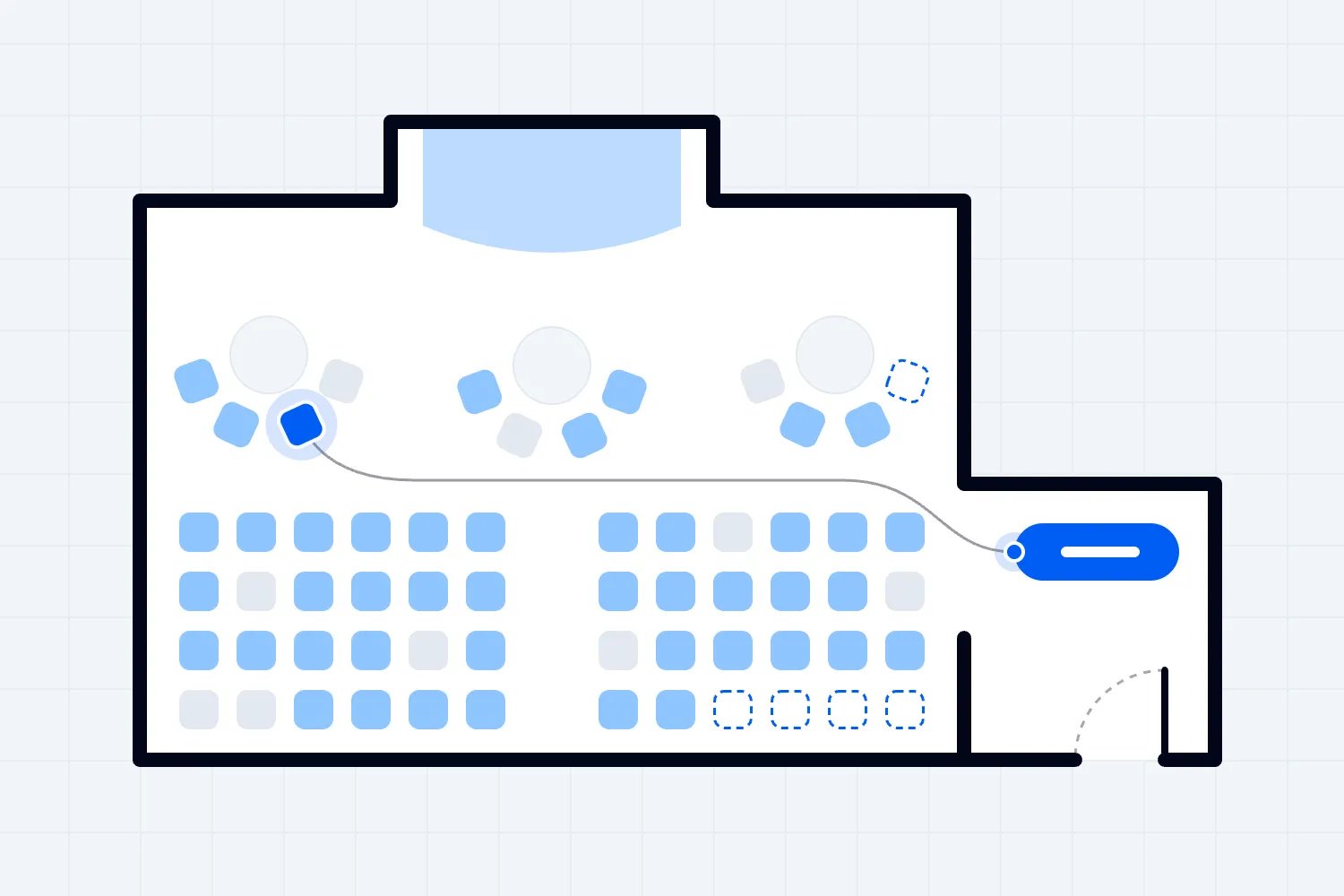
For reserved grandstands, reconcile the seat map with the physical labels. Check the edges of sections, restricted views and the seats next to accessible spaces. Loopyah's seat charts support labelled layouts, section pricing and seats held during checkout. You still need the venue team to approve what the map represents, including the correct handling of accessible inventory.
In the US, the Department of Justice's accessible ticket sales guidance addresses purchasing access, seat information and companion seating. Bring those requirements into the inventory review before sales open. Accessible places should not become a miscellaneous hold that nobody can explain or sell through the proper process.
If you're using general admission, tell buyers what that means. Admission to an unreserved grandstand doesn't promise a particular row or a group of adjacent places. Staff need a response when families arrive late and want to sit together. Good descriptions prevent a ticket from promising more certainty than the layout allows.
Before signing off the allocation, try a change that affects several promises at once. Suppose a stand section becomes unavailable after tickets have sold. Identify the people assigned there, the alternatives the venue can offer and the person who can authorise the remedy. Stop further sales of the affected places while that decision is made. Don't silently move buyers on the map and assume the new location is equivalent.
Use the same discipline for a sponsor request that arrives after public sales have opened. Find the actual uncommitted inventory, explain any cost of changing the allocation and get approval before promising seats. Your commercial team can negotiate a different benefit if the requested places are already sold. Ticketing should reveal that constraint early enough for the conversation to remain manageable.
Keep spectator admission and pit permission separate
Pit access needs its own decision process. A person may have paid for a pit product and still need to complete the track's required checks before entering. Decide those checks with the venue, sanctioning body and insurer, then make the requirements visible before purchase and at the correct entrance.
For example, the current World Racing Group general rules require drivers taking part in on-track activity at DIRTcar-sanctioned events to sign a participant waiver before participating. That is a specific rule for those events and participants. It illustrates why you need to check the applicable racing rules rather than treating a paid QR ticket as proof that every condition has been met.
Build a short access description for each product. A grandstand ticket might cover public spectator areas only. A pit pass might require a separate entrance, an eligibility check and completion of the relevant admission process. A post-race pit visit, if offered and approved, may have a different opening time and route from working-pit access during the meeting.
Avoid one broad label such as "all access" unless it really describes every included area and condition. People read those words literally. If a hospitality guest can visit a lounge but cannot enter a working pit lane, say so. If a grandstand seat is not included with a pit pass, say that too.
Upgrades need inventory rules as well as prices. When a spectator changes products, establish whether the original admission is exchanged, retained or supplemented. If a pit pass also includes grandstand admission, the person may still use a grandstand place. Your capacity accounting must reflect the actual entitlement, not just the name on the more expensive ticket.
Keep the public entrance and pit-processing route distinct where the approved venue plan requires it. A spectator trying to retrieve an email should not hold up participant registration, and pit staff should not have to sell ordinary grandstand tickets while checking eligibility. Put signs before people join the wrong queue.
For minors, obtain the exact requirements for this meeting. Don't copy a neighbouring track's age limit or assume an adult buying the order can satisfy every guardian requirement. Tell buyers what they must bring, who must be present and what happens if the conditions aren't met. Your gate supervisor needs that written answer too.
Price the meeting using the money you keep
A sold ticket is useful only if the meeting can deliver what it promises at that price. Work from retained revenue after applicable taxes and selling costs, then account for the extra cost of admitting that spectator. This is particularly important when adult, child, family and premium products produce different amounts.
Use a fictional simple model to see the decision. Suppose the meeting has $18,000 of fixed costs. Confirmed sponsorship contributes $4,000 net of its separate package-delivery costs. Spectator tickets therefore need to cover $14,000. Each paid spectator ticket leaves $24 after taxes and selling costs, and admitting that person adds $4 of variable cost. Each contributes $20 towards the remaining fixed costs. In this model, the $18,000 already includes the costs allocated to season holders and sponsor guests; the extra $4 applies to each additional public paid admission. Season-ticket income is excluded from this example, so it is not counted again as single-night revenue.
You need 700 paid spectator tickets to cover that $14,000. At 600, you are $2,000 short. At 800, you have $2,000 left after the stated costs. These are illustrative calculations, not speedway benchmarks. They assume the same ticket mix and costs at each attendance level, and exclude any unlisted income or expense.
Now compare that requirement with the inventory example. With 1,000 grandstand places available for public sale, 700 paid tickets are possible within the stated allocation. That does not establish that demand exists. It also doesn't allow you to count the 150 season places as new single-night sales or sell the 50 sponsor places again.
If children, bundles or premium products change the average retained amount, rebuild the calculation using the expected mix. A family product admitting several people creates several admissions, even if checkout shows one bundle. A cheaper average ticket requires either more paid admissions, more confirmed outside income or lower costs. There isn't a pricing trick that removes that arithmetic.
Keep concessions and parking separate until you know what the event business actually retains. Gross food sales belong in your budget only if the agreement makes them yours. If a concession operator pays you a fixed fee, forecast that fee. If they pay a share, allow for the relevant costs and uncertainty instead of counting every dollar spent at the counter.
Our event budget guide develops the wider cost plan. For race-night ticketing, the immediate decision is whether the offer can cover its costs within the places you can genuinely sell. If it can't, change the plan before advertising a discount.
Make the total price and early offer easy to understand
An early price can help you learn about demand before race day. Choose the quantity and end condition deliberately, and explain which event and admission it covers. A cheaper ticket with unclear rainout terms may simply move a future dispute earlier in the calendar.
Loopyah's ticket selling tools support ticket types with priced quantity releases and confirmation emails linking to QR tickets. That can handle a defined early allocation followed by a later price. Decide the release quantities from your inventory and budget; the software doesn't decide how much discount the meeting can afford.
Give buyers the total price clearly. In the US, the FTC's Rule on Unfair or Deceptive Fees guidance explains upfront total-price requirements for live-event tickets, including mandatory charges, with specified exclusions. Have your team check the rules that apply to your sales and show the relevant totals consistently in the ad, event page and checkout.
There is a practical reason to care even before you get to the rules. In Loopyah's Pollfish survey of 500 US respondents, fielded on 11 November 2025, 24.8% said service fees often stopped them buying, 59.8% said they sometimes compared platforms, and 15.4% said fees weren't a major factor. These are the raw responses to Q11 in the Event Attendee Insights Report. They describe that survey, not speedway fans specifically.
| Label | Respondents |
|---|---|
| Often stop buying | 24.8 |
| Sometimes compare | 59.8 |
| Not a major factor | 15.4 |
The chart shortens the response labels. "Sometimes compare" means respondents said they sometimes compared platforms because of service fees. The findings don't tell you what your track should charge, or prove that a particular fee change will increase sales. They do give you a reason to check whether a buyer can understand the complete cost before committing.
Use one worked basket in your launch review. Buy the products a family would actually select, include any mandatory charges, and compare the total with the advertised offer. Check how a free child admission appears and whether any optional purchase is genuinely optional. Ask a colleague who didn't build the page to explain the basket back to you.
Be cautious with frequent last-minute discounts. Someone who repeatedly sees a cheaper offer after buying early learns to wait. If you need a targeted offer, decide who qualifies, the inventory it uses and the commercial reason. Keep the terms clear enough that staff can honour the purchase without guessing which promotion applied.
Decide rainout treatment before the forecast becomes the story
Rain affects more than whether the track can race. It affects staff commitments, spectator travel, seat allocations and the money you may need to return. Your ticketing plan needs agreed treatment for a postponed meeting, an abandoned programme and a cancellation without a replacement date.
The terms must match your event's agreements and applicable consumer rules. As an example of venue-specific terms, Charlotte Motor Speedway's published policy says tickets are valid for the rescheduled date and describes a separate weather-credit arrangement for qualifying NASCAR events. Read its track policies as that venue's conditions. They are not a standard you can automatically apply to a weekly dirt-track meeting.
For your own meeting, get the promoter, venue and ticketing seller to agree who makes each decision. Race control may decide whether the track can operate, while another authorised person confirms the ticket remedy. The people issuing customer messages need both answers. A social post saying "called off" is insufficient if it doesn't tell buyers whether the meeting is postponed, cancelled or awaiting a decision.
If the programme's completion affects ticket treatment, state the exact applicable condition in language your audience can understand. Don't invent a universal heat-race or feature-distance threshold. Confirm the event's rule, how the official decision is recorded and how staff will explain it. Your ticketing lead should not have to judge whether enough racing took place.
Then test the practical consequence. If an original ticket remains valid for a replacement date, how will entry recognise it after a previous check-in? If replacement tickets are issued, how will the originals be prevented from creating duplicate admission? Establish the supported process with the seller and rehearse it. Don't promise automatic revalidation unless you've verified that exact behaviour.
Reserved seating makes the question more specific. Confirm whether the same seats can be honoured on the replacement date and what happens if that layout is unavailable. Check season-holder rights, sponsor commitments and buyers who cannot attend. A new date with fewer available places cannot simply inherit every old promise and keep selling freely.
Keep enough cash available for the remedies you have promised and may owe. Money already received is not necessarily money you can spend without considering cancellation exposure. Our guide to a ticket refund reserve explains how to connect that exposure to available cash. The reserve should reflect your agreements and costs, rather than a percentage copied from another business.
Keep a usable decision record
Prepare a short record with the meeting name, original date, current status, decision maker, decision time, ticket treatment and next update. Add the status of reserved seats and any pit products separately where their conditions differ. The point is to let the next person give the correct answer without reconstructing a chain of messages.
Before changing the ticket setup, capture the affected orders and the approved instruction using your normal authorised process. Record who made the change and check a sample afterwards. If you pause sales, confirm that every active sales route has paused. A pinned social announcement won't prevent a buyer from paying through an old link that is still open.
Also decide who can approve exceptions. A buyer asking for a remedy outside the published process needs an authorised answer, even when the answer is no. Give support staff a route to that person and a way to record the decision against the case. That keeps two employees from making incompatible promises to the same customer.
Give weather decisions a clear communication route
A refund policy answers a commercial question. It doesn't determine when people should move to safety. Keep the safety decision under the authorised event plan, with a named person monitoring conditions and a clear way to reach spectators and staff.
The US National Weather Service recommends a lightning safety plan for organised outdoor activities, including decisions about stopping, shelter and resuming. Its outdoor sports lightning guidance also warns that small rain shelters do not provide safe lightning protection. Plan with the appropriate local specialists and account for the time your crowd needs to reach suitable shelter. A pause at the ticket window must not delay a safety instruction.
Prepare separate messages for people already inside and people who haven't travelled. Those inside need the immediate instruction and route. Those outside need to know whether to come, whether sales are paused and when the next update will arrive. Your PA, gate brief, event page and customer email should agree on the event status.
Use plain statements. An example might say, "Tonight's meeting is postponed. Please don't travel to the track. We are confirming the replacement date and will update ticket buyers by Tuesday afternoon. Keep your ticket while we confirm the admission arrangements." This is draft wording for a situation where those commitments are true, not a substitute for your approved policy.
A delay message needs a different instruction. State what is delayed, whether people may enter and where they should wait if already on site. Don't promise a revised racing start until the responsible officials have confirmed one. If you don't know, say when you will next update people rather than making a hopeful estimate sound official.
Loopyah's attendee email tools distinguish event updates from promotional sends and let you address ticket holders within the platform. Use the relevant event audience, then check the message on a phone. Email is one communication channel; the venue still needs ways to reach spectators who aren't looking at their inboxes.
Give customer support the same approved wording before it goes out. Include the event identifier, decision time, next update and the person authorised to resolve exceptions. Keep a record of what was sent. If the decision changes, issue a clear correction rather than silently editing one page while an earlier email keeps circulating.
For longer cancellation messages, use the structure in our event cancellation email guide. Buyers should finish the message knowing what happened, what applies to their purchase and what they need to do. Explaining how disappointed you are can wait until those questions have answers.
Rehearse the gate before you add more scanners
Start with the path from parking to the correct entrance. Put the ticket-retrieval instruction and queue signs where people can act on them before reaching a scanner. A family sorting out four tickets needs a little space; they shouldn't have to do it while blocking the only route past the ticket window.
Separate routine entry from problems that need longer attention. Someone with a valid ticket ready to scan can follow the ordinary line. A buyer with the wrong date, an unreceived email or a seating dispute needs a help point staffed by someone who can resolve it. Show the scanner team how to direct that person without losing track of the original issue.
Run the rehearsal with the accounts, devices and network you will use on race night. Test a valid ticket, a duplicate attempt, a wrong-date ticket, a refunded ticket and a group arriving separately. Record what staff actually see and what they should do next. A sales demonstration on an administrator's account doesn't establish what a casual gate worker can do.
Check connectivity in the places where people will stand. A test in the office doesn't describe coverage at a distant entrance during a busy meeting. Ask the platform to demonstrate how multiple devices handle the same ticket and what happens when a device loses its connection. Agree a fallback before opening. Don't assume offline scanning, synchronised duplicates or existing turnstile integration from the presence of a QR code.
Loopyah's live ticket-selling page describes QR admission checks using a phone. Test that flow against your actual gate tasks. If you need additional access hardware, a particular offline process or a specialised credential connection, verify it separately before you rely on it. Get a working demonstration before putting those requirements in the gate plan.
Gate speed depends on the slowest repeated task in the route. If everyone must stop for bag inspection after the scan, extra scanners may only move the queue to the next point. Observe the whole arrival process, including any search, eligibility check, wristband issue and walk to the stand. Put staff where that rehearsal shows work accumulating.
Give the supervisor authority to pause admission when the event plan requires it. Keep the entrance routes and emergency arrangements under venue control, including during a weather interruption. Staff should never be encouraged to keep scanning merely because a dashboard shows unsold tickets. Commercial availability and safe operation are separate decisions.
A useful rehearsal finishes with a small incident exercise. Have one colleague present a ticket for the wrong meeting while another reports that a scanning phone has lost its connection. Watch whether staff know who handles each problem and whether the ordinary line can continue under the agreed plan. The exercise is about the team's response, not how quickly someone can recognise a deliberately planted mistake.
Record the result in words a replacement staff member could use. For example, the brief might identify the help desk by its actual location, name the supervisor and state which transactions require approval. Keep the current version available at each staffed entrance. If you change the process after the rehearsal, tell everyone affected rather than assuming the next shift will notice an edited document.
Control walk-up sales, upgrades and re-entry
Walk-up buyers need the same accurate availability as online buyers. Use one controlled inventory process across the ticket window and web sales. If a method cannot share availability immediately, set a documented allocation and reconciliation process rather than asking the two teams to estimate what remains.
Agree when sales stop for the night and who can change that decision. Late admission can still create work after racing has started. Tell buyers which gates remain open, whether any ticket products have closed and where they should go. A page accepting payment for an entrance that has already shut creates a support problem you could have prevented.
Keep the price change record simple. A supervisor should know the approved walk-up price, any remaining concessions and the conditions for an upgrade. Don't leave staff to invent a discount because a race has finished or someone has travelled a long way. If partial-programme pricing is part of the offer, define it before the meeting.
An upgrade needs a record that explains the original ticket, the new entitlement and the amount paid. Check that the change doesn't create two independently valid admissions for one person or consume inventory twice. When the process needs a supervisor, signpost that route. A scanner operator shouldn't have to improvise an exchange while the queue grows.
Re-entry deserves its own test. If someone leaves to visit the car, decide whether they may return, which proof they need and where they come back in. Check the platform's supported process and any physical credential the venue uses. A screenshot of a ticket that has already been admitted doesn't, by itself, tell staff whether the holder was authorised to leave and return.
Think through a shared family order. One adult leaving temporarily should not require the whole party to leave, and the buyer's phone should not be the only unexplained way another adult can return. The actual solution depends on your ticket and credential system. Explain it at the exit before someone walks out, when staff can still help.
Cash needs a controlled close as well. Record the opening float, approved sales, refunds and final count, with a named person checking differences. Card payments need reconciliation too. A payment device showing transactions does not automatically establish that every sale reduced the right event's ticket inventory.
Check how public occupancy is monitored when re-entry is allowed. Total scans may include repeated visits, while tickets sold include people who never arrived. Ask the venue team which measure it needs and how entries and exits will be recorded. Don't report repeated gate movements as additional spectators or use sales alone as a live count of people inside.
Sell repeat attendance without promising the same place twice
Regular racing gives you a reason to build a returning audience. It also makes ticket conditions easier to confuse. A season product, a multi-meeting bundle and a single-night ticket need clearly different descriptions, especially around special events and replacement dates.
Start by listing the meetings included. State whether the product covers a fixed seat, general admission, specific classes or only the ordinary weekly programme. If a visiting series is excluded, name that exclusion before checkout. A loyal buyer should not discover at the gate that the event they most wanted to attend wasn't included.
A season right must reserve the appropriate inventory for every included meeting. Don't sell all seats for one date and then add season holders on top. If their seat is released when they don't attend, establish exactly how that release becomes authorised. A no-show assumption is not permission to resell a seat you've already promised.
Our ticket bundle guide explains the capacity and refund questions behind multi-event offers. For a speedway, add the replacement-date problem. If two postponed meetings move close together, confirm how the bundle applies and whether a buyer needs separate admission records for both. A broad promise of "all racing this season" can be expensive if nobody has defined the boundary.
Model the price against plausible attendance by the holder. An illustrative four-meeting bundle at $80 leaves $20 per included admission if all four are used, before selling costs and tax. That is a different offer from four single-night tickets at $30 each. The comparison is arithmetic, not evidence that a particular discount will create additional demand.
Don't use a bundle to conceal weak individual meetings. Understand which dates buyers value and which they would otherwise skip. A package may bring useful early cash, but it also commits places and creates obligations across the calendar. Count the committed admissions on each date even when the money arrived in one order.
For returning-buyer promotion, distinguish an operational update from an invitation to buy another event. The UK's ICO explains the consent and conditional soft-opt-in rules for electronic mail marketing. Apply the requirements relevant to your audience and location. Buying a ticket doesn't remove your responsibility to check how later promotional contact is permitted.
A useful next-meeting email explains the programme, date, actual price and any relevant difference from the last visit. Segment the audience when that helps the recipient, such as distinguishing an event update for current holders from an offer for people who haven't bought. Keep the admission conditions just as clear in a loyalty offer as in a first purchase.
Check how your seller represents the bundle before publishing it. Ask for a demonstration of admission on each included date, including one used date and one postponed date. Confirm whether the customer receives separate tickets, a reusable credential or another supported arrangement. Verify season-pass behaviour separately from ordinary single-date tickets. The sales promise must fit the arrangement you have actually tested.
Let regulars keep buying individual meetings if that remains part of your offer. Someone who can't commit to the calendar may still become a valuable repeat spectator. Compare the contribution and administration of the package with those single-night purchases, and review the result after the included meetings have taken place. Early cash is useful, but the eventual cost of delivering every promised admission belongs in the decision.
Close the meeting with records that explain the result
Before everybody leaves, collect the information needed to settle the event. You want paid tickets by product and channel, complimentary admissions, refunds, selling costs, payment totals and unresolved customer cases. Keep pit products distinct from public spectator admission so the figures describe the rights actually sold.
Compare those records with the budget assumptions. If you expected each paid ticket to contribute $20, calculate what the actual mix produced. A higher headcount can still leave less money when the mix shifts towards discounted admissions or delivery costs rise. Identify the cause before deciding that the next meeting needs another price promotion.
Reconcile sponsor and season commitments separately. The gate report may show their attendance, but their money may have been received under a wider agreement. Allocating that income to a meeting needs a consistent finance policy. Don't count a whole season purchase again each time the holder walks through the gate.
Review the practical failures while staff can remember them. Which ticket descriptions caused questions? Did pit buyers arrive without the required documents? Did one sign send spectators to the wrong entrance? A specific correction to the event page or gate brief is more useful than a general instruction to communicate better next time.
Keep unresolved refunds and rain checks visible in the handover. Give each case an owner and a next action. If an entitlement transfers to a later meeting, make sure the team running that date can recognise it and has allowed for the inventory. The obligation doesn't disappear when tonight's cash is counted.
Then review demand using comparable meetings. Note differences in programme, weather, pricing, marketing and capacity before crediting one change with the result. A special race can attract a different audience from an ordinary weekly fixture. You need enough context to decide what can sensibly be repeated.
Check the difficult purchase before opening sales
Your final review should follow a buyer through a situation that could go wrong. Choose a family booking grandstand seats, a spectator seeking a pit upgrade, or a season holder attending a postponed meeting. Use the published wording, the real inventory and the actual staff permissions.
Ask the relevant team to complete the transaction and explain the outcome. Which date is valid? Which area is included? What happens to the original ticket? Which conditions still need to be met at entry? What would the buyer receive if the meeting cannot go ahead? Record the answer and correct any disagreement before you open sales.
A ticketing plan is ready when the event page, checkout and gate team give the same answer to those questions. Start with that agreement for your next race night. Then run the test purchase through it, including the awkward exception, while you still have time to fix what doesn't work.

Author: By the Loopyah Content Team
The Loopyah Content Team shares expert insights, practical guides, and industry updates to help event organizers create unforgettable experiences and stay ahead in the event planning world.