· 27 min read
How to plan a ticketed rodeo

You've found an arena, a stock contractor is interested, and local businesses are asking about sponsorship. It's tempting to get the ticket page up while that interest is there. But you still need to know who is delivering the competition, which areas spectators can enter, and what happens if the ground or weather makes the programme impossible.
Good rodeo event planning starts with a workable, approved sporting operation. Confirm the format, specialist team, livestock arrangements and venue conditions first. Then build the spectator offer and budget around what that operation can reliably deliver. Ticket sales should fund a defined event, rather than become the reason you press ahead with unresolved problems.
This guide is for an operator producing a paid, audience-facing rodeo. It concentrates on the commercial and operational decisions you own, including supplier responsibilities, seating, admissions, sponsorship, interruption plans and settlement. It uses US sources for specific rodeo and regulatory examples. If you're running elsewhere, use the relevant local association and authorities before adopting any requirement described here.
Define the rodeo before you sell the experience
Write down what your audience is buying. Is this a complete rodeo programme, a specialist bull riding event, or a rodeo performance within a larger fair? How many performances will you sell? Will the same ticket also cover music, food areas or other attractions? Those choices change the sporting agreement, public opening hours and cost of keeping the site staffed.
A fair admission and a rodeo admission can be separate products. Make their relationship explicit. Someone buying a rodeo seat shouldn't discover at the entrance that another compulsory ticket is needed to reach it. Equally, a fair visitor shouldn't assume the arena is included because the rodeo appears prominently in the advertising.
For a first edition, I would favour one clearly described performance over several overlapping experiences. An extra session creates another staffing period, another audience movement and potentially another livestock and medical duty. It only adds commercial value when the additional receipts cover those obligations and the specialist team approves the programme.
Decide whether you are producing the rodeo yourself or buying an agreed production service. In either case, name the organisation responsible for the competition and the person who can answer sporting questions. A contractor supplying animals may have a different scope from a producer supplying the programme, officials and arena personnel. Don't let the word "rodeo package" conceal that difference.
Prepare a short event definition before seeking final quotes. Include location, proposed dates, indoor or outdoor setting, performance count, proposed disciplines, intended audience, ticket products and any additional entertainment. List which details are confirmed and which still need agreement. Suppliers can then price the same event, rather than return offers based on different assumptions.
Use the definition to resist casual additions. A sponsor's request for an arena presentation or a musician's offer to play afterwards can sound harmless. Ask whose working hours change, whether the sporting permissions still cover the activity and whether ticket holders were promised something different. Approve the cost and operational change before adding it to the public programme.
Confirm approvals and appoint the specialist team
Start with the relevant rodeo association and your proposed producer or stock contractor. Ask which sanctioning route fits the format, what has to be submitted, who is eligible to compete and which current rules apply. An association's approval and a venue booking are different things. Neither should be treated as a substitute for local permissions or insurance confirmation.
The Professional Rodeo Cowboys Association's rodeo approval resources illustrate the separate paperwork involved in a PRCA event, including approval applications, sponsorship and livestock welfare. Use the application for the actual event year. As of October 2026, the hub provides 2027 documents. An old application passed around by a previous committee may be the wrong starting point.
Create a responsibility list while those discussions are happening. Identify who supplies the stock, prepares the arena surface, manages chutes and livestock movements, provides competition personnel, handles entries and confirms results. Ask whether the quote includes judges, the rodeo secretary, timers, the announcer and the arena personnel needed for your disciplines. Have the rodeo lead identify anything excluded, including who will book and pay the missing roles.
Put named contacts beside responsibilities. "The committee" isn't enough when a delivery arrives before dawn or an official cancels. Each important duty needs someone who can make a decision and an agreed replacement arrangement. Check that the same person hasn't accepted several duties that happen simultaneously in different parts of the site.
Ask your insurer or broker to review the actual event description. Include livestock activities, participants, spectators, contractors, any youth activity, alcohol and additional entertainment. Describe the insurance held by the organisations involved and ask what evidence you need from each. A certificate's existence doesn't establish that your planned activity is covered under its terms.
Keep an approval record with the document, responsible person, due date, conditions and confirmation status. Add the local venue, licensing, fire, food and traffic requirements identified by the appropriate authorities. This is a record of decisions and evidence, rather than a list of assumptions marked complete because somebody sent an email.
Set an internal deadline for the unresolved items that would prevent the event. Work backwards from ticket launch, supplier cancellation dates and marketing commitments. If a required agreement isn't ready, decide whether to delay the launch or change the proposal. Don't use early ticket income to make a doubtful plan feel more certain.
Contract for livestock care throughout the booking
The animals' time on site extends beyond the performance. Walk through arrival, unloading, holding, preparation, competition, recovery and departure with the stock contractor and veterinarian. Ask them to specify the facilities and staffing required at each stage. The organiser's job is to provide the agreed conditions and verify that the people responsible are ready.
Avoid copying pen dimensions, handling methods or welfare limits from a general event article. The species, stock, disciplines, site and applicable rules matter. Have the qualified team approve the arrangements for water, feed, shelter, separation, footing, cleaning and access. Record who inspects them before animals arrive and who maintains them during the booking.
For a concrete association example, the PRCA's 2027 livestock welfare application requires an on-site veterinarian for every performance and section of slack, and suitable provision for humanely moving injured livestock from the arena. It also recommends a designated welfare contact and written injury plan. Those are PRCA requirements and recommendations, not a complete description of every rodeo's legal duties.
Ask the rodeo lead to explain whether your event includes slack, meaning competition scheduled outside the main public performance. If it does, include those hours in every relevant service agreement. A veterinarian booked only for the advertised evening show doesn't cover an earlier competition period simply because both happen on the same date.
Agree what happens if an animal cannot take part, a transport vehicle fails or a welfare concern arises during preparation. Name the people who decide and the process for telling the show caller that the programme has changed. Commercial staff should never promise that a particular activity will continue regardless of the specialist team's assessment.
US interstate livestock movements need their own checks. USDA APHIS identifies rodeo cattle among the categories subject to official identification requirements and describes movement documentation and state-specific horse requirements in its interstate animal movement reference. Have the responsible contractor and veterinarian confirm current federal and destination-state requirements for the actual animals and journey. Don't assume an exemption applies because stock has attended another rodeo.
Keep document checking away from the public ticket queue. Agree who checks arrivals, where an unresolved delivery waits safely and who can refuse or delay unloading. The gate volunteer who scans spectator tickets should have a clear contact for a livestock vehicle, without being expected to interpret veterinary paperwork or decide whether the delivery can proceed.
Inspect the venue as a working rodeo site
A venue's advertised capacity tells you little about whether your configuration works. Inspect it with the venue manager, rodeo lead and operations lead. Walk the site in the order people and vehicles will use it. Check the actual routes for stock deliveries, contestants, spectators, suppliers and emergency services, including the periods when several groups arrive together.
Keep public movement separate from working livestock and vehicle areas. Where the site creates a crossing, have competent people design and manage the arrangement. A sign saying "staff only" doesn't physically prevent a family following the shortest route from parking to the seats. Look for the route a first-time visitor would choose, rather than the route familiar staff know they should use.
The arena team needs to approve the surface, chutes, gates, barriers and working areas for the proposed disciplines. Spectator staff need to know which boundaries are fixed and which working gates can open during the programme. Don't sell a premium standing area near a working gate and discover during the rehearsal that people have to be moved whenever stock leaves.
Check viewing from the seats you intend to sell. Consider fencing, rails, equipment, sponsor signs and temporary structures. Take the proposed production layout with you, because an empty arena may offer a view that the event setup removes. Describe restricted views honestly and agree whether any seats must remain unavailable.
Accessibility belongs in this inspection. Follow the route from arrival through ticket checks to the viewing position, toilets, refreshments and the emergency arrangements. Ask the venue to confirm what works for the planned ground conditions. A route that is usable on a dry inspection day may need a different arrangement after heavy rain.
US organisers selling assigned seats should review the Department of Justice's ADA ticket sales guidance. It addresses comparable purchasing opportunities, prices, information and related conditions for accessible seats. Have the venue and ticket seller implement the requirements that apply to the event. A separate contact email alone shouldn't become the entire buying process for people who need accessible seating.
Put venue responsibilities into the hire agreement. Include setup and removal hours, surface work, utilities, waste, toilets, cleaning, damage, security and access to keys or controls. Confirm the boundaries of any catering, bar or signage exclusivity. Those terms affect both the event's operating cost and what you are entitled to sell to sponsors and vendors.
Work out the ticket requirement before setting the price
Build the budget from the event you've agreed to deliver. Collect written quotes for the venue, rodeo production, livestock services, officials, medical provision, staffing, equipment, insurance and marketing. Include organising time, access works, cleaning and the hours needed after the last spectator leaves. A budget that only covers the public performance understates the job you're buying.
Separate committed costs from costs that change with attendance. A fixed production fee may stay the same whether the stand is half full or sold out. A hospitality meal changes with the number of guests served. Some costs increase in steps when another area opens or staffing coverage changes. Check the actual contract rather than labelling every item fixed or variable by habit.
Treat sponsorship and vendor income with the same care. Deduct the costs of fulfilling their packages before using the remainder to reduce the ticket requirement. Include income only at the level of certainty appropriate to the decision. A conversation with a likely sponsor isn't cash available for a non-refundable supplier deposit.
Here's a fictional budget in US dollars to show the calculation. Assume fixed event costs of $36,000, including the planned organising work and contingency. Confirmed sponsor receipts are $8,000, and providing those sponsor benefits costs another $2,000, outside the $36,000 event cost. Sponsorship therefore contributes $6,000 towards the fixed event costs, leaving $30,000 for spectator tickets to cover.
Assume the weighted average retained ticket receipt is $30 after applicable transaction charges and taxes. This isn't necessarily the advertised ticket price. If the additional cost per paid spectator is $5, each paid spectator contributes $25 towards the remaining fixed costs. Divide $30,000 by $25 and the event needs 1,200 paid spectators to break even under these assumptions.
At 1,000 paid spectators, the ticket contribution is $25,000 and the event loses $5,000. At 1,400, it is $35,000 and the event makes $5,000. These are arithmetic examples, not rodeo attendance forecasts or recommended prices. The costs and average receipt are held unchanged for the comparison; real attendance changes may require another staffing or service level.
Now compare the requirement with approved saleable inventory. Suppose the venue team confirms that, after all relevant holds and restrictions, you can sell only 1,100 spectator places for this performance. The example cannot break even through those tickets alone. You need a lower cost, a higher credible average receipt, more confirmed net non-ticket income or a different event plan. Hoping for a busy walk-up doesn't create another hundred places.
Protect the cash needed before and after the show
Profit and available cash answer different questions. Add payment dates to your budget so you can see when supplier deposits, balances and other commitments fall due. Record when sponsor funds are actually expected and when ticket proceeds become available under your payment arrangements. Don't schedule spending against money that hasn't cleared or isn't yet available to you.
Ask suppliers what changes if the performance is postponed, shortened or cancelled. Identify which deposits are non-refundable, which services can move and which additional hours create another charge. Ask the insurer about the coverage and exclusions relevant to those scenarios. Put the answers beside the cost, so you can see the financial consequence of a decision before a weather interruption happens.
Keep a separate allowance for customer remedies and disputed payments where appropriate. Ticket proceeds shouldn't all be treated as free working capital while you still owe the performance or a possible refund. Have the applicable cancellation terms checked for your jurisdiction, including consumer rights. A phrase such as "no refunds" doesn't settle every circumstance in which an event fails to deliver.
Agree who can authorise extra expenditure on the day. A damaged barrier, extended medical duty or replacement generator may need an immediate decision. Give the operational lead an agreed process for contacting the finance decision maker, recording the approval and tracking the revised forecast. Staff shouldn't have to make an unauthorised commitment personally to solve a foreseeable problem.
Use our guide to reviewing event spending against budget to keep quoted, committed and expected costs distinct. For this rodeo, update the forecast whenever the performance count, public hours or supplier scope changes. Those decisions can affect several invoices even when the ticket price stays the same.
Set a commercial review before the next substantial commitment. Compare paid sales, confirmed sponsorship, remaining inventory and the cost of proceeding. Decide beforehand who can postpone or cancel if the evidence no longer supports the plan. That decision needs enough lead time to be useful, rather than arriving after every contract has become payable in full.
Make ticket choices easy to understand
Create ticket types for real differences in the spectator experience. General admission, reserved seating and hospitality can justify different prices when their entitlements are clear and deliverable. Avoid creating extra categories simply to make the page look busy. Every additional entitlement gives admissions and customer support another rule to explain and enforce.
For each ticket, state the performance date, entry time, viewing arrangement and what else is included. Define child eligibility and the process for any free child admission. Explain parking separately if it has its own charge or allocation. A family should be able to work out the total visit cost and where everyone will sit before paying.
Checkout clarity has evidence behind it. In Loopyah's Event Attendee Insights Report, fielded through Pollfish in November 2025 with 500 US respondents, 48% selected unexpected fees as a reason they had abandoned a ticket checkout in the previous year. Thirty percent selected a confusing seat map or inability to find good seats. Respondents could select up to three reasons, so the percentages overlap. This was a general attendee survey, not a rodeo study.
| Label | Respondents |
|---|---|
| Unexpected fees | 48 |
| Price changed | 34.8 |
| Map or seats | 30 |
| Site errors | 19.8 |
The chart uses shortened labels for four selected responses and unweighted respondent percentages. Price changed refers to demand-based pricing; map or seats means a confusing map or no suitable seats; site errors includes a slow site or app. It isn't a forecast of your lost sales, and removing one problem doesn't imply you'll recover that percentage of customers. For your ticket page, the practical response is to explain the price and viewing choices clearly, then test whether a buyer can complete the purchase.
Loopyah's ticketing tools let you define ticket types and releases, take payment and send a confirmation linking to QR tickets. That connects the offer you publish to a ticket admissions staff can check. You still decide the capacity, entitlement descriptions and event terms, and you need to test that the setup matches them.
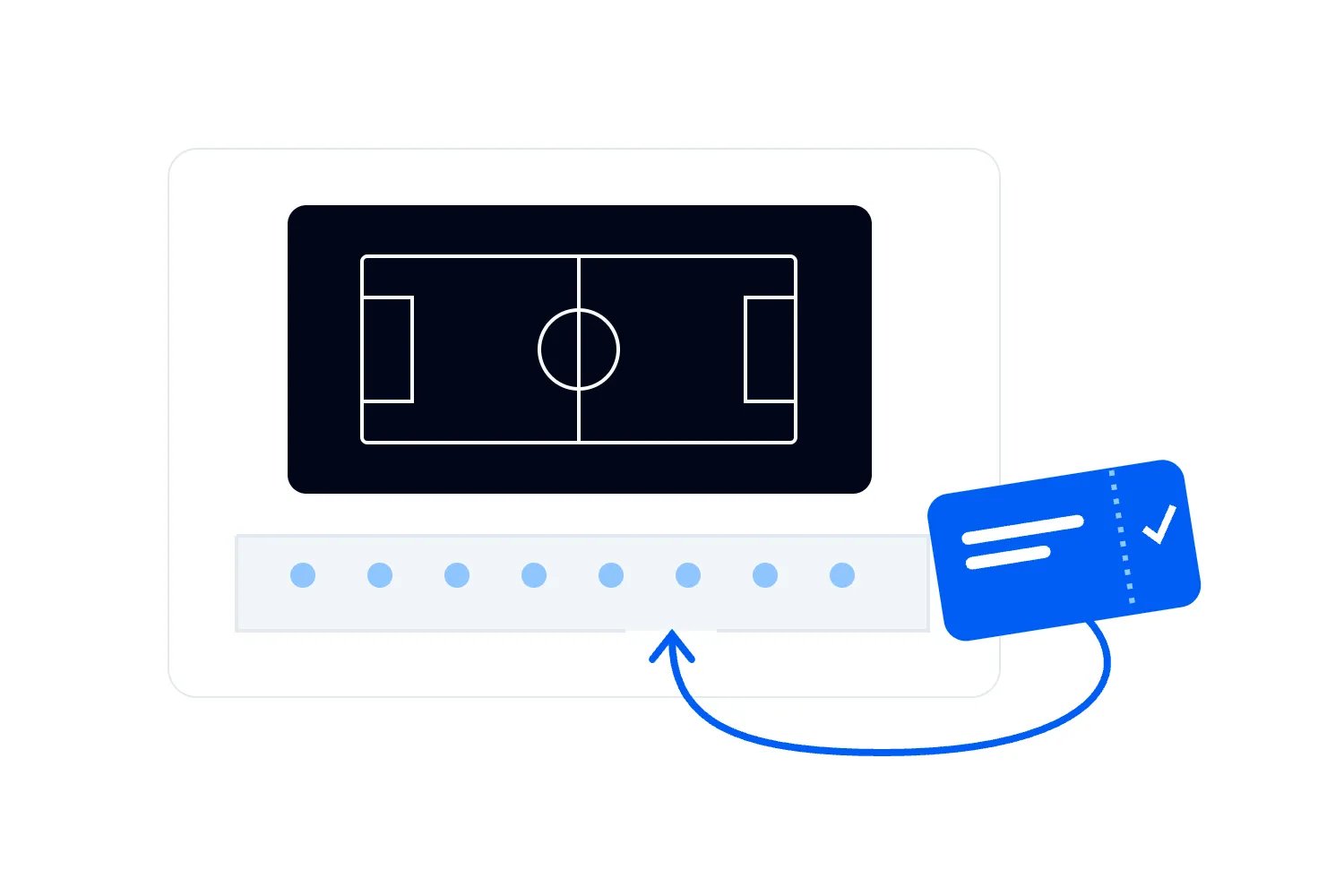
If you offer assigned seats, Loopyah's seat charts let you draw the layout, price sections and let buyers select seats. Build from the venue's approved spectator configuration. A ticket map represents the places you have permission to sell; it doesn't establish the physical safety or accessible suitability of the venue.
Make a test purchase for each materially different product. Follow the confirmation on a phone, retrieve the tickets and ask an admissions worker to explain what they allow. Include a group booking and a buyer with a question about access. Fix ambiguous descriptions before adding more promotional traffic to the page.
Keep contestant credentials separate from spectator tickets
A spectator ticket proves an admission entitlement. It doesn't establish that its holder can compete, enter the livestock area or accompany a contestant into a restricted working space. Agree a separate credential process with the rodeo lead for contestants, officials, stock personnel, accredited media and other authorised workers.
Have the competition team own eligibility, entries, applicable waivers and sporting records. Ask what the organiser receives, who checks it and who resolves exceptions. A public checkout shouldn't become an improvised system for approving a contestant who doesn't meet the competition requirements. Refer those decisions to the people with authority under the relevant rules.
Write access permissions in language a gate worker can use. Identify which credential permits entry to the arena working area, contestant facilities, hospitality and general spectator areas. Don't assume a sponsor lanyard or media badge means access everywhere. Some people need different permissions at different times, particularly during stock movements and setup.
Keep sponsor seats and complimentary admission in the same inventory control as paid places. They may produce no ticket income, but they still use the relevant capacity. Distinguish the person who can approve a complimentary allocation from the worker who hands it out. A well-intentioned promise at the gate can displace a paying customer if the allocation was never recorded.
Decide how a family booking is admitted when its members arrive separately. Check your ticketing process for partial group arrivals and train staff on the actual behaviour. Establish who can resolve a missing email, incorrect date or disputed scan. Keep the exception desk separate from the main scanning position so one difficult enquiry doesn't stop the whole line.
Re-entry needs its own agreed method. Test the event's actual configuration with the provider, and explain the rule before arrival. If a spectator leaves to collect something from a vehicle, admissions staff need a reliable process for return and occupancy control. Don't improvise a stamp or scan rule that conflicts with the system already in use.
Give every gate a supervisor and a route to the event control contact. Staff should know when to stop admission, how to keep an emergency route clear and where to direct a contestant with an unresolved credential. They also need to know which questions they cannot decide, including sporting eligibility and permission to enter livestock areas.
Sell sponsorship you can actually deliver
Start with the rights available under your venue and association agreements. Check naming, signs, arena announcements, broadcast use, supplier exclusivity and category restrictions before promising any of them. The PRCA's 2027 committee sponsorship application, for example, sets out national sponsor rights and committee obligations. A local package must fit the agreement that applies to that rodeo.
Price the work behind each benefit. An arena banner needs an approved location, artwork, production, installation and removal. Hospitality needs tickets, space, service and staffing. A sponsor appearance needs a confirmed time and permission from the operational team. If the package costs nearly as much to deliver as it brings in, it contributes very little towards the show.
Keep stock areas out of casual activation promises. A sponsor may want guests photographed near animals or invited behind the scenes. Refer any proposal to the qualified team before offering it, and decline it when the conditions can't be met. A valuable sponsor relationship doesn't grant the commercial team authority to change livestock handling or public access arrangements.
Give the sponsor a written description of quantities and limits. Say how many tickets are included, which performance they cover, where branding appears and when assets are due. Describe what happens to time-sensitive benefits if the programme changes. Our event sponsorship agreement guide helps you turn those decisions into a clearer brief for the agreement.
Treat vendors similarly. Confirm pitch fees or revenue arrangements, power, water, waste, delivery windows, sales hours and any required approvals. Establish who receives customer payments and how your share is documented. A food vendor's gross turnover isn't your event revenue when you are entitled only to an agreed pitch fee or percentage.
Ask vendors how they will cope with demand between programme sections. Long queues can obstruct circulation or keep spectators away from the performance they bought. Position the service points with the venue and crowd team, and protect accessible routes and exits. More stalls aren't automatically better if they create another obstruction or consume places you need for people to move.
If you add an animal encounter or educational display, plan it as its own activity. The CDC's farm animal guidance explains that healthy-looking animals can carry germs and recommends handwashing after contact with animals or their environment. It also advises keeping food and drink out of animal areas. Have the responsible specialists and public health advisers agree the appropriate separation, supervision and hygiene arrangements for what you actually offer.
Build the programme around real working time
Have the rodeo lead create the sporting programme. Ask them to account for preparation, competition, livestock movements, surface work and any approved changes. Then add the public timings and commercial commitments around that programme. The advertised start time should follow the agreed operation, rather than force specialists to compress essential work to meet a poster.
Create one working schedule covering the whole site day. Include supplier access, livestock arrivals, competition activity outside the main performance, staff briefing, public opening, sponsor duties, the main show and departure. Not every team needs every detail, but their individual schedules must come from the same current version.
Name a show caller or equivalent person responsible for coordinating the public programme with the rodeo lead. Agree how a change reaches the announcer, sound operator, admissions supervisor and commercial team. The announcer shouldn't have to interpret a radio conversation and guess whether to promise a restart or introduce an unscheduled presentation.
Allow the specialist team to set appropriate working and recovery requirements. Don't derive a full performance length by multiplying a brief competitive attempt by the number of entrants. Loading, checks, resets, results and interruptions take time too. Ask for a schedule based on the actual format and the contractor's documented delivery plan.
Give public timings the right level of certainty. If doors open at a fixed time but the finish is approximate, say so. If a particular discipline or performer is provisional, don't use it as an unconditional headline promise. Buyers can accept a clear explanation of what is planned more easily than a late discovery that the advertised experience was never confirmed.
Rehearse the communication chain before the event. Test a delayed stock arrival, a contestant query, a failed public address channel and a sponsor requesting a programme change. Check who decides, who tells the public and where staff find the current information. Resolve conflicting instructions while the exercise is still a conversation around a table.
Agree medical, weather and interruption decisions
Ask a competent event medical provider to assess the actual event, including participants, workers and spectators. Share the disciplines, site, programme, audience profile and access routes. The provider should specify the required cover and operating conditions. Human medical support and veterinary provision are separate services, and neither should be assumed to cover the other's responsibilities.
Clarify what happens when a patient needs transport or a key provider becomes unavailable. Ask the relevant leads what activity must pause and what has to be restored before it can resume. Don't set a generic staffing ratio from an unrelated event or assume that a nearby hospital replaces suitable on-site arrangements.
Britain's Health and Safety Executive describes the need for emergency plans proportionate to event risks, including clear roles, show-stop procedures and arrangements for the public. That guidance applies in Great Britain; elsewhere, agree the appropriate local requirements with the venue, providers and authorities. The useful planning question is specific: who takes which action when the agreed conditions are no longer met?
For an outdoor site, distinguish weather monitoring from the decision to pause or evacuate. Name the monitor, information sources and authorised decision makers. Have the qualified team set the thresholds for the actual hazards, including ground conditions, heat, wind and lightning. Don't reduce the plan to "we'll see how it looks" once people have paid and gathered.
The US National Weather Service's lightning guidance for outdoor sports calls for a designated monitor and a plan covering stops, shelter and resumption. It explains that open shelters don't provide lightning safety and recommends waiting at least thirty minutes after the last thunder before outdoor activities resume. That waiting period is not, by itself, permission to restart your rodeo; the other required conditions still have to be met.
Identify suitable shelter and the time needed to reach it before accepting the spectator plan. Consider how people with access requirements will move and how the site team will manage routes while the livestock team follows its own agreed procedures. A shelter instruction is only useful if the intended people can reach the place and it can accommodate them.
Use our outdoor event weather monitoring guide to develop the decision record. For this event, it should connect the observed condition to the stop authority, immediate instructions, next update and required checks before restart. Preserve the relevant professional decisions even when the delay threatens the event's financial result.
Promote the performance with information buyers need
Once the event is ready to sell, build the campaign around a recognisable spectator experience. Explain the programme, venue, date, viewing choices and atmosphere honestly. Use cleared images and footage that represent what you are offering. If media comes from a previous edition or another venue, identify it appropriately rather than suggesting it shows this event's exact layout.
First-time spectators need a little orientation. Explain what they will see, when to arrive and whether the ticket covers the entire performance. Tell returning fans what is distinctive or confirmed about this edition. You don't need to teach every competition rule on the ticket page, but buyers should understand why this is worth their time and money.
Work with the venue, local partners and relevant community organisations to share one accurate sales page. Give each partner the confirmed wording and a process for checking changes. A partner's post can remain visible long after the programme changes, so make the booking page the place where buyers find current details and conditions.
Before increasing ad spending, compare the remaining sales requirement with the time and inventory available. Use paid orders to assess the campaign. Comments, shares and sponsor enthusiasm are useful signals, but they don't pay the contractor's balance. Track the source information your ticket seller actually provides and avoid attributing every sale during a campaign to that campaign.
Send buyers practical arrival information through your service communication process. Include the correct entrance, parking arrangements, ticket retrieval, prohibited items, access contact and the distinction between doors and performance time. State the weather communication channel and where the current event status will appear. Keep contestant arrival instructions separate so the two audiences aren't sent to the same working gate.
Prepare messages for a delay, pause, changed programme and cancellation before the day. Leave space for the confirmed facts, decision time and next update. Having a draft ready helps the authorised person issue a precise message quickly. It doesn't mean promising a remedy or restart time before the responsible people have decided what is possible.
Use a launch check, then repeat it before opening
Before selling, hold a decision meeting with the people responsible for the sporting operation, venue, finance and public experience. Check unresolved conditions against actual evidence. A hopeful update isn't the same as an accepted contract, permission or confirmed service. Write the decision and any remaining conditions so everyone understands what has been authorised.
A usable launch record includes these questions:
Is the event definition agreed, including performances and additional activities?
Are the required approvals, venue permissions and insurance conditions resolved?
Are the specialist production, livestock, veterinary and human medical responsibilities confirmed?
Is the spectator configuration approved, with saleable inventory and access arrangements recorded?
Does the budget work at a credible paid attendance, and are the payment dates affordable?
Do ticket descriptions and customer terms match the experience the team can deliver?
Are interruption decisions, public updates and financial consequences understood?
These questions aren't a substitute for the specialists' own inspections or documentation. They help the organiser notice when the commercial launch is getting ahead of the operational work. If a necessary condition remains unresolved, record who will resolve it and when the launch decision will be revisited. Don't quietly convert it into a task to finish after sales begin.
Repeat the operational check before public admission. Verify the actual site and services, rather than relying on what was booked weeks earlier. Confirm staff positions, radios, announcements, gates, exits, medical cover and the current programme. Have the responsible team address a failed condition before the public enters the affected area.
Close the event before deciding to run another
Keep departure in the operating plan. Spectators leaving, contractors removing equipment and livestock vehicles preparing to move can create a different set of conflicts from arrival. Retain the agreed staffing and route controls until their duties are complete. The end of the last performance isn't automatically the end of the event's responsibilities.
Reconcile paid tickets, complimentary allocations, scans and any available attendance records without treating them as interchangeable. A ticket sold is income associated with an entitlement. A scan is a recorded admission action. Neither alone tells you the exact number of people present at every moment, particularly where re-entry or several access processes are involved.
Settle suppliers against the agreed scope and authorised variations. Compare sponsor receipts with the benefits delivered, document vendor income and record refunds separately. Include late invoices and your own organising work before stating the profit. If the result depends on a one-off donation or unpaid labour, show that clearly in the next edition's budget.
Meet with the rodeo lead, venue, welfare contact, medical provider and admissions supervisor while the practical details are fresh. Ask which conditions caused delays, what changed from the agreed plan and which changes should be priced into another booking. Keep sensitive incident records in the appropriate restricted process, rather than circulating them in a general commercial review.
Then decide what the next event can promise. Keep the parts spectators valued and the specialist team could deliver well. Change the price, scope or supplier arrangement where the actual costs require it. If the numbers still depend on more paid spectators than the approved site can accommodate, resolve that problem before announcing the next date.

Author: By the Loopyah Content Team
The Loopyah Content Team shares expert insights, practical guides, and industry updates to help event organizers create unforgettable experiences and stay ahead in the event planning world.