· 27 min read
Should your seat map stop buyers leaving a single empty seat?
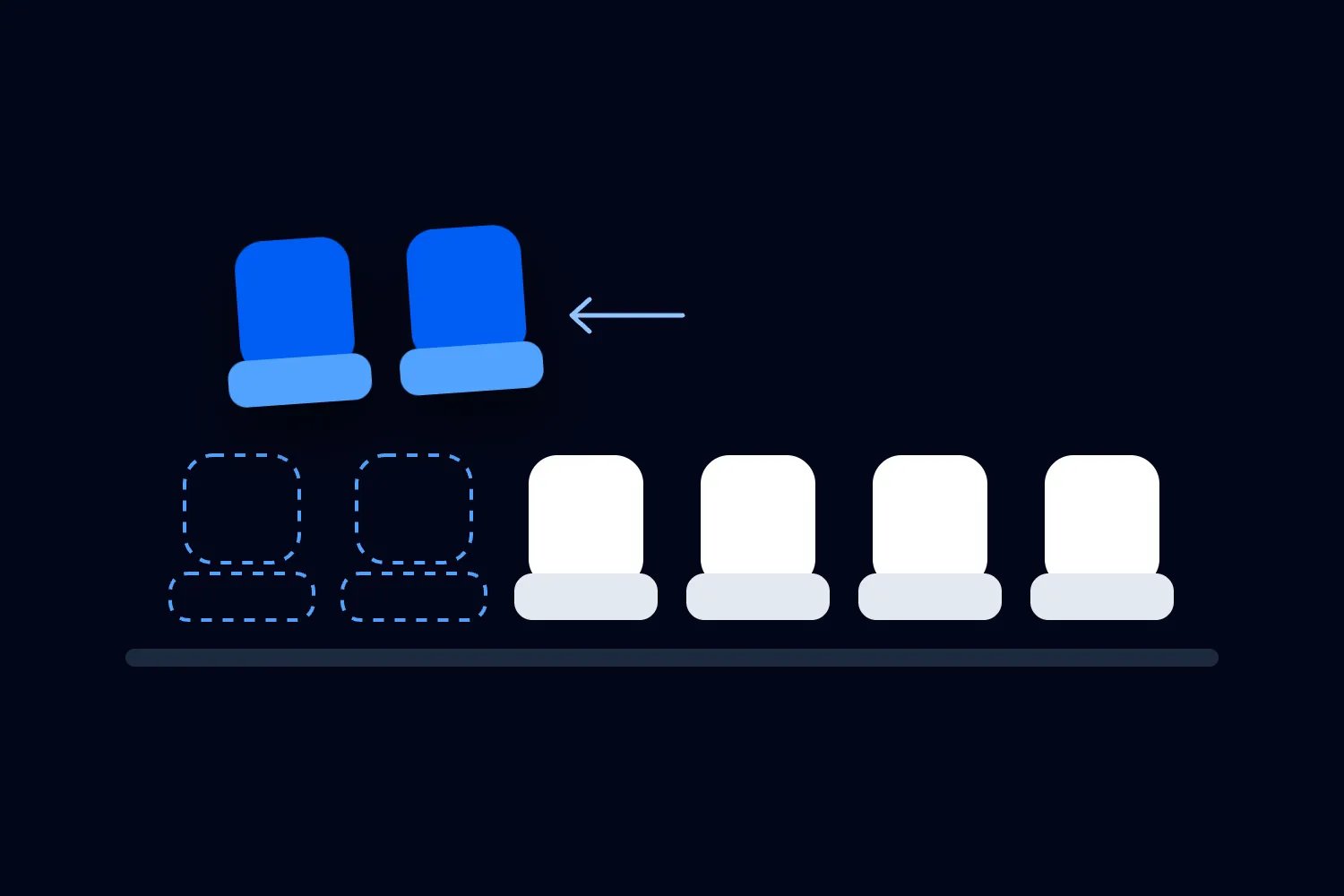
Someone wants two tickets to your show. They find a pair they like, tap the seats, and get told they can't continue because their choice leaves one seat on its own. You can see why the rule exists. You also have a customer trying to pay you who has just been given another job to do.
A single seat ticket policy can make sense when it preserves places that groups are likely to buy. Use it selectively, with suitable alternatives and a working exception process. If the rule regularly blocks the only seats a party can use, or protects inventory you have little chance of selling, relax it. The rule needs to help you sell more tickets than it costs you in lost bookings and support.
The decision needs more than a switch in your ticket settings. You need to understand your remaining seats, the bookings the rule interrupts, and what staff can do when the suggested alternative doesn't work. This guide explains how to make that decision, calculate the possible cost, handle access needs, and review the rule as the performance approaches.
What does a single seat ticket policy actually prevent?
The policy usually prevents a purchase that leaves one available seat isolated within a continuous run of seats. You may also hear it called an orphan seat rule. That describes the seat left behind, rather than the number of tickets the customer wants to buy.
A person buying one ticket can still be welcome. They might select an existing single, choose an end seat in a longer available run, or take a place that leaves a usable group together. A party buying several tickets can trigger the restriction if its selection separates one available place from the rest. Explain that difference, because a message about "single seats" can otherwise sound like you're refusing solo customers.
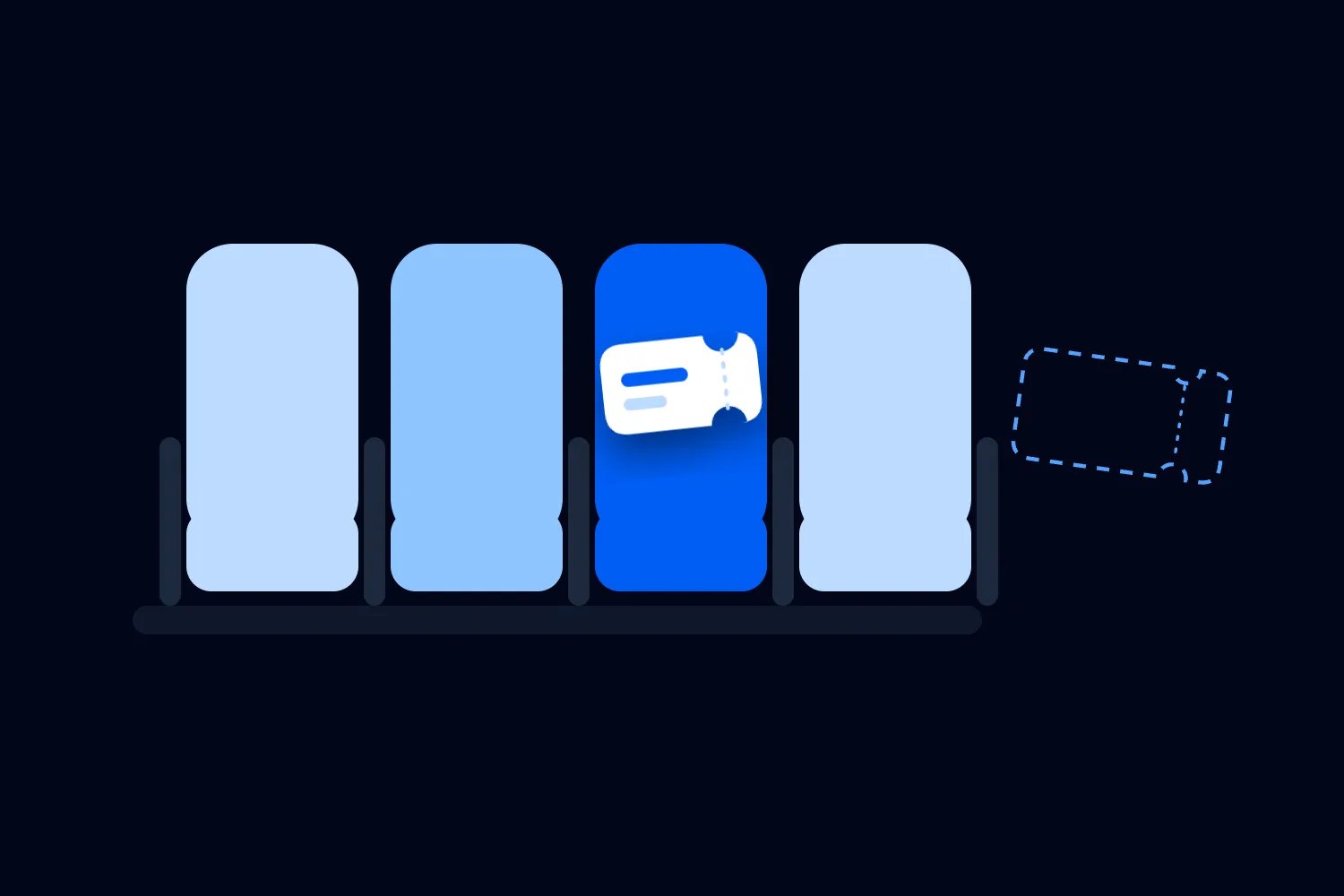
Imagine five ordinary seats together in one row, numbered 1 to 5, all available at the same price with the same stated features. A pair choosing 2 and 3 leaves seat 1 alone and seats 4 and 5 together. A pair choosing 1 and 2 leaves three together. In that simplified situation, suggesting 1 and 2 could preserve a larger booking opportunity without changing the number of tickets bought.
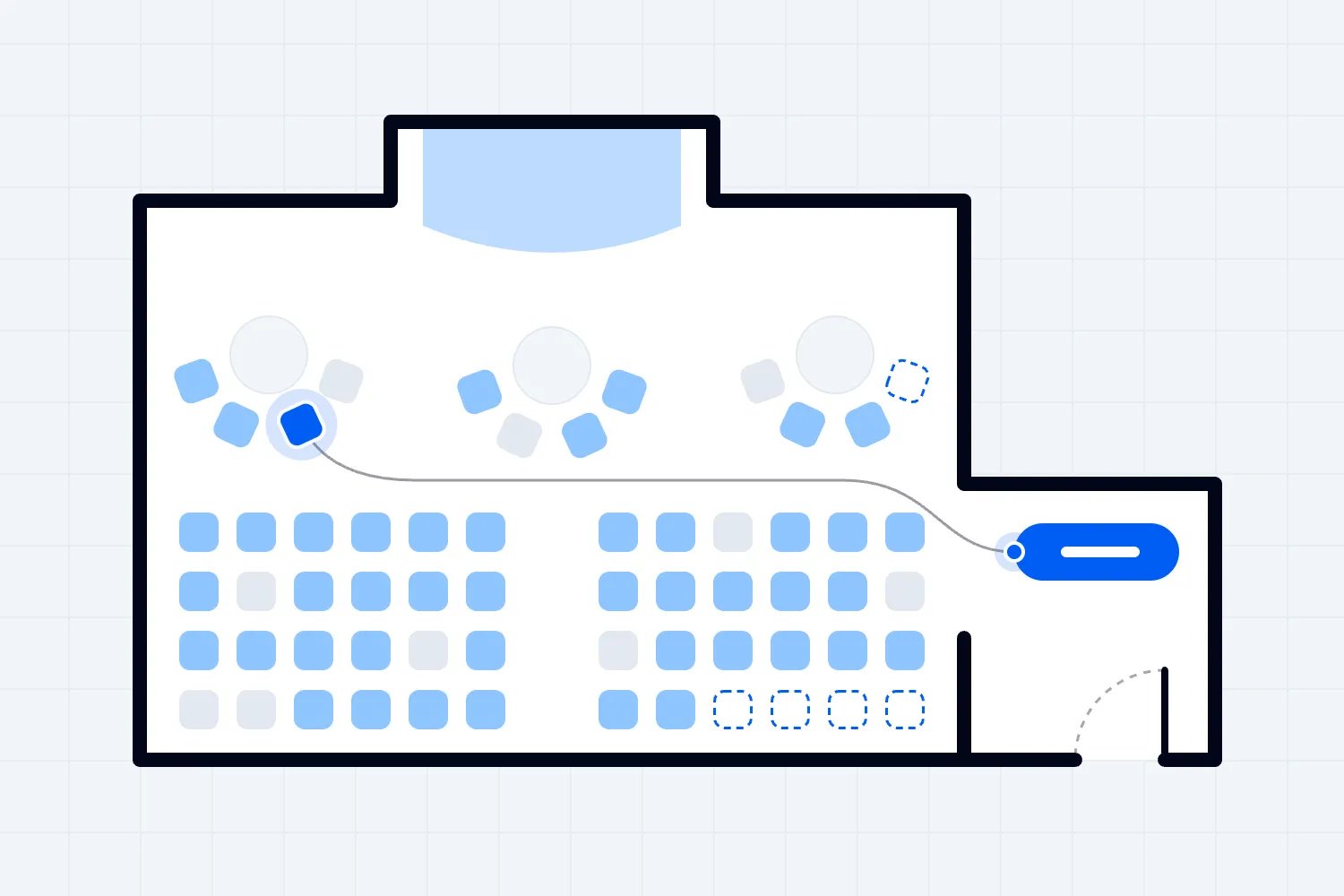
That example depends on the seats being genuinely comparable. Seat 1 could be beside a wall, have a different view, or be unsuitable for someone in the party. The map also needs to reflect real physical breaks. An aisle between two seats means their neighboring numbers don't make them a continuous group. The rule should follow the actual seating and current availability.
Hampstead Theatre's booking information explains that its online system may prevent customers leaving a single seat available and directs buyers to its box office when that is the only option. That's an example of a restriction with an assistance route. It doesn't establish how much additional revenue a similar policy would generate for your event.
Before discussing the rule with your provider, agree what it should treat as a new isolated seat. Separate that from a single already created by a return, a production hold, or another booking. A buyer shouldn't have to resolve every existing gap elsewhere in the row before buying a legitimate available seat.
If the underlying chart is wrong, correct it first. Our event seating chart guide covers the approved room layout and the buyer-facing map. Purchase restrictions come after those decisions, once you know which places exist and what you're promising to sell.
Check whether the alternative works for the buyer
The first thing you want to do is try the purchase yourself. Choose the seats a real customer might choose, then follow the alternative the system suggests. Don't stop when you find any combination that technically passes. Check the price, view, route, and whether the whole party remains together.
A move along the same row may be easy for one customer and impossible for another. Someone could need an aisle position, be attending with a child, or want to avoid a place with a known obstruction. You don't have to guess the reason. You do need to avoid treating every refusal to move as a customer being difficult.
Price deserves particular attention. If the original pair is in the only remaining affordable section, an alternative in a higher price band doesn't resolve the problem. It asks the buyer to spend more. Report that as a different offer in your review, even if the provider's system considers it a successful suggestion.
The same applies to restricted views. Two empty seats behind a pillar aren't equivalent to two clear-view seats just because they appear together on the map. Our guide to selling restricted-view seats explains the information buyers need before paying. A purchase restriction must not override those descriptions or make a poorer view look like an ordinary substitution.
Seat choice can stop a purchase even when someone wants to attend. In Loopyah's 2025 Event Attendee Insights Report, 150 of 500 U.S. respondents, or 30%, selected confusing seat maps or difficulty finding good seats as a reason for abandoning a ticket purchase in the previous year. Respondents could choose up to three reasons. That combined answer doesn't tell us how many encountered a single-seat restriction, or how many purchases any individual map lost.
Use the survey as a reason to investigate your own buying experience. Ask a person unfamiliar with the event to buy for a stated party size and budget. Have them describe what happens without coaching them toward the combination you already know works. Watch where they hesitate and what they think the warning means.
There is useful detail in a failed attempt. "The customer wouldn't change seats" hides the decision. "The alternative cost more and separated the parent from the child" gives you something specific to fix. Keep the explanation at that level when your ticketing and sales teams discuss exceptions.
Compare extra seat sales with lost whole orders
The financial case is easy to overstate. An isolated unsold seat has a potential value, but preventing it doesn't guarantee a sale. The buyer you interrupt might move and complete payment, choose another performance, contact the box office, or leave. Each outcome changes the result.
Start with the additional paid tickets you reasonably think the rule helps you sell. Then subtract tickets lost because customers couldn't complete a suitable booking. Account for extra support costs as well. You are comparing what changes under the policy, rather than treating the full value of every protected seat as additional income.
Here's an invented example in U.S. dollars. Assume an ordinary paid ticket leaves the event $30 after applicable sales taxes and transaction charges. Assume each additional attendee adds $4 to your catering or other attendance-related bills. That leaves $26 per extra ticket toward venue hire, production, overhead, and the event's eventual profit. These amounts are planning assumptions, not market rates or customer results.
Suppose the rule helps you sell eight tickets that would otherwise have remained unsold. That adds $208 after the attendance-related costs. But suppose five interrupted pairs abandon purchases they would otherwise have completed, with no later replacement bookings for those seats. That's ten lost tickets, worth $260 on the same basis. Before support costs, the policy leaves you $52 worse off.
Add an assumed $60 of extra paid box-office cover and the difference becomes a $112 loss. A report showing "eight single seats avoided" would miss that outcome. It would describe the shape of the inventory without accounting for the orders you lost while trying to improve it.
Now change the assumptions. If the rule produces ten additional ticket sales and costs one pair, the ticket difference is eight. At $26 each, that's $208, or $148 after the same $60 support allowance. The policy is helpful under those assumptions. The question is which version resembles your event, and how confidently you can distinguish additional sales from purchases that would have happened anyway.
The break-even point also follows from those assumptions. With eight genuinely additional tickets worth $208 and $60 of extra support, you have $148 left before accounting for lost orders. Two lost pairs cost $104 and leave $44. Three cost $156 and turn the result into an $8 loss. This isn't a recommended tolerance for complaints. It shows how quickly losing whole bookings can outweigh preserving individual seats.
Keep this calculation separate from the event's full budget. Fixed venue and production costs still have to be paid. A positive result here means the policy improves the comparison under the stated assumptions; it doesn't establish that the performance is profitable. If one sale replaces another at a different price, use the actual change in retained income and costs rather than counting the new ticket as wholly additional.
There is also a difference between cash paid and staff time used. If your salaried box-office team handles the work within existing paid hours, a time allowance describes work taken from something else. If you add a paid shift, that creates another bill. Show which applies instead of quietly combining both into a claimed cash saving.
You won't observe every abandoned customer's intention. Treat the calculation as a decision tool with uncertain inputs. Run a favorable case and a less favorable one, then decide whether the potential benefit justifies the restriction and the work needed to operate it well.
Use the rule where groups are still buying
A blanket setting across every performance is convenient, but performances can have very different remaining inventory. A popular Saturday show with only a few continuous runs left presents a different decision from a slow midweek show with many empty rows. The same rule may help one and interrupt the other.
Look at actual paid order sizes for comparable events where you have usable records. A room that sells substantial numbers of solo tickets may have less difficulty selling singles than you assume. A family performance may need larger continuous runs. Don't infer either pattern from how you personally attend shows.
Then inspect the seats that remain. Ten available seats spread across several sections are different from ten together. The price bands and known restrictions matter too. A map with plenty of places can still have no suitable pair at a buyer's budget, while a nearly full map can retain several attractive pairs.
Write a narrow reason for activating the restriction. For example, you may want to preserve the last continuous run in an ordinary seating block while there is still credible demand for parties of that size. That's a situation your team can inspect. "We want maximum occupancy" doesn't explain why interrupting this particular customer helps.
Avoid building an imagined future booking into the budget. A group that might appear isn't confirmed income. If the actual sale has produced mostly singles and pairs, holding a large run for a party you haven't seen may reduce the choices available to the people who are buying now. Review inquiries and recent purchases before deciding how long to preserve it.
You may not have the ability to configure every section separately. Ask your provider what the actual controls permit, then choose a policy you can implement and explain consistently. A simple restriction with reliable exceptions can be more workable than a detailed set of conditions your software and staffing can't support.
Loopyah's seat charts let you build an approved layout, price sections, and let buyers choose specific seats. Those capabilities help buyers understand what they're purchasing. Before adopting a single-seat restriction, ask for a demonstration of how your actual event configuration handles it. The presence of a seat map doesn't establish that an automatic gap rule or the exceptions you need are available.
Keep the approved physical layout separate from sales preferences. Don't remove required access routes, change permitted seating, or create new places to make the inventory look easier to sell. If the configuration needs changing, have the responsible venue and production people approve it before changing the public offer.
Keep access needs outside an ordinary sales argument
An access request needs its own review. You shouldn't weigh a required arrangement against the speculative income from an adjacent seat and let the revenue estimate decide. Start with what the person needs, what the venue can provide, and the rules that apply to your event.
Marlowe Theatre's booking guidance provides a useful operational example. It explains why it tries to avoid single seats and says it may leave them to accommodate particular access needs. Review how an exception like that would work in your own purchase flow before adopting the rule.
For U.S. assigned-seat events, the Department of Justice's accessible ticket sales guidance addresses equivalent sales methods, hours, and sales stages, as well as companion purchases and the release of accessible inventory. It also says proof of disability cannot be required as a condition of purchasing accessible seating. Have the person responsible for your venue's compliance check the complete requirements. A general instruction to phone the box office doesn't replace equivalent purchasing opportunities.
Don't import the U.S. rules into another country as though the requirements were identical. Have the relevant local policy reviewed before the sale opens. Your ordinary gap rule, essential companion arrangements, and accessible-inventory release process need to work together, but they answer different questions.
Operationally, give staff a clear route to resolve a request. They need to know who can approve the arrangement, how suitable places are reserved while a question is answered, and how the final booking is confirmed. An unmonitored email address won't help someone trying to purchase during a busy onsale.
Ask about the arrangement the buyer needs rather than demanding a personal explanation for why they chose that seat. A request for an aisle position may be enough to begin checking suitable options. Collect only information needed for the decision and keep sensitive details out of general sales notes and shift handovers.
The customer also needs to know whether their party can stay together. Don't resolve the gap warning by moving the person who needs assistance away from their companion, then describe the purchase as successful because both tickets were sold. Confirm that the proposed arrangement works before completing the change.
Timing matters here too. Relaxing the ordinary single-seat restriction near showtime doesn't automatically authorize releasing accessible places to general buyers. Those decisions have separate conditions. Our guide to accessible seats and companion tickets explains the broader inventory and booking questions your team should settle before selling.
After an exception is approved, confirm the actual seat assignments. The buyer should receive the arrangement agreed with your team, and admission staff should be able to recognize the booking without receiving unnecessary personal information. Leave a clear contact for a discrepancy so the customer doesn't have to explain the whole conversation again at the door.
Write a warning that helps the purchase continue
A warning should explain what happened and give the buyer a usable next step. "Selection invalid" tells them almost nothing. It can look like a payment problem, a seat that has just sold, or a fault with the website. Someone who doesn't understand the restriction may keep making the same selection.
If the proposed alternatives really are comparable, use direct wording. For an invented row, your message might say, "This selection leaves seat B1 on its own. Please choose B1 and B2 instead, or choose another available pair. If those seats don't work for your party, contact our box office." Use that only where the seats, assistance route, and actual system behavior match the message.
Don't recommend a specific pair without checking its availability. Other buyers can be purchasing at the same time. A suggestion that was valid when the warning appeared may no longer be valid after someone spends time reading it. Your provider should demonstrate what the buyer sees when availability changes during selection.
The World Wide Web Consortium's guidance on error suggestions explains the principle of providing known ways to correct a detected input error, subject to its stated exception. Use that principle when reviewing the warning. The practical seat suggestion still needs testing in your checkout; adding helpful words alone doesn't establish that the whole map is accessible.
Place a short explanation near seat selection so the warning doesn't come as a surprise. Don't make customers read a full terms page to understand why the pair they tapped was refused. The longer policy can cover exceptions, contact hours, and what happens when no suitable alternative remains.
Keep the current selection visible where the system allows it. Clearing the whole basket can make a small seating change feel like starting the purchase again. Check what happens to other seats or ticket types already selected, and make any required change clear before the buyer proceeds.
The assistance route should be specific. Give the actual contact method and operating hours, and tell staff what the warning says. Don't promise an immediate response if the box office is closed. If sales continue outside staffed hours, decide how buyers with a legitimate exception can complete a purchase without relying on an unavailable team.
Avoid language that blames people for leaving an empty seat. They are choosing from an offer you published. A calm explanation and a relevant alternative do more useful work than a lecture about supporting the venue. Your internal reason for the rule can be commercially sound without becoming a demand that customers buy something unsuitable.
Decide when to review the rule before doors
A rule that helped early in the sale can become unhelpful later. The chance of a future group buying a preserved run changes as the performance approaches. So does the cost of sending a ready buyer away to wait for assistance. Review current choices rather than leaving the original setting untouched.
Blackburn Empire's single-seat explanation says it often removes the restriction when a show is close to selling out and invites customers with specific requirements to contact the box office. That demonstrates one venue adapting its policy to the sale. It doesn't give you a universal occupancy percentage or time before doors at which to do the same.
Choose your review times around the way your event sells and the hours your team can act. For an invented evening performance, you might review the map two days before the show and again before the final staffed sales shift. Those are example checkpoints, not recommended industry deadlines. A daytime show or a sale with substantial walk-up demand may need different decisions.
At each review, ask whether the restriction is preserving a combination someone is likely to buy and whether blocked parties still have suitable alternatives. Include current inquiries. If support has repeatedly been asked for the same blocked pair, that is useful evidence about demand for those particular seats.
There is no need to wait for a completely full section before questioning the rule. A partly empty room might still contain a small number of desirable pairs. Conversely, a nearly full show might have isolated places that solo buyers are happy to purchase. The percentage sold doesn't describe either situation adequately.
If you relax the restriction, record who approved it, which performance it affects, and when the change takes effect. Check the public purchase flow afterwards. Don't assume changing a setting in one sales channel also changes the venue box office or another authorized seller's allocation.
Keep price decisions separate. Making existing seats easier to buy doesn't mean they need a discount. If you also change prices or run a promotion, record that as another intervention. Otherwise the post-show review won't be able to distinguish the effect of a purchase restriction from the effect of a cheaper ticket.
When the box office closes, the policy still has to function. A warning that depends entirely on a phone call becomes a different offer outside office hours. Review whether ordinary available seats should remain blocked during that period, while preserving the separate arrangements required for access and other protected inventory.
Give the box office authority to resolve the problem
An exception process needs a decision-maker. If every unusual booking goes through the producer, the producer becomes part of checkout. That's hard to sustain during a busy campaign and especially awkward when the person is working on the performance instead of answering ticket questions.
Agree which ordinary cases trained staff can resolve. They might approve a purchase when there is no comparable pair, handle an existing single created by a return, or refer a specific access arrangement to the responsible colleague. The permissions must match the tools they actually have. Don't tell staff to override a rule that their account cannot change.
Use a short record for the outcome. Capture the performance, affected seats, type of issue, action taken, and booking reference where there is a completed order. You don't need a transcript of every conversation. You do need enough detail to distinguish a resolved sale from a customer who was told to try again later.
When staff temporarily reserve seats while helping, put an expiry and an owner on the reservation through the supported process. An indefinite hold can create the very fragmented availability you're trying to avoid. Explain to the customer how long the places remain available and how they complete payment.
Check the full cost before confirming any alternative. If moving seats changes the price, the buyer must understand that change and agree to it. Staff shouldn't silently upgrade a booking, add a ticket the customer didn't request, or charge for an unwanted third seat merely to satisfy the purchase rule.
Your team also needs a process for a buyer who abandons the call. Release ordinary temporary reservations as agreed and record what happened. Don't describe every helped inquiry as a recovered booking. A paid order is a different outcome from a seat suggestion or an unanswered follow-up message.
Coordinate the exception with admission. If the customer receives a revised ticket, make sure the original assignment no longer conflicts with the new one. Ask the provider to demonstrate the actual change process before staff use it on live purchases. Keep unrelated ticket controls, including identity or age conditions where applicable, under their own approved policies.
Shift changes deserve a brief handover. The incoming team needs to know the current rule, any approved relaxation, and unresolved bookings with time-limited reservations. A staff member should be able to answer the next customer consistently without searching a long group conversation for the latest instruction.
Measure completed purchases, not just warning messages
You need more than a count of how often the rule activates. The same person might trigger the warning repeatedly, or encounter it while exploring seats before making a final choice. Ten warnings don't necessarily represent ten customers, ten lost orders, or ten seats saved.
If your provider supplies suitable reporting, ask what the records actually mean. A seat selection, temporary reservation, payment attempt, and completed order are different stages. Check how repeat attempts are grouped and what information is available across devices. Don't invent precision when the system cannot connect an interrupted attempt with a later purchase.
Start with a small set of questions your records can answer:
How many distinct purchase attempts encountered the restriction, using the provider's stated definition?
How many then completed an order, changed performance, or requested help?
Which seat combinations and party sizes caused repeated problems?
How much staff work and additional paid cover did the policy require?
What remained unsold after the performance, including both isolated seats and continuous runs?
Those records describe behavior. They don't prove what would have happened with the rule turned off. Some buyers would have purchased different seats anyway. Some would have left for reasons unrelated to the warning. Keep confirmed facts separate from your estimate of additional or lost sales.
A useful customer-service question is whether the suggested alternative worked for the party. Ask it when you're already helping someone, without turning a purchase into a research interview. Categorize the practical reason when appropriate, such as a price difference or separated seats. Avoid recording unnecessary health information to support a sales analysis.
For checkout investigations more broadly, our guide to diagnosing ticket checkout abandonment explains how to separate stages and look for the actual obstacle. Use that approach when a warning appears alongside other problems, such as failed payments or unclear charges.
Be cautious comparing a sell-out Saturday with a slow Thursday and crediting the difference to this policy. Cast, demand, marketing, prices, remaining inventory, and sales timing can all differ. A comparison is more useful when you document those conditions and acknowledge what you couldn't hold constant.
If you trial a policy change, agree the scope and review method beforehand with your provider and venue. Don't let simultaneous experiments sell the same places under conflicting rules. Keep the inventory consistent across buyers and channels, and choose a comparison your team can operate without creating booking errors.
After the show, combine the purchase records with the final seat inventory and staff notes. Then revisit the financial assumptions. You may still have a range of possible gains and losses rather than one reliable figure. That's enough to decide whether to keep a narrow rule, improve its alternatives, or remove a restriction whose benefit you cannot justify.
Test awkward bookings before opening the sale
A successful purchase through an empty map proves very little about the rule. Most awkward cases appear after some seats are sold, reserved, returned, or removed from availability. Ask your provider to demonstrate representative inventory states using a safe test setup before relying on the configuration.
Start with the five-seat example and check both selections. Then test an existing isolated seat, a run at the edge of a section, and a row interrupted by an aisle. Add price boundaries and seats with different view descriptions. The result should follow the approved policy rather than simply treating adjacent numbers as equivalent places.
Test solo purchases explicitly. A person trying to buy an available single should understand whether they can proceed and why. Then try a party whose only suitable combination triggers the warning. Confirm the available assistance, the current contact hours, and what happens when nobody is staffing that route.
Have the responsible access lead review relevant booking situations through the actual buyer journey. Include companion choices and the alternative method for someone unable to use the visual map. A successful ordinary pair purchase doesn't verify those arrangements. Resolve any mismatch before directing customers into the sale.
Also test what happens when another buyer reserves the suggested seats while the first person is deciding. The final message and payment flow should reflect current availability. You don't want a customer following your instructions only to be told their replacement choice is unavailable without any explanation.
Returns and cancellations can change the map after launch. Confirm how a returned single appears and whether the restriction changes nearby choices. If staff move an existing booking, inspect what remains available at the old location as well as the new one. A completed move can create another purchase problem if you check only the customer's revised ticket.
Record the approved behavior in plain language and keep the provider's answers with it. When your sales team later reports an unexpected block, you can compare it with what was demonstrated. That makes the discussion specific and gives the provider a clear booking situation to investigate.
Make existing singles easy to buy
Even a well-operated restriction won't eliminate every isolated seat. Returns, approved exceptions, and changing reservations can leave individual places available. Decide how you will sell those seats rather than treating them as failed inventory that nobody could possibly want.
Describe the offer honestly. If only separate places remain, say that before someone starts selecting for a group. A solo attendee may be perfectly happy with an individual seat. A couple may prefer another date. Give both enough information to decide without implying that a pair becomes available later in checkout.
Don't automatically discount every single. A clear-view seat in a desirable section may be worth its stated price to someone attending alone. Start by making availability understandable. If you change the price, use your normal approval process and check the effect on income, including any refund or exchange commitments already made.
A focused message can explain that individual places remain for a specific performance. Keep the wording welcoming to people attending alone and accurate about seat locations. Avoid describing the entire event as sold out while quietly expecting staff to explain that singles are still purchasable. The public availability message and actual map should agree.
If a party is willing to sit separately, let them make that choice with the locations clear. Don't assume agreement just because the system permits all the tickets in one order. Where children or assistance arrangements are involved, follow the relevant approved policy and confirm the arrangement rather than treating a split as an ordinary substitute.
Use what happens to improve the next decision. If suitable singles sell readily at the normal price, your initial assumption about their difficulty may need changing. If they remain unsold, inspect their actual features and the offer's visibility before concluding that stricter purchase rules are the answer. A seat with a poor view, unclear description, or little demand for the performance can remain unsold for reasons a gap restriction cannot fix.
Write a short operating policy your team can use
You don't need a long document to make the decision usable. You need enough detail that another person can operate the sale without guessing why the rule exists. The following is a starting structure. Complete it with your actual event conditions, provider controls, and locally reviewed access arrangements.
Record the performance and seating areas covered, then describe the restriction in one sentence. State whether it prevents creating a new isolated ordinary seat and how existing singles are treated. Identify any section or price limitations. If the system can't distinguish those conditions, write what it really does rather than the behavior you wish it had.
Next, describe a suitable alternative. Include the party staying together where required, the offered price, known view limitations, and relevant access features. You don't need to guarantee that every seat is identical. You do need to recognize when the alternative changes the customer's purchase in a meaningful way.
Name the staff role that can approve an ordinary exception, the contact route for an access arrangement, and the escalation route for a configuration error. Set contact hours and the process outside those hours. Make sure those routes are published where buyers actually need them.
Include the review checkpoints and who makes the final decision. Record the evidence they should inspect, such as suitable pairs remaining, repeated blocked inquiries, recent party sizes, and time left to sell. Explain how a change is checked across channels and passed to the next shift.
Finally, specify what you will review after the performance. Keep the confirmed order outcomes, support work, final availability, and uncertain revenue assumptions distinct. Assign the review to someone who can change the next onsale, with the venue and provider involved where needed.
The best next step is to take a real blocked selection from your map and follow it through. Find the alternative, check whether it works, complete the purchase through your approved process, and inspect the inventory left behind. If your team can't give that customer a clear, suitable route to paying, fix the rule or relax it before you spend more money sending buyers to the same obstacle.

Author: By the Loopyah Content Team
The Loopyah Content Team shares expert insights, practical guides, and industry updates to help event organizers create unforgettable experiences and stay ahead in the event planning world.