· 27 min read
How to price seated and standing tickets fairly
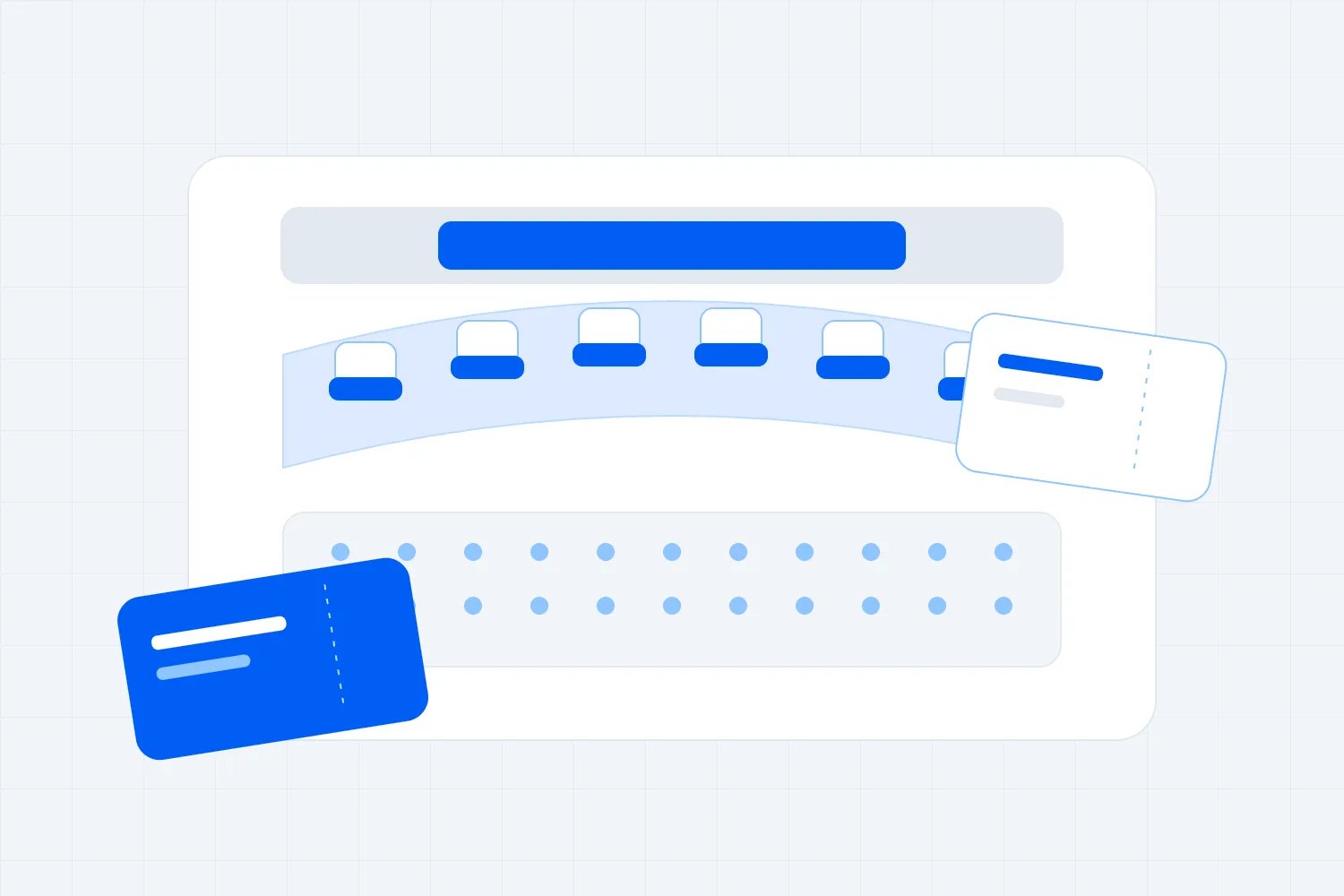
You've got a standing floor, a seated balcony and a budget that needs both to sell. Do you charge more for the seats? Maybe. But if the floor gets people closer to the artist while the balcony has a distant side view, the word "seated" doesn't explain why someone should pay extra.
Set the price difference around what each ticket actually guarantees, then check whether realistic sales at those prices cover the event's costs. A reserved seat, a better sightline and access to a particular area are different benefits. You can charge for a difference people value. You also need to describe it clearly enough for them to choose.
There isn't a standard seated-ticket percentage you should copy. The useful answer comes from your room, your audience and the money the event must keep. We'll work through a fictional mixed-admission show, including the awkward cases: seats that sell slowly, standing that sells first, friends buying different categories, and a layout change after people have paid. All example amounts are USD and invented for explanation, not market rates or performance benchmarks.
First, decide what each ticket entitles someone to
Start with a sentence for each category before opening the pricing sheet. A standing ticket might provide admission to the main floor, with no assigned position and no guaranteed seat. A seated ticket might provide a specific numbered chair in the balcony. Those sentences already explain more than "standard" and "premium."
Then ask what buyers can do after entering. Can someone with a balcony seat visit the floor? Can someone with a standing ticket use an unoccupied chair? Does admission include the same performance, bars and facilities? If the answers differ, those differences belong in the offer. They also affect whether a higher seated price makes sense.
A seat that remains yours throughout the show offers something useful. You can arrive without competing for a particular standing position, leave for a break and return to the same place. But that promise only works if your team protects the assignment. An instruction to "find any available seat" describes a different product.
Unreserved seating needs its own wording. It can mean every ticket holder is guaranteed a chair but chooses it on arrival. It can also mean shared casual seating that is available to standing guests. Don't let the buyer discover which meaning you intended when they reach the room. A small seated area doesn't become guaranteed seating because your event photograph shows chairs.
Where the venue offers both a seated section and a floor, agree whether the ticket categories are separate admissions or whether one includes the other. If seated buyers can enter the floor, the venue must assess and approve how that movement is managed. A ticketing label cannot establish safe occupancy. The same applies to a seated area that becomes standing during part of a show.
Write the boundaries into a short internal record: the assigned area, whether a place is guaranteed, the view description, movement rights, and anything specifically excluded. Ask the venue manager and ticketing lead to approve that record together. This gives your sales copy and front-of-house briefing the same starting facts.
Our wider ticket pricing strategy guide covers releases, discounts and packages. Here, keep the narrower decision in view. You're deciding what two different admissions are worth relative to each other, before adding an early price or a promotional code.
Compare the experience from the places people will use
Walk the room with the production arrangement you intend to sell. Stand in the floor areas buyers will occupy, then sit in the proposed seated sections. Look at the performer position, screens and anything else the audience needs to see. An empty venue photograph cannot answer what a balcony buyer will experience once people are standing below.
Distance and comfort can point in different directions. The floor might be closer to the performance and suit someone who wants to dance. The balcony might be farther away but offer an assigned place and a clearer overall view. Neither is automatically the better ticket. You're offering choices to people who value different parts of the night.
Check the weakest places within each proposed category. A broad seated price may hide a comfortable central block and an awkward side block. You might need separate prices, a clear restriction description, or fewer places on sale. Don't average an excellent view and a poor view into a promise that fits neither.
For standing, avoid selling an unassigned area as though every buyer gets the rail. "Standing floor access" is a claim you can define. "Front-row experience" suggests a position you may not be able to provide. The same caution applies to a photograph taken from the best spot. Show the area honestly and explain that positions within it aren't assigned.
Review how the audience is expected to behave. A seated performance where people generally remain seated creates a different experience from a concert where much of the seated audience stands. Don't guarantee a continuous seated view simply because you sold a chair. Have the venue and production leads settle what can truthfully be promised, including any specific accessible viewing arrangements.
The HSE's crowd-risk assessment guidance, for Great Britain, asks organizers to consider crowd movement, behavior, venue features and people with different needs. Use the responsible venue team's assessment for your event. A price comparison isn't an occupancy calculation, and an apparently quiet corner isn't permission to sell additional standing places.
If a particular seat has an obstruction, handle that as a specific limitation. Our guide to selling restricted-view seats explains how to assess and describe it. A lower price doesn't replace that description, and the presence of a chair doesn't cancel out the limitation.
Ask a colleague unfamiliar with the sale to compare the categories using only the proposed public information. Can they explain what they gain, what they give up and where they can go? Their answer is a useful check before you spend time debating a small price adjustment.
Find out which difference buyers care about
You don't need to persuade everyone that the seat is better. You need enough people who want that particular seated experience at the price you charge, alongside enough people who want the standing offer. Find out why each group wants its particular experience instead of dividing the audience by what you assume people can afford.
Ask previous buyers about the choice they actually made. Why did they choose the balcony? Did they want a guaranteed chair, a wider view, a calmer location, or somewhere their group could stay together? Then ask what nearly made them choose the floor. Their answer may reveal that your proposed premium benefit isn't the reason they bought.
Talk to standing buyers too. They may have chosen the floor because it was the experience they preferred, even when they could afford a seat. If you assume every standing buyer is waiting for a discount, you can end up underpricing the most desirable area. That matters especially when the artist, format or audience changes between editions.
For a new event, show people the actual category descriptions and proposed complete prices. Ask them to choose and explain their reasoning. Separate that conversation from a sale: an enthusiastic answer doesn't pay your venue bill. Small interviews can expose confusing wording and poor assumptions, but they don't establish how many tickets you will sell.
Loopyah's Worth It Event Index 2026 asked 500 US consumers how clearly they usually understood the experience before buying an event ticket. The chart shows the full unweighted distribution for that question, fielded by Pollfish on February 11, 2026. It concerns general event clarity, not a preference for seating or a willingness to pay a seated premium.
| Label | Respondents (%) |
|---|---|
| A great deal | 26.2 |
| A lot | 36.6 |
| A moderate amount | 31 |
| A little | 5.8 |
| None at all | 0.4 |
Source: Loopyah Worth It Event Index, Q6, Pollfish survey 395565149, n=500 US consumers, February 11, 2026. Single-selection responses; percentages sum to 100%.
The practical question for your sale is whether buyers understand the specific difference you're charging for. A label such as "premium balcony" leaves that work to them. "Reserved numbered balcony seat, stairs to access, no floor admission" gives them a real choice, provided those facts have been checked for your venue.
Keep useful objections in the wording review. If several people ask whether they can sit with their friends, explain seat selection. If they ask whether the floor is included, answer beside the category. You may need a better description before you need a different price.
Build the budget around likely sales in each area
Now put numbers against the offer. Australia's business.gov.au pricing strategy guidance recommends considering costs, customer value and market conditions together. That is a useful distinction here. Your costs establish what the event needs; they don't establish that buyers will accept the price difference required to provide it.
For our fictional show, assume the venue has approved a sellable allocation of 300 standing tickets and 200 seated tickets after all relevant holds and access arrangements. These are planning assumptions, not a suggested venue layout. Fixed event costs are $18,000. There is no sponsorship or bar income in the calculation, and no additional unpaid attendance cost outside that fixed budget.
Suppose each standing ticket leaves the event $50 after payment charges, any taxes passed on and other sale deductions. Each seated ticket leaves $70 on the same basis. Serving a standing attendee costs another $5, while serving a seated attendee costs another $8. Those serving costs exclude everything already deducted from ticket receipts and everything already in the fixed budget.
Each standing sale therefore provides $45 toward fixed costs and profit. Each seated sale provides $62. The seated sale contributes $17 more, because the extra $20 retained also has to cover $3 more in serving costs. That's the first calculation worth making. A $20 difference in the money kept from the ticket isn't a $20 increase in profit.
Your forecast is 240 standing sales and 140 seated sales. Standing contributes $10,800 and seating contributes $8,680. Together they provide $19,480. After the $18,000 fixed budget, the event makes $1,480 under these assumptions. You've sold 380 paid admissions, leaving 60 standing and 60 seated places unsold.
The forecast puts a separate paid-sales estimate against each category, including the places expected to remain unsold. If your evidence for 140 seated buyers is weak, that is a commercial uncertainty to resolve before committing more money.
You can also calculate the seated price a profit target would require. Suppose you want $3,000 profit while keeping 240 standing sales and 140 seated sales. After the standing contribution of $10,800, seated sales must provide $10,200 toward the $21,000 combined costs and target. Divide that by 140 and add the $8 serving cost. Each seated ticket would need to retain about $80.86, with a suitable rounding allowance. That is roughly $10.86 more than the current $70 assumption. Check whether the corresponding buyer price is credible. If buyers won't pay it, change the costs, target or offer instead of presenting the required price as evidence of demand.
If you still need to establish the underlying costs, use our event budget guide. Keep the complete buyer price separate from the amount your event retains. Your public seated-versus-standing difference may differ from the $20 retained difference in this example because the actual charges and taxes can differ by category.
Test whether the price gap survives weaker seated sales
The next calculation is where an attractive pricing plan can unravel. Keep the same prices, costs and 240 standing buyers, but reduce seated sales to 100. Standing still contributes $10,800. Seating now contributes $6,200. The combined $17,000 leaves a $1,000 loss after fixed costs. Forty missing seated sales have changed the result by $2,480.
That doesn't prove the seated price is wrong. The section may be poorly explained, the audience may prefer standing, or the demand forecast may have been optimistic. It does show how dependent the budget is on that section. Your next decision needs to address the cause rather than treating a lower price as the automatic answer.
Suppose you consider reducing the seated retained amount from $70 to $60. With the same $8 serving cost, each seated sale now contributes $52. At the original forecast of 140 seated buyers, the cut removes $1,400 from the event. Profit falls from $1,480 to $80 if standing sales remain unchanged. A busier-looking seated area would need additional buyers before it improved that result.
To recover the original $8,680 seated contribution at $52 per buyer, you need 167 seated sales, rounded up to a whole ticket. That's 27 more than the original 140. The arithmetic establishes what the price cut needs to achieve. It doesn't predict that those extra buyers exist, and the new price must be configured to produce the intended retained amount after actual charges.
The practical test is whether you can explain why the lower price would attract those additional people. Perhaps interested buyers consistently reject the gap after understanding both offers. Perhaps a partner can reach a new audience. "Seats are selling slowly" tells you what happened, but gives you little evidence about how many extra sales a reduction will create.
Also test movement between categories. If 30 people who would have bought a seated ticket instead choose standing at the original prices, each switch reduces contribution by $17. That's $510 less, assuming the floor has room and nobody replaces their seated purchase. If the floor would otherwise sell out, the effect can be different because the switch may displace another buyer. Record the assumption.
You can use that reasoning in the other direction. A seated upgrade adds the contribution difference only when the new arrangement and costs match the calculation. It doesn't add a whole new admission. If you count both the original ticket and its upgrade as attendees, your forecast becomes wrong before doors open.
Check what you give up when you add more seats
Sometimes the question isn't just how to price the existing room. You're considering adding chairs to a standing area. That changes the physical configuration, the costs and potentially how many admissions the room can support. Ask the venue and production leads to approve the arrangement before treating it as additional sellable inventory.
Start by checking what must be removed or reassigned. Chairs, aisles, barriers, sightlines and movement routes can change what fits safely. There isn't a universal conversion between a standing place and a seat. Don't use a sketch or a generic people-per-square-meter assumption as your sale limit. The approved event configuration decides the inventory.
Then compare the alternatives financially, using actual quotes and achievable sales. For a separate fictional option, suppose an approved conversion removes 40 sellable standing places and creates 20 sellable seated places. Installation and related fixed work cost $800. Keep the original contributions of $45 standing and $62 seated solely to illustrate the comparison.
If all the affected places would sell either way, the standing arrangement provides $1,800. The converted seated arrangement provides $1,240 before installation, or $440 after it. The conversion leaves $1,360 less toward the event's wider costs and profit. Charging more per ticket has produced less money because you sell fewer admissions and pay to change the room.
But perhaps those 40 standing places would otherwise remain unsold. Then there is no $1,800 of lost standing contribution in that scenario. If 20 additional people buy the new seats, they provide $440 after installation under the stated assumptions. That's a different comparison. You need evidence about the people who would actually buy, alongside the approved capacity change.
For the full-sales comparison to match the $1,800 standing alternative and cover the $800 installation, the 20 seats must contribute $130 each. With $8 serving cost, each would need to retain $138. Whether buyers will pay the corresponding complete price is a separate question. If that sounds unrealistic for the experience, don't hide the problem by assuming away the standing sales you are likely to lose.
A conversion can still serve an important programming or access purpose. Assess those responsibilities properly and budget for them. The calculation here is about choosing an optional commercial configuration; it doesn't determine the accessible provision your event must make or justify charging people for required adjustments.
Keep accessible ticket choices out of a forced upgrade
A general premium seat and a place with accessible features aren't interchangeable categories. If someone needs a suitable seating arrangement to attend, don't begin with "You'll have to buy premium." Establish what arrangement they need, what the venue provides and which rules apply to your event. A convenient price ladder cannot settle that question.
For US events covered by the rules, the Department of Justice's ADA ticket-sales guidance says accessible seats cannot cost more than non-accessible seats in the same section, including service charges. It generally requires accessible seating in all price categories available to the public. The guidance also describes how the lowest-price requirement applies when accessible seats aren't provided in some price categories.
Read that with the venue for your actual configuration. A floor that is standing-only and a balcony that is seated can raise questions that a ticket name alone won't answer. Your access lead needs to review the arrangements and the applicable requirements before approving the sale. Outside the US, check the relevant local framework rather than importing this rule as a universal policy.
Keep companion arrangements clear as well. Whether a companion needs a nearby seat, a paid ticket or an essential companion arrangement involves separate questions. Our guide to accessible seats and companion tickets explains the operating decisions. Don't bury those arrangements inside a hospitality package because that is where your ticket setup happens to contain chairs.
Access information needs to describe the real approach and viewing position. A reserved chair reached by stairs won't suit every buyer. A wheelchair space isn't the same thing as a removable chair or an aisle position. Provide confirmed facts, a clear purchase route and a contact for questions that the published information cannot answer.
Don't ask the front-of-house team to solve an avoidable category problem on arrival. Someone who bought the appropriate admission should find the agreed arrangement available. If your team has approved a change for a buyer, update the relevant booking and staff information before event day. Avoid making that person repeat a private explanation at every entrance.
This also affects your budget. Count the places and admissions accurately, including any agreed companion allocation and any costs of providing it. You need an honest revenue forecast, with the applicable arrangements already included. Treating all accessible places as premium paid inventory creates a forecast your actual sale may never be allowed to deliver.
Write the price difference where buyers choose
Once the offer and prices work, explain them side by side. The standing description should say where admission applies, whether any position or seat is guaranteed and what movement is permitted. The seated description should identify the assigned seat or seating arrangement, the area and any important access or viewing limitation. Put the meaningful difference near the price.
Here's sample wording for a fictional venue where the categories are separate: "Standing floor admission. No assigned position or guaranteed seat. This ticket doesn't include balcony entry." The corresponding description is: "Reserved balcony seat. Select a numbered seat for the performance. Balcony access is by stairs. This ticket doesn't include standing-floor entry. Contact us before booking if you need information about an accessible arrangement."
That wording isn't a ready-made access policy. Use it only where the physical facts and movement rules match your approved setup, and provide the specific access booking information your event requires. If balcony ticket holders can also enter the floor, say so instead and explain how that access operates. Your buyer should never have to infer rights from which ticket costs more.
For fees, use the rules in the market where you sell. The FTC's fees-rule guidance, for covered US live-event ticket offers, explains the requirement to display the total price including known mandatory charges upfront, subject to its stated exclusions and further disclosures. Don't compare a standing headline price with a seated checkout total and call the difference your premium.
Australia's ACCC guidance for event-ticket sellers requires clear, accurate information about the ticket and event, including relevant restrictions. These country-specific sources support the same practical review: can someone understand the admission and its payable price before deciding to purchase?
Check the actual phone journey. Long category names may be shortened, explanatory text may appear only after a tap, and a buyer may arrive through a direct purchase link without reading your main event page. Test the routes you use. Ask someone to choose a ticket and explain the seat, area and total cost back to you.
Mixed group bookings deserve attention. If friends buy standing and balcony tickets in one order, make sure the category remains clear for each admission. An order containing both doesn't give everyone access to both areas. Tell the group how to arrange the experience they want before they pay, including what happens when adjacent seats aren't available.
Keep release prices separate from admission rights
An early standing ticket and a later standing ticket can provide the same admission at different prices. A standing ticket and a reserved balcony ticket provide different arrangements. Keep those choices separate in the names and the budget. Otherwise a buyer comparing "early standard" with "regular premium" has to work out whether the difference concerns timing, access or both.
Use a simple category-and-release record for your team. For each admission, record the current complete buyer price, the amount you expect to retain and the number available in that release. Record the next release separately. If both categories have an early offer, check the seated-versus-standing gap at each stage rather than assuming it stays constant.
For another fictional variation on the original forecast, suppose 40 of the expected 140 seated buyers receive an offer that reduces the amount retained by $10 each. Their serving cost remains $8. The offer removes $400 from the original $1,480 profit, leaving $1,080 if every other assumption stays unchanged. That can be an affordable choice, but only when the budget includes it. Don't forecast all 140 at the regular retained amount after promising some of them a discount.
Check how public price comparisons read during the changeover. An early seated offer can temporarily cost less than a later standing offer without being a mistake. Explain the release conditions and admission differences accurately. Don't call one category "always the cheapest" if your configured sale can contradict that statement, and don't imply that buying later gives someone better access within the same category.
A promotion should also preserve the capacity limits and rights of the admission it changes. A discount on the balcony doesn't let those buyers enter the floor if their ticket excludes it. A group offer that includes several admissions needs to identify the category of each one. The discount changes the payment; it doesn't silently rewrite the room's operating plan.
Agree what happens when an offer ends or sells out. Remove expired messages from the channels you control and confirm the current ticket price. Keep any claim about remaining availability specific to the actual release or section. A nearly exhausted early seated allocation doesn't mean the whole seated area is nearly sold out.
Connect the approved categories to the ticket sale
The physical plan, ticket categories and sale settings need to describe the same room. Use names that staff and buyers can recognize at the venue. If the balcony is called Balcony B on signs, don't sell it under an unrelated metallic tier name unless the relationship is immediately clear. Consistent labels reduce the amount of explanation needed at the door.
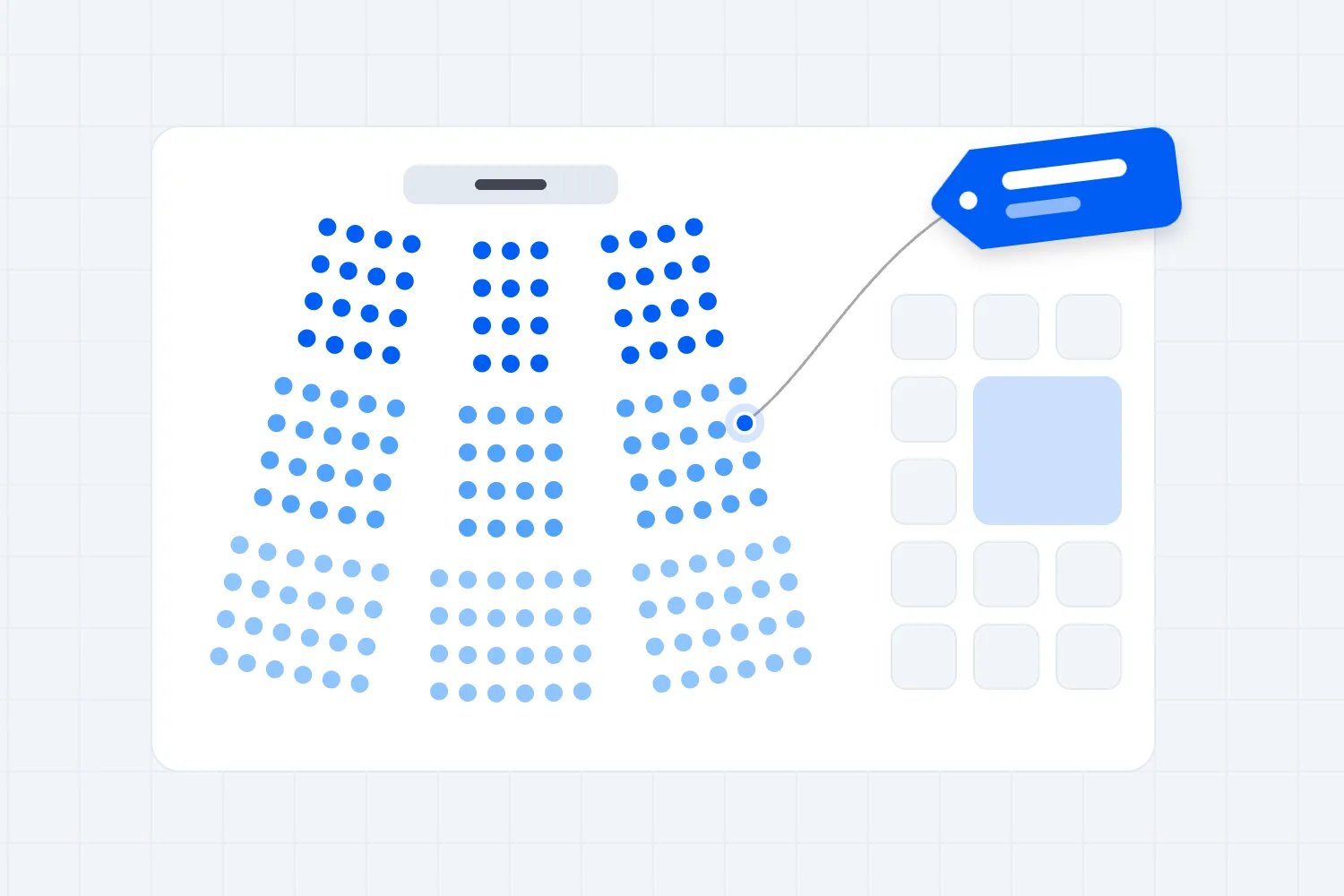
Loopyah's seat charts let you draw rows, seats and standing areas, assign categories that become separately priced ticket types, and let buyers choose exact seats. That's useful when the price difference depends on where someone will be. You still decide the approved layout, category rights and truthful description of each area.
Check every category against the places allocated to it. A reused venue chart is a starting point for the new production, not confirmation that the old arrangement is still accurate. Review production holds, guest places and the approved access provision before releasing inventory. Resolve the settings that don't match the actual offer while the sale is still private.
Then test a standing-only purchase, a seated-only purchase and the mixed order you expect customers to make. Loopyah's ticket-selling workflow sends a confirmation email linking to QR tickets after purchase. Inspect what your actual configured confirmation and tickets show. Don't assume a promise appears there merely because you typed it elsewhere.
Give staff a short category briefing using the same names. They need to know who can enter each area, whether a seat is assigned, who can approve a change and where to send a buyer with an access question. The selling software holds the ticket records; the venue team must still deliver the arrangement those records represent.
Plan upgrades before advertising them. Check availability, the actual additional amount payable, how the old admission is handled and how staff recognize the revised booking. Confirm the supported process in your setup rather than assuming a category automatically permits self-service exchanges. Confirm which admission remains valid after the change, and make that status clear to the customer and the door team.
A downgrade needs an answer too. Someone may discover the stairs won't suit their group, or a friend may only be able to buy standing. Apply your published policy and applicable rights, check a suitable alternative and confirm any accepted change. A lower-priced ticket isn't automatically a suitable substitute for the arrangement the person needs.
Review each category before changing the price
Once tickets are on sale, compare the results with the assumptions in your budget. Record paid sales and money retained by category at the same number of days before the show. Keep complimentary places and holds separate. A section can look nearly full on a map while still being short of the paid contribution your plan assumed.
Look at the information buyers receive before concluding that the gap is too large. Are there repeated questions about the balcony's view or whether a seat is guaranteed? Are standing buyers asking to upgrade and finding no clear route? Fix a confirmed explanation or purchase problem, then review the effect. A category isn't fairly tested when the offer is hard to understand.
If standing sells out first, don't assume you can move those buyers into unsold chairs. Some chose standing because they wanted that experience. You can offer an optional alternative with accurate terms, but changing their admission without agreement can change what you sold. Nor can you add floor capacity because the balcony has empty seats. The physical approval remains the limit.
If seated sells out first, check how much contribution the remaining standing inventory must provide. It may be sensible to keep the current standing offer and improve promotion. A higher price might also be considered for unsold tickets if justified and lawful, but a seated sellout alone doesn't prove that remaining buyers will pay more for a different area.
Before any reduction, write down the additional sales needed, the likely source of those buyers and the effect of existing buyers switching or seeking a change. Use the earlier $52 seated contribution example as the method, with your actual numbers. Keep a dated record of what changed in the offer and promotion, so the next review doesn't attribute everything to price.
Small events rarely provide clean evidence that a price caused a particular sales result. An artist announcement, payday or a partner email can arrive at the same time. You can still make a practical decision, but be honest about what you know. Use repeated editions and buyer explanations to improve the next forecast rather than claiming a few orders establish the perfect gap.
Give staff a workable answer when the category disappoints
Someone may arrive expecting a guaranteed chair because they misunderstood "seated area available." Another person may find that a production camera changes the view from their assigned seat. Start by establishing what that customer bought and what was described, then compare it with the arrangement being delivered. The fact that one category cost less doesn't answer whether the promise was met.
Give a supervisor authority to investigate and approve a response under your terms and applicable law. They need access to the current seat allocation, the buyer's admission and any known production changes. An empty chair isn't automatically available: it may belong to someone arriving later or form part of an access arrangement. Staff should check before offering it.
Separate an optional change of preference from a problem with the sold experience. A standing buyer who now prefers a seat may be asking for an upgrade. A buyer whose reserved chair isn't available has reported a different issue. Don't send both through a paid-upgrade instruction because it is the easiest process to explain during a queue.
If the proposed solution involves another category, explain the actual alternative and ask whether it works for the person. Moving a seated buyer to standing may fail to provide the arrangement they need. A balcony move may separate a party or involve stairs. Check the relevant details before describing the more expensive location as an improvement.
Record an accepted move against the booking and confirm the admission staff can recognize it. Tell the buyer whether the original ticket remains the entry document or whether an approved replacement is issued through your supported process. Make the instructions clear enough for the next shift to understand without asking the customer to start the conversation again.
Afterward, investigate repeated complaints by location and description. If several seated buyers expected floor access, check how that boundary was shown. If several standing buyers expected casual chairs, review the imagery and wording they saw. Those findings can explain a weak price difference more usefully than a general satisfaction score, because they identify a promise your team can correct before the next sale.
Approve the offer by rehearsing a real booking
Before launch, have someone who didn't configure the sale buy the combination your audience is likely to need. Use the permitted testing route and avoid treating a live payment as a harmless rehearsal. Give the reviewer the public information and let them explain their choice without coaching.
Ask them to identify their area, whether they have an assigned chair, what view or restriction they understood and where the other ticket category would let them go. Then compare those answers with the approved category record. If they differ, fix the wording or the setup that created the misunderstanding and repeat the relevant part of the test.
Bring the budget into that review. The ticketing lead should show how many paid buyers the plan needs in each area, what each sale contributes and what happens if the seated forecast is weaker. The venue lead should confirm that the sale limits and movement rights match the approved configuration. The person responsible for access should confirm the available arrangements and prices.
Prepare one change scenario as well. Suppose production proposes moving equipment after the sale begins. Who checks the affected seats, who stops inaccurate unsold offers and who handles the people already booked? A price difference based on a clear view stops being defensible if that view changes and nobody updates the offer or contacts affected buyers.
After the event, ask buyers whether the information helped them choose and whether the experience matched it. Keep that separate from asking whether they enjoyed the artist. Someone can love the performance and still feel their category was poorly described. Compare those answers with specific support issues, upgrade requests and the actual contribution from each area.
Use what you learn to approve the next sale. Keep a seated premium when buyers understand and value the guaranteed arrangement, and the paid sales support the budget. Change the gap, grouping or explanation when the evidence points elsewhere. Before another ticket goes on sale, your team should be able to state what the extra money buys and show the sales assumptions that make the event work.

Author: By the Loopyah Content Team
The Loopyah Content Team shares expert insights, practical guides, and industry updates to help event organizers create unforgettable experiences and stay ahead in the event planning world.