· 27 min read
How do you measure ticket demand separately from website traffic?
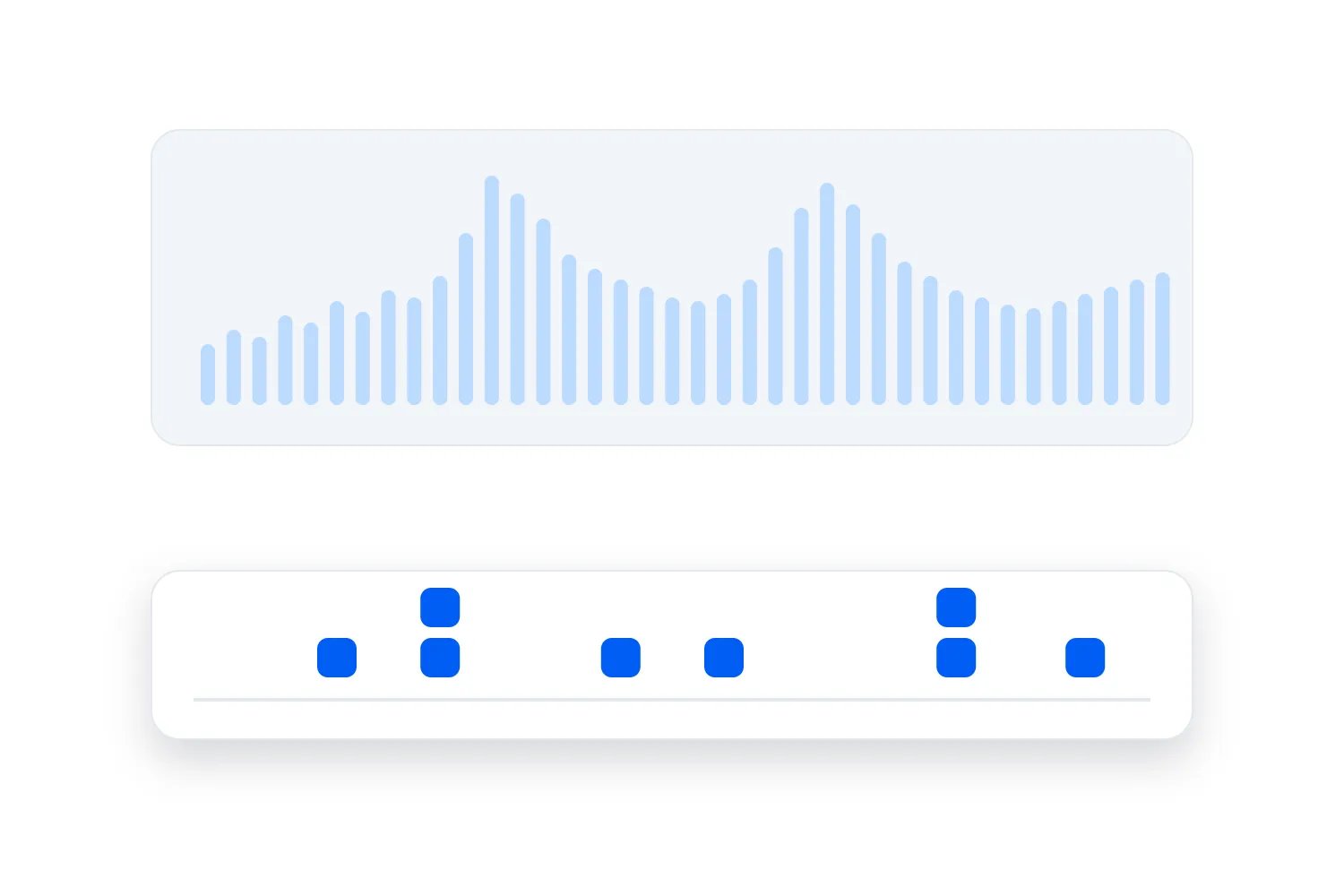
Your event page is getting busier. The campaign report looks encouraging, people are sharing the lineup, and someone on the team wants to book a bigger room. Then you open the ticket report. Sales have moved, but nowhere near as much as the visits. What has the extra attention actually proved?
To measure ticket demand, keep website activity, buying actions and completed paid sales separate. Read each against the offer people could buy, including its price, availability and timing. Traffic helps you understand exposure. Ticket selection and checkout activity help you investigate interest. Completed paid orders establish that buyers accepted the available offer, although refunds and cancellations can change what remains committed.
You need all of those signals because they answer different questions. A busy page can contain existing customers looking for the address, people checking a performer, and prospective buyers comparing dates. Some visitors want to attend but cannot complete payment. Others enjoy the announcement and have no intention of coming. The visit total doesn't separate them for you.
Before you approve another bill, you need to know what the evidence points to. You might need to reach more suitable buyers, clarify what the ticket includes or investigate a failed purchase step. You might also need to hold the current plan because paid demand doesn't yet support an additional commitment. This guide explains what to measure, how to read the gaps, and what to put in the demand review before making that commitment.
Decide which demand question you're trying to answer
Start with the next decision. "Is there demand?" is too broad when your actual choice is whether to add another workshop, increase advertising, or approve a more expensive venue. Each involves a different audience, offer and financial commitment. Write the decision before choosing the numbers you want to show.
For a workshop expansion, you might need evidence that additional people will pay for the same session at its current price. Sales of a cheaper introductory session don't settle that. For an advertising decision, you need to understand whether reaching another suitable audience is likely to produce enough additional paid tickets to justify the cost. A room upgrade also requires checking the added delivery costs and whether extra capacity can actually be sold.
Then define the offer. Include the event date, location, ticket entitlement, price and purchase conditions. People can want your event in principle while rejecting this date or this total price. A demand statement that leaves out those conditions can sound far stronger than the evidence supports.
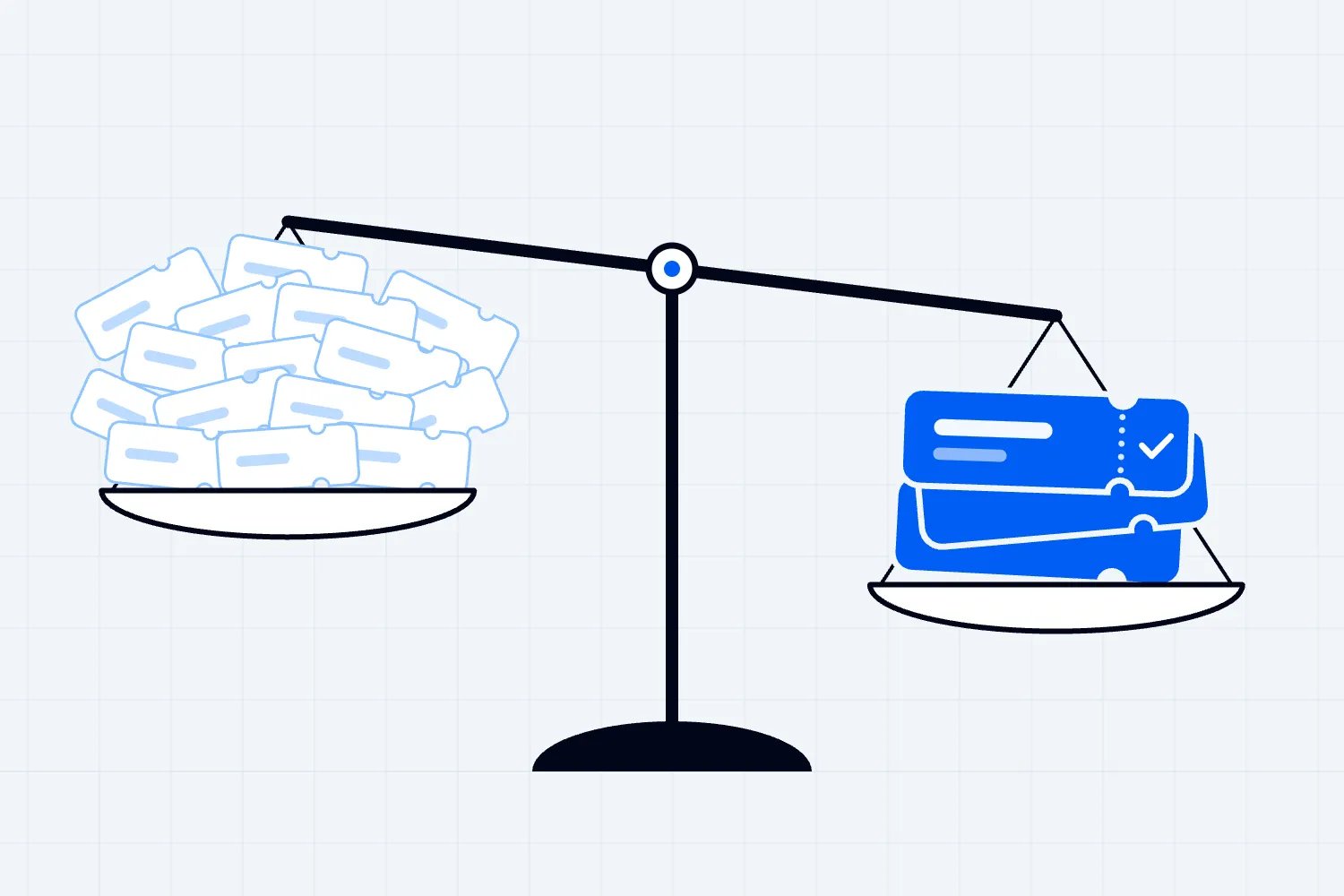
It's useful to separate demonstrated demand from remaining potential. Demonstrated paid demand is what your completed transactions establish on the stated basis. Remaining potential includes people who might buy later, people you haven't reached, and people prevented from buying. You can investigate that potential, but you cannot calculate it simply by subtracting purchases from visits.
Suppose the team says every visitor who didn't buy is a lost sale. That assumes each visit represented a separate suitable customer who wanted a ticket and could have bought one. None of those assumptions follows from the visit count. Before putting a value on the gap, work out what happened during the journey and what you still don't know.
Keep that uncertainty specific. "We don't yet know whether travelling buyers will accept the date" gives the team a research task. "Demand is uncertain" leaves everyone arguing about confidence. The useful demand review tells you which part of the commercial plan has support and which part needs another piece of evidence.
Keep browsing, buying intent and paid commitment in separate totals
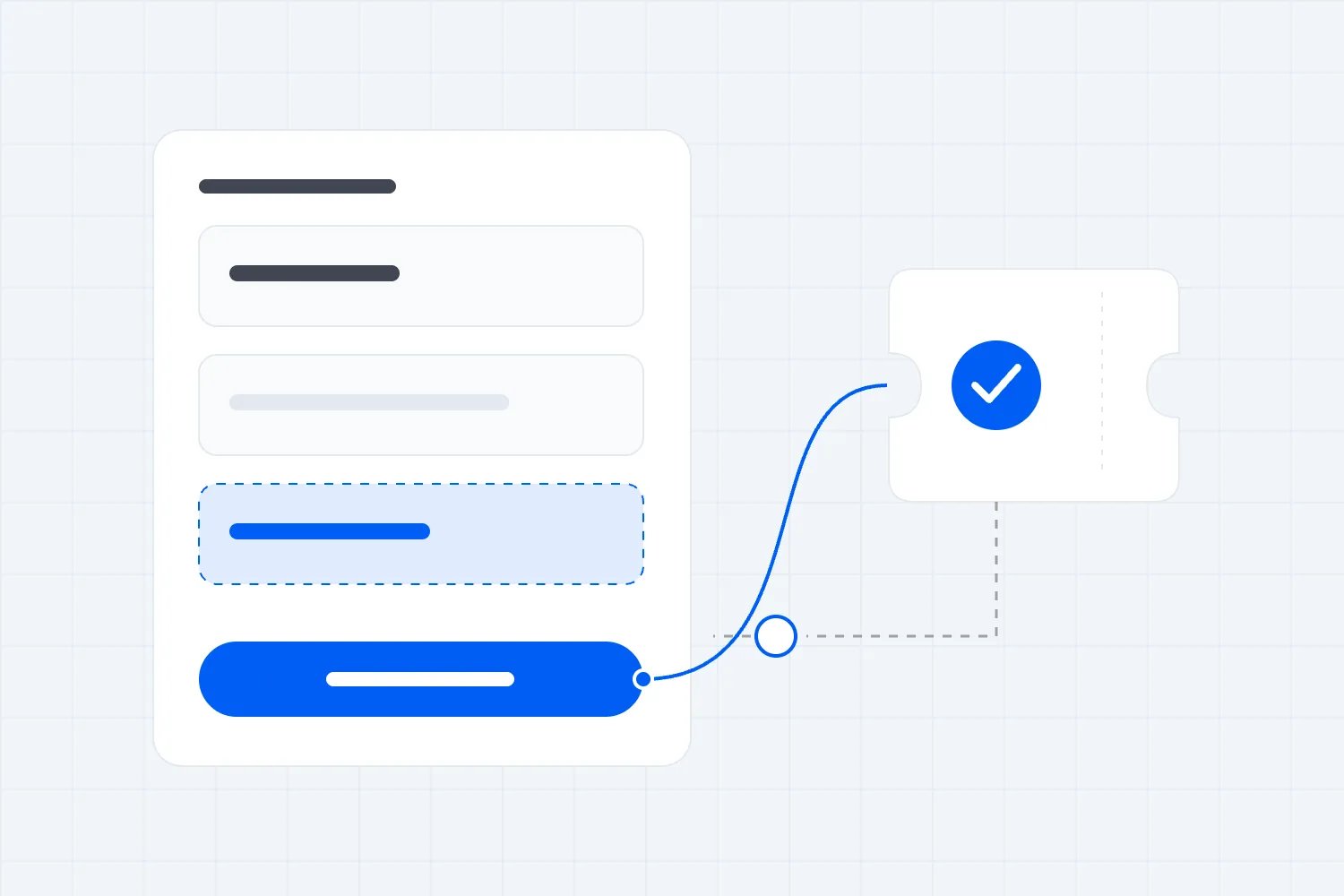
Think about the actions available to someone who discovers your event. They can view the page, read the programme, choose a ticket, start checkout, attempt payment and complete an order. Some platforms combine these steps. Use the actions your setup actually records and explain what each means before treating them as evidence.
A page view tells you that your tracking recorded a view. It doesn't establish that a new person read the offer or could attend. A ticket selection gives you a more relevant signal because someone interacted with something they could purchase. It still doesn't establish acceptance of the final price or an intention to finish that day.
A checkout start usually tells you more about buying activity, provided the recorded action really is the beginning of checkout. A tap on a general "Find out more" button shouldn't receive the same label. Ask your provider which action creates the count, including whether repeat visits and repeated attempts create additional records.
Completed paid orders carry the strongest evidence of purchase on your current offer. Keep the orders and the admissions they contain separate. One person buying tickets for friends creates one order and several paid places. That can fill your event while telling you less about the number of independent buying decisions than the same number of single-ticket orders.
Keep unpaid bookings, free tickets and waiting list entries visible in their own categories. They may be useful operationally, but moving them into the paid total makes the commercial result harder to assess. An employer awaiting invoice approval is in a different position from a customer whose card payment completed.
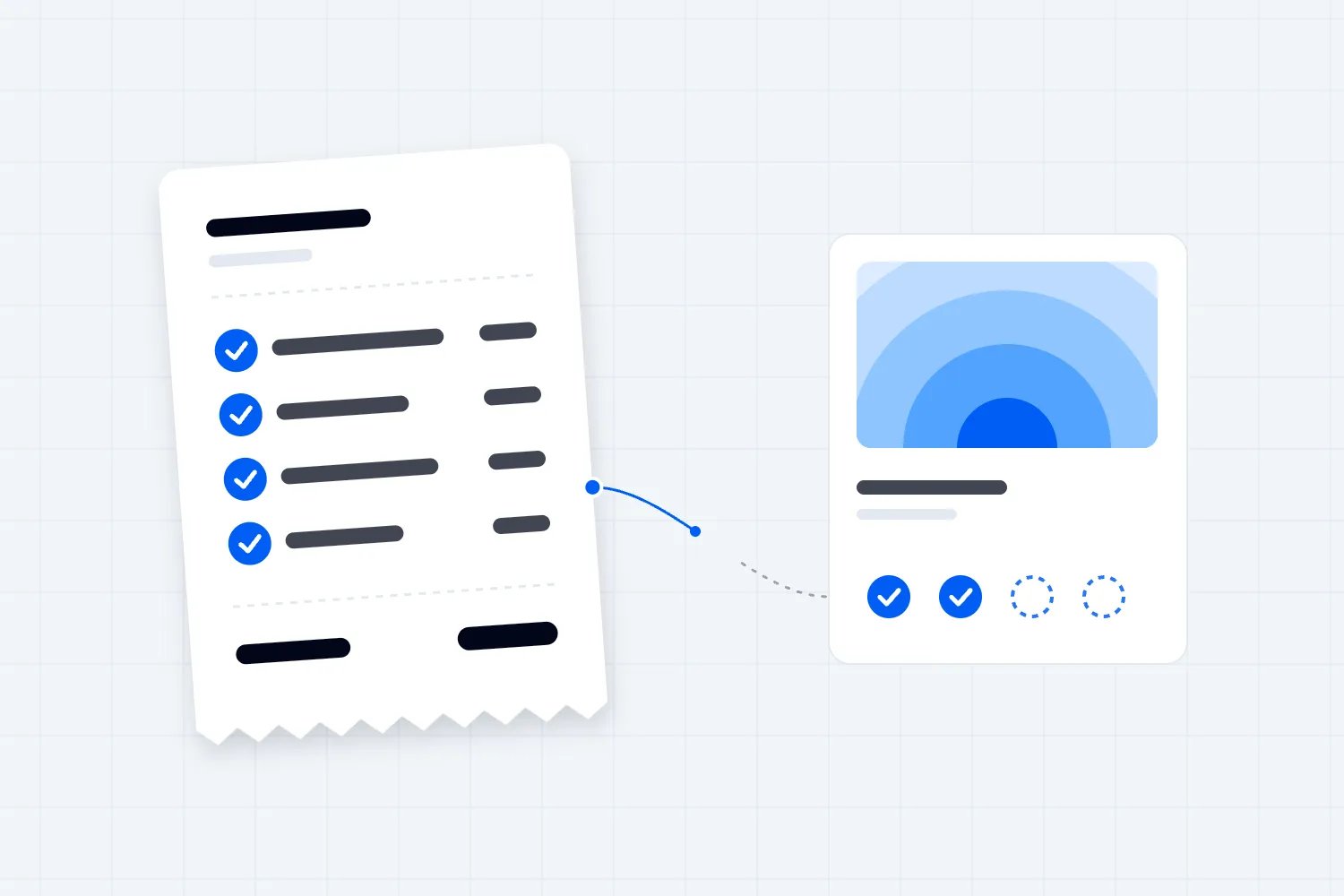
Also distinguish purchases from the current position. A ticket sold and later fully refunded with its admission cancelled belongs in the purchase history, but no longer belongs in current valid paid inventory. A transfer changes the holder rather than creating another original sale. Your demand report should let the team see what buyers originally accepted and what commitment remains now.
Use the reports your ticketing platform already provides before considering a separate ledger. Start with the supported order and ticket records. Agree the inclusion rules once, investigate exceptions, and use those records consistently. The work is deciding what the figures establish, rather than recreating a report you already have.
Count visits and people on the basis your analytics actually supports
Website reports use several measures that sound interchangeable in conversation. Page views count recorded views. Sessions describe periods of interaction. User measures estimate or identify users according to the tool's settings and available identifiers. Calling all three "people interested in the event" removes differences that matter to your conclusion.
Google's explanation of Analytics sessions describes a session as a period in which a user interacts with a website or app. A person can visit during several sessions. Someone can also read several pages in one session. You therefore can't turn a session total into a count of unique prospective attendees by changing the column heading.
Existing buyers are a particularly important source of repeat activity. They may return for the venue address, the timetable or instructions for their friends. That activity can increase as the event approaches without representing new ticket demand. Where your reporting can distinguish information pages from the sales page, keep that distinction in the review.
A shared event link creates another complication. A person might look on a work computer, discuss the event in a group chat and buy later on their phone. Your analytics may not reliably connect those visits. Equally, a purchaser booking for several people doesn't tell you how many members of the group previously saw the page.
Use the measure you can explain. If you have sessions, report sessions. If a reliable report follows identifiable users through a journey, name the users and the limits of that identification. Don't present a percentage of sessions as the percentage of your potential market willing to buy.
Decide which visits belong in the question too. Traffic to a blog article about a performer isn't equivalent to traffic reaching the available ticket offer. Your whole website might serve several events, old event pages and practical customer information. An overall traffic increase can coexist with no meaningful increase in exposure to this event's sale.
Document known staff tests and internal activity using your provider's supported controls. Keep suspicious traffic under investigation rather than deleting every short visit as a bot. A brief visit might be an unsuitable visitor ruling out the date, a returning buyer finding an address, or a tracking problem. Duration alone won't tell you which explanation is correct.
Use one worked example without mixing the units
Let's follow an invented paid event called Studio Assembly. These figures are for explaining the method, not industry benchmarks or a customer result. During its review week, the event page records 3,200 views across 2,000 measured sessions. The reporting setup can follow the relevant actions within each of those sessions.
Of those 2,000 sessions, 360 contain at least one checkout start and 100 contain a completed paid order. All 100 purchasing sessions are included in the 360 checkout sessions, and each contains exactly one order. Those 100 orders contain 150 tickets priced at $60 each, with no discounts, taxes, fees or add-ons included in the ticket-price calculation. All the orders in this example belong to the measured sessions.
That last condition matters. In a real report, some orders may have no observed website journey. Keep them in the sales ledger and outside a matched-session calculation unless the relationship can be established. Don't silently pretend your complete order total belongs to the subset of visitors analytics could observe.
For Studio Assembly, 360 divided by 2,000 gives 18% of measured sessions reaching checkout. The 100 purchasing sessions divided by 2,000 give a same-session purchase rate of 5%. Among the 360 sessions reaching checkout, 100 divided by 360 gives approximately 27.8% with a paid order in that same session. These are deliberately consistent session measures.
The 150 tickets don't turn that purchase rate into 7.5%. Dividing 150 by 2,000 gives 7.5 tickets per 100 measured sessions. That is a ticket yield from recorded sessions, with group quantity included. It answers a different question from how often a session contains a purchase.
The ticket-price total is $9,000. Now suppose ten of those tickets are fully refunded at $60 each and cancelled before the reporting cutoff. The current position becomes 140 valid paid tickets and $8,400 of ticket charges after those completed refunds. This excludes other charges, costs and adjustments. It isn't profit or bank cash.
Notice what remains unknown. We haven't counted how many individual people considered attending, established why the other sessions didn't produce orders, or estimated all future sales. We have established the observed journey, the purchases it produced and the current paid ticket position. That is enough to begin a focused investigation without claiming to have measured the whole market.
Check the measurement before interpreting a missing sale
Before deciding that interest failed to become demand, confirm that your setup can observe the purchase. A tracking gap and an unfinished order can produce the same empty cell in a marketing report. Your order records help distinguish them because they establish whether the purchase exists even when its website journey is incomplete.
For Google Analytics, ecommerce events must be configured and sent. They aren't automatically collected simply because the site sells something. Ask the person responsible for measurement which purchase and checkout actions your ticketing setup sends, whether the required information is present, and how they have tested it.
Use a permitted test purchase to follow the actual route. Start at a campaign link, select an available ticket, complete payment and check the confirmed order. Then ask the reporting owner to confirm what appeared at each measured step. Record the ticket type, device, approximate time and order reference so they can find the right transaction.
Check repeated confirmation visits too. Returning to a confirmation page shouldn't become evidence of another paid order. Your provider should explain how repeated purchase signals are recognised. A marketing event called purchase is still a report of an action; reconcile it with completed orders before relying on its total.
The route between websites deserves attention. Your own site may describe the event while a separate domain handles ticket selection or payment. Google's cross-domain measurement guidance explains how activity can split into separate identities and sessions across root domains without appropriate configuration. Ask which parts of your actual route are supported and tested. Adding a domain name to a report doesn't establish that the handoff works.
Privacy choices also affect what is visible. Google distinguishes observed behaviour from modelled behaviour when analytics identifiers aren't available because of consent choices. Modelling has eligibility requirements and may appear differently across reports. Ask whether the figures you're comparing include estimates, and respect the person's choice rather than trying to reconstruct an individual journey around it.
If the order ledger is complete but journey recording is partial, you can still report paid sales accurately. You may need to withhold a visitor purchase percentage or narrow it to a clearly identified observed group. Say exactly which comparison is unavailable. It's better to have a reliable paid-demand total and an unresolved journey question than an impressive percentage assembled from incompatible records.
Read the gap as a question, rather than a count of rejected tickets
Return to Studio Assembly. The 2,000 sessions include 360 with checkout starts and 100 with paid orders. That leaves 260 checkout sessions without a paid order in the same session. You can investigate those sessions, but you can't describe them as 260 people who wanted tickets and were lost.
Some may belong to buyers who returned later. Others may be repeated attempts by the same person, people comparing a group total, or visitors who discovered that the date didn't work. There could also be payment problems. The recorded absence of a purchase tells you where to ask the next question, without telling you the answer.
When page activity rises and ticket selection doesn't, inspect what people were shown and who arrived. A widely shared performer announcement can attract fans who live elsewhere. A campaign about a conference speaker can attract people interested in the talk but unable to attend the event. Those visits are real activity, while their relevance to your ticket offer remains unresolved.
When ticket selection increases but checkout doesn't, review the information and conditions at the handoff. Did buyers discover a minimum quantity, an eligibility requirement, or an unavailable seat combination? Are they comparing prices or arranging a group? Check customer questions and the supported journey records before choosing which explanation to test.
When checkout activity rises but paid orders don't, inspect payment outcomes and the final offer. Ask your provider about errors during the affected period and check whether the relevant inventory was available. A buyer who couldn't pay has demonstrated a different problem from a visitor who never selected a ticket.
Our guide to the factors affecting ticket sales conversion explains how to improve those parts of the experience. Here, keep the demand conclusion narrower. Say that measured checkout activity increased while completed paid orders didn't, then name the evidence you need to distinguish a purchase obstacle from a decision to wait or decline.
Customer conversations can help explain a pattern. Ask a focused question such as what information someone needed before deciding, where an attempted purchase stopped, or whether the available date suited them. Keep the replies as explanations from those respondents. Don't apply their proportions to every unconverted session or assume the quiet visitors share the same reason.
Record the offer and availability beside every demand result
Paid demand is always demand under conditions. If Studio Assembly sells its first release at $60, those purchases support a statement about that offer. They don't establish how many people would buy at $80, travel to another venue or accept a shorter programme. Record changes that affect what people are being asked to accept.
Availability can restrict what sales reveal. A sold-out workshop cannot record more purchases while it remains unavailable. A page with strong traffic after sellout may contain further interest, existing buyers checking details and disappointed visitors. You know that sales were constrained. You still don't know the exact quantity you could have sold.
A waiting list can help you investigate that gap, provided its terms are clear. State whether joining reserves anything, whether a price is known and what happens when tickets become available. A person joining an unpriced list has made a smaller commitment than someone accepting and paying for a released ticket.
When you release legitimate additional inventory, track the offer made and what happens afterwards. Record how many eligible people received it, how many completed purchases and which places remained unsold. Delivery or contact failures should remain visible. An unanswered invitation doesn't automatically mean that the recipient rejected the event on its merits.
Keep the same care when a particular ticket type remains available. General admission sales don't tell you how many people would accept a premium package. Premium page visits don't prove willingness to pay for the extras. Review each commercially different offer on its own terms before combining the event total.
A reported lack of sales can also reflect a release that never opened correctly, an obsolete campaign link or an advertised price that is no longer available. Record the affected time and correct the customer experience. Leave a note in the demand report so the team doesn't later compare a restricted period with a fully available one.
Before adding capacity, check what the extra places require. A room, staffing level or supplier order may increase in a large step. Selling some more tickets might be achievable without covering that entire step. Demand evidence supports the revenue assumption; the revised budget still determines whether expansion makes commercial sense.
Give traffic time to produce purchases before comparing periods
A website visit and a purchase don't have to occur in the same reporting week. Someone might find the event while commuting, discuss it with friends and buy after checking their schedules. If you divide this week's orders by this week's sessions, the result may combine purchases from earlier visitors with visits that haven't had time to produce sales.
You can use that ratio as a period summary when it is labelled accurately. It doesn't describe a tracked group progressing through a journey unless your reporting actually follows that group. Avoid calling it the probability that a visitor buys, particularly when sales arrive through routes outside the measured website.
For a clearer delayed-purchase question, define a group by when it first reached the relevant offer in your observed data. Then allow the same follow-up period for each group. Someone first observed on the final day needs as much time to purchase as someone observed on the opening day before you compare their outcomes.
Choose the follow-up period using your buying process and the decision deadline. A professional conference requiring employer approval can involve different delays from a local show booked on a phone. There is no universal waiting period that makes every event comparison fair. Use what your own reliable journey history can show, and flag purchases that remain outside the window.
Keep the same-session measure if it's useful for detecting immediate checkout problems. Add a delayed view when the data supports it. They answer different questions and can coexist. Don't revise yesterday's sales total to make a later purchase appear earlier; associate the later outcome with the observed group while preserving the actual purchase date.
A fresh campaign should not lose its budget simply because its visitors haven't had the same time to decide as an older audience. Equally, "they'll buy later" needs evidence before it becomes the explanation for every weak result. Look at matured groups, customer questions and actual later purchases rather than relying on optimism.
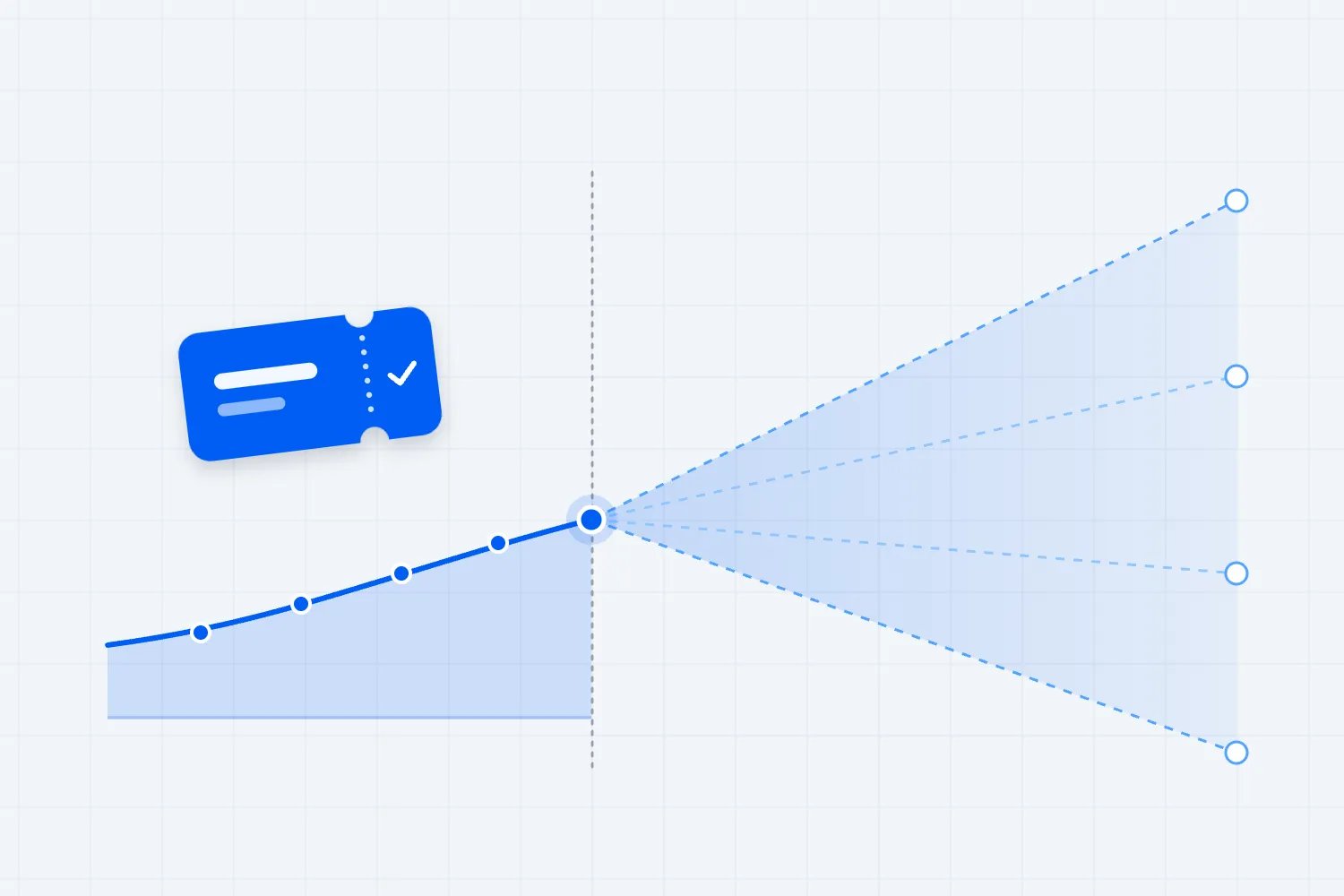
Once you need to estimate final sales, use a separate ticket sales forecast based on comparable sales curves. A forecast makes assumptions about what happens next. The demand review should first establish what has happened, the conditions behind it and which parts of the remaining audience are still untested.
Compare acquisition sources without giving each one the whole sale
Source reporting helps you understand where recorded purchases came through. It doesn't necessarily reveal every interaction that persuaded the buyer. Someone might discover the event in a social post, read an email and later buy through a friend's link. Different reports can credit that journey differently while referring to the same completed order.
Google's attribution settings documentation describes attribution as assigning credit among interactions before an important action. The selected model and its lookback window, meaning how far back an interaction can receive credit, affect that credit. Keep those settings attached to the comparison rather than presenting a source label as a complete account of the buyer's decision.
Don't add the sales claimed by several advertising platforms and call the sum total demand. Reconcile against your unique completed order records. Keep unmatched sales in an unknown category while you investigate them. Unknown source doesn't mean no marketing influenced the buyer, and a recognised source doesn't prove that its activity created an otherwise impossible sale.
Compare sources on the job they were given. Email reaching previous attendees starts with familiarity. A campaign introducing a new event to strangers has a different audience and may need more explanation before the purchase. A higher purchase rate from familiar buyers can be commercially useful without establishing that you should stop reaching new ones.
Where supported, include paid orders, ticket quantities, the amount retained after the relevant adjustments and campaign cost. Keep the same dates, currency and source definition. If you use a code, record whether it was shared beyond its original audience. A widely forwarded code still identifies its use, but gives you less certainty about how each buyer discovered the event.
Loopyah's ticketing includes sales by source so you can review which posts and emails are associated with ticket sales alongside the purchases. Start with that existing reporting when you sell through Loopyah. Use that result to decide which promotion deserves a closer look and whether further spending is affordable.
For paid campaigns, Loopyah's AI Ads Manager uses recorded ticket sales to guide changes across connected Meta, Google and TikTok accounts. You supply the creative, budget and end date. That keeps campaign management focused on purchases. Your team still needs to judge the event's delivery costs and whether an attributed sale demonstrates additional demand caused by the spend.
Test a demand explanation with a result you can recognise
Once you have a plausible explanation for weak paid demand, write down what would support it. If the event description doesn't explain who a workshop suits, clarify the level and prerequisites. If buyers cannot complete payment, work with your provider to fix the failure and verify the purchase. Those are different jobs with different evidence of success.
For a working offer that you want to improve, decide the main outcome before reviewing the result. More ticket-button clicks might indicate that the explanation encouraged further exploration. More completed paid orders would support a stronger commercial conclusion. Include the price and subsequent refunds so a temporary increase in discounted purchases doesn't masquerade as a better result at your intended price.
NIST's guidance on experimental objectives starts with agreeing and writing down the objective before choosing a design. Applied here, decide whether you're comparing two explanations of the same offer, investigating a price objection or checking a broken step. "Make the numbers better" doesn't tell you which change to try or what conclusion a result would support.
When the tools and volume allow it, showing comparable visitors two working versions during the same period can help distinguish the effect of a change from wider campaign conditions. Ask someone with experiment experience to plan it when the spending decision is substantial. Changing the audience, price and programme simultaneously can improve sales while leaving you unsure which change mattered.
You don't need an experiment before correcting false information or repairing a verified failure. Nor should you deliberately leave a broken purchase path available to some buyers to preserve a comparison. Fix it, document the time, and describe the later results with the other changes that could explain them.
Small events may produce too few purchases to settle a comparison confidently. Keep the number of orders visible rather than announcing a dramatic percentage from a small difference. A useful result can be that a recurring question disappeared or a known payment problem stopped occurring. State that finding and continue observing paid sales without claiming a precise demand increase.
For Studio Assembly, the next investigation might be whether mobile buyers reaching checkout encounter an error. Confirming that error would justify fixing it. It wouldn't prove that every checkout session without an order would have bought. After the repair, measure whether the affected journey works and what paid purchases follow under comparable available offers.
Put the spending decision back into dollars
Even reliable demand evidence needs a cost comparison. More paid tickets are useful when they support the event you have promised to deliver. A campaign can bring purchases while costing more than those purchases leave available. Keep that question separate from whether your page looks busy or your purchase percentage improved.
Use Studio Assembly for a separate invented spending calculation. Suppose an additional retained ticket sells for $60, costs $8 to serve and carries $4 of selling and payment costs paid by the organizer. That leaves $48 before fixed event costs and the proposed extra marketing. These are made-up planning assumptions, not Loopyah fees or a recommended margin.
A proposed $1,200 campaign would need 25 additional retained tickets at $48 each just to cover that campaign's cost. It would leave nothing from those tickets towards other outstanding fixed costs. If adding those attendees triggers another room or staffing charge, include that amount before approving the campaign. Check that enough legitimate inventory remains available too.
The difficult word is additional. A report showing 25 tickets associated with an ad doesn't establish that all 25 would have been absent without it. Some buyers might have returned through another route. Where you cannot establish the additional effect, keep the uncertainty in the spending decision and limit the commitment accordingly.
Also avoid treating a budget target as a prediction. Needing 25 tickets doesn't mean the campaign is likely to sell them. Look at the audience you can still reach, comparable actual outcomes, the remaining buying time and the downside if sales disappoint. Choose a spend you can afford to learn from when the evidence is incomplete.
For capacity decisions, use the full revised event economics. Our event break-even guide explains how ticket income, fees and delivery costs affect the required sales. Your traffic report can help you choose what to investigate. It cannot make an extra venue bill affordable by itself.
Show which buyers and routes the report cannot measure
An online journey report only describes the activity available to it. A conference can also sell through an employer's purchasing process. A regular venue can receive group enquiries by phone. A customer may buy directly from the ticketing page without first visiting your own website. Keep these routes in the demand review when they matter to the offer.
Start with the complete order record, then show which part has an observed website journey. If you cannot match an employer order to page activity, include its paid tickets in the event's commercial position. Leave it outside a calculation about measured website sessions. The sale is real even when the marketing path is unknown.
Group enquiries deserve a separate description until their purchase status is clear. Record the requested date, quantity, price discussed and next approval step through your existing sales process. An enquiry for a large allocation can affect planning, but it shouldn't increase completed paid demand while the customer is still deciding. Avoid counting both the enquiry and the later order as separate groups of buyers.
The same discipline applies to audiences you haven't reached. If your paid promotion has only covered the venue's immediate area, the report says little about buyers who would travel. You can investigate that audience with an accurate offer and an affordable test. Don't assume its potential is zero, and don't invent its size by applying the local purchase rate to everyone living further away.
Consider whether the offer was usable for the people included in a comparison. A date restriction, age requirement or location can rule out someone who otherwise likes the programme. Practical access information may also be missing. Those conditions help explain why activity didn't become a purchase, but the reporting alone doesn't establish which condition affected each visitor.
Keep requests for a different event separate too. Someone asking you to run a Saturday edition has given you a research lead for that proposed edition. They haven't committed to your Friday event, and you haven't established what they would pay on Saturday. A clear offer and an appropriate purchase opportunity are needed before that request becomes demonstrated paid demand.
At the review, state what the current evidence cannot answer and choose whether the missing answer matters now. You might keep the smaller room while investigating another audience, or proceed with the existing event because confirmed purchases support its current commitments. An incomplete picture can still support a limited decision when everyone understands its limits.
Keep a demand-review record another colleague can use
A useful review record should make the conclusion understandable without a tour of every dashboard. Keep the original source reports available and write the decision, reporting basis and unresolved question in ordinary language. If the measures underneath them need correction, our guide to cleaning event data before comparing results covers that preparation.
You can reuse the following prompts for each commercially important offer:
Which event, date, ticket entitlement and total price are we assessing? What changed during the review period, including release availability, programme information and purchase conditions?
What decision is due, who can approve it and when does the option expire? State the cost of the proposed commitment separately from the revenue hoped for.
What browsing activity is reliably recorded? Name the page, the measure and the population, including whether the report covers sessions, observed users or a wider estimate.
Which buying actions are recorded, and what action creates each count? Explain whether the journey follows the same sessions or users and whether later purchases have had equal time to appear.
How many unique completed paid orders and tickets are established by the order records? Show completed refunds, current valid paid tickets and the money measure on their stated basis.
Which paid orders have no reliable source or observed journey? Keep them in the commercial total without assigning them to a visitor group they cannot be matched to.
What does the evidence let us conclude? Name the audience and available offer it supports, then identify the question that could change the decision.
What will we do next, who owns it and when will we review it? Choose a check that can change the decision while the business still has an option.
For Studio Assembly, the review could say that 100 of its 2,000 measured sessions produced 100 paid orders containing 150 tickets, with 140 valid paid tickets remaining after the stated refunds. The page attracted activity, but the event has not established how much additional demand remains. The immediate task is to investigate the suspected mobile checkout failure before approving more acquisition spend.
That recommendation gives the team a specific job before the next spending decision. It connects the current paid ticket position to a purchase problem that still needs checking. If the next review shows the purchase works and suitable audiences still decline the offer, you'll have a different problem to address. If paid sales increase, assess what changed and whether the money supports the next commitment.
Before your next demand meeting, take the current offer through to a confirmed order and open the corresponding sales report. Agree what each total counts, keep the unanswered question visible and put a date on the next decision. You'll be able to explain why the event needs another action without asking the team to treat website traffic as tickets you haven't sold yet.

Author: By the Loopyah Content Team
The Loopyah Content Team shares expert insights, practical guides, and industry updates to help event organizers create unforgettable experiences and stay ahead in the event planning world.