· 21 min read
How to measure sponsor booth engagement beyond badge scans
Your sponsor's booth team scanned a lot of badges. Then someone asks how many visitors tried the product, described a problem the sponsor could solve, or agreed to a useful next conversation. The scan total doesn't answer any of those questions.
To measure sponsor booth engagement, record what people did, distinguish visits from unique people, and connect each measure to the sponsor's objective. Keep contact permission, commercial qualification and later sales results separate. You can then explain where the booth attracted attention, where conversations developed and where the evidence stops.
For an organizer running a paid event, this matters before the renewal meeting. You need to know whether the package delivered something worth buying again, and whether collecting that evidence costs more than you allowed in the package. A measurement plan that requires your best salesperson to spend the event correcting spreadsheets will disappoint somebody.
The first thing you want to do is agree what the sponsor needs to learn. Then build the smallest collection process that can answer it reliably. Below, we'll work through the definitions, the on-site process and a fictional example showing why the biggest scan total can hide the more useful result.
Start with the sponsor's decision
Ask the sponsor what they want to decide after this event. A brand testing a product needs different evidence from a supplier looking for buyers with a scheduled purchasing project. Both can run a busy booth. That doesn't make the same measures useful to both businesses.
Write the decision in ordinary language. "Should we bring this demonstration to the next event?" is specific enough to discuss. "Was the activation successful?" leaves everyone free to invent a different answer later. If the sponsor wants meetings with relevant buyers, agree what makes someone relevant and what counts as a meeting.
Our guide to aligning sponsorship with event goals covers that earlier commercial conversation. For the booth itself, turn the objective into something staff can observe or the sponsor can confirm. A completed trial, a stated purchasing need and a held follow-up meeting each need their own record.
AMEC's measurement framework distinguishes activity, audience response, outcomes and business impact. That distinction is useful here. Staffing a demonstration proves delivery. Someone completing it proves participation. A subsequent purchase requires different evidence. You can report all those things without pretending that one automatically establishes the next.
Agree the reporting date as well. If the sponsor sells something that takes months to evaluate, an immediate sales verdict will be premature. You can report booth participation first and review later outcomes on an agreed date. Put the sponsor contact responsible for those later figures in the plan before the event opens.
Decide what a booth visit means
A person walking past a sponsor's sign hasn't necessarily visited the booth. Someone waiting in a neighboring queue may stand inside your measurement area without engaging at all. Draw the booth boundary on the floor plan and describe the behavior that counts as entry before staff begin counting.
Your definition might require someone to enter the demonstration area or approach a staff member at the counter. The exact rule depends on the layout. What's important is that the rule means the same thing during a quiet morning and a crowded afternoon, and that you can explain it to the sponsor afterward.
Keep visits and unique visitors separate. A visit is an occurrence. A unique visitor is a person counted once within a stated period. The same attendee could arrive for a demonstration, return with a colleague and come back to collect information. Those are repeat visits if your entry rule counts them, even though one person made them.
Use a reliable identifier only where collecting and using it is appropriate. If anonymous observation cannot distinguish repeat visitors, report observed visits. Don't rename that figure unique visitors because the sponsor prefers the wording. An honest visit count still helps you understand activity and staffing when you explain what it measures.
Also define who you exclude. Booth employees, contractors replenishing stock and event staff checking power can inflate a doorway counter. Log the exclusion method and its limitations. If the device can't remove those movements, describe the result as recorded entries and explain the likely contamination instead of claiming precision the equipment cannot provide.
Measure participation with a clear completion rule
Choose participation measures around the actual experience. At a product booth, that could mean completing the agreed demonstration steps. At a tasting, it might mean accepting a sample. At a learning station, it could mean finishing an exercise. Avoid combining those activities into a single engagement total that nobody can interpret.
Write down the completion rule. If someone watches the opening of a demonstration and leaves, did they complete it? If they skip a step because they already know the product, what happens? You don't need a complicated policy, but staff need an answer they can apply consistently without negotiating each record.
Record attempts as well as completions when the difference will change a decision. A lot of started demonstrations with few completions could justify shortening the experience or fixing equipment. Counting only completions would show a disappointing result while hiding the practical reason. Record interruptions separately so staff can distinguish a visitor's choice from an operational failure.
Don't count a queue as participation. The queue shows demand or a capacity problem, depending on what happens next. Someone who leaves before their turn has had a different experience from someone who finishes. Your report should preserve that difference even when the booth looked equally busy in the event photographs.
This is where booth design ideas need a measurement question. If you add a larger demonstration area, decide whether you're trying to increase completed trials, reduce waiting or improve conversation quality. Measuring the intended change helps you decide whether the extra floor space and staffing were worth their cost.
Treat dwell time as context
Dwell time measures how long someone remains in a defined area or activity. It can tell you that an experience holds people's attention, but a long stay can also mean they are waiting, struggling with instructions or enjoying a seat. Duration alone doesn't tell you which explanation applies.
For useful timing, define the start and finish. You might measure demonstration start to completion rather than arrival to departure. If you include waiting time, say so. Keep the same definition across sessions you intend to compare, and record any period when crowding made the boundary difficult to observe.
You don't need to time everybody to learn something useful. You can observe planned periods across the event, provided you describe their coverage and don't present them as a complete census. Include different traffic conditions. Timing only the quiet opening period won't tell you how the experience worked during the busiest break.
Use the distribution when possible. A single average can hide a mix of quick departures and very long stays. A median tells you the middle recorded duration, while simple duration bands can show how many observed visits were brief or extended. Keep the number of timed observations visible with the result.
Then ask what the timing changes. If visitors wait longer than the demonstration takes, another presenter might help. If most leave before the main benefit appears, the opening may need work. Don't declare that longer is always better. A shorter, clearer demonstration can serve the sponsor and the attendee better than a confusing experience that takes longer.
Define a meaningful conversation before judging quality
"We had great conversations" is hard to verify. A practical definition describes what happened during the exchange. For a sponsor seeking business buyers, that could mean a visitor described a relevant problem and the staff member recorded an appropriate next step. The definition should reflect the sponsor's objective, not the staff member's enthusiasm.
Keep the notes short enough to finish while the memory is fresh. Record the stated need, relevant fit and next action. Avoid asking staff to transcribe every conversation. Long forms encourage missing entries during busy periods, and a complete looking export can conceal that the team only recorded people they had time to remember.
Separate visitor statements from staff judgments. "Asked whether the product supports several locations" records a question. "Ready to buy" is a judgment that needs supporting criteria. If the sponsor wants a qualification label, agree the required information and allow "unknown" when the conversation didn't establish it. Guessing improves the total while weakening its meaning.
A conversation can be valuable without producing a sales lead. An existing customer might identify a service problem. A participant might explain why the offer isn't relevant. Those findings can affect the sponsor's next decision, so keep a short category for useful feedback rather than forcing every conversation into a buying intention.
If several staff speak to the same visitor, avoid counting several people. You may report conversation occurrences separately, but unique conversation participants require a way to remove duplicates. Agree whether the sponsor wants to understand staff workload, audience reach or both. Each question needs a different count, and none deserves an invented answer.
Keep permission separate from qualification
A badge scan records an action performed by a scanner. It doesn't, by itself, establish permission for every future use of the person's details. It also doesn't establish that the attendee has the need, authority or timing that would make them a qualified commercial contact. Those are separate questions with separate evidence.
Build distinct fields for the permitted follow-up and the sponsor's qualification criteria. Someone can ask for a brochure without meeting the sponsor's buying criteria. Someone can match the target customer profile and decline marketing. Respect both records. Combining them into one "good lead" box makes reporting easier by losing information the sponsor actually needs.
The UK ICO's electronic mail marketing guidance explains that requirements depend on matters including the recipient and the applicable exception. Consent is required in many situations, and a business context doesn't remove every obligation. Check the rules for your jurisdiction, audience and planned communication rather than using a universal badge scanning script.
Operationally, tell attendees what information the booth collects, who receives it and why. Record the relevant permission or other applicable basis through the process your team has approved. Keep a specific request for information distinct from permission for ongoing promotional messages. Your attendee data sharing process should make those distinctions clear before anyone promises sponsors a contact list.
Don't improve the permission rate by pressuring visitors at the end of a demonstration. If the sponsor needs more suitable follow-up requests, improve the offer and explain the next conversation clearly. Report declined and unknown responses honestly. An attendee who enjoyed the booth and wants no further contact has still participated in the event.
Put the right denominator under every percentage
A percentage needs a named group. "Half engaged" tells the sponsor very little unless you say half of whom, doing what, during which period. Use the count of people or visits eligible for the action as the denominator, and make sure the numerator belongs to that same group.
For example, a demonstration completion rate can use recorded demonstration starts as its denominator. A follow-up request rate might use unique demonstration participants, if you can identify them reliably. Those measures answer different questions. Neither should silently use total event attendance just because that number is available in the ticketing report.
The same care applies to target audience fit. If staff established fit for only some conversations, report the assessed group and the unknown group. Dividing confirmed fits by assessed contacts describes the assessed contacts. It doesn't establish that the same proportion of everybody at the booth matched the sponsor's target audience.
Watch overlapping categories. A visitor may complete a demonstration, request information and book a meeting. Adding those counts creates activity totals, not additional people. If you need the number who did any of those things, use compatible person records to remove duplicates. Otherwise report the categories separately and state that people can appear in several.
Our broader guide to event metrics helps separate event results from individual activities. For this booth report, keep the arithmetic inspectable. Put the numerator, denominator and definition alongside each percentage. That gives the sponsor a way to check the result without asking your team to reconstruct it after the event.
A fictional example shows what scan totals miss
Suppose a fictional sponsor runs a demonstration booth at a paid conference. The team records 240 unique booth visitors using an approved identification process. Of those people, 120 complete a demonstration. Every completion belongs to a recorded visitor, and the records remove repeat demonstrations when calculating unique participants.
Among the demonstration participants, 72 describe a problem matching the sponsor's agreed criteria. Separately, 48 demonstration participants request a follow-up. Staff confirm that 36 people belong to both groups. All these numbers are invented to explain the calculation. They are not industry benchmarks, survey results or an account of a real event.
| Label | People |
|---|---|
| Booth visitors | 240 |
| Completed demonstration | 120 |
| Matched need criteria | 72 |
| Requested follow-up | 48 |
| Matched need and requested follow-up | 36 |
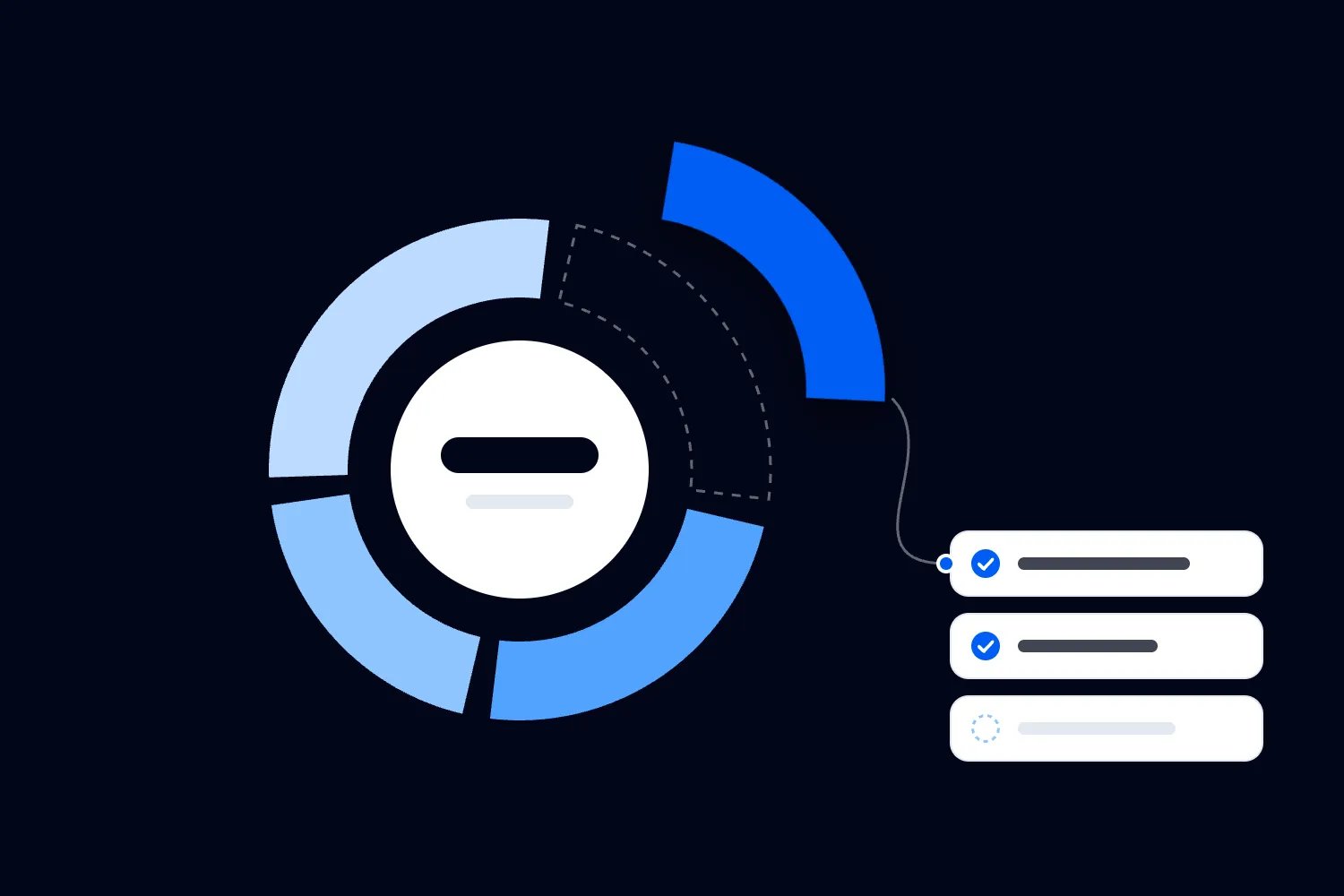
The chart shows overlapping groups, so don't add the bars. Demonstration completion represents 120 divided by 240, or 50% of recorded unique visitors. The 48 follow-up requests represent 40% of demonstration participants. The 36 people who both match the need criteria and request contact represent 30% of demonstration participants.
Now suppose the scanner logged 300 scan actions. That doesn't conflict with 240 unique visitors. Repeat scans can produce more actions than people. You'd retain the scan log for reconciliation, investigate unexplained records and report the count that answers each question. You wouldn't present 300 scan actions as 300 interested buyers.
The useful commercial discussion concerns the 36 people and their agreed next steps, alongside the other participation and feedback results. The sponsor still needs to contact them appropriately, confirm any further qualification and see whether the conversations progress. Nothing in this fictional booth example establishes sales, profit or financial return.
Plan observation around the staffing you actually have
Someone needs to own each record. If everyone assumes the booth manager is counting visitors, the final report may depend on their memory. Assign the entry count, participation records and conversation notes to named roles. Check that those duties fit the workload you expect during the busiest part of the event.
Separate counting from selling when the budget allows and the information matters. A presenter running a demonstration can't always time arrivals and record departures accurately. When staff must combine duties, simplify the measures and describe the gaps. Fewer dependable measures are more useful than a detailed report assembled from inconsistent recollections.
Write an observation schedule before doors open. Spread the planned windows across relevant sessions and breaks rather than choosing convenient quiet moments afterward. Log actual start and finish times, staffing levels and any interruptions. If a count covers only observed windows, label it that way. Don't multiply a quiet hour across the whole day without a justified estimation method.
Record operating conditions too. A broken display, a closed entrance or a speaker session finishing late can change booth activity. These notes help explain the numbers and identify changes worth testing. They don't excuse every disappointing result. They make it possible to distinguish a weak offer from an experience the team couldn't deliver as planned.
Budget the work when you sell the package. If a sponsor wants independently observed conversations across the whole event, price the staff and reporting time needed to deliver that promise. Your margin suffers when detailed measurement becomes an unplanned favor, especially if every sponsor expects the same attention after seeing another partner's report.
Test the collection process before the crowd arrives
Run a short rehearsal with the people who will operate the booth. Ask them to count the same staged visits and classify the same example conversations. Compare their records. If they disagree, revise the definition now, while you can still fix the form and explain the change without affecting live results.
Include the awkward cases. Someone returns with a colleague. A demonstration starts but equipment fails. A person asks for technical information and declines ongoing marketing. A member of event staff crosses the booth. These aren't unusual enough to ignore, and they're exactly where different interpretations can make later comparisons unreliable.
Test the equipment and the destination of the data. Check scanner identifiers, time settings, duplicate handling and any offline collection process. Confirm that a saved permission record remains connected to the right contact after export. A working scanner doesn't guarantee a useful dataset if fields disappear when the sponsor imports the file.
Keep an incident record during the event. If a device stops collecting, record the affected period and whether any recovery is possible. Don't quietly fill the gap with a staff estimate and present the combined total as measured. A transparent limitation is easier to explain than a number nobody can reproduce.
After the first operating period, inspect a small selection of records with the booth lead. Look for missing fields and inconsistent interpretations while staff can still correct the process. Preserve the earlier records and note the change. If definitions change materially, report the periods separately rather than making the revised method appear to have operated all day.
Use feedback to explain behavior
Counts show what happened under your definitions. They rarely explain every reason. Ask a short, neutral question when the answer would change a decision. For a demonstration, you might ask what the visitor wanted to learn and whether the experience answered that question. Leave room for an answer the sponsor didn't expect.
Avoid rewarding only positive feedback. A visitor who found the product irrelevant can explain a targeting problem. Someone who abandoned a queue can explain a capacity problem. If staff survey only people who finished happily, the resulting feedback describes a selected group. It can't tell you how everyone approaching the booth experienced it.
AAPOR's survey guidance recommends specific, understandable questions and transparent reporting of the collection method. For your booth feedback, record who you invited, when you asked, how people answered and how many responded. A voluntary sample needs that context. A large number of answers doesn't automatically remove selection bias.
Keep satisfaction and learning separate. Someone can enjoy a game without understanding the sponsor's offer. Someone can understand the offer and decide it isn't suitable. Ask about the thing you need to know rather than wrapping enjoyment, understanding and buying intention into one positive sounding question that staff can't interpret consistently.
Use comments to propose a change, then check whether the counts support investigating it. If visitors repeatedly mention waiting and the observation notes show queues, extra capacity is a reasonable test. If one visitor dislikes the music, record it without claiming the whole audience agrees. Our post-event survey guide can help you write focused follow-up questions.
Connect follow-up to the event without claiming every sale
Agree how the sponsor will identify event related contacts in its own records. Use a consistent event label and preserve the permitted next action. Decide which status updates the sponsor can provide and when. Without that agreement, your organizer report may stop at a handover even when the sponsor later learns much more.
Keep booked meetings separate from held meetings. A calendar booking can be canceled, moved or ignored. When the sponsor confirms a meeting took place, count that result under the agreed definition and reporting period. Don't quietly replace the original bookings total. Showing both tells you whether requested follow-up turned into an actual conversation.
For destination traffic, Google's campaign URL guidance explains how tagged links identify referring campaigns in Analytics. Use distinct links where you genuinely need to distinguish placements, and test them. A booth QR code and an event email can then produce different campaign records, subject to the destination's collection and reporting setup.
Those records still have limits. Someone may forward a link, visit on another device or already be discussing a purchase with the sponsor. Ask the sponsor to distinguish newly recorded opportunities from existing ones and describe the matching rules. An event associated sale is a useful observation. It doesn't alone prove the event caused the sale.
Don't calculate financial return from a contact count. A sponsor would need suitable return and cost information, including its activation spending, to assess that question. For your booth review, report the confirmed progression and the missing information. "Awaiting sponsor confirmation" is more accurate than assigning assumed revenue to people who haven't bought anything.
Compare booths only when the conditions make sense
A sponsor may ask how its booth performed against another partner's. Start by checking whether that comparison answers a useful question. Different locations, opening hours, staffing and activities can produce different totals even when both partners delivered exactly what they promised. A tasting counter and a private consultation room shouldn't compete for the same visit target.
Compare an activation with its own earlier performance only after checking the definitions and conditions. If last year's figure counted scan actions and this year's counts unique people, calculate a compatible measure from the records if possible. Otherwise explain that you don't have a direct comparison. Renaming an old total doesn't repair the missing information.
Rates can help when exposure differs, but they don't remove every difference. Completed demonstrations per operating hour describes throughput. It doesn't measure the quality of the conversations or account for a location with heavier foot traffic. Use it to discuss capacity, alongside the relevant operating notes, rather than declare a winning sponsor.
For a planned change, decide what you can reasonably hold consistent. You might test a shorter demonstration during comparable periods while keeping the same staff and invitation. Record which version visitors encountered and how you assigned the periods. If the shorter version runs only during a busy break, traffic and the changed experience are tangled together.
You can still learn from an imperfect comparison. Describe what changed, what you observed and what remains uncertain. That supports a cautious operational decision without claiming experimental proof. If the commercial stakes justify a stronger test, plan the assignment and analysis with someone qualified before the next event, rather than trying to invent a rigorous study after collection.
Keep partner confidentiality in the comparison too. Agree which aggregate figures can be shared, and avoid revealing another sponsor's contact quality or sales results simply because their booth was next door. Discuss only evidence approved for that sponsor.
Protect the records while making the result useful
Most people reading the booth report need aggregate results and definitions. They don't need a spreadsheet containing attendee names and conversation notes. Keep any authorized contact transfer separate from the report, limit access to the intended people and check that one sponsor can't view another sponsor's records through a shared evidence folder.
The ICO's data minimisation guidance says personal data should be adequate, relevant and limited to what the purpose requires. Applied to this process, decide what information each measurement needs before collecting it. An anonymous visit count usually doesn't require a person's job title, email address and purchasing plans.
Agree retention and correction responsibilities through your approved privacy process. The sponsor may need its authorized contact records for follow-up, while your measurement team may only need aggregate counts after reconciliation. Don't keep every export indefinitely because it might be useful someday. Record who handles questions or corrections when the event team has moved on.
Finally, check the report against the underlying records with the sponsor contact. Resolve obvious duplicates, distinguish missing information from zero and preserve the reporting date. If a later sponsor update changes a result, issue a dated correction explaining why. That protects the working relationship more effectively than silently changing a number someone has already forwarded.
Use the result to change the next booth
Review the booth as an experience you can improve. If people enter but few try the demonstration, examine the invitation and waiting time. If demonstrations finish but relevant conversations remain scarce, revisit audience fit and the questions staff ask. If qualified contacts request follow-up but meetings don't happen, investigate the handover with the sponsor.
Make the recommendation specific enough to price and test. Changing the demonstration length, adding a presenter or revising the follow-up offer produces a different operational plan. "More engagement next year" doesn't tell either side what to buy. Record which change you recommend, the evidence behind it and the measure you'll use to judge the next event.
Our sponsorship reporting guide covers the wider report, including promised benefits and unresolved delivery issues. Use this booth analysis within that larger account rather than letting it replace the sponsor's original objectives. Before discussing renewal, agree the next action and its owner while both teams still remember what happened on site.

Author: By the Loopyah Content Team
The Loopyah Content Team shares expert insights, practical guides, and industry updates to help event organizers create unforgettable experiences and stay ahead in the event planning world.