· 21 min read
When is conference networking software worth paying for?

You're looking at a networking platform demo, and it all seems straightforward. Delegates find people with similar interests, book conversations and leave with a reason to return. Then the quote arrives, and you have to explain which part of that experience is worth paying for.
Event networking software is worth buying for a conference when it solves a specific problem your programme already has, enough delegates can use it, and the likely additional value covers the full cost. That cost includes your team's time. A busy activity dashboard won't make the purchase worthwhile if people still struggle to meet someone relevant.
The first thing you want to do is write down what failed at your last conference. Maybe delegates couldn't find peers outside their existing circles. Maybe your coordinator spent days repairing meeting bookings. Those problems deserve different solutions, and you can waste a lot of money buying the wrong one beautifully.
This guide helps you decide whether to pay, what to make suppliers demonstrate and how to judge the purchase afterwards. We'll use a fictional conference budget to work through the numbers. The example figures are assumptions for the calculation, not vendor prices, industry averages or customer results.
Start with the conversation people are paying to have
"Better networking" is too vague to buy against. Ask what people came to your conference to discuss, who they needed to meet and what prevented that from happening. A delegate seeking experienced peers has a different problem from an exhibitor trying to arrange conversations with willing buyers.
Suppose you organise a paid conference for independent training businesses. Delegates want to compare approaches to course delivery, customer retention and staffing. Your last survey says people enjoyed the speakers but struggled to identify anyone managing a similar business. The potential software job is helping them discover relevant peers before they arrive.
Now change the situation. The right people already know each other, but accepted appointments keep disappearing when somebody changes their availability. Here, reliable booking and updates matter more than recommendations. A platform with impressive matching and weak cancellation handling might make the existing problem worse.
Ask your team for actual examples. Read support messages, speak with returning delegates and ask exhibitors what happened after their initial introductions. Be careful with complaints that say only "the app was bad". Was the login difficult, the directory incomplete, or the programme so crowded that nobody had time to meet?
Software cannot create a suitable audience or protect conversation time in your agenda. If your delegates mainly need hosted discussions about shared problems, start with the conference networking programme. You might improve the experience through clearer topics and capable hosts before buying another system.
Write a purchase brief in ordinary language. For example, "Delegates should be able to find relevant peers, choose whether to contact them and understand what happens next without asking our coordinator." Add the failure you need to prevent. That gives you something specific to test when every supplier says their platform makes networking easier.
Work out whether the simpler option is already enough
There isn't a delegate count at which networking software suddenly becomes compulsory. Audience complexity, the type of conversation and the amount of coordination matter. A small specialist conference with several participant groups may have a harder matching problem than a much larger event where people want open conversation after the talks.
Consider what you could deliver with your current tools and a sensible programme. An optional introduction request, a clear directory with appropriate visibility controls, or hosted topic groups might answer the need. Describe that alternative properly, including staff time and support. Calling it free because you already own the spreadsheet hides part of its cost.
Equally, don't reject software just because somebody could do the work manually. If a coordinator spends the final week resolving duplicate bookings, moving appointments and answering availability questions, reliable self-service could be valuable. The important question is which work disappears and which work the platform creates instead.
Get the person who currently does that work into the discussion. They can explain exceptions a sales demonstration misses. A delegate changes company. An assistant bought several tickets. Someone cancels after creating a profile. If those cases require your coordinator to repair several records, the promised saving needs another look.
Be especially careful about changing your whole registration system to obtain one networking feature. Include migration, training and disruption in the decision. A modest improvement in introductions may not justify replacing ticketing that already works well, particularly close to the event.
You can also decide to wait. If this is your first edition and you don't yet know who wants to meet whom, a smaller programme can teach you that. Record the requests you cannot handle, then buy against demonstrated demand for the next conference. Waiting should produce information you can use, rather than the same debate next year.
Make suppliers demonstrate your difficult cases
A standard demo shows the product under conditions its supplier has prepared. Ask for another session using a small set of fictional participant records that resemble your conference. Include different ticket entitlements, a group booking, someone with little profile information and someone who wants to stay out of the directory.
Follow one delegate through the whole experience. They receive an invitation, sign in, understand the available options and find someone relevant. They send a request, receive an answer and change their mind. Ask the supplier to show what each person sees, including the messages sent outside the platform.
Then try the cases that cause support work. Cancel a ticket after the person has accepted an appointment. Change an email address. Replace a colleague on a company booking. Ask whether changes arrive automatically, how long they take and what your coordinator does when they fail. "We integrate with registration" doesn't answer those questions.
If matching is part of the pitch, inspect the reason for a recommendation. Two people sharing a broad industry label may have nothing useful to discuss. Ask which information affects the suggestion, whether delegates can correct it and whether the system keeps recommending the same highly visible people to everyone.
For software advertised as using AI, request the same practical demonstration. Can it identify relevant peers using the information your attendees will realistically supply? What happens when that information is missing or wrong? You don't need to assess the underlying mathematics to see whether a recommendation makes sense for your audience.
Finish by asking your coordinator to perform the important tasks without the salesperson directing every click. Have them correct a record, find a failed invitation and export a usable report. Write down the steps that need supplier help. Those steps affect how much support you need to buy and whether the system is manageable during a busy conference.
Check whose experience improves when recommendations are working. If everyone gets directed towards a handful of popular speakers, those people may receive more requests than they can answer while other delegates see little benefit. Ask whether participants can set limits and decline contact easily. Your goal is relevant, willing conversations across the audience, so include less visible participants when judging the demonstration.
Price the full service your conference needs
Ask every shortlisted supplier to quote the same event assumptions. Specify expected registrations, the period delegates need access, the networking functions you require and who will administer them. Request a written explanation of what happens if attendance changes. Quotes based on different populations are difficult to compare honestly.
Check what the supplier counts as a participant. It might be an imported registration, an invited account or an active user. Speakers, exhibitors, staff and cancelled registrations could affect the total, depending on the agreement. Ask how duplicate records and substituted delegates are treated before putting a headline rate into your budget.
Separate compulsory charges from optional additions. Setup, branding, data connections, training, reporting and event-day support may have different terms. Confirm whether your required functions appear in the quoted package. A lower price isn't useful if you discover later that exporting the results requires an upgrade.
Your team needs its own estimate. Include preparing data, checking invitations, reviewing recommendations, answering participant questions and producing the final report. Assign those hours to actual roles. If the events manager is already covering speaker problems and room changes, their supposed spare capacity is not a dependable support plan.
Also check the contract period against your event calendar. An annual agreement might make sense across a confirmed series, but dividing its price by conferences you only hope to launch makes the first event look cheaper than it is. Include the commitment your business is actually making.
Put these costs into your event budget, alongside the alternative you would otherwise deliver. Keep cash expenditure and staff time visible. You need to understand both the bill you must pay and the work your existing team must absorb, even when nobody receives an additional invoice for it.
Request one comparable written offer from each finalist. It should name the functions included, participant allowance, access dates, setup responsibilities, support coverage, reporting access and total payable amount. Note any taxes or currency assumptions separately. Where the offer depends on an estimate, such as attendance, ask the supplier to price the consequence of exceeding it. That gives you a useful comparison without treating a feature checklist as a purchasing decision.
Before signing, ask to speak with an organiser whose event resembles yours in audience and staffing. Prepare questions about the work rather than asking whether they like the supplier. What needed correcting before invitations went out? Ask who handled those changes and how long they took. Which participant questions reached their help desk? Could their coordinator produce the promised report? Ask what they would budget differently for another edition. A reference can reveal work you haven't considered, but their results don't establish what your delegates will do. Bring those answers back to your own demonstration and cost estimate, and resolve any material differences with the supplier before accepting its account of the service.
Use conservative numbers before promising a return
Here's a fictional example for a conference expecting 800 delegates. Assume the networking licence costs $3,600, supplier setup costs $600, your team spends 30 hours at a planning rate of $30 an hour, and additional support costs $300. The total economic cost is $5,400. These amounts describe this example only.
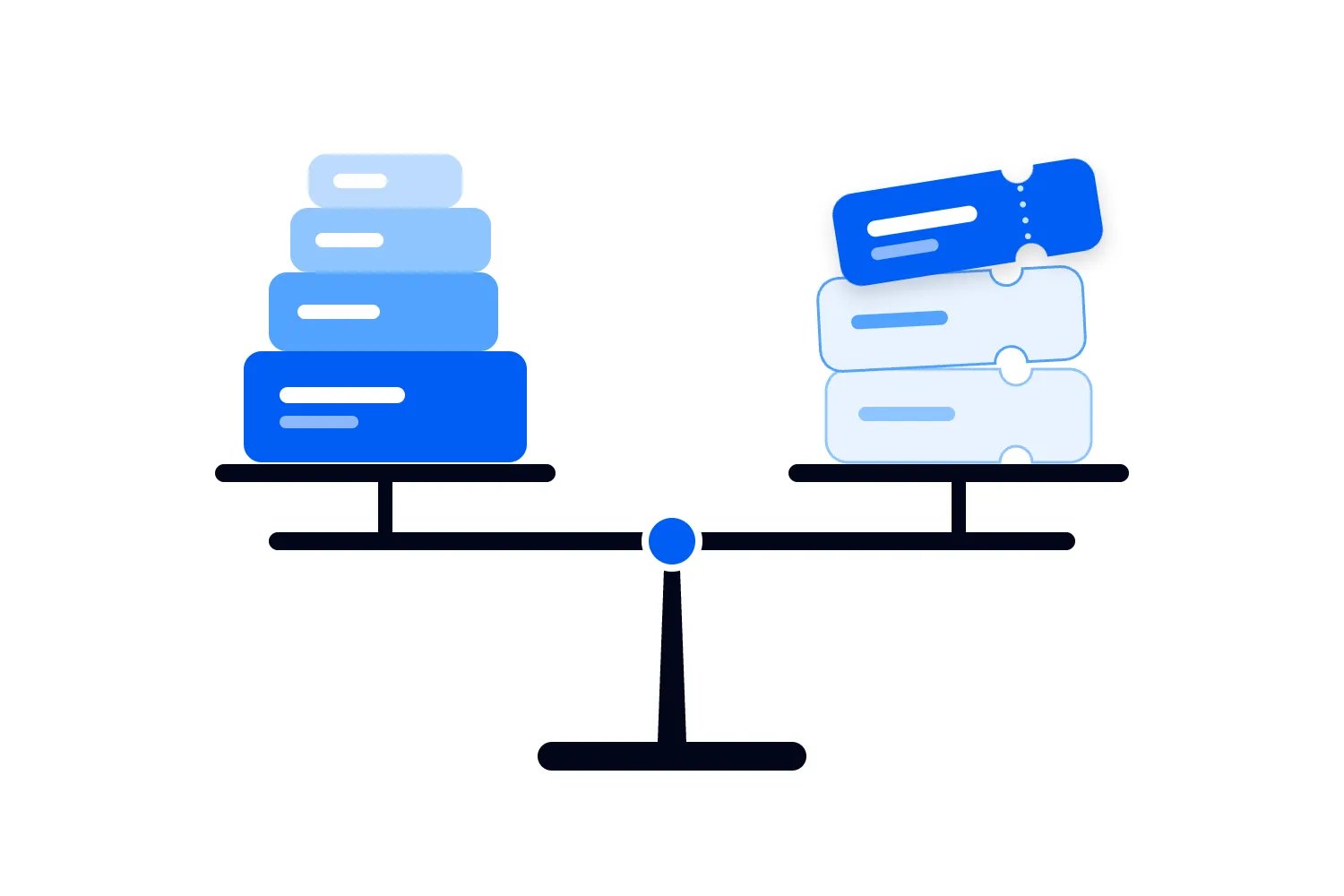
Your simpler alternative uses existing tools and 40 staff hours at the same $30 rate, with no additional supplier charge. Its economic cost is $1,200. Buying the platform therefore adds $4,200 compared with that alternative. You aren't deciding whether networking is worth $5,400 in isolation; you're deciding whether the upgrade justifies another $4,200.
| Label | Licence | Supplier setup | Staff time | Extra support |
|---|---|---|---|---|
| Networking platform | 3600 | 600 | 900 | 300 |
| Simpler option | 0 | 0 | 1200 | 0 |
Now suppose you estimate that the improved offer will produce 20 additional paid registrations, each contributing $120 after the variable costs of serving that delegate. That gives you $2,400. You also assume $2,000 of additional sponsor contribution after any costs of delivering the sponsor benefits. Together, the assumed benefit is $4,400.
That leaves only $200 above the additional cost. It's a narrow case that depends on both assumptions working. You haven't established that the platform causes those extra bookings, and an enthusiastic sponsor conversation is weaker evidence than an agreed package. I wouldn't approve the purchase on that forecast alone.
Try a weaker result. Ten additional registrations contribute $1,200, and additional sponsor contribution reaches $1,000. The total is $2,200, which leaves you $2,000 short of the $4,200 upgrade cost. Ask whether your business can accept that outcome while learning enough to make the next decision better.
Notice that the platform saves ten staff hours in this example. Don't add another $300 benefit: the cost comparison already includes those different labour totals. Likewise, don't count a sponsor renewal twice as retained revenue and new sponsorship. A plausible spreadsheet can still overstate value when the same improvement appears in several places.
For cash planning, distinguish released time from avoided expenditure. If your salaried coordinator finishes ten hours earlier, you have capacity for other work, but the salary bill may stay the same. If you cancel ten hours of external administration you would otherwise buy, the cash saving is different. Both improvements can matter. Describe which one you expect, and check that the people responsible for delivery agree with the estimated hours.
Keep attendee value separate from your own revenue
A delegate might meet a future client whose business is worth far more than their conference ticket. That's valuable to them. It doesn't mean you can put the client's contract value into your software return calculation. Your business earns ticket and sponsorship income, and those improvements need their own evidence.
The same applies to an exhibitor's sales prospects. Your event may help create a useful conversation, but you don't receive the exhibitor's future sales revenue. The commercial connection for you might be a sponsor renewing or paying for a clearly defined additional service. Keep that separate from the sponsor's internal estimate of potential business.
Be precise about what you're selling. Providing a searchable directory is different from arranging an introduction that both people accept. Offering an appointment request is different from guaranteeing that the other person attends. Your software purchase should support the promises in your ticket description and sponsorship agreements, rather than quietly expand them.
Ask sponsors which evidence they actually need. An export of everyone who opened the app may tell them less than a smaller set of relevant conversations they chose to continue. Our guide to measuring sponsor booth engagement explains why activity counts need context before you describe them as commercial results.
You can still justify a purchase partly through attendee experience. Perhaps better peer access is central to the ticket promise, and your current process consistently fails. Explain that as a service improvement with an agreed budget. Don't manufacture a precise sales return because the experience is difficult to express in dollars.
If a supplier offers a case study, read what changed besides the software. A new audience, stronger speakers or a redesigned programme could explain some of the result. Ask what the figures measure and which costs they include. Use the example to understand a possible application, then test whether the same conditions exist at your conference before using it to support your own revenue forecast or renewal decision.
For renewals, look for evidence connecting the service to buying decisions. Returning delegates may mention useful introductions, and sponsors may ask to repeat the arrangement. Those are useful signals. They still need to be read alongside pricing, speaker quality and other changes before you credit the platform with the conference's whole improvement.
Test whether delegates can actually use it
Invite prospective users to try the experience before committing. Include people attending alone, someone whose employer booked their ticket and people who are less comfortable installing another app. Let them use their own devices where practical. Watching them attempt a real task will tell you more than asking whether the screenshots look attractive.
Give them the purpose, then stop helping. Ask them to find a relevant person, understand what information is visible and decide whether to send a request. Note where they hesitate, abandon the task or ask for support. A test that only succeeds with your coordinator explaining every screen hasn't shown that delegates can manage independently.
Check access requirements during selection. W3C's web accessibility evaluation guidance explains that automated tools alone cannot establish whether a website is accessible; knowledgeable human evaluation is needed. Ask for evidence covering the actual participant journey, and include people with relevant access needs in testing when you can.
For the web experience, examine keyboard use, readable text, form instructions and error messages. For a native app, ask for evidence about that app as well. A report about the supplier's marketing website says little about whether a delegate can complete their profile or respond to a request in the product you're buying.
Have a practical alternative for participants who cannot use the service. Decide who assists them and which advertised benefits remain available. If the fallback requires staff to recreate every booking manually, include that work in the cost estimate. Accessibility and support should influence the purchase while you can still choose another option.
Usability also affects the launch workload. If the system fits the audience, explain one useful action in the invitation and help people complete it. The wider event app adoption plan can help with that communication. Extra reminder emails won't repair a product people cannot sign into or understand.
Check privacy and security before importing registrations
A networking tool may expose information to other attendees, sponsors and the supplier's own services. Ask for a clear explanation of who sees each field and why. A delegate may be happy to share their professional interests while wanting their email address, accessibility information or private notes to remain restricted.
Ask the supplier to demonstrate the visibility settings using participant and sponsor accounts. Check the default, what a delegate can change and whether opting out affects other conference access. Look at exports too. A screen can hide a field while a downloadable report reveals it to people who don't need it.
When UK GDPR applies, the ICO's guidance on contracts with data processors explains the contract requirements for those relationships. Establish the supplier's role for each use of attendee information and have the relevant terms reviewed. The ICO currently flags that guidance as under review following legislative changes, so check the current position before signing.
Ask about other companies involved in processing, where information is handled, how deletion works and what happens after the agreement ends. If the supplier wants to use participant information for a separate purpose, such as training its own models, resolve that explicitly. Don't assume permission to operate a conference directory answers every other use.
For security, the UK's National Cyber Security Centre provides guidance on choosing a cloud provider. It links the level of assessment to the sensitivity of the information and intended use. Ask for evidence appropriate to your conference, including access controls, incident handling and how responsibility is divided between your team and the supplier.
Make the operational questions concrete. Can a sponsor representative see private delegate messages? Can you remove an administrator's access promptly? Who answers if an account is compromised during the conference? Give your team only the access they need, and keep private access information out of shared networking profiles. Resolve unanswered questions before uploading the audience.
Buy support that covers your actual event
Find out who provides help when the conference is running. An account manager available during ordinary office hours may be useful during setup and unavailable during your opening session. Give the supplier your event dates, location and working hours, then confirm the support coverage in writing.
Distinguish an acknowledgement from a repair. A promise to answer a message tells you little about when delegates can resume booking conversations. Ask how urgent problems are classified, who can investigate them and how your coordinator receives updates. You need enough detail to plan around an interruption without demanding an unrealistic guarantee that nothing will fail.
Check your own responsibilities as well. Who tests registration updates before launch? Who approves participant emails? Who decides whether to pause invitations if the wrong records arrive? Assign these jobs early. A managed service can include supplier work, but your organisation still has to make decisions about the event and its promises.
Ask for a rehearsal that includes a failure. Use fictional data to create an invitation problem, an incorrect entitlement or a booking conflict. Watch how the supplier and your team diagnose it. The exercise should show who takes the next action, rather than end with everyone agreeing to contact someone else.
Confirm the access period after the conference. Delegates may want to continue a conversation, and your team needs time to review results. Find out when accounts close, when reports must be exported and whether extending access costs extra. Put any promised follow-up period into the agreement and your attendee communications.
Have a fallback that your team can explain calmly. It might be a staffed help point or a simpler introduction process while the service is unavailable. Choose what you can actually deliver within the programme. If the only fallback is abandoning a benefit sold prominently with the ticket, consider that before accepting the contract.
Run a pilot with a decision attached
A pilot is useful when it tests the uncertainty stopping you from buying. If you don't know whether delegates will complete profiles, test that journey. If your concern is unreliable registration updates, test changes and cancellations. A successful demonstration of some unrelated feature won't make the original concern disappear.
Choose participants who resemble the audience you need to serve, rather than only your most enthusiastic regulars. Explain the trial's scope and keep the full conference promise fair for everyone. A pilot should not quietly deny a paid benefit to people outside the test group.
Before starting, define what counts as completion. GOV.UK's guide to measuring completion rate stresses defining the start and end of a transaction consistently. For your trial, distinguish receiving an invitation, activating an account, making a request and completing a conversation. Those actions answer different questions.
Write down what evidence would change the buying decision. You might require delegates to complete the essential task without staff help, suitable recommendations across your participant groups and a workable report your coordinator can explain. Set your own thresholds using the event's needs. A supplier's typical engagement rate isn't automatically the right target.
Ask people who stopped partway through what happened. GOV.UK's user satisfaction guidance recommends gathering feedback from people who drop out as well as those who finish. Apply that principle here. The participants missing from the results may reveal the most expensive support problem.
Include a review date before the contract decision and name the person who can approve, decline or extend the test. A trial that rolls into an annual commitment before you inspect the evidence has failed as a buying process, even if the participants enjoyed using the software.
Keep a short record of each trial problem and what changed. If the supplier fixes an invitation issue, repeat that task with someone who hasn't seen the explanation. Otherwise, you may mistake a participant learning a workaround for a product becoming easier to use. Record your team's help as well. A completed task supported by several private messages should not appear in the results as an entirely independent success.
Review the smaller participant groups separately before accepting an encouraging average. Returning delegates may understand the event's language while first-time visitors find the profile questions confusing. Company bookers may activate accounts easily while the people actually attending never receive the invitation. Those differences tell you whether the next change belongs in the product, registration connection or communication plan. They also help you avoid buying a service that works mainly for the people who needed the least help.
Renew against useful outcomes and the next quote
After the conference, combine the platform report with participant feedback and the team's actual hours. Separate messages and requests from conversations people confirm were useful. Record how many people answered your questions, and avoid treating the respondents as the whole audience. Keep sponsor results specific to the service you agreed to provide.
Use your post-event survey to ask what helped and what prevented useful introductions. Speak with people who didn't participate too. Compare their answers with the support record and the purchase brief. If the main problem remains, another year of the same platform needs a different justification.
Check the notice deadline while there's still time to act. Confirm whether the agreement renews automatically, what price applies and which records you can retrieve before access ends. Ask for a sample export during selection, then verify that your team can read it without the supplier's dashboard. You may need attendance and delivery evidence after switching tools, but that doesn't justify retaining private messages or profile details indefinitely. Keep only what you have a proper reason to keep under the rules applying to your event.
Finally, price the next edition using the new quote and your actual workload. Renew when the service solved a worthwhile problem at a cost you can defend, and agree the changes needed before signing. If the evidence is weak, ask for a narrower package or return to the simpler programme. Ask the supplier to put the revised price, agreed changes and cancellation deadline into the renewal offer.

Author: By the Loopyah Content Team
The Loopyah Content Team shares expert insights, practical guides, and industry updates to help event organizers create unforgettable experiences and stay ahead in the event planning world.