· 27 min read
How to model best-case and worst-case profit for a paid event
Your event budget shows a profit, but it depends on selling enough standard and premium tickets while keeping production at a price the supplier hasn't confirmed. How much confidence should you put in that number before paying the next deposit?
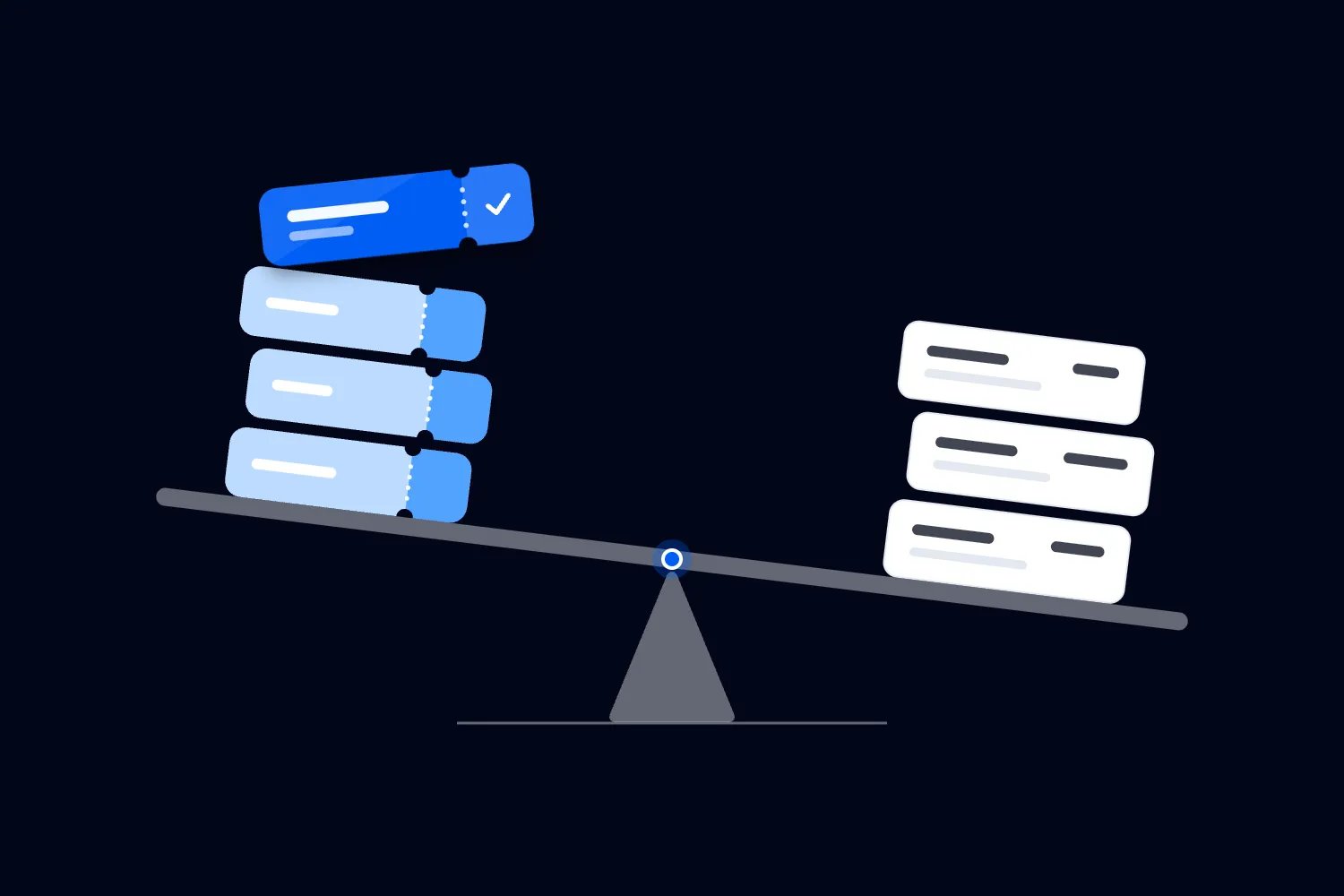
Model a few believable versions of the event. Start with your current sales and cost estimate, then change the assumptions that could move together in a weaker or stronger result. Recalculate ticket revenue, delivery costs and the final profit for each version. The useful answer is whether you can afford the weaker outcome, what has to happen for the stronger one, and which commitment you should make next.
That's event budget scenario analysis. You can do the arithmetic in a working budget or inspect the assumptions in your event finance tools. The difficult part is deciding which numbers belong together. A busy room can need more staff. A late discount can lift ticket quantity while reducing the money each sale leaves behind. A quieter event can still owe the full catering minimum.
We'll work through one fictional paid event, including a loss, a modest profit and a stronger result with extra costs. Then we'll use those outcomes to test discounts, refunds, cash and supplier deadlines. Every worked amount is an invented USD assumption for explaining the method, not a typical event cost, a forecast for your business or a Loopyah customer result.
Start with the decision you need to make
Before changing attendance numbers, name the commitment you're considering. Perhaps the venue wants a non-refundable balance. Perhaps you can still reduce the production package, or you're deciding whether to open another ticket allocation. Each decision needs a view of what the event could earn and what you could still change.
Write the decision and its deadline above the forecast. "Approve the additional room by Thursday" is useful. "Improve profitability" leaves you with no particular question to answer. You'll choose different tests when you're considering a small optional purchase than when you're committing most of your remaining cash.
Keep the original approved budget available. It's the plan you authorized at the time. Your latest forecast is what you now expect the final event to earn and cost. Scenarios are alternative outcomes under stated assumptions. You need those distinctions when someone asks why today's working estimate differs from the budget approved before tickets launched.
Business Queensland's budgets and forecasts guidance recommends documenting assumptions, updating forecasts with current information and considering different outcomes under uncertainty. For your event, the practical application is to explain the conditions behind each result before approving more spending.
If you're using Loopyah's event CRM, start with its financial view. Connected sales, refunds, fees and other supported transactions come in automatically; you add your event costs. It provides projected profit and break-even information, with conservative, estimated and sellout views. Use those existing records and projections when reviewing the assumptions below, then check the supplier terms and commercial decisions that need your team's judgment.
You don't need to retype your whole sales history to understand a scenario. You do need to know whether the costs describe the event you'll actually deliver. A copied quote from the previous date may be a sensible starting estimate, but a different venue or access schedule can change the bill.
Make each scenario describe a believable event
Start with a working case supported by what you know today. Use actual paid sales, the remaining ticket inventory, current supplier terms and a reasoned estimate of future purchases. Then write a short explanation of a weaker outcome and a stronger one.
For the weaker case, explain what goes wrong together. Premium buyers might book more slowly while standard admission continues selling. You might need a discount to reach a different audience. An unresolved production requirement might also increase the quote. Those are different causes, and you should be able to explain why you've included them in the same version.
The stronger case needs its own explanation. Perhaps a confirmed programme announcement supports more standard sales, and premium demand reaches the allocation you can actually serve. That can also create extra staffing or room costs. Don't improve every revenue assumption and reduce every expense simply because the column says best case.
Call these your weaker and stronger trading cases if "worst" and "best" suggest more certainty than you have. A realistic weak-sales case isn't necessarily the largest loss the business could ever suffer. Cancellation, major disruption or a supplier failure may require separate tests with different obligations. A high-sales case also isn't a ceiling if you've excluded another credible way of earning revenue.
Most importantly, don't call the middle case the most likely outcome just because it's in the middle. Explain why you use it for today's decisions. If you have little relevant history, say the sales estimate is provisional and keep more flexibility in the commitments it supports.
Choose the cases before judging which result you prefer. Otherwise it's easy to adjust the assumptions until the event passes. The purpose is to find a decision you can defend when sales disappoint, rather than produce several reassuring profit numbers.
Separate tickets sold, revenue earned and people served
An attendance assumption alone won't calculate profit. You need to know how many paid tickets sell at each price, what refunds or discounts reduce those sales, and how many people create service costs. Complimentary guests can use capacity and catering without generating ticket revenue.
Keep ticket categories separate when their economics differ. Early admission, standard admission and a premium package can have different prices and different delivery costs. A premium ticket that includes food or another benefit doesn't contribute its entire price difference to profit.
For each category, record the actual selling price after discounts and the number of valid paid admissions you expect to retain. If you're starting from original sales instead, deduct cancelled and refunded tickets consistently. Preserve the revenue and fees associated with those transactions so a refund doesn't disappear merely because the admission count falls.
Use the same basis across every scenario. If one version counts original tickets issued while another counts tickets remaining after refunds, the comparison will mix demand with different counting methods. Count orders separately where your fees depend on orders. A booking for several people can create a different charge from several individual bookings.
ACCA, the professional accounting body, explains in its cost-volume-profit analysis that sales mix and changing cost behaviour affect the result. Applied to tickets, the lesson is straightforward. You can't assume that a cheaper ticket replacing a premium sale leaves the event in the same financial position just because the total ticket count is unchanged.
No-shows need separate treatment too. Someone who keeps their paid ticket but stays home usually leaves ticket revenue unchanged. Whether their absence reduces a meal or materials charge depends on what you've ordered and agreed to pay. Budget the billable quantity, rather than assuming every empty seat saves money.
For help estimating how many tickets will sell, use our ticket sales forecasting guide. Use that estimate as the starting ticket quantity here. The profit scenarios then ask what those sales would leave after the costs required to achieve and serve them.
Work through the current estimate first
Let's use a fictional event with 500 places available for paid tickets and a separate allocation of 20 complimentary guests. Those figures assume the venue assessment and other occupancy requirements have already been resolved. They aren't a method for calculating safe capacity. Premium delivery can support at most 80 paid guests in this example.
The current estimate is 100 early tickets at $40, 220 standard tickets at $60 and 40 premium tickets at $100. That's 360 retained paid tickets. For the main comparison, assume no refunds, no resale and no additional discounts. We'll test refunds separately later, without changing these main cases.
Early tickets bring in $4,000. Standard tickets bring in $13,200. Premium tickets bring in $4,000. Total ticket revenue is $21,200. The early allocation sells before standard admission, while premium tickets are offered separately. No scenario assumes more than 100 early tickets.
The organizer absorbs a fictional selling cost of 4% of ticket revenue. That's $848 in the current estimate. This is an invented charge for the calculation, not Loopyah pricing or a payment provider quote. Real fees can include fixed charges, different payment methods and different treatment after refunds.
Each retained early or standard ticket costs $8 to serve. Each retained premium ticket costs $24, including its additional benefits. The current paid guest service cost is therefore 320 ordinary admissions at $8, plus 40 premium admissions at $24. That's $2,560 plus $960, or $3,520.
The 20 complimentary guests each cost $8, adding $160. The event also has $15,000 of venue, programme, production, staffing and other fixed delivery costs within this scenario's size. Add $2,000 of allocated business overhead. The paid guest service costs, complimentary guest costs and overhead aren't included in that $15,000.
A signed sponsorship adds $4,000 of revenue and requires $800 of delivery costs. We show both amounts separately. The sponsor uses no additional guest places in this example. If your package includes admissions, include those places and their costs wherever you account for sponsor benefits, once.
Total revenue is $21,200 of tickets plus $4,000 sponsorship, or $25,200. Total costs are $15,000 fixed delivery, $2,000 overhead, $160 complimentary service, $3,520 paid guest service, $848 selling costs and $800 sponsor delivery. They add to $22,328, leaving $2,872 of projected operating profit before financing and income tax.
All example prices and costs use a consistent tax basis with no separate tax adjustment required. There's no additional contingency expense hidden in the total. The fixed delivery allowance includes paid organizer work, while the overhead allocation covers the chosen share of business costs. Your own accounts may need other entries. Our event profit and loss template explains how to reconcile the final statement.
Change the ticket mix and costs in the weaker case
Now imagine standard sales finish below the current estimate and premium demand is weaker too. The event retains the same 100 early sales, but finishes with 140 standard tickets and 20 premium tickets. That's 260 paid tickets. A previously unresolved production requirement also increases fixed delivery costs by $900.
The $900 is a separate adverse quote assumption, not a charge caused by lower attendance. We include it to see what happens if weak sales coincide with a cost increase the team has not yet ruled out. If the quote is confirmed at the lower price before your decision, remove that uncertainty from the current assessment.
Ticket revenue becomes $4,000 early, $8,400 standard and $2,000 premium, totalling $14,400. Selling costs at the invented 4% are $576. Paid guest service is 240 ordinary admissions at $8 plus 20 premium admissions at $24, or $2,400.
The sponsor still pays $4,000 and still costs $800 to serve. Keeping the signed package unchanged lets us see the sales and supplier effects clearly. This isn't a claim that sponsor income always survives lower attendance. Your actual agreement may contain delivery conditions or remedies that need their own scenario.
Fixed delivery costs are now $15,900. Overhead remains $2,000 and complimentary service remains $160. Add paid service of $2,400, selling costs of $576 and sponsor delivery of $800. Total costs are $21,836 against $18,400 revenue. The weaker case makes a $3,436 operating loss before financing and income tax.
Compare it with the current $2,872 profit. Profit falls by $6,308. Ticket revenue drops $6,800, paid service costs fall $1,120 and selling costs fall $272. The additional production requirement costs $900. Those changes explain the whole movement, without treating the lower service bill as a purchasing achievement.
That's the commercial issue you need to decide on. Can the business absorb the $3,436 loss as well as meet its other commitments? Which uncommitted items could reduce it without breaking the offer you've sold? If you can't accept this outcome, identify the change required before authorizing another non-refundable order.
Let stronger sales bring their actual delivery costs
For the stronger case, keep 100 early tickets, increase standard sales to 300 and fill the 80-place premium allocation. That gives 480 paid tickets, still below the 500 paid places available. The original fixed delivery quote stays at $15,000 because the adverse requirement in the weaker case doesn't occur here.
The supplier arrangement in this fictional example adds $1,200 when retained paid admissions exceed 450, with the 20 complimentary guests unchanged. It covers an agreed additional delivery package at that size. This is an illustrative commercial threshold, not a staffing ratio or safety recommendation. Your event's assessment, venue and supplier terms determine the service you need.
Ticket revenue is now $4,000 early, $18,000 standard and $8,000 premium, or $30,000. Selling costs are $1,200. Paid guest service is 400 ordinary admissions at $8 and 80 premium admissions at $24, totalling $5,120.
Add the unchanged $4,000 sponsor income and total revenue is $34,000. Costs are $15,000 fixed delivery, $1,200 additional delivery, $2,000 overhead, $160 complimentary service, $5,120 paid service, $1,200 selling costs and $800 sponsor delivery. Total costs are $25,480. Projected operating profit is $8,520 before financing and income tax.
The stronger case earns $5,648 more profit than the current estimate. Ticket revenue increases by $8,800, while paid service costs increase $1,600, selling costs increase $352 and the delivery package adds $1,200. Subtract those extra costs and the improvement reconciles.
More sales help here because the additional revenue covers their associated costs. Don't assume the same relationship at every quantity. An extra room or a larger technical package could make the next group of sales much less attractive than the previous group.
In Great Britain, HSE's crowd safety assessment guidance asks organizers to consider expected attendance and venue suitability, including safe capacity. Use the applicable assessment and requirements for your location. A profitable high-sales forecast doesn't authorize more admissions or less provision than your event can safely accommodate.
Find the assumption that could change your decision
Once the main scenarios are complete, test important assumptions individually. This is often called sensitivity analysis. It means holding the other inputs steady so you can see how one change affects profit. The combined scenarios show possible events; the individual tests help you find the cause worth investigating first.
Take the current estimate and replace 20 of its premium sales with 20 standard sales. Total paid quantity stays at 360. Ticket revenue falls by $800 because each replacement earns $40 less. Paid service costs fall by $320 because the ordinary admission costs $16 less to serve. Selling costs fall by $32. Profit falls by $448, from $2,872 to $2,424.
Now you can see why an overall ticket target can be misleading. A sales report saying you're on track for 360 tickets hasn't confirmed the original profit if premium sales are becoming standard sales. Ask the person responsible for premium demand whether the remaining forecast is still supported.
You can also check a cost uncertainty on its own. If the $900 production increase occurs at the current ticket estimate, profit becomes $1,972. That helps you distinguish a manageable cost change from the combined downside, where weaker sales and the same increase produce a loss.
Keep the relationships intact when testing attendance. If you add enough tickets to trigger the additional delivery package, include it. If a smaller audience still owes a supplier minimum, retain that bill. A test that changes quantity while ignoring the relevant contract answers a question your actual event can't experience.
The US Small Business Administration's break-even guidance separates fixed and variable costs and discusses costs with both elements. For an event, read the quote to find those behaviours. "Catering" can mean a fixed minimum plus additional meals, while "production" can include a fixed package plus overtime.
Use our event break-even guide when you need the ticket requirement under a particular set of assumptions. Recheck the ticket mix and cost range behind that threshold whenever the plan changes. One break-even number shouldn't quietly represent every scenario.
Look closely at the next cost increase
It's worth testing either side of a supplier threshold when you're close to it. For a separate illustration using the same fictional terms, suppose you have 100 early tickets, 300 standard tickets and 50 premium tickets. That's 450 paid admissions, so the additional $1,200 delivery package hasn't been triggered.
Ticket revenue is $27,000. Selling costs are $1,080 and paid guest service costs are $4,400. Keep the original $15,000 fixed delivery, $2,000 overhead, $160 complimentary service, $4,000 sponsorship and $800 sponsor delivery. Total revenue is $31,000 and total costs are $23,440. Operating profit is $7,560.
Sell one more standard ticket and it contributes $49.60 before the additional package. But the package now costs $1,200, so profit falls by $1,150.40 to $6,409.60. The next ticket has brought in revenue while the required delivery change has reduced the overall result.
Under these particular assumptions, 25 additional standard tickets contribute $1,240 and cover that $1,200 increase, leaving $40 more profit than at 450. Their total is 475 paid tickets, inside the example's paid capacity. That doesn't predict that 25 buyers are waiting. It tells you what the proposed expansion has to achieve to improve the result on this ticket mix.
Ask the supplier about the complete service package before deciding whether to expand. If the larger package is necessary to deliver your existing commitments, include it regardless of whether the sales look attractive. If you can legitimately cap the allocation at the smaller size, compare the lower capacity with the larger offer and its likely demand. Don't remove required staffing or invent a capacity limit solely to preserve a flattering calculation.
These threshold tests aren't additional outcomes to add to the earlier profits. They're separate views of how the same pricing and cost rules behave near a particular decision. Keep the quantities on each version so someone reading it later can reproduce the result.
Check whether a rescue discount actually helps
Suppose the weaker scenario looks uncomfortable and someone proposes another discount. You're hoping a lower price will attract buyers who wouldn't otherwise attend. It might. But you need to compare the extra sales with the revenue lost from buyers who would have paid the ordinary price.
For a separate test, offer standard admission at $50 instead of $60. At the invented 4% selling cost and $8 service cost, each additional $50 sale leaves $40 towards the other costs. The original $60 ticket leaves $49.60 on the same basis. These are contribution amounts, meaning the revenue remaining after the costs created by that ticket.
Assume 30 standard purchases still to come use the offer, although those buyers would otherwise have paid $60. Each leaves $9.60 less contribution, so the discount reduces contribution by $288 before attracting any extra buyers. You need eight genuinely additional $50 sales to exceed that loss, assuming no further campaign expense or delivery threshold is triggered.
If the offer attracts 12 additional buyers, their contribution is $480. Subtract the $288 lost on the 30 replaced purchases and the improvement is $192. Apply that to the weaker case and the loss becomes $3,244. The offer improves the result under these assumptions, but it hasn't made the event profitable.
Those extra 12 sales are a chosen test, not a prediction about price sensitivity. You need evidence to support the likely extra demand. Count promotional spending, partner commission or additional service requirements if they apply. A larger sales quantity can still leave a smaller profit when those effects are included.
Also check who receives the offer and how it changes your existing releases. On Loopyah, ticket releases have their own prices and quantities, with the next release opening when the previous one sells out. Make sure the offer you're testing matches what buyers can actually purchase, rather than assuming a different price structure from the one on sale.
If you can't explain where the additional buyers would come from, keep the no-improvement version available. Reducing the price is a commercial action with uncertain demand effects. It shouldn't automatically improve the forecast just because the team needs the event to recover.
Keep refunds and supplier minimums visible
The main examples assumed no refunds so the ticket mix was easy to follow. Your real event may need a refund allowance or a separate refund stress test, based on its terms and experience. Apply future assumptions only to sales still exposed to them, and keep completed refunds as actual transactions.
For another separate test of the current estimate, suppose 20 standard buyers receive full $60 refunds after the service order is locked. Their tickets aren't resold. Assume the original selling costs aren't returned and the service bill doesn't reduce. Ticket revenue falls by $1,200, costs stay unchanged and operating profit falls from $2,872 to $1,672.
Retained paid admissions fall to 340, but the paid guest service bill remains the original $3,520 under those chosen terms. If you instead multiply the lower count by the service rate, you'd report a saving that the supplier hasn't agreed to provide. The cancelled tickets are gone; their ordered meals can still be payable.
If the supplier genuinely permits the 20 ordinary service units to be removed, the $160 reduction changes this separate result to $1,832. Use the actual agreement to decide which version belongs in your forecast. Check fee treatment too, because retained or additional refund charges can change the result.
Minimums require the same discipline before refunds happen. A food order guaranteed above your expected attendance doesn't become cheaper when sales slow. Show expected guests and billable units separately. Ask whether you can reduce the guarantee before its deadline, and record the revised agreement before claiming the saving.
Keep these tests clearly labelled when sharing them. The refund result changes the current estimate only for this illustration. It doesn't silently update the earlier weaker and stronger cases. If refunds become part of the latest trading forecast, rebuild every affected scenario consistently and date the new versions.
Decide what you can afford before the commitment date
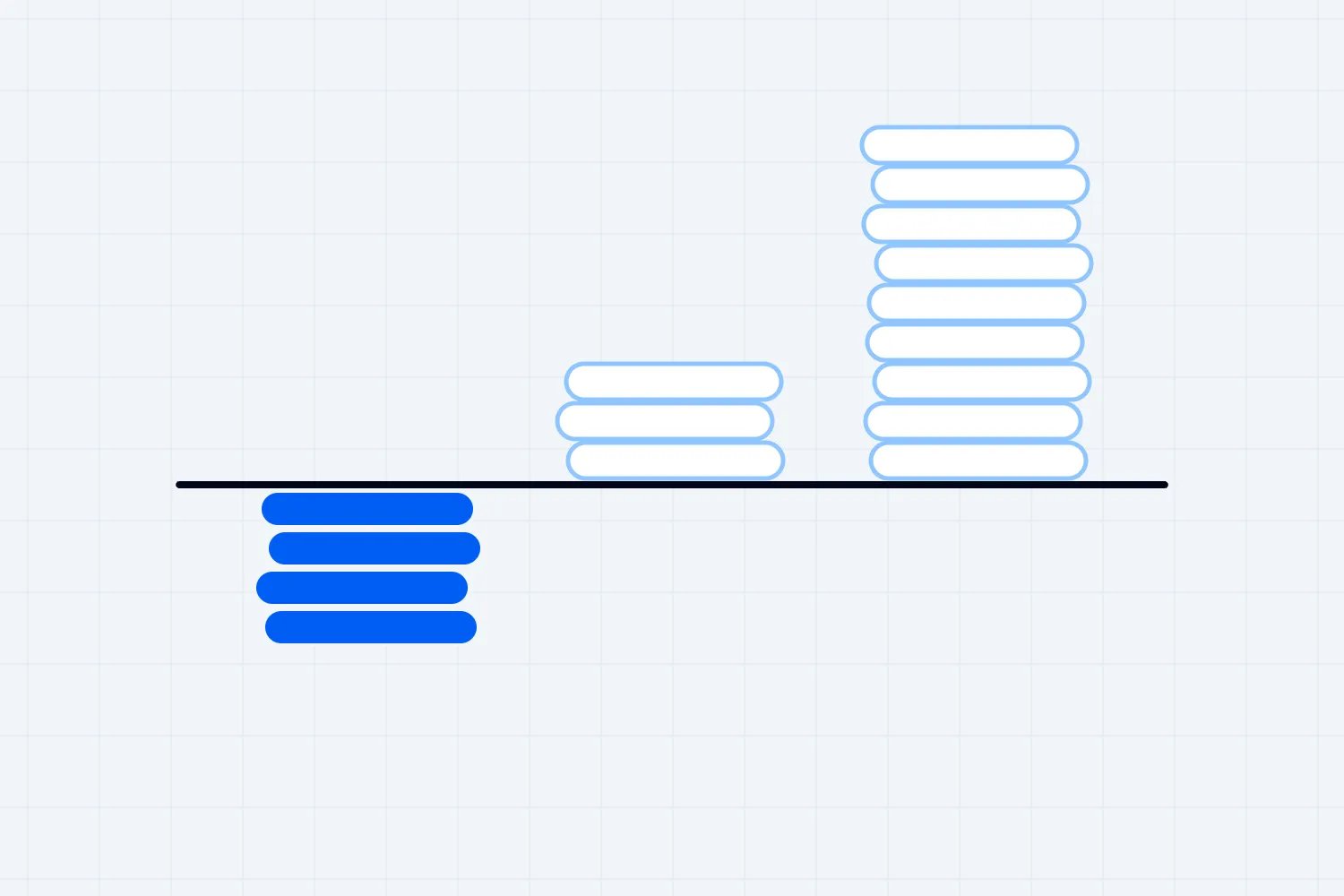
The current estimate earns $2,872, but the weaker case loses $3,436. Whether to proceed depends on your ability to bear that loss, the evidence behind both estimates and the alternatives still available. A profitable middle column doesn't settle the decision.
Choose an acceptable loss limit for this event before looking for a nicer forecast. Base it on your available business funds, other commitments and the reason for running the date. An established operator might deliberately test a new format with an approved loss allowance. That still needs a limit, funding and a clear learning objective.
For an illustrative decision, suppose this event's owner can accept at most $2,000 of operating loss on the same cost basis. The weaker case exceeds that limit by $1,436. That is the improvement needed to meet the chosen limit, not the amount needed to reach break-even. Break-even still requires the full $3,436 improvement.
Now investigate changes you can actually agree. If removing an optional feature avoids $1,600 of future work but costs $200 in change charges, the net saving is $1,400. The weaker loss becomes $2,036. You're still $36 outside the chosen limit, even though rounding might make the proposal sound good enough.
Check that the feature wasn't promised to buyers or sponsors and that removing it won't reduce sales. Confirm the supplier accepts the revised amount. This alternative belongs beside the original weaker case until the change is agreed. Don't delete the cost because someone plans to ask for a reduction.
If the only way to proceed is to believe a much stronger finish than current evidence supports, pause the next optional commitment and review the event's scope. Where cancellation or postponement becomes a real option, compare the remaining obligations and buyer remedies carefully. Our event cancellation decision guide covers that separate assessment.
Money already spent still belongs in the full-event result. But when comparing the choices available today, distinguish unavoidable past costs from future amounts each choice changes. A decision can reduce the eventual loss without making the whole event profitable. Show both results so nobody mistakes the better remaining option for a successful original budget.
Run the cash check for each important case
A profit scenario shows what the event is expected to earn after its costs. It doesn't tell you when those receipts become available or when the bills fall due. The strongest trading result can still need extra cash before event day.
Australia's business.gov.au cash flow statement guidance uses opening cash, incoming money and outgoing payments to calculate the closing balance. Apply that date-based check to each scenario that might affect a commitment, using actual payout arrangements and supplier payment dates.
Here's a small, separate cash illustration. At a review date, the event has $6,000 available for its remaining payments. Another $4,000 of ticket money is expected before the next supplier deadline, when $12,000 is due. That leaves an unfunded $2,000 shortage at the deadline. The arithmetic is $6,000 plus $4,000 minus $12,000.
Suppose the same forecast also includes $5,000 arriving after the deadline. That later receipt doesn't pay the earlier bill. If only the receipt date moves, with no change to revenue or costs, the profit result stays the same. The cash problem changes because the money becomes available too late.
Arrange the funding or agree a changed payment schedule before treating that plan as deliverable. Borrowing can cover a timing gap, but it isn't ticket revenue. Include any interest or fees in the relevant profit view and repayments in the cash schedule. Keep money needed for taxes, refunds and other events out of available funds unless it can legitimately be used.
Check cash availability and the acceptable loss separately. You might have enough money to pay every bill while expecting a loss larger than the owner has approved. Equally, a profitable event can need temporary funding before its ticket receipts arrive. Both conditions need to work before you commit.
Loopyah's financial view separates cash already paid out from money on the way. Use that current information alongside the future supplier dates you're reviewing. Our event cash-flow forecast guide develops the full calendar, including shortages hidden inside an apparently positive week.
Use a short scenario record the team can challenge
You should be able to discuss the scenarios without reconstructing every formula in the meeting. Keep one dated record with the shared assumptions, the cases and the next decision. Store the calculations and evidence where the person checking them can find them.
For each case, use these fields:
The situation being tested, including what changes together and why.
Paid quantities and actual prices by ticket category, with complimentary and sponsor admissions separately identified.
Refunds, selling costs and the quantities suppliers will actually charge for.
Confirmed other revenue, its delivery costs and any conditions that could change it.
Fixed delivery costs, quantity-driven costs, additional packages and allocated overhead.
Projected operating profit on the stated basis, the earliest cash shortage and the decision required before the next deadline.
Next to each uncertain assumption, record its evidence and owner. A signed quote, a provisional supplier estimate and a hoped-for reduction shouldn't look identical. Add the date by which you need confirmation. That lets a colleague challenge the right part of the scenario instead of arguing about the whole event.
For this fictional event, the review would say that premium demand and the unresolved production requirement could materially change the result. The producer needs to confirm the quote before the next commitment. Whoever owns premium sales needs to explain the remaining demand estimate using current purchases and the planned offer.
Check that the cases still describe the same offer
Before sharing the record, compare the event description behind each case. Does the stronger result include a new attraction? Does the weaker result remove a room, meal or promised recording? Those can be useful alternatives, but the changes need their own costs, revenue effects and approvals. Label them as revised offers so the team can distinguish a demand scenario from a change to the product buyers receive.
Check inventory as well. The premium quantity can't exceed the benefits you can deliver, and group purchases need to use the appropriate number of admissions. Keep sponsor guests, complimentary guests and production holds consistent with the capacity assessment. A scenario that increases paid tickets by quietly removing guest allocations needs an actual decision to release those places.
Look for costs that appear twice when someone copies a supplier total. A deposit already included in the contract doesn't become another expense. Sponsor delivery deducted from net sponsor income mustn't also appear in full among general costs. Keep the treatment used in the current estimate throughout the comparison, or reconcile the change explicitly.
Finally, ask a colleague to read the explanation before checking the arithmetic. They should be able to tell you what caused the loss and what would improve it. If they can only repeat the final number, develop the reasoning. A correct total attached to an unexplained sales assumption still gives the approver very little to judge.
Keep the current estimate, the weaker case and the proposed response together. If you add the optional feature reduction, show both the original $3,436 loss and the conditional $2,036 loss. The reviewer can then see exactly what the supplier must agree before the forecast improves.
Don't give each case a probability unless you have a defensible basis for doing so. Assigning neat percentages and calculating an average profit can make judgment look measured. If a low-probability loss would threaten the business, an attractive average doesn't remove the need to fund or avoid that exposure.
Update the cases when evidence or commitments change
Use actual quantities and prices for sales already completed. Forecast the remaining tickets separately. You can't improve the whole event's average price retrospectively by assuming that early buyers paid the later standard price. Preserve what happened, then change only the part of the forecast that remains uncertain.
Check each case after a material change in sales mix, supplier terms, refund exposure or delivery scope. Also review before the next commitment deadline, even when the sales total seems healthy. The important date might be the last chance to reduce a food guarantee, rather than your regular weekly meeting.
If the weaker case has already been overtaken by actual sales, build a new believable weaker case from today's position. Don't retain an impossible low total simply because it appeared in the original report. Equally, issued tickets can still face refunds or other adjustments, so explain the remaining exposure before treating them as irreversible income.
When a production quote is confirmed, replace the estimate and remove the superseded uncertainty. When an extra delivery package becomes unavoidable, include it in every case that now requires it. Our budget review guide explains how to reconcile completed work, agreed remaining costs and unresolved estimates without counting the same supplier bill twice.
After delivery, compare the final result with the last dated scenarios and their assumptions. Find out whether the miss came from ticket volume, category mix, refunds, a cost minimum or an unexpected scope change. Keep those causes for the next edition. A final profit figure alone won't tell you which part of the forecasting process needs work.
Before approving your next deposit, ask for the weaker result on today's evidence, the cash needed on the payment date and the last practical change available. For the fictional event here, the unresolved issue is a possible $3,436 operating loss against a $2,000 loss limit. Confirm the quote and agree a workable change before authorizing the next commitment on the strength of the $2,872 current estimate.

Author: By the Loopyah Content Team
The Loopyah Content Team shares expert insights, practical guides, and industry updates to help event organizers create unforgettable experiences and stay ahead in the event planning world.