· 21 min read
Why do independent festivals fail despite strong ticket demand?
Independent festivals can fail because the money they keep from tickets doesn't cover the full business, because bills arrive before usable cash, or because one disruption creates obligations they cannot fund. Strong demand helps you sell the event. It doesn't settle those problems by itself.
So you're selling tickets, people are excited about the lineup, and the comments are asking for another release. Meanwhile, your production supplier wants a deposit, your sponsor hasn't paid, and last year's bills haven't quite disappeared. How can an event people clearly want feel this close to running out of money?
The first thing you want to do is separate the audience question from the survival question. The audience question is whether enough people will buy your festival at the prices you need. The survival question is whether your company can deliver what it has promised, pay what it owes and remain able to operate afterwards.
This article focuses on that second question. We'll look at the commitments behind a festival, follow a hypothetical business through its payment dates, and work out when changing the plan or taking a year off is the sensible decision. The aim is to help you act while you still have choices.
Cancellation, a fallow year and business failure mean different things
A cancelled festival isn't automatically an insolvent company. An organizer might cancel because the site is unavailable, take a planned year off, or stop a format that no longer makes commercial sense. Those decisions can protect the company, even though the audience loses an edition they wanted.
Equally, delivering the festival doesn't prove the business survived it. You might finish the weekend with suppliers still unpaid, borrowing that has no realistic repayment plan, or no money to keep the team working. The public sees a successful show while the company struggles with the consequences.
The Association of Independent Festivals reported that 43 UK festivals were cancelled, postponed or closed in 2025, following 78 in 2024. These are combined event outcomes reported by a trade association. They are not counts of companies proven insolvent, and they don't establish that every affected festival had strong ticket demand or failed for the same reason.
That distinction matters when you review your own position. If you copy a headline about festival closures into your budget meeting, it can make every problem sound unavoidable. Your business needs a diagnosis you can use. Which payment cannot be made, which commitment is creating the problem, and which change remains available?
For a UK limited company, GOV.UK's company closure guidance distinguishes companies that can pay their bills from those that cannot. It also explains that creditors' interests come before directors' or shareholders' interests when a company is insolvent. Other jurisdictions have their own rules. Get local professional advice when you cannot meet obligations, rather than treating this article as a legal test.
For commercial planning, keep the distinctions visible. A disappointing profit, a temporary funding gap and an inability to pay creditors need different responses. Taking a year off may be a responsible response to one of them. Continuing without a credible payment plan may make the situation worse.
Demand can be real while the festival remains unaffordable
People may genuinely love your festival. They may recommend it, return every year and buy the cheapest release within hours. You still need to know what they will pay for the remaining tickets. Enthusiasm at one price doesn't prove demand at the price your revised costs require.
Picture a festival whose early release sells quickly. The team reads this as permission to book a more expensive act. But those early buyers purchased before that act was announced. Their purchases support the original offer. They don't prove that the additional artist will generate enough additional revenue to cover the fee and production requirements.
The same problem appears when capacity becomes the main success measure. A festival with many discounted tickets, complimentary admissions and included guest places can look busy while receiving less cash than the headline ticket price suggests. The right question is what each paid allocation contributes after the costs associated with selling and serving it.
Our article on why selling out can hide a bad event business explains that calculation in detail. Here, take the resulting figure into the wider company plan. Can the festival's contribution support the annual team, financing costs and the money needed to prepare another edition? An event can cover the weekend and still leave the business unable to continue.
Late demand creates another difficulty. Buyers might intend to come but wait until closer to the date. A forecast can reasonably allow for later sales when you have evidence. A supplier with an invoice due tomorrow cannot be paid with those intentions. The demand forecast and the payment schedule have to agree.
Watch what buyers actually do as each release changes. Are purchases continuing at the higher price? Are payment plans collecting as expected? Are sales coming from new buyers or the same small group buying first? Keep the answers separate from social engagement. A comment saying someone is coming creates no settled revenue.
You can use Loopyah ticketing to see sales by source, including which posts and emails sold tickets. That helps you investigate the campaigns contributing to purchases. You still need to judge whether those purchases produce enough usable money, at the right dates, for your commitments.
Avoid asking marketing to fix an impossible budget. If selling every realistically available ticket at a credible price still cannot fund the event and the business, more promotion won't solve the arithmetic. Reconsider the cost, the offer or the scale before giving the team a sales target they cannot reach.
The payment dates can break a profitable plan
A festival budget adds income and costs across the whole edition. Your bank account experiences them on specific dates. Artist deposits, site preparation and production payments may arrive long before all ticket receipts become available. A plan can show a surplus and still require funding that you haven't arranged.
The US Securities and Exchange Commission's guide to financial statements explains why an income statement and a cash flow statement answer different questions. The first describes revenue and expenses over a period. The second describes cash movements. For your festival, you need both views before deciding the business can afford the edition.
Let's use a hypothetical festival business, with every amount in USD. These figures are invented for explanation, not an industry benchmark, a customer story or a quote for Loopyah's fees. Ticket receipts are already net of any deductions used in the example. There are no separate tax, borrowing or equipment purchase adjustments.
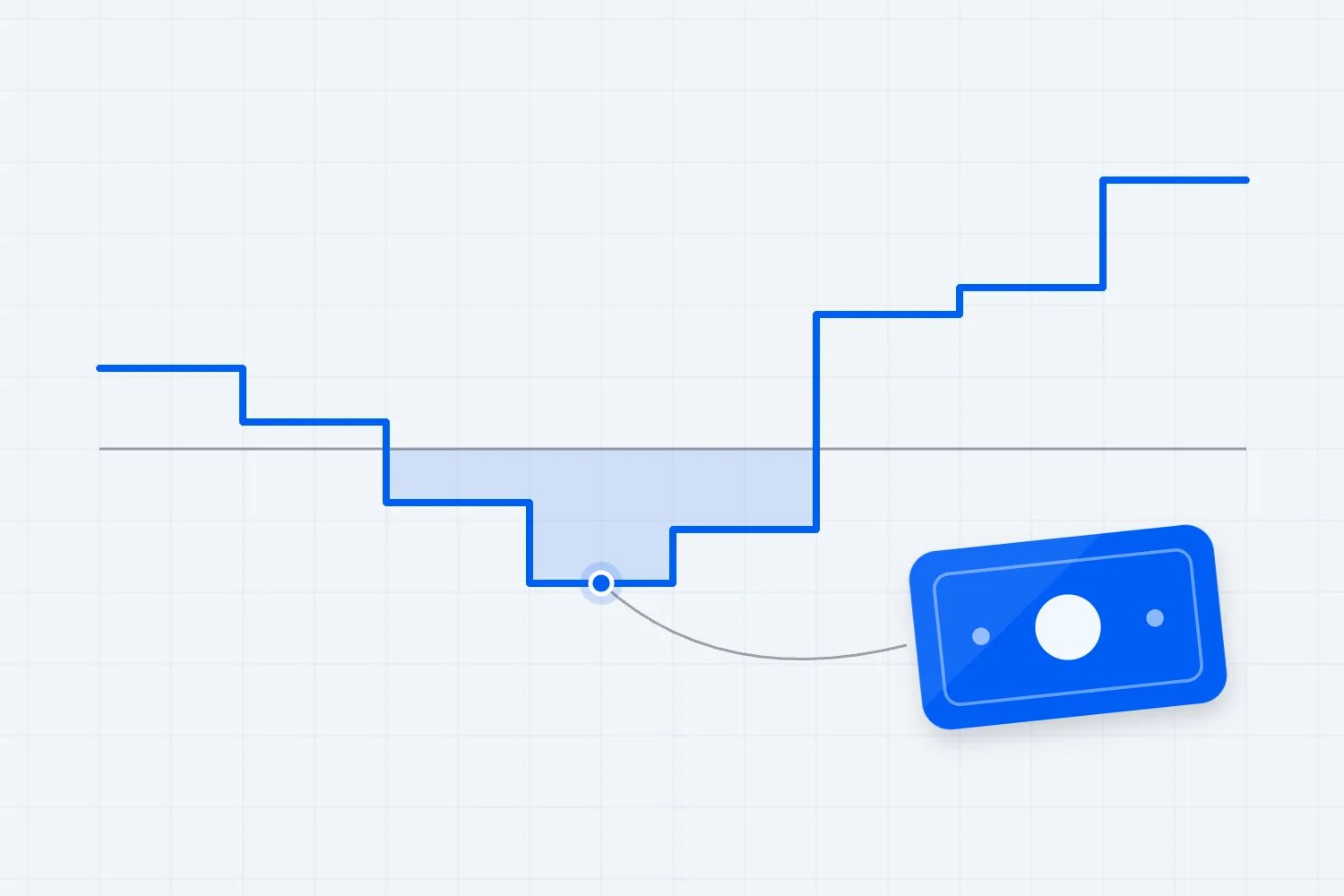
The company starts the cycle with $50,000 of unrestricted cash. By the first checkpoint it receives $80,000 and pays $110,000, leaving $20,000. Before the next checkpoint it expects another $90,000 but owes $140,000. That would leave a $30,000 shortfall before the event happens.
Later, it expects $150,000 and pays $120,000. After the festival it expects $100,000 and pays $40,000. Across the cycle, receipts total $420,000 and payments total $410,000. Starting cash means the company would finish with $60,000 if every expected movement occurred. But it cannot reach that finish without solving the earlier $30,000 gap.
| Label | Cash balance |
|---|---|
| Start | 50000 |
| First payments | 20000 |
| Before event | -30000 |
| Event settlement | 0 |
| Final settlement | 60000 |
The negative balance shows missing funding, not a bank account you can assume will be allowed to overdraw. Our simplified chart uses checkpoints. A real forecast needs the actual payment dates because a large bill between checkpoints could create a deeper shortfall than this example shows.
Start with your event cash flow forecast, then add the company's existing obligations. Confirm when ticket settlements become usable, when sponsor payments are due, and what restrictions apply to the money. A payout policy, reserve or payment delay can change your available cash even when sales follow the forecast.
Don't solve the gap by quietly moving a supplier's payment to a more convenient week. Ask for revised terms and record the agreement. Until the supplier agrees, the original due date stays in the forecast. The same applies to funding. A conversation with a lender becomes usable funding only when the facility is confirmed and available on the required terms.
Old liabilities can consume the next edition's money
Your festival may begin selling well and still start the season in a weak position. Last year's unsettled supplier invoices, company borrowing and unpaid taxes don't disappear when you announce a new lineup. They reduce the cash available for this year's delivery before the new edition has spent anything.
This can be hard to see when every edition has its own budget. Last year's payment sits outside this year's event costs, so the new budget looks sound. But both payments leave the same company bank account. The separate event budgets need a company forecast that shows the combined obligation.
Suppose the hypothetical business also owes $20,000 from the previous edition, payable before the new festival. Its $30,000 funding gap becomes $50,000 unless another movement changes. Calling that invoice a historic cost doesn't provide the money to pay it. The delivery team needs to know the smaller amount genuinely available to them.
Owner funding can hide this deterioration. You cover a shortfall personally, the festival happens, and the result looks acceptable because the transfer restored the balance. Record whether that money is equity, a loan or another arrangement. Then ask whether the business can operate without the same rescue next time.
Include related commitments across your calendar. If another event draws from the same cash, a weak result there may affect this festival's deposits. A festival that appears independently funded can become dependent on another show's settlement without anyone explicitly approving that dependence. Make those assumptions visible before the dates collide.
Money from next year's tickets deserves particular care. Accepting it creates new delivery obligations, even if the cash helps pay older bills. Before opening that sale, demonstrate how the company will fund the new edition as well as settle the old one. Repeating the transfer every year is not evidence that the business has recovered.
A business can deliberately use shared company cash to fund several projects together. Before approving that arrangement, check when each project receives money, when its payments are due and how a delay would affect the others. Record who approved the arrangement and how all obligations will be funded.
You lose options as contracts become harder to change
The festival's financial exposure changes whenever you sign, pay or miss a contractual deadline. Early in the cycle, you may be able to change the site, reduce stages or defer an announcement. Later, cancellation charges and nonrefundable deposits can make the same change much more expensive.
Keep a dated record of the commitments that materially affect your choices. For each major contract, identify the amount already paid, the next amount due, the cancellation terms and the date those terms change. The total contract value alone doesn't tell you what you can still avoid spending.
The useful comparison at a decision point is the additional cost of continuing against the cost and obligations of stopping. Money already spent still matters to the company's condition, but spending more won't recover it automatically. A team can become attached to finishing because so much work has already gone into the edition.
Imagine a supplier offers a cheaper package if you confirm immediately. The discount may be worthwhile. But early confirmation might remove your ability to reduce production if ticket sales weaken. Compare the saving with the extra amount you would owe in a plausible cancellation or reduction. Read the actual terms rather than assuming all deposits behave alike.
Look beyond your own supplier. An artist booking may require transport, accommodation, additional security or equipment your production budget hasn't included. A larger site might add access roads, waste collection and staffing. Ask the person proposing the change to bring its full delivery cost and payment dates to the decision.
Build approval around the choices that change exposure. Routine purchases within an agreed budget shouldn't require a committee. A booking that creates a large nonrefundable liability should have an identified approver who can see the cash forecast. Otherwise, several individually reasonable decisions can produce an unaffordable combined commitment.
Don't leave this entirely to the finance person after the programme is locked. The people choosing artists, production and audience promises need the information while they can change those choices. Commercial control works best when it helps them select a plan the business can actually deliver.
The site can change the economics after tickets go on sale
Festival costs can rise because the delivery plan becomes more specific. A provisional quote may assume straightforward vehicle access, a certain power requirement or a particular number of crew hours. Once the site plan is settled, those assumptions may no longer hold. Compare the revised quote with what was originally included before calling every increase supplier inflation.
Ask production to identify unresolved requirements while you can still price them. Access, ground protection, temporary infrastructure and waste arrangements can affect several suppliers at once. If the site requires a longer installation period, additional crew accommodation and hire days may follow. Record the connected changes instead of approving each invoice in isolation.
A cheaper site isn't necessarily a cheaper festival. Compare the cost of making it usable, the audience's ability to reach it and any effect on sellable capacity. You might save on hire while spending more on transport or infrastructure. Those are commercial consequences of the chosen plan, not surprises that finance should somehow absorb later.
Keep audience promises connected to that plan too. If your advertising sells camping, particular facilities or a full programme, reducing them may create buyer and contractual consequences. A smaller production plan works only when it can deliver the revised offer safely and when changes are handled appropriately. Check before counting the saving.
Reserves need to match the problems they are meant to cover
A contingency line in the budget is an allowance for uncertain costs. Cash available to pay those costs is a separate requirement. You can write a generous contingency into a spreadsheet while having no money available when the access road needs urgent work. Check both the allowance and its funding.
Avoid choosing a reserve just because another festival uses a particular percentage. Your risks depend on the site, the programme, supplier terms and the amount of cash committed before the event. A reserve that works for a venue festival may be inadequate for an outdoor site with different cancellation exposure.
Start with scenarios your team can describe. What happens if a sponsor pays after the weekend? What happens if site conditions require extra equipment? What happens if the final ticket release sells later than expected? Put a cost and a date against each assumption, then test combinations that could plausibly happen together.
For our hypothetical business, suppose you arrange $30,000 of short term funding to cover the original gap. That gets the forecast to zero at its lowest checkpoint. If $25,000 of expected receipts arrives late, however, you have another problem. Funding the best estimate exactly leaves no room for that timing change.
This doesn't mean every imaginable disaster needs cash sitting unused. Some risks can be reduced through the delivery plan, different payment terms or appropriate insurance. Some are too large for the business to accept at all. Decide how each material risk will be handled instead of putting every risk into one vague reserve.
Be clear about money you cannot freely spend. Cash held for a contractual purpose, refund provision or another commitment should not be counted twice as general reserve money. Your accountant can help determine the appropriate treatment. The management decision still needs a plain answer about what is available for unexpected payments.
After the edition, compare the scenarios with what actually happened. Did overtime, weather preparation or a sponsor delay use the reserve? Was the assumption reasonable? Updating that record helps you prepare the next plan with evidence specific to your festival rather than repeating the same percentage out of habit.
Cancellation creates a different budget
When an event cannot proceed, the original profit forecast stops answering the urgent questions. You need to know what buyers are owed, which supplier obligations remain, what expenses can be recovered and when each movement will happen. A cancellation can remove future income while leaving much of the committed cost intact.
Prepare this view before it is needed. Take the major decision dates and calculate the consequences of cancelling at each one. Use your actual buyer terms, supplier contracts and applicable rules. Don't assume postponement eliminates refunds or that cancelling releases you from every remaining supplier payment.
Insurance needs the same care. Hiscox's event insurance FAQs explain that its cover does not insure lack of attendance, ticket sales or interest, which it treats as trading risk. That is a specific insurer's stated position, not a description of every policy. Ask your broker to explain your own cover, exclusions and limits against the scenarios you face.
Check what evidence a claim requires and how long the business could wait for payment. An expected recovery may reduce the eventual loss without providing cash on the day a refund is due. Until timing and coverage are sufficiently clear, keep the claim separate from confirmed money you can use.
Operational decisions come first when safety is at stake. The UK's Health and Safety Executive's emergency planning guidance for events covers contingencies such as severe weather and an act cancelling, together with clear responsibilities and show stop procedures. Your financial exposure must never become a reason to continue an unsafe performance.
Connect the teams who would handle those consequences. The safety lead decides within the agreed operational plan. Finance checks obligations and available cash. Customer communications explains confirmed arrangements to ticket holders. Nobody should have to invent the entire cancellation process while people are waiting at the gate.
You also need a communications approval route. Announcing a refund date without confirming you can meet it creates another promise under pressure. Tell buyers what you know, explain what happens next and provide an accountable contact. Clear information won't remove the loss, but avoidable confusion can make an already difficult situation worse.
Sponsorship can support survival only when the terms work
Additional revenue can make a festival more affordable, but a sponsor's headline commitment isn't the amount you can use. Package delivery costs, included admissions and payment timing affect its contribution. A large deal paid after the event may improve the final result while doing little for an earlier deposit.
Our music festival sponsorship guide explains how to develop an offer around the festival and the sponsor's objectives. For the survival review, bring each agreement into the cash forecast with its actual payment conditions. Keep an interested brand, an agreed contract and a received payment as separate stages.
Suppose a hypothetical sponsor agrees to pay $40,000 but the festival must spend $15,000 delivering the package. The expected contribution is $25,000 before any other relevant deductions. If delivery costs are paid before the sponsorship arrives, you also need cash to fund those costs. Counting the entire $40,000 as available profit would overstate its help.
Negotiate payment dates before making additional promises that depend on the deal. The sponsor may have procurement processes or conditions you must fulfil before invoicing. Understand them early. If those conditions cannot provide money before your supplier payments, treat the deal as later revenue and arrange another source of funding.
With Loopyah sponsorship packages, you can set prices and quantities, choose approval where needed, and track deals through application, payment and fulfilment. That helps keep a sponsor saying yes distinct from a sponsor having paid. You still need to choose an affordable package and check the applicable payout arrangements.
A sponsor should not be asked to rescue an unexplained deficit. Show how the package will be delivered and what happens if the edition changes. If losing one deal makes the festival unable to proceed, recognize that dependence while you still have options. A second unsigned proposal doesn't remove it.
A forecast needs owners who will correct it
The sales forecast is often the most disputed number in a festival meeting. Someone believes the next announcement will transform sales. Someone else expects a familiar late rush. Both may have useful evidence. Ask them to state the assumptions and the dates at which you can judge whether those assumptions were right.
Compare this year's sales with earlier editions carefully. Check how long tickets have been available, what was announced, the price mix and any change in the date or capacity. A total that looks similar can conceal very different remaining demand. Use the history to investigate what buyers are doing rather than treating last year's final result as a guaranteed minimum.
Keep a realistic expected case and a downside case. Update both when evidence changes. The downside case should describe something that could actually happen, such as a delayed sponsor payment combined with a weaker final release. An arbitrarily disastrous forecast tells the team very little about the decisions they can make now.
Agree who updates receipts, who checks contracts and who confirms payment dates. Then compare forecast movements with actual movements regularly. If a receipt slips, change the date immediately and show the resulting gap. Waiting until the next formal meeting may cost you the opportunity to negotiate before a payment becomes overdue.
Decide when you still have a choice
Set review dates around the commitments that become harder to reverse. At each date, check current paid sales, the remaining credible demand, confirmed funding, supplier obligations and the downside scenarios. Use the same definitions each time so the decision doesn't improve merely because someone changed how the report counts income.
Write down what would make you continue, reduce the plan or stop. A ticket target alone is inadequate when sponsor payment or funding is equally important. Your condition might require a specified amount of cleared cash and an agreed supplier change before you confirm the next expensive booking.
Assign the decision to people who can make it. Marketing can explain sales evidence. Production can explain the consequences of a smaller plan. Finance can show dates and obligations. Someone with authority then approves the choice. A meeting where everybody reports concerns but nobody owns the decision leaves the commitments moving anyway.
Be equally explicit about what the owners are willing and able to risk. A plan that depends on another personal transfer needs agreement before the business makes the commitment. Include the amount, timing and conditions, with professional advice on the arrangement where needed. The team cannot treat an owner's willingness to help last year as authorization this year.
Borrowing deserves a repayment forecast as well as an arrival date. If funding solves the pre-event gap but leaves repayments the next edition cannot afford, it has moved the problem. Test the repayment against a credible trading plan and the company's other obligations. Approval for money to arrive is only part of the decision.
Taking a fallow year can be sensible when you have a credible recovery plan. Work out the continuing costs, existing obligations and money needed to return. Retaining a brand and audience doesn't fund the company through the pause. Tell the team what the year off will change before treating it as a solution.
When the decision is to continue, record why. Name the payment change, confirmed funding or revised delivery plan that makes continuation affordable. Include who checked it and what evidence would trigger another review. This gives the team a shared explanation they can use when a later proposal would spend the money you just protected.
When the decision is to stop, make the operational and financial work explicit. Identify who contacts suppliers, who confirms buyer arrangements and who keeps the revised cash forecast current. Stopping the public event doesn't stop the company needing to manage obligations. The sooner the responsible people have the same facts, the less time they spend making incompatible promises.
Keep the decision record short enough to read before the next approval. It should explain the choice and its conditions, rather than reproduce the whole budget. If those conditions change, reopen the decision promptly. A signature on an old plan doesn't make the current plan affordable.
Start your next review with the earliest unfunded payment and the last date you can still change its commitment. Gather the current contracts, settlement information and cash forecast. If a workable change exists, agree it and update the plan. If it doesn't, act before another promise makes the eventual decision more expensive.

Author: By the Loopyah Content Team
The Loopyah Content Team shares expert insights, practical guides, and industry updates to help event organizers create unforgettable experiences and stay ahead in the event planning world.