· 16 min read
Exhibitor prospectus: a template for selling booth space
An exhibitor prospectus explains why a business should buy space at your event, exactly what that space includes, what it costs and how to book. The useful version answers a commercial question: is this audience and offer worth the exhibitor's money? Build it around a credible audience, a clear package and delivery terms your team can actually meet.
It doesn't need to be a glossy document full of crowd photographs. A buyer looking at your prospectus is also thinking about staff, travel, equipment and time away from the business. Help them understand the whole commitment before you ask for payment.
This guide walks through the offer, audience evidence, pricing and booking process, then gives you a prospectus template. We'll use a fictional paid conference with a small exhibition area to make the decisions concrete. The same principles apply to a consumer expo or festival selling commercial spaces, with different operational requirements.
Decide what you are selling before designing the prospectus
A booth package usually buys a defined physical space and stated services for an agreed period. Sponsorship can add promotional rights, visibility or other benefits. They can be sold together, but the buyer needs to know which rights come with the price.
An exhibitor buying a table does not automatically become an event sponsor. Equally, a sponsor buying brand exposure may still need a properly specified space for an activation. If the package includes both, separate the space, services and promotional commitments in its description.
Start with the approved layout and the programme. How many spaces can you deliver? When will exhibitors actually meet attendees? What can they do there? A spot outside the entrance during a short lunch break is a different offer from a staffed exhibition room open throughout the day.
Think about the audience's experience too. Adding another row of booths might increase potential revenue while making circulation worse or reducing the quality of conversations. The prospectus should sell inventory that fits the event, not force the event to accommodate every package you hope to sell.
Keep the prospectus separate from the exhibitor operations manual. The prospectus helps a business decide and book. The manual explains delivery labels, arrival instructions and detailed onsite requirements after acceptance. Put material costs and restrictions in the sales document, then link the fuller operational instructions when they are ready.
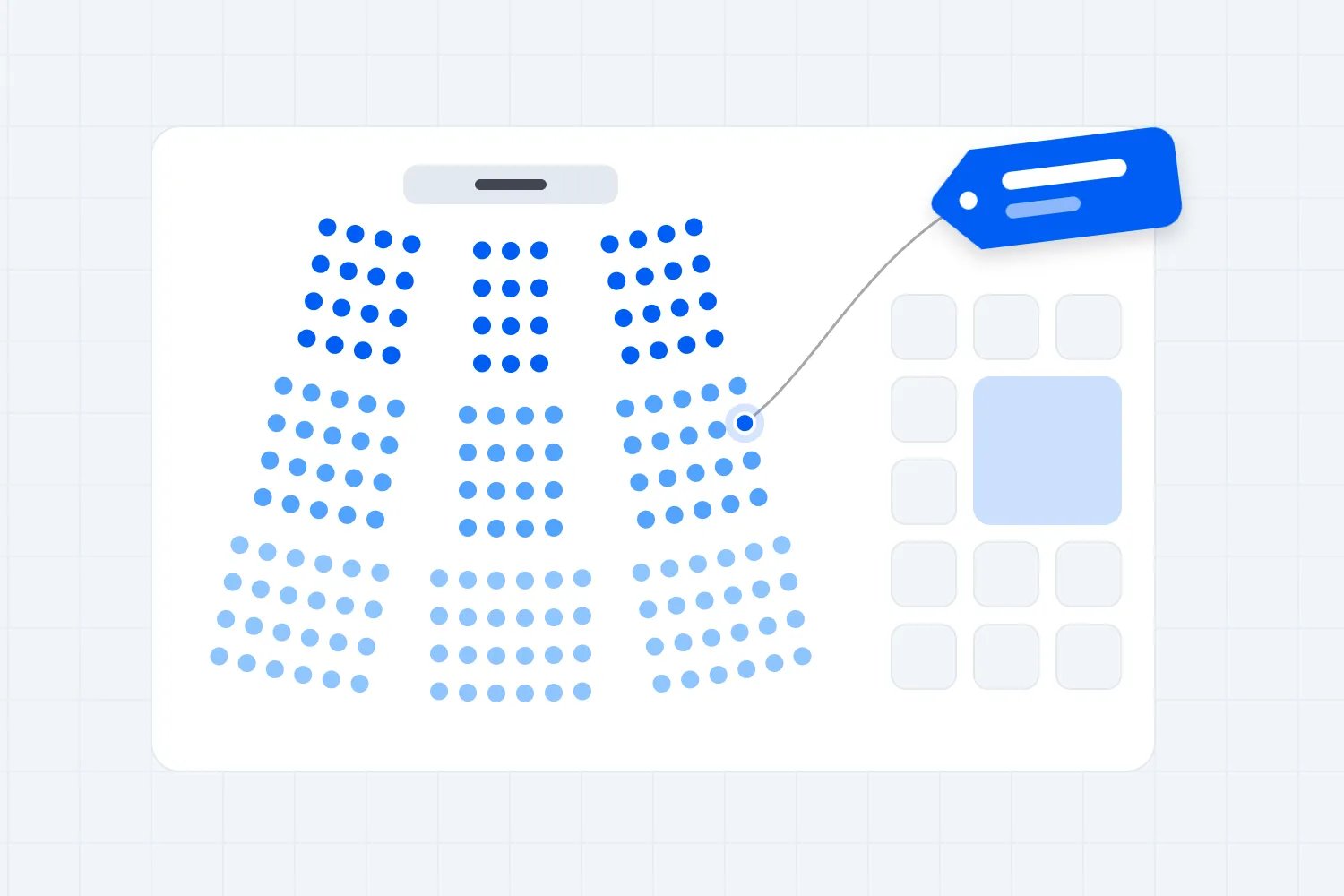
Our guide to mapping seating and booths covers the layout discussion. Resolve that before promising a particular position or footprint in your sales copy.
Give the exhibitor evidence about the audience
Start with who attends and why those people might care about the exhibitor's offer. Job roles, buying responsibilities, interests and location can matter more than a large headline attendance figure.
A software supplier selling to venue managers needs a different audience from a food producer selling directly to festival visitors. Explain the fit in the prospectus rather than assuming "exposure" is valuable to every business.
Use the records you actually have. For a previous edition, state the edition and date, what the count measures, and where it came from. Registrations, paid tickets, unique checked-in attendees, exhibitors and total visits are different quantities. Don't combine them into a bigger number without telling the buyer.
A fictional audience statement
Suppose last year's Independent Venue Forum recorded 420 unique attendee check-ins, excluding exhibitors and staff. A voluntary post-event survey received 105 responses, of which 63 described themselves as owners or general managers.
Those invented figures support two separate statements: the event recorded 420 attendee check-ins, and 60% of survey respondents selected those roles. They do not establish that 60% of all attendees were owners or general managers. The other attendees did not answer that survey.
For the next edition, the organiser has a target of 500 attendees. Label it as a target. A target is not an attendance guarantee, and the previous year's result does not make the target a confirmed booking.
If this is your first event, say so. Describe the intended audience, confirmed distribution partners and ticket-sales progress at a dated point. A well-explained new event is more credible than a first edition borrowing numbers from an unrelated community or another organiser's show.
When you use audience quotes or identifiable photographs, check the permission and context. A testimonial from a previous exhibitor should describe their actual experience. It should not become a promise that every future exhibitor will get the same commercial result.
Specify the booth package so nobody has to guess
Write each offer as if the person reading it has never exhibited with you. "Standard booth" means very little without dimensions, furnishings, access and services.
Include the usable width and depth, what the space comes with, how many exhibitor passes are included and which event areas those passes access. Say whether the offer is an open floor area, a furnished tabletop or a constructed shell scheme. Explain unusual shapes or obstructions before purchase.
List meaningful exclusions beside the inclusions. Electricity, dedicated internet, storage, furniture, shipping, waste handling and additional staff passes can change the buyer's total cost. If those services are supplied separately, identify who provides them and when orders or quotations are due.
The American Public Health Association's exhibitor information provides a useful real example of this distinction. Its page separates exhibition hours and move-in arrangements, and identifies services for which exhibitors bear additional costs. The lesson is clarity about the offer, not copying another event's fees or operating rules.
The American Chemical Society's exhibitor page also distinguishes included benefits from opportunities that cost extra, alongside a floor-plan and booking route. Your prospectus should make the same distinction at the scale of your own event.
A worked package description
For our fictional conference, a standard package includes a marked 2m by 2m space, one table, two chairs, two exhibitor passes, a listing in the event directory and access during the published exhibition hours. Power is not included. Any electrical service requires a separate approved order.
There are twenty standard packages and four corner packages. The corner package has the same footprint and inclusions but occupies a designated corner position. It does not promise more visitors or sales. The buyer pays for a particular location characteristic, not a guaranteed outcome.
All dimensions and quantities here are teaching assumptions. They are not recommended aisle widths, safe capacities or a venue layout. Your actual inventory must fit the event-specific plan and the venue's requirements.
Price the space against its costs and credible value
An exhibitor's willingness to pay depends on the audience, the event format and the alternatives available to that business. Your minimum acceptable price also depends on what you spend delivering the package. You need both sides of that conversation.
Start with the costs created by the exhibition offer. These might include additional venue space, furniture, signs, extra staff, services, sales administration and payment costs. Then decide what the exhibition needs to contribute toward the event's shared costs and profit.
Do not divide your entire event budget by the number of booths and assume the market owes you that price. If businesses will not pay what your offer needs, change the offer, costs or event plan. A more polished prospectus cannot fix that gap.
A fictional partial-sales check
The following figures are invented US-dollar planning assumptions, excluding applicable sales taxes. They are not market rates, supplier quotes or Loopyah charges. Actual quotes must state their applicable tax treatment and total payable amounts clearly.
Our organiser plans to sell twenty standard packages at $1,000 and four corner packages at $1,500. Selling all twenty-four would bring in $26,000 before tax.
The exhibition has $6,500 in fixed costs. Each sold package adds $250 in direct delivery costs and an illustrative $50 allowance for payment and booking administration. That leaves $700 per standard package and $1,200 per corner package before the fixed exhibition costs.
At full sales, the contribution is twenty times $700, plus four times $1,200, minus $6,500. That leaves $12,300 toward shared event costs and profit. It is not the whole event's profit.
Now assume only twelve standard packages and two corner packages sell. Revenue is $15,000. Direct delivery costs are $3,500, the payment and administration allowance is $700, and fixed exhibition costs remain $6,500. Contribution falls to $4,300.
That is the number worth discussing before you commit. Can the event still work if the exhibition contributes $4,300? Which costs remain payable if more spaces stay empty? Use your actual cost behaviour; a furniture contract might be committed in advance even when the package has not sold.
The event budget guide helps you connect this contribution to the rest of the event. Keep the exhibition calculation visible so a full-looking floor plan does not hide an unprofitable offer.
| Label | Direct delivery costs | Payment and administration | Fixed exhibition costs | Contribution before shared costs |
|---|---|---|---|---|
| All 24 packages sold | 6000 | 1200 | 6500 | 12300 |
| 14 packages sold | 3500 | 700 | 6500 | 4300 |
Source: the fictional assumptions and calculations in this article. Each stack adds to exhibition revenue. Contribution remains available for shared event costs and profit; it is not net event profit.
Explain booking, allocation and the terms that matter
Tell the buyer how a space becomes theirs. Does an application reserve inventory? Does approval trigger a payment deadline? When is the location assigned? If a business can request a preferred position, explain whether that request is guaranteed.
These decisions belong in your operating process before they appear in the prospectus. Without them, two sales conversations can accidentally promise the same corner space.
Set one record of availability and one person responsible for confirming allocations. Record temporary holds with an expiry and distinguish them from paid bookings. When a hold expires, follow the stated process rather than leaving the space unavailable indefinitely.
Give the buyer the commercial terms before payment. Cover the payment schedule, cancellation or withdrawal, event changes, relocation conditions, prohibited activities, brand approvals and the responsibilities of each party. The prospectus can summarise these, but the full agreement must be available and consistent with the summary.
Don't copy a broad "no refunds under any circumstances" clause from another event and call the job done. The ACCC's contract guidance explains protections applying to unfair terms in certain standard-form consumer and small-business contracts in Australia. Have terms reviewed for the event, business relationship and jurisdiction instead of treating a template as legal approval.
Keep the sales process connected
If you sell booth space as part of an event sponsorship package, Loopyah's sponsorship tools let you specify priced packages, quantities and perks, including booth space, on a private page. You can require approval before a brand pays and track the deal through payment and fulfilment.
That handles the package transaction. Your team still owns the physical allocation, venue requirements and onsite arrangements. Don't describe a package quantity as an automatic booth-allocation system, or promise that a buyer can choose a particular floor-plan position unless that process is actually provided.
Use the sponsorship agreement guide when the booth offer includes promotional rights. Keep extra obligations, such as a social post or category exclusivity, visible alongside the space rather than burying them in a different sales conversation.
Set boundaries around data and onsite activity
Be careful with the phrase "access to attendees". It can mean an opportunity to meet people at the booth, a speaking slot or a contact list. Those are very different offers.
Describe the actual opportunity. Exhibitors may be able to speak with visitors who approach them and collect information through an appropriate process. Buying a space does not automatically give them permission to receive everyone's personal details or send marketing to every delegate.
The ICO's business-to-business marketing guidance includes an example where a conference organiser considers selling delegate contact information without having told delegates. It explains why the proposed use is likely to be unfair. That is UK guidance; assess the privacy and marketing requirements that apply to your event before offering data benefits.
Also explain the approval process for demonstrations, food sampling, loud audio, structures or equipment. A business should know before booking that its planned activity may need additional permission or documentation. Your sales team should not promise approval on behalf of the venue or a specialist contractor.
HSE's event-management guidance describes the organiser's role in coordinating work and considering contractor assessments. It applies in Great Britain. The practical point for the prospectus is to state relevant requirements early and connect accepted exhibitors with the people who can assess their proposed activity.
Keep operational promises modest and precise. "General overnight venue security" does not necessarily mean individual stock is insured or watched continuously. Explain responsibility for property and confirm the actual service before putting it in the package.
Copy this exhibitor prospectus template
Use the following sections as the document's working structure. Replace the prompts with confirmed information. A simple online page or readable PDF can work; choose a format your buyer can forward to the person approving the spend.
Event and opportunity
State the event name, dates, location and format. Explain who attends, why they come and the kinds of businesses that are relevant to them. Name the organiser and the person who handles exhibitor questions.
Describe the exhibition's place in the programme. Include the public opening hours and when attendees can reasonably visit. Distinguish those hours from setup, staff access and breakdown.
Audience evidence
List dated attendance records, clearly defined audience information and the source of each figure. Label survey findings with the respondent count. Keep previous results separate from forecasts for the next edition.
For a first event, explain the intended audience and the evidence behind your plan. Identify confirmed partnerships accurately, without implying that a mailing-list size equals event attendance.
Packages and availability
For each package, state its name, footprint, location type, quantity, price and applicable taxes or charges. List furnishings, passes, directory exposure and any promotional benefits. Name important exclusions and optional services.
Include a current plan or explain when a plan will be supplied. State how positions are requested and allocated. Mark preliminary layouts as preliminary and explain the relevant change process.
Participation and booking
Explain who can apply, any category restrictions, how approval works and when payment is due. Link the full terms before the buyer commits. State cancellation, change and withdrawal arrangements in plain language consistent with that agreement.
Give dates for artwork, directory information, staff names and required documentation. Identify which deadlines affect inclusion in printed or published material. Say what happens if the buyer misses one rather than improvising after the sale.
Delivery and contact
Summarise build and breakdown arrangements, access restrictions and the route for specialist questions. Explain where the full operations manual will be available. Tell exhibitors how to request help during setup and the public event.
End with one clear booking route. If approval is required, say "Apply for a booth". If the package can be purchased immediately, say so and explain when the location will be confirmed.
Handle custom requests without losing track of the deal
A prospectus starts the conversation. Some businesses will ask for a different footprint, a demonstration slot or permission to bring additional staff. Decide who can approve those changes and check the cost before quoting.
Suppose a standard-package buyer asks for another table and a hosted product demonstration. The extra table might be a straightforward supplier order. The demonstration could require programme time, power, technical support and venue approval. Those are different commitments even if the buyer calls both requests "small extras".
Record the final offer in one place. Identify which standard package it replaces, what changes, what it costs and which conditions still apply. Give the buyer a version they can approve. Forwarding a long email chain to the onsite team is a poor substitute for a clear final specification.
Be particularly careful with exclusivity. An exclusive beverage sponsorship could conflict with an exhibitor intending to distribute competing drinks. Check existing agreements before accepting the application, and explain the restriction early enough for the buyer to decide whether the space still works for them.
For discounts, compare the revised income with the costs that remain. In our fictional example, reducing a standard package from $1,000 to $800 would reduce its contribution before fixed costs from $700 to $500, assuming the same $300 delivery and administration allowance. You might accept that deliberately for a useful reason, but record the reason and its effect on the event budget.
A short offer record your team can reuse
Buyer and authorised contact: [business and person].
Package and prospectus version: [name, date and reference].
Physical space: [dimensions, location status and allocation conditions].
Included services and promotional benefits: [confirmed deliverables].
Approved changes: [specific additions or exclusions].
Price and payment: [currency, applicable taxes, total and deadlines].
Requirements still awaiting approval: [activity, responsible reviewer and deadline].
Final confirmation: [who accepted what and when].
Keep operational approvals separate from commercial acceptance. Receiving payment does not make an unapproved installation safe, and a buyer's preferred location does not become available because it appears in their application. Your confirmation should tell them what is settled and what remains to be agreed.
Check the offer with a buyer before sending it widely
Ask someone who was not involved in building the package to work through the prospectus. Can they calculate what they must pay, identify what their team needs to arrange, and explain how their location is confirmed?
If they ask whether power is included, the document hasn't answered that well enough. If they mistake your attendance target for last year's result, change the presentation. If they cannot find the terms until after payment, fix the booking route.
Have operations and sales review the same final version. The person selling a demonstration space and the person approving equipment need to agree about what is possible. Add a version date, and update the page or document when availability, prices or arrangements change.
After the event, compare what you promised with what you delivered. Record fulfilled benefits, operational problems and exhibitor feedback. That gives the next prospectus stronger evidence and helps you decide which packages are worth selling again.
Your exhibitor prospectus should make a commercial decision easier. Show a credible audience, define the space, explain the real costs and give the buyer a reliable path to booking. Then deliver what the document says.

Author: By the Loopyah Content Team
The Loopyah Content Team shares expert insights, practical guides, and industry updates to help event organizers create unforgettable experiences and stay ahead in the event planning world.