· 27 min read
How to write a sponsor case study without exposing attendee data

You've delivered the event, the sponsor is happy, and now you want something useful to show the next brand. There are good photos, a report full of numbers and a few encouraging emails. Surely you can turn that into a case study?
You can, but start with the claim you can prove and the information you're allowed to publish. A useful event sponsorship case study explains what a sponsor wanted, what you delivered and what happened within a stated period. It gives a prospective sponsor enough detail to judge whether a similar package could suit them, while keeping attendee records and confidential commercial information out of the public story.
The first thing I'd do is separate your evidence from your finished case study. Keep the detailed records somewhere restricted. Publish an approved explanation built from the relevant facts. You don't need to show someone's email address to demonstrate that a workshop generated suitable enquiries.
This guide walks through that process with a fictional paid conference, a worked measurement example and a case study template you can adapt. We'll also look at the awkward situations: a sponsor who wants every contact named, a small audience that's easy to identify, an impressive result that hasn't been verified and a missed commitment that changes what you can honestly say.
Decide what the next sponsor needs to learn
A sponsorship report and a case study do different jobs. The report accounts for the agreement you already made. It belongs in the relationship with that sponsor and should cover delivery, outcomes, shortfalls and the next decision. Our sponsorship report template covers that process in detail.
The case study helps another buyer understand the opportunity. They need to recognise a situation like theirs and see how your event could help. That means choosing one useful question rather than publishing every number from the report. Could a practical demonstration help this kind of brand speak to relevant operators? Did a hospitality package provide the setting the sponsor needed for existing clients? Was an audience education objective met in a way you could document?
Choose the question before choosing the headline. Otherwise the biggest number tends to win, even if it tells the buyer very little. A sponsor trying to book product demonstrations won't learn much from the number of times its logo appeared in a social feed. That figure might belong in the delivery report. It probably shouldn't carry the case study.
Think about who will read it, too. A brand manager might need to show the idea to a sales director. An agency planner might be comparing several events for a client. Write enough context that someone who wasn't in the first meeting can understand the objective, the activity and the result. Avoid internal abbreviations and assumptions about what the package name means.
A good starting sentence is simple: "A supplier wanted to arrange relevant follow-up conversations with independent venue operators attending our paid conference." That tells us who was trying to do what. We can now judge whether the activity and evidence answer that brief.
You also need a commercial reason to produce the piece. If it supports a package you won't offer again, explain what is transferable. Perhaps the exact room is unavailable next year, but the small-group demonstration format can run elsewhere. Don't let a prospective buyer assume they're purchasing the same audience, timetable or position because the case study doesn't mention the change.
Agree the objective and the evidence before the event
It's much easier to write a credible case study when somebody agreed how success would be measured before doors opened. That doesn't mean building an elaborate research project for every sponsor. It means recording the objective in terms both sides understand and choosing evidence that could actually answer it.
For our example, imagine the fictional Workshop Assembly, a paid one-day conference for independent venue businesses on 18 June 2027. Its fictional sponsor, Cedar Tools, sells maintenance equipment. The sponsor buys a demonstration area and wants conversations with people involved in selecting equipment for their venues. All names, dates and figures in this example are invented for teaching. They aren't Loopyah customer results or performance benchmarks.
Before the event, both sides agree that a relevant enquiry means a distinct participant who works for a venue, has a role in equipment selection and asks for a follow-up conversation about a stated maintenance need. That definition is narrower than "someone stopped at the stand". It also makes clear why counting every badge scan would exaggerate the result.
They agree to review follow-up meetings within thirty days. The sponsor will confirm the counts from its own records, while the organiser will verify delivery of the demonstration area and supporting placements. Neither side promises a number of sales. The later purchase decision depends on factors the event doesn't control, including budget, timing and whether the equipment suits the buyer.
Record who owns each measure. Your team may know how many people entered the event, but the sponsor may be the only party able to confirm which meetings actually happened. A case study can't replace that missing confirmation with your estimate. Put a review date in the plan so the result doesn't remain "we'll ask them eventually".
If the deal already exists, work with what was genuinely agreed. Don't invent a pre-event objective because the resulting story reads better. You can write, "The original package focused on demonstrations; the sponsor later reviewed follow-up activity." That is a different claim from meeting a target agreed before the event.
Our guide to aligning sponsorship with event goals helps with the earlier planning decision. Here, the point is to retain enough of that agreement to explain the result accurately when you write it up.
Build an evidence record you can check
Before writing the narrative, collect the records behind it. For Workshop Assembly, that includes the approved package, the final demonstration schedule, dated placement checks, the organiser's activity log and the sponsor's confirmation of follow-up counts. A controlled evidence folder lets the reviewer trace the public statements without opening access to everyone who receives the case study.
For each proposed claim, write down the source, the period it covers, the person responsible and the wording it supports. "The demonstration area operated during both scheduled breaks" needs a delivery record. "Eight participants completed a follow-up meeting" needs evidence of completed meetings. A calendar invitation alone establishes that something was booked, not that it took place.
Keep the original source and the approved public statement connected. You might assign a simple reference such as "Follow-up count, confirmed 19 July". The public page doesn't need a link to the sponsor's private customer system. Your internal reviewer needs to know where the confirmation is and whether the person who supplied it had authority to do so.
Check the meaning of platform numbers before copying them. An email sent, delivered, opened or clicked represents different activity. A reach estimate and an impression count aren't interchangeable. A photo of a full session can't tell you how many distinct participants attended across the day. If nobody measured a result, write "not measured" in the internal record and leave the claim out.
This discipline also protects you when a number changes. Suppose a sponsor first reports twenty booked meetings and later removes two duplicate bookings. Retain the correction and publish eighteen. Don't keep the earlier figure because it already appears in the sales deck. Ask where else the old number went and correct those versions as well.
For UK non-broadcast marketing, CAP's substantiation guidance says marketers should hold documentary evidence for objective claims before publication. That's a useful standard for your drafting process: locate the evidence before you write a confident headline, rather than searching for support after the sponsor has approved the design.
You don't need to make the public case study read like an audit file. A short method note can explain who supplied the figures and what the period covers. Keep the supporting detail available to the people who must verify it, with access limited to their actual task.
Separate delivery, participation and commercial outcomes
A lot of sponsor stories become unreliable at the point where different kinds of results are bundled together. You delivered a stand. People visited it. Some asked to hear more. Later, the sponsor sold something. Those events may be connected, but they don't establish the same thing.
AMEC's evaluation framework distinguishes communication activity and outputs from audience responses, outcomes and impact. Applied to sponsorship, this helps you explain each result at the level your evidence supports. A delivered placement proves the activity happened. It doesn't, by itself, prove a change in buying behaviour.
For Workshop Assembly, the sponsor records 120 conversations at the demonstration area. Some participants return with another question, so those conversations involve 82 distinct people. Of those people, 34 meet the relevance criteria agreed with Cedar Tools. Eighteen of those 34 book a follow-up meeting, and eight of those eighteen complete a meeting within the thirty-day reporting window.
Each count has a different meaning. The 120 conversations describe interactions, including repeats. The other figures count distinct participants within progressively smaller groups. We won't plot the conversation total as if it were a count of unique people. We also won't add all the stages together, because the same person can appear in several of them.
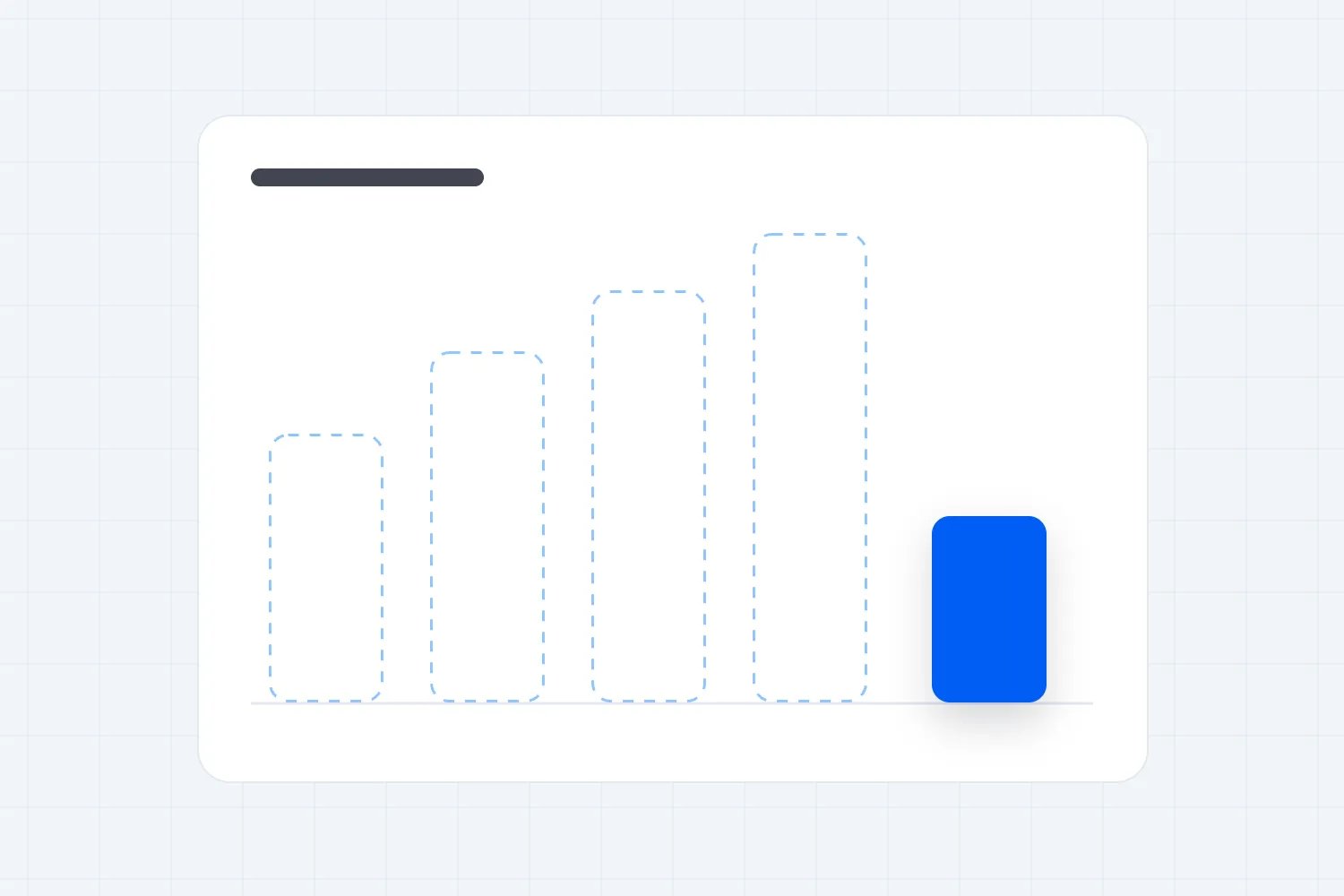
The chart below uses the distinct-participant counts only. All four are fictional and come from this worked example. Each participant can appear once at each stage, and each later group is contained within the earlier one. The chart shows what the example's records support, rather than predicting what another sponsor will achieve.
| Label | Participants |
|---|---|
| Spoke with sponsor | 82 |
| Relevant enquiries | 34 |
| Meetings booked | 18 |
| Meetings held | 8 |
Now choose your headline according to the original objective. "Thirty-four relevant enquiries" could be accurate if the stated criteria were met and the follow-up request was recorded. "Eighty-two qualified buyers" would be wrong. Being present for a conversation doesn't establish buying authority, budget or purchase intent.
You can calculate that eight completed meetings represent 8 of 18 booked meetings, or 44.4%, during this period. That percentage describes the booked group. It doesn't describe the whole conference, and it doesn't tell us why the remaining meetings hadn't happened. Some may be scheduled later. Others may have been cancelled. Don't invent an explanation to make the percentage sound better.
Our guide to sponsor booth engagement goes further into collection and counting. For the case study, select the few measures that answer the objective, explain their definitions and retain the limits that affect how a buyer should interpret them.
Keep the public story separate from attendee records
Here's where a useful case study can go wrong. You have enough evidence to show that the package generated relevant conversations, but somebody asks for a screenshot of the contact list to make it feel more convincing. Suddenly the draft includes names, job titles, email addresses and notes about people's buying plans.
The prospective sponsor doesn't need that list to understand the result. An approved aggregate count and a clear description of the criteria will often do the job. Keep individual contact records within the separate arrangements that govern their collection, use and sharing. Publishing a case study is its own use of information and needs its own review.
The UK's ICO describes data minimisation as keeping personal information adequate, relevant and limited to what is necessary for the purpose. For the public case study, ask what the reader actually needs to evaluate the sponsorship. A job-category summary may help. A named person's private purchasing note usually won't.
The sponsor's approval to use its company name doesn't settle the attendee question. The sponsor may approve the wording about its results while having no authority to authorise publication of somebody else's personal information. Likewise, permission to send a participant a requested follow-up message doesn't automatically cover putting that participant in an advertisement for your next event.
Make the review practical. Read the proposed text, open every image and inspect every attachment as a recipient would. Look for badge names, faces, email addresses in browser windows, notes on whiteboards and identifiable quotations. A screenshot can disclose more than the paragraph it illustrates. A shared spreadsheet may also contain hidden columns or tabs you didn't mean to send.
These ICO sources describe the UK framework and currently carry notices that parts of the guidance are under review following the Data (Use and Access) Act. Check the current requirements for the locations and people involved. The editorial decision remains straightforward: publish the least personal detail that explains the commercial result, and get an appropriate review when you can't establish whether a person can be identified.
Removing names doesn't always make the story anonymous
Suppose your draft says, "A procurement director from the only independent arena in the city requested a six-figure equipment proposal." You've removed their name. You've also given a motivated reader enough clues to work out who they are, particularly if the attendee list or a public photo identifies their employer.
The ICO's anonymisation guidance explains that identifiability depends on context and can arise from combinations of details. Its assessment considers reasonably likely identification using information available to the recipient. Deleting a name is only one part of that assessment.
In a small paid event, the combination may be the problem. Employer, seniority, city, session time and a distinctive quote can identify a person even when each field seems harmless on its own. A sponsor who was in the room may know exactly who the description refers to. Publishing the same description online gives an even wider audience the chance to connect those clues.
Start by asking whether the detail helps explain the sponsorship. If "venue operators" answers the commercial question, there's little value in specifying a rare job title and location. Broaden categories or leave them out. Don't replace a name with a reference number and call the result anonymous while retaining the detailed record elsewhere.
Small-group percentages deserve the same attention. A result such as "everyone from a particular employer requested a meeting" can reveal individual choices if that employer sent very few people. There isn't a universal minimum group size that makes every event statistic safe to publish. Your audience, the other available information and the sensitivity of the inference all matter.
Check for information revealed by subtraction, too. If a public case study gives the total number of qualified enquiries and names every category except one, readers may be able to calculate the omitted small group. Removing a single row doesn't help if the rest of the table reconstructs it. Change the grouping or remove the unnecessary breakdown.
For Workshop Assembly, the public story can say the enquiries came from venue businesses without identifying individual employers or quoting purchasing plans. The restricted evidence record still contains enough detail for authorised reviewers to verify the definition. Those are different documents for different audiences. Keep their contents and access arrangements consistent with that purpose.
Get approval for the exact use you have in mind
Before you ask a sponsor to approve the case study, decide where it will appear. A page on your website, an attachment sent privately to prospects and a paid social advertisement can involve different audiences and uses. "Can we mention the partnership?" is too vague when the actual plan includes a named quote, a logo and specific commercial results.
Send the proposed text and visuals together. State the intended channels, the planned publication period, whether paid promotion is included and whether the piece will be edited into shorter versions. Ask the sponsor to identify the person authorised to approve the company name, logo, results and quotation. A friendly account contact may still need internal sign-off.
Keep the permissions separate enough to understand. Approval of a logo doesn't prove that the numerical claim is correct. Confirmation of a meeting count doesn't authorise an attributed quote. Approval of the sponsor's information doesn't resolve rights in a photograph, the photographer's licence or the treatment of identifiable people in the image.
For any personal information you plan to publish, establish the appropriate legal basis and other requirements with the person responsible for privacy. If you're relying on consent, review whether it covers the particular material and use. Don't assume every situation requires the same route or that a generic event notice answers every question.
The ICO's data-sharing code is a UK reference for considering lawfulness, fairness, transparency and security when sharing personal information. It isn't a substitute for checking the actual facts. An agreement between two companies doesn't make every use of attendee information appropriate.
Put a response deadline in your approval request and explain that silence means the piece stays unpublished. If the sponsor approves with changes, retain the final version it approved. Avoid publishing a later rewrite that strengthens the claim or removes the qualification. That's no longer the same piece they reviewed.
You can plan the process earlier through your sponsorship agreement, including who can approve a future case study and how requests will be handled. The final publication review still needs the actual material. Nobody can meaningfully verify an outcome claim before the outcome exists.
Write the result without implying more than you measured
The interesting part of a case study is usually the explanation. Why did this activity suit this audience? What did the organiser and sponsor each contribute? What happened that a future sponsor could learn from? Those answers give the numbers meaning without pretending the event controlled every later decision.
For Cedar Tools, a useful explanation might say the demonstration covered maintenance tasks familiar to the conference audience, operated during breaks and had sponsor staff available to discuss specific needs. The organiser provided the area and the agreed communications. The sponsor supplied the equipment, demonstration staff and follow-up process. That makes the division of work visible.
Then state the result with its boundary. "The sponsor confirmed that 34 distinct participants met the agreed enquiry criteria, and eight completed a follow-up meeting within thirty days." A nearby method note explains how those groups were defined and who confirmed them. The reader shouldn't have to download a separate appendix to discover what the headline means.
Avoid changing a sequence into proof of causation. Someone who visited the stand may already have known the sponsor or been planning to buy. If the sponsor can't distinguish existing opportunities from new ones, don't call the entire total new business created by your event. You can report the recorded activity and explain what remains unknown.
Return on investment needs particular care. Package price alone is rarely the sponsor's whole cost, and sales revenue isn't profit. If the sponsor hasn't supplied verified financial results and the relevant cost basis, leave ROI out. A case study about useful conversations can still be commercially valuable without an invented multiple attached to it.
A hypothetical illustration helps show why. Suppose Cedar Tools pays a fictional USD6,000 package fee, spends USD2,000 on demonstration staffing and USD1,000 on travel and materials. Its stated total for those items is USD9,000. If it later reports USD12,000 of sales revenue, that isn't automatically a USD3,000 profit. Product costs, other expenses and how those sales relate to the event would still need checking.
Use a quotation for what the speaker actually observed or believes. "The quieter area gave our team time to understand each venue's problem" is a different statement from "This package guarantees profitable customers". Don't edit the first into the second because it sounds stronger in a sales deck.
The US FTC's endorsement guidance explains that endorsements must be honest and can't make unsupported claims. It also discusses material connections and exceptional-results claims. Review the overall impression of the piece, including the headline, quote and design, rather than expecting a small qualification to repair a misleading promise.
A complete fictional sponsor case study
Here's how the material could read after the counts, wording and permissions have been checked. This is an instructional example, not a report of an actual event or an endorsement by a real sponsor. The names are fictional, and the results must never be reused as evidence that your event or Loopyah achieved them.
Cedar Tools at Workshop Assembly
Cedar Tools wanted to speak with independent venue operators who had a maintenance need and a role in equipment selection. The sponsor chose a staffed demonstration area at Workshop Assembly, a paid one-day conference held on 18 June 2027. Its objective was relevant follow-up conversations rather than general brand exposure.
The organiser provided the agreed demonstration area, scheduled activity during both conference breaks and delivered the event-page placement and attendee communication included in the package. Cedar Tools supplied the equipment and demonstration staff, recorded participation and managed follow-up. The demonstration used practical maintenance tasks to help participants decide whether a longer conversation would be useful.
Across the event, the sponsor recorded 120 conversations involving 82 distinct participants. Thirty-four participants met the relevance criteria agreed before the event: they worked for a venue, had a role in equipment selection and requested follow-up about a stated maintenance need. Repeat conversations with the same person were excluded from the distinct-participant count.
Eighteen of those participants booked a follow-up meeting. Cedar Tools confirmed that eight completed a meeting by 18 July 2027, thirty days after the event. The figures describe recorded participation and follow-up within that window. They don't establish new customer revenue or show whether the event caused a later purchase.
The practical demonstration gave the sponsor a specific topic to discuss with the conference audience. The planned break periods provided time for those conversations without competing with the main programme. Both parties would consider the format again, with a follow-up review scheduled earlier so that the next report can distinguish completed, cancelled and later meetings.
Method note: all figures in this example are fictional. In a real case study, identify the records used, the counting rules, the confirmation date and the parties responsible. Publish only the approved detail. Keep individual contact records and purchasing notes outside the public case study.
Why this version helps the next buyer
The reader can see the objective, the package mechanism, each party's contribution and the limits of the result. They can ask whether they have a demonstration and a follow-up team suited to the same format. They can't reasonably infer that buying a logo placement would produce the same outcome.
Notice what's missing: an invented testimonial, a list of named attendees and a promise that every sponsor will get eight meetings. None is necessary to understand the opportunity. A real sponsor quote could add useful colour after approval, but the factual account should remain understandable without it.
You can use this structure for other sponsorship objectives. A hospitality case study would explain the guest experience and relevant relationship outcomes. An education case study might show participation and responses to a properly described survey. Keep the evidence aligned with that objective instead of copying the demonstration measures into every package.
Copy this working template for your own event
Use this as a drafting document before you design the public page. Replace every prompt with verified information or remove the section if it doesn't apply. Leaving a number blank during drafting is better than filling it with an estimate that later becomes a published fact.
The commercial question
Write the sponsor type, its relevant situation and the decision it wanted to influence. Explain why the event audience was suitable using evidence you actually have. State whether the objective was agreed before the event or reconstructed later from the sponsor's review. Include the event format, location and date where they help the reader assess relevance.
The package and delivery
Describe the specific activity and the contracted benefits necessary to understand it. Say what the organiser delivered and what the sponsor supplied. Record any material change, missed commitment or agreed remedy before you summarise the delivery. Link to the current package description only after checking that it still describes what a new buyer would receive.
The measured result
For each result, complete this sentence: "[Source owner] confirmed [defined count or measure] during [period], using [counting method]." Add the group behind a percentage and explain repeat participation. Label estimates and sponsor-reported figures accurately. Don't combine different measures into a total simply because the resulting number is bigger.
The interpretation
Explain why the activity was relevant and what the evidence suggests you would repeat or change. Separate an observation from a proposed explanation. If your team thinks the timing helped, but nobody measured the effect of timing, describe that as the team's assessment. Don't present it as a proven cause of the result.
The limits and approval
Record what wasn't measured, what is still awaiting confirmation and what the result doesn't establish. List the approved company name, logo, quote, figures, visuals, channels and publication period. Note the final approver and version. Check personal information separately, including information revealed indirectly through descriptions or images.
The next offer
Explain what a prospective sponsor can enquire about now, including any differences from the example. You might offer a comparable demonstration package, a conversation about a different format or access to a current prospectus. Avoid attaching a guaranteed outcome to an offer whose results depend on the sponsor's staffing, product, audience fit and follow-up.
Our guide to sponsorship packages helps turn that next offer into clear benefits and quantities. The case study should help a buyer understand a package, while the package description states what you're actually selling and the agreement records the commitment.
Handle weak results and sponsor disagreements honestly
Not every partnership produces a clean success story. Perhaps the area worked well but the sponsor didn't record distinct participants. Perhaps the activity generated enquiries but the sponsor never confirmed follow-up. Perhaps a promised email was missed. You can still learn from the event, but you may not yet have the evidence for the case study you wanted.
Start by identifying the type of problem. A delivery failure needs a remedy. A measurement gap needs an explanation and a better collection plan. An outcome below target needs a review of what happened and what each party can change. Treating all of these as a copywriting problem only makes the next conversation harder.
If a missed benefit affects the interpretation, include it or choose a different story. You shouldn't write that the full package produced a result when a material part wasn't delivered. Nor should you erase an unresolved complaint because the sponsor approved a flattering sentence from somebody else on its team. Confirm the overall account with the right person.
When the sponsor disputes a count, return to the definition and source records. If your team counted conversations and theirs counted contacts, the figures may describe different things. Reconcile them before publishing. If the records can't resolve the disagreement, remove the contested claim or describe the narrower result both sides can verify.
If the sponsor won't approve publication, keep the work private. You might ask whether a narrower, genuinely anonymous example would be acceptable, but don't assume anonymity solves contractual confidentiality. A recognisable package, venue and date may identify the company even after you remove its logo. Check the actual agreement and proposed wording.
You can publish a general lesson based on your own verified operations when you have the right to do so. Explain it as guidance rather than disguising an unapproved customer story. Invented examples should be openly fictional, as Workshop Assembly is here. That lets you teach the process without pretending a hypothetical result is commercial proof.
Make the approved case study useful in sales
Once the content is approved, put it where a prospective sponsor can use it. A clear web page may be enough. A short PDF can work for a forwarded proposal if it retains the definitions, reporting period and material limitations. Whichever version you produce, make sure the result is understandable without a salesperson explaining what the headline leaves out.
Lead with the relevant objective, then show the activity and result. Use a few visuals that explain the evidence rather than filling the page with dashboard captures. A simple count chart is useful when it makes the stages clear. Photographs can demonstrate delivery when rights and privacy have been checked, but a crowded room doesn't prove sponsor revenue.
Keep the source and qualification beside the claim they explain. If a salesperson crops the number into a social graphic, the cropped version needs its own review. The qualification may disappear even though the original page was accurate. A shorter format should narrow the claim to what it can explain responsibly.
On Loopyah, event sponsorship pages let you describe the audience and offer priced packages with stated perks and quantities through a private link. Sponsors can buy directly or apply for approval, depending on the package setup. That provides a practical place to connect an approved story to a current offer. Your team still has to verify case-study results and obtain the necessary publication approvals.
Don't confuse a private sales link with a restricted evidence store. A prospect may forward a link or download an attachment. The material on the sales page should already be suitable for that audience. Keep attendee exports and confidential sponsor records in the separate controlled location used for review.
Decide who owns the published versions. Keep a record of where the case study is used and when it should be reviewed. If you change the package or correct a result, update the website, current proposal and reusable graphics. Retire old attachments your team keeps sending. Otherwise one careful review becomes several inconsistent sales claims over time.
Do the final review as a future sponsor
Read the finished piece without opening the evidence folder. Can you tell what the sponsor wanted, what the package involved and what actually happened? Can you tell who supplied the result and what the measurement period covers? If you have to guess whether a count means interactions, people or sales, the wording needs another pass.
Then review it with the evidence open. Trace every headline figure, quotation and factual implication back to its record. Check the arithmetic and the groups behind percentages. Inspect chart labels and scales, including whether the visual implies a comparison you haven't established. A beautiful chart can still exaggerate a result by giving different measures the same label.
Review the privacy and permissions on the final exported material, not just the text document. Open the file a prospect will receive. Check the image edges, visible screen details, embedded links and attachments. Ask whether combinations of details identify somebody even when the obvious names have been removed.
Finally, ask what a reasonable buyer would expect after reading it. If the piece suggests the result is guaranteed, representative of every sponsor or entirely caused by the event, make sure you have evidence for that impression. Otherwise change the claim. An approval email doesn't make an unsupported implication accurate.
Your next action is to choose one completed sponsorship and write the objective, the strongest verified result and the important limit in plain language. Ask the source owner to confirm that short account before you turn it into a sales asset. You'll find out quickly whether you have a publishable case study or a measurement question that needs answering first.

Author: By the Loopyah Content Team
The Loopyah Content Team shares expert insights, practical guides, and industry updates to help event organizers create unforgettable experiences and stay ahead in the event planning world.