· 27 min read
Can a small venue make money from its own ticketed programme?
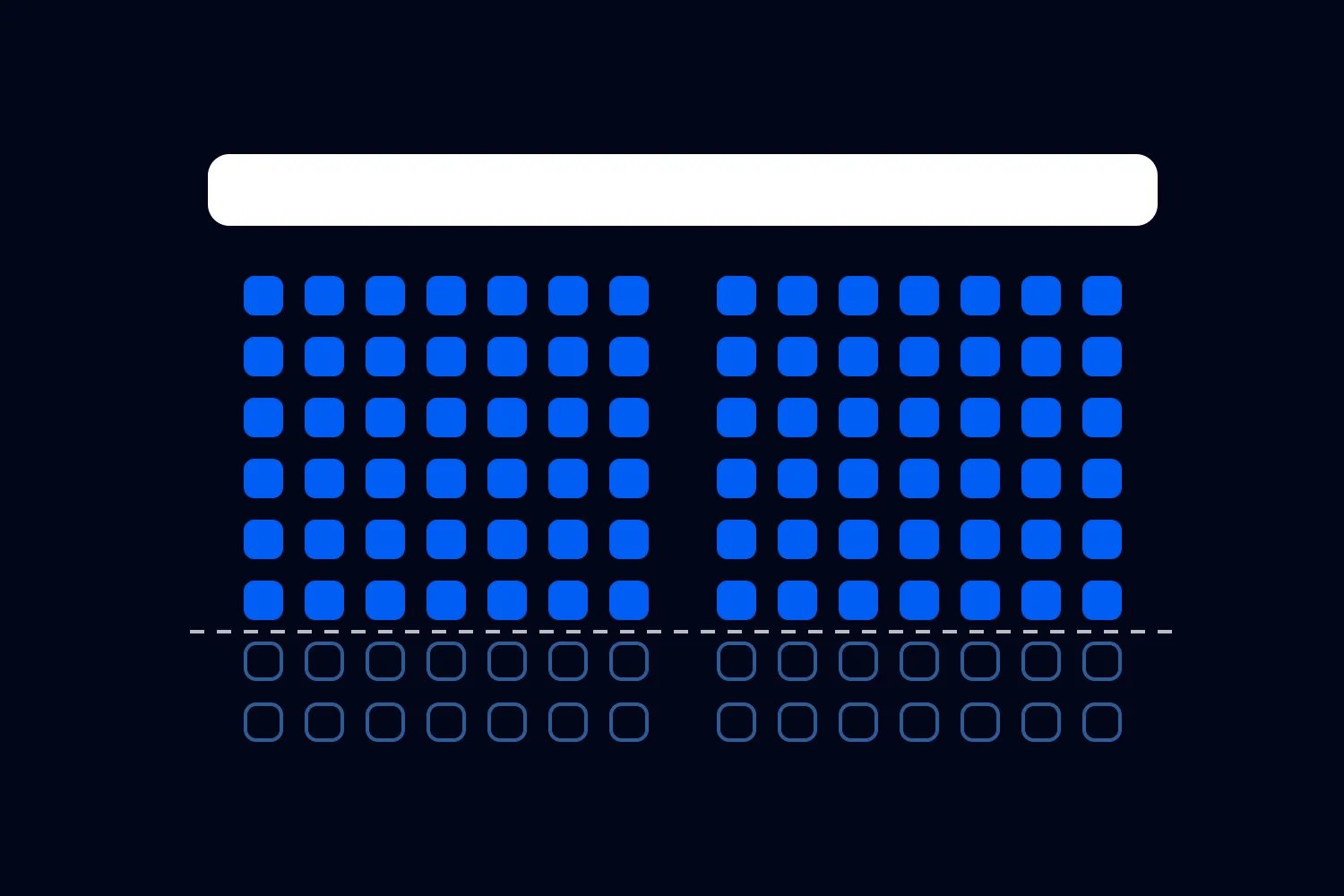
So you've got a small venue, a few reliable hire bookings and too many empty dates. You could put on your own shows. You already have the room, the sound system and somewhere for people to buy a drink. Surely keeping the ticket money has to be better than leaving the place closed?
It can be. A venue-produced programme can bring in money on otherwise quiet dates and give people a reason to return to your venue. But you also take responsibility for selling the tickets, paying the performers and delivering the night. Having your own room means you don't pay another venue's hire fee. You still have to pay for opening yours.
My view is that you should test a small, repeatable programme before filling the calendar. Work out what each opening leaves after its own costs, compare that with a real hire opportunity, then check whether the combined month pays the venue's ongoing bills. Those are different decisions. Mixing them together can make a busy venue look healthier than it is.
This guide is for a venue business producing public, paid events under its own name. We'll work through a small room's ticket capacity, a complete show budget and a monthly result, then use those numbers to decide which dates deserve another booking. The calculations are examples you can replace with your own figures. They aren't a prediction of what your venue will earn.
First, separate the venue's different ways of earning
Start with what you actually sell. When another organizer hires your room, you sell an agreed period of access and whatever services the booking includes. The hirer may carry most of the audience and programming risk. Your work still includes handling the booking, preparing the room, supplying agreed staff and restoring it afterwards.
When you produce the event, you sell the experience to ticket buyers. You choose the programme, set the offer and carry the consequences if sales are weak. You may keep more of the revenue, but the extra receipts come with extra work and commitments. A full hire diary doesn't prove that you can sell your own programme.
There may also be ordinary trading, such as a cafe or bar open without a ticketed show. Keep that activity visible. If the cafe would have made money anyway, you can't count all its evening receipts as a benefit created by the event. Identify the additional income and costs that the show actually changes.
For each kind of booking, record the money the venue retains after the costs caused by that booking. We'll call this its contribution. That means the amount left to help pay shared bills such as rent and year-round administration. It isn't the venue's final profit, and it isn't the same as ticket revenue or the total through the bar.
You can then compare a hire booking with a venue-produced night using the same question. How much does this use of the room leave for the business after we've delivered it properly? Comparing a hire fee with gross ticket sales misses most of the answer.
Your event business plan should explain how these activities support the company over time. Here, we're making a narrower decision: whether producing your own ticketed dates improves the venue's result, and which dates make sense to produce.
An empty night isn't free, but it can be the cheaper choice
The rent may be payable whether the room opens or stays dark. That makes an empty Wednesday feel wasteful. It's tempting to say that any ticket income is better than nothing, because you're already paying for the building.
The missing question is how much you must spend to earn that income. A new show might need a performer, extra staff, cleaning, marketing and someone to manage production. If the additional receipts don't cover those costs, opening makes the business worse off than leaving the room closed. The rent still needs paying in both cases.
That doesn't mean every event must carry an identical share of rent before you consider running it. A quiet date that genuinely leaves money after all additional work can help cover costs that would exist anyway. Rejecting it solely because of an arbitrary rent allocation could also be a mistake.
You need both views. Use the additional income and costs to decide whether a particular opening improves the position. Use the complete monthly accounts to decide whether the venue is sustainable. An event can pass the first test while the overall business fails the second.
Keep a practical record of the closed-night alternative. Would staff otherwise be paid for productive work, have a different shift or not be rostered? Would the bar trade anyway? Does opening require an extra manager rather than simply moving existing hours? Your answer changes which costs belong in the comparison.
A genuinely avoidable payment belongs against the opening. A cost that continues unchanged belongs in the shared monthly total. Some costs have both parts. Electricity might include a standing charge and extra use, while a salaried manager might need paid cover when producing the show takes them away from normal duties.
The US Small Business Administration's break-even guidance explains the distinction between fixed, variable and mixed costs. Apply that distinction to the period you're deciding about. A performer fee can be fixed for one show while disappearing entirely if you decide against booking the next one.
Find your actual paid ticket inventory
Don't begin with the largest number on the venue's marketing page. Begin with the layout and operating arrangements for this particular event. A standing music night, a seated talk and a workshop with tables can use the same room very differently.
Confirm the safe and permitted capacity with the people responsible for the venue and event. Then identify the attendee places available after the production layout and other restrictions. Finally, remove complimentary places, sponsor allocations and holds from the number you expect to sell. Keep the reason for each allocation clear.
Great Britain's Health and Safety Executive makes assessing the venue and its safe capacity part of crowd planning. Its guidance considers how people enter, move around and leave. A room that physically fits more chairs doesn't automatically have permission or arrangements to admit more people.
For the worked example below, assume the venue has already confirmed a layout with 120 attendee places after all relevant restrictions. Eight are reserved for complimentary guests, leaving 112 paid tickets. These are invented inventory assumptions, not a capacity assessment or a recommended allowance for another venue.
Now check what the offer requires. A demonstration might need a clear view of a small working area. A performer might ask for space within the audience. Adding seats could damage the experience people bought even where it is otherwise permitted. Your commercially useful capacity may be lower than the maximum you can admit.
Be equally clear about where holds go. If a production hold can be released later, record who confirms that release and when. Don't forecast the same place as both a paid sale and a guest allocation. If you increase comps, update the paid inventory and any associated refreshment costs together.
This is where small rooms become unforgiving. A few unavailable places can matter when the budget depends on selling almost everything. Before arguing about another marketing campaign, check whether the available inventory can produce the income the plan requires at all.
Build a show budget that includes your own work
Let's use one fictional small venue throughout. All the amounts are USD planning assumptions. They aren't supplier quotes, wage guidance, Loopyah fees or average venue results. Revenue excludes sales tax collected for authorities, and costs include any assumed nonrecoverable transaction taxes. The example result is before financing costs and business income tax.
The venue sells its own shows as well as taking hire bookings. For a particular show, its average retained ticket income is $24 per paid ticket after discounts and refunds, before the ticket-related costs below. That is an expected average across actual prices, rather than the highest advertised price multiplied by every buyer.
Ticket-related costs are assumed to be $2 per retained paid ticket. In this simplified example, that covers all organizer-borne ticket transaction costs, with no additional unrecovered refund charges. Each retained paid ticket therefore leaves $22 before the show's other income and direct costs. Your actual fee structure may behave differently.
The venue also expects $4 of net bar contribution for each paid attendee. That amount is after stock, bar labour, payment costs and waste allocated to those sales. For the example, every retained paid buyer attends. Complimentary guest hospitality is already allowed for in the fixed show costs. No sponsor income, merchandise or other revenue is assumed.
Together, the ticket and bar assumptions provide $26 per paid buyer towards the fixed show costs and then the venue's overhead. The $4 isn't an entitlement attached to every ticket. It's an uncertain trading assumption that we'll test separately. If buyers don't attend or spend, actual bar contribution will be different.
The fixed direct costs of opening this show are:
Performers and agreed programme costs: $650.
Event staff outside the bar allocation: $450.
Show-specific marketing: $180.
Extra utilities, cleaning, hospitality and supplies: $170.
Paid producing work by the owner: $250.
That totals $1,700. The staff and producing allowances include the assumed full cost of the work assigned to this date. Bar staff are counted in the net bar contribution, so we don't count them again here. The building's ongoing costs will appear once in the monthly calculation.
Including the owner's work is deliberate. Booking talent, checking the offer, managing sales and settling the night take time even when no invoice arrives. If the programme only works because you do all that indefinitely without pay, you've established a different proposition from a venue that supports paid work.
For an initial test, you may choose to invest some of your time. Record the hours and what you would pay for the role in a repeatable operation. Keep that investment visible alongside the cash result. Otherwise the first night becomes the basis for a series that nobody has time to run.
Work out what one opening leaves
At 70 retained paid tickets, the example produces $1,820 towards the fixed show costs, using $26 per buyer. After the $1,700 cost of opening, it leaves $120 for the venue's ongoing bills. That is a positive contribution, but it gives you little room for an unexpected bill or a weaker bar.
At 90 paid tickets, the contribution towards fixed costs is $2,340, leaving $640 after opening costs. At the full paid inventory of 112 tickets, it leaves $1,212. Every figure uses the same price, cost and bar assumptions, with no extra staffing threshold within this range.
The show covers its own costs at 66 retained paid tickets. Dividing $1,700 by $26 gives a little more than 65, so you round up to the next whole ticket. At 65 tickets, you're $10 short. At 66, you have $16 left. Neither result says anything yet about paying the building's rent.
Our event break-even guide develops the calculation for different prices, refunds and other revenue. For this venue, the useful point is that covering the opening costs is a starting condition. You still need enough contribution across the programme and hire diary to run the business.
Now remove the assumed bar contribution. With only $22 per ticket available, 90 paid buyers leave $280 after the same $1,700 show costs. The night remains better than a genuinely closed alternative under these assumptions, but the amount available for overhead has more than halved.
That difference deserves attention before you approve the next show. Is the $4 supported by comparable trading records? Does the audience have time to use the bar? Are the right products available? Does your agreement actually let the venue retain the money? A promising ticket forecast shouldn't conceal an unsupported second income stream.
If your costs change in steps, calculate those steps. You might need another staff member, a different production setup or extra access hours beyond a particular attendance level. The next sale then brings its ticket income but may also trigger a larger commitment. A single average cost won't explain that decision.
Put the shows back into a complete month
Now give the venue a fictional monthly overhead of $6,000. This includes $2,500 for the premises, $1,800 for ongoing administration pay, $300 for insurance and compliance, $400 for routine maintenance and equipment provision, and $1,000 for other standing costs. These are illustrative categories and amounts, not recommended spending levels.
Ongoing administration pay includes the agreed work outside individual bookings. The owner's $250 producing allowance per show covers separate additional work, so the same hours aren't paid twice. In a real venue, check the division against actual duties. If a salary already covers producing, don't add a second charge for the same hours.
The maintenance provision represents the regular operating allowance used in this planning model. It isn't an additional cash purchase of equipment every month. Have your accountant align the full accounts with appropriate depreciation and expense treatment, and put actual equipment payments into the cash forecast when they fall due.
Assume four hire bookings each leave $800 after all their direct delivery and booking costs. Together they contribute $3,200. No bar income or labour from these hires appears again elsewhere. The venue still needs $2,800 to cover the $6,000 monthly overhead.
Now add six venue-produced shows, each selling 90 retained paid tickets. Their contributions total $3,840, using the $640 result from the show budget. Together with hire income, that's $7,040 towards overhead. After the $6,000, the venue has $1,040 of operating profit on the stated basis.
That's a business result you can discuss. It depends on four hire bookings, six produced dates, average show sales of 90 tickets and the assumed bar performance. It also depends on being able to deliver all ten bookings within the month. None of those conditions is proved by writing them into a forecast.
If each produced show sells only 70 paid tickets, the six shows contribute $720. Add the same $3,200 from hires and the monthly total is $3,920. The venue loses $2,080 after overhead, even though every produced show covers its own opening costs.
At 112 paid tickets on every produced date, the same month leaves $4,472 after overhead. Treat that as the inventory ceiling under these assumptions, rather than your default plan. A forecast that needs every date to sell out gives you no spare ticket inventory to compensate for weaker sales elsewhere.
Calculate the ticket target the venue actually needs
The monthly model gives you a more useful sales target than the show's individual break-even point. After the four hire bookings, the programme must cover $2,800 of remaining overhead as well as six sets of $1,700 show costs. That's $13,000 to recover from paid buyers across the six shows.
At $26 per buyer, the venue needs 500 retained paid tickets across those dates to break even for the month. That works out at a little over 83 per show. If every show sold the same whole number, 84 tickets each would put the venue just above break-even on this model.
Different dates can carry different results. One show selling strongly can offset a weaker date, provided the combined price, cost and bar assumptions still hold. Forecast the dates individually when the programming or audience differs, then add them. Don't use an average to hide a show whose losses you haven't agreed to fund.
The target is also a test of the proposed format. If your evidence suggests 60 likely paid buyers on a typical date, a monthly requirement around the mid-eighties needs an explanation. Lowering the forecast to something realistic is useful even when it makes the original programme unattractive.
You have several ways to respond. Reduce genuine costs without damaging the promise, improve the offer enough to support a different price, secure additional net income or change the number and mix of bookings. You can also decide that the format isn't suitable for this room. Each response needs fresh figures.
Adding shows doesn't automatically repair the month. An additional date carries another $1,700 opening cost in this example. It only improves overhead coverage when its own retained income exceeds that cost, and the extra date doesn't weaken sales on dates already planned.
Before treating this model as permission to open more often, replace every assumption with your records and current quotes. Include any omitted taxes, financing, owner pay or equipment costs in the appropriate place. The target is only as complete as the costs it is supposed to cover.
Compare your own show with a real hire opportunity
Suppose someone wants to hire the room on the same date as the example show. Their booking would leave $800 after all the additional work and costs it requires. Your produced show is expected to leave $640 at 90 paid tickets. Choosing your own show means accepting $160 less towards the same overhead.
You may have a good reason. The programme might be part of a deliberate audience-development test, or the hirer may need access that conflicts with another commitment. But write the reason and its cost. Keeping ticket revenue isn't automatically the more profitable use of the room.
Under the example's unchanged assumptions, your own show needs 97 retained paid tickets to beat an $800 hire contribution. At 96 it leaves $796. At 97 it leaves $822. That's a much higher threshold than the 66 tickets needed to cover opening costs, even though nothing about the show budget has changed.
This comparison only applies when the hire is genuinely available on workable terms. A published hire rate isn't a booking. An enquiry with no agreed date or delivery requirements isn't guaranteed income. Use confirmed offers, the realistic booking pipeline and your own conversion history, while keeping their uncertainty visible.
You can set different programming rules for different parts of the diary. Protect dates that reliably attract good hire bookings. Test your own programme on dates with less competing demand. Review how far ahead each kind of buyer books before deciding when an unsold hire date becomes available for production.
That handover needs enough time to sell and deliver the show. A room becoming free shortly before the date doesn't create an audience, a suitable performer or a prepared team. Sometimes the commercially sensible response to a late gap is to leave it open rather than buy an expensive show at short notice.
Don't subtract the foregone $800 again as a cash expense in the monthly accounts. It's the benefit of the alternative you turned down, used to compare choices. The accounts record the income and costs of the booking you actually accept. Counting both would misstate what happened.
Choose a programme you can sell repeatedly
A small venue doesn't need a different concept for every free date. It needs a reason for a defined audience to buy, delivered often enough to build recognition without asking the same people to spend more than they want. Start with the audience you can reach and the experience your room can provide well.
Look at your own paid events and the hirers' publicly observable results where available. What formats suit the room? Which start and finish times work for the audience? What production demands repeatedly cause difficulty? Don't assume that a popular visiting show gives you permission to use its customer list or reproduce its creative offer.
Choose one initial format with manageable requirements. That might be a seated comedy programme, a listening concert or a practical class. Each needs its own commercial case. Mixing several formats at launch makes it harder to understand whether weak sales came from the idea, the price, the date or the way you presented it.
Write the buying promise in ordinary language. Who is performing or teaching, what will happen, how long will it last and what does the ticket include? People don't pay because your diary needs filling. They pay because the evening is worth their money and time compared with their other options.
Test price against that promise. A cheap ticket might make the first purchase easier, but it also reduces the money available for a small room's fixed costs. If you need discounts on most sales, put the discounted average into the budget. Don't approve the performer using full-price income and review the result using a different price mix.
Frequency needs testing too. The audience that fills a monthly show may not buy the same kind of evening every week. More dates can spread existing demand across more opening costs. Keep enough time between commitments to see whether people return, whether new buyers arrive and whether the team can repeat the work.
A recognizable series can still vary its programme. Explain what remains consistent, such as the format and standard of presentation, and what changes, such as performers or subjects. That gives previous buyers a useful reason to consider the next date without making every night feel interchangeable.
Count all the hours around the public opening
The advertised show might last two hours. Your team may work much longer. Someone handles the booking, builds the ticket offer, answers access questions, prepares the room, checks equipment, manages arrival and closes the venue. Afterwards, someone reconciles receipts and pays the people who delivered it.
Write the work by role and phase, including breaks, setup, cleaning and settlement. Then ask which tasks can genuinely be combined. The person supervising an incident can't also be guaranteed to scan every arrival or mix sound continuously. A small team still needs a workable allocation of responsibility.
Great Britain's HSE event management guidance covers coordination, competence and supervision throughout delivery, including setup and breakdown. Cost the arrangements your event needs. Cutting a line from the budget doesn't remove the work or make it safe to leave uncovered.
Use the employment rules that apply to your location and roles. In Australia, the Fair Work Ombudsman's guidance on calculating employee pay directs employers to the relevant award or agreement and tools for checking applicable rates, allowances and overtime. Don't carry the fictional staff allowance in this article into a real roster.
Existing salaried staff deserve a proper time check. If producing an extra event uses hours previously spent selling hires, chasing invoices or maintaining the building, something else has changed. You may not need another immediate wage payment, but you do need to understand the work displaced and whether it creates a later cost.
Track the owner's hours in the same way. It's useful to know whether a $640 contribution required modest producing work or an entire extra working week. That doesn't turn every hour into a new cash expense. It tells you whether the model can support the workload when you repeat it.
The building also needs time between bookings. Resetting a cabaret layout for a workshop, testing equipment and correcting damage all consume access hours. Put those hours in the calendar before selling the next date. A monthly forecast with enough customers can still fail if the team and room can't deliver the promised bookings.
Treat bar income and extra sales honestly
If the bar is part of your model, measure what it contributes to the event after its own costs. The example's $4 per paid buyer is an assumption to investigate, not a target the team should achieve by pushing people to drink. Plan a service that fits the audience and the event.
Check the records from comparable nights. Use actual attendance, the products sold, staffing hours, stock use and waste. A sold ticket that goes unused can still leave retained ticket income, depending on the terms and circumstances, but it doesn't create a customer at the bar. Keep ticket sales and checked-in attendance separate in the real model.
The bar's opening pattern matters. A long interval may concentrate orders, while a continuous performance gives people fewer opportunities to leave their place. An audience arriving just before the start may behave differently from one spending time in the room beforehand. Make the service plan fit the show rather than adding unsupported spending to the forecast.
Our guide to improving bar sales at a ticketed music venue covers the operational work in more detail. For this decision, use the amount the venue can retain after the relevant stock, labour and other costs. Confirm any promoter or concession share before including the money.
Apply the same treatment to other extras. Merchandise has product and selling costs. A sponsor package has agreed delivery work. A ticket that includes a refreshment has already paid for that inclusion, so you can't count the same money again as an independent bar purchase.
If an income stream is unproven, show the month without it. For our six shows at 90 tickets, removing the bar contribution reduces each show's result from $640 to $280. The month then loses $1,120 after the unchanged hire contribution and overhead. That tells you how much the original plan depends on bar performance.
You may decide to test the bar assumption before committing to the full programme. You could also select a format and ticket price that works without it. Either approach is more useful than calling all bar receipts profit or assuming that a busy room must spend enough to make the numbers work.
Check permission and payment timing before selling
A venue that can host an outside hirer may still need to check the arrangements for its own proposed programme. Confirm the intended activity, hours, layout, alcohol service where relevant, insurance and any creative rights with the appropriate advisers and authorities. Existing use doesn't answer every new format or operating change.
For example, the government's entertainment licensing guidance explains circumstances where entertainment in England and Wales may require authorization and distinguishes film copyright permission from entertainment licensing. Requirements and exemptions depend on the activity. Use the local authority's current advice for your event rather than assuming a small audience removes every requirement.
Then map when money arrives and leaves. A performer may need a deposit before ticket sales begin. Staff and suppliers may be due payment before ticket proceeds reach the bank. A show can be profitable on paper while the venue lacks the cash needed to deliver it.
Business Tasmania's budgeting and cash-flow guidance explains the difference. Profit measures income against expenses, while cash flow follows money in and out. Use both records. A deposit can be part of an eventual event cost without becoming an additional expense just because it was paid earlier.
Keep buyer refunds, tax payments, payroll and existing hire obligations in the cash forecast. The money in the bank may already be needed for work you've sold. Ticket receipts for a future show don't become spare funds simply because the current month is short of money.
Before accepting a commitment, identify its cancellation terms and how much remains payable if sales disappoint. A decision deadline only helps if you still have a meaningful choice at that point. Waiting until the performer's full fee is due may leave you with the same bill even if you cancel.
Don't assume that weak sales give you a general right to cancel without consequences. Check your agreements, buyer promises and applicable consumer obligations before choosing a response. The financial forecast should include the cost of honouring those obligations, including a workable process for informing affected people.
Run a pilot with an agreed decision at the end
Give the first programme a defined scope. Choose the dates you can deliver and afford, the maximum commitments you'll accept and the questions the test must answer. You might be testing paid demand on a quiet weekday, willingness to pay for a specific format or whether the team can produce it without disrupting hires.
Choose the review date before booking an indefinite run. There's little value in calling something a pilot if you've already committed to the next season before seeing the results. Keep future dates conditional where your agreements allow it, and be clear with performers and suppliers about what is confirmed.
Set sales checkpoints against actual spending decisions. At each checkpoint, review retained paid sales, expected remaining sales, the price achieved and the costs still avoidable. Compare the full delivery option with any permitted alternative. Don't use a fixed ticket target as a substitute for reading the contracts and current forecast.
Loopyah's ticket sales reporting shows which sources sold tickets, including posts and emails. That helps you compare your promotion plan with actual purchases as sales develop. You still supply the venue costs, hire alternatives and cash commitments needed to judge whether the date works for the business.
Make the ticket-buying experience part of the test. Check the event description, price, inclusions, access information and confirmation before launch. Our guide to ticketing for a small performance venue explains the operational checks. An audience can't prove demand if the offer is confusing or buying a ticket doesn't work properly.
After each date, settle the actual figures rather than the optimistic version. Record discounts, refunds, fees, staff hours, programme costs and net bar contribution. Include bills still outstanding. Ask the team where the plan required extra work and ask buyers what affected the experience or their decision to return.
Look for reasons behind the result. Strong sales with excessive staff hours suggest a different fix from weak sales with smooth delivery. A good first night driven by one unusually popular performer doesn't establish demand for every other show in the series. Keep the conclusion as specific as the evidence.
For the review meeting, copy these prompts and answer them for each date. Attach the sales report, cost record and roster so someone else can check the result.
Date and format: What did we produce, and how did it differ from the other pilot dates?
Paid demand: How many tickets did we retain after refunds, at what average income, and how many buyers actually attended?
Money left: What did the show contribute after all its direct costs, including producing work and the actual bar result?
Work required: Which roles used more hours than planned, and what would repeating those hours cost?
Alternative booking: Was a genuine hire offer displaced, and what would it have contributed?
Next commitment: What remains payable, when is cash needed, and what would changing the next date cost?
Decision: Repeat, revise or stop this format, with a named person responsible for any change before more dates are confirmed.
Keep a separate monthly page combining the hires and produced events with the venue's overhead. A successful pilot date doesn't settle that wider question. If you choose to fund a weaker format because it serves a longer-term purpose, record the amount, the evidence you expect to learn and the point when you'll reconsider. That makes it a deliberate investment you can review, rather than a loss discovered after another season is booked.
Decide which dates to repeat
Return to the three choices for each part of the diary. You can accept a hire booking, produce your own event or leave the room available. Use the income, work and commitments attached to the options that actually exist. A wish for a busier venue doesn't make an otherwise weak show financially attractive.
For our fictional venue, six shows at 90 paid tickets plus four hires produce a positive monthly result under the stated assumptions. The same shows at 70 tickets don't cover the month, and the 90-ticket show contributes less than a genuine hire offer leaving $800. Each comparison answers a different question the operator needs to resolve.
You might repeat only the strongest format, keep the programme on quieter dates or change the offer and test again. You might also decide that hire bookings are the better use of the room for now. That is a useful result of the work, especially if it prevents a season of commitments the business can't support.
Before approving another run, write down the dates, the paid sales evidence, the work required and the expected complete venue result. Check that cash covers the commitments and that the team can deliver them. Then book the next programme at a scale those records support.

Author: By the Loopyah Content Team
The Loopyah Content Team shares expert insights, practical guides, and industry updates to help event organizers create unforgettable experiences and stay ahead in the event planning world.