· 13 min read
Low-cost weekly entertainment ideas for small Australian pubs
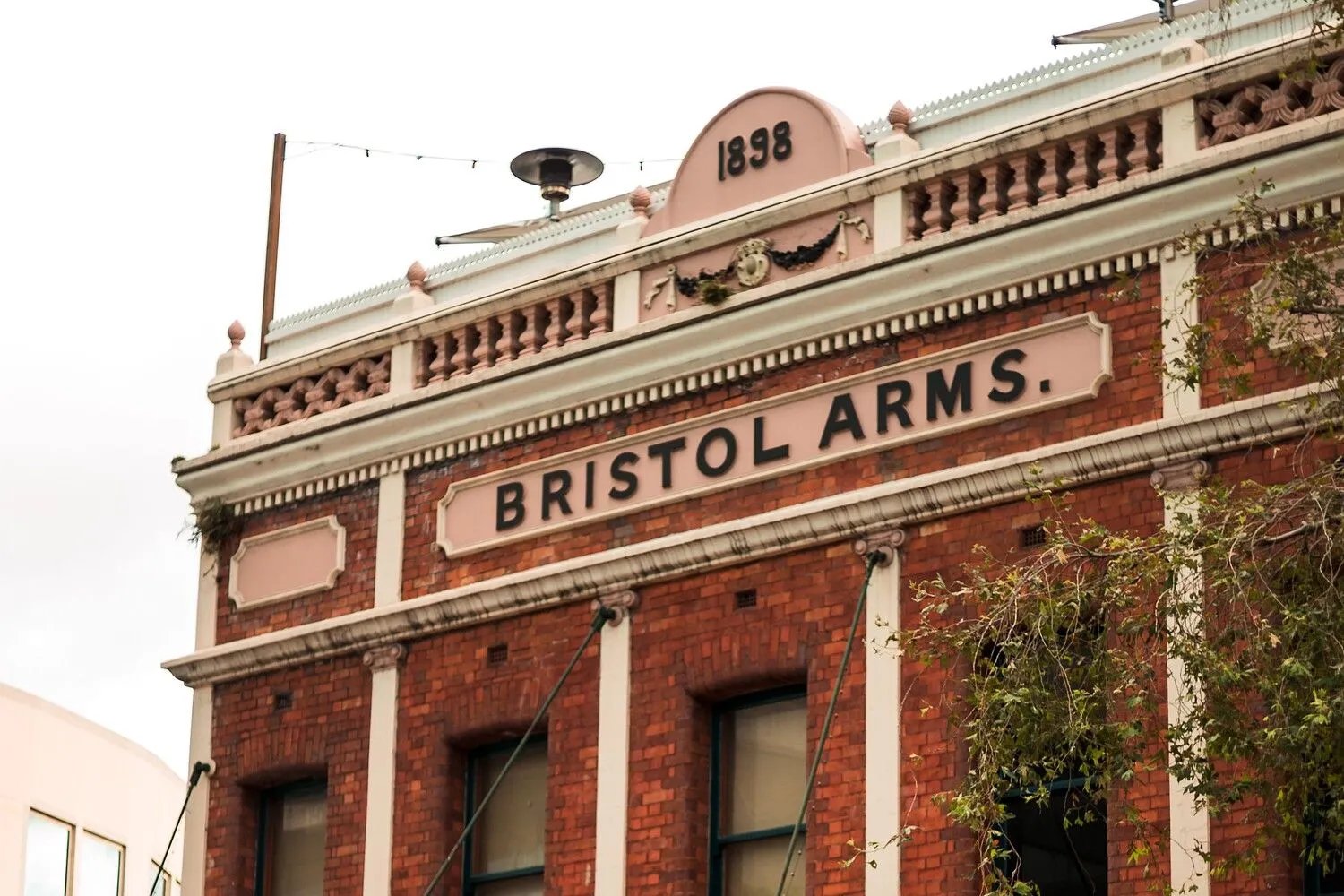
For a small Australian pub, start with a format you can repeat using the room, equipment and staff you already have. A paid comedy night, an acoustic listening session or a small workshop can be worth testing if ticket income covers the extra work. Work out the minimum paid attendance before you promise a weekly programme.
"Low-cost" should include the person setting up, the host, promotion, cleanup and the space you give up. A cheap act can become an expensive night when it needs extra sound equipment or displaces your best dining tables.
This guide compares three paid formats, works through illustrative budgets in Australian dollars, and lays out a four-week test. If you are still looking for a wider range of themes, our bar event ideas can help. Here, the decision is which night you can run again without regretting the bill.
Choose the room and the night before the entertainment
Walk the room while the pub is trading. Can customers hear someone speaking without the host shouting over the bar? Can staff serve drinks without crossing the performance area? Is the entrance obvious to a first-time visitor?
Those details decide which formats are practical. A listening session needs an audience that can actually listen. A workshop needs table space and somewhere to put materials. A comedy night needs sightlines, a microphone and a host who can keep the room together.
Count the seats you can sell in the actual setup. Leave space for access, circulation and the work of running the event. Confirm the arrangement against the venue's applicable capacity and operating conditions; do not borrow the capacity number from a different room layout.
Choose a night with room to improve, then check what you would be replacing. A quiet Tuesday might make sense. Moving a profitable regular booking to make way for a new event creates a cost even if nobody sends you an invoice.
Agree who keeps the ticket income, who keeps food and drink sales, and who pays each bill. An outside organizer and a pub owner have different economics. A busy bar does not rescue the organizer's loss unless the agreement gives them a share of that income.
Three paid formats to compare
A hosted comedy night with a clear bill
Use a capable host and a small lineup suited to the room. Decide who books the performers, checks the sound and handles a late cancellation. Ask for a written quote covering the agreed set, travel, equipment and any other commitments.
A paid audience needs a clear promise. Tell people what kind of comedy they are buying, the running time and any applicable age or content information. Do not sell an untested open mic as a professional showcase and hope enthusiasm covers the gap.
The repeatable part is the format: recognizable start time, host, room layout and booking process. You can change the bill without rebuilding the entire night. Give the host enough authority to handle interruptions while the venue retains responsibility for its own service and operating rules.
Comedy is a sensible candidate when you have good speech sound and a room that feels comfortable with a modest crowd. A large empty room makes a small test harder to deliver well.
An acoustic listening session
Offer a specific artist, style or performance worth booking for. A seated ticketed session needs a different arrangement from background music beside a busy bar. Make it clear whether the ticket buys a seat, entry to a standing area or a place at a shared table.
Ask the performer what they bring and what the venue must supply. A modest fee with unexpected sound hire may cost more than an inclusive quote. Confirm the sound check, set length, breaks and finish time before choosing the ticket price.
Check music permissions with the venue. OneMusic's pub licensing guidance explains that commercial public music use can require permission, and that a personal streaming subscription does not supply those rights. Ask whether the proposed live and recorded uses are covered by the venue's arrangements.
Do not treat "acoustic" as a promise that sound, licensing or neighbour considerations disappear. The advantage is a potentially simpler production, provided the quote and room support it.
A small workshop with a useful result
Drawing, simple craft or another practical workshop can work in a room with tables. Choose an activity with a clear result, a competent facilitator and materials you can cost before selling.
Explain what the ticket includes. Does each person take something home? Are materials supplied? Is a drink included or bought separately? Buyers should be able to compare the offer without asking three questions in the comments.
Workshops often exchange lower capacity for a different ticket price and higher per-person costs. Count the facilitator's preparation and cleanup as well as the session. Find out whether materials must be ordered in advance and what happens to unused stock.
Avoid making the session dependent on alcohol purchases. The activity should still make sense for someone who wants a soft drink. If the theme involves food, tools or other special requirements, choose a facilitator and venue arrangement that can handle them properly.
Compare the numbers on the same basis
Use retained ticket proceeds, not the headline ticket price, in your operating calculation. Retained proceeds means the amount left after applicable taxes and ticketing or payment fees you bear. Then subtract the extra cost of serving one more participant.
Business Victoria's margin guide explains why money left after direct costs must still cover overheads before it becomes profit. For each night, divide the fixed-cost total by the contribution from one paid place, then round up to a whole ticket.
The examples below are invented planning scenarios in Australian dollars. They are not performer quotes, typical market rates or Loopyah fees. Each fixed-cost total is an assumed allowance for the act or facilitator, additional staff, promotion, equipment or permissions as needed, and an allocated share of overhead. Replace every input with your own quote and cost allocation.
Example one: a 40-place comedy night
Assume fixed costs of A$540: A$300 for the host and acts, A$100 for extra staffing, A$60 for promotion, A$40 for equipment or permissions and A$40 allocated to overhead. These are invented allowances to show the calculation. Each paid place produces A$24 after applicable taxes and organizer-borne fees, with another A$2 of attendee-related costs. That leaves A$22 per place to cover fixed costs and profit.
A$540 divided by A$22 is 24.55, so you need 25 paid places to cover the assumed costs. At 40 paid places, the result is A$880 less A$540, or A$340 before any costs or taxes not included in the assumptions.
That margin is your room for error. It will shrink if you give away seats, pay for extra promotion or add staff beyond the allowance.
Example two: a 40-place acoustic session
Assume fixed costs of A$720, retained proceeds of A$24 per paid place and A$2 in additional costs per attendee. The A$22 contribution is the same, but the larger fixed bill changes the risk.
A$720 divided by A$22 is 32.73, so you need 33 paid places. At 40 paid places, A$880 less A$720 leaves A$160 under the stated assumptions.
That does not make acoustic music a bad choice. It means this particular quote and ticket offer need more of the room to sell. A different quote, higher retained price or different capacity would change the calculation.
Example three: a 24-place workshop
Assume fixed costs of A$360. Each place produces A$35 after applicable taxes and organizer-borne fees, while materials and other per-person costs total A$15. The contribution is A$20 per participant.
You need 18 paid places to cover A$360. At 24 paid places, A$480 less A$360 leaves A$120 under the stated assumptions. Buying materials in minimum batches or keeping them after a cancellation may change which costs are genuinely variable.
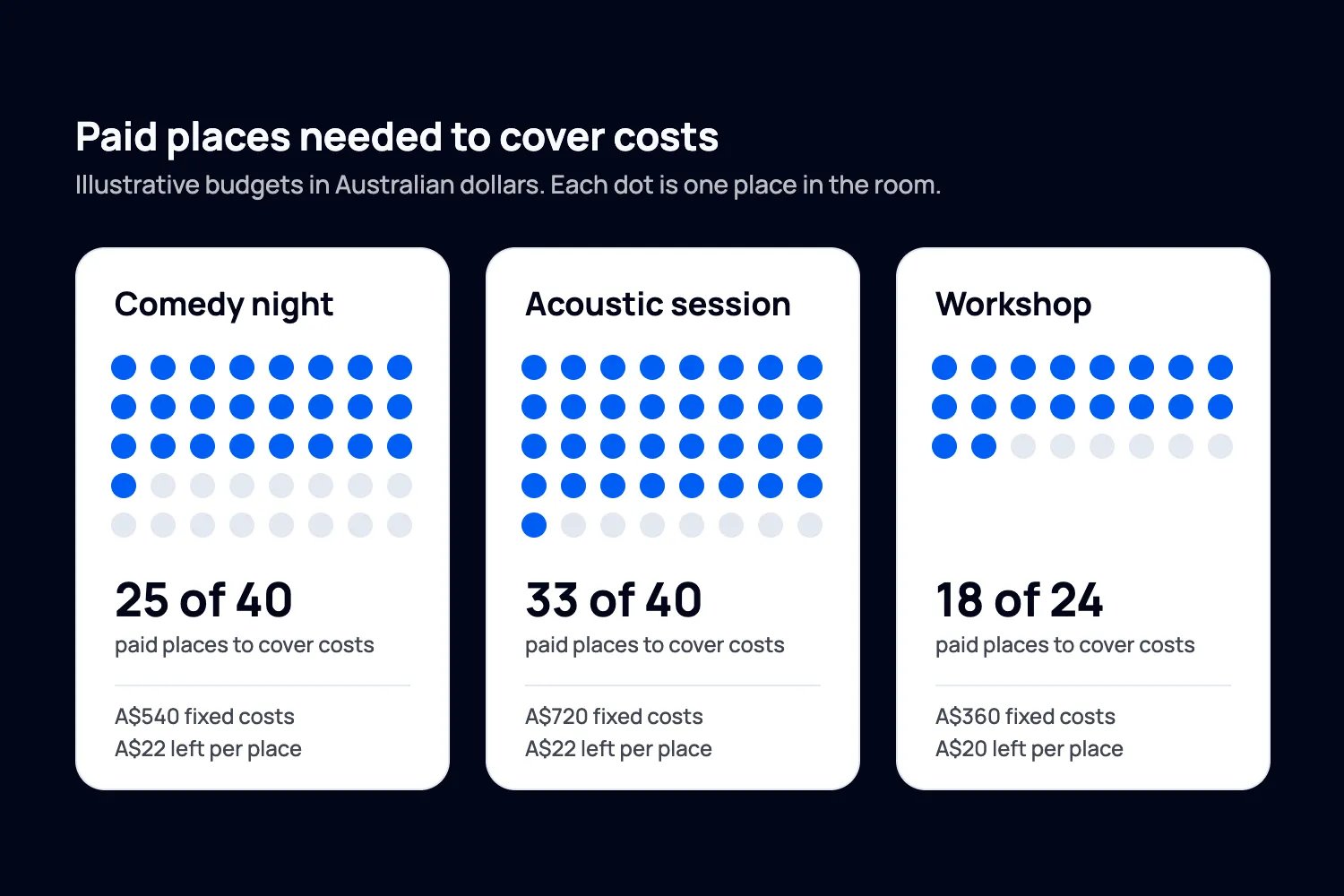
Now compare the nights with only three-quarters of the paid places sold. Under these illustrative assumptions:
Comedy sells 30 of 40 places and leaves A$120 after the stated costs.
The acoustic session sells 30 of 40 places and loses A$60.
The workshop sells 18 of 24 places and just covers its stated costs.
That gives you a useful choice. Comedy has more room for unsold seats in these examples; the workshop commits less to fixed costs; the acoustic quote needs a stronger sales forecast. It doesn't mean comedy is always better or that all three formats will sell at the same rate. Replace the inputs with real quotes and a credible attendance estimate for each offer.
Test a weaker turnout too. Twenty comedy tickets would leave a A$100 shortfall. Four nights with that same result would lose A$400, so decide what the whole trial can afford before committing to the series.
Our event budget guide covers the wider budget. Keep costs in one place so the same staff time does not disappear between the pub's accounts and the event's accounts.
Keep food and drink income separate
Food and drink sales can improve a pub's result, but the till total is not profit. Compare the amount left after stock and trading costs with similar non-event nights. Use the same weekday and hours, and note differences such as a holiday, big match or unrelated booking that make the comparison less useful.
Charge each cost once. The event budgets above already allow for extra staff and a share of overhead. If those same wages appear in the pub's trading calculation, remove the duplicate when combining the figures. Count any ordinary trade displaced by the event before calling the remaining increase a gain.
If regular customers simply move their normal visit to event night, that is different from winning extra trade. Record what you can establish and keep uncertain assumptions visible.
For an outside organizer, use only the payment or revenue share actually agreed with the pub. If the pub keeps the bar, leave the bar out of your break-even calculation. You can negotiate a different arrangement, but you cannot pay a comedian with somebody else's sales.
Complimentary tickets need similar care. They use capacity and can incur costs without producing ticket income. Show them separately from paid attendance instead of celebrating a full room that did not cover the bill.
Make the offer easy to buy
Give the night a repeatable name and explain this week's specific reason to attend. Include the performer or facilitator, date, doors time, start and finish, what is included and how seating works.
For consumer-facing prices, follow Australia's price display rules, including the applicable requirements around the total price and mandatory charges. The retained-proceeds numbers in the examples above are private planning inputs; they are not ready-to-publish ticket prices.
Loopyah's ticketing tools let you create a paid event, manage ticket types and track sales. Use those sales to decide whether the night is progressing towards its paid-attendance target. The venue and organizer still need to agree the programme, cost commitments and decision dates.
Avoid unlimited door promises when the room has a limited layout. Use the same ticket inventory for advance and door sales wherever possible, and account for guests and complimentary places in the usable capacity.
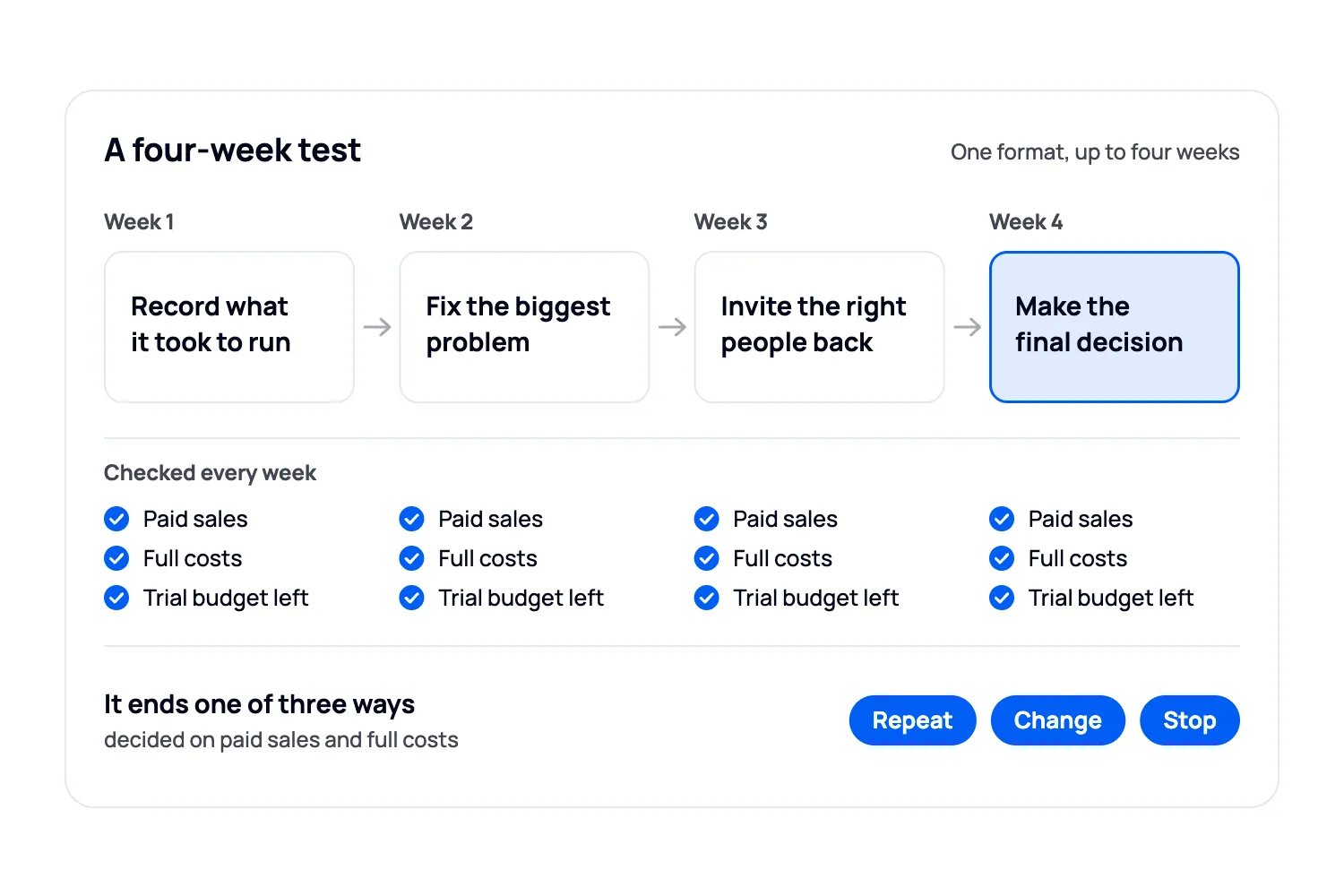
Run a four-week test you can learn from
Plan a trial of up to four weeks using one promising format. Agree the review dates and cancellation commitments with the venue and performers before selling a series. Set a maximum total loss you can fund, including money already committed to later dates. A four-week plan isn't a reason to ignore a failing first or second night.
Keep the core format consistent enough to learn from it. Four unrelated events tell you less about whether a weekly habit is forming. The schedule below is a suggested test, not a claim that four weeks proves long-term demand.
Week one: record what it took to run. Track paid sales, actual attendance, costs, staff hours and customer questions. Separate one-off launch work from costs that return every week. Note delivery problems such as poor sightlines or a late start, then review the next commitment against the remaining trial budget.
Week two: fix the biggest problem. Keep the core offer recognizable. If the issue was finding the entrance, change the arrival information. If nobody understood the workshop result, change the explanation and imagery before cutting the price.
Week three: invite the right people back. Use the next lineup or activity to make the invitation specific. Distinguish new buyers from returning customers so you can see whether the series is beginning to earn repeat business.
Week four: decide whether to repeat, change or stop. Repeat when ordinary paid sales cover recurring costs, including your time, and guests have a reason to return. Change the offer when an affordable fix has a credible chance of closing the gap. Stop or renegotiate before another commitment if you've reached the trial loss limit or need more paid places than the room can hold. Recheck those conditions each week; week four is the final review, not the first.
Set review points before non-refundable commitments where possible. A weak sales report does not remove obligations you already accepted or justify misleading buyers about a cancellation. Agree the options with suppliers and communicate any change under the terms and requirements that apply to your event.
Build the next audience while you run this night
Tell buyers what is coming next and give them a clear choice about receiving promotions. The ACMA's spam guidance covers consent, identifying the sender and a functioning unsubscribe option for commercial messages. Keep a record of the permissions you rely on.
Loopyah's attendee email tools keep buyer contacts and purchase history together, let you choose relevant segments, and report ticket sales associated with campaigns. Promotions respect opt-outs, so you can invite the appropriate past buyers without exporting the audience for every night.
You still need something worth returning for. A different comedian, a new workshop outcome or an artist the room wants to hear gives the invitation substance. Sending more messages cannot compensate for an unclear offer or an uncomfortable room.
Choose the format whose costs and likely paid attendance work together. The cheapest quote can still be a poor choice if too few people want the offer. Test the numbers below full capacity, set a limit on the trial's losses and keep the night only when the experience and the accounts justify booking it again.

Author: By the Loopyah Content Team
The Loopyah Content Team shares expert insights, practical guides, and industry updates to help event organizers create unforgettable experiences and stay ahead in the event planning world.