· 27 min read
How to run a profitable ticketed jazz night
You book a good quartet, find a room with a bar and put tickets on sale. Then the venue asks whether its staff can serve food during the sets. The band expects a listening audience. Some buyers think they've booked a relaxed evening where they can chat over dinner. Everyone has bought into a different event.
To run a profitable ticketed jazz night, decide what people are paying to experience before you choose the lineup and room. Cost the actual seating and service arrangement, agree how the musicians get paid, and check how many paid tickets you need without relying on drinks income that belongs to the venue.
The music matters enormously. So does whether someone can hear the quieter passages, see the players and order a drink without a tray arriving in front of their face. Those details affect what you can honestly charge and whether people want to come back.
This guide is for an operator selling admission to a public jazz night, particularly in an existing small venue. We'll work through the format, musicians, acoustics, tables, pricing, promotion and final accounts. The money examples use invented USD figures to explain decisions. They are not typical jazz fees, recommended prices or evidence of what your event will earn.
Decide what kind of jazz night you're selling
A listening concert and a social evening with live jazz can both be good businesses. They need different promises. If the main attraction is hearing an original quartet perform a particular programme, the room should support attention to that performance. If people are buying a dinner experience with music, service and conversation will shape the evening as much as the repertoire.
Write the offer as a sentence that a buyer could repeat to a friend. For example, your first date might be a seated quartet concert with two sets, an interval bar and quiet listening during the music. That's much more useful than describing an elegant atmosphere. It tells the band what kind of engagement you're offering and gives the venue something concrete to plan around.
A supper show needs more detail. Is food included? Does everyone eat before the first set? Can people order throughout? Are shared tables part of the offer? A ticket that includes admission only needs to say that clearly when the photographs show plates and cocktails. Buyers shouldn't have to discover a compulsory dinner purchase after paying for entry.
A dance-led night creates another set of requirements. The usable dance floor changes the seated inventory, and the band needs to know the intended style and pacing. Don't advertise a listening concert and move tables halfway through because a few guests want to dance. Agree the format with the musicians and venue, then communicate it consistently.
You can combine formats when the timing is clear. Doors might open early for conversation and drinks, followed by seated listening for the first set. The interval gives people another chance to socialise. That arrangement still needs a service plan and a host who explains it warmly. Calling the event relaxed doesn't tell anyone when chatting is welcome.
For a first date, I'd choose the simplest version you can deliver well. A defined concert with drinks before the music and at the interval is easier to cost than an ambitious dinner package involving another business's kitchen. That doesn't make dinner a bad idea. It means the extra promise needs an operator, a price and a workable service window.
Our concert planning guide covers the wider booking and production process. Here, the important additional question is how the room behaves while the band is playing. Make that decision before you sign a venue deal that depends on continuous service.
Check who will buy this particular programme
Jazz is a broad description of music, not a complete audience plan. Someone who wants a familiar vocal repertoire may have little interest in an experimental instrumental set. A pianist's reputation within the music community may be excellent without translating into enough local ticket buyers for your room.
Start with the programme and the catchment together. Ask the artist or bandleader about recent comparable paid shows nearby, the room sizes and the prices. Find out whether they headlined, supported another act or played a free festival stage. All are useful experience, but they answer different questions about demand for your ticket.
If you're starting a new series, talk to potential buyers about the specific offer. Show them the proposed lineup, day, location, approximate price and listening format. Ask what would stop them booking. An enthusiastic response to the idea of more live music is encouraging; a paid order for a named date is stronger evidence for your budget.
Check the local calendar with the artists and venue. Two different jazz shows can attract different audiences, but two appearances by the same band within a short period may compete for the same buyers. Transport, a difficult finish time or a large nearby event can also change whether an otherwise attractive date is practical.
Agree what promotion the musicians can actually provide. A bandleader might commit to one mailing and a specific announcement, with approved copy and a booking link. Record those actions without assuming every follower will see them or buy. If the band has no established local audience, your sales plan needs to explain how you'll reach people yourself.
The first show can be a smaller test with a clear financial limit. Use a suitable room and a credible lineup, then review real sales before committing to a longer series. Avoid signing several dates solely to make the venue hire cheaper. A discount on four nights isn't a saving if you only have demand for one.
Keep the initial evidence in a short booking note. Include the intended listener, why this programme suits them, comparable sales where available, partners willing to promote and the attendance assumption behind the budget. When the assumption changes, you can see which commitment it affects rather than debating whether the event still feels promising.
It also helps to separate the series from the individual artist. A series can develop a reputation for thoughtful programming and a good listening room, but that audience takes time to establish. For the first date, identify which purchases you expect because of the band and which you expect because people trust your event. Don't count the same buyer in both groups when explaining the forecast.
If the artist has played your room before, ask whether the previous audience paid a comparable price. An invitation-only opening night or a heavily discounted launch can look like evidence of demand while answering a different question. Keep the useful information, such as which local partners reached buyers, and avoid importing the headline attendance without its conditions.
Book the lineup you can support properly
The right number of musicians follows the music, room and budget. A duo isn't a cut-price quartet, and a larger band isn't automatically a better ticket offer. Ask what the proposed lineup can deliver artistically and what changes if you remove or add a player. Buyers should hear the programme you've advertised, not discover an unannounced reduction at the door.
Choose one authorised booking contact. Usually that will be the bandleader, agent or representative, but confirm who contracts with you and who pays the individual players. If you hire musicians separately, you take on more coordination and payment responsibilities. Don't assume the person whose name is on the poster has agreed to manage everyone else's arrangements.
Before confirming, request the performance plan and technical requirements. You need set lengths, breaks, instrumentation, stage positions, microphones and monitoring needs. Ask about any piano, drum kit, amplifiers or other equipment the venue must provide. An acoustic piano can involve tuning and access arrangements that a generic equipment list misses.
Put the fee and included work in writing. Does it cover the agreed performance, soundcheck and travel? What happens if the event starts late? Who approves a substitute player, and what change would require you to tell buyers? Agree the announcement, approved photographs, cancellation terms and any recording permission before the event becomes public.
The UK's Musicians' Union explains the value of written live-engagement terms, including clear responsibilities for sound equipment. Its standard-contract page includes templates with specific intended uses, so select suitable terms with appropriate advice rather than copying a private-function agreement into a commercial promotion unchanged.
A fixed band fee makes the basic budget easier to understand. A percentage arrangement can share some sales risk, but only when both parties understand the calculation. Define which income counts, which costs can be deducted, how refunds work and whether a minimum payment applies. The phrase share of the door leaves too much unanswered.
Suppose you are comparing a fixed fee with a guarantee against a percentage. Ask for worked low-sales and sold-out settlements before signing. A guarantee against a share usually means comparing the two amounts as defined by the agreement. It should not silently become a guarantee plus the same percentage. Your written contract must settle the actual mechanism.
Treat promotional recording as a separate decision. Permission to perform doesn't automatically resolve permission to record, edit and publish clips. Agree the intended uses, approvals and any additional payment, and check other rights involved. A camera arriving at soundcheck is a poor substitute for that conversation.
Ask about the consequence of a missing player before it happens. A substitute of the agreed standard may be acceptable for some programmes, while a named soloist's absence changes the product people bought. Decide who assesses that change, who contacts buyers and what the applicable terms and consumer obligations require. Keep a reliable show-day contact for the person authorised to make those decisions.
Choose a room for listening, not just its advertised capacity
Visit while the room is operating if you can. Listen for the bar, kitchen, refrigeration, ventilation and sound from neighbouring rooms. A venue can look perfect in an empty afternoon photograph and become a difficult listening space once staff start working. Ask what can realistically change during the sets and what must keep running.
Walk the audience positions with the production contact. Can a listener at the back hear the balance and see the players? Is someone seated behind a column paying for a view they won't get? Does the front table sit uncomfortably close to the drum kit? Test the arrangement you're proposing instead of relying on the room's reputation.
Discuss the stage sound with the musicians and engineer. The goal is to make the performance intelligible across the occupied room at an appropriate level. Simply adding amplification won't remove competing conversation or make every seat equally good. The players may need a different position, suitable equipment or a different service arrangement.
In Loopyah's Event Attendee Insights Report, 184 of 500 US attendees surveyed by Pollfish on 11 November 2025 selected poor sound or visibility as an event frustration. That's 36.8% of respondents. Expensive food and drinks was selected by 279 people, or 55.8%, and unclear information by 55, or 11%. Respondents could select up to three answers. This is a general attendee survey, not research about jazz audiences or proof that any particular room treatment increases sales.
| Label | Respondents percent |
|---|---|
| Expensive food and drinks | 55.8 |
| Poor sound or visibility | 36.8 |
| Unclear event information | 11 |
For your venue visit, that evidence supports checking the whole paid experience rather than treating music quality as the only consideration. It doesn't tell you how loud your show should be. Ask the competent production and venue team to plan sound exposure, monitoring and hearing protection for the actual event.
HSE's Sound Advice guidance addresses controlling noise exposure at work in Britain's music and entertainment sector. A quiet musical style doesn't remove the need to assess the work. Include staff and musicians as well as the audience in the relevant local safety arrangements, and don't use an audience-level target as a substitute for workplace assessment.
Sound inside and sound escaping the building are also separate problems. If neighbours or licence conditions limit the show, investigate that before confirming the booking. Our guide to reducing sound leakage from a music venue explains why a room treatment intended to improve listening doesn't automatically contain sound outside.
Once the basic room works, confirm the operational details. Check unloading, instrument storage, dressing or rest space, accessible routes, lighting and the time available to set up. A modest room that supports the musicians and audience can be a stronger commercial choice than a larger room that requires expensive changes before every show.
Make the tables, seats and service agree
The table layout affects both the experience and the number of tickets available. Ask the venue for a plan of the proposed arrangement, then check it with the people responsible for safe capacity, circulation and service. HSE's venue and site design guidance, for Great Britain, explains that capacity can be limited by exits and circulation. You cannot calculate a safe audience limit from the number of chairs you can physically fit.
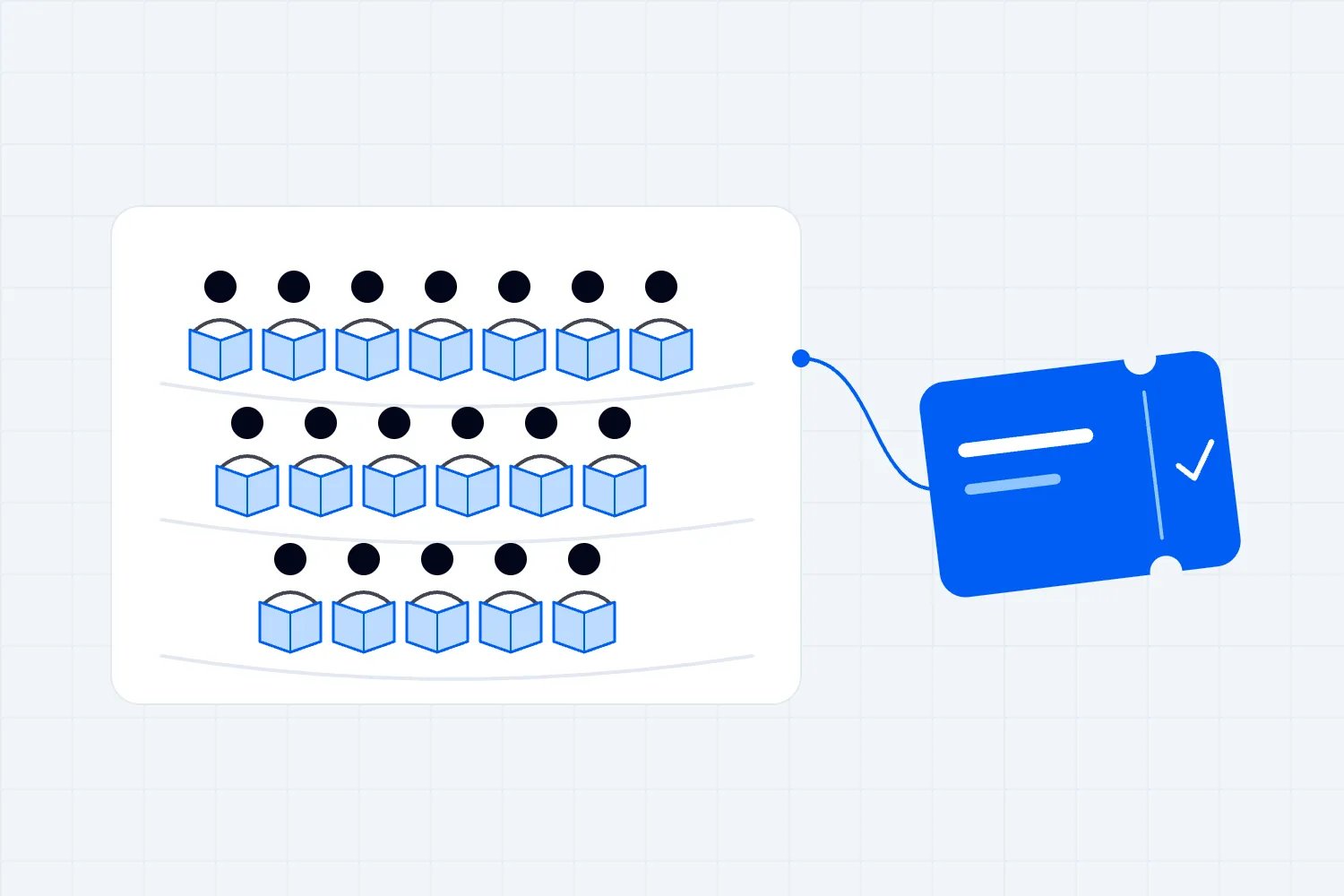
Once the venue has approved the event layout, account for your inventory. In our fictional example, the approved arrangement provides 120 audience places. Eight are withheld because their views don't meet the advertised offer, leaving 112 usable audience places. Eight of those go to agreed non-paying guests, so the paid inventory is 104. These deductions explain commercial inventory; they do not establish a safe capacity or an accessible-seating allocation.
Keep staff, artists and contractors within the venue's separate overall occupancy procedure. A paid-ticket allocation isn't a count of everybody inside. Any later guest request uses one of the remaining audience places and needs approval. If you add guests after selling all paid places, something in the allocation must change lawfully and operationally before you promise entry.
Decide whether you're selling individual seats, admission with shared tables, or entire tables. Each is a different purchase. A couple buying two tickets shouldn't discover that they must fill a four-person table. If whole tables are the offer, state how many admissions the purchase includes and model the revenue using tables actually sold.
Explain shared seating before checkout. Some buyers enjoy meeting other listeners; others want a private table. Say whether tables are shared, whether places are allocated, whether the view varies and whether arrival order affects seating. Avoid promising a reserved table when the ticket only reserves admission.
For an allocated layout, Loopyah's seat charts let you draw rows, seats and tables, label categories and allow buyers to select available seats. Categories can have their own ticket prices. You still need to supply the approved layout and accurate descriptions of the positions. A seat map records the offer; it doesn't assess whether a particular view, route or arrangement is suitable.
Accessibility needs that same attention before sales open. Describe the route, seating options, toilets and contact process using information the venue has verified. For assigned-seat events covered by US ADA rules, the Department of Justice's ticket-sales guidance addresses equal sales access, pricing, companions and accessible-seat release. Apply the rules for your location rather than treating accessible positions as spare inventory you can sell whenever other seats run low.
Next, test the service route. Staff need to move without blocking exits, crossing the most sensitive listening positions repeatedly or reaching over guests. The practical plan might use pre-orders before the set, a quieter collection point or table service at agreed moments. Choose with the venue and musicians. Don't promise a silent room while the business agreement requires constant food delivery.
Work out what the night has to earn
Build the show budget with money you receive and costs you actually bear. Separate it from the venue's bar business. A busy bar doesn't pay your band unless your agreement gives you a defined share, and even then the payment may arrive after your suppliers need paying.
Here's a fictional 104-ticket jazz night using the audience inventory above. Fixed show costs total $2,400. That includes a $1,200 fixed band fee, $400 room hire, $250 sound provision, $200 event staff, $200 promotion and $150 for remaining show costs and contingency. These figures are explanatory assumptions, not market quotes. Replace every line with your own complete costs, including applicable rights, insurance and tax treatment.
The fixed budget also includes any delivery costs for the eight guests. Each paid ticket retains an average of $31 after applicable ticket taxes and ticketing or payment charges. A further $1 of attendance-related cost applies to each paying guest. That leaves $30 per paid ticket to cover the $2,400 fixed budget.
Divide $2,400 by $30. The event breaks even at 80 paid tickets, before business overhead or taxes outside this show budget. That's about 76.9% of the 104 paid places. At 60 paid tickets it loses $600. At 90 it produces a $300 surplus, and at a full 104 it produces $720. No bar, merchandise or sponsor income is assumed.
Now test the lineup decision. If a different programme adds $600 in fixed costs and the contribution stays at $30, you need 100 paid tickets to break even. The sold-out surplus falls to $120. That could still be a deliberate artistic or audience-development choice, but it leaves little room for sales uncertainty or omitted costs. You need a reason stronger than hoping the bigger lineup feels more impressive.
A cheaper venue can have the same effect in reverse. Saving $200 on hire doesn't help if you then spend $350 on equipment and lose usable seats. Compare the complete cost and saleable inventory of each layout. Our event break-even guide develops the calculation when prices, costs or other income vary.
Review cash timing separately. A deposit is part of the agreed bill, not another expense, but it still needs funding when due. Map the band deposit, room payment, promotion and supplier balances against usable ticket payouts. Use an event cash-flow forecast to identify the money you must provide before the night generates its final result.
Set a sales review before the next avoidable commitment. Write down the tickets sold, remaining capacity, remaining income possible and contractual options. Cancelling, postponing or changing the format can create obligations of its own. The point of an early review is to make a decision while you have a real choice, using the terms you've already agreed.
Contingency deserves a closer look too. The example groups remaining costs and contingency into one $150 line to keep the arithmetic visible. Your working budget should identify the actual items underneath it. If known rights or insurance costs consume the entire allowance, you no longer have a reserve for an unexpected bill. Update the budget instead of continuing to describe that money as available contingency.
Similarly, include the work you provide yourself when judging whether a series is sustainable. You might choose not to charge the first show for all your planning time, but record the hours and distinguish that choice from a profitable recurring operation. A $300 show surplus has a different meaning when it requires several days of unpaid work every month. Decide what the business must pay you before treating the result as repeatable.
Price the offer buyers will actually receive
The $31 retained average in that example is an assumption to test, not a ticket price to copy. Buyers see a checkout total. You need to understand what remains after the charges and taxes that apply to your arrangement. If you're absorbing fees, don't use the advertised face price as the amount available to pay the band.
Compare your proposed offer with relevant local paid experiences. Look at the performers, room, duration, seating, included food or drinks and total buyer price. A free bar performance isn't a direct price benchmark for a seated listening concert. Equally, a recognised touring act in an established club may support a price your new local series hasn't demonstrated yet.
Be cautious with early releases. Suppose the first 20 tickets contribute $24 each after the same applicable deductions and attendance costs, while later tickets contribute $30. The first release provides $480 towards the fixed budget. You then need another $1,920, which requires 64 tickets at $30. Break-even becomes 84 paid tickets in total, rather than 80.
At a full 104 paid places, that price mix produces $600 surplus, compared with $720 under the original flat contribution assumption. The discount may help you secure early commitments, but it has a measurable cost. Limit the quantity and explain the genuine release condition. Don't advertise a deadline that you plan to extend automatically whenever sales are slow.
With Loopyah ticketing, a ticket type can have several releases with their own quantities and prices, and the next release opens when the current one sells out. Set those quantities from the same approved inventory used in your budget. A new release changes the price of remaining admission; it doesn't create extra audience places.
If you sell a premium area, explain the advantage accurately. A closer position isn't always the best balance for every listener, and a high table isn't automatically a clear view. Avoid charging more for a category on the basis of a promise you haven't tested. Price differences should follow real choices buyers can understand.
For tables, check what happens when a party is incomplete or people book separately. If you reserve a whole table for two individual admissions, you may lose the chance to sell the other places. Resolve that in the ticket structure and seating policy before staff have to negotiate it on the night. Make any minimum purchase, compulsory spend or included item clear before payment.
Agree how the bar and kitchen support the performance
Bring the venue manager, service lead and bandleader into the same conversation. You need a schedule the kitchen can deliver and the musicians recognise as the event they accepted. A plan agreed only with the person selling room hire can fail when the service team sees it for the first time at doors.
For a listening concert, pre-show orders and an interval can provide defined service windows. Let buyers know when to arrive if they want food before the music. Choose a menu and ordering method the venue can fulfil in that period. Selling a dinner promise to every ticket holder is a capacity commitment for the kitchen, not just an appealing addition to the event page.
Use a practical rehearsal or service walk-through. Put chairs in the intended positions, carry a tray along the route and check where a queue would form. Ask staff where empty glasses go and which tasks create noise. Some equipment must keep operating, and emergency or access needs always take priority over listening etiquette.
If your agreement includes bar income, define it. A percentage of gross drinks sales differs from a share after specified costs. Confirm whether tax, refunds, discounts, staff drinks or purchases outside the event period count. Agree the report, payment date and who can question an error. If no share is agreed, keep bar takings out of the promoter's forecast.
Don't use gross drinks revenue as profit when you operate the bar yourself. Purchases, staffing, waste, payment costs and other relevant expenses change what remains. Our guide to improving music-venue bar sales explains the operating questions. For this jazz night, also ask whether the extra transaction disrupts the experience people paid to hear.
Offer non-alcoholic choices and explain the age policy clearly. Confirm alcohol permissions and responsibility with the venue. A ticketed audience doesn't automatically make every sale or service arrangement lawful. If a dinner package is involved, agree who answers dietary questions, what can be provided and how the buyer receives confirmed information.
Watch the interval as a practical service problem. The sample schedule allows 25 minutes, but that isn't evidence that your team can complete every order in that time. Ask the service lead to test the expected demand against the menu, staff and payment process. If the window doesn't work, simplify the offer or revise the programme before launch. Extending the interval on the night changes the finish time and may affect the band, staffing and last transport home.
Confirm permissions and the show-day decisions
Ask the venue what its existing permissions cover, including the proposed hours, music, alcohol and operating conditions. Check the actual event rather than accepting that the venue has hosted jazz before. A later finish, different layout or recorded music after the band can change the questions you need to resolve.
In England and Wales, the government's entertainment licensing guidance explains that requirements and exemptions depend on the activity and circumstances. Confirm the applicable position with the licensing authority and current premises documents. Avoid reducing that to a rule that every small jazz night is exempt. Elsewhere, use the relevant local authority's requirements.
Public music rights need a separate check. The UK government's live and recorded music licensing guidance directs users to the appropriate rights arrangements. Agree who checks the repertoire and use, obtains any necessary permission, supplies reports and pays. Include background recordings before doors or during the interval in that discussion.
Build the risk and emergency arrangements with the venue and competent suppliers. Confirm the person responsible for decisions, how to reach the bandleader and how staff communicate with the audience. Door staff need to know what to do with a ticket problem without losing control of the entrance. Musicians need a briefing on any agreed stop signal and who gives it.
Use a single show-day schedule with named owners. It should include access, setup, soundcheck, staff briefing, doors, sets, interval, final service, audience departure and loading out. Check that the contracted work fits inside the room booking. Don't schedule soundcheck to end at the same moment the audience must enter if no one has time to inspect the finished room.
A sample listening night could open doors at 19:00, begin its first 45-minute set at 19:45, take a 25-minute interval at 20:30 and begin its second 45-minute set at 20:55. Music finishes at 21:40. The room agreement must allow the separate time needed for final service, audience departure and equipment removal. Those timings are an example to test, not a universal jazz programme.
Our soundcheck scheduling guide helps you plan the earlier work. Include the whole ensemble in the agreed check where required. If access runs late, tell the production contact and bandleader immediately, then use the agreed decision process. Don't quietly cut the check and hope the first paid set will resolve the problems.
Sell the sound and explain the evening
Your campaign should help the right buyer recognise the music and understand the night. Lead with the actual artists and programme. Explain whether it's original material, a particular repertoire, a vocal performance or another confirmed offer. Avoid describing every jazz night as intimate and unforgettable when the buyer still doesn't know what they'll hear.
Use an approved performance clip that represents the advertised lineup and sound. Label any difference clearly. A polished recording by a much larger ensemble can create the wrong expectation for a duo date. Confirm the rights and approvals before using recordings in advertisements as well as ordinary posts.
The event page should answer practical questions near the buying decision. Include doors and music times, set structure, admission inclusions, seating, shared tables, food arrangements, age policy, access information and the full price information buyers need. If you're asking people to keep conversation for the interval, explain that as part of the experience before purchase.
You can describe the room warmly without making the audience feel tested on jazz etiquette. Tell first-time visitors what to expect, how the interval works and where to ask for help. Avoid implying that everyone needs musical knowledge to enjoy the show. The booking decision should feel clear to someone discovering the artists for the first time.
Coordinate the launch with the venue, musicians and relevant local partners. Supply the same approved description and booking link, then agree the dates of their announcements. Check actual orders and retained income. A partner's post can attract attention without producing enough ticket sales to justify a paid repeat.
If you use advertising, set a spending limit from the event budget. The example already allocates $200 to promotion; adding another $200 changes the result unless you have identified extra contribution to pay for it. The event marketing budget guide explains how to connect spending to the money tickets can contribute.
Review what is stopping sales before offering a blanket discount. People may need a clearer clip, transport information or an answer about seating. Those fixes preserve the price. If the offer itself isn't persuasive enough, decide what can honestly change and recalculate the economics before announcing it.
At the review, distinguish attention from purchase intent. A short clip might get plenty of views outside the area people will travel from, while a small local mailing produces the orders. Use the available sales reporting to investigate where purchases came from, and ask partners what they actually sent. Don't assume the last link used explains every influence on the buyer. The practical question is which next action you can afford and what evidence would justify paying for it.
Keep existing buyers informed separately from the public sales campaign. They need the confirmed arrival and seating details, plus any material change to the programme. Check that the event page, ticket information and message agree. If the kitchen stops taking pre-show orders at a particular time, tell buyers early enough to plan their arrival around it.
Host the room and settle the actual result
Brief the host to welcome the audience, introduce the artists accurately and explain the listening and service arrangement in ordinary language. Keep the introduction short enough to protect the advertised music time. The host should also know where to direct access, welfare or practical questions without discussing someone's needs publicly.
Admit late arrivals through the agreed route and at appropriate moments where feasible. Make room for people who need to leave, use facilities or receive assistance. Quiet listening is an audience expectation, not a reason to obstruct access. If conversation disrupts the performance, staff should use a calm, agreed response rather than expecting the band to police the room.
Track admissions, guests and any permitted re-entry through the venue's procedure. Tickets sold, scanned entries and people currently inside are different counts. Keep door selling within the remaining authorised inventory and check any refund or seat move before offering that place again. A no-show doesn't automatically free a sold seat for another buyer.
After the night, settle the band under the agreed terms and reconcile the event. Start with paid orders and retained ticket income, then confirm refunds, discounts, invoices and any additional authorised spending. Deduct deposits once from the balances owed. A busy room is satisfying, but the final accounts tell you whether the night funded its promises.
Compare the result with the assumptions you wrote before booking. Did the paid inventory stay at 104? Did the ticket mix change? Were guests approved? Did an extra service or production bill reduce the surplus? Record those causes separately so you know whether the next date needs a different price, layout, agreement or sales plan.
If you want a series, ask buyers about the programme and the room experience separately. Someone can love the band and dislike the service interruptions. Discuss that with the venue and musicians before rebooking. For the next date, use actual paid attendance, retained income and complete costs, then confirm the same listening promise before tickets go back on sale.

Author: By the Loopyah Content Team
The Loopyah Content Team shares expert insights, practical guides, and industry updates to help event organizers create unforgettable experiences and stay ahead in the event planning world.