· 28 min read
How to produce a ticketed puppet show
You've found a puppet company, a room you can afford and a Saturday when families might come. The room holds plenty of people. The show looks lovely in the video. So how many tickets should you sell?
Start with the child sitting behind an adult in the back row. Can they actually see the puppet that tells the story? If they can't, the room's advertised capacity is the wrong number to build your event around.
To organise a puppet show people will pay for, choose a production for a specific audience, test its visibility in the actual room and agree exactly what happens before, during and after each performance. Set ticket prices using the places you can honestly sell. A compact set can make a small show practical, but it doesn't make every room suitable or every extra performance profitable.
This guide focuses on presenting an existing indoor family production. We'll work through booking the artists, seating children and adults, managing participation and planning repeat performances, with a fictional budget you can adapt. Puppetry also serves adult audiences and very different theatrical forms. Here, we're solving the particular problems of selling a family visit where the smallest audience members still need a proper view.
Choose the audience before you book the show
The first thing you want to do is describe who you're asking to attend. A preschool audience, children already used to theatre and mixed-age households won't necessarily enjoy the same production. "For families" gives you very little information about language, pace, frightening moments or how much of the story depends on following dialogue.
Ask the company which ages the production was made for and why. Watch a complete recording if one is available, or attend a performance. A short promotional clip can show an appealing character while leaving out a long quiet sequence, a sudden sound or a complicated ending. You need enough understanding to recommend the experience honestly to the person paying.
Use the production's stated running time rather than a supposed rule about children's attention. For example, Glen Echo Park's listing for the Puppet Co.'s 2026 production of Cinderella recommends ages five and over and gives an approximate running time of 45 minutes. Those details describe that production. They don't establish the right length for every puppet show.
Separate an age recommendation from an admission restriction. If a show is recommended for older children but younger siblings can attend, explain that distinction. If the production or venue has an actual minimum age, put it where buyers choose tickets. Don't let a cheerful "all welcome" caption contradict a condition someone discovers after booking.
Decide what the accompanying adults should expect too. Are they watching with their children throughout? Can they follow the story comfortably from the seating provided? Are they paying the same admission price? Selling adult tickets while treating adults as an inconvenient obstruction is a poor starting point. Their experience affects whether the household will buy your next show.
For a first run, I'd favour one clear audience promise over a programme trying to suit every age. You can programme another production for a different audience later. Begin with a show you can describe accurately and a group of buyers you know how to reach.
Agree what you're buying from the puppet company
Booking an existing production and commissioning a new one are different jobs. An existing show should have an established running time, technical requirements and performance method. A commission adds development, construction, rehearsals and approvals. Don't ask for a new ending, different characters and a workshop while budgeting as though you're buying the touring show unchanged.
Send a practical enquiry. Include the venue, proposed date, audience ages, likely audience size, number of performances and whether you intend to charge admission. Share photographs and measurements of the room, the loading route and the proposed audience arrangement. A company quoting for a school visit needs to know if you're actually proposing a public ticketed run.
Request the technical rider, which is the document explaining what the production needs to work. Establish what the company brings and what you must supply. That might include sound equipment, lighting, a technician, a particular table, blackout, dressing space or someone to help unload. "Self-contained" is worth unpacking before you sign anything.
Agree the full working day as well as the performance fee. Confirm arrival, setup, rehearsal, breaks, reset, dismantling and departure. Ask how many performances the company is willing to deliver that day and what changes if you add one. A small cast may be doing physically demanding work behind a screen while also operating sound and moving scenery.
Put the audience interaction in the agreement. Does the show include questions from seats? Can anyone come forward? Is a post-show demonstration part of the fee? Can visitors handle a designated puppet? A photograph of a previous event isn't permission to promise the same activity at yours.
Confirm the rights and publicity materials with the company. Concord Theatricals' introduction to theatrical licensing explains the role of an agreement with the rights holder in performing a copyrighted work. For your booking, establish who clears the script, music and any adaptation, and what promotional images or recordings you may use. Check added performances and filming separately rather than assuming the performance fee includes them.
Before paying a deposit, record what happens if the performer becomes unavailable, the venue cannot open or the production has to stop. Get the relevant terms checked for your location. Supplier cancellation arrangements and your obligations to ticket buyers need to be considered together, while remaining separate agreements.
Test the puppets in the room you intend to sell
The set's footprint tells you whether it fits. It doesn't tell you whether the audience can follow the action. A tabletop puppet, an overhead glove puppet and a shadow on a screen create different viewing problems. Ask which parts of the performance must remain visible and which positions the artists regard as unsuitable.
Passepartout Theatre's technical information for To BE makes the connection explicit. Its objects are 15 centimetres high, and the company specifies an audience in front with seats at rising levels. It also calls for a floor-level performance space. That's a useful example of why lifting everything onto a conventional stage isn't an automatic fix.
Arrange a room test with the company before confirming your sales quantity. Use the actual performance height, chairs and lighting conditions. Have someone operate a puppet through representative movements while others watch from the sides, the back and the proposed accessible positions. Check the low action, not only the character held high for a greeting.
Recreate an occupied room as closely as practical. An empty line of chairs hides the problem of an adult's head directly in front of a child. Check different seated eye heights and adult-child combinations. Involve families and disabled audience members in paid testing where possible, with a clear brief and appropriate arrangements, rather than assuming the production team can predict every experience.
Ask what a viewer can understand from each position. Can they distinguish the characters? See an important prop change hands? Read an expression or follow a shadow across the whole screen? Seeing the top of a puppet is insufficient if the story happens on the table below it.
Test sound at the same time. Puppeteers may speak from behind scenery or turn away while manipulating a character. Listen to quiet dialogue with ventilation running and neighbouring activity underway. Let the company and a competent sound technician resolve microphone and loudspeaker needs. More volume won't repair a line that disappears whenever a performer moves.
Keep the tested layout and identify who can approve changes. If the company moves the playing area forward on arrival, revisit the affected views before opening the doors. A seating plan agreed around one position doesn't remain valid just because the same number of chairs still fits.
Give the puppeteers a workable backstage
Ask the company to show you how the performers work behind or around the set. They may kneel, stand with raised arms, move along a narrow route or change characters out of view. A room inspection that checks only the audience side can miss the space the artists need to perform the show at all.
Confirm clear working positions, suitable surfaces, ventilation and access to drinking water with the company. Keep their changing and resting space available for the agreed hours. Don't give that room to the craft activity after setup because the artists appear to have finished using it. They may need it again between performances or during a quick change.
Find out which sightlines must conceal the operators and which intentionally reveal them. Visible manipulation can be part of the performance. Don't add curtains or move lights simply because you think puppeteers should always be hidden. Equally, a view into a concealed character change can spoil an entrance the company has carefully rehearsed.
Allocate secure storage for cases, spare puppets and repair materials. Agree what stays ready between shows and what must be reset. Keep public routes away from strings, rods, control equipment and the backs of screens. A visitor leaning against a set to take a photograph can disturb equipment that looks like ordinary scenery from the front.
Ask the production lead what happens if an essential puppet or playback device fails. They should decide the appropriate spare equipment, repair arrangements and artistic alternatives. You need to know who can pause the performance and how front of house will explain the interruption. Avoid promising that the company can improvise its way through any failure.
Use a short handover note after setup. Record the approved playing position, clear backstage area, public boundary, remaining faults and person responsible for resolving each one. Check the room again before the next audience enters. The note should help staff preserve a working production, without asking them to repair mechanisms or handle puppets they're not trained to use.
Seat adults and children as one audience
Children on mats at the front and adults in chairs behind can work for some productions. It can also separate a child from the person they need beside them, obstruct a wheelchair user's view or create an uncomfortable visit for someone who cannot sit on the floor. Start with the audience's needs and the tested production, then choose the arrangement.
Ask the company how it normally seats mixed groups. Puppet Showplace Theater's audience FAQ explains its use of designated adult positions to preserve views and warns that adults may not always sit immediately beside their children at crowded performances. That's the theatre explaining a particular arrangement before arrival. Your event needs the same honesty about its own layout.
If buyers must sit separately, say so before purchase and consider whether that suits your intended age group. If you promise households can stay together, provide a layout that makes it possible. Don't make the usher choose between a child's view and a promise made on your booking page.
Include wheelchair positions and companion seating in the initial viewing test. Check the route to them, the view with everyone seated and what happens if people stand during participation. Ask attendees what they need through an accessible contact process. Avoid treating a space left at the rear as a complete access plan.
For general admission, decide how staff will direct people without turning the front rows into a scramble. Explain any floor seating, chair sections or priority arrangements. Reserved seating can provide certainty where positions differ, but the physical layout still needs to deliver what each booking promises. Ticket labels can't improve an obstructed view.
Keep pushchairs, coats and bags in the plan too. Provide an agreed storage arrangement that preserves routes and doesn't leave the foyer unusable. A parent carrying a sleeping child needs to know what happens to the pushchair before reaching the auditorium entrance. Publish the relevant facilities and restrictions in your event accessibility information.
Make a late-arrival plan with the artists. Some entrances interrupt a delicate scene or admit a bright corridor directly behind a shadow screen. Establish suitable admission moments and somewhere people can wait safely. Tell buyers if late entry is restricted, and give front-of-house staff an instruction they can apply consistently.
Calculate admissions after you approve the layout
The venue's general capacity, your approved audience arrangement and the tickets available to sell may all be different. Work with the venue and competent safety advisers on the actual event. Great Britain's HSE includes determining safe capacity and considering how people enter, move and leave in its crowd safety assessment guidance. Apply the requirements for your own location.
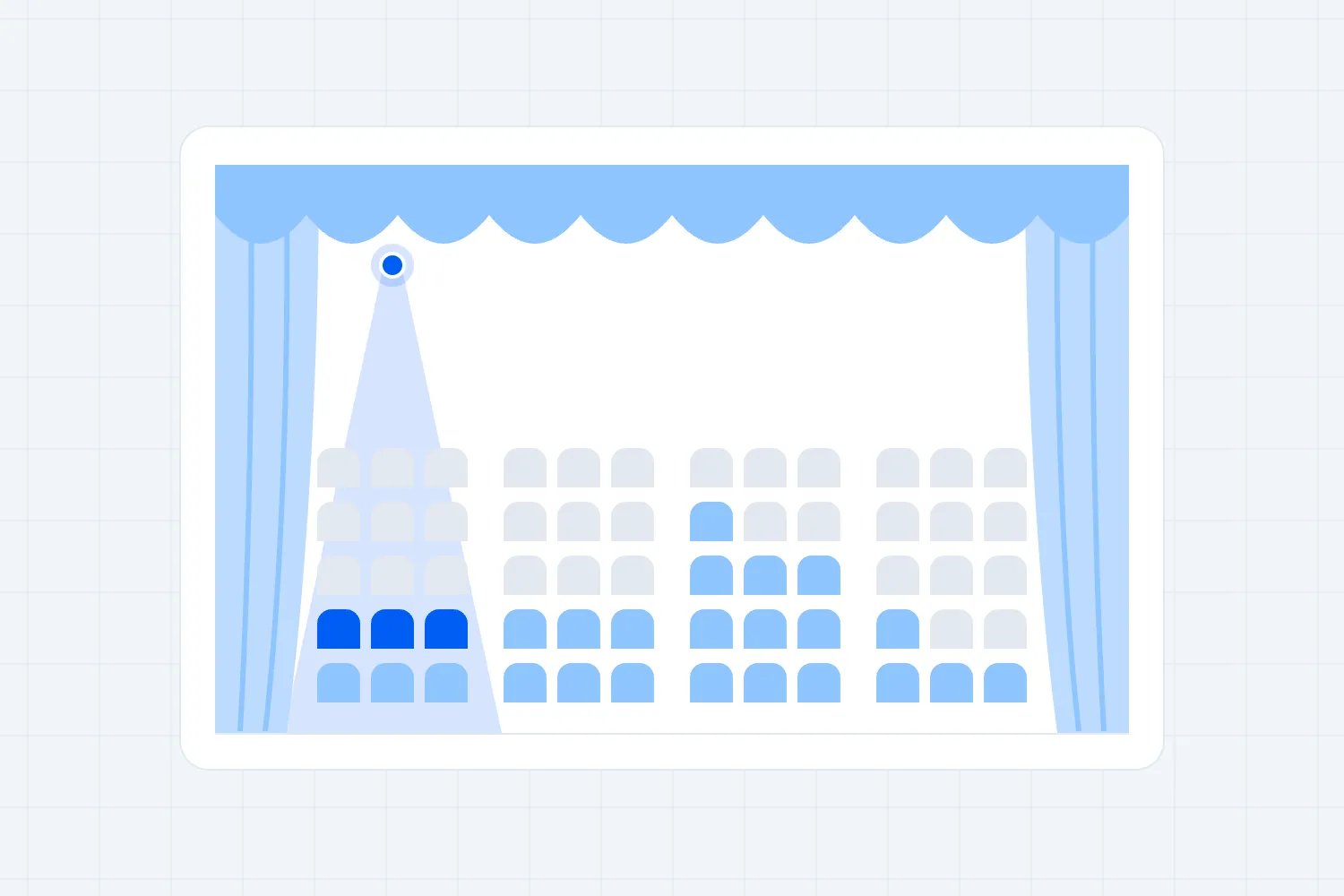
Here's a fictional example we'll use throughout the guide. Suppose the venue team initially allows 90 audience positions in the proposed room arrangement, separate from the working areas for artists and staff. The production test identifies eight positions where essential puppet action cannot be seen. You remove those positions and have the resulting arrangement confirmed, leaving 82 audience admissions per performance.
In this example, you allocate four of those admissions without charge, including agreed companion admissions and invited guests. Each uses one of the 82 positions. That leaves 78 paid admissions per show, or 156 across two performances. These figures are invented planning assumptions, not capacity advice or a typical puppet-show size.
Keep the four no-charge admissions visible in the count. They're part of the audience, with the same need for a view and a route out. If you offer more complimentary places later, reduce paid availability accordingly. Don't leave the financial forecast at 78 paid admissions while quietly admitting additional guests.
An infant policy needs its own decision. Free entry and permission to sit on a lap don't establish how the venue counts that person. Confirm the arrangement and counting method with the venue. Our worked example assumes everyone admitted uses one allocated audience position. If your real policy differs, rebuild the inventory and budget before using its numbers.
Likewise, one family booking may represent several people. A ticket product sold once doesn't necessarily mean one admission consumed. Define adult and child combinations, infant arrangements and whether the group enters together. Our family ticket guide develops that setup. Test the actual purchase and admission process before relying on a bundle name to control attendance.
Keep each performance's availability separate. A spare place in the morning doesn't help someone holding an afternoon ticket. Check your test booking, confirmation and door process all identify the correct performance, and give the person controlling sales the current approved allocation.
Define participation before you advertise it
"Interactive puppet show" can mean calling out a character's name, singing from your seat, handling a puppet or joining the performers. Those experiences need different space, staff and time. Describe what actually happens instead of letting the buyer imagine the most generous version.
Begin with the production's existing participation method. If the company invites responses from seats, let the show lead that exchange. You don't need a separate promise that every child will have an individual turn. Some children will watch quietly, and that should be a comfortable way to attend.
Where volunteers come forward, agree the invitation, route and support arrangements with the artists. Establish how a child declines or changes their mind, where their accompanying adult stays and who helps them return. Avoid staff lifting children into position or encouraging a reluctant child because the running order has reached the participation section.
Puppets and operating equipment also need boundaries. Ask which objects, if any, are suitable for visitors to touch and how the company wants them handled. A working character may contain delicate mechanisms or be needed immediately for the next show. Provide a demonstration puppet if that is the agreed offer, rather than inviting everyone backstage.
Be careful with words such as "meet the puppets." Does that mean seeing a character at the front, a group demonstration or an individual photo? A family may plan the visit around that promise. If the offer is a short group introduction, describe it that way and make clear whether handling or individual photographs are included.
Calculate individual activities honestly. In an illustrative add-on with 30 participating children, even one minute each requires 30 minutes before transitions. That cannot fit into a ten-minute gap. You can offer a group demonstration, sell a smaller separately timed activity or leave the add-on out. Don't solve the mismatch by rushing children through something their parents believed was included.
Put workshop capacity on a separate basis from performance admission. Tables, materials, assistance and accompanying adults all change the requirement. If you want a puppet-making workshop, buy and plan that activity properly. A full auditorium isn't automatically a suitable workshop group, and unused seats don't create extra teaching capacity.
Plan access with the company before launch
Access decisions need to be made with the artists while the production can still adapt. A show dependent on darkness may need a different lighting approach for a relaxed performance. A visually driven story may need additional description or a touch introduction. Find out what can actually be delivered, who will deliver it and what it costs.
Norwich Puppet Theatre describes concrete arrangements for its relaxed performances, including keeping auditorium lights on, avoiding sudden lighting changes or loud effects, allowing movement and providing a space outside the auditorium. Those are changes to the visit. The label "relaxed" alone wouldn't tell a buyer what to expect.
For your production, publish the agreed conditions in ordinary language. Explain sound, darkness, movement, re-entry and any available quiet space. Don't promise a silent room or total control over other audience members. Tell families what your staff will support and which elements of the performance remain unchanged.
Rehearse any adaptation that affects the puppets. Extra light may reveal a hidden operator or wash out a shadow image. That doesn't make access impossible, but the company needs time to find a workable artistic and technical answer. Adding a lamp at the door minutes before opening is too late to establish the result.
Give the front-of-house team an agreed approach to children moving or making noise. Staff need to understand the actual performance policy rather than enforce their personal idea of theatre etiquette. The artist needs to know what audience behaviour is being welcomed, and accompanying adults need the same explanation before buying.
Supervision remains a separate responsibility. State whether children must stay with an accompanying adult throughout, and confirm the applicable safeguarding arrangements with the venue. Identify who handles a separated child, a welfare concern or a request for help. Performers concentrating on manipulation cannot also act as the audience's childcare team.
Give buyers a contact route that reaches someone who knows the production. A useful reply can explain a particular effect or seating arrangement. A vague reassurance that the event is suitable for everyone risks promising support you haven't planned. When something is unavailable, explain the actual limitation so the buyer can decide.
Build the day around the artists' working time
Two performances can spread venue and production costs across more paid admissions. They also create another arrival, departure and reset. Agree the schedule with the company before selling the second start time, including paid working hours, adequate breaks and time for repairs or changes.
Imagine a fictional 45-minute production with performances at 11:00 and 13:15. The company has approved those timings for this example. The first audience finishes at 11:45. You allow 15 minutes for departure, 20 minutes for the production reset, 40 minutes for the artists' break and 15 minutes to seat the next audience. That uses the full 90 minutes between the first ending and the second beginning.
That break isn't an unallocated space for photographs, a workshop or a sponsor visit. If you want another activity, add the necessary people and time, or move the next performance. Don't sell an extra while expecting the performers to deliver it during the rest they've already agreed.
This version has no spare minutes between those tasks. If rehearsal shows that departure or reset takes longer, increase the gap before you advertise it. Agree who can delay seating when the room isn't ready, and how the waiting audience will receive the revised start time.
Work backwards through the morning too. In our example, venue access starts at 08:30. Setup runs to 10:00, followed by a 30-minute technical check and a 15-minute team briefing. Seating starts at 10:45. These are illustrative allowances, not a claim about how quickly a touring puppet company can set up.
After the second show ends at 14:00, allow the audience to leave before dismantling begins. If departure takes 15 minutes and load-out takes 45, the venue is occupied until 15:00. Confirm that the hire, crew and loading access cover that period. A venue booking that ends when the final puppet bows leaves work unpaid or unfinished.
Use a shared production schedule with named people responsible for each handover. The duty manager confirms the audience area is ready. The production lead confirms the show can begin. Front of house confirms seating is complete. Agree the communication between them rather than assuming someone backstage can see a queue in the lobby.
Check the adjoining spaces during the turnaround. The first audience may be using toilets or collecting pushchairs as the next group arrives. Establish whether the foyer and routes can handle that overlap. If they can't, change arrival instructions, provide a suitable separate waiting space or increase the gap. The timetable has to work outside the auditorium as well.
Price the day using the places you can sell
Use actual written quotations to build your own budget. Include the artists' full agreement, venue access, technical support, front of house, promotion, insurance, administration and the work after the last performance. Cost your own producing time too. If you're creating a new production, development and puppet construction belong in the cost. They don't disappear because the same show may tour later.
For our fictional two-performance day, assume all amounts are USD. The company charges $1,100 for the agreed day, the room costs $400, technical support costs $250 and front-of-house staffing costs $240. Promotion is $150, insurance and administration including the producer's planning time are $160, and a $100 allowance covers unexpected operating costs. Total budgeted day costs are $2,400.
These invented amounts illustrate the calculation. They aren't supplier quotes, market rates or Loopyah fees. The company fee in this example includes the agreed performance rights and production equipment. The room and staffing costs cover the working schedule above. Replace each amount and inclusion with your actual agreement, including taxes you cannot recover.
Now suppose each paid admission leaves you $19 after applicable ticketing, payment and tax deductions. An additional attendance cost of $1 per paid visitor leaves $18 toward the $2,400 day budget and profit. The four no-charge admissions per show have their costs included in the day budget. There is no workshop, merchandise or refreshment income in the calculation.
At the full 156 paid admissions, those contributions total $2,808. After the $2,400 budget, you have $408 left. That's the planned result after every included cost, assuming the whole allowance is spent. It isn't permission to add $408 of unpaid work or new benefits without recalculating.
To cover $2,400 at $18 per paid admission, you need 134 paid admissions across the day. The mathematical result is a little over 133, so round up to a whole admission. At 134, contributions are $2,412 and the surplus is only $12. Your sales target should distinguish reaching that point from earning a worthwhile return.
Compare that requirement with evidence you actually have. Previous sales to a similar audience at a similar price are useful. A venue mailing-list size or an enthusiastic comment isn't a paid booking. If this is your first production, acknowledge the uncertainty and limit commitments accordingly. A small room doesn't guarantee an easy sellout.
Check when the money must be available too. Deposits and supplier balances may be due before ticket receipts reach your bank. Keep enough available cash for those commitments and the refunds you may owe. A profitable final forecast doesn't pay a company deposit that falls due this week.
Check each performance and every discount
Two shows share some costs, but they don't necessarily attract equal demand. A morning performance may fit one household's routine while the afternoon suits another. Review sales and enquiries by performance, and give each start time an explicit role in the plan. Don't assume a strong afternoon will make the morning's unused places valuable later.
With our fictional figures, 60 paid morning admissions and 74 afternoon admissions reach the required 134, leaving $12. If the morning sells 50 and the afternoon reaches its full 78, the day sells 128. Contributions total $2,304, leaving a $96 loss against the $2,400 budget. A sold-out performance can therefore belong to a loss-making day.
Check discounts against that result before advertising them. If ten admissions that would otherwise contribute $18 receive a $3 discount, the full-day surplus falls by $30, from $408 to $378. That assumes the same deductions and attendance costs otherwise apply. In your real calculation, use the actual retained amount after the discounted sale.
A discount can still make sense if it brings in a buyer who would otherwise leave a place empty. The question is whether it adds paid attendance at a useful contribution, or reduces the price for people already intending to buy. Test a defined offer for a quieter performance rather than cutting every ticket because the overall total feels slow.
Avoid promising that an extra show is almost free. Suppose, before signing, you compare a one-performance quotation of $1,800 with our two-performance budget of $2,400. The second performance adds $600 in agreed performer, staffing and room costs. At $18 contribution, it requires 34 genuinely additional paid admissions to cover that increase. Thirty-three provide $594 and leave $6 of the increase uncovered.
The phrase "genuinely additional" matters. If existing buyers simply move from the first performance into the new one, their money doesn't pay the extra bill twice. Recalculate total expected sales across both. In this fictional comparison, one performance cannot cover its $1,800 budget even at 78 paid admissions, which provide $1,404. Two performances improve the possible result, but only if the combined demand is there.
Use those calculations to decide before committing. You might need a different hire agreement, another venue, a stronger audience offer or a different price supported by buyer demand. Adding seats that fail the viewing test is a particularly expensive way to avoid that decision. You collect a little more while undermining the reason people paid to attend.
Make the booking page answer the parent's questions
Lead with the story and the experience, then make the practical visit easy to understand. Say who the production suits, how long it runs and whether there is an interval. Name the performing company accurately and use approved images that show the production being booked. A generic puppet photograph can sell a different scale or style of show.
Explain the seating before purchase. Are chairs supplied? Will some children sit on the floor? Can accompanying adults remain beside them? How are access bookings arranged? If your layout has a meaningful restriction, put it close to the ticket choice. Don't bury a condition that could determine whether a household can attend.
State what's included in participation. For an imaginary show, suitable wording might be: "A 45-minute live puppet story with optional songs and responses from your seat. This booking includes the performance only. There is no individual puppet-handling session or making workshop." Adapt the wording to the confirmed show rather than adding restrictions your audience doesn't need.
Keep ticket choices understandable. Loopyah's ticket selling tools let you create ticket types and releases with their own prices and quantities, and provide QR tickets for admission. Use the configuration that matches your approved offer, then test a purchase for the correct performance. The production team still decides the age policy, seating and admissions available.
Publish the accompanying adult rule, infant arrangements, arrival time and any late-entry restriction. Explain whether a buyer can change performance and how requests are handled, subject to the rights that apply locally. A friendly tone helps, but the information has to be specific enough for someone organising transport, siblings and another adult.
Tell people about facilities they will actually use, including toilets, changing facilities, pushchair storage and refreshments where available. Don't imply those facilities exist simply because the building normally hosts events. Confirm their availability during your hired hours and communicate any important limitations before someone pays.
Ask someone outside the project to read the page on a phone and describe the visit back to you. If they expect a workshop, drop-off childcare or a seat beside their child that you cannot provide, revise the page. The test is whether a buyer understands the experience without a personal explanation from the producer.
Show buyers the part they'll want to see
Your promotion should help the right adult picture their child enjoying this specific show. With the company's permission, use a short excerpt that shows puppet scale, performance style and a representative moment. Explain the story in plain words. "Live puppetry" alone gives an unfamiliar buyer very little reason to choose your date.
Choose channels according to the audience you've defined. A local arts venue's family programme, relevant community partners and your own permission-based customer list may reach suitable buyers. Confirm what each partner has agreed to publish and when. Being near a school or library doesn't mean its staff have accepted responsibility for selling your event.
Send partners useful material. Include the age recommendation, performance date, running time, venue and booking link, along with an approved image and concise description. Check the actual published information when possible. An old start time copied into a local calendar can produce late arrivals even when your own page is correct.
Give each performance a clear booking route and review how it sells. If afternoon demand is stronger, explain the morning option to people asking about availability rather than pretending every time suits everyone equally. Our guide to selling theatre tickets develops the wider audience and sales plan. Keep this production's age and viewing promise consistent wherever it appears.
Don't create urgency by hiding ordinary availability or announce an extra performance before the artists and venue agree. You can publish an honest booking deadline or limited approved allocation. The aim is to help someone decide, with enough confidence that the performance and practical arrangements will match what they bought.
Rehearse the visit and learn before repeating it
Before the first audience arrives, walk through a complete booking with the front-of-house lead. Check the performance on the ticket, entry route, seating instructions and escalation contact. Include an infant enquiry, an access arrangement and a family holding tickets for the wrong start time. Resolve the process while there's time to change it.
Run the production checks with the artists too. Confirm that the tested viewing arrangement remains intact, the essential action is visible and dialogue reaches the audience positions. Check the agreed participation route and backstage boundary. If something has changed, identify who approves the correction and whether sales availability needs to change with it.
Give staff a clear response to interruptions. Who tells the company to pause? Who speaks to the audience? Where do people wait if the room must be cleared? What happens to the next performance? Agree proportionate arrangements with the venue and production leads, including the relevant emergency procedures and the buyer communication that follows a material change.
After the first performance, collect specific observations without consuming the artists' agreed break. Ask front of house where views failed, who needed help finding seating and which questions repeated. Let the company report technical or participation problems through the agreed contact. Record the changes and brief staff before admitting the next audience.
Review the day using actual paid admissions, retained revenue and costs. Compare the two performances separately, including discounts, free admissions and any extra staffing. Ask buyers about the view and whether the age description matched the show. A general positive rating won't reveal that families loved the story while several children missed the important tabletop scene.
Before booking the next date, correct the expensive misunderstanding or weak assumption you found. That might mean fewer chairs, a different start time, clearer participation wording or a revised artist agreement. Confirm that the new layout and budget still work together. Then sell the next performance on the experience you know you can deliver.

Author: By the Loopyah Content Team
The Loopyah Content Team shares expert insights, practical guides, and industry updates to help event organizers create unforgettable experiences and stay ahead in the event planning world.