· 21 min read
How to plan attendee transport for a remote paid event
You've found the site, booked the programme and started selling tickets. Then someone asks how everyone gets back to town after the last act. The nearest station is a drive away, the access road is narrow, and the coach quote only tells you how many seats you're hiring.
A festival transport plan needs to explain how those seats become completed journeys. Work out when passengers will arrive, how long each vehicle takes to return for another load, and how many people the boarding area can handle. Build the journey home separately, with people responsible for dispatch and decisions when the service falls behind.
This guide works through that operating plan for a remote paid event. You can use it for a countryside concert, destination festival or another ticketed event where transport connects the audience to the site. The aim is to produce a schedule your supplier can deliver and your team can run, including the difficult hour after the programme finishes.
Define the service before you ask for vehicles
The first thing you want to do is write down the journey you are providing. A station shuttle, a coach from a city centre and a service from an offsite car park have different operating problems. Combining them under "event buses" makes it surprisingly easy to order the wrong service.
For each route, name the exact boarding location, destination, days, operating window and passenger group. Include whether people reserve a particular departure or join a continuing service. Write down the outward and return promises separately. "Return transport included" leaves too much open if the attendee thinks that means leaving whenever they want.
At this stage, settle the main transport choice. If you're still deciding whether to encourage rail journeys, arrange shared travel or hire a link to the site, our guide to sustainable event travel covers that decision. Here, we're concentrating on making an agreed route work once people depend on it.
Draw the boundary around your responsibility clearly. If your service finishes at a station, establish which onward connections passengers can actually use. If the shuttle returns to a car park, confirm that people can retrieve their cars after the show. A completed bus journey can still leave the customer stranded behind a locked gate.
Identify separate movements that could consume the same resources. Crew pickups, artist transfers and supplier trips may need vehicles too. Don't quietly assume the audience fleet will cover them during quiet periods. Agree the actual duties with the operator, then check whether the vehicle can return before its next passenger departure.
Write the unresolved points against an owner. Someone should be obtaining the station's permission, confirming the loading location and checking the finish time with production. Until those answers arrive, your draft schedule contains assumptions. Keep that distinction visible when another team asks whether they can announce the service.
Consider what your ticket page is promising while those questions remain open. You can explain that you are arranging a station connection and publish confirmed information when it is ready. You shouldn't sell a timed journey against an unconfirmed pickup location. If transport is essential to reaching the site, resolve it early enough that buyers can assess the whole visit. Otherwise, the person discovering the gap may already have bought a nonrefundable train ticket and assumed your shuttle would meet it. Your commercial team needs the same confirmed service description as the people ordering the vehicles.
Turn passenger demand into arrival waves
Attendance is a starting point for transport planning, but it doesn't tell you when to send a bus. You need a passenger forecast for each route and part of the day. Start with transport reservations where you have them, then examine the less certain demand separately.
For a booked departure, count passengers rather than orders. A booking containing several tickets represents several people who need places. Check whether companions, children and other travellers need separate reservations under your arrangements. Keep wheelchair space and assistance requirements connected to the actual departure without circulating private details in the general team document.
For an unreserved shuttle, write down why you expect people to use it. Previous counts, current travel responses and the rail timetable may support your estimate. A general feeling that most people will come by train isn't enough to decide whether you need additional vehicles. Record what you know and what you are still estimating.
Next, divide the operating window into periods that reveal the peaks. Station arrivals often follow train arrivals rather than a smooth hourly pattern. Two trains close together can create a large queue even when the hourly total appears manageable. Plan around those actual pulses, with time for passengers to reach your boarding point.
Use a simple worked example throughout the planning meeting. Suppose your fictional event expects 720 shuttle passengers across an afternoon. Your working forecast places 180 in the first hour, 360 in the second and 180 in the third. These are invented planning figures, not an attendance benchmark. The middle hour is the first problem to solve.
Ask what could move that demand. A train cancellation could concentrate passengers onto the next service. An early programme announcement could pull bookings forward. Explain which evidence would make you revise the forecast and when you'll check it again. That helps the supplier plan changes while there is still something available to hire.
Keep the evidence behind each part of that forecast. Transport reservations tell you which departure someone has selected. They don't necessarily tell you which train they will take beforehand. Ask for that detail only if it will change your operating decision, and explain why you need it. You may discover that a station departure time conflicts with the train passengers intended to catch. Correcting that misunderstanding before the day can prevent an entire group from missing a bus that departed exactly as advertised. The booking record can be accurate while the passenger's understanding is wrong.
Calculate the complete vehicle cycle
A vehicle cannot start its next trip until it has completed its current one and returned ready to load. Include both drives, boarding, unloading and any agreed waiting or turning time. Time the route with your operator under conditions relevant to the event, rather than using a quiet journey in a small car.
The Federal Highway Administration's special event shuttle planning guidance includes loading, unloading and waiting in route service time. It also connects the interval between vehicles to route service time and the number operating. Those are useful planning principles; the supplier still needs to validate your route and schedule.
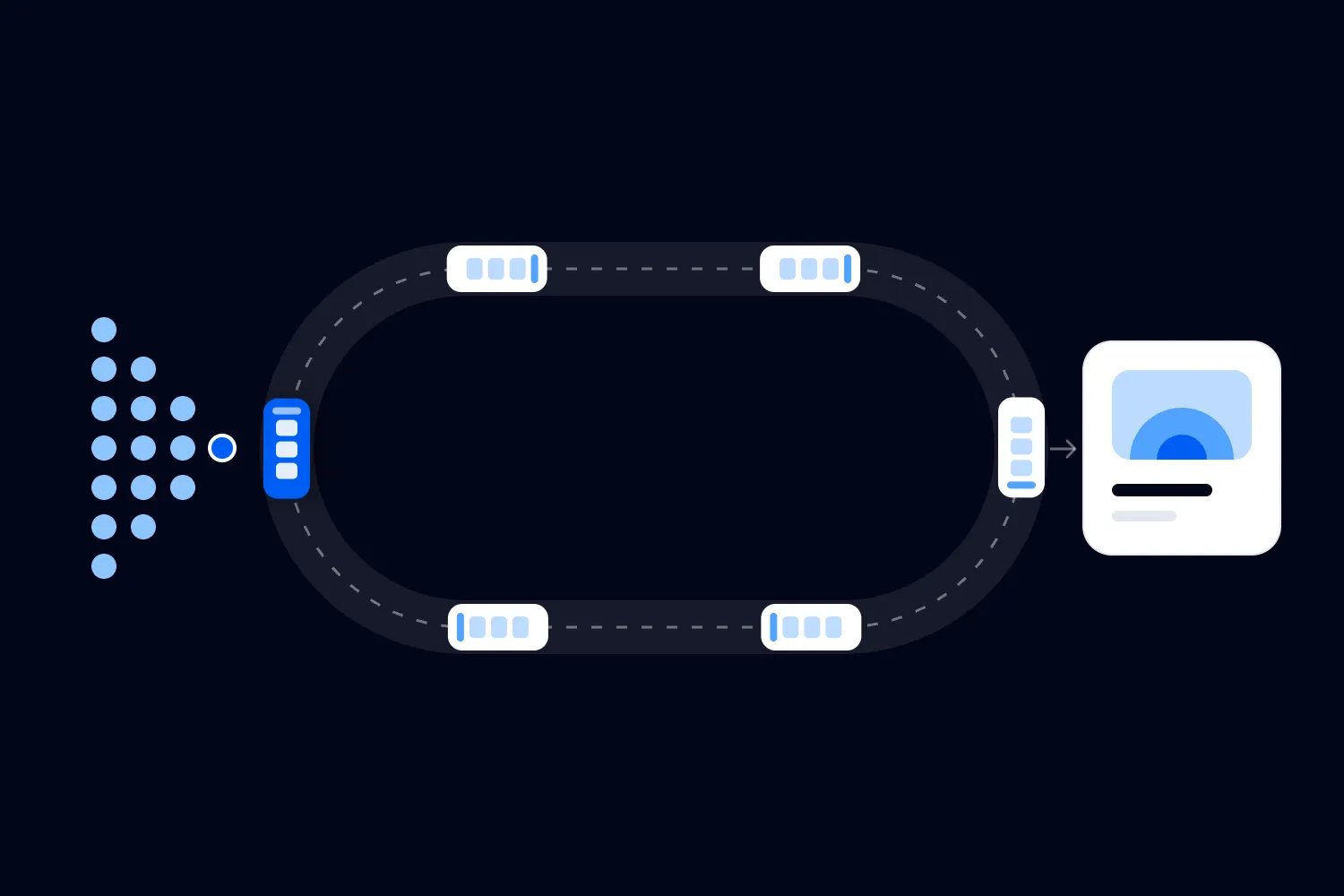
For our fictional example, assume the operator confirms 48 usable passenger places per vehicle for the agreed configuration. The complete cycle takes 60 minutes. With six vehicles circulating evenly, the arithmetic gives a departure about every ten minutes and 288 passenger places per hour. All of these inputs are illustrative, including the usable capacity and cycle time.
That calculation immediately exposes the peak. Our second hour brings 360 expected passengers to a service with 288 places per hour in ideal steady operation. Some people will wait into the next period unless you change the plan. Having enough places across the whole afternoon doesn't remove the concentrated shortage.
Now test a slower cycle. If it takes 80 minutes, the same fleet offers a theoretical average of 216 places per hour. At 90 minutes, that falls to 192. The following chart shows our example arithmetic. It assumes full vehicles and even circulation; it is not a promise about the capacity you can safely deliver.
| Label | Passenger places per hour |
|---|---|
| 60 minute cycle | 288 |
| 80 minute cycle | 216 |
| 90 minute cycle | 192 |
This is why the journey time deserves scrutiny before you add vehicles. If coaches join the same traffic queue as private cars, their return can slow exactly when demand rises. Ask the operator and traffic planner whether a permitted route or operating arrangement can make the service more dependable. Don't assume priority that hasn't been agreed.
One useful comparison is the cost of serving the peak against the consequences of carrying its queue forward. Additional vehicles may only be needed for a limited operating window. But the supplier may have a minimum duty charge or need those vehicles elsewhere later. Request an actual proposal before assuming a short peak can be bought cheaply. Then compare the workable options with your demand forecast. You are deciding how to meet a particular concentration of passengers, with their onward commitments and waiting conditions, rather than trying to achieve an impressive fleet size.
Build a departure schedule you can check
The hourly calculation helps you compare options. The actual timetable needs individual trips. Start with each vehicle's first departure, record its expected site arrival and show when it becomes available at the original pickup point again. Allow the operator to identify where driver duties and breaks affect that availability.
In the illustrative 60 minute cycle, a vehicle leaving the station at 14:00 cannot also cover a 14:40 station departure. That sounds obvious when you read the two times together. It becomes easier to miss when separate people plan a crew movement, a passenger service and a late addition on different documents.
Build one operating schedule that includes every agreed use of each vehicle. A row should identify the vehicle or duty, route, boarding time, departure, destination arrival and next available time. Passenger information can show a simpler version. The working copy needs enough detail to reveal overlapping assignments before someone starts waiting at a stop.
Check the initial position of the fleet too. Six hired vehicles don't create evenly spaced departures if they all arrive at the depot as boarding starts. Agree where each vehicle waits before service, who authorises its movement and when the first passengers can board. Include the journey needed to get it into that position.
Then apply the demand forecast to the timetable. Carry any passengers who cannot board into the next departure's expected queue. Count places already committed to reservations. This makes the wait visible and shows whether the queue clears before another train arrives. Use the operator's confirmed capacity for each actual trip, especially where vehicle configurations differ.
Solve the resulting problem explicitly. You might add a peak departure, move an agreed booking window or use another confirmed pickup location. Explain the impact on passengers before choosing. Reducing the forecast because the queue looks inconvenient doesn't change how many customers your current promises could bring to the station.
There is another detail worth checking in the worked example. A theoretical 288 places per hour doesn't mean 288 places are available whenever passengers appear. If a group reaches the stop just after a departure, those people wait for the next one. If several vehicles run together after a traffic delay, the next gap can be longer than planned. Ask your operator how dispatch will manage spacing and recover the timetable. Any proposed waiting or repositioning needs to fit the agreed operation, including what drivers can do and where vehicles may wait.
Check what the boarding area can process
Vehicle capacity is only useful when passengers can reach the door and board safely. Visit both ends of the route with the people responsible for the location and operation. Follow the path a passenger takes, including the point where someone confused about their reservation will stop to ask for help.
The UK's Health and Safety Executive recommends separating people and vehicles, minimising reversing and protecting emergency access. It also advises organisers to discuss external traffic management with the relevant authorities and transport providers. Use the local requirements for your event; a UK guidance page doesn't authorise traffic control on your roads.
Confirm where waiting passengers stand and how they reach the correct vehicle without crossing an active turning area. Check where a queue can extend, how people leave it and which other routes it must keep clear. Include lighting and weather exposure. A place that looks spacious before opening can become constrained once the audience arrives.
Test the boarding process with the operator. Reservation checks, questions, luggage handling and assistance all take time. If your schedule assumes several coaches can load together, confirm there are approved places and enough staff to do it. A second vehicle waiting behind the first may add no useful boarding capacity at that moment.
Keep admission checks and transport checks distinct in the procedure. A person may have valid event admission and no seat on this departure. Another may have a confirmed transport booking but need help finding their event ticket. Staff need a clear answer for each situation so one conversation doesn't stop the whole boarding line.
Document how accessibility works through the complete transfer. Confirm the vehicle, boarding equipment, space, assistance and route between the drop off and event entrance. Arrange those details with the passenger and supplier. Our event accessibility checklist can help connect transport arrangements to the rest of their visit.
Check the relationship between unloading and the entrance queue as well. If a coach drops passengers into an already crowded arrival area, transport has transferred a problem to your admission team. Tell the entrance lead how many people each scheduled arrival could bring and when. Agree how the teams will communicate if the entrance slows. Any decision to hold a vehicle must account for its passengers and approved waiting location, as well as its later duties. You need coordination across those teams because changing one arrival can alter several subsequent departures on the same route.
Give each departure a dispatch procedure
The person dispatching a vehicle needs to know whether it is ready to leave and what happens next. Agree a short procedure with the transport operator that respects the driver's responsibilities. Include checking the correct route and destination, confirming the boarding count and reporting the actual departure time to the other end.
Name a lead at the station or car park and a lead at the site. They need a dependable way to contact each other and the event control team. Test reception where they will work. If mobile service is unreliable, arrange an appropriate alternative before sending staff out with a list of phone numbers.
Keep one current record of departures and passenger counts. Record the time the vehicle left, where it is heading and anything that affects its next trip. The station lead can then distinguish a delayed vehicle from one dispatched to another duty. Otherwise, several people may confidently tell the queue that the same bus is five minutes away.
Agree who handles exceptions away from the main boarding line. That includes a changed reservation, a passenger who missed their booked departure and a request for assistance that staff cannot resolve immediately. The dispatcher needs access to a person authorised to decide, rather than having to improvise a new policy while the vehicle waits.
Decide how you reconcile counts at a handover. If one staff member records reservations and another reports people boarding, the totals may describe different things. Label them clearly. A reserved passenger who never arrives does not occupy the same operational position as a person already carried to the site and expecting a ride home.
Connect this procedure to your wider event logistics plan. Production, security and the entrance team need to know which transport decisions could affect them. A delayed shuttle may require a change to entrance staffing, but that doesn't mean everyone should start issuing separate instructions to the driver.
Plan the return as its own service
The journey home usually has a different demand pattern from arrival. People may arrive across an afternoon and leave after the same final performance. Use the outward counts to improve your forecast, then plan the return against the programme and confirmed onward journeys. Reversing the arrival timetable rarely answers the whole problem.
Start with where each vehicle will be before the finish. If it is returning from another job, confirm when it can actually report to the site. Include access arrangements during audience departure. A coach waiting beyond a congested access road is unavailable to the queue until it can reach the loading position.
Work backwards from any connection you've promised. Allow for people leaving the audience area, reaching the loading point, boarding, travelling and getting to their onward platform or stop. Ask the transport provider to check the timing. If the planned programme makes the connection unrealistic, resolve that before passengers build their evening around it.
The HSE's guidance on crowd controls covers arrival, circulation and dispersal, including queue arrangements that protect emergency routes. Treat the walk to the return vehicles as part of the event operation. Security and transport staff should agree how they manage the space after the main entertainment stops.
Keep the queue understandable when destinations split. Signs and staff instructions need to distinguish the station, offsite parking and any city coach. Check reservations before passengers reach a door where possible, using the method agreed with the operator. Sending someone back through a crowded line because they joined the wrong route creates another avoidable problem.
Also plan for people leaving early. State when return service begins and whether departures need reservations. If there is no continuous afternoon return, explain that before purchase and again before travel. A remote site needs a clear response when someone must leave unexpectedly, even if your scheduled service cannot provide an immediate journey.
Don't release vehicles because the visible queue has disappeared. Check the agreed records, outstanding assistance arrangements and passengers still making their way from the site. Confirm who authorises the last departure and who remains responsible afterwards. The end of the transport operation is a decision, with evidence behind it.
Explain the final departure in terms people can act on. Distinguish when they should join the queue from when the vehicle leaves. Include where they should wait and what they should do if they cannot find the stop. A message saying "last bus after the show" doesn't tell someone whether they can visit the toilets or collect a coat first. Confirm the actual arrangements with production and the operator, then repeat the same instructions in the information passengers receive. Changes need a clear owner so an older version doesn't remain in circulation.
Buy a service with clear responsibilities
Send suppliers the route, operating schedule, demand assumptions and site constraints together. Ask them to challenge it. A useful proposal should explain how they will operate the duty, including the vehicle specification, drivers, supervision and response to disruption. A price attached to a seat count leaves too many responsibilities unassigned.
Check the provider through the relevant local process. In Great Britain, the government's vehicle operator search lets you search for public service vehicle operators. Verify the actual contracting business and its suitability with the appropriate checks for your location. A familiar trading name alone doesn't tell you who will operate your service.
Ask whether subcontractors may be used and how changes will be communicated. Your plan depends on the actual vehicle configuration and capabilities. If a replacement has fewer usable places or different boarding arrangements, someone needs to reassess the affected trips. The word "equivalent" in an email won't settle those operational differences on event day.
Confirm what the quote includes at each end. Who supplies dispatch staff, signage, passenger assistance, approved waiting space and communications? Who obtains location permissions? Record each answer and its cost. An apparently cheaper quote can leave your team responsible for work that another supplier has already included.
Agree the disruption arrangement in practical terms. If a vehicle fails, who receives the call, where does a replacement come from and how will you learn when it can arrive? Distinguish a dedicated replacement commitment from a promise to make enquiries. You need to know what you can actually tell passengers.
Then review the budget with the service specification intact. Use your event budget to account for staffing, operating time, approved infrastructure and agreed backup arrangements. If you need to reduce spending, change an identified part of the service and assess the consequences. An unexplained reduction in the transport total cannot make the same duties cheaper.
Decide what happens when the plan falls behind
Work through a delayed vehicle before the event. The dispatcher reports a late return, the next queue is growing and another train is approaching. Decide who assesses the effect, who can change departures and who informs passengers. Put those responsibilities in the working plan so the response doesn't depend on finding the organiser.
Use conditions your team can observe. The operator might report a slower route cycle, the queue might exceed the planned waiting area, or a connection might become impossible. Agree the response with the relevant specialists. Any threshold involving safe capacity, traffic or weather needs their assessment; don't copy a number from someone else's event.
Weather deserves its own discussion because it can change several parts of the journey together. The Met Office describes site specific forecasting and operational weather advice for events. Use suitable local forecasts and expertise, then connect relevant conditions to actual decisions about your route, waiting area and site access.
For example, your contingency might move boarding to another approved location when the original becomes unusable. That requires permission, a usable pedestrian route, staff, signs and instructions passengers can receive. Calling a patch of nearby ground the backup stop doesn't establish that coaches can load there or that people can safely reach it.
Separate transport disruption from emergency evacuation. A circulating passenger shuttle shouldn't automatically become your evacuation provision because it appears on the vehicle list. The emergency plan needs its own competent assessment and coordination. Make sure the ordinary transport schedule doesn't obstruct the access or resources that plan depends on.
Prepare passenger messages with the facts someone waiting needs. State which route is affected, what they should do, when another update will come and where help is available. Avoid inventing an arrival time to quiet the queue. An honest update gives staff something consistent to say while the operator confirms the next movement.
Review staff coverage across the full operating window. The person dispatching early arrivals may not be the person closing the return service. Plan the handover, including the current counts, vehicle position, unresolved passenger arrangements and decisions already made. Staff also need the breaks and support appropriate to their duties. A schedule that relies on the same tired person remembering every change until the final coach leaves is fragile. Write down what the next shift must know, and check that someone has actually accepted responsibility before the earlier lead leaves the stop.
Rehearse the handovers and close the operation properly
Before the event, walk through the working schedule with the supplier and the staff who will use it. Test a normal departure, a late train, a full vehicle and a missed reservation. Ask each person to explain their next action. You'll hear the gaps faster than you will by asking whether everyone has read the document.
Run the route and inspect the boarding locations with the appropriate people. Check the vehicle movements, passenger routes, communications and signs against what has actually been approved. Record any change in the same current plan. An accurate document from last week becomes misleading when the entrance moves and nobody updates the transport instructions.
Keep an offline copy of the confirmed operating information where the responsible staff can reach it. That should include the route instructions, authorised contacts, schedule and relevant emergency arrangements. Restrict passenger information to what those staff need. Test how a dispatcher would check a reservation if the connection drops, and agree how updates will be reconciled when service returns. Two conflicting passenger lists can create another problem when both teams believe they control the remaining places. The fallback needs an agreed owner and a way to record changes, rather than relying on someone remembering to message the other stop at some point later.
After service, reconcile the operating record with the supplier. Compare planned and actual departure times, completed trips and passenger counts. Look at the particular periods where waiting increased. A late first departure, a longer cycle and slow boarding call for different changes, even if all three produced the same complaint about queues.
Keep the review specific enough to change the next booking. You may need another departure during a short peak, a different loading arrangement or a programme finish compatible with the last connection. Take those findings into the next supplier conversation before agreeing a fleet size. The useful result is a better operating decision based on what actually happened.

Author: By the Loopyah Content Team
The Loopyah Content Team shares expert insights, practical guides, and industry updates to help event organizers create unforgettable experiences and stay ahead in the event planning world.