· 21 min read
How to book and brief sign-language interpreters for an event
You've booked an interpreter for your paid conference. The booking confirmation looks fine, the fee is approved, and someone has added "ASL available" to the event page. Then your production manager asks where the interpreter will stand. Your speaker coordinator wants to know whether they need the slides. An attendee asks about the afternoon workshop, which runs at the same time as the panel you've arranged coverage for.
This is why booking event sign language interpreters needs a production plan as well as a supplier. Start by confirming the language and communication needs of the people attending, then ask qualified providers to propose coverage for your actual program. Before the event, agree the preparation, staffing, placement, participation and technical arrangements that make that coverage usable.
You don't need to become an interpreter to manage this well. You do need to tell the provider what the event involves, give them access to the people and material they need, and make somebody responsible for the arrangement on the day. Here's how to do that without discovering the missing pieces after the doors open.
Confirm which language and support people need
The first thing you want to do is ask a useful question. "Do you need accessibility support?" can start a conversation, but it doesn't tell you which interpreter to book. Ask what language or communication support the person needs to participate, how they prefer to discuss arrangements, and which parts of the event they plan to attend.
Sign language isn't universal. The US National Institute on Deafness and Other Communication Disorders explains that American Sign Language and British Sign Language are different languages. A booking for ASL doesn't establish access for someone who uses BSL, even if the spoken presentations are in English. Confirm the language explicitly rather than inferring it from the country on a ticket order.
For an international event, a generic "sign language provided" promise is particularly unhelpful. Tell the provider which languages attendees have requested. Discuss the proposed service with the people who will use it before publishing the final arrangements. If somebody asks for a particular interpreter, pass that preference on and find out whether that person is suitable and available.
Keep the conversation practical and private. You need enough information to arrange communication, not a personal medical history circulated across your production team. Ask permission before sharing an attendee's details with a provider, explain why an introduction would help, and restrict the information to the people handling the booking. Your public schedule can describe the available service without identifying who requested it.
Also ask about participation. Someone may be attending as a delegate, presenting a workshop, hosting a panel or meeting potential clients at an exhibition stand. Those roles create different interpreting requirements. A team placed to interpret a keynote for the audience may need a different arrangement to interpret a Deaf presenter's contribution into spoken English for everyone else.
Captions, assistive listening and interpreting answer different communication needs. This article focuses on arranging interpreters; don't cancel another confirmed service just because an interpreter is available. For the wider planning decisions, use our event accessibility checklist, while treating each attendee's communication requirements as an individual conversation.
Know the legal rules that apply to your event
In the United States, the Department of Justice's effective communication guidance covers public entities under ADA Title II and public accommodations under Title III. It says the appropriate service depends on the communication involved and the person's usual method of communicating. A qualified interpreter must interpret accurately and impartially in both directions, including relevant specialist vocabulary.
That doesn't translate into a universal rule that every event must book the same service. Nor does "we have captions" establish that an attendee who requested interpreting can participate effectively. Check the requirements for your organization, event and location. Events outside the US operate under their own laws; the ADA is not a worldwide event standard.
Keep those obligations separate from your supplier preferences. If procurement says you need three quotes, start early enough to obtain them. If the venue says access is the organizer's job, clarify responsibilities in writing. A disagreement between your suppliers shouldn't leave a ticket holder trying to negotiate support at reception.
For US conferences, conventions and workshops, the National Association of the Deaf explains that necessary communication services are the host's responsibility. Covered hosts cannot add the required service's cost to the requesting attendee's bill or require them to bring an interpreter. Access to breakout activities also matters. A request is not resolved simply because the opening keynote has coverage.
Don't make legal decisions by comparing an interpreter's invoice with one person's ticket price. Refer a genuine question about an exception or conflicting obligations to someone qualified to assess it. Meanwhile, continue the practical work of finding an effective arrangement, communicating with the attendee and recording the options you've explored.
Write the brief before you ask for prices
An agency can't price an event accurately from "conference, Saturday, interpreter needed." They need to understand what happens and when. Send the current program, even if some sessions remain provisional, and explain which details are likely to change. A useful quote begins with a usable brief.
Describe the event in ordinary language. A paid training day on employment law involves different preparation from a comedy show or a ticketed science lecture with audience questions. Name the subject, audience and format. Explain whether speakers will read prepared scripts, demonstrate equipment, improvise, perform songs or discuss technical material.
Include the venue address, room names and access arrangements, plus the date, time zone and expected start and finish. Distinguish the audience's program from the provider's arrival, technical check, preparation meeting and departure. If the advertised event ends before networking finishes, say which finish time the interpreting request concerns.
Tell the provider whether sessions overlap. Send a room schedule that shows simultaneous activities rather than a flat list of titles. Include breaks and informal activities you want assessed for coverage. Ask them to identify gaps and propose appropriate staffing. They should be able to explain the proposed coverage in terms you can check against the program.
Mention filming, streaming and later reuse at this stage. A recording for attendees, a public livestream and a collection of promotional clips are different proposed uses. Give the provider enough information to price and agree them properly. "We might record something" needs resolving before cameras start, not during the speaker's introduction.
Finally, name your booking contact and your event-day contact. Add the deadline by which you need confirmation and the date you expect final presentation materials. If those are different people, make their responsibilities clear. The interpreter shouldn't have to search a long email chain to find out who can approve a schedule change.
Find qualified interpreters for the assignment
You can engage a freelance interpreter directly or work through an agency. The Registry of Interpreters for the Deaf provides hiring resources and directories for US bookings, including a way to verify certification. Directory membership is a starting point for enquiries. You still need to check whether the person has the language skills, relevant experience and availability for your particular event.
Ask a provider how they select people for an assignment like yours. Someone who interprets routine appointments may or may not have the preparation and experience your performance or specialist conference requires. Explain the difficult parts of the event and listen to the questions they ask. A useful discussion gets specific about the work.
Request evidence of the qualifications and any local licensing required for the assignment. Ask who verifies them if you're using an agency. Don't confuse somebody's ability to sign conversationally with professional interpreting competence. Your volunteer who studied some ASL can help with other event duties without being assigned responsibility for interpreting the main program.
Ask about experience with the event format as well as the subject. A fast panel with audience interventions presents a different problem from a speaker reading a script. A performance may need artist preparation, rehearsal and discussion of creative material. Let the provider explain how they would prepare rather than asking only whether they "do events."
Depending on participants' requirements, the provider may recommend a Deaf interpreter working with another interpreter. Discuss why that arrangement is appropriate and include the relevant professionals in preparation. Treat the recommendation as a question about effective communication, rather than assuming that everyone involved performs an interchangeable job.
Ask what happens if the assigned interpreter becomes unavailable. You want a named escalation contact, a process for proposing a qualified replacement and a way to tell the production team what has changed. "We'll sort it out" isn't enough detail when that team needs credentials, presentation files and arrival instructions before the event.
Let the provider assess team size and coverage
Don't decide staffing by counting the attendees who requested interpreting. One person attending a demanding program still needs usable communication throughout that program. Describe the work and ask the provider to recommend the team, rotation and breaks it requires. Then check whether their proposed arrangement covers what you've promised.
Team interpreting involves professionals supporting each other; somebody who isn't actively signing may still be working. Avoid reallocating that person to registration or asking them to cover another room because they appear available. Agree who works where with the interpreting lead, who can explain what changes are feasible.
Parallel sessions deserve special attention. Imagine an opening talk followed by a choice between a workshop and a panel. A single team cannot be in both rooms at once. Discuss expected attendance and options early, keeping meaningful choice available rather than telling every Deaf attendee to select the session that's easiest for you to staff.
Breaks can create a similar misunderstanding. The audience may leave the auditorium to speak to exhibitors while the interpreters need their agreed rest. If networking or exhibition conversations are part of the event experience, ask the provider how those interactions could be covered. Don't quietly convert every break into another assignment.
Your written confirmation should name the covered activities and explain how additional requests will be handled. For a changing conference program, agree a date to review the schedule again. A good initial booking can become an inadequate arrangement when you add an evening reception or move a speaker into a concurrent session.
Compare the complete quote and agree the terms
Get the full scope in writing before you approve the purchase. An hourly rate alone doesn't tell you what the event will cost. Ask about minimum booking periods, preparation, rehearsal, travel, accommodation, additional hours, cancellation, deposits and payment timing. Which items apply depends on the provider and assignment; have them explain their quote rather than assuming a standard tariff.
Compare quotes against the same brief. If one includes preparation and another doesn't, investigate the difference. If one proposes a larger team, ask why. The cheapest total may reflect a different service, while the highest total may include activities you haven't requested. You need a clear comparison before deciding whether a price is good value.
Include these costs in your event budget while you still control the program and supplier commitments. An uncertain total is a reason to ask better questions and reserve enough money. It isn't a reason to promise an undefined service and hope the final invoice fits whatever remains after production.
Agree the process for overtime as well. Your stage manager may be able to shorten an introduction, but that doesn't mean they have authority to approve extra paid hours. Name who can make that decision and how the provider contacts them. If a session runs late, nobody should be negotiating a new contract in front of the audience.
Put replacement arrangements, confidentiality and recording permissions into the agreement where relevant. Confirm whether an agency or individual is responsible for each part. Keep the signed scope accessible to the event lead, along with the practical schedule, so a supplier substitution doesn't force the team to reconstruct what you bought.
Send preparation material people can actually use
A presentation title rarely tells an interpreter enough. Send the current slides, scripts, speaker names, biographies and relevant terminology, plus any videos or other material the audience will encounter. Explain which files are final and which may change. Keep sensitive content under the agreed confidentiality arrangements rather than withholding everything until the performance starts.
The World Federation of the Deaf and World Association of Sign Language Interpreters' guidelines for arranging conference interpreting recommend advance preparation materials and time for Deaf presenters to prepare with interpreters. The guidance was written for UN meetings, so its institutional arrangements aren't universal booking rules. The preparation principle is useful for commercial events too.
Make one person responsible for collecting material. If your speaker coordinator already has the slides, have that person send the agreed version to the interpreting lead. Asking every interpreter to chase every speaker separately adds work and makes it harder to know whether everyone has the same file.
Explain abbreviations and names that won't be obvious outside your organization. A speaker may use a product name, a research acronym and a person's surname in the same sentence. An accompanying glossary can explain what they mean without telling a qualified interpreter how to do their job. Invite questions while somebody who understands the subject is still available to answer them.
For panels, share the intended questions and themes even if the discussion won't follow a script. For workshops, describe exercises and how participants will work together. For performances, discuss lyrics, scripts, artist preferences and rehearsal with the relevant professionals. The preparation should match what people will experience, including material outside the main presentation deck.
Agree a straightforward way to identify revisions. Send a message saying which session changed and replace the old file in the agreed location. A folder full of nearly identical "final" decks leaves people guessing. If a late change can't be prepared adequately, discuss how the session needs to change before promising that everything will proceed as planned.
Check sightlines, lighting and room movement together
Ask the interpreter where they need to work, then check the position with your venue and production leads. Don't allocate a spare corner after the stage furniture is set. The position needs to work for the people watching, the speaker, the interpreting team and the movement required during the session.
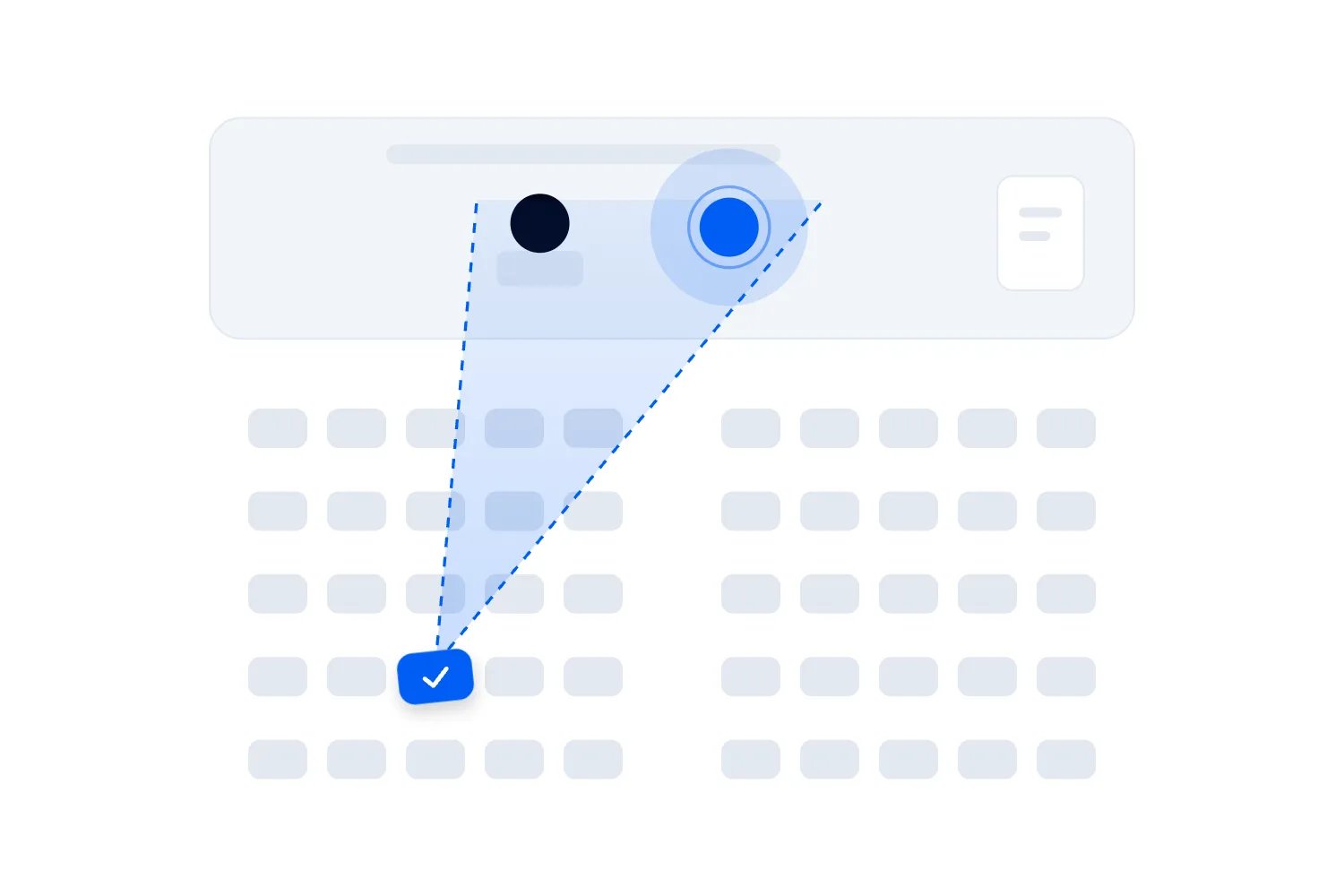
Walk the room from the attendee's perspective. Can someone see both the speaker and interpreter without continually turning away? Will a seated person lose the view when the audience stands? Does a sponsor banner, lectern or camera operator block the relevant area? A clear view during an empty-room inspection can disappear once the room fills.
Lighting deserves its own check. Run the actual presentation and performance cues, including the darker moments. Ask the interpreting team to assess visibility, then agree the changes with lighting. If your show uses a blackout, explain what it achieves and work through the communication and safety implications before rehearsal finishes.
Plan seating with the attendee rather than assuming everybody wants the front row. The appropriate position depends on sightlines, personal needs and whether someone is attending with companions. Explain the options and preserve the agreed view. Front-of-house staff need enough information to protect that arrangement without announcing someone's access request to the room.
Think about movement between activities. A workshop might begin in rows and move into small groups. A demonstration might take the presenter offstage. Tell the interpreting team and agree the position for each part. When the facilitator changes the format without warning, the interpreter and attendee can lose the arrangement you carefully tested.
Prepare speakers, hosts and audience questions
Brief speakers on the practical arrangements before their session. Explain where the interpreter will be and how questions will work. Ask speakers to use the agreed microphone and avoid talking over other people. These are manageable production instructions, and the host needs to reinforce them when the discussion becomes enthusiastic.
Tell speakers to address the attendee directly when answering a question through an interpreter. There's no need to turn every exchange into "ask them whether." The attendee is the person contributing to your event. Interpreting is how the exchange becomes accessible to the people involved.
Allow time for that exchange. A moderator who moves immediately to the next person can close the discussion before an attendee has received the answer or finished their contribution. Discuss the pacing and handover with the interpreting lead during rehearsal. The host needs an agreed cue rather than a vague request to "be inclusive."
Audience questions need a real procedure. Decide how the host identifies a signed contribution, how the interpreter gets a microphone when needed and how the room hears the question. If a question comes from an online attendee, explain how it reaches the moderator. Practice this sequence with production rather than assuming somebody will work it out.
Include the people running activities outside the main stage. An exhibitor hosting a demonstration and a facilitator dividing participants into groups may have missed the speaker briefing. Give them the instructions relevant to their activity. Access can fall apart in a side room even when the keynote team has rehearsed everything carefully.
For hybrid events, test what the remote attendee sees
If the event is streamed, decide whether the interpreting service covers the online audience, the room or both. Tell the provider which arrangement you intend. A livestream camera that occasionally catches the interpreter at the edge of the stage doesn't establish a usable interpreted stream.
Test the attendee view on the actual platform with the intended devices. Check the interpreter's full signing area, image size and placement alongside slides and speakers. Ask the interpreting team to assess the feed. The producer's large monitoring screen can hide a problem that makes the service unusable on a participant's smaller display.
Rehearse every layout your producer plans to use. A speaker view might preserve the interpreter while screen sharing hides them. A switch to audience questions can cause another change. Give the person controlling those layouts clear instructions and include access checks in the technical rehearsal, so a routine production switch doesn't remove the service.
An offsite interpreter also needs a reliable view of signed contributions and a usable sound feed for spoken content. Test both directions and agree how the interpreter reports a problem. Don't treat a successful connection as proof that the whole discussion can be interpreted. A microphone that misses audience questions will still miss them online.
Agree what happens when the feed fails. For a session relying on that arrangement, the host needs to know when to hold the discussion, whom to contact and what must be checked before resuming. Finish the recording agreement too, including the intended distribution and later reuse, so the accessible live experience doesn't disappear from the version attendees receive afterwards.
Put the arrangement into the working production schedule
Once the booking is confirmed, add the operational details to your event run of show. Record arrival, preparation meetings, technical checks, session coverage and handovers alongside the relevant production activity. The interpreting team shouldn't be managing a separate schedule that contradicts the one the stage manager is using.
Keep the detailed coverage plan available to the people who need it. The public agenda can describe which service is available and how attendees contact your access lead. The crew version needs room assignments, contact details and decisions about delays. Both should reflect the same confirmed arrangement.
Brief front-of-house staff on where to direct questions and how to reach the responsible person. If an attendee arrives asking about interpreting, reception should be able to help without asking them to explain their needs repeatedly to different volunteers. Provide a direct route to the person who can make decisions.
Check credentials and arrival instructions before the event. A professional who is booked to work backstage needs the appropriate access, a clear entrance and somebody expecting them. If security hasn't received their details, the appointment can begin with a queue at the wrong door while the speaker is already being introduced.
During the event, assign a lead to check that the arrangement is working and act on problems. Ask attendees privately whether they can follow and participate. If they report a problem, bring in the interpreting and production leads promptly. An organizer watching from the back of the room cannot judge language access by appearance alone.
Work through a booking before you confirm it
Suppose you're running a paid professional conference with a morning keynote, concurrent afternoon sessions and an exhibition reception. An attendee has requested ASL interpreting and wants to attend a workshop, ask the keynote speaker a question and meet exhibitors. You now have enough information to describe the job, but you haven't yet confirmed how it will work.
Send those activities to the provider together. Ask them to explain the staffing and coverage they recommend, including preparation and breaks. Then compare the proposal with the program. If reception coverage is missing, ask whether the provider excluded it deliberately or misunderstood the request. Resolve that gap before accepting the quote and describing the service to the attendee.
Next, involve the relevant crew members. The workshop facilitator explains when participants leave their seats for an exercise. The technical lead checks the keynote position and question microphone. Your exhibition manager identifies how the attendee can request interpreting for a conversation without wandering around looking for the team. Each person checks the part they actually control.
This is also where you find decisions that belong to the organizer. Perhaps the reception has changed rooms, or the workshop now overlaps the keynote's question period. Don't send the contradiction to the interpreter and assume they'll resolve it. Work out the program change, discuss its consequences with the attendee and provider, and issue one confirmed arrangement.
Before signing off, read the service description as if you were buying a ticket. Does it tell you which language is available, which activities are covered and who can answer a question? If the description simply says "accessible event," replace it with information somebody can use to plan their attendance. Keep the contact route available for needs your description hasn't anticipated.
After approval, send a short confirmation to the provider with the agreed scope, materials deadline, production contact and next review date. Ask them to flag anything that doesn't match their understanding. That reply is useful evidence of a shared plan, especially when the booking has passed between sales, finance and production. Keep it with the event documents so the day team can find it without searching your personal inbox.
Handle late requests and changes without improvising
Publish a monitored contact route and invite requests early enough to help you plan. Explain when advance information is helpful, but don't turn a preferred planning date into an automatic refusal. The provider's availability may be difficult at short notice; that calls for an active response and discussion of workable options.
When a late request arrives, acknowledge it, confirm the communication requirements and contact appropriate providers. Keep the attendee informed while you work. Don't promise a particular interpreter before availability is confirmed, and don't leave the person wondering whether their message reached anybody.
If your first provider cannot help, ask about qualified referrals and check other suitable services. Assess proposed alternatives with the attendee and relevant professionals. Replacing requested interpreting with an untested automated service because it is immediately available doesn't answer whether the person can participate effectively.
Schedule changes need the same discipline. Before moving a covered session, check the interpreter's assignment, any concurrent activity and the attendee's plans. Confirm the revised arrangement with everyone affected. A room move sent only to speakers can leave an attendee and interpreting team waiting together for a session that has already started elsewhere.
Afterwards, ask specific questions about the experience. Could attendees follow the program, ask questions and join the activities they wanted? Ask the provider what information arrived too late or which production decisions made the job harder. Record the changes for your next booking while the people involved can still explain what happened.
Keep the useful operational details for the next edition, then reconfirm individual requirements and availability. Ask returning attendees about changes before you repeat their previous interpreting arrangements.
Your next step is to send a proper brief for the event you're planning. Confirm the language requirements, attach the current program and ask a qualified provider to propose coverage and preparation. Then review that proposal with your production team and the people who will use the service before you confirm what the ticketed event will provide.

Author: By the Loopyah Content Team
The Loopyah Content Team shares expert insights, practical guides, and industry updates to help event organizers create unforgettable experiences and stay ahead in the event planning world.