· 21 min read
How to find the critical path in an event production plan
You've got a fixed opening time, several suppliers promising to be ready, and a plan full of tasks marked urgent. What you need to know is which delay would actually stop you opening. That's the question an event project critical path helps you answer.
Find it by linking the work that depends on earlier work, estimating how long each task takes, and calculating the longest route by duration through those dependencies to your readiness milestone. Then check that the people, access and equipment needed for that route really exist when the plan says they do.
The useful part is what happens next. You can see which delays use spare time, which change your earliest possible readiness, and where paying for recovery would make a difference. A fixed public opening remains a commitment. If your forecast runs past it, the calculation has exposed a problem to resolve, rather than quietly changed the event time.
Let's work through a small production example, including the arithmetic. All tasks, durations and USD prices below are fictional assumptions. They aren't recommended installation times, standard crew sizes or instructions for specialist work. Your suppliers and venue must confirm the conditions for your actual event.
Start with the finish you need to protect
Choose a precise milestone before calculating anything. "Event ready" leaves too much open. For a paid conference, you might define readiness as all required rooms accepted, the agreed technical checks complete, registration tested and the responsible people confirming that admission can proceed.
That milestone is different from programme start. Buyers may enter before the first speaker appears. Working backwards from the speaker's start can make a plan appear achievable while leaving no time to receive attendees. Record the advertised admission time separately, together with any earlier internal readiness target.
Also define the boundary of this calculation. You can analyse the weeks of design, ordering and approvals before installation, or the final setup window. A single analysis can cover both, but mixing vague multiweek tasks with precise final checks makes it harder to understand what's driving the result. Start with the part you can define properly.
Our example begins when approved work areas become available. Procurement, design and relevant permissions are already complete. If that assumption isn't true for your event, include the outstanding work and its dependencies. The arithmetic cannot compensate for work you've left out.
The Association for Project Management's explanation of scheduling and critical paths describes critical path analysis as determining duration using estimated activities and their logical dependencies. In an event plan, those dependencies need to reflect the conditions people actually require before they start.
If you still need to define what the suppliers are delivering, complete the event production brief first. You can't make a reliable duration estimate for an installation whose scope keeps changing. Confirm the accepted scope, then ask how long each useful stage needs.
Turn supplier promises into linked tasks
The first thing you want to do is ask each lead a simple question. What has to be finished before your team can start this job? Keep asking until the answer identifies an observable condition and the person who confirms it.
"After staging" might mean the platform is physically assembled, that a particular work area has been released, or that every required specialist check is complete. Those answers create different schedules. Record the actual release condition rather than choosing whichever interpretation makes the finish time look better.
Use a short identifier for each task. You can then link task B to task A without depending on someone recognising a shortened description. Identify the owner, duration estimate, immediate predecessors and completion condition. A predecessor is the task that has to happen first.
Separate activities when different people receive the output or different dependencies control their start. "Set up conference" is too broad. "Complete approved equipment installation" and "Test the installed presentation system" expose the handoff between installing equipment and demonstrating that it works. Keep the technical method in the responsible supplier's own plans.
Avoid linking everything in one long line merely because your list happens to be written in that order. Separate work can run at the same time if the responsible leads agree it has the necessary resources and safe separation. Conversely, separate departments may still compete for the same room or technician.
The UK's Health and Safety Executive's event management guidance, relevant to Great Britain, calls for a safe phased programme that takes contractors' risk assessments into account and is communicated to those involved. Apply the requirements for your own location with the appropriate competent people. A dependency calculation supports coordination; it doesn't authorise a work method.
Work through a small production network
Imagine a paid conference using a main room and separate registration area. The venue and suppliers have already agreed the work arrangements. Our simplified model has continuous available working time, sufficient separate resources for the parallel tasks, and no breaks, travel or overnight closures inside the modelled window. Those assumptions make the arithmetic visible.
Time starts at hour zero. Each task starts only after its listed predecessors finish. There are no partial releases or overlaps within a linked pair. Final readiness requires both the programme and admission branches to finish. The following list defines the whole teaching example.
A takes two hours to complete the agreed site access handover and release the work areas. It has no predecessor inside this model.
B takes four hours to complete the main-room installation stage after A. Its completion releases the room for C under the supplier's accepted arrangements.
C takes three hours to complete the agreed presentation-system installation after B. It releases the system for testing.
D takes two hours to test that system after C. Completion means the agreed tests have passed and any faults preventing rehearsal have been resolved.
E takes three hours to complete programme rehearsal and its required corrections after D. It is the end of the programme branch.
F takes three hours to complete registration-area preparation after A. It uses separate resources and an agreed separate area.
G takes one hour to test the admission process after F. It is the end of the admission branch.
R is the readiness milestone. It takes no working time and requires both E and G to be complete.
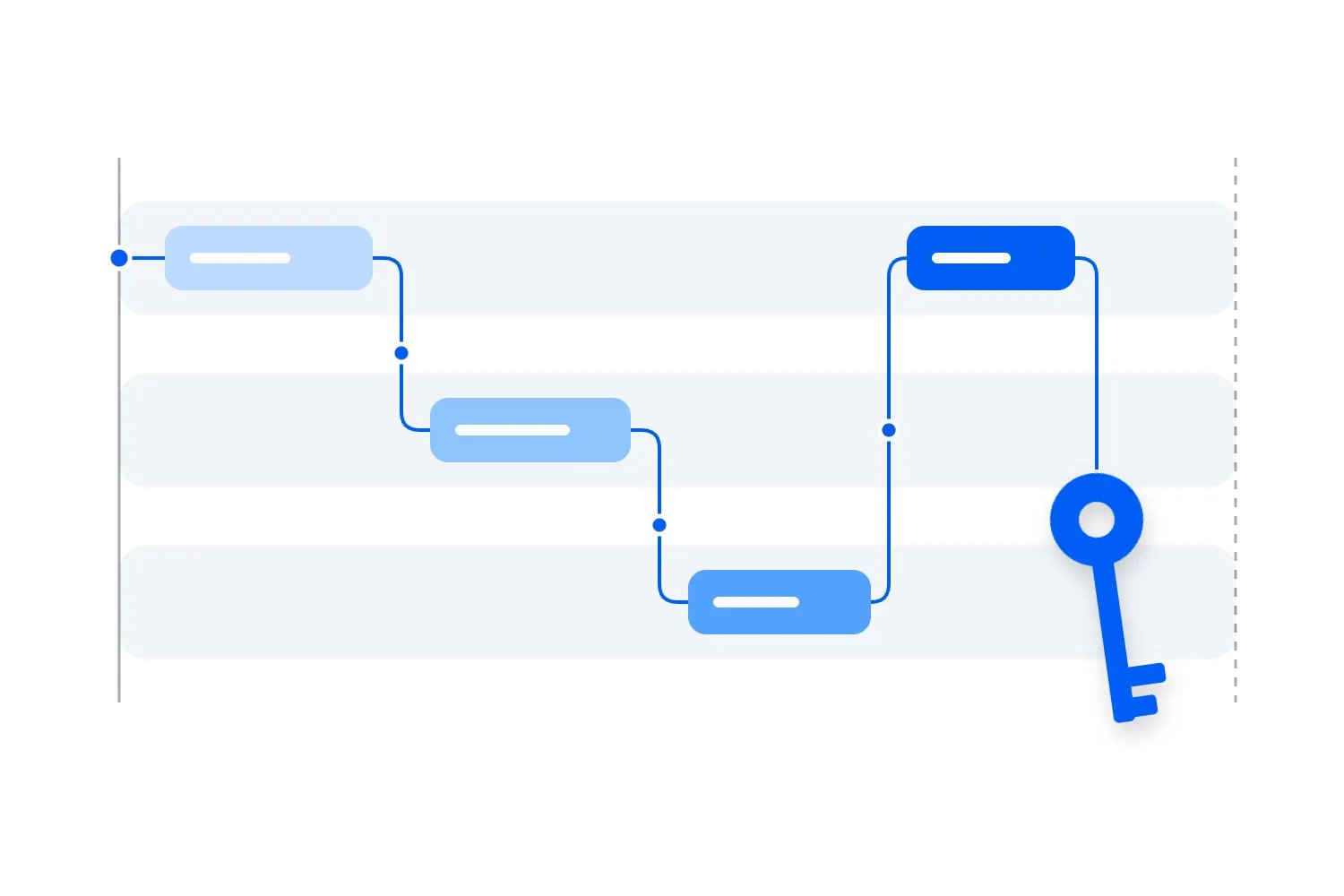
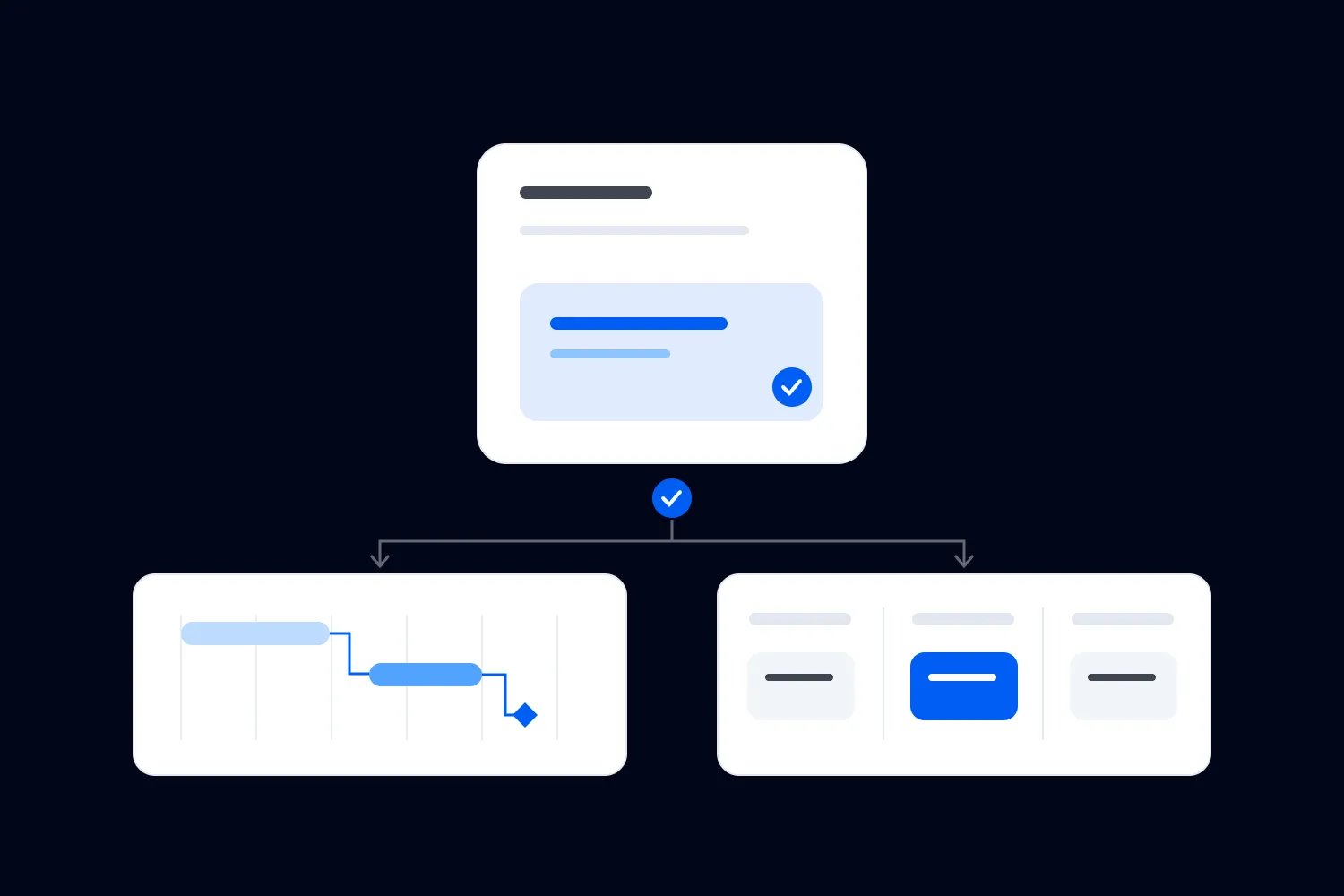
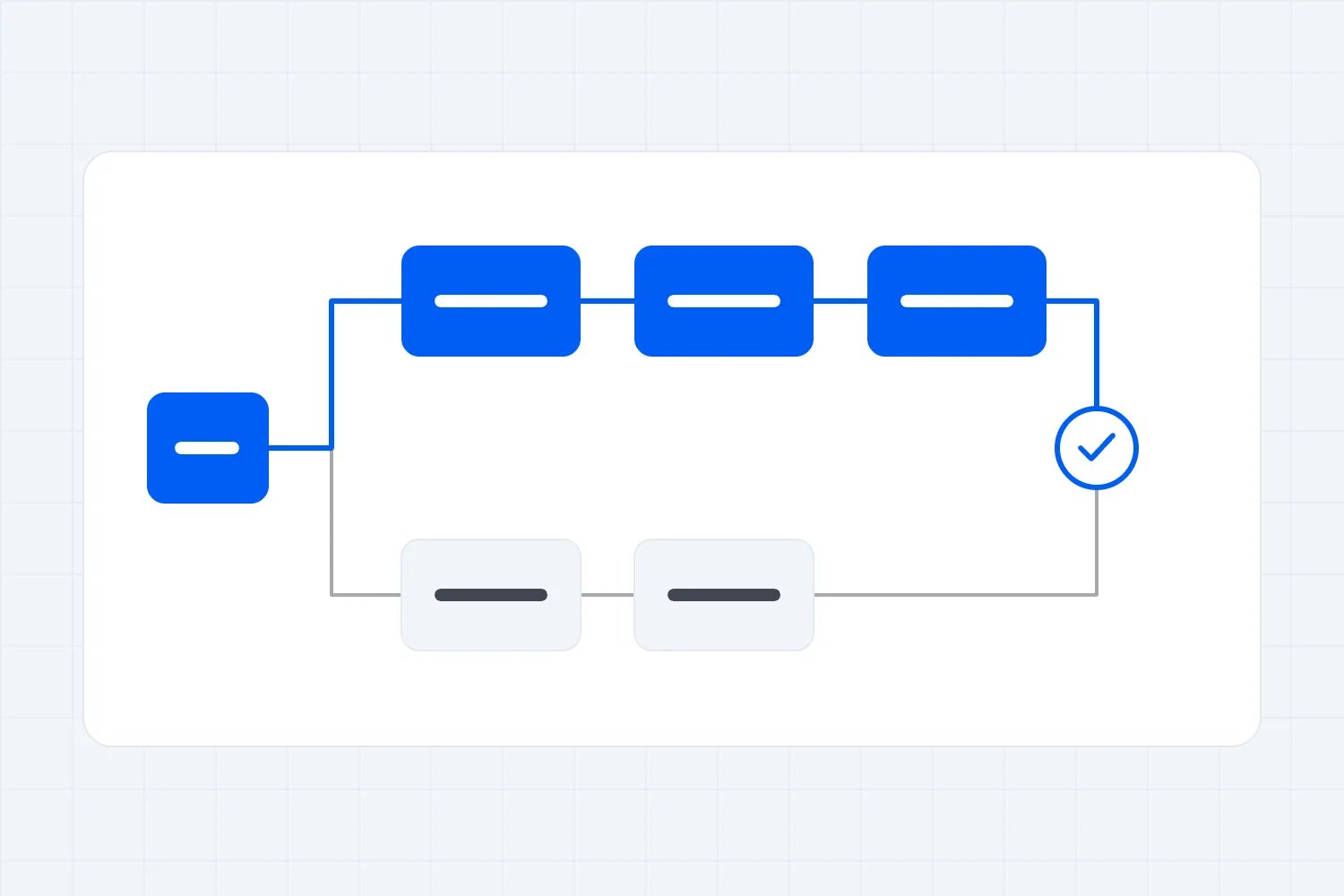
There are two routes from start to readiness. A, B, C, D and E total fourteen hours. A, F and G total six hours. The longest route by duration is fourteen hours, so that route determines the earliest readiness in this model.
Notice that A belongs to both routes. Don't count it twice when estimating total work or staffing costs. We're comparing routes through the same network, not adding two independent event projects together. The same task can affect several downstream teams.
Also notice that the fourteen-hour route contains several modest tasks. You wouldn't find it by circling only the longest individual job. The consequence of a delay depends on what follows that job and the spare time along its route.
For now, the model forecasts readiness fourteen working hours after access begins. It hasn't told us what calendar date or clock time that represents. We'll check the working calendar and the public opening constraint after calculating the early and late times.
Calculate the earliest start and finish
Start at hour zero and move forward through the dependencies. This is often called the forward pass. You calculate the earliest start from the latest finish among all the task's immediate predecessors, then add the duration to find its earliest finish.
A starts at zero and finishes at hour two. B can therefore start at hour two and finish at hour six. C runs from six to nine. D runs from nine to eleven. E runs from eleven to fourteen. Each step waits for the previous one.
The registration branch starts after A as well. F can run from hour two to hour five. G can run from five to six. R has to wait for E and G, so its earliest time is fourteen, the later of their two finishes.
That rule matters whenever branches join. You don't average their finish times, and you don't choose the finish of whichever department is most confident. If the milestone requires both branches, the later one controls when the milestone can happen.
Keep early times even if you intend to start a task later. They show what's possible under the current logic and assumptions. Your issued production schedule may deliberately use a different start to match a crew call or room booking, but that decision should remain visible.
Now test the definition of each finish. If D includes only the first test attempt, unresolved faults require additional work before rehearsal. Either include a realistic allowance in its agreed duration or model the necessary follow-up explicitly. Calling an unsuccessful test complete would make the next calculation meaningless.
For larger schedules, use software that calculates from the links and calendars. You still need to understand this simple forward calculation so you can challenge a result. A precise-looking finish generated from missing predecessors is still an unreliable forecast.
Work backwards to find the latest allowable times
Next, work backwards from the calculated finish at hour fourteen. This is the backward pass. For this first calculation, we're finding the latest each task can happen without moving the model's earliest readiness, rather than inserting the public opening time as a separate deadline.
E must finish at fourteen, so its latest start is eleven. D must finish by eleven and start by nine. C must finish by nine and start by six. B must finish by six and start by two. Each of these matches its early times.
G also needs to finish by fourteen, because R requires it. With a one-hour duration, G could start at thirteen. F must finish before G starts, so F could run from ten to thirteen. Those are their latest times under the same simplified assumptions.
A has two immediate successors, B and F. To preserve both routes, A must finish by the earlier of their latest starts. B needs A complete by two; F needs it complete by ten. Two therefore controls A's latest finish, and A's latest start is zero.
That earlier-of-the-successors rule is the backwards counterpart to the later-of-the-predecessors rule. It's worth understanding because shared tasks are where people often misread spare time. A can't finish eight hours late just because the registration team has eight hours available.
The APM project management glossary defines the backward pass and the distinction between total and free float. You don't need to use those terms in every supplier conversation, but their different meanings explain why a delay can affect another team before it affects the overall readiness time.
If you're calculating in a spreadsheet, show early start, early finish, late start and late finish in separate columns. Keep durations and predecessor IDs visible. Ask another person to follow one branch forwards and the shared predecessor backwards before anyone relies on the result.
Understand what float actually permits
Total float is the amount a task can move without delaying the chosen overall finish, under the model's current assumptions. In our example, subtract early start from late start. A, B, C, D and E each have zero total float. F and G each show eight hours.
Those eight hours are shared along the registration branch. They aren't eight hours for F plus another eight for G. If F uses six hours through a late start or longer duration, only two remain for any later delay before readiness moves. Recalculate after the first change.
Free float answers a narrower question. How long can a task move without delaying the earliest start of its immediate successor? F has zero free float because G is planned to start as soon as F finishes. F can delay G while both still finish before R.
That matters commercially even when the event stays on time. A later F finish might leave the admission-testing lead waiting, require a different call or clash with another booking. Total float protects the model's finish; it doesn't promise that every delay inside it is free of cost or inconvenience.
The U.S. Government Accountability Office's Schedule Assessment Guide explains critical and near-critical paths and the need to monitor float as work progresses. For this event, also watch a branch whose remaining spare time is smaller than a plausible delivery or staffing delay.
Don't label registration unimportant because it has float. If the admission branch runs beyond hour fourteen, it becomes the controlling route. More fundamentally, every required condition still needs to be met. Float changes when attention becomes urgent; it doesn't remove the obligation.
You can start F earlier to complete it with less uncertainty, provided the agreed resources are available. Starting at its latest allowable time deliberately uses the entire allowance. That's a choice to discuss with the people affected, rather than a scheduling improvement on its own.
Translate working hours into a feasible event calendar
Now return to your fixed opening. Suppose your actual, confirmed calendar offers fifteen available working hours before the internal readiness deadline. The model needs fourteen, so there is one hour between forecast readiness and that deadline. Keep that allowance separate from the eight hours on the registration branch.
The one hour belongs to the overall finish comparison. The eight hours describe the difference between the two routes before their shared milestone. Adding them together would imply nine hours of protection for the main-room sequence, which the model does not provide.
If the confirmed calendar offers only thirteen hours, you have a one-hour shortfall. The forecast remains fourteen. In a constrained scheduling model, this can appear as negative float against the required finish. Explain it plainly to the decision-maker: the current work and resources don't fit before the deadline.
Calendar detail can change the result substantially. A task needing three working hours cannot automatically run across a building closure. A specialist available only the following morning creates a wait even if the preceding installation finishes tonight. Record availability where it controls the next start.
Be equally careful with time units. A supplier's three-day lead time may mean business days, while your event countdown uses calendar days. Deliveries may exclude weekends or require an order before a daily cutoff. Confirm the meaning with the supplier and reflect that actual calendar in the plan.
Once you introduce calendars, limited resources or extra fixed dates, trace the route controlling readiness again. The simple fourteen-hour result remains a teaching calculation. Your working forecast must account for the waits and restrictions that your event actually faces.
Record any internal recovery allowance openly. Otherwise, departments may each assume the same spare hour is theirs to use. Say who can approve its use and when the forecast will be checked again. A buffer that exists only in someone's head is difficult to protect.
Check the people behind the parallel branches
The example assumes F can happen while B and C happen. Before applying that logic to your event, name the actual resources each activity needs. A registration area and a main room may be physically separate while both still require the same venue technician for release.
Suppose that technician must attend the whole of B and the start of F. You cannot retain the original parallel plan without resolving that conflict. Ask whether a different qualified person is available, whether the tasks can be resequenced, or whether the work genuinely needs that person's continuous presence.
Once you agree the arrangement, represent it in the schedule and recalculate. Don't leave the conflict in a note while reporting a finish that assumes it disappeared. The dependencies describe necessary work order, while the resource check establishes whether the proposed timing can actually happen.
The same applies to approvals before installation. An organiser who must approve the final layout and release the sponsor artwork may appear available for both tasks on paper. If both decisions need a meeting during the same hour, someone must change the appointments or delegate within agreed authority.
Ask about absence and handover as well. The named lead might finish their booked call before a delayed task is ready. Confirm who can accept the handoff later, and what information that person needs. A new contact on a list doesn't establish that they understand the unfinished work.
Don't confuse a critical task with an important task
A task can be commercially important while having plenty of scheduling flexibility. Launching the sponsor announcement may matter to the agreement but have no direct dependency on tomorrow's room setup. Track its contractual deadline separately unless it genuinely controls a readiness condition in this model.
Likewise, a small task can determine the finish. A final confirmation that takes minutes may block admission if nobody else has authority to provide it. Include that availability in the forecast. The critical path measures the consequences of timing, so importance labels and department seniority cannot substitute for following the links.
Recalculate when a delay happens
Suppose F starts three hours late while every other assumption holds. It now finishes at eight and G at nine. R remains at fourteen because E still controls it. The registration branch has used three of its eight spare hours, leaving five.
Now suppose F starts nine hours late. F finishes at fourteen and G at fifteen. The admission branch has become longer than the programme branch, so readiness moves to fifteen. If your deadline is fifteen, you've consumed the separate one-hour allowance as well.
Compare that with B taking an extra hour. C, D and E all wait, so programme readiness moves to fifteen. Speeding up G cannot recover that hour because G already finishes well before the controlling route. You need a change affecting the main-room sequence, or an approved change to the required scope.
After work starts, calculate using actual completed work and a fresh estimate of the remaining work. Don't keep adding original durations from hour zero. If C is halfway through its booked window, that doesn't prove half its work remains. Ask its lead when the required completion condition can now be met.
Record the time of the update. "Ready at fifteen" is useful only when people know whether that forecast accounts for the latest problem. Identify the revised finish, the affected successors, the action being considered and the next confirmation time.
Then tell the people whose decisions change. A later testing start affects the test lead. A later readiness forecast affects venue and admission leads. An additional crew call affects whoever approves spending. Don't make the owner of the spreadsheet the only person who knows the schedule moved.
The event contingency plan guide helps you organise the response when a defined trigger occurs. Keep its decision responsibilities consistent with this schedule. The person who calculates a late forecast may not be the person authorised to change admission arrangements.
Choose recovery that changes the controlling route
Once you know what is late, ask the responsible lead which options genuinely shorten the remaining controlling work. They might be able to prepare an independent component elsewhere, use a preassembled alternative, or add suitable staff to a task that can be divided. Each proposal needs a confirmed effect.
The Project Management Institute's discussion of schedule compression distinguishes adding resources to shorten work from overlapping tasks that normally run in sequence. Both can introduce costs or risks. For an event, ask exactly which task changes and which required condition still has to be satisfied.
More people won't halve a task that depends on one access route or a fixed processing time. Nor can money make an unavailable specialist appear. Confirm the resource, arrival, revised duration and any new dependency before treating a recovery proposal as part of the forecast.
You can also simplify optional scope. Perhaps an extra display can be removed before installation begins without changing the sold experience or any required function. Confirm that judgment with the relevant commercial and production leads. Removing a promised session or accessibility provision is a different decision with wider consequences.
Never recover time by quietly deleting required tests, breaks or release checks. If someone proposes a different method, the people responsible need to assess and approve that method and its timing. A scheduling calculation can't decide that a specialist requirement no longer matters.
Recalculate every route after approving a recovery. Shortening the original critical path may make another branch controlling. If two routes both finish at fifteen, improving only one still leaves readiness at fifteen. You need to understand both before buying another hour of help.
Check whether the recovery cost is justified
Imagine the delayed programme route forecasts readiness at hour sixteen. The separate admission route is already forecast at fifteen, and your deadline is fifteen. These are changed conditions, so use this updated model when considering recovery, rather than the original six-hour admission route.
A supplier offers a confirmed change that shortens the programme route by one hour for $600. Both branches would then finish at fifteen. If the change is approved and delivered as estimated, it recovers one hour of overall readiness. Ask what the price includes and whether any other costs follow.
Now imagine a different proposal costs $1,000 and removes two hours from the programme route. That branch would finish at fourteen, but admission would still finish at fifteen. Overall readiness is fifteen in either proposal. The extra $400 buys no earlier overall finish under these assumptions.
| Label | Overall readiness hour |
|---|---|
| No recovery | 16 |
| USD 600 | 15 |
| USD 1000 | 15 |
That doesn't automatically make the larger proposal wrong. It might reduce uncertainty in a way your team values. But describe that separate benefit honestly, and check whether the money would be better spent resolving the admission delay. Don't sell the proposal internally as two hours recovered at the event level.
Compare confirmed costs with the consequences you're trying to avoid, using actual bookings and terms. Those consequences may include extra venue time, extended crew calls or a disrupted buyer experience. Avoid inventing a precise refund bill when nobody has established what would happen.
Use your event profit and loss plan to record approved additional costs. Identify who can approve them before the setup window. A supplier's ability to do extra work and your authority to buy it are separate conditions, and both need resolution in time to act.
Keep production dependencies separate from ticket operations
Your critical path calculation coordinates production work, but admission readiness also needs an agreed ticket process. Check who can access the event, which people will handle entry and what successful testing looks like. Link those responsibilities to the admission branch instead of assuming they happen automatically.
Loopyah's event management software lets team members use their own accounts, with door managers able to check tickets without seeing sales. That helps you assign admission access without sharing the owner's login. The production lead still has to confirm staff availability and test the actual admission arrangements.
Include unresolved access or training tasks when they can prevent admission readiness. Once they're complete, record the confirmation and calculate from the remaining work. Keeping ticket operations connected reduces repeated administration, but it doesn't decide whether the venue is ready to receive the public.
Review the route before each important handoff
Before accepting the schedule, read the controlling route with the leads responsible for it. Ask each person to confirm the predecessor, duration basis, available resources and finish condition. Pay particular attention to handoffs where one company assumes another has already checked something.
Review the shorter routes too. Find any allowance that's shared, any resource booked twice and any external response whose timing remains unconfirmed. A plan becomes useful when these uncertainties are visible early enough to change a booking, simplify work or secure the necessary confirmation.
Before the meeting ends, ask each affected lead to repeat the next required handoff and its forecast time. That brief check can expose different interpretations while everyone is still available to resolve them. Record any disagreement as an open action, with a named owner and a decision deadline.
Keep the original accepted schedule and the current forecast distinguishable. Record actual timings and the reason for changes, so the next edition improves its estimates instead of repeating the same optimistic promise. Don't rewrite the original plan after the event to make every task look on time.
For your next production meeting, start with the readiness milestone and trace back through the work that currently determines it. Confirm the next unfinished dependency with its owner. If that task slips, you'll know which forecast to update, whose work changes and which decision has to happen before the remaining time runs out.

Author: By the Loopyah Content Team
The Loopyah Content Team shares expert insights, practical guides, and industry updates to help event organizers create unforgettable experiences and stay ahead in the event planning world.