· 21 min read
Buffet, plated or food stations: which event service style should you choose?
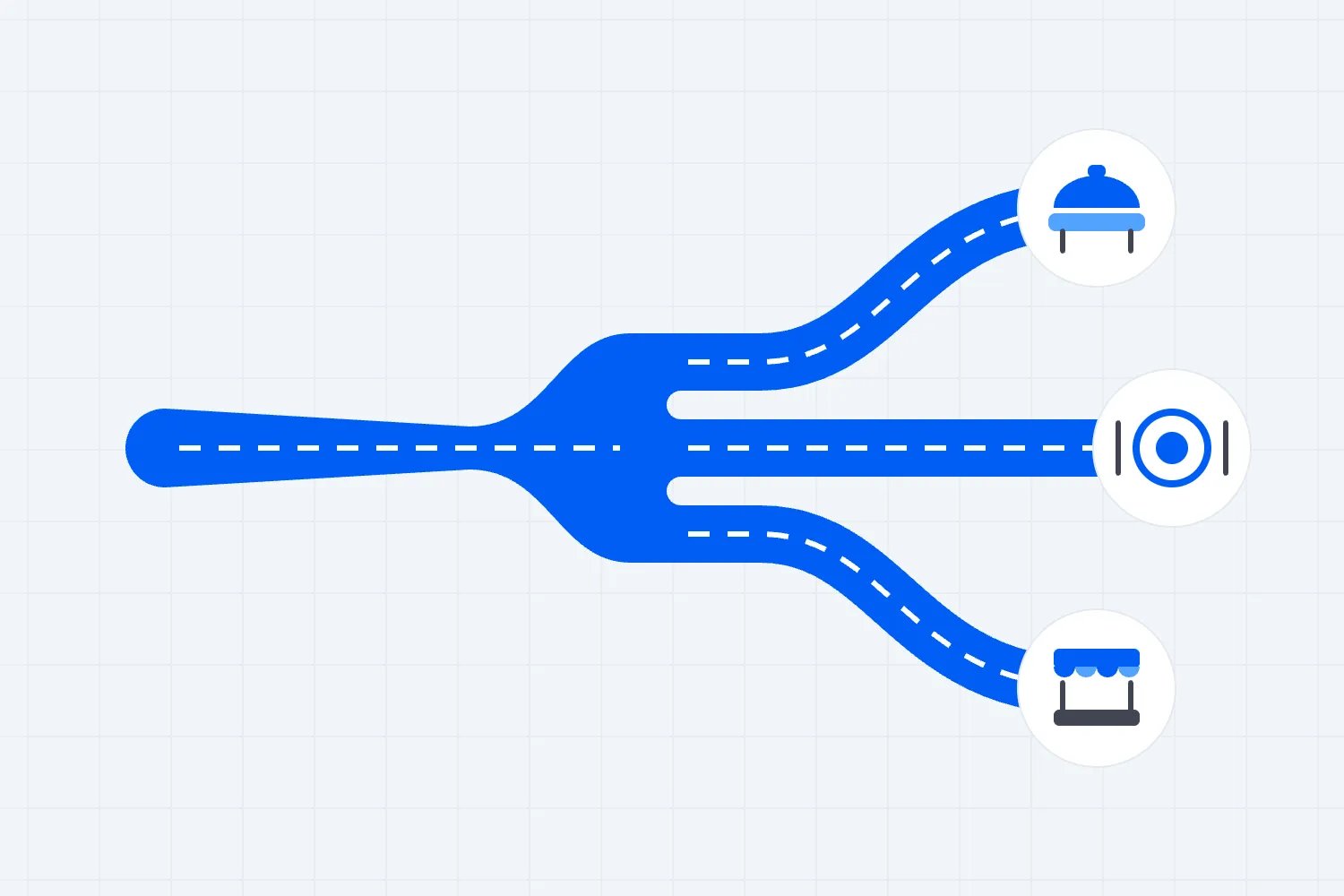
Choose a buffet when guests need a proper meal with choice and your room can handle the queue. Choose plated service when the meal has a fixed place in the programme, and food stations when moving around and trying different dishes is part of what people paid for. Then check the full cost, service time and venue setup before signing anything.
That's the answer. The awkward part is that any of these can look right on a menu and work badly in the room. Your buffet can swallow the lunch break. Your plated dinner can leave half the audience waiting while the other half starts eating. Your beautiful food stations can turn into several expensive queues.
If you're selling tickets to a conference, tasting event, supper club or dinner programme, food is part of your promise to the buyer. People don't separate the caterer's performance from yours. They paid you, and they'll remember whether they ate comfortably and got back to the event on time.
So let's choose the service around the experience you're selling. We'll compare buffet, plated service and food stations, work through a sample budget, and look at the decisions you need to settle with the caterer. The aim is a meal people enjoy at a cost your event can carry.
Start with what the meal needs to do
The first thing you want to do is describe the meal without naming a service style. Try this: "Everyone needs lunch, a seat and time to talk before the next session." Or this: "People are buying an evening of tasting and discovery, with food available throughout."
Those are different jobs. The conference lunch has a deadline. The tasting evening has a flow. Giving both the same buffet because it worked at your last event is a poor starting point.
Write down when food opens, when it closes, who needs to eat and what happens immediately afterwards. Count everyone you're responsible for feeding, including performers, speakers and staff where their agreements include meals. Complimentary admission doesn't make someone's lunch free to produce.
Next, decide how central food is to the ticket. At a business conference, it may support the programme. At a paid supper club, it is the programme. At a music event, it may be a separate purchase. Make that distinction before comparing quotes, because it changes how much choice, presentation and service the buyer reasonably expects.
Be honest about the room, too. Can guests sit down? Where will queues go? Can servers move between tables? How far is the kitchen? Can the venue support cooking at stations? A food service style is also a set of movements through a physical space.
If you're still deciding what the whole event should deliver, our event brief template helps you make the promise concrete. Give the caterer that promise alongside the menu request. "Lunch for a conference" leaves too much open. "A seated lunch with everyone back in the auditorium before the afternoon keynote" gives them something to plan against.
Buffet service works when choice and a proper meal matter
A buffet brings guests to a shared food display. They choose dishes, then return to their seats or another eating area. Staff may serve some or all of the food. Don't assume buffet means entirely self-service; ask exactly what the caterer proposes.
I'd start here for a conference lunch with varied preferences and a room that can support separate serving lines. It gives guests choice without turning every meal into an individual order. But it needs a real plan for getting people through, especially when everyone arrives at once.
The weak version is familiar. Someone reads every label, the person behind them waits for the same serving spoon, and the entire audience funnels past one tray of the most popular dish. By the time the last guests sit down, the first guests are collecting coffee.
Ask the caterer to walk through the line dish by dish. Where do guests collect plates? Which dishes take longest to serve? Does everyone need to visit the same point for cutlery? Can drinks sit somewhere else? Can the team replenish trays without walking against the queue?
Duplicate a complete serving line when the caterer recommends it and the room allows it. Adding a second table of side dishes won't help much if both lines still converge on one main course. The useful unit is a route through a complete meal, not another piece of furniture.
Buffets also make portion control less predictable. Some guests take a little; others take several mains. That doesn't automatically make them wasteful, but it means your production plan needs to account for how this particular menu will be served. Agree who portions expensive dishes and how guests can return for more.
Keep the promise specific. If admission includes lunch, say that. If it includes a buffet with drinks purchased separately, say that too. Don't sell "unlimited dining" because it sounds generous unless the caterer has agreed what that means and priced the commitment.
The other practical question is presentation late in service. A buffet that looks good when doors open still needs to serve the final guest properly. Ask how the team refreshes the display, keeps dishes identifiable and handles an item running low. A smaller fresh tray can make more sense than one enormous tray sitting out for the whole break.
Choose a buffet because it suits your meal and space. Don't choose it on the assumption that it must be the cheapest option. Food allowance, service staff, equipment and waste can change that answer.
Plated service earns its cost when the room needs to stay together
With plated service, the kitchen prepares individual plates and servers bring them to guests. People remain seated, and the meal can follow a planned sequence. That makes it a strong option for a ticketed dinner with speeches, performances or a shared tasting programme.
The benefit is control over the experience. You can plan when the meal arrives, how it looks and when the programme resumes. Guests don't have to stop a conversation, find a queue and carry food back through the room.
But a planned sequence isn't the same as guaranteed speed. Ask how the team will serve the full room, where plates will be held, and how long the first table might wait before the last table receives the same course. The answer should reflect your actual layout and menu.
A dish that looks wonderful at a tasting may be difficult to deliver consistently at your event. You need the caterer's judgement on what survives the journey from kitchen to table. Don't make that decision from a photograph of one plate.
Plated service also moves some decisions earlier. The caterer may need meal selections before a deadline. If you're offering several mains, agree how selections reach the kitchen and how servers identify the correct diner. "We'll work it out on the night" is a surprisingly expensive plan.
For a small supper club, a short menu can make service clearer and give the kitchen more control. For a larger paid dinner, advance choices may suit the audience better. Either way, dietary needs deserve a process of their own, rather than getting lost in a tally of chicken and fish.
Think about clearing, not only serving. Plates, cutlery and glasses need somewhere to go. Clearing during a quiet speaker session can disrupt the thing people came to hear. Agree those movements with the programme lead so the caterer isn't forced to choose between noisy clearing and a missed service deadline.
The price needs the same care. A plated quote may include staff and tableware that a buffet quote lists separately. It may also assume venue access, kitchen equipment or a service duration you haven't booked. Ask for the complete scope before deciding the headline price is too high.
If the shared meal is central to the ticket, I'd rather simplify the menu and pay for reliable plated service than sell a formal dinner and deliver a buffet the room can't support. Your buyer cares whether the evening works. They don't see the saving you made on paper.
Food stations work when movement is part of the event
Food stations spread service across several points. Each may offer a cuisine, dish, tasting or preparation method. Some are ready to serve; others finish food to order. Those differences matter more than the word "station" in the quote.
For a paid tasting event or networking evening, stations can give people a reason to move around the room. Guests choose where to go and what to try. That can suit an event where discovery and conversation matter more than everyone eating the same course together.
Here's the catch: separate stations don't automatically spread demand evenly. If one offers the dish everyone came to try, that station can collect most of the queue. The quieter stations may look lovely while the popular one struggles.
Ask what each station produces during your service window. A prepared tasting portion and a cooked-to-order dish have different demands. The latter needs enough cooking capacity, power, staff and space to serve the people who want it. A chef preparing one portion at a time can become the slowest part of the evening.
Decide whether stations collectively provide dinner or offer tastings. Small plates can still add up to a proper meal, but only if quantities and menu coverage support that promise. Selling dinner and then telling hungry guests that the food was intended as a tasting doesn't go down well.
Give guests a clear way to understand what their ticket includes. Can they visit every station? Are portions limited? Are some items extra? Does a token or tasting card apply? Agree the service rules with the vendors before explaining them to buyers.
Stations also need a clearing plan. Guests may carry several plates or leave them on conversation tables. If nobody clears those surfaces, your networking space becomes a collection point for dirty dishes. Include that labour in the quote.
For multiple food vendors, settle responsibilities individually. Who supplies the service equipment? Who takes payment for extra purchases? Who responds if a vendor doesn't arrive? Who manages the shared waste area? Our event vendor agreement guide covers the wider contract decisions. Your station plan should make the food commitments equally clear.
I'd choose stations when exploring the menu adds value to the paid experience and the venue can support the separate operations. I'd avoid them when you need a whole audience fed during a short break. More service points help only when those points can handle the demand they attract.
Compare complete quotes, then test the ticket price
You need comparable quotes before you can choose on cost. Ask each caterer to price the same attendance, service window, dietary requirements and venue conditions. If one quote assumes a kitchen and another includes a temporary setup, the prices answer different questions.
Request food, labour, equipment, delivery, setup, clearing and applicable taxes as separate lines where possible. Check minimum charges, access requirements, overtime and the final headcount deadline. Ask whether venue fees or compulsory venue staffing sit outside the caterer's invoice.
Don't forget the people who aren't buying tickets. If the event needs to feed its crew, their meals belong in the budget. If a sponsor package includes dinner places, those meals still cost money even though admission revenue appears elsewhere.
Here's a hypothetical comparison for 200 people receiving meals. These figures are invented planning inputs in US dollars, not market rates. Replace every one with your quotes before making a booking.
A buffet costs $5,000 for food, $900 for labour and $600 for equipment and delivery. Total catering cost is $6,500, or $32.50 per meal. Plated service costs $5,600 for food, $1,600 for labour and $800 for equipment and delivery. That's $8,000, or $40 per meal.
Food stations cost $5,200 for food, $1,700 for labour and $1,100 for equipment and delivery. The total is also $8,000. In this example, stations and plated service cost the same for different reasons. Calling stations "casual" hasn't made them cheaper.
These sample totals assume no separate tax or venue surcharge and no costs beyond the stated lines. In your event, add every applicable charge. Also check whether the supplier's price changes if attendance falls, rather than assuming all costs move neatly with headcount.
Now connect catering to what buyers pay. If your ticket price is already fixed, moving from the sample buffet to plated service adds $1,500 to the event budget. You need to absorb that cost, find a real saving elsewhere or earn additional revenue that covers it.
If you plan to charge more, test whether the improved meal strengthens something buyers actually value. A seated dinner may support a higher priced evening. It doesn't follow that a conference attendee will pay more just because you changed the lunch service.
Use your full event break-even calculation for that decision. Catering is only one expense, and ticket revenue still needs to cover the rest. A meal upgrade can be a good choice without being a profitable choice at the price you've set.
Test the busiest moment, not the average evening
Service planning needs a demand estimate and a delivery estimate. How many people will want food at the same time? How many complete meals or portions can the proposed setup serve during that period? Ask the caterer to explain both.
At a conference, a session ending can send most of the room to lunch together. At a tasting event, arrivals may spread over the evening, but an announcement or performance break can still cause a surge. Don't plan only for the calmer middle of service.
Take another hypothetical example. You want 180 guests served within 30 minutes. That requires an average of six guests receiving a complete meal each minute. If the caterer's tested plan can manage only four, it won't meet your target even before interruptions.
That arithmetic is a first check, not a queue forecast. Guests arrive unevenly, some dishes take longer, trays need replacing, and the final person still needs time to eat. A service plan operating exactly at its theoretical limit leaves no room for those ordinary events.
Ask what can change. The caterer might simplify a slow dish, add a complete serving line or recommend a longer break. You might stagger attendance by session or group, provided that doesn't take away the time people need for the programme.
For plated service, walk through the course sequence with the room plan. For stations, test the likely favourite separately. Don't divide total demand equally across stations just because that makes the spreadsheet work.
Put the agreed times into the event run of show. Include the signal to open service, the decision to replenish near closing and the handover back to the programme. Name the person who can change timing on the day.
Crowd movement deserves a proper check. The UK's Health and Safety Executive identifies queuing areas, pinch points and movement around attractions among crowd safety considerations. Use that guidance to review where food demand could obstruct other movement, alongside the venue's requirements.
Move the queue away from exits and essential routes. Let the venue and responsible safety staff approve the plan. Your nicest station is in the wrong place if its queue stops guests reaching the toilets or leaving the room.
Ask whether the room reset is included, too. If your next session uses the same space, someone must clear dishes, remove service furniture and return seats to position. Give that work a time allowance and an owner before the event.
Make dietary needs and access part of the service
Menu choice doesn't settle dietary needs. A guest may need a particular meal, reliable ingredient information or protection against allergen cross-contact. Treat those as different questions and let the caterer explain what they can provide.
Ask for the caterer's process before promising an accommodation. Who receives requests? Who confirms whether a meal can be supplied? What happens if an ingredient changes? Who answers the guest on the day? Your team should know who to call instead of guessing from a dish name.
The Food Standards Agency's allergen guidance for food businesses explains allergen information responsibilities and cross-contamination considerations. Its scope is England, Northern Ireland and Wales. Use the rules that apply where your event takes place, and ask your food provider how they meet them.
For a buffet, discuss labels, separate utensils and how staff handle a guest needing an alternative meal. For plated service, confirm how that meal reaches the correct person. For stations, ensure each vendor follows the agreed process rather than giving contradictory answers.
A dietary preference and a food allergy aren't interchangeable. "Vegetarian" tells someone something about a dish, but it doesn't answer every ingredient question. Avoid reassuring language such as "safe for everyone" or an allergen-free claim the supplier cannot support.
Access needs the same practical attention. A guest may have difficulty standing in a queue, carrying a plate or reaching a serving point. Ask how they can receive the same meal and make choices without having to improvise in front of everyone.
The US Access Board's guide to accessible routes explains how accessible routes connect facilities under US standards. It's a useful reference for US events, rather than a universal venue rule. Have the venue confirm applicable requirements and preserve the accessible route when arranging tables and queues.
Offer a way to raise access and dietary needs before the event, with a clear deadline and contact. Collect the information you need, restrict access to the people handling the request, and avoid putting personal details on public lists or signage.
Then test the actual experience. Can a guest find the right person? Can they read the menu? Can they reach a seat after receiving food? A supplier saying "we accommodate everyone" isn't enough until you understand the steps.
Agree food safety and waste responsibilities before service
You don't need to become the caterer. You do need to know who is responsible for food safety, what facilities they require and when they would stop serving a dish. Book a provider whose plan fits the venue and the applicable local requirements.
Ask about transport, storage, holding equipment, monitoring and replacement dishes. For stations, confirm whether preparation happens on site and whether the venue permits the proposed equipment. An attractive menu won't fix insufficient refrigeration or a missing power supply.
The US Food and Drug Administration's consumer guidance on serving safe buffets advises replacing serving dishes with fresh ones rather than topping up existing dishes. It also stresses temperature checks. That's useful background, but consumer guidance isn't your commercial food safety plan; your caterer must follow the requirements that govern their operation.
Make the decision authority clear. If the caterer removes a dish for safety reasons, staff should direct guests to the available alternative. Nobody should pressure the kitchen to keep serving it because the ticket page mentioned it.
Waste needs an agreement too. Ask the caterer what they will record, what happens to unserved food, and who handles disposal. Donation or reuse requires a suitable arrangement and safe handling; it isn't a last-minute instruction to give everything away.
The US Environmental Protection Agency's tools for assessing wasted food recommend recording the amount, type and reason for waste. For your event, distinguish preparation waste, food left unserved and food left on plates. Each points to a different decision next time.
If one buffet dish repeatedly comes back untouched, investigate the recipe, portion size or menu fit. If you discard a large final tray, review replenishment near closing. If a popular station runs out while another has surplus, revisit the split of production between them.
Ask for enough information to improve the next event, without giving service staff an impossible recording task during the busiest period. A short agreed record completed after service is more useful than a complicated form nobody finishes.
Sell the meal you can actually deliver
Before tickets go on sale, settle the words buyers will see. Describe whether food is included, what kind of service to expect, when it happens, and whether drinks or extra items cost more. Leave no space for two people to read the same ticket differently.
You can make this sound appealing without promising a giant menu. "A seated dinner followed by the performance" tells the buyer more than "a premium culinary experience". A tasting ticket should explain the tastings included and how guests receive them.
If you've already sold tickets, check the existing promise before changing service. Moving an included seated dinner to standing food stations affects the buyer's evening. Work through the communication and any applicable refund responsibilities before presenting it as a harmless operational update.
This is where ticketing and attendee communication need to connect. In Loopyah's attendee email tools, buyers become contacts as tickets sell, and you can send an event update to ticket holders. Use that to explain the food timing, request any outstanding information and point people to the right contact before they arrive.
You still need the caterer's approval of the menu and dietary process. Sending a polished email doesn't make an unconfirmed promise deliverable. Finalise the details, then send one clear update rather than several partial messages that leave guests unsure which version applies.
Set the headcount deadline around the food commitment
Your catering deadline and your ticket sales deadline need to make sense together. Ask when the supplier commits to ingredients and staffing, and whether they can add meals after that point. A final number isn't useful if you keep selling meal-inclusive tickets without checking that more meals are possible.
Suppose sales are still open when the caterer needs a guaranteed count. Agree an initial commitment, a permitted adjustment and a last time for changes. Those are contract terms to negotiate, not a reason to quietly estimate low and hope the kitchen absorbs the difference.
Decide what happens if sales disappoint. Does the supplier charge a minimum regardless of turnout? Can the menu or staffing change? Would changing the service break your advertised promise? You need those answers while you can still act, rather than after the deposit becomes due.
Also decide how you handle late requests. A person who buys near the event may need a meal the kitchen can no longer prepare. State the contact process before purchase where that matters, and get the caterer's confirmation before accepting a specific accommodation.
Keep one current attendance record for the people receiving meals. Separate paid guests, included sponsor places and crew, then reconcile it with the supplier before the deadline. Don't let several old email attachments become competing versions of the final order.
Review the service before booking it again
After the event, compare what you planned with what happened. Did the final guests get enough time to eat? Did the most popular station keep up? Did the plated course reach the last table while it was still enjoyable? Ask the service lead as well as the guests.
Record where the problem occurred. A buffet queue caused by plates running out needs a different fix from a queue caused by a slow main course. A complaint about dinner being too small needs a different response from a complaint about unclear tasting instructions.
Compare the final invoice with the quote, including changes you approved. If overtime or equipment additions made the supposedly cheaper service cost more, carry that information into the next brief. Keep supplier performance separate from whether the style suited the event.
For a recurring event, change the part that failed before changing the whole format. You might need clearer signs, a different dish or an earlier request deadline. If the room still cannot feed the audience within the break, accept that the style or programme needs to change.
Make the final decision with the caterer
By now, you should know which style suits the programme. Before you book, ask the caterer to confirm the menu, complete price, service plan, dietary process and venue requirements in writing. Include the final attendance deadline and what changes after it.
Choose buffet for a meal break with useful choice and enough space to serve it. Choose plated when guests need to stay seated and the meal has a shared sequence. Choose stations when exploration earns its place in the ticket and each service point can handle its demand.
If two options still look equal, favour the one your venue and caterer can deliver reliably. A simpler meal served well will support your next event better than an ambitious arrangement that makes people wait, miss the programme or leave hungry.

Author: By the Loopyah Content Team
The Loopyah Content Team shares expert insights, practical guides, and industry updates to help event organizers create unforgettable experiences and stay ahead in the event planning world.