· 28 min read
How to observe attendee behaviour to improve an event
You're walking through your event and notice people stopping outside a session room. Some turn back. Others ask a member of staff where to go. By the debrief, the team has an explanation ready. The signs weren't clear enough. Someone else says the programme was confusing. The venue thinks people simply arrived late.
Any of those explanations could be right. Watching people stop doesn't tell you which one is right, or whether the same problem happened throughout the day. If you order new signs on that evidence alone, you might spend money fixing the wrong thing.
Useful attendee observation starts with a decision you need to make. Choose the behaviour you can actually see, agree where and when to record it, and keep what happened separate from what you think it means. Then compare those records with the relevant event data and what attendees tell you. That gives you a much better reason to change something.
This guide walks through that process for a paid event, including a reusable observation record and a worked conference example. Every event, count, cost and attendee response in the example is fictional. They're here to explain the decisions, not to provide benchmarks or claim results from a Loopyah customer.
Start with the change you're considering
The first thing you want to do is narrow the question. "Are people enjoying the event?" sounds reasonable, but it asks an observer to judge an internal experience from the outside. Someone sitting quietly might be absorbed, tired, uncomfortable or waiting for a colleague. You can't reliably choose between those explanations by looking at them.
A more useful question names a task and a possible delivery decision. Can people find the next session room after the main talk? Can workshop participants locate the equipment they've been told to collect? Can visitors understand where an included tasting starts? Each question points towards something you can observe and somebody who can change the arrangement.
Suppose you run a paid design conference. You've received comments about people missing the beginning of afternoon sessions. Before paying for another floor host, you want to know what happens between the main hall and the smaller rooms. Your first question could be whether visitors reverse direction at the east corridor junction during session changes.
That question deliberately leaves the cause open. You're checking a visible action at a specific place. Programme wording, room labels, conversations with friends and a closed doorway remain possible explanations to investigate. The question doesn't assume that everyone who reverses direction is lost.
Write down the decision before assigning observers. Perhaps you'll decide whether to change the room information, investigate another route or collect more evidence. Include who can approve that decision and when they need the findings. Observation has a practical purpose when its result can alter a booking, briefing, message or delivery arrangement.
Your attendee journey map can help identify the task to investigate. Use it to select the moment where the expected experience and actual accounts disagree. The observation plan then explains how you'll check that moment during the event. You don't need to watch the entire attendee journey to answer one useful question.
Write down what happened before explaining it
An observation should let someone who wasn't there picture the action. "Several attendees were frustrated" doesn't do that. It combines an uncertain number with a judgment about how people felt. "Three people approached the east junction, looked towards both corridors and returned to the foyer" is a description another observer could check.
Keep a separate place for possible explanations. The return to the foyer might suggest difficulty finding a room. It could also be people fetching drinks or deciding to stay with a colleague. You can investigate those possibilities without pretending that the observer witnessed the decision inside someone's head.
The Government Digital Service's guidance on taking research notes recommends recording what you see or hear rather than personal interpretations. That's a useful discipline for an event team, particularly when the person taking notes also designed the arrangement under review.
Avoid descriptions that judge character or competence. "Didn't bother reading the sign" assumes the person saw it and chose to ignore it. Record where they walked and whether you could actually see them stop at the sign. Even "looked at the sign" may be more than your viewing position establishes. Looking in its direction doesn't prove somebody read or understood it.
You can still record an attendee's explanation when they voluntarily provide one through the agreed research process. Mark it as their account. A person saying they expected the illustration session in the main hall tells you about their expectation. It doesn't demonstrate that every person at the junction shared it.
Time and conditions matter too. Add the actual clock time, whether a session had just ended and anything that changed the view. A room sign hidden behind an open door at one point is a different situation from the same sign visible later. Without that context, a perfectly accurate count can send the next team towards an inaccurate explanation.
Choose a method that can answer the question
You have a few useful options, and they require different arrangements. For a flow question, a person at a fixed position can count passages through a defined area. For a task question, you can invite consenting adult participants to show you how they find their next session. For an unclear action, a short voluntary conversation afterwards may explain something the count cannot.
Fixed-position observation suits the corridor example because you need a record of movement at one junction. The observer stays in an agreed place with a clear view and records the defined actions during scheduled windows. They don't follow individuals around the venue or try to connect a visible person to a ticket purchase.
An invited task session has a different purpose. You might ask a willing participant to use the programme to find a particular room while a researcher accompanies them. That can reveal how the room names and instructions work together. It also changes the circumstances: the participant knows they're being observed and has been given a task. Report it as a task session, rather than ordinary unprompted behaviour.
GOV.UK's contextual research guidance explains the tradeoff between silent observation and asking people questions. Questions can clarify what's happening, but they also interrupt the activity. Choose the approach that fits the uncertainty you're trying to resolve, and explain its limits when you share the result.
For our conference, start with the fixed-position record and arrange a separate opportunity for voluntary conversations after people have reached their destination. Asking where someone is going while they're choosing a corridor can itself help them find it. That may be good attendee service, but it changes the behaviour you're trying to understand.
You don't need video to make this useful. A clear count, a short factual note and a record of the conditions may answer the first question. Choose recording technology only when the extra information is necessary and the permissions and handling are appropriate. More material to review can make a simple investigation slower without making the decision better.
Set privacy arrangements before the doors open
An event ticket isn't agreement to take part in a research session. If you're inviting someone to complete a task, answer questions or be recorded, explain the research and obtain appropriate informed agreement before starting. Make participation optional, including the option to stop, without affecting their access to the event they paid for.
GOV.UK's informed consent guidance describes explaining who is conducting the research, its purpose, the information collected, how it will be used and how long it will be kept. Use that as a practical starting point for invited sessions, with your own information handling lead checking the arrangements that apply to your event and location.
Counting anonymous passages is a different activity from collecting identifiable accounts. Before starting, agree how your event will explain observation and handle questions, and have the responsible person check what the plan requires. A note that includes a distinctive appearance, precise movement history or personal conversation can become identifying even when you leave out a name. Keep the count separate from participant records.
For the corridor plan, the working sheet needs times, passage totals, defined actions and operational conditions. It doesn't need ticket numbers, photographs of badges, descriptions of clothing or guesses about age and disability. Don't add those fields because they might be interesting later. Decide what information the question requires before collecting it.
The UK Information Commissioner's Office explains data minimisation as keeping personal data relevant and limited to what's needed for the purpose. That is UK guidance; your local requirements still need checking. The practical choice here is to avoid collecting identifying detail when an aggregate movement count answers the question.
Agree who can read the notes, where they'll be stored and when they'll be reviewed for deletion. Give the debrief a summary without unnecessary individual detail. Research involving children, vulnerable participants or sensitive information needs an appropriately designed process; don't extend this simple adult-conference plan into those situations without the right expertise.
Cover the conditions that could change your answer
The quietest period is often the easiest one to observe. It's also a poor choice if the question concerns what happens when two sessions finish together. Schedule the windows around the conditions you're investigating, and write down why you chose them. Convenience alone shouldn't determine which part of the event becomes your evidence.
At the design conference, the east junction receives traffic after the main talk and during the afternoon programme. Observe more than one relevant session change if staffing allows. Include a quieter comparison period if it helps you understand the route. Keep the periods separate in the report so a calm interval doesn't conceal a problem during a busy release.
A useful coverage note might describe the period just before the main hall empties, the first part of that release and a later change between smaller sessions. The exact length depends on the task and what your observer can record accurately. There isn't a universal observation duration that makes an event study representative.
Choose the viewing position on a site walk. Can the observer see the approach and the point where someone turns back? Is there a column hiding one corridor? Could the observer's presence obstruct the route or look like a help point? Arrange a suitable position with the venue and operations team. If a safe, useful view isn't available, change the method.
You also need a plan for periods you can't observe. Perhaps the same staff member must support a session change elsewhere. Mark that interval as unobserved. A blank is better than reconstructing a count from memory later. If you only covered the east approach, make that limitation visible rather than reporting that "attendees found the rooms" across the whole building.
Consider people who use a different route. The accessible approach may bypass the junction completely. A result about the main corridor says nothing about whether that alternative works. Include it in a separate, appropriately arranged check with the people responsible for access. Don't infer access needs from appearance or treat an absence of complaints as a completed assessment.
Finally, record changes to the event itself. A delayed main talk can compress a break and alter movement. A room swap can make previously correct signs misleading. Those changes are part of the explanation you need later. If the event changes mid-window, note the time and split the record where possible. Don't quietly combine two arrangements into one result.
Agree what counts before counting people
This is the part that's easy to skip when the team is busy. Two observers can watch the same junction and produce different totals because they're counting different things. One counts groups. The other counts individuals. One records a brief stop as a turnback. The other only records somebody who returns to the foyer.
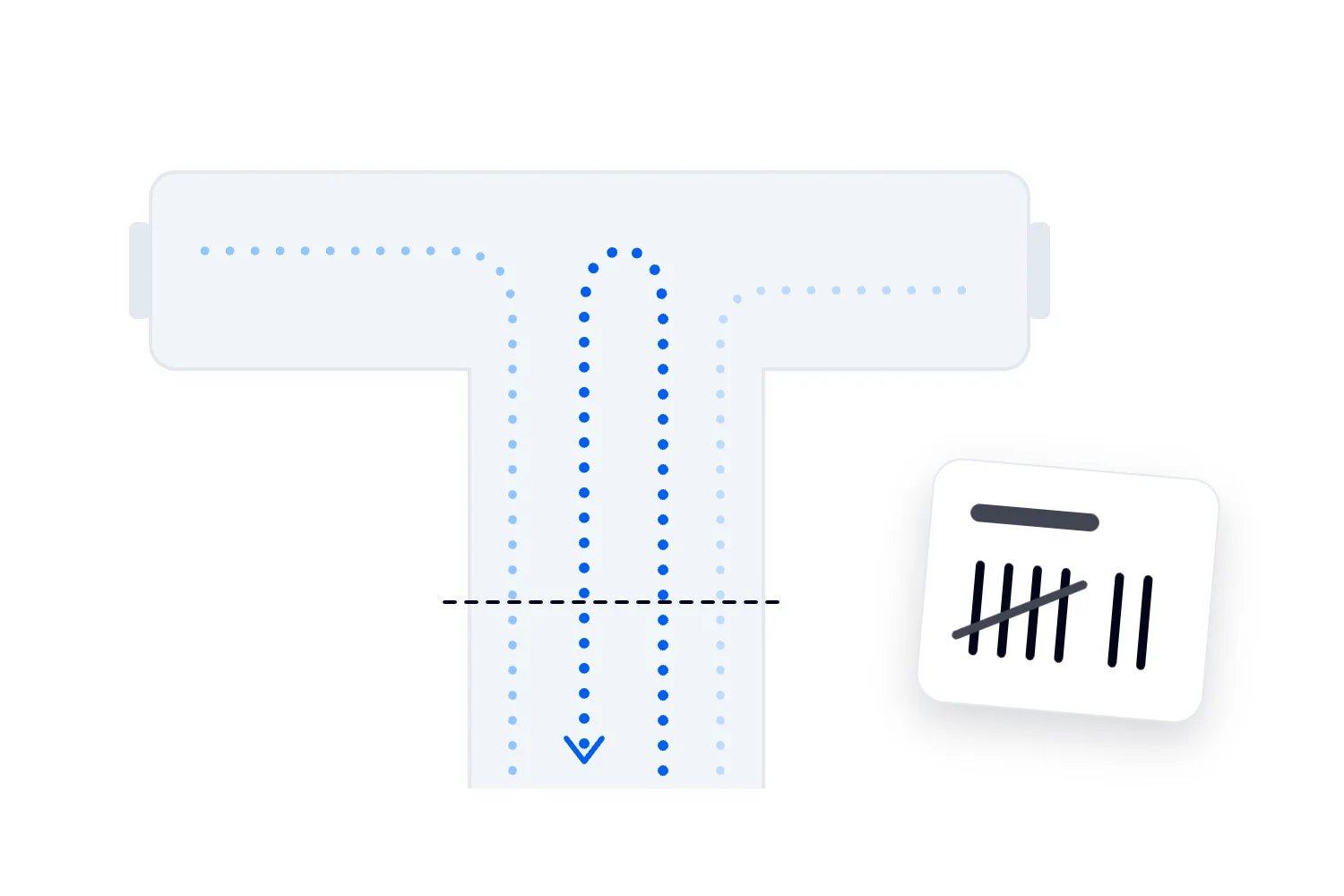
For the conference, define an approach passage as one person crossing a fixed imaginary line towards the junction from the foyer. Mark the line on the observer's plan using a stable physical reference. People walking the other way don't enter that approach total. A group of four crossing towards the junction contributes four passages.
Define a turnback as an approach passage that continues to the junction and then reverses back across that same line towards the foyer without entering either session corridor. Only count it when the observer sees the complete sequence. If the view is blocked, record the outcome as unknown. Don't guess the missing part to complete the sheet.
That gives you passage counts, not a count of distinct attendees. Somebody can cross the approach line more than once during the window. You aren't tracking their identity to remove repeat visits. State this plainly in the report, because "one in five passages ended in a turnback" means something different from "one in five attendees got lost".
Decide how a window ends. If someone crosses towards the junction just before the scheduled finish, allow the observer to finish recording that passage's outcome. Close the entry count at the finish time and note any brief completion period. Otherwise the last people counted could be unfairly recorded as successful simply because you stopped watching.
Keep the sheet manageable. You might record approach passages, completed turnbacks and outcomes you couldn't see, with separate notes for staff interventions. A detailed classification of every pause, gesture and conversation would ask too much of one observer at a busy junction. Start with the action that matters to the decision.
For observed proportions, say which denominator you use. If some outcomes are unknown, show that number alongside the total and explain whether you've excluded them from a particular calculation. Don't make those missing cases disappear. If uncertainty is substantial, report that the setup didn't produce a reliable answer and improve the view or reduce the counting task.
Brief the observer and try the sheet together
Walk through the definitions with the person doing the work. Point out the approach line, the junction boundary and the two corridor entrances. Ask them to describe what they would count in a few examples. A visitor stopping to read the programme and then entering a corridor isn't a turnback under the definition above, however long they pause.
Use a short practice period before the main observation. If two observers independently count the same view, compare their records afterwards. Don't combine their overlapping counts as though they represent twice as many passages. Their purpose is to reveal whether the instructions and viewing position produce similar judgments.
If one person reports more turnbacks, discuss the actual difference. They may be counting people who take a few steps backwards but still enter a corridor. Clarify the rule and practise again. Don't solve disagreement by averaging the two numbers, because that leaves the inconsistent definition in place.
The observer needs time allocated to observation. Someone simultaneously scanning tickets, resolving booking problems and counting corridor movements will have to stop counting whenever the other task needs them. Great Britain's Health and Safety Executive makes a related point in its crowd monitoring guidance. Staff monitoring as part of other duties need enough opportunity and time to do it. Your research assignment also needs its own time; it doesn't replace the event's crowd safety monitoring.
Keep the research role connected to the operational briefing. The observer must know who to contact about a blocked route, distress or another immediate concern. Your safety arrangements take priority over completing a research window. If the observer leaves the position to help or report an issue, record the interruption. Never preserve an untouched observation period by delaying assistance.
Use an observation sheet someone else can understand
You can start with a shared document or a printed page. The useful sheet explains the scope without requiring the person reading it to attend the original briefing. Keep any invited participant records in their separate approved process. The anonymous junction sheet can use these fields:
Event and edition, observation question, decision owner and date needed.
Location, viewing position, approach boundary and areas outside the view.
Planned window, actual start and finish, and any completion period.
Observer, counting definitions and the version of those definitions used.
Approach passage total, turnback total and outcomes not fully visible.
Factual notes with times, including changes, assistance and interruptions.
Possible explanations, clearly separated from the factual record.
Follow-up checks needed before recommending a change.
Write the question at the top so the observer knows what they're there to investigate. Put the definitions close to the tally fields. If the sheet is on paper, leave space for the actual conditions; a page full of tiny boxes encourages people to squeeze important qualifications into illegible notes.
Don't fill empty fields with a reassuring default. "No staff intervention recorded" could mean there was none, or that the observer wasn't assigned to record it. The briefing and sheet should settle that distinction. Likewise, "unknown" is an acceptable outcome when somebody disappears behind a group before their route becomes clear.
After each window, allow time to check the totals and clarify handwriting while the details are fresh. Preserve corrections visibly enough that another person can understand them. A tidy digital version can help with analysis, but keep the original until the agreed review and retention process is complete. Don't rewrite a doubtful note into a confident statement just to make the summary read smoothly.
Ask follow-up questions without supplying the answer
Observation can show you an action worth investigating. A short conversation can help explain that action, provided the person freely agrees to take part and you follow the research arrangements. Choose a moment when the conversation won't cause them to miss the very session you're investigating.
Ask them to describe what happened. "How did you decide which room to go to?" allows several answers. "Were the signs confusing?" offers your preferred explanation. If they mention a room name, ask what they expected it to mean and which information they used. Let the account develop before proposing a change.
Avoid making the attendee responsible for designing your operations. They can explain that they expected a talk in the room called Studio. They may not know the venue's restrictions on signs or whether another host can be hired. Your team needs to turn their account into options it can actually deliver.
Record disagreement and unexpected explanations. Someone may have returned to the foyer because their friend was carrying their bag. That doesn't invalidate the observed turnback. It changes what the action can tell you about finding the room. Keeping that explanation protects the team from treating every similar movement as proof of confusion.
A handful of conversations can explain individual experiences, but it won't establish how common a problem is across the event. People who have time to stop may differ from those rushing to a session. Record how you approached people and who the conversations covered without building an identifying profile. If you couldn't appropriately reach people using another route, say so. That tells the next team whose experience still needs investigating.
Compare the observation with the right event records
Now bring in records that address the same place, period and question. For the design conference, the running order can establish when sessions actually finished. Staff notes can show whether a doorway was temporarily closed. A time-stamped room-entry count, if you genuinely collected one, can show when people arrived. Each record answers a different part of the question.
Check what your ticketing data actually records before asking it to explain session movement. An event-entry scan establishes something about admission at that point. It doesn't automatically show which talk somebody attended or whether they found the room easily. Keep event admission, session entry and corridor passages as separate measures unless your actual collection method supports a connection.
Our guide to choosing event KPIs can help with the wider performance review. For this investigation, select only measures close enough to the task to be informative. Total ticket revenue won't explain a turnback at a junction. Nor should you attach a refund to that moment without checking the actual reason and relevant records.
Attendee feedback can add detail about the route. Use a specific, neutral question in your post-event survey, such as asking how they found the afternoon session room and what happened along the way. Keep the response base visible. People who answer are describing their own experience, not necessarily everyone who passed the junction.
If a confirmed change needs communicating, Loopyah's attendee email tools let you build the message and send yourself a test before the real send. Check the room names, route description and recipient selection against the actual arrangement. The observation still needs its own record; an email being sent doesn't establish that the route is understood.
When the records disagree, investigate the scope before choosing a winner. A positive overall survey rating can coexist with difficulty finding one session. Staff may accurately remember the morning while your observation covers the afternoon. Put those differences in the review. Forcing everything into one verdict loses the information that could explain the problem.
Be precise about what a small sample supports
A busy window can produce a large count without producing a representative picture of the event. You might record hundreds of passages from one hall release while missing every other arrival route. The number looks substantial, but its meaning still depends on where, when and how it was collected.
Report the count with its coverage. "We recorded 120 approach passages during the main hall release" tells the reader what you observed. "We studied 120 attendees" would imply distinct people and a broader research design. If the same person can pass repeatedly, you can't convert the passage total into a share of ticket holders.
Also check how many passages produced each count. Twenty turnbacks during a very busy release and ten during a quiet period don't by themselves show which arrangement is working better. You need the approach totals for both periods, the same counting definitions and a record of the conditions. Even then, a difference may have several explanations.
Observation is especially useful for finding a delivery problem worth examining. It is less suited to proving that a particular change caused higher satisfaction or repeat purchases when everything else changed too. Different speakers, audiences, weather and room assignments can all affect the next edition. Decide what your follow-up needs to establish before describing it as a test.
Keep serious individual problems visible even when they don't repeat. A blocked accessible route needs the appropriate response regardless of its frequency in the observation sheet. Conversely, a frequent harmless action doesn't automatically deserve spending. People stopping to talk may be using the conference exactly as intended.
Your report can therefore reach different kinds of decisions. It may justify an immediate correction to a confirmed failure, a modest trial of clearer information or another round of research. It can also conclude that the first method didn't answer the question. That's better than manufacturing certainty because the team already spent time collecting the notes.
A worked example at the east junction
Let's put the method together. Northbank Design Day is a fictional paid conference with 600 ticket holders. Its afternoon programme uses two smaller rooms beyond the east junction. The programme calls one session location Studio, while the permanent venue sign calls the same room East Two. The team wants to decide whether clearer room information should be trialled before hiring another floor host.
The operations lead agrees the approach boundary and turnback definition described earlier. An observer has a clear view of the whole sequence. The event's research arrangements cover the anonymous counts and a separate voluntary conversation process. The example windows are chosen around specific programme changes; they aren't presented as a random sample of the audience.
The first planned window runs from 13:20 to 13:35, covering the release from the main talk. The second runs from 14:40 to 14:55, during a later session change. The quieter window is 14:00 to 14:10. These times are invented for Northbank's programme. Another event should choose windows around its own actual movement rather than copying the clock times.
During the first selected release, the observer records 120 approach passages and 24 completed turnbacks. During another selected release, they record 90 passages and 18 turnbacks. Every counted passage has a visible outcome in this simplified example. Across those two windows, 42 of 210 approach passages end in a turnback, or 20%.
That percentage describes those passages in those windows. It doesn't mean 20% of the 600 ticket holders were lost, dissatisfied or late. Repeat passages are possible, and the observation doesn't establish motives. The report keeps the original window totals so the combined percentage doesn't hide their different timing.
A quieter window produces 100 approach passages and six turnbacks. Keep that result separate. It may help the team understand how conditions differ, but it isn't a before-and-after comparison with the busy releases. The programme, destination demand and conversations in the foyer may differ as well as the volume of movement.
The factual notes show several people consulting the programme before reversing direction. That still doesn't identify the cause. The team checks the actual programme and permanent sign, confirming the inconsistent room names. Through the agreed process, six willing adult participants describe their route afterwards; four mention difficulty matching Studio to East Two. These are invented responses for this example, not quotations or measured research.
The other two accounts describe returning for a companion and choosing a different talk. The review retains them. They demonstrate why the observer couldn't label every turnback as a wayfinding failure. The six conversations also aren't a representative sample from which the team can estimate how many attendees found the room names difficult.
The operations lead checks the running order too. The main talk was due to end at 13:12 and actually finished at 13:20, eight minutes late. The next sessions began at 13:30, so the intended 18-minute interval became ten minutes. That provides another plausible contributor to late session entry, but doesn't explain away the confirmed naming inconsistency. The team can correct that inconsistency while continuing to investigate programme timing.
The decision is to trial consistent room information and observe again. Nobody reports that the research proved another host unnecessary. The observation has helped the team choose a proportionate first change, preserve competing explanations and state exactly what the follow-up must check.
Cost the response without inventing lost revenue
Northbank now needs a practical proposal. The venue confirms that temporary room labels can be placed where they're visible without obstructing routes or required signs. The programme owner agrees the consistent name to use. The operations lead checks that staff instructions and attendee information will use that same name.
Assume the fictional trial costs $180 for approved temporary signs, two staff hours at $30 an hour to prepare and place them, and one hour at $30 to update the programme information and briefing. All amounts are illustrative USD, with any applicable taxes included. The planned change costs $270 under those assumptions.
The research has its own cost. Assume two hours to plan, three hours for observation and agreed conversations, and two hours to review and document the findings. At the same assumed $30 an hour, that's $210 of staff time. The first research-and-change cycle therefore uses $480 in this example, before any additional follow-up costs.
Those figures describe the resources used, even if some staff are salaried and there is no separate payroll payment for each hour. Check overtime, contractor charges and the work displaced by the assignment in your own budget. Don't add both an allocated hourly cost and the identical payroll charge again as though they were two different expenses.
You cannot calculate the return by multiplying the 42 turnbacks by the ticket price. Those passages already occurred inside the event, may include repeat visitors and don't establish lost sales. Nor do they tell you that a sign will generate another purchase. State the operational reason for the trial and its cost without inventing a revenue figure to make the proposal look stronger.
A modest cost also doesn't remove the need to check the remedy. If the room name is wrong in the programme, a new sign using another inconsistent name could make things worse. Confirm the complete wording and placement before ordering. Keep any proposal for another host separate, with the role, hours, cost and question that person would resolve clearly described.
Review the evidence, then write a decision people can use
Invite the people who observed the activity and those who can change the arrangement. Bring the original totals, definitions, conditions and relevant programme versions. GOV.UK's guidance on analysing a research session separates observations, findings and actions. Apply that distinction when the team discusses what the event should do next.
For Northbank, the observation is the recorded turnback pattern. The confirmed operational finding is that the programme and venue sign use different names for the same room. The action is to trial consistent room information. Those statements are related, but each has a different level of support. The review should preserve that difference.
Use your event debrief to agree the action and owner, rather than repeating every field note aloud. Put the detailed records where the responsible team can check them. The decision record should explain the question, coverage, finding, alternative explanations, approved response, cost and follow-up condition.
In this example, the operations lead owns the $270 change and coordinates the programme owner and venue. Before the next edition, they confirm the wording and walk the approach under the actual room arrangement. The next observation uses the same definitions where the site permits, with any differences recorded. The late-running programme remains a separate issue for the production team.
A completed note could read: "East approach, two busy windows, 210 passages and 42 turnbacks; all outcomes visible. Programme says Studio; venue sign says East Two. Approve $270 to use a consistent room name in the agreed signs, programme and briefing. Operations lead to confirm the route before doors and arrange follow-up observation. Production lead to review the shortened break separately." This wording is an illustrative internal record, not an attendee quotation.
Set a completion condition for the preparation work as well. The programme owner checks the final version, the venue agrees the sign positions and the floor team receives the same room names. The operations lead can then confirm those tasks are done. Whether people find the room more easily remains a question for the next event, so the preparation task and the outcome review need separate completion dates.
Keep unresolved questions explicit. The team hasn't established how many unique attendees were affected, whether the inconsistent names caused every turnback or whether another host would help. It has established a correctable mismatch and a method for checking what happens afterwards. That's enough to approve a limited change without claiming the entire room-finding problem is solved.
Check the next edition before closing the question
Suppose the next comparable release produces 110 observed approach passages and 11 turnbacks. That's 10% of those passages. Report that result alongside its conditions and the earlier windows. Don't announce that clearer signs halved attendee confusion. You're comparing passage behaviour, and the audience and programme may have changed.
Look at the actual task again. Are the approved room names now consistent? Can people using the programme match them to the destination? What do the follow-up accounts say about any remaining difficulty? If turnbacks fall but people still need repeated assistance at the doorway, the original junction count hasn't captured the whole problem.
You should also check what the change cost to maintain. A temporary sign that needs replacing for every room configuration has an ongoing preparation cost. A programme template using consistent names may reduce that work, provided someone checks it against each venue. Keep the arrangement useful to the next team rather than relying on the person who ran this investigation remembering everything.
If the next result is unclear, preserve it. You might need a better observation position, another relevant release or a separately recruited task session. You don't have to keep collecting until the figures look favourable. Decide whether the remaining uncertainty would change the next operational decision, and spend research time accordingly.
For your own event, start with one task people need to complete and one decision you can still influence. Agree what the observer will count, protect time for the work and book the review before collecting anything. When the team meets, they should be able to explain what happened, what they still don't know and who will check the proposed change at the next event.

Author: By the Loopyah Content Team
The Loopyah Content Team shares expert insights, practical guides, and industry updates to help event organizers create unforgettable experiences and stay ahead in the event planning world.