· 21 min read
Should you offer payment plans for expensive event tickets?
A buyer wants your $600 weekend pass. They like the lineup, their friends are interested, and the dates work. Paying the whole amount today is the problem. Splitting it into smaller payments sounds like an obvious way to get the booking without cutting your price.
Sometimes it is. Offer event ticket payment plans when the timing of payment is stopping otherwise suitable buyers, you can cover your bills while money arrives, and the arrangement leaves enough profit after its extra costs. Keep full payment available. Start with a limited release rather than putting every expensive ticket on a plan immediately.
The detail that changes the decision is who carries the unpaid balance. If you collect installments yourself, you're waiting for the buyer's money. If a separate lender finances the purchase, the buyer owes that lender under its agreement. Those arrangements need different cash forecasts, refund processes and admission rules. Calling both "pay later" hides the differences you need to understand before launch.
Find out whether payment timing is the problem
An expensive ticket doesn't automatically need a payment plan. Someone who thinks your conference is poor value won't necessarily change their mind because you split the bill. You might get an initial payment and discover the original objection when the next collection fails.
Read the questions buyers already send you. "Can I pay after payday?" points toward timing. "What's included in the pass?" points toward an explanation you haven't made clear. "Will my employer pay?" may need an invoice and approval process. Each buyer is hesitating for a different reason, even if your sales report groups them together as abandoned purchases.
Ask interested buyers what prevented them from completing the order. Keep the question open before suggesting a plan. Otherwise, you're asking people whether they'd like more flexibility, which tells you little about whether they would complete the payments. Record the ticket they wanted, when they wanted to buy, and the alternative they chose.
Then look at your selling window. A festival selling months ahead has room for spaced payments and a recovery period. A workshop next weekend has much less time. You can still consider a supported third-party finance option, but a merchant collection schedule ending after delivery changes your exposure substantially.
Check value and pricing first using your ticket pricing strategy. Payment flexibility can help someone buy an offer they already want. It shouldn't become the answer to an unclear program, weak demand or a ticket price your intended audience cannot reasonably support.
Decide who collects the remaining money
With an organizer-managed installment arrangement, the buyer pays you over an agreed schedule. Your ticketing or payment system may automate collections, but automation doesn't make the outstanding money available. You still need rules for failed attempts, cancellations, inventory and when the ticket becomes valid.
A deposit followed by a balance payment is a simpler version. It can suit a long booking window, provided the deposit and remaining obligation are clear. Don't describe a deposit as a completed ticket purchase if the buyer still needs to take another step before they can enter.
Third-party buy now, pay later is different. The Consumer Financial Protection Bureau describes BNPL as installment credit. A lender provides the financing, and its agreement sets the buyer's repayment conditions. Your merchant contract determines settlement, fees and which losses or disputes remain your responsibility. Read that contract before assuming you've transferred every risk.
For example, Loopyah's ticket checkout lists Afterpay in Australia alongside cards, Apple Pay and Google Pay. That's a specific third-party payment option in a specific market. It doesn't establish that every event, buyer or country qualifies, or that you can create your own installment schedule inside Loopyah. Confirm eligibility and the applicable merchant terms before advertising it.
An invoice is another separate arrangement. An employer may approve a delegate's attendance and pay the invoice later. That is not necessarily consumer financing or a payment plan. It needs a company payment deadline and seat-holding rules. Keep these routes distinct so your sales team doesn't promise something your checkout or finance process cannot deliver.
Test the economics before celebrating extra orders
A payment plan is worth testing when completed additional sales leave more money after the costs of serving those attendees and running the plan. The word "additional" matters. If a buyer would have paid in full anyway, switching them to installments may add cost without creating a new sale.
Work through an illustrative example. A ticket costs $600 and the additional cost of serving that attendee is $180. Before payment costs and other event expenses, that leaves $420. Assume your proposed plan adds $24 in financing or collection costs per completed sale. These are invented planning figures, not a provider quote or an industry benchmark.
Suppose 100 buyers choose the plan. Under your conservative estimate, 70 would have bought without it and 30 are additional completed sales. Those extra attendees contribute $12,600 before the plan's added costs. Charging the extra $24 across all 100 plan purchases costs $2,400, leaving $10,200 before any extra support, losses or other costs caused by the change.
Now make the assumptions less comfortable. If only five purchases are additional, their $2,100 contribution doesn't cover that $2,400 cost. The same impressive count of plan orders produces a worse result. The example deliberately assumes every plan completes, so you can see that payment failure isn't the only way the offer can disappoint.
| Label | Contribution less plan costs |
|---|---|
| 5 additional | -300 |
| 30 additional | 10200 |
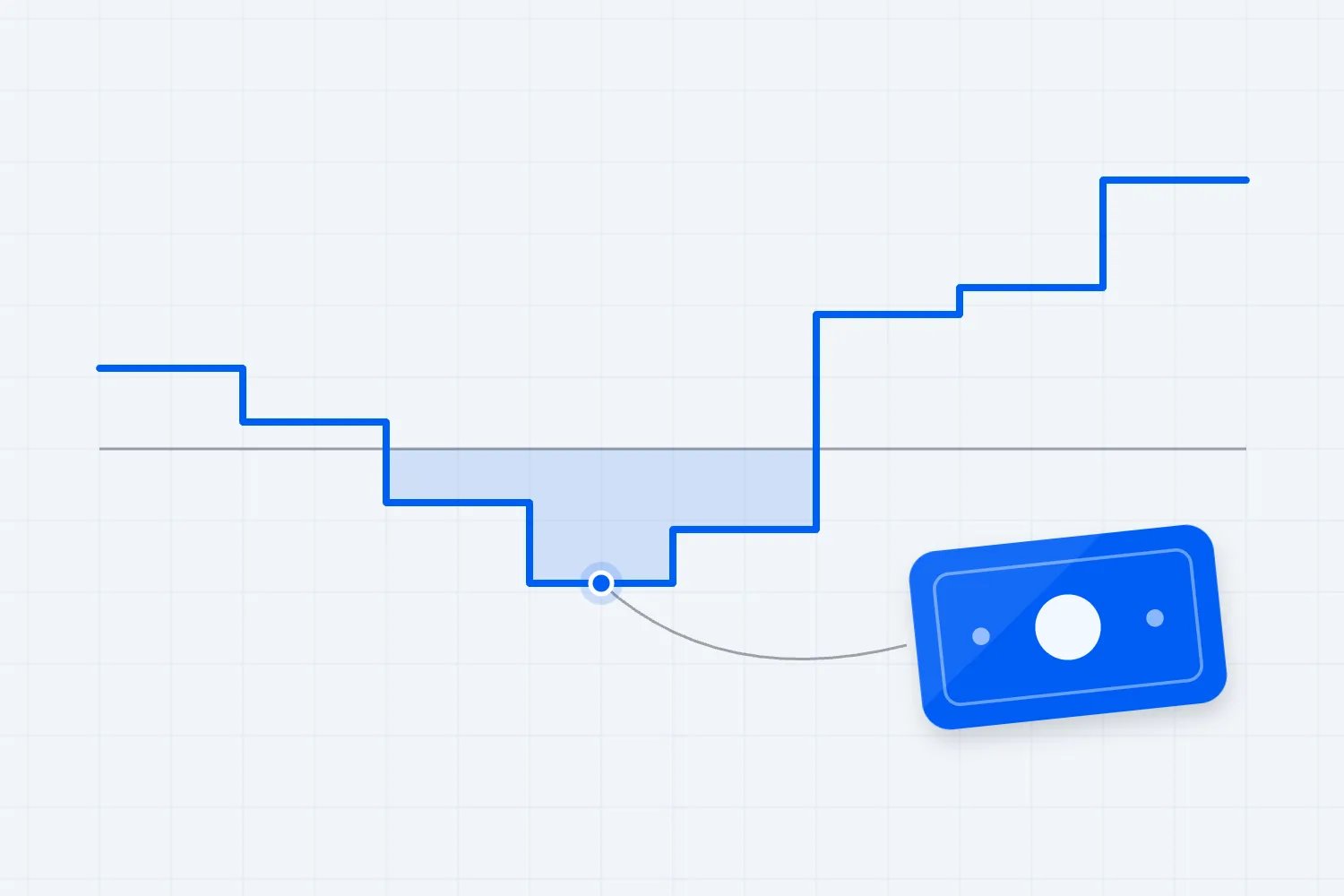
This chart uses the invented example above: $420 contribution per additional completed sale, less $2,400 in plan costs across all 100 plans. It excludes extra support, losses and other costs, and assumes all plans complete.
Run a separate calculation for incomplete plans. Count money you must refund, unrecovered costs, processing costs you cannot recover and support time. Treat any retained payment according to the actual agreement and applicable law. Don't quietly treat abandoned deposits as profit to make the proposal work.
You won't know the true additional sales perfectly. Use a reasonable comparison, document the uncertainty and calculate a range. If the plan only looks attractive when almost everyone using it is assumed to be a new customer, you need stronger evidence before expanding it.
Build the payment schedule around your real bills
The first thing you want to do is open your event cash-flow forecast. Put supplier deadlines and the money actually expected in your bank on the same calendar. A successful ticket launch can still leave you short of the cash needed to deliver the event.
Imagine an event on September 20. You open a merchant-managed plan on May 1 with a $200 first payment, $200 on June 1 and $200 on July 1. The buyer pays $600 in total, with time remaining to resolve collection problems. These dates are a worked planning example, not a recommended universal schedule.
Now imagine your production supplier needs a large payment on May 15. That booking has only produced its first $200 installment by then, before processing costs and any payout delay. You cannot pay the supplier with the other $400 simply because the sales dashboard shows a $600 booking.
Choose the final collection date by working backward from delivery. Allow time for a failed payment notice, a permitted retry or payment update, any agreed grace period, and inventory changes. Your system's behavior and the buyer's contract should determine what happens during that time. Don't invent a recovery window that the software cannot actually enforce.
Fixed dates can simplify administration, but late buyers may face several payments close together. A rolling schedule can feel more natural to buyers while creating different final dates across the audience. Decide whether you can support those differences accurately. If you can't, close enrollment in the plan earlier and explain why later bookings require another payment method.
Compare your forecast under slower collections as well as the planned dates. Keep enough money available for the bills you cannot move. If the only way to fund production is to assume every future installment arrives immediately and nobody requests a valid refund, the plan is too aggressive for your current finances.
Set a deposit you can explain
There is no useful universal deposit percentage for every event. The right amount depends on the ticket price, time before delivery, costs you commit to when a place is reserved and what the intended buyer can reasonably pay. Starting with an appealingly small number and working backward is a poor way to protect the event.
List the costs triggered by accepting the booking. A reserved workshop place might involve materials ordered specifically for that person. A festival pass may have fewer immediate individual costs but still reserve scarce capacity. Distinguish those costs from bills you would pay regardless, because they support different decisions about the initial amount.
Then test the buyer's experience. If the deposit is low but the final payment is enormous, you haven't necessarily made budgeting easier. You've postponed the difficult decision until a point when the buyer has paid money and may have arranged travel. Explain each amount before purchase so they can judge the complete commitment.
Decide whether the schedule pays for the whole order or each ticket separately. A group organizer purchasing several passes needs to know whether one failed installment affects every ticket. Staff also need a defined answer if part of that group asks to cancel or substitute someone else.
Be careful with the phrase "nonrefundable deposit." Putting it in bold doesn't settle whether you can keep the money in every circumstance. The reason for cancellation, your agreement and local consumer law matter. Have the terms checked for the markets you serve, particularly if keeping part of a payment is central to your financial model.
Show the whole price before the buyer commits
Lead with the total ticket price and explain how the payments divide it. A buyer should be able to compare paying in full with using the plan without calculating hidden additions. If financing changes the total, make that difference explicit before they choose.
For US live-event ticket sales, the FTC's guidance on unfair or deceptive fees says covered businesses must disclose the total price upfront and display it more prominently than other pricing information, subject to the rule's specified exceptions. Mandatory charges belong in that total. A small first installment is not a substitute for clear total pricing.
For the hypothetical $600 organizer-managed arrangement, explain that the buyer pays $200 today, $200 on June 1 and $200 on July 1. State the final amount, any additional charges, and whether later collections happen automatically. Describe the ticket's admission condition and where the buyer can find their remaining balance.
Keep lender language accurate when a third party supplies credit. Don't promise guaranteed approval, universal interest-free terms or no effect on a buyer's credit without current evidence for that exact product and market. Australia's Moneysmart guidance on BNPL explains that fees and credit consequences can apply. Direct buyers to their actual agreement rather than rewriting it as a cheerful sales line.
Your confirmation should repeat the arrangement the buyer accepted. They need a durable record of the total, paid amount, remaining installments, relevant dates and support route. If your event page changes later, that record helps both sides understand the original purchase instead of arguing from different versions of the offer.
Plan for failed payments before the first failure
A failed collection doesn't tell you why it failed. The card could have expired, the bank could require another action, or the buyer could lack funds. Your response should help the buyer resolve the specific issue without creating repeated charges or conflicting instructions.
Use the provider's supported collection and retry controls. Agree what notice goes out, which payment-update route the buyer uses, how long the booking remains reserved, and who handles exceptions. Test those controls rather than assuming an email reminder changes the ticket's status automatically.
For a merchant-managed plan, a useful notice identifies the event and amount, explains that the attempt failed, and states the next action and deadline. Include a secure way to update payment details. Make it clear whether the system will retry so the buyer doesn't pay manually while another automatic collection is about to run.
Don't collect card numbers through support messages to rescue the order. The PCI Security Standards Council prohibits retaining card verification codes for future transactions, even with the customer's permission. Use the payment provider's approved process for future charges instead of creating a spreadsheet of sensitive payment details.
Choose a final outcome for an unresolved plan. Depending on your terms and the applicable law, that may involve cancellation, a permitted refund calculation and release of inventory. Record which system changes first and who verifies the others. Canceling a payment schedule without canceling admission can leave a valid ticket attached to an unpaid order.
With third-party financing, don't automatically apply your merchant-managed failure procedure. A buyer's missed lender repayment is governed by that financing agreement. Your order may already be settled under your merchant arrangement. Confirm the consequences with the provider rather than threatening to cancel entry over a debt you don't collect.
Separate the reservation from permission to enter
A place reserved under your own payment schedule and a fully paid, valid admission are different things. Decide what the buyer receives after the first installment and what your check-in system will accept. The confirmation, ticket record and support explanation need to agree.
You might issue a reservation confirmation first and provide an admission ticket after full payment. Another system may issue a ticket immediately but control its active status. Either approach needs testing. A warning in an email won't prevent entry if the scanner accepts the code anyway.
Test a completed plan, a payment still within its agreed recovery period, a canceled plan and a partially refunded group order. Try a screenshot of an older ticket as well as the latest confirmation. Check what staff see when connectivity is limited and whether the device has the current admission information.
Your team needs enough information to resolve a problem discreetly. An exception desk can check the booking and contact the named decision-maker. The main queue should not become a public conversation about someone's finances, and a temporary staff member shouldn't be improvising credit terms while people wait.
For third-party financing, use the admission status that follows your provider and ticketing arrangement. A buyer can have a valid purchase even while they still owe the lender repayments. Keep that distinction in staff training. "Has the organizer been paid under this order?" and "Has the buyer finished repaying their lender?" are different questions.
Settle admission exceptions before event day whenever possible. Send accurate reminders to affected buyers and reconcile your final list. If your systems cannot enforce the rule you have sold, change the arrangement before launch. You shouldn't ask door staff to compensate for an unreliable payment process with judgment calls.
Make cancellations, refunds and transfers work together
Read your event refund policy against the proposed payment arrangement. It should explain what happens when the buyer changes their mind, when you cancel the event, and when a payment remains unresolved. Those situations may lead to different outcomes.
If you cancel the event, stop future merchant collections through the supported process and work out the required refunds. Refund the payments actually collected rather than a balance you never received. Check whether your processor returns its fees and whether a lender needs a separate refund instruction to adjust the buyer's agreement.
Don't assume a general "no refunds" condition removes statutory rights. The Australian Competition and Consumer Commission's ticket-selling guidance explains that consumers have refund rights when the organizer chooses to cancel or makes a major change. The facts and jurisdiction matter, so your cancellation procedure must follow the rights that apply to the purchase.
For a buyer cancellation, tell support how to handle the remaining balance and any permitted deductions. If the buyer has paid $400 of the example $600 price, the record should show $400 collected and $200 still outstanding. Canceling the order, ending collections and issuing any refund are related actions that each need confirmation.
Transfers need their own rules. Changing the attendee's name does not automatically transfer the payer's obligation or a lender agreement. Decide whether a partially paid booking can transfer at all, whether full payment is required first, and how the original buyer receives confirmation of what remains their responsibility.
Handle upgrades with the same care. Moving to a more expensive ticket may change the balance without changing the original collection permissions. Use the supported provider workflow and explain the revised total before obtaining agreement. An informal promise in a support email is a weak foundation for another automatic charge.
Check the rules where you actually sell
Consumer credit and ticket-sale rules depend on the arrangement and the market. Before launching your own schedule, have someone qualified check whether its duration, fees, collection method or other terms create obligations you haven't planned for. A provider offering a feature does not answer every question about your use of it.
In the UK, the Financial Conduct Authority began regulating relevant third-party deferred payment credit on July 15, 2026. Its guidance distinguishes agreements involving third-party lenders and sets out the scope and exceptions. That distinction is another reason to identify the actual supplier of credit before deciding which rules apply.
Don't reuse an old finance explanation across countries. Eligibility, disclosures, complaints and customer protections can differ, and rules change. Keep the provider's current market documentation with your operating instructions, then review the buyer-facing wording whenever the arrangement changes.
Get specific answers about refunds, disputes and financial difficulty. Who receives the complaint? Who can change a repayment schedule? What happens if the event is postponed? Ask the provider to demonstrate the actual process with your kind of ticket purchase so your support team knows where to direct the buyer.
Keep only the customer information you need and restrict who can see payment problems. A marketer may need to know whether a booking completed. They rarely need a detailed explanation of a buyer's failed repayment. Set your reporting and support permissions around the work each person actually performs.
Ask the provider to demonstrate the awkward orders
A sales demonstration usually shows a buyer completing checkout successfully. You need to see the orders that create work for your team. Ask for a test environment or a supported demonstration using the arrangement you intend to sell, including the ticket types and countries you serve.
Start with settlement. Ask when you receive the money, whether the amount changes with the buyer's repayment schedule, and what can delay it. Find out which fees remain after a refund and how a dispute affects your balance. A provider can collect the buyer's installments while still imposing conditions on your own access to funds.
Then test a failed middle payment. Watch the buyer message arrive and check the order afterward. Does the status change? Can the buyer update their payment method securely? Does a successful retry restore the correct status without someone manually editing the ticket? Ask who receives an alert when the recovery process stops working.
Try a group order next. Cancel one ticket, transfer another and leave the others in place. Check the payment schedule and admission record after each action. You want to know whether the system treats the group as one financial obligation or allows individual tickets to be managed separately. Either can work if your terms and staff procedures match it.
Finally, cancel the test event. Follow the supported refund route and inspect what happens to future collections. Record what staff must do and what the system does automatically. If your team needs to complete several actions, assign an owner and a verification step. A refund confirmation alone doesn't establish that every linked payment instruction has stopped.
Use the answers to choose the arrangement, rather than selecting the most attractive first-payment message and hoping the process can support it. Ask for written confirmation of important conditions. Your event team will need something more reliable than remembering what a salesperson said during a call months earlier.
Choose differently for different ticket releases
Consider a small professional conference where employers pay for most attendance. The main obstacle may be internal approval and the company's purchasing process. A consumer payment plan could add complexity without resolving that obstacle. A clear invoice route, company details and an honest seat-holding deadline may solve more of the actual problem.
Now consider a multiday festival selling premium passes well before the event. Some buyers may be paying personally and coordinating with friends. A limited payment-plan release could help those buyers commit earlier, provided the schedule leaves enough time to complete payment and the production budget can support the collection dates. The useful test measures completed purchases across that full period.
A capacity-constrained workshop presents another problem. Holding a place for someone whose final payment remains uncertain can prevent another buyer from booking. The cost of an incomplete plan includes the chance that you cannot resell that place before the workshop. An early final-payment deadline may help, but only if enough time remains to reach another suitable buyer.
For a premium ticket with separately purchased extras, define what the plan includes. Accommodation, transport or a specialist session may have different suppliers and cancellation rules. Don't let the buyer assume their first payment reserves everything mentioned in the event description. Show the exact contents of the order and which additional purchases remain separate.
Late releases deserve a fresh decision too. A schedule that worked for people buying months ahead may be unsuitable close to the event. Keep the original terms for existing buyers while closing that option for new orders where necessary. Explain the cutoff on the event page before people start checkout, so they don't discover the change after selecting their tickets.
These examples lead to different answers because your costs, selling window and buyer's reason for hesitating are different. Review the arrangement at the level where those conditions change. You can offer flexibility on one ticket release while keeping another payable in full, as long as eligibility is clear and you apply the terms consistently.
Run a small test and wait for completed plans
Choose a ticket release with enough lead time to complete the schedule and observe the outcomes. Keep the ticket's value and audience clear throughout the selling period. If you change the lineup, price, ad campaign and payment terms simultaneously, you'll struggle to know which change affected demand.
Keep full payment available and record how buyers move between the options. Ask buyers who completed the plan what they would have done without it. Their answers are imperfect evidence, but they help you challenge optimistic assumptions about how many purchases the plan created. Compare similar audiences and selling periods where practical. If allocation is random and appropriate for your context, it can improve the comparison, but a small event still needs caution about drawing strong conclusions from a few purchases.
Track completed additional sales, collected cash by date, extra payment costs, incomplete plans, refunds and support effort. Look at the tickets that become valid for admission. A report showing the total value of reserved places can make a weak trial look successful while most of the money remains uncollected.
Review the cash forecast during the test. If collections fall behind, pause new enrollment before increasing the number of outstanding balances. Keep the promises already made to existing buyers and work through their arrangements properly. Stopping future sales and changing accepted agreements are different decisions.
Read the support conversations too. Repeated confusion about dates, duplicate payment attempts or transfer rules tells you something the sales total won't. Fix the cause before expanding. The financial result includes the time your team spends explaining the offer and resolving problems, even when that time doesn't appear as a provider fee.
Expand only after the completed plans support it. If the additional sales cover the additional costs, cash arrives before the bills, and entry works as promised, you have a reason to continue. Otherwise, adjust the schedule or keep the simpler full-payment route while you address the real problem.
Choose the arrangement your event can support
If buyers already want the ticket but need time to pay, a well-run plan can be useful. Start by identifying who collects the balance and testing what that does to your cash. Then confirm the refund and admission process before the first buyer accepts the offer.
You don't need the smallest possible first payment. You need terms people understand and a collection process your business can honor. For your next release, write down the total price, each payment date, the supplier bills that fall between them and what happens after a failed collection. If those answers still depend on someone sorting it out later, keep working on the arrangement before you sell it.

Author: By the Loopyah Content Team
The Loopyah Content Team shares expert insights, practical guides, and industry updates to help event organizers create unforgettable experiences and stay ahead in the event planning world.