· 27 min read
How do you price a coach day trip so empty seats do not erase the profit?
You've found a destination people want to visit, the coach company has sent a quote, and the ticket price looks reasonable when you divide the bill by all the seats. Then you try the same calculation with a smaller group. Suddenly, there's very little left for you.
Price a coach day trip around the number of paid places you can reasonably expect to sell, after checking the actual vehicle and destination limits. Include the whole departure cost, your own work, selling charges and the profit you want. Then decide how many bookings you need before the supplier commitments become too expensive to cancel.
The empty seats need to be affordable within that plan. They shouldn't require a last-minute explanation that the trip will make money next time.
We'll work through a fictional shared departure with 48 places available to paying customers. At a $100 ticket price, it can make $600 with 40 paid passengers, even though eight places remain empty. It can also lose money at a lower turnout. The useful part is knowing where those outcomes change, while you still have time to change the offer or decline the booking.
All worked prices and costs below are invented U.S. dollar figures. They aren't coach hire quotes, industry averages or Loopyah fees. The examples exclude taxes on sales and show results before business income tax. Replace those assumptions with the taxes, charges and supplier terms that apply to your trip.
Define the day you're selling before you request prices
A return coach journey with free time in a town is a different offer from a hosted visit with timed attraction entry and lunch. Both might be advertised as a day trip, but they create different costs and responsibilities. Write down what the customer actually receives before asking whether a ticket price is enough.
Start with the date, pickup location, destination, approximate itinerary and return arrangements. Decide whether one ticket includes attraction admission, food, a guide or host, and any activities during the visit. Also identify purchases customers arrange themselves. A cheap-looking headline price becomes harder to defend if the main reason for travelling costs extra.
For our example, the ticket includes one return journey, a host, admission to one attraction and a simple refreshment. Customers buy their own lunch. There is one pickup point, and the operator hires a coach with a driver. We aren't budgeting for buying a vehicle or running a transport fleet.
That distinction matters if you're comparing your price with someone else's. An established transport business may spread vehicle ownership and scheduling costs across other work. Your departure has the cost of the hire agreement you actually sign. Copying its advertised fare doesn't tell you whether your separate trip will pay.
Check the responsibilities created by the combination you sell. For England, Scotland and Wales, Business Companion's package travel guidance explains that the package travel regulations exclude arrangements lasting less than 24 hours unless overnight accommodation is included. That is a specific exclusion from those regulations. Your transport, consumer, insurance and other obligations still need checking.
If you add an overnight stay or substantially change the arrangement, check the position again before collecting money. An idea that starts as a day trip can become a different product while the original budget remains open on your laptop.
Write the sales description alongside the itinerary. It will expose promises the budget hasn't covered, such as an additional pickup, a guaranteed meal choice or entry at a particular time. Resolve those promises with suppliers before treating the offer as ready to price.
If you're still deciding how to build the business itself, our guide to starting a paid tour guide business covers the wider launch. Here, the decision is narrower: can this particular coach departure deliver its promise and pay properly?
Get a coach quote for the whole day
Send coach companies the same itinerary so you can compare their replies. Give them the pickup and return points, expected passenger number, destination, stops and realistic time at each location. Explain luggage, access requirements and anything that affects the vehicle or loading process.
Ask what the price includes. That means driver time, fuel, distance, positioning the vehicle before pickup and after drop-off, parking, tolls and any other route charges. Check whether the vehicle remains with your group during the visit. A quote based on dropping you off and returning later may have different terms from one that keeps the coach nearby all day.
Get the included hours and extra-time charges in writing. Ask when the clock starts, what happens after the agreed return time and how changes are approved. You need to know whether a later attraction slot adds a modest charge or requires a different staffing arrangement.
Don't build a timetable by adding driving time from a map and assuming everything else is a break. In Great Britain, DVSA's guidance on bus and coach drivers' hours distinguishes driving, other work, duty, breaks and rest. Under the rules described there, a break excludes other work. The applicable regime and compliant schedule depend on the journey and operation.
Have the coach operator confirm how your proposed day can be delivered, including the driver's other commitments. If your plan involves the driver helping passengers throughout a destination stop, don't simply label that entire stop as rest. Agree who handles passenger assistance and which parts of the visit the host manages.
The same applies to delays. Ask what happens if congestion pushes back the return, an attraction holds the group or someone needs additional boarding time. Build a workable itinerary with the supplier. A financial allowance for extra hours doesn't make an unsuitable schedule acceptable.
Compare the cancellation terms as carefully as the hire prices. Record the deposit, balance date, cancellation charges at different dates and the conditions for changing the vehicle. Check substitution arrangements, insurance and the supplier's authority to perform the work. Keep the name of the company actually operating the journey, especially if you book through an intermediary.
A more expensive quote can leave you better off if it gives you a useful confirmation deadline or avoids a large commitment before demand is clear. Compare the whole agreement against your sales plan. The cheapest starting number is only one part of the decision.
Once you've selected a supplier, preserve the agreed itinerary with the quote. If you add another pickup later, send the revised version back for confirmation. Otherwise, you'll still be pricing the original journey while selling a longer one.
Count the places you can sell
The vehicle's advertised seating capacity is a starting point. Confirm the actual layout you will receive and which passenger seats the business needs for staff or other agreed purposes. The driver's position doesn't become another passenger place just because you're counting from a vehicle description.
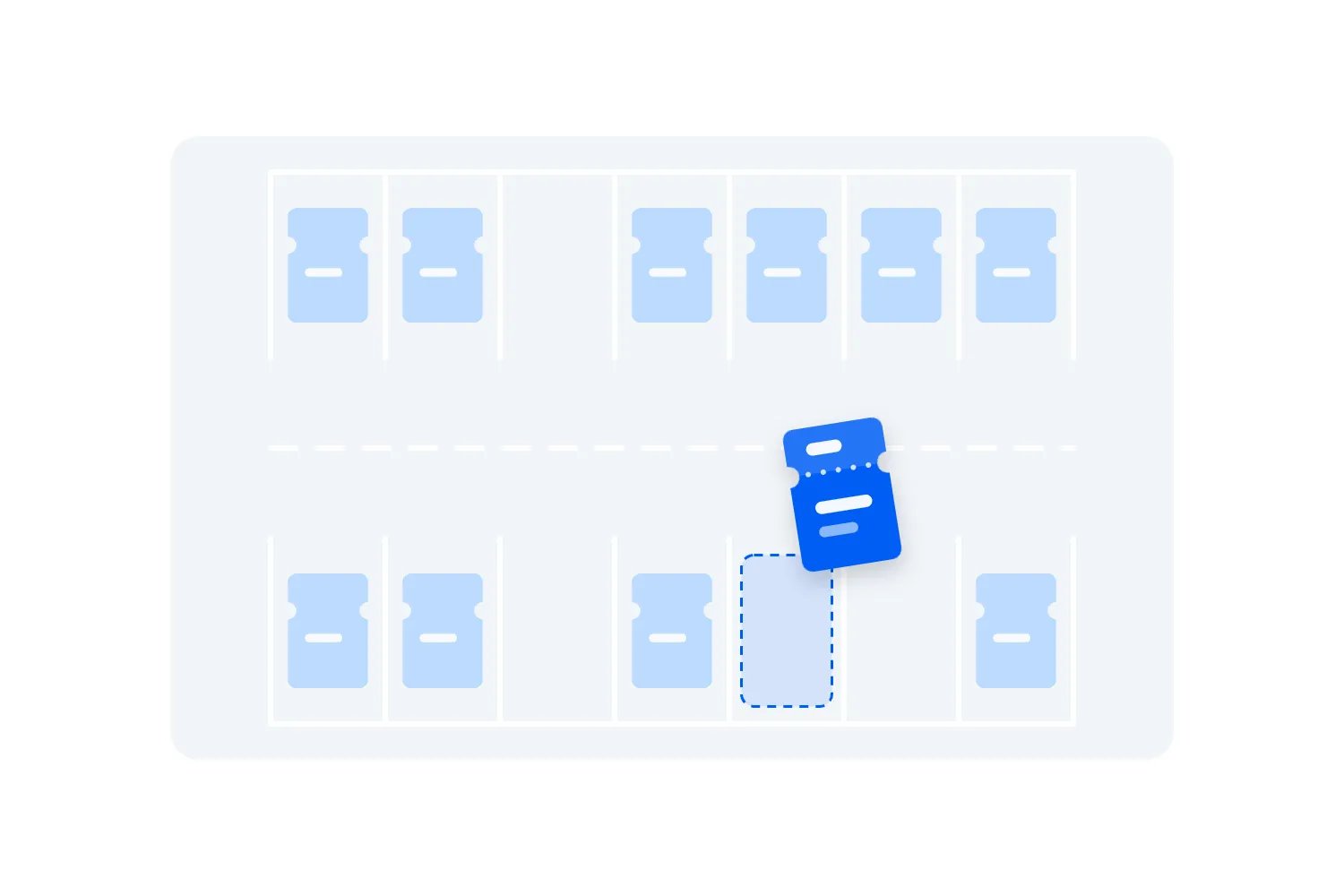
Our fictional coach has 50 passenger seats. One is for the host, and the organiser keeps one other passenger place unsold as a spare. That leaves 48 paid places. The example assumes that layout has been confirmed with the supplier for this trip.
Your own arrangement may be different. Check wheelchair positions and any layout changes directly with the operator, together with the access arrangements customers need. Don't guess how many seats a different configuration removes, or build a pricing policy that discourages people from asking for assistance. Plan the appropriate vehicle and obligations into the offer.
Then check the destination limit. You might have enough passenger places but fewer timed attraction admissions. A guide, activity room or restaurant may impose another constraint. The number on sale must fit the whole experience you've promised.
Keep complimentary passengers visible too. A partner's guest still occupies a place and may require paid admission and refreshments. If you add a complimentary booking later, update both availability and costs. It doesn't disappear financially because the ticket price is zero.
Count paid passengers separately from orders. A family buying four places in one checkout creates four passenger commitments. Depending on your suppliers and payment setup, some costs may apply per passenger and others per order. Mixing those units makes the budget look more precise than it is.
For this first calculation, every paid place has the same price and cost. We'll introduce different prices later. Before doing that, get this simple version right and keep a single agreed limit across every sales route.
Separate the departure bill from the cost of each passenger
Some costs stay payable whether the coach carries a small group or reaches capacity. Others change with the number of passengers. Your supplier agreements decide which is which.
An attraction admission is only a per-passenger cost if the attraction lets you pay for that number. If you guarantee a block of admissions, part of the bill stays payable even when those places don't sell. Record the guarantee rather than calling every admission variable and hoping the final invoice agrees.
Here is our fictional departure budget:
Coach and driver for the agreed itinerary, including the quoted route charges: $1,600.
Host's agreed preparation and delivery work: $240.
Marketing for this departure: $180.
Booking administration for this departure: $120.
A share of business insurance and other continuing overhead: $140.
Allowance for additional unplanned costs: $120.
That totals $2,400. The host and administration amounts cover separate work, and neither is already included in the coach quote or overhead. If you're doing those jobs yourself, keep the pay in the calculation. Otherwise, your apparent profit includes unpaid labour you will eventually need someone else to do.
Each paid passenger adds $18 for attraction entry, $4 for the refreshment and an invented $3 combined selling and payment charge. That is $25 per passenger. For simplicity, this example assumes those charges apply to every paid place, with no additional per-order charge, refund or commission.
The coach quote already includes the driver and route costs listed in that agreement. We aren't adding a second driver wage or fuel estimate. The attraction and refreshment suppliers charge only for actual paid passengers under this hypothetical arrangement, and the host's own needs are covered in the departure costs.
Treat the $120 allowance as spent when judging whether the price works. If nothing uses it, the final result improves. If a known expense emerges, put it on its proper line rather than hiding it inside the allowance and continuing to describe the budget as unchanged.
For each real cost, record the amount, what it covers, when it becomes committed and when payment is due. Include quote expiry dates. These details explain why a cost can change, and they make it possible to compare the forecast with the final bills.
Check attraction minimums and final numbers
Ask the attraction whether the group rate needs a minimum number of visitors, whether staff enter free and when you must confirm the final count. Check what happens to admissions after a customer cancels. A cheaper group rate can be expensive if it commits you to buying places you can't return.
To see the effect, change just one assumption in our example. Suppose the attraction instead requires payment for at least 36 admissions at $18 each. The admission bill is then at least $648. With only 28 paid passengers, an ordinary per-person calculation would include $504 for entry. You would understate the bill by $144.
That $144 is additional cost at 28 passengers under the revised attraction terms. It isn't already in the original $2,400 budget. Above the minimum, follow the actual supplier agreement for additional admissions. Record this version separately, because the original break-even calculation assumes entry costs rise only with paid passengers.
The final-number deadline can change the position again. If you've confirmed and committed to more admissions, later customer cancellations may leave those purchases payable. Track what you can still cancel, rather than reducing every supplier cost automatically when the ticket count falls.
If your trip includes accommodation, use the same discipline but account for room commitments and nights separately. Our retreat pricing guide develops that version. Don't carry a day-trip cost assumption into a residential offer just because the coach journey looks similar.
Set the ticket price using a realistic paid group
Suppose you want $600 left after all the costs we've included, and you have a defensible reason to plan for 40 paid passengers. The fixed departure budget and target together come to $3,000. Divide that by 40, then add the $25 per-passenger cost. The required ticket price is $100.
At 40 sales, ticket revenue is $4,000. Passenger costs are $1,000. Pay the $2,400 departure budget and $600 remains. The calculation already pays the host, administration and allocated overhead. It also treats the extra-cost allowance as used.
Eight of the 48 saleable places can remain empty while that result holds. We've priced the departure to work at the planned group size. We haven't predicted that those 40 people will book.
Now compare a $95 price. With the same $25 passenger cost, each sale leaves $70 towards the departure budget. At 40 passengers, the result falls to $400. That may be an acceptable business decision, but write down the reduced target. Don't continue telling yourself the trip produces $600.
If you calculated the required price using all 48 paid places, the result would look cheaper. The $3,000 requirement divided by 48, plus $25, gives $87.50. But at only 40 passengers, that price leaves just $100 after the budget. The discount came from assuming eight more sales, rather than making the operation less expensive.
Work with money you actually retain. If your fees are a percentage of the ticket price, a percentage plus a fixed amount, or different by sales channel, replace the simple $3 assumption. Recalculate at the proposed price. Don't add a fee to the customer total and then count it as earnings if it goes to a platform or payment provider.
Taxes need the same care. Money collected for an authority isn't money available to pay the coach. Use a consistent tax treatment across revenue and supplier costs, including whether any supplier tax is recoverable. Ask your accountant about the treatment of the actual travel offer before relying on a tax-exclusive planning example.
The calculation gives you a price the business needs. Buyers still have to consider the trip worth that amount. If they won't, revise the itinerary, supplier commitment, date or intended audience. Removing your own pay only conceals the problem.
Know your break-even count and your profit target
At the main $100 price, each paid passenger leaves $75 after the $25 passenger cost. That money covers the $2,400 departure budget first. Divide $2,400 by $75 and you reach break-even at 32 passengers.
This follows the U.S. Small Business Administration's break-even method: divide fixed costs by the selling price less the variable cost of each sale. Here, the unit is one paid passenger on one departure. Round up whenever your own result includes part of a passenger.
Our fictional outcomes at the $100 price are straightforward:
At 24 paid passengers, the departure loses $600.
At 32 paid passengers, it breaks even.
At 36 paid passengers, $300 remains.
At 40 paid passengers, $600 remains.
At 48 paid passengers, $1,200 remains.
These are alternative outcomes for the same trip, with the same costs per passenger and departure budget. They aren't demand forecasts. They show what happens when actual paid bookings differ from the plan.
You might choose 36 paid passengers as the minimum for this departure because $300 is acceptable under the stated assumptions. That would be your commercial choice. It isn't an industry rule, and it doesn't guarantee that another bill won't emerge.
Keep three counts separate in your working notes. There are 48 places available to sell, 40 paid passengers in the planning case, and a proposed minimum of 36 before you commit to running. The mathematical break-even count of 32 helps you understand the risk, but it doesn't have to be your operating minimum.
Recheck the experience at the minimum. If an included activity requires a larger group, or a promised attraction rate disappears below a threshold, your earlier calculation no longer applies. A trip must be deliverable as sold at the number you accept.
Also decide what happens above the planned group size. Additional profit can strengthen the business. You don't need to spend it automatically on another inclusion after the tickets have sold. Add something only when you have a reason, know its full cost and can still deliver the original promise.
Give the booking forecast a reason
Forty is a useful planning number only if you can explain where it came from. Your first coach trip doesn't inherit an audience because the vehicle has seats available.
Look at paid bookings for comparable departures, the actual audience you can reach and the amount of time you have to sell. Compare dates, pickup areas, destinations, inclusions and prices. A school-holiday trip sold through a longstanding customer list isn't a reliable forecast for a new weekday departure aimed at a different group.
Record when bookings arrived on previous trips. A final total can conceal the fact that most people paid after your new supplier deadline. You need evidence about bookings by the decision date, as well as the eventual turnout.
For a new offer, keep the first sales test small enough that a weak result is affordable. Negotiate a useful hold or cancellation arrangement where possible. Describe any minimum-booking condition clearly before purchase and confirm how it works under the rules applying to your sale. Testing demand doesn't excuse selling an unclear promise.
Interest lists, comments and partner enthusiasm can help you find prospective buyers. They don't pay the supplier bill. Keep them separate from completed paid bookings, and don't count a group enquiry as a confirmed group because someone said the date looked good.
If sales are slow, diagnose the actual hesitation. Customers may like the destination but dislike the pickup time. They may already have admission passes, want a shorter day or be unsure what the ticket includes. A lower price won't resolve every objection, and it reduces the money available to fix an operational problem.
Compare your trip with the customer's practical alternatives. Explain the convenience of the transport, the specific visit and the support provided, without claiming a saving you haven't researched. The offer has to justify its price in the customer's circumstances. Your supplier invoice explains what you need to charge; it doesn't, by itself, explain why someone should buy.
Update marketing spend as sales progress. Our original budget includes $180. If you approve another $150 campaign, add that amount to the departure cost. Two extra full-price passengers would contribute $150 after their passenger costs and cover the added campaign spend exactly. They wouldn't increase profit beyond the previous forecast. You also need enough available places and time to receive those bookings before the decision deadline. Stop treating the campaign as a solution once its required additional sales exceed the remaining inventory.
Budget discounts and commissions before releasing them
Different fares make the average ticket value more important than the headline price. An early offer, child fare or group discount changes what those seats contribute, while the coach bill may stay exactly the same.
Suppose ten of our 40 paid passengers buy an early ticket for $90, and the other 30 pay $100. Retain the same fictional $25 passenger cost at both prices. The early tickets contribute $650 after passenger costs, and the standard tickets contribute $2,250. After the $2,400 departure budget, $500 remains.
The ten discounted places have reduced the original $600 result by $100. Selling two more standard places would bring the result to $650 under these assumptions. Whether that discount helps create those additional sales needs evidence; the arithmetic alone can't answer it.
Our guide to setting early-bird ticket quantities develops the wider decision. For a coach trip, write the actual fare mix into the departure budget and set a genuine quantity for the cheaper tickets. Otherwise, the advertised standard fare may be a price few customers ever pay.
For children, check the seat, admission, refreshment and supervision arrangements separately. Don't assume every child has a much lower delivery cost because an attraction offers cheaper entry. The vehicle place and much of the departure bill still need paying for.
Partner commissions require another calculation. Imagine a hotel or community partner earns $10 on each qualifying $100 place. In this separate scenario, ten passengers book through that partner and 30 book directly. The partner places contribute $65 each after the existing $25 passenger cost and the additional commission. Direct places still contribute $75. The result is again $500 after the departure budget.
Here, the commission is additional to the $3 selling charge already included. Use your actual agreement and avoid counting the same commission twice. Agree attribution, refund consequences and payment timing before the partner starts selling.
Don't apply the full discount example and full commission example to the same departure without combining them. These are separate tests. Your operating budget needs the fares and channels that actually occur together, including any passenger who receives a discount and also attracts commission.
A smaller coach and another pickup need their own budgets
When sales are below plan, a smaller vehicle may help. Get a real revised quote before treating the change as a saving. It must still meet the journey, access, luggage and customer requirements.
Consider a separate fictional alternative with 30 places available to paying passengers after its layout and staff needs are confirmed. Suppose the revised vehicle agreement reduces total departure costs from $2,400 to $1,950. Passenger costs stay at $25 and tickets stay at $100. This is an alternative budget, not an extra discount on the original coach.
At 28 paid passengers, the smaller trip leaves $150 after costs. The original larger-coach budget would lose $300 at the same 28 passengers. The change improves the outcome by $450, exactly the fixed-cost reduction, if every other assumption holds.
But the smaller version can only make $300 at its full 30 paid places. It cannot reach the original $600 target at that ticket price. You might accept that result to deliver this date, then choose a different arrangement for the next one.
Check existing customer commitments before changing the vehicle. A different coach can alter boarding access, facilities and the experience promised. Obtain the necessary confirmations and apply any required customer remedies. A lower invoice isn't permission to deliver a materially different offer without addressing it.
Now consider an extra pickup on the original trip. Suppose a revised quote adds $150 to the full departure cost, with no other changes. Two genuinely additional $100 passengers each leave $75 after passenger costs, so two sales cover that increase exactly. You need more than two for the change to increase profit.
That assumes those passengers would not have booked at the original pickup and the revised itinerary remains workable. If they merely move an existing booking to a more convenient stop, the extra pickup produces no additional ticket revenue.
Ask about the extra time, loading arrangements and effect on the visit itself. Keep the calculation attached to the revised quote. Otherwise, a growing list of helpful pickups can consume the profit from passengers who were already willing to travel.
Decide before the expensive commitments become unavoidable
Your departure minimum needs a date. A note saying you'll run with 36 passengers does little if you only check it after the attraction guarantee and coach balance are due.
Put every supplier commitment on a calendar. Record the last day to cancel or change the coach on the agreed terms, the attraction's final headcount date, payment dates and when any extra charge begins. Ask whether a provisional hold is actually a binding booking. Keep the written answer.
Choose your sales review early enough to act before the next meaningful commitment. The right date follows your agreements and customer obligations. It doesn't come from a universal rule that all day trips should be confirmed a particular number of days ahead.
At the review, use the actual ticket mix, refunds, remaining balances, supplier changes and cash received. If you have 36 passengers at reduced prices, that may produce less than the $300 shown for 36 full-price tickets. Recalculate the remaining money instead of approving the departure from headcount alone.
Our guide to deciding when low sales justify cancelling an event explains the broader choice. One distinction matters especially here: the original price must cover the full business cost, but a decision made after money is committed compares what you can still change.
Money already spent doesn't become recoverable because you cancel. Equally, having spent money doesn't justify accepting every further bill. Compare the remaining costs and receipts of proceeding with the refunds, supplier charges and other consequences of cancellation. Keep legal duties and safe delivery as conditions of either option.
Don't repair a low-sales result by assuming you can retain every customer payment. In the UK, the Competition and Markets Authority's cancellation guidance explains that consumer cancellation terms must be fair and that businesses should take reasonable steps to reduce losses. A supplier's terms and your customer's rights are separate questions.
When the organiser cancels, different obligations arise. In Australia, the ACCC explains consumer rights when events change or are cancelled, including refund rights when an organiser chooses to cancel. Apply the rules for your own offer and market before setting the customer policy. You can't infer a worldwide refund rule from either example.
If you deliberately run a departure below your commercial minimum, record why and who funds the shortfall. Perhaps it's an approved launch test. Set a spending limit and a question the test should answer. Don't call it a profitable departure or carry the same weak assumption into every future date.
Check the cash before you confirm the trip
Profit and cash answer different questions. The budget tells you what should remain after the trip. The bank forecast tells you whether money arrives before the people delivering it need paying.
The Australian Government's cash flow guidance recommends forecasting incoming and outgoing money to identify shortages. For a coach departure, use the expected bank receipt date of ticket proceeds and the actual supplier payment dates. A completed sale isn't necessarily money available in your account that day.
Here's a separate timing test using costs already in our main budget. Suppose the coach supplier requires a $1,200 payment and you've paid the $180 marketing bill by the first commitment date. You need $1,380. Those are payments against existing cost lines, not extra costs added to the $2,400 departure budget.
Assume only 12 full-price tickets have sold and their proceeds have reached the bank. They generate $1,200. After the invented $3 selling charge for each passenger, $1,164 is available before attraction and refreshment payments. You're $216 short of the $1,380 already needed, even before keeping money available for possible customer refunds.
The other ticket sales in your forecast don't fund that date. You need business cash, a different supplier timetable or another workable arrangement. Confirm which applies before treating the departure as financed.
Customer deposits can make timing more complicated. A booking with a balance outstanding isn't the same as a fully paid ticket. Record the amount received, balance due, collection date and likely bank receipt date. Include extra payment charges where instalments create them, and confirm that your actual booking setup supports the arrangement.
Maintain enough available money for the refund situations your business may face. A contingency cost allowance isn't a bank balance, and a supplier deposit doesn't remove a customer obligation. Check how much the business could need if the trip stops after money has been committed.
Use a dated event cash flow forecast for this work. Keep it separate from profit so supplier advances aren't counted twice and uncollected customer balances aren't mistaken for money you can spend.
Make the booking page match the budget
Once the offer works, describe exactly what one ticket buys. State the departure date, pickup point, arrival instructions, expected return, inclusions and exclusions. Customers should know whether attraction admission is included and whether they need to arrange or pay for lunch.
Explain access and luggage arrangements accurately, with a route for questions before purchase. Tell customers how seating works and whether any preference can be guaranteed. Don't advertise a specific vehicle facility unless the supplier agreement supports it, including the arrangements if a substitute is necessary.
Show the amount buyers must pay clearly, following the price-display rules for your market. If a required booking charge changes the total, it belongs in the purchasing decision. A budget based on a lower advertised price and an unexplained charge invites avoidable questions and complaints.
State any minimum-booking condition, the decision date, what confirmation means and what happens if the departure cannot proceed. Keep customer cancellation rights distinct from the organiser's decision to cancel. Review the wording against the actual offer rather than copying another trip's terms.
For a dated departure, Loopyah's ticketing tools support ticket types and price releases with their own quantities, and confirmation emails link to buyers' QR tickets. That helps you sell the defined offer and give buyers their tickets. You still need to reconcile the total places on sale with the confirmed coach and destination capacity, including places sold through partners.
The price releases also need to match the fare mix you budgeted. If the early allocation sells out, check the remaining target using the money those bookings actually contribute. A sales dashboard can show completed orders; you decide whether their value is enough to support the next supplier commitment.
Before launch, read the page, itinerary, budget and supplier quote together. Ask someone unfamiliar with the trip to explain what they would receive and pay. Any disagreement between those documents should be resolved while you can still change it.
Use the first departure to improve the next quote
After the trip, replace every estimate with the actual bill or time worked. Record paid passengers by fare, complimentary passengers, refunds, selling charges, commissions, attraction costs, coach extras and the final host and administration hours. Compare the result with the booking forecast you approved.
A profit figure can look acceptable while relying on much more owner work than planned. If customer messages took longer, include those hours in the next departure budget and improve the information that caused the questions. If an extra pickup added time without creating sales, reconsider it before renewing the route.
Keep booking dates as well as the final total. They show whether customers paid before your supplier decision and whether the early offer changed the timing enough to be useful. Review several comparable departures before treating one unusually strong result as the normal audience for every date.
Keep a short departure record you can reuse: the exact offer, saleable places, quote and expiry, fixed budget, cost per passenger, fares and commissions, expected paid bookings, chosen minimum, supplier deadlines, cash needed and final result. Attach the reason for the next change. That gives the next person pricing the trip something more useful than last year's ticket price.
If you can't sell the offer at the price it needs, reopen the supplier agreement or change the trip before opening more dates. Start with one departure whose costs, booking target and confirmation deadline you can defend. Then use the actual result to decide what deserves another date on the calendar.

Author: By the Loopyah Content Team
The Loopyah Content Team shares expert insights, practical guides, and industry updates to help event organizers create unforgettable experiences and stay ahead in the event planning world.