· 26 min read
How to build a paid public events programme at a planetarium
You've got a dome that can take people somewhere they can't go on their own. The question is what they'll pay to experience there, and what will bring them back after they've seen the stars once.
Start with a small programme of clearly different shows, rather than filling the calendar with every format you can imagine. Confirm the rights, technical requirements and real sellable capacity for each one. Then price the dates around the cost of delivering them, including the people and preparation that make a planetarium feel special. A beautiful projection doesn't make an underfunded evening sustainable.
This guide is for the person responsible for paid public programming at an existing planetarium, whether it's independent or part of a museum, school or science centre. It assumes you already have a working dome and permission to explore public events. Building a planetarium, installing its projection system and securing approval for a change of use are separate projects.
We'll work through a fictional pilot season, with example costs in US dollars. Those figures are planning assumptions, not typical planetarium prices or a promise of demand. The aim is to help you decide what to offer, how to run it reliably and which dates deserve another booking.
Start with a reason to choose this show
A planetarium is a place. Your event needs a more specific promise. Someone choosing an evening out needs to know whether they'll watch a film, hear an astronomer, ask questions, enjoy music or learn to recognise the sky above their own town. Those experiences can share a building without being interchangeable.
Choose a first audience you can describe without saying "everyone who likes space". Adults curious about astronomy might want an unhurried explanation and questions. Families might need a shorter visit with a clear age recommendation. Enthusiasts may pay for a specialist subject that would confuse a first-time visitor. Each choice changes the presentation and the information buyers need.
Our example starts with adults who want an accessible introduction to the night sky. The first event combines a live presenter with the dome's astronomy system. The promise is that guests will understand what they're looking at when they next go outside. It doesn't promise a telescope session, a clear sky or advanced scientific training.
That distinction matters commercially. If the attraction is a guided experience, the presenter needs to explain things well. If the attraction is a particular film, the title and licensed version matter. If the attraction is a visiting scientist, their contribution needs enough time to justify leading the advertising with their name.
Before commissioning a season, show potential buyers a real description with a possible date and price. Ask what they think happens during the visit. An answer such as "we'll go outside and use telescopes" reveals a problem if you're offering an indoor projection. Correcting that misunderstanding early is easier than dealing with it after payment.
You can also ask existing visitors which questions they still have. Look for specific curiosity rather than broad approval. "I'd come back to understand how we find planets around other stars" gives you something to programme. "Space is interesting" tells you much less about whether that person will buy another ticket.
Choose one promise for each event page. Supporting elements can make the experience richer, but they shouldn't make the offer difficult to describe. A beginner sky show with a live question session is understandable. A long list of science, music, mindfulness and networking leaves buyers guessing about the evening they've actually booked.
Build a pilot season with differences people can recognise
For a first test, use a small number of dates that your team can prepare properly. You don't need a new production every week to establish a programme. You need enough variation to learn what people choose, without changing so many things that you can't explain the results.
Imagine three pilot dates. The first is a live introduction to the local night sky. The second is a licensed fulldome film, meaning a film made for projection across a dome, with a separate hosted discussion. The third is a specialist evening about how astronomers study distant planets. These are invented programme choices, not a recommended universal season.
Keep the audience and booking conditions reasonably consistent while testing the subject. If one date is on a convenient Saturday and another starts late on a working night, the sales difference may reflect timing. If the specialist evening has a much higher price and an unfamiliar host, you can't attribute its result only to the topic.
Write down what you're trying to learn before you sell. For the live sky show, it might be whether beginners value questions enough to book a longer visit. For the film, it might be whether the title attracts a new audience. For the specialist evening, it might be whether previous visitors will return for more depth.
A programme also needs a sensible relationship with the rest of the institution. Check school bookings, maintenance, private hires, regular public shows and staff availability before announcing your dates. An evening slot that looks empty on the public website may be the only time the technical team can service the system.
If you operate within a museum, decide whether the event is separate admission, an addition to general entry or a benefit included in another ticket. Make the boundary explicit. Our guide to growing museum attendance on quiet weekdays considers the wider visit. Here, the dome event must work as the experience people are paying for.
Avoid launching a season pass until you know how guests will reserve places on individual dates. A pass that sounds generous can create a capacity problem if everyone wants the same show. Establish the reservation rules, any attendance limits and the handling of unused bookings before selling the promise of repeated access.
Give yourself permission to repeat a successful show. Repeat visitors need a reason to return, but new visitors haven't seen your existing programme. The decision should follow audience overlap, preparation cost and available demand. Constant novelty is expensive when every new title needs rights checks, technical work and a fresh presenter briefing.
Clear show rights before you announce the programme
Having a file on the playback system doesn't settle what you're allowed to do with it. Check the actual agreement for the title, site and use you're planning. A school licence, preview copy or material supplied with equipment may have conditions that don't cover your proposed paid public programme.
Start with whoever owns or distributes the show. Ask whether your agreement permits paid public performances at this dome, on these dates and under this commercial arrangement. Confirm its term, permitted versions, reporting requirements and any restrictions on editing or promotion. Keep the answer with the programme records so another employee can find it later.
The California Academy of Sciences offers fulldome show licensing and routes licensing enquiries to its business partnerships team. Its public previews help you assess a title. Being able to watch a preview doesn't establish permission to charge an audience to see the production in your venue.
Terms can reach into decisions that seem purely creative. For example, the Loch Ness Productions sample fulldome agreement covers one licensed site and contains conditions concerning complete performances, changes, credits, publicity and reporting. It's one distributor's agreement, not a rule for every show. Read the terms offered for your actual title.
That matters if you're planning to shorten a film, translate narration, add music or put sponsor material into the projection. Ask before making the change. A presenter introduction before the film and a discussion afterwards may be a straightforward programme design, but you still need to keep each part within the permissions you've obtained.
Check promotional materials separately. You may need approved images, a credit line or permission to use a trailer. The person designing your event page should receive those requirements before the page is built. Otherwise a perfectly ordinary crop, caption or sponsor treatment can create avoidable rework.
Live presentations need their own review. Ask the presenter where their images, clips, music and data come from, and what permissions apply to public use. A guest's confidence that something is "online" doesn't answer that question. Keep the material list proportionate to the production, but don't leave ownership entirely unexamined.
Also agree whether you can record the event, photograph the speaker or reuse an excerpt in future promotion. Permission to deliver a talk doesn't automatically resolve those uses. Our speaker agreement guide helps you work through the engagement, while the rights owners and your local advisers can settle the permissions needed for the specific content.
If music-led dome events are part of the plan, treat them as a separate rights enquiry. Don't assume permission for a soundtrack, album, live performance and synchronised visuals all comes from one source. Get the proposed use assessed before selling tickets. Unresolved rights are a reason to delay that format, however attractive the idea sounds.
Establish the sellable capacity for each performance
The number of installed seats is a starting point, not a ticket quantity to copy into every event. Ask the venue lead to confirm the approved audience arrangement for the specific show. Account for wheelchair positions, companion seating, equipment, sightlines, staff locations and any places that must remain unavailable.
In Great Britain, the Health and Safety Executive's venue and site design guidance identifies exits and circulation among the factors that can limit capacity. Apply the rules and competent advice relevant to your location. Neither a ticketing setting nor a worked example in an article establishes a safe occupancy.
For our fictional pilot, suppose the venue confirms a maximum of 60 guest places in the event's approved arrangement. Four of those places are held for planned complimentary guests, leaving at most 56 paid places. This is inventory arithmetic, not a seating design or an accessibility allocation. The approved arrangement already accounts for the venue's access requirements.
Keep those categories visible to the people selling and admitting guests. If an employee promises two extra complimentary places, either two paid places must remain unsold or the existing holds must change. A complimentary guest still attends. They don't become invisible to capacity because no money changed hands.
Treat each performance as its own inventory. Two shows with 56 paid places each don't create 112 interchangeable places. A buyer with a ticket for the later performance can't necessarily be admitted to the first one. The same applies when a museum ticket includes a dome reservation. Someone must control which session each visitor can enter.
Review different ticket categories together. Adult, concession, member and partner tickets may have different prices, but they can consume the same limited places. Test the actual booking setup so the combined inventory can't exceed the approved limit. Don't rely on someone noticing the total after separate categories have sold.
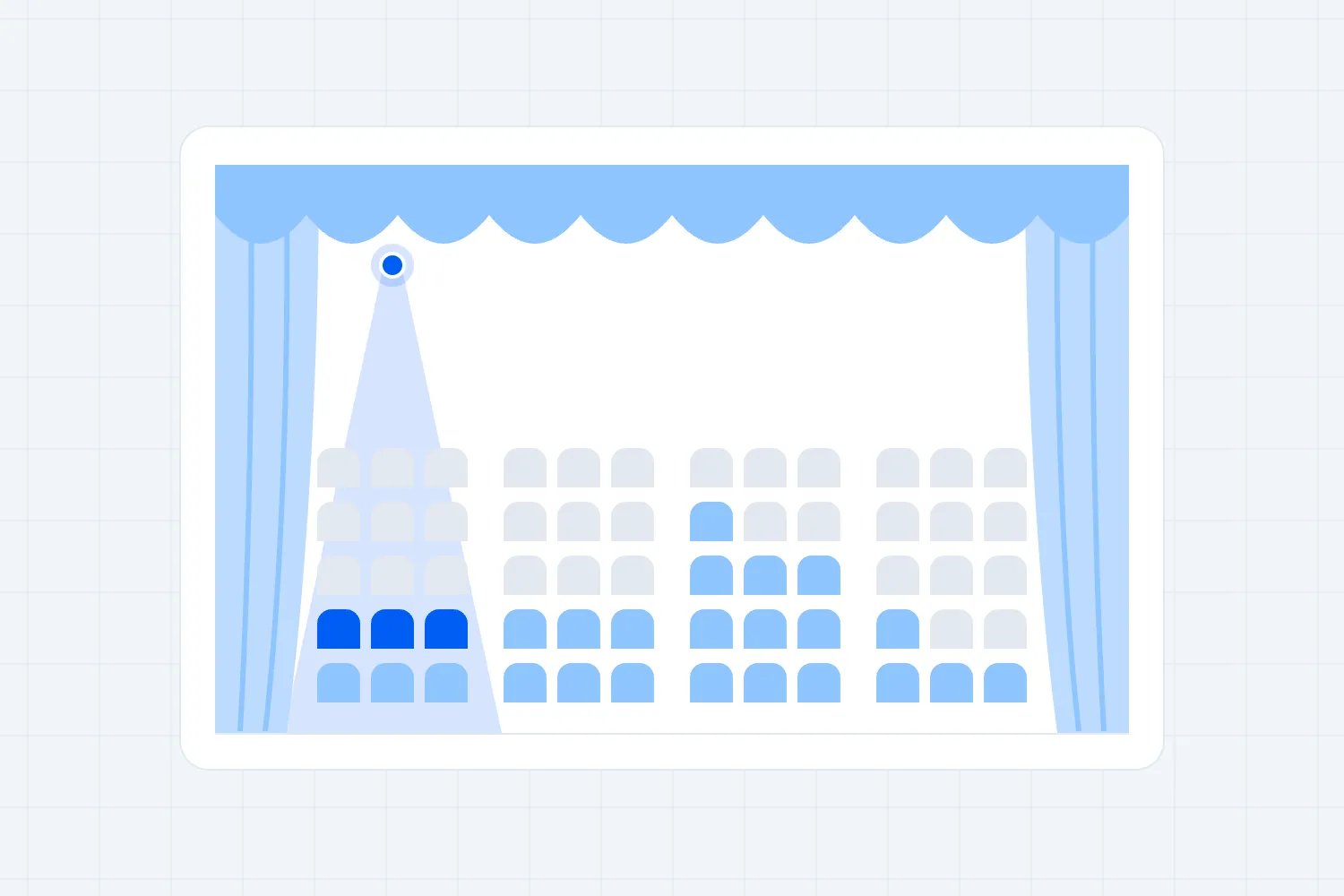
For reserved seating, a map can help buyers understand their choice. Loopyah's seat charts let organisers create venue layouts and buyers select seats. You still need to configure the real arrangement correctly and establish how access bookings and companion places work. Software can't decide whether a particular dome position is suitable for a guest.
General admission can be appropriate too. If you're using it, explain how seating works, when guests enter and what help is available. Avoid promising a particular view unless you can deliver it. A dome can make position important in ways that aren't obvious to someone accustomed to an ordinary cinema.
Make accessibility part of the advertised experience
Ask what the full visit requires, beginning with finding the correct entrance after normal opening hours. A step-free route through the daytime museum may be locked in the evening. Check arrival, toilets, waiting space, entry to the dome, seating, the show itself and leaving afterwards. Describe what you can actually provide.
Consult people with relevant access needs while you develop the programme. A route that looks adequate on a floor plan may be awkward during a busy changeover. A caption option that technically exists may be hard to read against the projection. Testing the experience gives you better information than a general statement that everyone is welcome.
The American Museum of Natural History's accessibility information describes provisions including audio description for its Hayden Planetarium show and wheelchair areas with companion seats in its theatres. Those are arrangements at that institution. Use the specificity as an example of useful visitor information, not evidence that your own equipment offers the same support.
Publish the access arrangements for the exact performance. A recorded film with captions and a live discussion may need different support. Explain whether the live part is covered, how a visitor requests assistance and what the team needs to arrange in advance. Check with the rights owner before adapting licensed material.
Think carefully about darkness, moving imagery, sound and the ability to leave. Describe relevant content and conditions without making medical assurances. If you plan a relaxed performance, define what changes: perhaps audience movement is welcome, some lighting remains on or the presentation is adjusted. Confirm the technical and licensing implications before using the label.
Late entry and re-entry need an explicit decision. Xplore's standalone planetarium information says late entry isn't permitted and that staff help guests leave, with re-entry potentially unavailable. That's its policy. Your team should establish what works safely at your site and explain it before purchase.
A strict admission cutoff affects the whole visit. Tell guests when to arrive, where to wait and what happens if transport delays them. Make sure the front desk can explain the policy consistently and has an agreed way to handle problems. A sentence buried in terms won't help a family standing at the wrong entrance.
Keep access conversations practical and private. Ask what the person needs to participate rather than collecting a detailed personal history. Limit the information to the employees who must arrange the support. If you can't provide something requested, explain the actual limitation and discuss options instead of letting the guest discover it on arrival.
Find out what each date really costs
Use two views of the money. First, what additional income and expenditure does the event create? Second, does the programme contribute enough to the institution's continuing costs? An evening can cover its extra staffing while still contributing little towards maintaining the dome. Both facts matter, and they answer different questions.
Start with the costs that change because you're running the date. Include preparation, presenter time, technical operation, front-of-house work, cleaning, security, rights and promotion. Check minimum shifts and building-opening charges. An employee already on the payroll can still create overtime or displace other paid work.
Then record an agreed contribution towards shared costs, such as equipment maintenance and management. Don't hide those costs because the building already exists. Equally, don't count an annual expense in full against every performance. Agree how the institution wants to assess the programme so the eventual result isn't judged against a different method.
Here's the fictional pilot's first date. Fixed costs are $180 for presentation and preparation, $120 for technical operation and testing, $100 for front-of-house work, $80 for opening and cleaning, $60 for rights and content costs, and $40 for promotion. An additional $120 is allocated towards shared institutional costs. Together, that's $700 before guest-related costs.
Assume the event retains $22 per paid ticket after transaction charges and any applicable sales tax. Assume a further $2 per attendee for guest-related supplies. Those are invented assumptions, not a quoted platform fee or tax treatment. Each paid attendee therefore provides $20 towards the $700 fixed total. With no complimentary guests, 35 paid attendees cover it exactly.
But our planned date includes four complimentary guests. Their supplies cost $8, so paid attendance must cover $708. At 35 paid guests, the event loses $8. At 36, it has a $12 surplus. At the maximum 56 paid guests, the surplus is $412: $1,232 retained ticket income, less $120 for supplies for all 60 guests, less $700 fixed costs.
Those small differences are why you should count the actual ticket mix. If ten of the sold-out date's paid tickets retain $5 less because of a discount, the $412 surplus becomes $362. If another $150 of technical work is required, it becomes $262 before that discount, or $212 with both changes. A sellout doesn't protect an incomplete budget.
Cash timing is another question. The technical supplier or distributor may need payment before ticket proceeds are available. Put due dates beside your costs and check the actual payout arrangements you're relying on. A season that eventually makes money can still need funding before the first audience arrives.
Keep unconfirmed sponsorship out of the base calculation. If someone later agrees to fund a date, show what that changes and what you must deliver in return. Free tickets, logo placement and additional hospitality can all create costs or consume inventory. Sponsorship helps when the net contribution is understood, not when an optimistic amount fills a budget gap.
Decide when an extra performance is worth opening
Once the first performance sells well, adding another can look like an easy win. Work out which costs repeat and which can genuinely be shared. The answer depends on your agreement with the venue, employees and content owner. Don't assume an extra performance is free because the projector is already running.
For example, suppose a second same-day performance adds $260 in fixed costs, including the required extra staffing and rights allowance. Keep the same invented $22 retained ticket income and $2 supplies per guest. With no complimentary guests on this performance, 13 paid attendees cover its additional costs exactly. Fourteen produce a $20 surplus.
That calculation only works if the $260 really covers the extra performance. If staff minimums, building hours or licensing change the cost, recalculate it. If demand for the later show comes mostly from people who would otherwise have bought the first, assess the combined day rather than celebrating each booking as additional business.
Don't open another date solely because the first is nearly full. Ask whether the remaining demand can be served at the proposed time, whether the team can repeat the experience well and whether the second performance has enough selling time. An enquiry for Saturday afternoon isn't automatically demand for Friday night.
Waitlists can help you identify interest if the process makes the proposed alternative clear. An email address on a list isn't a paid reservation. Tell interested guests the exact new date and price, then judge actual bookings. Keep a decision deadline before the next non-refundable commitment so you retain a useful choice.
Also consider the operational cost of your busiest slot. A second audience creates another arrival, departure and reset. If the lobby can't accommodate overlapping groups, the practical schedule may require a longer gap than you expected. Selling a few more tickets doesn't justify a changeover your team hasn't tested.
Rehearse the dome experience, including what can fail
A desktop preview isn't a dome rehearsal. Check the actual file, playback system, projection, audio and presentation cues in the venue. Watch the complete production from audience positions, not only the control desk. Confirm that the version you've tested is the one listed on the event page and permitted by the agreement.
Ask the technical lead to document the supplied format and any conversion work. You don't need to become a projection engineer, but you do need to know who confirms compatibility and when. Leave enough time for the distributor and venue team to resolve problems before guests have arranged their evening around the show.
Rehearse the live parts as well. The presenter should practise moving between the introduction, dome content and questions without losing the audience. A technically accurate explanation can still be difficult to follow if it assumes everyone recognises the constellations or understands the scale being shown. Ask a colleague unfamiliar with the subject to describe what they understood.
Give the operator and presenter a shared running order with clear cues. State who controls the lights, starts each section, handles the microphone and decides when to stop. If one person performs several roles, test that combination. Don't discover during a question that nobody can assist a guest because the only employee is at the console.
For our hypothetical evening, venue doors open at 18:15. Dome entry begins at 18:40, followed by the guest briefing at 18:55. The presentation starts at 19:00 and ends at 19:40. Questions finish at 20:00, the audience leaves by 20:10 and the reset finishes at 20:30. These are example timings to rehearse, not a standard turnaround for domes.
If you use that schedule as the basis for an additional performance, the next entry can't begin before the agreed reset is complete. The technical lead and front-of-house lead should confirm the actual gap after rehearsal. Include toilets, cleaning, lost property, access support and staff breaks in the discussion, rather than timing only the film.
Prepare realistic alternatives for failures. If the main production won't play, can you deliver an authorised live presentation that still meets the advertised offer? If the answer is no, establish who cancels and how guests are informed. A different show isn't an automatic substitute merely because it uses the same dome.
Keep a tested local copy or other approved backup only where the licence and system allow it. Confirm who can restore playback, what support is available out of hours and how long you'll attempt recovery before making a customer decision. The audience needs an honest update while the technical team works, not repeated promises that everything will start in a minute.
Put the right people around the presenter
Specialist knowledge and public presentation are different skills. Ask a proposed host to explain part of the subject to the intended audience. Look for clear language, curiosity about questions and a willingness to say when an answer is uncertain. A strong public show helps beginners understand without making them feel foolish for asking.
Agree the boundary between scientific content and technical operation. A visiting researcher may be excellent in discussion but unfamiliar with your dome controls. A regular operator may know the system well without being comfortable handling a specialist question session. Plan the combination around the real people available, including cover if someone is absent.
Front-of-house employees need more than a start time. Brief them on the ticket types, admission cutoff, access arrangements, age guidance, show duration and what else is included. They should know who handles a late arrival and who can authorise a remedy when the advertised experience can't be delivered.
If families are part of the programme, establish the supervision and safeguarding arrangements appropriate to the venue and local requirements. Explain whether children must remain with an adult, how tickets count accompanying adults and what happens when someone needs to leave. Don't borrow an age recommendation from another planetarium without reviewing your own content and conditions.
Use the same care with volunteers. An unpaid role still needs a clear task, training, supervision and a realistic shift. A programme that appears profitable because preparation and customer support happen invisibly in someone's own time may be difficult to repeat. Record those hours so you understand what another date would require.
Sell the visit accurately before you sell the atmosphere
Your event page should let someone picture the whole evening. Say what the show is, who it's intended for, how long the visit lasts and which parts are live. Explain the relationship with ordinary museum admission, whether refreshments are included and whether there is any outdoor activity. Describe the experience before relying on spectacular space imagery.
This is especially important for planetariums because words such as "stargazing" can imply looking at the real sky. If the whole event takes place indoors under a projection dome, say so. If outdoor observing is optional and weather dependent, distinguish it from the part the ticket guarantees. Don't let a photograph of a telescope make the promise for you.
Loopyah's Worth It Event Index asked 500 US consumers on 11 February 2026 how clear they felt about an event experience before buying. Only 26.2% selected "a great deal"; another 36.6% selected "a lot". The chart shows every response. This is general event research, not a study of planetarium visitors or proof that clearer copy increases bookings.
| Label | Respondents |
|---|---|
| A great deal | 26.2 |
| A lot | 36.6 |
| A moderate amount | 31 |
| A little | 5.8 |
| None at all | 0.4 |
For the fictional live-sky evening, you might write: "A beginner-friendly live tour of the night sky inside our projection dome, followed by questions with the presenter. The presentation runs from 19:00 to 19:40 and questions finish at 20:00. This ticket doesn't include telescope observing or entry to the museum galleries." Add the actual access information and arrival instructions separately.
Put the time and place details where guests will see them before payment. Include the correct evening entrance, suggested arrival time and admission cutoff. Repeat the most important instructions in the confirmation and pre-event message. Don't assume a visitor will remember a small note read several weeks earlier.
Loopyah's online ticket sales support event pages, ticket types and quantities, with payment and a confirmation containing the ticket QR code. That helps you connect the offer guests read with the ticket they bring. You still provide the accurate show description, correct inventory and arrangements for admission.
Explain any concessions and complimentary access clearly. If a member benefit covers ordinary shows but excludes specialist evenings, say that before the member reaches checkout. If a companion arrangement requires contact with the venue, provide a usable route. Unclear eligibility creates work for your team and uncertainty for the person trying to book.
Keep weather-dependent observing a separate decision
A dome programme can run when the outdoor sky is unhelpful. That is useful, but it can also create confusion if you sell an evening around an astronomical event and guests expect to see it outside. Decide whether observing is a guaranteed part of the paid offer, an optional addition or a separate booking before you describe the date.
For an ordinary evening observing session, establish who checks conditions, who decides whether it proceeds and when that decision reaches guests. Ask the observing lead what equipment and staffing are needed, how people will move between spaces and what happens if conditions change during the visit. The dome team shouldn't have to invent that plan while admitting an audience.
Write the fallback into the offer. If the indoor show and questions are the full paid experience, explain that any outdoor observing is an optional extra subject to suitable conditions. If observing is the main reason for the ticket, an unrelated film may not satisfy the booking. Agree the customer options and the money required to deliver them before taking payment.
Keep solar observing outside a casual add-on plan. It needs specialist safety arrangements and suitable equipment. NASA's solar viewing safety guidance explains the particular risks of looking at the Sun, including through optical equipment. If your team isn't equipped to assess and deliver it, programme an indoor explanation instead. The same restraint applies to a live feed: confirm permission, connectivity and a useful alternative if the transmission fails.
Give previous visitors a concrete reason to return
A repeat programme needs continuity people can understand. You might keep the same approachable host and change the topic, or develop a monthly live-sky show that reflects what visitors can observe locally. Alternatively, a licensed film season can introduce genuinely different subjects. Choose the pattern your audience values and your team can maintain.
Make the next event understandable on its own. Someone who missed the first date shouldn't assume they're behind. If the specialist evening does require prior knowledge, explain that knowledge rather than calling it "advanced" and leaving buyers to guess. A programme becomes easier to sell when each description helps the right visitor choose.
Don't mistake repeated purchase by one organiser for repeated attendance by the same people. A parent may buy for different family members. A group leader may bring a new group. Keep your measurement honest about what you can identify, and avoid collecting additional personal data simply to make the report look more precise.
Our guide to measuring repeat attendance across a series explains the distinction. For a planetarium pilot, begin with a consistent record of the event booked, tickets sold, attendance recorded and any return visit you can identify appropriately. Use the same method across dates so the comparison means something.
Promote the next show because of its content. A guest who enjoyed a local-sky introduction may be curious about why stars change colour, while a family who came for a film may prefer another film. Explain the connection without assuming every previous buyer wants every new event. Follow the communication permissions that apply to the audience and channel you're using.
Be careful with discounts for returning visitors. In the worked example, each $5 reduction in retained ticket income removes $5 from the result unless it creates a booking you wouldn't otherwise have received or produces another measurable benefit. Test an offer against its cost. A familiar audience can still buy a worthwhile new show at its normal price.
Review the pilot before committing to a longer season
After each date, collect the information needed to make the next decision. Record retained ticket income, refunds, guest-related spending, fixed costs and actual preparation hours. Separate paid attendance from complimentary attendance. Add technical problems, late arrivals, access issues and recurring customer questions while the details are still fresh.
Ask guests a small number of useful questions. What did they think the ticket included? Which part was most valuable? What would they come back for? Give them a way to explain disappointment rather than collecting only a star rating. A high overall score won't tell you that half the audience expected an outdoor observing session.
Compare the result with the reason you programmed that date. The film may attract new visitors while the specialist evening attracts returning ones. Either can be valuable, but they have different costs and purposes. Look at the money retained, the work required and the audience response together before deciding which format to repeat.
Write a short decision for each pilot event. For example: "Repeat the live introduction with the same host; keep the question session, clarify the indoor format and allow more arrival time." That is more useful than "successful night" because it tells the next organiser what to preserve and what to change. Record who owns each fix and when it must happen.
Renew rights and confirm staff availability before opening the next dates. Repeating the title doesn't guarantee the agreement still applies or that the same costs remain available. Check the revised running order and ticket inventory too, especially if you've changed the audience, access arrangements or relationship with general admission.
Your next commitment should be a programme you can describe accurately, deliver with the people available and fund at a realistic level of paid attendance. If the pilot hasn't established those conditions, revise the offer and test it again before announcing a full season. It's easier to change one unsold date than to repair months of promises.

Author: By the Loopyah Content Team
The Loopyah Content Team shares expert insights, practical guides, and industry updates to help event organizers create unforgettable experiences and stay ahead in the event planning world.