· 27 min read
How to organise a ticketed dance battle
Dancer entries are filling up. Spectator tickets are barely moving. Then someone asks whether their entry includes admission after they're knocked out, and you realise the poster hasn't explained much beyond the prize.
That's where I'd start. To organise a ticketed dance battle, you need a competition dancers understand and a show people will pay to watch. Set the style, entry conditions, judging and progression before opening sales. Then build the music, floor, running order and spectator offer around that decision, with enough income to pay everyone you've booked and honour the prize.
The dancer and spectator are buying different things. A dancer wants a fair opportunity to compete, suitable music and a result reached through the published rules. A spectator wants to see the movement, understand what's happening and enjoy the evening even after their friend loses. You have to deliver both experiences in the same room.
We'll work through a fictional small adult popping battle to make those decisions concrete. Popping is a street dance style associated with controlled muscular contractions and related movement techniques; your dance lead should define the vocabulary and scope for the local scene. All example fees, costs, capacities and timings below are invented planning assumptions in USD. They aren't market rates, official competition rules or a safety standard.
Choose a battle your local dancers actually want
The first thing you want to do is speak to people who practise and organise within the style. Ask what they would enter, which dates already matter locally and what makes them trust an organiser. You need more than a popular dancer's agreement to share the poster. Find out whether enough eligible competitors can attend and whether anyone beyond those competitors wants to watch.
A popping battle, a breaking battle and an open-style battle can require different music, judging knowledge and movement space. Open style means you allow more than one dance style; it doesn't tell entrants what music they'll hear or how unlike approaches will be compared. Write those answers before using the phrase as an invitation to everyone.
For a real example of a defined offer, the JOAT Popping Battle 2026 programme describes improvising dancers, an MC, DJs and judges. It also explains that dancers qualify through preliminary rounds before reaching the main battle. That qualification detail matters to someone buying an entry. Our fictional event will use a different arrangement: a confirmed place directly in the main draw, with no preliminary selection.
Keep your first edition manageable. One style and one category let you test the demand, production and judging without running several competitions at once. Adding a beginner division sounds welcoming, but it needs a defensible eligibility rule, enough entrants, more programme time and judges who can apply that rule. A second category isn't just another ticket option.
Decide whether you're producing a competition, a showcase or a social night with a short battle. The main attraction should match the time you're selling. If guests mostly want to dance with each other, our guide to a mixed-ability social dance night addresses that format. Here, most attendees are watching a scheduled contest, and floor access follows the competition plan.
Explain exactly what a dancer entry includes
Imagine our example has sixteen entry places for adults aged eighteen and over, in one popping category. Each accepted entrant pays for a place in the first knockout round, subject to the published check-in and competition conditions. Knockout means the winner advances and the loser leaves the competition. Losing doesn't end their admission to the event; they can stay and watch the rest.
Say that before taking payment. Also state whether entry includes any workshop, feedback, food, guest admission or recording. In this example, it includes none of those extras. The organiser supplies the competition, access to the agreed warm-up area and admission for the evening. Judges aren't promising individual coaching between rounds, and spectators must buy their own admission.
The simplest workable entry route may be first come, first served among eligible dancers. If that's your choice, confirm eligibility and payment through a process that doesn't sell seventeen places into a sixteen-person draw. If you're selecting dancers from applications instead, explain who selects them, what evidence they review and when applicants know the outcome. Don't describe a paid application as a confirmed battle place.
Preliminary rounds create another offer. Someone might pay to perform a short qualifying turn and never reach the advertised evening show. Explain the qualifying time, selection method and what access remains afterwards. The money should buy the opportunity you've described, rather than an implied chance to appear in a final that only selected people reach.
Set rules for age, category, substitutions and repeat entries. Our example admits each dancer once and doesn't allow someone to transfer a place privately without approval. Use only the information you need to administer those conditions. Provide a private access contact so someone can explain an adjustment without describing their circumstances on a public entry list.
Have the proposed paid-entry and prize arrangement checked against the rules where you're operating. A dance competition's legal treatment can't be established by calling it a skill contest on the poster. If you invite professional dancers to deliver contracted exhibitions as well, agree their work and pay separately. Don't imply that a chance of winning replaces an agreed performance fee.
Before launch, put the entry offer into a short working brief. For this example, it would read: one adult popping category; sixteen direct main-draw entries; no preliminary round; two turns of up to forty-five seconds per dancer in each battle; three judges choosing by majority; one $300 winner's prize; admission for eliminated entrants through the close. The full rules then explain the draw, music, conduct, interruptions, complaints and withdrawal conditions. Staff should be able to point to that same version when a dancer asks a question.
Add the actual check-in deadline once the production team confirms it. Distinguish arrival at the building from completion of the entry check. Someone who is in the queue before the deadline needs a clear process if your own administration delays them. Confirm how an access arrangement affects their call, and tell them whom to contact if transport goes wrong. A rule is easier to administer when it describes the event's responsibility as well as the entrant's.
Agree the rules with the judges and DJ before launch
Bring your dance lead, judges and DJ into the same planning conversation. Otherwise you can end up with judges expecting one kind of musical response and a DJ preparing something quite different. Explain the audience and the experience you're producing, then agree rules the team can actually apply.
For the fictional event, each battle gives each dancer two turns, each lasting up to forty-five seconds. The dancers alternate, so there are four turns in a complete battle. We use "turn" for one dancer's individual performance and "battle" for the whole head-to-head meeting. Define your terms just as clearly. "Two rounds" can mean different things to people reading a short announcement.
Our dance lead proposes assessing control within popping, response to the music, originality and how the dancer develops their exchanges. Those are example criteria to refine with qualified people, not a universal scoring system. Explain what each means in this event. Response to the music concerns how movement relates to what is playing; it isn't an instruction to reward the biggest movement whenever the crowd cheers.
Tell entrants how the result follows. In this example, three judges independently choose a battle winner after watching all four turns. Each must choose one dancer; there is no draw vote. A majority decides who advances. Judges don't count ticket referrals, follower numbers or how many supporters someone brought. Audience applause is welcome, but it doesn't determine this competition's result.
If you operate under an affiliated competition's rules, check its current documents and approval requirements. The World DanceSport Federation's rules library, for example, contains specific breaking regulations. That doesn't make those regulations appropriate for every independent street dance event. Use the system you have agreed and are entitled to advertise, and avoid claiming official status you don't hold.
Complete the awkward details now: who starts, whether starting order changes, how the clock begins, the end signal, what happens on a music failure and how conduct decisions are made. Our example uses a disclosed draw to choose who starts, then follows the order A, B, A, B. The starting dancer stays the same for both exchanges. The host explains it, the floor manager records it and the DJ receives the same instructions.
Describe acceptable competitive interaction too. Dancers may address each other through their performance, but your house rules should explain physical contact, entering an opponent's movement space, threats and harassment. Agree the wording with the dance lead so it respects the form without treating everything as permitted because it's a battle. State who can issue a warning, stop a performance or remove someone, and how the affected person receives that decision. Artistic judging and immediate safety intervention need different routes.
Pick judges for the work they need to do
A recognisable name can help sell tickets, but a judge still needs to assess the style, observe the whole battle and make decisions under the agreed system. Confirm availability for briefing, the entire competition and any required records. A judge who can only arrive for the final doesn't solve your first-round staffing problem.
Ask about relationships with entrants before publishing the panel. Teaching, coaching, family relationships and financial connections can create different concerns. Agree which relationships require disclosure, when someone must step aside and who provides cover. A blanket promise of "independent judges" needs a process behind it, especially in a small scene where people already know one another.
Our example budgets three working judges and requires a separately agreed replacement arrangement. The budget later in this guide doesn't assume an extra person works for free: any paid reserve obligation needs a quote within the staffing allowance or an added cost. Check conflicts against the confirmed entrants before the draw, rather than discovering them while two dancers wait on the floor.
Run a briefing with sample footage you have permission to use. Ask judges to explain how they apply the criteria, which conduct questions belong to the organiser and how they signal their decision. The purpose is consistent interpretation, not agreement about which dancer everyone should prefer. Independent judgment still allows a split decision.
Use a result record that fits the system. For our majority-vote example, record the battle identifier, dancers, each judge's choice, the winner and who checked the entry. You don't need to invent numerical scores that the judges never gave. A second staff member verifies that the winner is copied into the correct next position before the host announces the following matchup.
Suppose two judges choose dancer A and one chooses dancer B. A advances, and the record preserves that split. If the host accidentally announces B, the competition manager checks the original decisions and corrects the announcement; the panel doesn't vote again just to make the announcement true. Have a discreet way to hold the next call while that check happens. You want staff checking the original record, rather than taking an audience member's recollection as the result.
Separate an artistic disagreement from a process complaint. The example permits review of a wrongly recorded vote, an eligibility error or an unhandled conflict through a named competition manager. It doesn't promise a fresh artistic judgment because a dancer dislikes the result. Publish the reporting route and response timing, including how you handle an issue discovered after the next battle starts. Don't improvise a complaint fee in front of an upset entrant.
Build the draw before you write the running order
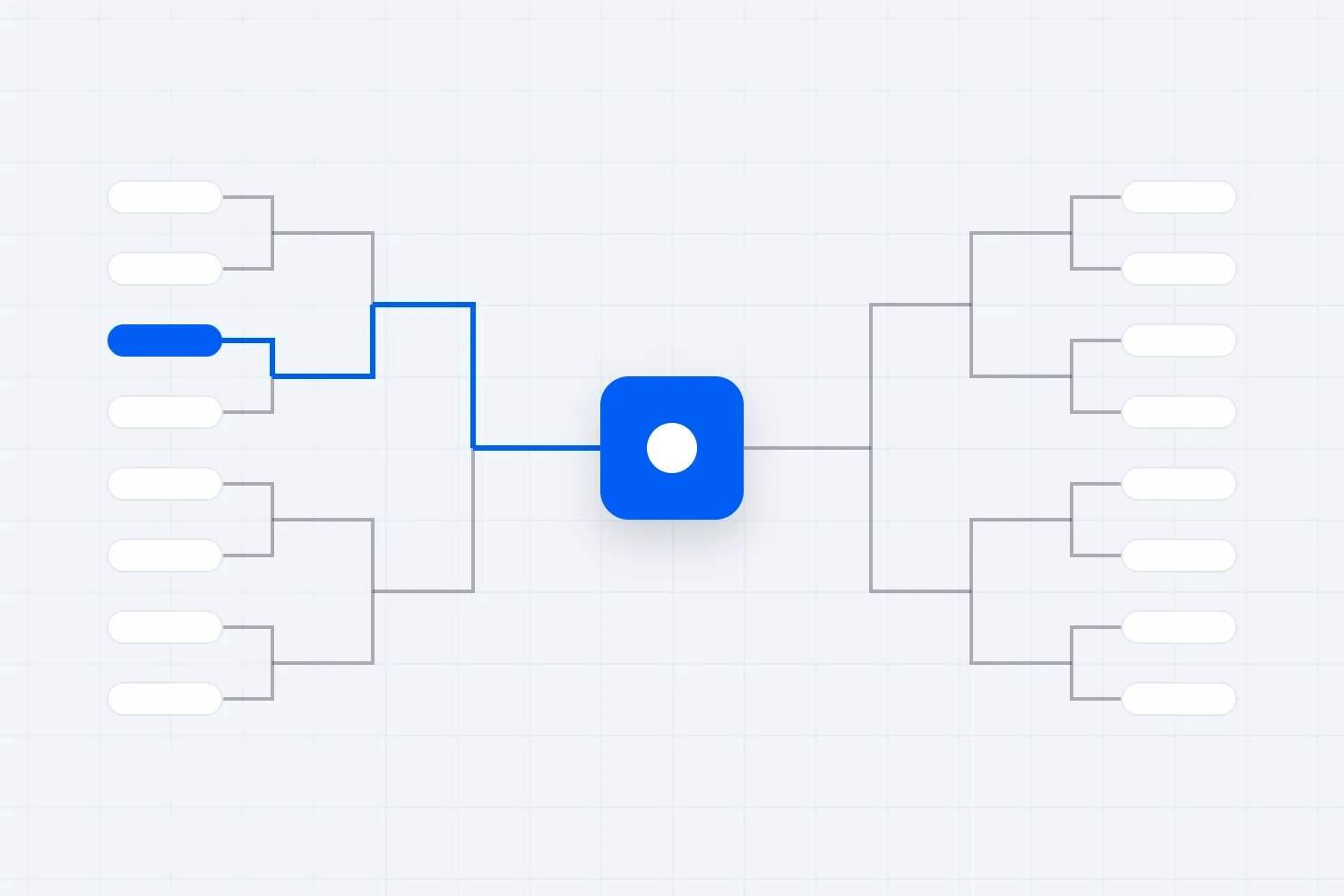
Sixteen dancers in a single knockout competition create fifteen battles. Eight first-round battles produce eight quarter-finalists. Four quarter-finals produce four semi-finalists, two semi-finals produce two finalists, and one final produces the winner. This example has no third-place battle, extra qualifying round or winner's exhibition. Add any of those and you must add their time and costs.
Each battle contains up to three minutes of dancing: four turns of up to forty-five seconds. That isn't a three-minute booking in the running order. You still need to call the dancers, confirm they're ready, manage the music, receive the result and clear the floor. Our fictional production rehearsal establishes a six-minute slot for this particular format. Test your own timings with the people doing the work.
Fifteen six-minute slots use ninety minutes. That's the competition time before welcome, breaks, recovery time and awards. If you're trying to fit it into a ninety-minute room booking, you already have a problem. Shortening later rounds on the night changes what entrants expected and can leave finalists with less recovery than you planned.
Draw positions through the method you've disclosed. A random draw is one option for our example. If you separate leading entrants through seeding, which means placing them to avoid early meetings, explain who decides those positions and why. Don't quietly protect a popular guest after advertising an entirely random draw.
Put a check-in deadline before the draw and a clear reserve process before that deadline. Reserves need to know whether they should travel, whether they pay, what access they receive and when the organiser will confirm a vacancy. A person on a waiting list isn't obliged to stand outside all afternoon hoping someone drops out.
Work through a withdrawal after the draw too. A bye means a dancer advances without facing an opponent, and it changes both the competitive experience and the show. Explain when your rules allow one, whether a replacement can enter and how affected entrants are informed. Keep a versioned draw with one person authorised to change it. An old bracket displayed near the door can keep sending dancers to the wrong place even after the host has announced the correction.
Make the room work for dancers and paying spectators
A hall with enough standing room may still be a poor battle venue. Ask your dance lead to inspect the actual surface, lighting, edges and usable movement area. Discuss cleaning products, spills, joints and changes of level. A floor suitable for one style or temporary demonstration isn't automatically suitable for the movements your competition permits.
Test spectator views at the floor level the dancers will use. Stand behind the proposed front row. Sit in the accessible viewing position. Check whether the judges, cameras and DJ equipment obstruct anyone. Selling a ticket with an almost completely blocked view is hard to justify just because the guest can technically enter the room.
In Great Britain, the HSE's venue and site design guidance identifies exits, circulation and space for the audience, staff and contractors as capacity considerations. Establish your event arrangement with the venue and competent advisers under the requirements where you operate. Don't infer a safe capacity from the number of chairs you can physically fit around a square.
For our example, assume that process permits sixteen competitors and 104 spectators in the chosen arrangement, with all workers and other occupants also included in the overall assessment. The spectator allocation consists of 100 paid places and four complimentary places. Eliminated dancers remain within the sixteen competitor admissions; they don't create sixteen extra spectator tickets you can sell.
Plan somewhere suitable for dancers to prepare and warm up without blocking circulation. Confirm water, toilets, storage and routes to the floor. Give the DJ and judges usable working positions. If photographers need access, agree it before they discover the best angle is directly behind the dancers' feet. Cables and camera movements need to follow the production plan.
Access includes the competitor experience as well as admission. W3C's accessible event planning checklist recommends accessible facilities, asking about requirements and considering access when scheduling. Apply those questions with your venue and dance team: can someone reach the preparation area, receive the call, understand the result and compete under agreed arrangements? Publish practical information and a contact who can resolve uncertainties before a person pays.
If the best viewing spaces are reserved for particular access needs, explain how guests arrange them and train staff to protect the routes. Don't turn those spaces into last-minute paid inventory when general admission sells out. Our event capacity guide develops the wider occupancy questions. For this battle, the important practical test is whether the agreed layout still works when every admitted dancer remains to watch the final and the audience moves to see the deciding exchange.
Give the DJ, host and floor team distinct responsibilities
Your DJ needs a musical brief that matches the competition, not a request to keep the room excited. Agree the musical direction, how tracks are selected, turn lengths and the cue for stopping. Discuss the relationship between each dancer's musical opportunity, including what happens if someone receives the wrong track or the sound cuts out.
In our example, dancers improvise to music selected by the DJ rather than submitting their own tracks. The dance lead and DJ agree the approach before entries open, and the description tells entrants what to expect. Don't promise identical musical conditions if the format deliberately uses different tracks. Explain the actual method you will use to make the comparison credible.
The host, or MC, explains the format, calls the dancers and helps spectators follow the exchanges. They need names and pronunciations, the draw and a short explanation of how the judges decide. Brief them to build excitement without encouraging personal abuse or making jokes about a dancer's body, background or access requirements.
The floor manager controls readiness and access to the competition space. They know who is next, who is warming up, whether the surface needs attention and how to contact the event lead. The competition manager owns eligibility, the draw and process complaints. Smaller events may combine some duties, but map simultaneous demands before assigning everything to one confident person.
Rehearse a music failure. For our example, the floor manager signals a stop, the DJ stops the track, the host explains the interruption and the competition manager applies the published recovery rule. That rule must say whether the affected turn restarts and what judges disregard. It shouldn't require the dancer to argue for another attempt while the next track is already playing.
Agree sound management, first aid, emergency arrangements and the authority to stop with the venue and relevant professionals. Dancers should know how to report a problem without losing their place simply for asking. A competition creates pressure to carry on, so staff need permission and practical means to pause it. Don't let a close running order become the reason someone ignores an unsafe floor or a person needing help.
Confirm music permissions and recording plans
Settle permissions before building the promotion around a familiar track or a promise of complete battle videos. Start with the music used inside the venue. Ask what the venue's existing arrangement covers, which event details it needs from you and who is responsible for anything additional. A room hire agreement that says music is allowed doesn't necessarily answer the rights question.
For a UK example, GOV.UK's guidance on live and recorded music licensing says public use usually requires a licence and directs organisers to PPL PRS. Check the intended use with the appropriate organisation in your market. Keep entertainment permissions, music rights and your venue agreement distinct in the planning record, so a confirmation about one isn't mistaken for permission for everything.
Next, decide what you're recording. A short promotional clip, a complete on-demand battle and a live broadcast are different proposed uses. Ask the relevant rights holders and suppliers what each requires before paying for a recording package. Our guide to music rights for event streams explains the questions to investigate. Don't promise dancers a publishable video merely because someone has agreed to operate a camera.
Agree filming and use of names and images with dancers, judges and other contributors. Explain the spectator recording policy too, including camera positions and how people can raise a concern. These arrangements need appropriate local advice where required; a broad sentence in the ticket terms shouldn't be expected to resolve every filming issue. Keep any promised review or approval step practical, with an owner and deadline.
Use permitted promotion that accurately shows the event. If you can publish only selected clips, say that when describing the entrant offer. If no recording is included, let dancers know before they decide to enter. This avoids turning an optional marketing project into a delivery promise the budget never funded.
Finally, ask the sound lead to address exposure for workers as well as the audience. Great Britain's HSE event noise guidance treats those questions separately. Agree controls and monitoring appropriate to the room and event, rather than choosing a volume because it sounds impressive during an empty-room test. The DJ still needs a clear account of how that plan affects their setup and performance.
Price the event with separate dancer and spectator income
You can fill every dancer place and still lose money. Sixteen entry payments won't necessarily cover the DJ, judges, venue and production, and adding more entrants changes the competition rather than simply increasing income. Start with a deliverable format, then test how many spectator tickets the complete budget requires.
Our fictional event has these fixed costs, all in USD:
Venue and agreed preparation access: $450.
DJ, including briefing and preparation: $250.
Host, including briefing: $200.
Three judges at an assumed $150 each: $450.
Technical, door and floor staffing provision: $350.
Insurance, permissions and administration provision: $200.
Promotion: $150.
Cash prize: $300.
Contingency, treated as spent in this forecast: $150.
The total is $2,500. These are invented allowances, not professional fee recommendations. Obtain quotes for every required role, including first aid, security, access support and reserve cover; the $350 staffing provision only works if those actual arrangements fit it. If they don't, increase the cost. All preparation for this first date is charged here, rather than assuming a later edition pays it back.
Assume the organiser retains $25 per paid dancer entry and $28 per paid spectator after applicable selling fees and ticket taxes. Those retained amounts are accounting assumptions, not the advertised checkout prices or a Loopyah fee quote. Work backwards from your actual costs and selling setup to publish accurate buyer totals. The calculation also allows $2 for each admitted member of the public, including complimentary guests. Purchase taxes are included in the assumed costs; income tax, borrowing costs and unrelated business overhead are outside this example.
With sixteen paid dancers, entry income is $400. Their $32 variable cost leaves $368 towards the fixed costs. Four complimentary spectators cost another $8. That leaves $2,140 to recover from paid spectators. Each paid spectator contributes $26 after the $2 variable allowance, so you need 83 of them to cover the listed costs: 82 contribute $2,132, while 83 contribute $2,158.
At eighty paid spectators, the event loses $60. At ninety, it leaves $200. At the full one hundred, it leaves $460. All sixteen dancers and all booked spectators are assumed to attend, there are no refunds and there's no bar, sponsor or merchandise income. These assumptions matter. If you expect another income source, confirm its amount and delivery cost before including it. Our event break-even guide explains how to build the calculation for your own event.
Now test the decisions you're considering. If twenty spectators leave you $8 less each because of a discount, the sellout surplus falls by $160 to $300. An additional $150 staffing bill reduces it to $150 if both changes happen. You may still choose that offer and cover, but the original $460 is no longer available. Don't keep quoting the standard-price sellout result after changing the plan.
Fund the prize and check the cash dates
The prize is a commitment to the competition you've advertised. Specify the amount, whether it's cash or another benefit, who receives it and when it's paid. Our example has one $300 cash prize for the winner, with no advertised payment for runners-up. It is budgeted as an event cost before assessing whether the night makes money.
Keep the funds available to honour it even if spectator sales disappoint. "Paid when ticket income clears" isn't a useful surprise for someone who has already won. If a sponsor provides the prize, agree who is responsible when the sponsor pays late or withdraws. The promise made to dancers needs an answer the organiser can deliver.
Separate prize administration from artistic judgment. A sponsor can receive agreed recognition without choosing its favourite dancer as champion. Likewise, selling tickets through a dancer's referral link shouldn't improve their result. If someone is paid to promote the event, record that commercial arrangement separately and make sure judges don't treat sales performance as a criterion.
Map every deposit, balance and refund exposure against money you can actually use. Suppose $700 of our included costs becomes payable before usable ticket proceeds arrive and you have $500 available. You need another $200 in funding at that point. That's a cash shortage, not an extra $200 expense to add to the $2,500 budget. Paying it with an advance doesn't make the event more profitable either.
Have cancellation, withdrawal and material-change terms checked before selling. For UK businesses, the CMA's guidance on fair and transparent consumer terms is a relevant starting source. Your local obligations and actual offer determine the terms you need. Avoid an all-purpose "no refunds in any circumstances" statement that tries to settle every possible problem in one sentence.
Set your decision date around those agreements. If you can still reduce an uncommitted cost, move the date or cancel with manageable exposure, review sales before that option disappears. Compare actual paid spectators and confirmed dancers with the forecast. A full entry list and enthusiastic comments can be encouraging while leaving you short of the audience income needed to proceed.
Sell a spectator experience someone can understand
A poster saying "sixteen dancers, one winner" explains the competitive shape. It doesn't explain why someone unfamiliar with the scene should spend their evening there. Describe the style, the music, the progression and what the host will help them follow. Use footage from a comparable experience only when you have permission to publish it.
Write the ticket page around practical decisions. Is the audience seated, standing or mixed? Are places assigned? Can spectators see the full movement area? What are the doors, programme and finish times? Explain the age policy, access arrangements, re-entry, food and drink position, and whether there is any public dancing. Our example promises a watched battle, with no audience dance session included.
Keep the dancer and spectator ticket descriptions visibly different. In the example, sixteen dancer entries and one hundred paid spectator admissions have fixed separate allocations. Four complimentary spectator places are reserved within the agreed plan. A dancer doesn't need to buy spectator admission as well, and a spectator ticket doesn't authorise someone to enter the competition.
With Loopyah's event ticketing, you can set ticket types and releases with their own prices and quantities, take payment and send confirmations linking to QR tickets. That supports the two admission offers. The organiser still defines eligibility and confirms the draw; a successful ticket purchase doesn't itself establish a dancer's right to compete under your rules. Test both purchase routes before launch.
Ask someone who hasn't helped plan the event to read the page and explain what they've bought. Then ask a dancer the same question. If the spectator expects a workshop and the dancer expects preliminary rounds, fix the descriptions. A shared poster can lead to separate entry instructions without forcing everyone through a long set of irrelevant details.
Think about a spectator whose friend loses in the first round. They've still paid for the evening. The host can explain what changed between the dancers' exchanges, introduce the next matchup and remind people where the competition has reached, without trying to justify each judge's artistic opinion. Visible dancer names and an updated draw help newcomers keep following. These details make the event understandable without requiring a lecture before every battle.
Promote through relevant studios, dancers and local culture outlets with agreed wording and any commercial terms settled. Explain why their audience would attend. Avoid promising a championship level your confirmed field doesn't support. Once sales begin, learn which questions keep appearing: unclear viewing, entry eligibility or finish times may need an answer on the page before another advertising push.
Run the evening with time for recovery and decisions
Here's a proposed running order for the fictional event. It uses the fifteen six-minute battles already described, with two turns of up to forty-five seconds per dancer in every battle, including the final. The team has checked the recovery intervals against its actual draw and movement demands. These timings are an example to rehearse, not a recommendation for every style.
17:30: spectator doors; dancer check-in, preparation and draw have earlier confirmed calls.
18:00 to 18:10: welcome, format and conduct explanation.
18:10 to 18:58: eight first-round battles.
18:58 to 19:08: break.
19:08 to 19:32: four quarter-finals.
19:32 to 19:42: break.
19:42 to 19:54: two semi-finals.
19:54 to 20:04: protected recovery time before the final.
20:04 to 20:10: final.
20:10 to 20:20: verified result, award and close.
The programme occupies 140 minutes, including ninety minutes of battle slots. The period before the final is protected recovery time, not spare time for another competition or a way to absorb delays. The public finish is around 20:20, with guest departure by the separately agreed 20:30 deadline; setup, dancer calls and venue handback need their own booked hours.
Use the actual draw to examine how soon each possible advancing dancer competes again. The winner of the last semi-final has less time before the final than the first semi-final winner. A timetable total doesn't establish that those intervals are suitable. If the dance lead requires longer recovery, extend the programme or change the format before selling it, and recalculate the venue and staffing costs.
For recoverable delays, this example allows the team to shorten the welcome and closing by up to five minutes each, preserving essential instructions and the verified award. Agree that response in advance. A larger delay needs the event lead to reassess the programme with the venue and competition team, explain the situation and follow the applicable terms. Staff mustn't reclaim the protected recovery interval or rush the final to keep a promised finish.
Before doors, walk through the whole evening with the team. Check the floor, sound, names, results record and next-battle calls. Decide who speaks to waiting spectators if a pause becomes necessary. A DJ can keep appropriate music playing during an administrative delay, but nobody should announce a revised competition rule merely to prevent the room getting impatient.
Use a few concrete rehearsals. A dancer checks in under a stage name that doesn't match the booking; staff resolve identity and eligibility privately before putting the correct name into the draw. A judge's choice is copied against the wrong dancer; the checker catches it before the next matchup is called. A spectator steps into the movement area to film; the floor team intervenes through the agreed access process. Each rehearsal should identify the person who acts and the information they need, rather than end with everyone agreeing to be careful.
Send practical messages before the date. Loopyah's attendee email tools distinguish event information for existing ticket holders from promotional offers and let you test a message before sending. Keep dancer-specific calls clear and verify the intended recipients. A general doors reminder mustn't cause competitors to miss their earlier check-in deadline.
Afterwards, pay on the agreed dates, reconcile actual income and costs, and keep the competition records required for your complaint process. Ask dancers about music, readiness and judging administration, and spectators about views and understanding the show. If you repeat the event, change the next offer around what you can substantiate. Before announcing a bigger field, work out the extra battles, recovery time and cost it creates, and whether enough people will pay to watch them.

Author: By the Loopyah Content Team
The Loopyah Content Team shares expert insights, practical guides, and industry updates to help event organizers create unforgettable experiences and stay ahead in the event planning world.