· 21 min read
How many survey responses do you need to judge an event fairly?

Your post-event survey has closed. The average looks encouraging, a few comments are brutal, and somebody asks whether you have enough responses to trust any of it. You need to decide what to change before the next event goes on sale. You don't need a percentage that sounds more certain than it is.
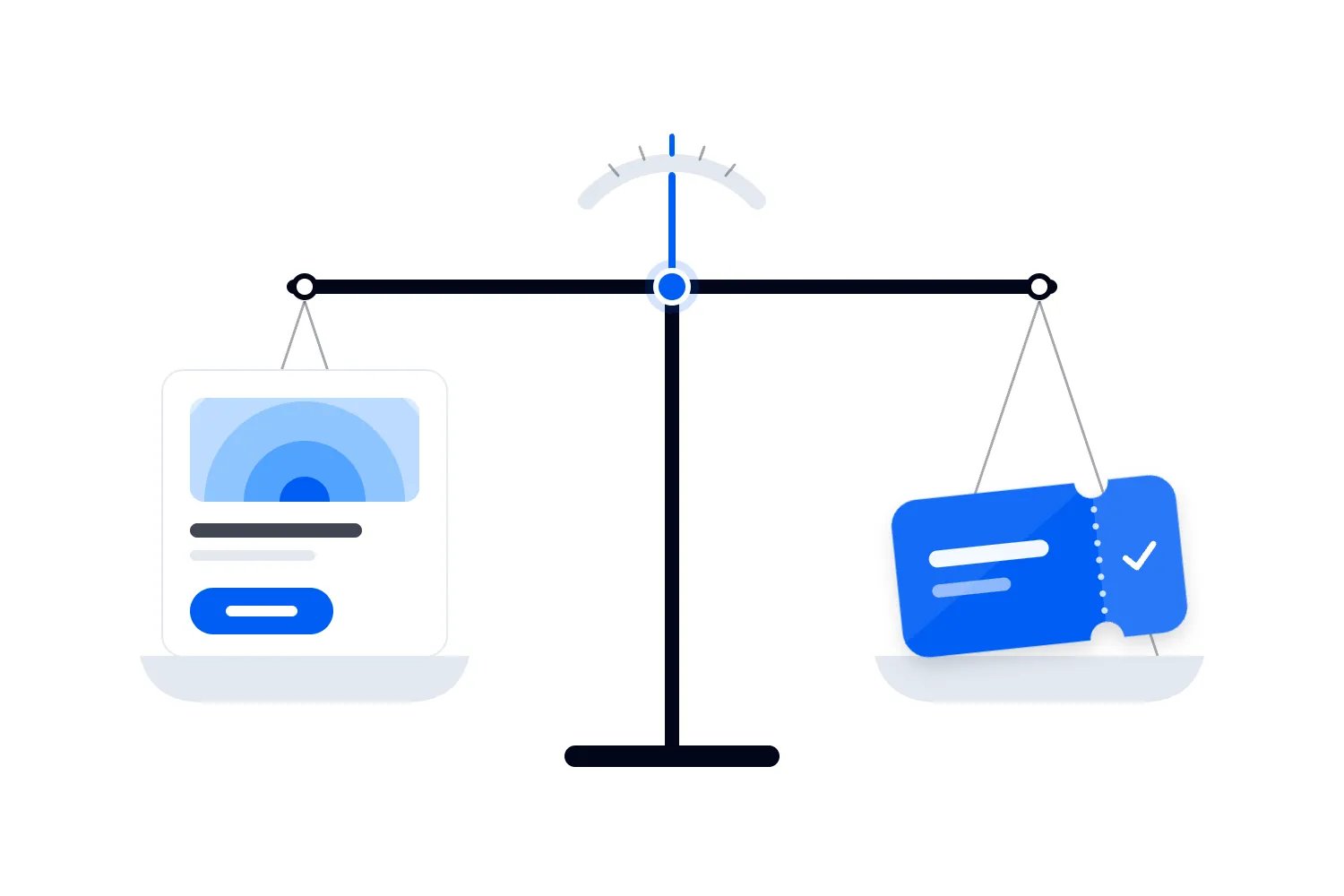
There is no universal event survey sample size that makes your results reliable. You need enough relevant answers for the decision you're making, a clear account of who replied, and an honest explanation of whose experience you may have missed. A voluntary survey can help you investigate problems and plan improvements without representing every attendee.
The useful question is what your responses support. A handful of detailed reports may justify checking an entrance problem. Replacing a popular event format or making a public claim about your entire audience takes stronger evidence. Here's how to work through that difference without turning your debrief into a statistics lecture.
Start with the decision the survey needs to support
Before you ask how many replies are enough, write down what you're about to do with them. Are you checking whether people understood the arrival instructions? Choosing between two expensive venue options? Trying to tell a sponsor how satisfied the audience was? Those decisions ask different things of the same survey.
For a cheap, reversible improvement, you can often act while uncertainty remains. If several attendees explain that a sign pointed them towards a closed entrance, inspect the sign and route. You don't need to establish the exact share of confused attendees before correcting information that your team confirms was wrong.
A major commitment needs more work. Suppose you're considering removing a programme track because its ratings look weak. You need to know who used it, who answered, what they expected, and whether the complaint concerns the topic or its delivery. More general event ratings won't fill those gaps.
Public claims deserve particular care because somebody else will rely on your wording. A sponsor might interpret "our audience loved the event" as a statement about everyone who attended. If you heard from a self-selected group, describe that group and its answers. Keep the limits visible when a result leaves the internal debrief.
Write the proposed decision at the top of your analysis. Under it, identify which question and which attendees can inform it. This prevents a large overall response count from becoming permission to make a decision the survey never measured. Our guide to post-event survey questions covers building the form. Here, the job is deciding how much confidence to put in the answers you received.
Count people who can answer the question
An event audience can contain ticket purchasers, their guests, people who actually attended, and people who never arrived. Before counting responses, decide which of those groups you mean. A buyer's email address doesn't necessarily identify everybody whose experience you want to understand.
Imagine a fictional conference with 1,000 attendees and 600 purchasing contacts. You send the survey to those contacts and receive 180 replies. Dividing 180 by 600 gives a 30% completion share among the invited contacts, assuming every contact was eligible and invited successfully. It doesn't establish that 30% of attendees answered, because orders and individual attendees are different units.
The distinction matters for interpretation. A group booker might understand the purchasing experience but have no idea whether a colleague could hear a particular session. Don't count a purchaser's reply several times because their order contained several tickets. Record whether you collected individual experiences or one person's account of a booking.
Use attendance records carefully too. Someone with no recorded scan may still have attended if the check-in process missed them. An eligibility question can help route their reply without forcing them into a no-show category. People who confirm they did not attend can explain that decision, but they cannot rate the experience inside the venue.
AAPOR's best practices for survey research distinguishes the population you want to understand from the list you can contact. For an event team, the practical consequence is straightforward. Name the intended audience, check who your invitation actually reached, and explain the difference before presenting a satisfaction result.
Use the answer count for each result
The number of submitted forms is only the beginning. People skip questions, leave early, or answer only the sections relevant to them. Each result needs the count of eligible people who actually answered that question. Use that count when you calculate and report the result.
Continue with a fictional survey receiving 180 submissions. Perhaps 165 people answer overall satisfaction, 50 say they used the shuttle, and 40 of those users rate it. The shuttle result describes those 40 respondents. Dividing positive shuttle ratings by 180 would quietly count everyone else as something they never said.
Keep "did not use," "don't know," and a blank answer separate. They describe different situations. Someone who didn't use the shuttle is outside the rating group. A user who can't remember may have relevant experience but no rating to offer. A blank answer tells you less still. Explain what you excluded rather than making the denominator fit the result you hoped to see.
When showing a percentage, include the count in words nearby. In a hypothetical shuttle result, "30 of the 40 respondents who rated the shuttle selected satisfied or very satisfied" is clearer than "75% satisfaction." It names the answers you combined and makes the size of the group visible.
This also helps you spot a broken survey route. If a question intended only for workshop participants has more replies than the workshop's plausible audience, investigate eligibility and wording before calculating anything. A large response count can come from people answering a question they couldn't judge. Correcting your interpretation is more useful than celebrating the total.
Why a sample-size calculator cannot settle a voluntary survey
A sample-size calculator can look reassuring. Enter an audience size, choose a confidence level, and it gives you a target. The problem is that the number depends on assumptions about how respondents are selected. A link that attendees choose to open doesn't automatically meet those assumptions.
In probability sampling, people are selected through a random process with known selection chances. With voluntary feedback, the willingness and ability to reply help determine who appears in your results. Sending everybody an invitation doesn't make the people who answer a random sample of everybody who attended.
AAPOR explains the distinction between margins of sampling error and model-based uncertainty. You cannot take an ordinary calculator's margin of error and attach it to an opt-in event survey as though it covers the uncertainty in representing your audience. More sophisticated estimates require a defensible method and assumptions, rather than a different label on the same calculation.
That doesn't make voluntary feedback useless. It changes what you can say. You can describe respondents' ratings, investigate their accounts, and compare them with other evidence. You should avoid claiming that a particular response total proves the whole audience felt the same way within a stated error range.
If you genuinely need a population estimate for a high-cost decision or a formal report, involve a survey researcher before collection. Explain the audience, the groups you need to compare, and the precision the decision requires. Asking for help after an open survey has closed cannot change how people entered it. Plan the evidence around the claim you intend to make.
Check who is missing before chasing a higher total
A higher total is useful when it adds relevant information. It is less reassuring when every additional reply comes from a part of the audience you already hear from. The next thing to check is whether important attendee groups are absent or barely represented.
Consider another fictional example. Half your attendees are first-time visitors, but only 20 of 200 survey respondents are first-timers. That's 10% of replies from a group that made up 50% of attendance. The survey may tell you a great deal about regulars while giving you a limited account of arriving without prior knowledge of the venue.
That mismatch doesn't prove first-timers were unhappy. You haven't heard their answers. It does mean you should be cautious about declaring that arrival instructions worked for new attendees. Use the mismatch to identify what you don't know, then choose a sensible way to investigate it.
Compare groups using records you legitimately hold and can interpret. Ticket type, event day, or first-time attendance may be relevant. A purchaser's history is not always an attendee's history, so don't invent a classification simply because your export contains a convenient column. If you can't identify a group reliably, state that limitation.
You also don't need to divide the audience into every possible combination. Choose groups that could change the decision. For an entrance review, arrival route may matter more than ticket price. For a paid upgrade, the relevant group is people who bought and used it. The aim is to find missing experience, rather than produce a complicated spreadsheet with very little information in each row.
A low response rate is a reason to investigate
It's tempting to treat a response rate as a quality grade. A low rate looks bad, a high rate looks good, and the team wants a threshold that settles the argument. The rate alone cannot tell you whether respondents differ from nonrespondents in ways that matter to the question.
AAPOR's Standard Definitions guidance says response-rate information is insufficient to establish how much nonresponse error exists, or even whether it exists. Nonresponse bias means the people you didn't hear from would change the finding because their relevant experiences or views differ. The rate tells you how much participation you achieved under the definition you used.
For a fictional invitation to 800 eligible attendees, 160 usable replies means 20% responded under a simple replies-divided-by-invitees definition. Describe that definition and any known delivery exclusions. A public social link may have no reliable invitation denominator, so reporting its response count may be more honest than claiming a response rate.
Don't assume the silent attendees were satisfied because they didn't complain. Don't assume only angry people answered either. Both explanations are possible in particular circumstances; neither follows from silence. Check respondent composition, read how people describe the experience, and compare relevant operating records.
A useful debrief statement is that the response rate leaves unanswered questions about particular groups. Name those groups when you have evidence they're missing. If you don't have that information, say you haven't established whether respondents resemble the audience. That gives the team something specific to investigate and avoids turning an uncertain survey into either a verdict or a write-off.
Small groups need counts and context
You can have plenty of responses overall and very few for the decision that matters. This happens when you split answers by day, ticket group, room, or activity. Each split reduces the number of relevant observations, sometimes to a point where a percentage adds more confidence than understanding.
In a fictional premium-ticket group, six of eight respondents say the upgrade was good value. That's 75%. If one person's answer changes, the result moves by 12.5 percentage points. The arithmetic is correct, but a precise-looking percentage can distract the team from the fact that you heard from eight people.
Show the count, explain what those people used, and investigate their reasons. Perhaps the negative replies concern a promised benefit that wasn't delivered. You can check delivery without waiting for a larger survey. What you can't establish from those eight volunteers is the exact satisfaction rate among all premium buyers.
The Office for National Statistics explains uncertainty in survey estimates, including the distinction between sampling and other sources of error. Its guidance concerns designed statistical surveys. The practical lesson for an event debrief is to recognise that an answer count and the quality of collection both matter; neither can replace the other.
Avoid setting a universal minimum group size and declaring everything above it safe. The right treatment depends on the claim, the collection method, and the consequence of being wrong. Small groups may support an investigation or an account of individual experience. If you need to compare groups formally, plan that analysis with appropriate expertise instead of discovering too late that almost nobody answered the important section.
Ask whether the question measured what you think it measured
You could collect more replies and still misunderstand the event if the question itself is unclear. "How was the venue and programme?" combines experiences that may point in opposite directions. You won't know whether a low rating concerns the room, the sessions, or both.
Pew Research Center's guide to writing survey questions explains how wording and question order can affect responses. For your review, read the exact form people saw, including the answer choices and any instructions. An export with a shortened column label may hide the wording that shaped their answers.
Check whether people could choose a relevant response. If workshop nonparticipants had to pick a satisfaction rating, the resulting distribution contains answers that don't mean what the heading suggests. If a value question didn't distinguish paid tickets from complimentary admission, you may have combined different judgments about the same offer.
These problems need explanation in the report. Keep legitimate answers, record which results have limited meaning, and improve the next version. Don't edit completed responses into the answers you think people intended. A short follow-up conversation can explore an ambiguity, but it becomes additional evidence with its own limits.
The same care applies to comments. A vivid paragraph can explain why someone was disappointed, but its detail doesn't tell you how common the experience was. Use comments to understand the possible cause and locate the problem. Use clearly defined counts when describing how often respondents mentioned it. If one reply discusses several issues, explain how you grouped it before treating comment categories as quantities.
Follow up to fill a gap, rather than reach a pleasing number
When you notice an important group is missing, think about what prevented them from replying. Did the invitation only reach purchasers? Was the survey hard to complete on a phone? Did attendees leaving early miss the QR code? A broader reminder won't repair a contact list that excludes the people you need.
Start by checking the invitation route and form. You may need a clearer explanation of why the feedback matters, a simpler route to the relevant question, or a reminder to eligible people who haven't responded. Keep the message neutral. An invitation that asks happy attendees to tell you how much they enjoyed themselves encourages a particular kind of reply.
Our guide to event email marketing strategy can help with the communication itself. Your research decision comes first, though. Define who should receive the request and why, rather than sending repeatedly until the dashboard reaches an attractive total.
If you offer an incentive, keep eligibility independent of the rating. Consider who is likely to value the reward. A discount on the next edition may appeal more to people already planning to return, which is relevant when interpreting their intentions. Record the incentive and invitation wording with the results so the team can see how you collected them.
Sometimes a few willing follow-up conversations are the practical next step. Ask people to explain what happened, and make it clear participation is optional. Those conversations can reveal a confusing route or an unmet expectation. They don't convert the original survey into a representative sample. Report what you learned as follow-up evidence and keep the original collection method visible.
Agree when collection will stop
Set a closing date before the replies arrive, along with the follow-up you intend to send. Otherwise, an uncomfortable result can encourage the team to keep asking until the percentage improves. A deadline also gives attendees a clear expectation and lets the operations team know when it can begin its review.
You can extend collection for a defensible reason. Perhaps the invitation contained a broken link, or you discovered that a relevant attendee group never received it. Record what happened, who received the additional invitation, and when they answered. Treat those details as part of the method, because the extra replies may describe a different mix of attendees.
Don't call a percentage stable simply because the latest replies barely changed it. If the same people keep hearing the invitation through the same route, the total can settle while a missing group's experience remains unknown. Look at what the additional replies contribute to the decision, including whether they fill the gap you identified.
Decide whether further collection is worth the effort. If you're investigating a specific complaint, contacting willing respondents may be more useful than extending every question. If the team cannot reach the relevant audience, say so and make a narrower decision. You can close an imperfect survey without pretending that its limitations disappeared.
Be careful about adjusting replies to match attendance
When one ticket group answers more often than another, adjusting the results can seem like an obvious repair. You give the underrepresented group's answers more influence and reduce the influence of the group that replied more often. Researchers call that weighting. It changes how much each existing answer contributes to the total.
Weighting cannot tell you what an absent group would have said. It also cannot establish that the few people who answered within a ticket group resemble everybody else in that group. If only the most engaged first-time attendees replied, increasing their influence still leaves the quieter first-timers unheard. Matching the attendance proportions doesn't prove you've matched the experiences relevant to satisfaction.
For a routine internal review, show the group counts and describe the gap before trying to repair it mathematically. A separate account of what premium-ticket respondents said may help the team more than an adjusted headline average whose assumptions nobody can explain. Keep the original, unadjusted results available whenever you do use an adjustment.
If the decision needs a weighted estimate, ask someone qualified to assess the method and its uncertainty. Record which characteristics were used, where the audience totals came from, and what the adjustment assumes. The responsible outcome may be that the available replies cannot support the desired claim. That's useful to know before a sponsor report or an expensive production decision depends on it.
Use operating records to test what the replies suggest
Attendees can tell you what an experience felt like. Your team then needs to investigate what happened and whether a proposed fix addresses it. The survey becomes more useful when you compare a specific claim with records about the same place and time.
Suppose several respondents at a fictional evening event mention waiting outside after doors opened. Check which entrance they used and when they arrived. Compare their accounts with staff notes, scanning activity, and any recorded queue observations. A scan timestamp tells you when admission was recorded; by itself it doesn't measure how long someone had already waited.
That distinction can change the spending decision. Adding scanning staff won't necessarily fix a queue caused by an approach route closing. Changing the arrival email may help people use the intended entrance, while a technical fault needs a different response. Ask the operations lead to confirm the cause before choosing the purchase.
The same applies to commercial results. A strong intention-to-return score is encouraging feedback from respondents. It isn't a count of next edition's ticket sales. Compare stated intention with later behaviour when you can do so appropriately, and record the limits of that comparison. A different date, offer, or lineup can change the buying decision.
Keep your event budget involved when choosing the fix. Estimate its cost, identify the experience it should improve, and decide what evidence you will check at the next edition. The survey helps you prioritise an investigation. Staff records, delivery checks, and subsequent observations help you decide whether the solution worked.
Don't make a small score change carry the whole decision
Recurring events create another temptation. This edition's score looks a little higher, so the team concludes the changes worked. Before making that claim, check whether the surveys describe comparable audiences answering comparable questions about comparable experiences.
Imagine a fictional series where 80 of 100 respondents selected the two positive satisfaction options last time, compared with 123 of 150 this time. That's 80% and 82%. You can report those respondent results. You haven't established that the whole audience became more satisfied or that a particular production change caused the difference.
Ask what else changed. Perhaps this survey reached more regulars. Perhaps the event added a second day, or the invitation went out at a different point in the journey home. A new headline act or ticket offer may also affect the experience. Keep those details with the results rather than explaining every change through the initiative you want to defend.
When a comparison matters, keep core wording and answer choices stable, and document collection differences. Show the distributions and counts for both editions. If the question changed enough to measure something different, start a new comparison rather than quietly continuing the old line.
This doesn't mean you must wait for a perfect experiment before improving the event. You can approve a sensible change, observe what happens, and learn. Describe that process accurately. "We changed the entry instructions and received fewer comments about finding the entrance" is a different claim from proving the change caused an audience-wide improvement. The first may be useful, provided you report how the feedback was collected.
Decide what you can do with the responses you have
By now, "enough responses" should mean enough evidence for a particular action. It may still be too little evidence for a broader claim. Separate the actions in your review so the whole survey doesn't have to pass or fail as one object.
You might have a confirmed information error that you can correct immediately, a recurring complaint that needs an operations check, and a proposed venue change that needs more investigation. Put an owner and a next step against each. This makes the review useful even when participation was lower than you hoped.
If a problem involves safety or access, use your established reporting and investigation process. A low count does not make a credible report unimportant. Popularity percentages cannot decide whether an incident happened or whether an access route worked for the person who needed it. Keep those decisions separate from overall satisfaction.
For an expensive change, write down what you still need to know before signing. That might be evidence about a missing group, confirmation that a promised benefit failed, or a costed comparison of remedies. Decide whether more survey replies would answer that question. Sometimes an inspection, a conversation, or a limited test will be more useful than extending the same form.
If the evidence remains weak, defer the claim or reduce the commitment. You can test clearer signs at the next edition without promising a measurable satisfaction increase. You can explore a different programme format before replacing the one people already buy. Make the size of the commitment match what you've actually learned, while keeping room to change your mind as better evidence arrives.
Write a result somebody else can judge
A useful survey summary lets a reader understand what the numbers describe without opening your spreadsheet. Include the audience you invited, the collection dates and route, the number of usable replies, and the count for each result. State whether participation was voluntary and explain important gaps in who answered. Keep those qualifications in the version you send outside the team.
For example, a fictional internal report could say, "We emailed individual attendees after the Saturday conference. Of 800 eligible invitees, 160 submitted usable responses. Overall satisfaction was answered by 150 people, of whom 120 chose satisfied or very satisfied. Participation was voluntary, and we haven't established that the respondents represent all attendees." Change every detail to match your collection and results.
Then explain the action in equally concrete terms. "The operations lead will inspect the side entrance and check the arrival instructions before the next on-sale" tells the team what happens next. "Improve the attendee experience" leaves the decision untouched.
Keep the form, cleaning rules, and full distribution available with the report. If you excluded duplicate submissions or retained partial answers, record how you did it. An honest method note makes it easier to revisit a finding when somebody asks a sensible question later.
Before you circulate the debrief, choose the result most likely to trigger spending and read it aloud with its response count and collection limits included. If the recommendation still makes sense, explain the next action and assign it. If those details change your confidence, resolve the missing evidence before making the commitment. That's the standard your event survey needs to meet.

Author: By the Loopyah Content Team
The Loopyah Content Team shares expert insights, practical guides, and industry updates to help event organizers create unforgettable experiences and stay ahead in the event planning world.