· 21 min read
How to run a paid cheese-tasting event
A paid cheese tasting works when the cheeses tell a story people can follow, the portions match the promise on the ticket, and your team can serve each round safely. Start with a small guided format you can cost and rehearse, then confirm the supplier, host and food handling arrangements before opening sales.
So you've found a brilliant cheesemonger, someone has offered you a room, and you can already picture the boards. The temptation is to order a selection and work out the evening around whatever arrives. That's expensive guesswork. A beautiful cheese can still be wrong for the session if it needs preparation you can't provide, blows the ingredient budget or leaves the host without a useful comparison.
This guide walks through how to host a cheese tasting as a paid event, using a fictional seated session to explain the decisions. The portion sizes, prices and timings are worked planning assumptions, not industry averages. You'll need to test them against your supplier's advice, local requirements and what your audience is actually buying.
Decide what guests will learn before choosing cheese
The first thing you want to do is finish this sentence: "By the end of the tasting, guests will be able to..." Keep the answer useful. They might recognise different cheese styles, explain why two ages of the same cheese taste different, or buy a board with more confidence. "Try some lovely cheeses" gives you very little help when you need to choose between suppliers.
For a first public session, I'd favour an introduction built around clear differences that a beginner can notice. You can explore texture, maturity and flavour without expecting anyone to know the vocabulary. A specialist session on a particular producer can work too, but only if you have an audience that cares about that producer and a host who can explain the detail.
Don't confuse an interesting theme with a complicated one. Comparing two examples carefully gives people something to discuss. Adding another region, a quiz, a wine pairing and a cheesemaking demonstration can leave you paying for several activities while rushing through all of them. Choose the part people are paying to experience and allow time for it.
Settle the format early. Seated guests and preassigned portions make a guided comparison easier to follow. Staffed stations offer more freedom, but each station needs someone who can answer questions, control portions and manage the food. A grazing table creates a different promise and makes it harder to guarantee that every guest tries every cheese.
If your idea is mainly about wine with cheese alongside, use our wine tasting event checklist to plan that event. Here, the cheese leads. Drinks are optional, the host explains the cheese, and the service follows the order you've chosen for learning.
Write a plain description of the finished offer before shopping. Name the level, format, session length, food quantity and what's included. Describe it as a tasting rather than dinner if that is what you're serving. You don't want someone arriving hungry because your event page made a few carefully portioned samples sound like a meal.
Choose a host who can teach the room
Your host needs more than an impressive list of cheeses they can name. Ask them to explain one cheese as if they were speaking to someone who has never attended a tasting. Can they make the difference interesting without turning the explanation into a test? Can they answer a simple question without making the person regret asking?
Ask for a proposed sequence and the reason for each choice. Then taste it together. The host should be able to say what guests will notice, which comparison matters, and where a pairing actually helps. You may discover that a famous cheese adds cost without adding much to the lesson. That's a useful discovery before you've promised it on the ticket.
Agree the practical work in the fee. Buying cheese, collecting it, preparing portions, writing notes and leading the session are separate jobs. A cheesemonger who quotes for hosting may reasonably expect someone else to cut and plate everything. Find out before your setup window disappears into a preparation job nobody priced.
Give the host the audience description, confirmed inclusions, running order and substitution rules. Make it clear who checks ingredient questions. Cheese knowledge doesn't automatically make someone the responsible food safety lead, and the person answering a guest's allergy question needs the current product information, not a confident guess based on the cheese's usual recipe.
Arrange cover for a host cancellation. That could mean a second qualified person with access to the teaching notes and supplier details, or a clearly stated cancellation decision. Don't substitute a staff member with a printed script for the specialist experience people bought unless that change genuinely meets your promise and you handle affected bookings fairly.
Build a tasting sequence guests can follow
The Oldways cheese tasting leader guide recommends progressing from mild cheeses to stronger ones and having someone explain the samples and answer questions. That's a useful starting point for a guided session. Your host should taste the actual selection and adjust the order, rather than relying on a list of cheese names.
For our fictional session, we'll use four cheeses and one comparison per round. Perhaps the first introduces a familiar style, the second changes texture, and the later rounds explore maturity and stronger flavour. Those are teaching choices, not a requirement to buy a particular milk type or include blue cheese. Availability and the audience's interests should shape the final selection.
Choose accompaniments deliberately. Plain bread and water can support the tasting without taking over the discussion. If you include a chutney or another pairing, let guests taste the cheese by itself first, then compare. You can explain what changed while avoiding a table so crowded with garnishes that nobody knows which combination they're supposed to try.
Use the same order everywhere. The host's notes, serving instructions and guest sheet should identify each sample consistently. A board that looks attractive but has no obvious starting point leaves the host explaining placement while guests eat ahead. Numbering the samples is perfectly fine if it makes the session easier to follow.
Leave room for disagreement. Someone can dislike the most expensive cheese and still have learned something. Ask what they noticed about texture or flavour, then help them describe it. If the host supplies every answer before guests taste, you've sold a lecture with snacks. Give people a quiet moment to form their own view.
Be careful with blind tasting. It can make comparisons fun, but it doesn't excuse withholding ingredient or safety information. Resolve individual requirements before service and keep the relevant information available throughout. You can conceal the producer's name for a reveal without asking someone to eat a mystery food.
Order edible portions, not impressive looking wheels
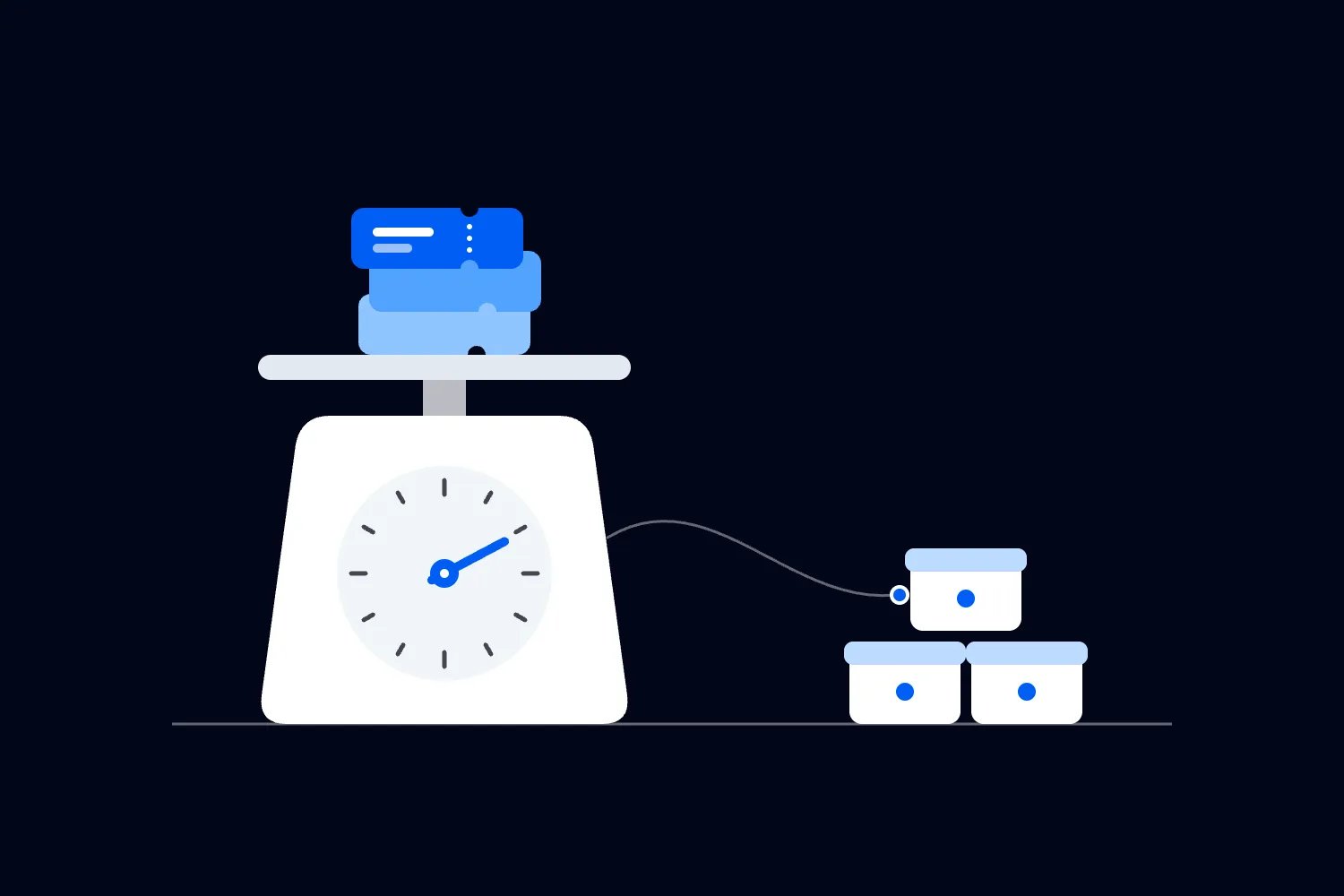
Start with the portion each guest will actually receive, then work back to the purchasing weight. Cheese bought by weight can include rind or trimming that you won't serve. Ask the supplier what is edible, what should be removed for this preparation, and what usable yield to expect. Check the answer by cutting and weighing a trial portion.
In our fictional four cheese tasting, assume each paying guest receives 20 grams of each cheese. That's 80 grams of cheese per guest, alongside the stated accompaniments. This is an illustrative tasting allocation, not a recommended meal size. Have the host test whether that amount supports the planned comparisons and explain the food provision clearly before purchase.
At 30 paying guests, each cheese needs 600 grams of edible portions. Four cheeses therefore need 2.4 kilograms of edible cheese altogether. Suppose you allow another 60 grams of each cheese for the host's demonstration and planned service reserve. Your requirement becomes 660 grams per cheese, or 2.64 kilograms across the selection.
Now apply the supplier's expected yield to each cheese separately. If one cheese yields 88 percent usable portions, 660 divided by 0.88 gives a purchase requirement of 750 grams for that cheese. The 88 percent is a fictional assumption for this calculation. A different cheese, cut or rind decision needs its own calculation, and minimum order sizes may require rounding up.
Don't add a vague extra allowance after already including a reserve. Name what each allowance covers so you don't pay for the same uncertainty twice. If a minimum purchase leaves extra stock, agree who owns it, where it stays and whether it can actually be sold or used afterwards under the applicable food safety arrangements.
Weigh sample portions with the person who will prepare them. A generous hand cut can change the total quickly, especially when several staff members work differently. Consistency also matters to guests. Someone who paid the same price as the person opposite shouldn't receive a noticeably smaller tasting because their plate was prepared at the end.
Include complimentary guests explicitly. A supplier's guest, photographer or invited buyer still consumes a portion. Keep those meals separate from paid attendance when you work out revenue. In the example above, the reserve is not a hidden promise of extra tickets. If you add guests, revise the portion requirement and the budget before confirming them.
A trial board also tells you about labour. Time the full preparation of a batch, including weighing, cleaning and labelling. Don't time one easy cut and multiply it by the guest count. A crumbly cheese, an awkward rind or a soft portion that needs careful handling may make the final board slower than the first. Ask whether the supplier can deliver portions prepared under an agreed process, then compare that quote with the real cost of preparing them yourself.
Record the result by cheese, rather than only weighing the whole finished board. Otherwise an underweight portion of one cheese can hide behind an oversized portion of another. If the host needs guests to compare the first sample with a later one, allow for that in the portion and service plan. You can't ask people to revisit a sample they've already finished because nobody told them to keep some.
Confirm supply and substitutions before selling
Send the supplier a written order with the exact products, expected quantities, preparation requirements, delivery arrangements and final headcount deadline. Ask what information will accompany the delivery, including ingredients, use by dates, storage instructions and identification that lets you trace the stock back to the supplier. Your team needs this information even when the supplier also provides the host.
Agree what happens if a cheese isn't available or isn't in suitable condition. A replacement should still serve the teaching purpose, fit the budget and pass the food safety and ingredient review. Similar price or appearance doesn't make two cheeses interchangeable. The replacement might change milk type, accompaniments, handling instructions or the comparison the host planned to explain.
Keep any substitution promise on the event page honest. If the producer is the main reason to attend, replacing that producer can change the experience materially. Decide how you'll contact buyers and handle the change. A general sentence about seasonal availability doesn't remove the need to deal fairly with someone who bought a specific advertised experience.
Make the headcount deadline match the supplier's commitment. Selling tickets after the final order only works if you can still provide a full approved portion and the venue can serve another guest. Otherwise close sales. You haven't gained useful revenue if a late booking forces an emergency retail purchase and an unreviewed change to the menu.
Treat food safety as part of the event plan
Confirm who is legally responsible for the food operation and which local requirements apply before signing the venue. Explain where cheese will be stored, cut, plated and served, including any work done away from the venue. Hiring a room or buying from a registered supplier doesn't automatically settle the responsibilities of your own business.
For a UK operation, the FSA's food business registration service says new food businesses must register with their local authority and should do so at least 28 days before trading or starting food operations. Ask the authority how registration applies to your actual arrangement. An event date needs to allow for the requirements, rather than assuming a small tasting is exempt.
Our food safety checklist for event organizers covers the wider supplier and site arrangements. For cheese tasting, pay particular attention to ready to eat handling, chilled storage, clean preparation space and the period between plating and eating. Name the person who checks the food and has authority to stop service when something fails.
Use the applicable business guidance for your location. Current UK government chilling guidance says chilled food must be kept at 8 degrees Celsius or below in England, Wales and Northern Ireland, with that limit recommended in Scotland. It advises setting fridges at 5 degrees Celsius or below. Your food lead should translate the applicable requirements and product instructions into the working plan.
Don't copy a blanket instruction to leave every cheese at room temperature for an hour. Agree any preparation for serving with the responsible food business, account for time outside temperature control, and follow the product's requirements. A host's flavour preference doesn't replace a safety decision. Several delays during delivery, preparation and service can affect the same food.
Inspect the venue's usable chilled space. An empty fridge during a viewing can look sufficient until drinks, catering supplies and your plated portions all arrive. Check where the cheese will go, how staff will measure and record temperatures, and what happens if equipment fails. A cooler brought by a supplier still needs an agreed method that suits its contents and use.
Keep labels and delivery records available. Check relevant recall notices before service and have a route for identifying affected products. If a supplier raises a concern, stop using the stock while the responsible person assesses it. Don't let a full room or an expensive order turn an unresolved safety question into a judgment about whether the cheese smells fine.
Plan the preparation space as carefully as the guest tables. Keep the stock and utensils organised, protect ready to eat portions from contamination, and agree cleaning between tasks. The room must support the food business's handwashing and cleaning arrangements. A decorative side table near the audience isn't automatically a suitable place to cut food, particularly if staff also leave bags, phones or used glasses there.
One person should receive deliveries against the agreed order. Give them time to check the products, condition, labels and any required temperatures before accepting them into storage. If the driver is late, tell the host and food lead what that changes. Rushing straight into plating can hide a wrong product until a guest asks a question you can no longer answer confidently.
Resolve dietary requirements before guests pay
Milk is central to this event, so be clear about what you can provide. Invite people to discuss requirements before booking and give them an actual response. A checkbox followed by silence doesn't tell a buyer whether they can take part. If you can't provide an appropriate experience, say so while they can still make another plan.
In England, Wales and Northern Ireland, the FSA's allergen information guidance explains the requirements for declaring relevant allergens, including loose food. Ask the food lead to review every cheese and accompaniment against current ingredient information. Bread, crackers, nuts, preserves and optional drinks can introduce considerations beyond the cheese itself.
Don't assume goat's or sheep's cheese provides an answer to a milk allergy. The same FSA guidance explains the similarity of mammalian milk proteins. Keep a request about milk allergy distinct from lactose intolerance or a vegetarian preference, and refer the actual requirement to the responsible food business. A label such as vegan doesn't establish that preparation avoids allergen cross contact.
Keep written ingredient and allergen information available alongside a conversation with trained staff. Make sure guests know how to ask, and tell staff to check the current record instead of improvising an answer. Review the information whenever a product changes, including a different brand of cracker or preserve. A familiar cheese name is not an ingredient list. At the briefing, ask someone to demonstrate how they would handle a question so you can fix any uncertainty before the room fills with paying guests.
Confirm the practical service arrangement for anything agreed. Who prepares it, which utensils they use, where they hold it, and how it reaches the correct guest all matter. If a substitute arrives, review that agreement again. The person taking tickets should know whom to call, and the service team should use the current confirmed information.
Some cheeses present particular concerns for people at greater risk of severe foodborne illness. The FDA's queso fresco guidance advises vulnerable groups to avoid queso fresco type cheeses, including those made with pasteurized milk. It explains that contamination can occur after pasteurization. Don't advertise pasteurized cheese as a universal guarantee of suitability, or ask an attendee to rely on your personal medical opinion.
Use our guide to dietary restrictions and food allergies at events for the collection and confirmation process. Keep individual information private and share it only with the people who need it to deliver the agreed service. At the event, guests should have a discreet way to ask questions and reach the food lead.
Price the full session, including your time
Work out fixed event costs and the cost of serving another guest separately. Fixed costs might include the room, host, preparation labour, equipment, cleaning, insurance allocation and promotion. Per guest costs include the food, accompaniments and any other costs that increase with attendance. Put ordering minimums and reserved portions where they actually belong in your calculation.
Here's a fictional budget in US dollars to show the method. Assume fixed costs of $720, a ticket that leaves you $50 after applicable taxes and selling costs, and $14 of variable cost for each paying guest. The $14 includes that guest's planned cheese allocation and accompaniments. Any demonstration stock and service reserve are included in the $720 fixed total.
Each paid booking contributes $36 towards those fixed costs. Divide $720 by $36 and you need 20 paid guests to cover this listed budget. With 24 paying guests, retained ticket revenue is $1,200, variable costs are $336, and $144 remains after the fixed costs. With 30 paying guests, the equivalent result is $360.
| Label | Result (USD) |
|---|---|
| 16 | -144 |
| 20 | 0 |
| 24 | 144 |
| 30 | 360 |
Fictional worked example from this section: $50 retained per ticket, $14 variable cost per guest and $720 fixed costs. Results assume those costs stay as stated, including at the larger attendance.
Those figures assume every listed cost behaves as stated. They aren't typical cheese tasting margins or a promise that $50 is the right ticket price. If extra staffing becomes necessary above a certain attendance, add that cost before using the larger result. Likewise, include your own paid preparation time instead of counting unpaid work as profit.
Check the low sales outcome while you still have choices. Agree the last date you can cancel, reduce the order or change the room without breaking supplier commitments or buyer terms. Set a paid booking threshold for that date. Don't wait until the day before the tasting to discover that the room fee is due and all the cheese has been cut.
Optional retail sales can improve the commercial result, but settle the arrangement first. Who takes payment, owns the stock, handles tax and receives the proceeds? Budget conservatively around confirmed income. Guests buying a wedge afterwards is a welcome possibility, not a reason to sell the event below the price it needs.
Also check when the money leaves your account. A session can cover its costs on paper while you still need cash for a supplier deposit before ticket proceeds become available. Put payment dates beside the venue, supplier and host commitments. Confirm the terms of your payment provider rather than assuming ticket money arrives when the buyer pays. Keep enough available to handle the cancellation arrangements you've promised.
If the budget only works at full capacity, revisit it before launching. You might choose a cheaper room, reduce a genuinely unnecessary accompaniment, or raise the price and explain the stronger offer. Don't trim the portions quietly after sales open. The right cost reduction changes a decision you still control without leaving buyers with less than they were told to expect.
Sell the experience you can actually deliver
Your event page should help someone imagine participating. Describe the comparisons, introduce the host and explain the level. Say whether guests sit together, how much food they receive, whether drinks are included, and what time the guided tasting starts. Beginners shouldn't need to interpret a list of unfamiliar producer names to understand why the evening is worth booking.
Make practical information easy to find before checkout. Include access details, the dietary enquiry route, ticket transfer and cancellation terms, and any age restrictions. If alcohol is involved, confirm the applicable permissions and service arrangements. In England and Wales, the government's Temporary Events Notice guidance explains one possible route for temporary licensable activities. Check your own venue and event rather than assuming included wine is outside licensing rules.
Keep the ticket structure simple enough to administer. Separate sessions need separate capacity controls and a realistic reset period. A pair ticket still represents two people who need portions and places. Optional extras should describe what the buyer receives and stay within what your supplier can deliver. Avoid inventing several price tiers for the same small room without a useful difference.
You can use Loopyah's ticketing tools to sell the event through an event page and manage ticket types. Set the available tickets around your confirmed serving capacity and explain the offer before people buy. The commercial work is deciding that capacity and promise. The ticket page should make those decisions clear to buyers.
Promote the teaching through a small example. Ask the host to explain one difference guests will explore, in language a newcomer understands. Share that with the audiences already interested in the supplier, venue or subject, under an agreed arrangement. Keep the specific producer and menu claims consistent with confirmed stock, and track which promotion actually brings paid bookings.
Rehearse the service before opening the doors
Walk through one guest's experience with the people doing the work. Someone arrives early, asks a dietary question, takes a seat and waits for the first sample. Where does each interaction happen? Your host shouldn't have to abandon the room to find a booking while prepared portions wait. Assign arrival checks and food questions to the appropriate people.
For our fictional session, doors open at 6:30 pm, the host begins at 7 pm and teaching ends at 8:30 pm. That gives you 90 minutes for the welcome, four guided rounds, a short pause and questions. Rehearse the actual explanations and service within that period. The setup and food preparation timetable must be agreed separately with the food lead.
Check the room from the least convenient seat. Can that guest hear the host and see any demonstration? Is there enough table space to keep the tasting order clear? Can staff deliver and clear without squeezing past chairs or obstructing accessible routes? Lower background music when teaching starts. An interesting host can't rescue a room where people miss half the explanation.
Brief the team on substitutions, confirmed requirements, the location of product information and who can stop service. Explain how to summon medical help and keep responder access clear. Keep a simple record of incidents and decisions. If something goes wrong, the next person on duty needs facts rather than several conflicting accounts of what someone said.
If you're running another session, test the reset as well. Someone needs to clear used tableware, clean the room, replace supplies and confirm the next service is ready while guests arrive. Sell the later session only when that work fits the gap. A queue outside doesn't make unfinished cleaning or an unresolved food check disappear.
Finish with a closeout plan for food, equipment and the room. The food lead decides what can be retained under the agreed safety procedures and what must be discarded. Don't promise take home leftovers just to avoid waste. Record actual portions, unused stock and paid attendance so the next event's order improves on this one.
Afterwards, ask guests what they learned, which comparison helped and whether the food matched the description. Review that alongside the budget and the team's service notes. Before putting the next tasting on sale, fix the specific problem you found, whether that's an oversized order, a rushed final round or a ticket page that left people expecting dinner.

Author: By the Loopyah Content Team
The Loopyah Content Team shares expert insights, practical guides, and industry updates to help event organizers create unforgettable experiences and stay ahead in the event planning world.