· 27 min read
What music rights do you need for event promotional videos?
You've got a great clip from the last show. The room is full, the crowd knows the chorus, and the edit makes the next date look like an easy decision. Then you try to turn it into an ad. Someone asks who cleared the music, and the answers start getting vague. The artist approved the footage. The venue pays for music. The song was available in the app. Which of those actually covers this video?
For event promotional videos, establish permission for the song and the particular recording, then check that the permission covers how you'll publish and advertise the finished edit. A track available for a personal post, a live performance or one platform may have a much narrower licence than your campaign needs. Get the intended uses agreed before the editor builds the whole video around it.
The practical choice is usually between music licensed for your whole distribution plan and separate versions using each platform's commercial music tools. Both can work. The expensive part is discovering the restrictions after you've paid for an edit you can't reuse and promised the file to sponsors.
This guide explains the rights you need to investigate, how to brief an editor, what to ask a licensing contact and how to keep a record people can actually use. The legal examples identify their country or source. Your agreement and the laws applying to your campaign determine the final permissions. The worked event, prices and deadlines below are fictional planning examples, all money in USD.
Separate the song from the recording you want to use
Start with two questions. Who controls the underlying music and lyrics? Who controls the recorded performance you're putting in the video? The answer might be the same independent musician, or several different parties. Until you know, an enthusiastic yes from one person can leave part of the job unfinished.
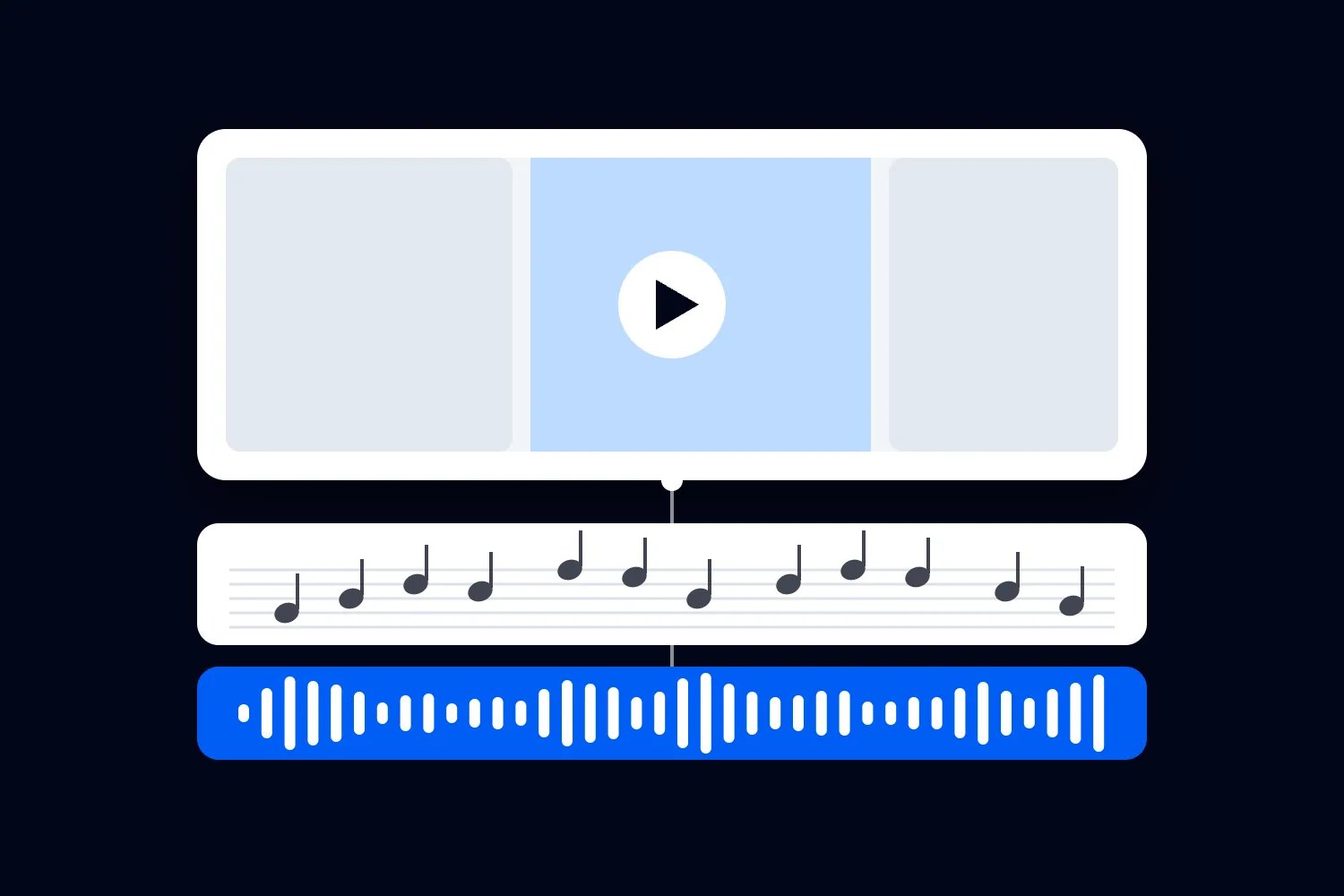
The U.S. Copyright Office distinguishes a musical composition from a sound recording. The composition is the music and any accompanying words. The recording is a particular captured performance. Copyright in one doesn't replace copyright in the other. For your team, this means identifying both the song and the exact audio file, rather than writing only the artist's name in the brief.
Permission to combine a composition with moving images is commonly called synchronisation, or sync permission. Permission to use an existing recording in that video is often called master use permission. These terms help you describe the request. They don't mean every campaign requires two separate invoices or that buying something called a music licence resolves every other right.
Imagine a singer has written an original song with another writer and released it through a label. The singer may approve the way they look in your trailer while referring the composition to a publisher and the recording to the label. Your task is to find the parties authorised to grant your proposed use, including any remaining shares they don't represent.
Ask the first contact what they control. A useful answer identifies the recording, the composition interests they represent and any other approval you must obtain. A reply saying "We're happy for you to promote the show" is a starting point for clarification. It doesn't describe which song, which recording, how long the permission lasts or whether paid advertising is included.
Keep performer consent and music permission connected without treating them as interchangeable. Our artist performance contract guide covers the wider booking agreement. Add a specific promotional recording and music discussion to that work, especially when several musicians, writers or representatives are involved. The editor needs usable evidence for this video, not a general statement that the artist has a contract.
Describe where the video will go before choosing the track
Music licensing for event promotional videos gets much easier when you can describe the campaign. "Social media" is too loose. Your own Instagram post, a paid TikTok ad, a file on your website and a sponsor's advertisement are different proposed uses. Put them in the brief before you ask anyone to quote or approve them.
Write a short distribution plan in ordinary language. Name the event and business, the accounts publishing the video, the platforms, the countries you intend to target and the period it will remain available. Say whether you're paying to distribute it. Include the versions you expect, such as a main trailer, shorter edits, different languages and a version with the next date added later.
Distinguish the advertising period from public availability. A campaign may run for a month while the original post stays on your profile for years. If the licence ends when the ads stop, you need to know what happens to that post. Ask whether leaving it publicly accessible is permitted, whether an archive exception exists and what must be removed when the agreed term ends.
Territory needs similar care. Buying ads for one city doesn't necessarily mean the video is only available in that city. Explain the difference between your targeting and the wider availability of your account or website, and ask the licensor what permission covers it. Don't invent a worldwide grant because a file can be opened abroad, or assume local targeting answers the question.
The GEMA guidance on promotional films gives a useful German example. It directs users to rights holders for permission to use music in promotional films for television, cinema or the internet. A collecting society's involvement in other music uses doesn't mean it can approve your particular advertisement. Ask the organisation which rights it actually administers.
Include partner use now. A sponsor might only want to share your published post, or might expect a downloadable file to edit and advertise from its own account. Describe which one. If you haven't agreed that scope, tell the sponsor the video delivery is subject to clearance. Selling an unrestricted video benefit before checking the music can create a commitment your marketing budget can't support.
Our guide to artist approval rights for event ads helps organise who approves creative changes and when. Use that process alongside music clearance. An artist can dislike an otherwise licensed edit, and a beautifully approved edit can still contain music your campaign isn't authorised to use.
A free post can still be commercial promotion
You don't have to buy media for a video to promote your business. A trailer on your own account can be designed to sell tickets just as clearly as an ad. When you assess a music licence, describe what the post does. "Organic" means you aren't paying the platform to distribute that post. It doesn't mean the use is personal or that every available song is permitted.
Meta's Instagram music library guidance says its licensed music library is intended for personal, non-commercial use, with access restrictions for certain business accounts and posts. It points users towards Sound Collection, which can support commercial uses such as ads. Those are different sources of music, even when the editing experience makes them look similar.
Before selecting a track, check the current library, the particular use and the account publishing it. Being able to find a song in an audio picker doesn't answer every licensing question. Changing an account category so more songs appear also doesn't change the commercial purpose of your event trailer. Your permission needs to match the actual campaign.
If a post performs well and you want to boost it, pause for another check. Does the permission include paid advertising? Is the music eligible for the ad format and destination? Can the original version run, or do you need a separate edit? Answer that before the boost becomes the centre of your sales plan, rather than assuming organic performance makes paid use available.
Give creators the same instruction. A performer or content creator may normally use music on their personal account. When you're commissioning a ticket-selling video or obtaining permission to advertise their post, explain the commercial use at the start. Ask for a version whose soundtrack can be used in the campaign you agreed, with the relevant evidence supplied at handover.
There is also a creative reason to make this decision early. If the joke, reveal or crowd reaction depends on one recognisable chorus, replacing it can mean rebuilding the whole video. An edit based on the event's actual experience, with music supporting the pace, usually gives you more options. Choose deliberately whether this particular song is essential enough to justify the clearance work.
Choose between platform music and a reusable soundtrack
Platform music tools can be a sensible route when you're making content for that platform. A separately licensed soundtrack can be more practical when the same campaign needs several destinations. Compare the scope and the work involved. Neither route becomes the cheaper choice simply because the download costs nothing or the editor can export it quickly.
TikTok's October 2026 guidance for TikTok One creator collaborations recommends Commercial Sounds for commercial collaborations. It says those sounds are intended for TikTok and warns against downloading them for reposting elsewhere. Availability and usage rights can vary by track, region, account or campaign. Check the actual sound for the planned collaboration.
For a campaign using that route, retain a version without the platform music. Add the permitted audio separately in each destination's supported workflow. Keep the voice, event sound and added music separate in the editing project where possible. You can then replace the soundtrack without rebuilding the captions, changing the message or losing a clean interview recording.
YouTube's Audio Library guidance explains its track-specific attribution requirements and warns that YouTube can't advise on off-platform music issues. Don't turn a successful YouTube upload into evidence for every other destination. Read the actual licence attached to the track and establish whether your intended advertising and reuse are covered.
For a reusable soundtrack, ask the supplier to identify the licence covering the composition and recording together, if that is what it offers. Check the named customer, platforms, commercial uses, paid advertising, term, territory and permitted edits. If you're buying through an editor's subscription, ask whether client work is covered and what evidence your business receives for the finished production.
Ask what happens when the subscription ends. Check whether permission continues for the production you've already made, what registration the supplier requires and whether a later edit needs a new licence. Updating an event date on last year's trailer may count differently from leaving the original approved video unchanged. Get the answer for your agreement before relying on future reuse.
This is where planning how to repurpose event recordings should include rights as well as editing. Reusing the picture is only part of the job. A short trailer, a sponsor clip and next year's announcement may share footage while needing different music permissions or different soundtracks.
Check live performance audio before calling it original sound
An editor may tell you the video uses only sound recorded at your own event. That's useful production information, but it doesn't establish ownership of everything audible. The camera might have recorded a live cover, a DJ playing commercial recordings or a venue playlist under an interview. Listen to the material before deciding what can go into the promotion.
In its Australian guidance, APRA AMCOS explains synchronisation as including music recorded with video and music added afterwards. Recording a performance yourself doesn't remove the underlying song question. It also notes that distribution or screening can require additional licensing. Ask the relevant local organisation about those uses alongside your sync and recording enquiries.
For a live cover, you may avoid using the familiar released recording because your musicians performed a new version. You still need to investigate the composition, permissions connected with recording that performance and the intended promotional distribution. If a backing track is audible, identify that recording too. The phrase "our footage" describes who filmed it, not every right in the soundtrack.
If the artist supplies a recording of their own song, ask whether they control both sides and whether co-writers, publishers, labels or samples are involved. Keep the question specific and respectful. You aren't asking them to defend their career arrangements. You're asking who can approve a defined piece of promotion, so your event and their team don't have conflicting expectations later.
A separate issue is the captured performance and the people in the picture. Confirm the filming and promotional arrangements with the performer and check the relevant permissions for other contributors. Music clearance doesn't automatically grant unrestricted use of someone's image, their performance or your videographer's work. Allocate those checks before the final review, rather than discovering them as unrelated surprises.
For interviews, choose a recording position away from the house speakers if you can. Record clean speech and a separate atmosphere track. The editor can retain the interview while leaving uncertain background music out. If music still leaks into the speech, assess the actual result. Turning it down or speaking over it isn't, by itself, evidence that the use is cleared.
Our live stream music licensing guide covers the wider transmission and replay questions. This promotional edit needs its own assessment even if the original show was cleared to stream. A licence describing access for ticket buyers may say nothing about using a chorus to advertise another date or a sponsor's product.
Send a clearance request that describes the finished campaign
Your first enquiry should make it easy for the recipient to understand the use and identify anything they don't control. Avoid sending only a file with "Can we use this?" Explain who is asking, which music is involved and what the campaign will do. Ask for missing information to be identified before anyone treats the request as ready for approval.
The Universal Music Group licensing FAQ distinguishes recording permission from publishing permission and asks applicants to describe their intended use. Its guidance also makes clear that recording a new version of a song still leaves a publishing question. Use that distinction when contacting any representative, while checking their own terms rather than treating one company's process as an industry rule.
Here is a fictional request you can adapt. "We're producing a trailer for Harbour Sessions, a paid concert organised by Harbour Events. We would like to use the identified recording of Track A, from the first chorus starting at the supplied timecode, underneath performance footage and event information. Please confirm which recording and composition rights you represent and identify any remaining rights holders we need to approach."
Continue with the distribution. "The proposed versions are a thirty-second trailer and fifteen-second edits for our named Instagram, Facebook, TikTok and YouTube accounts, including paid ads, plus the video on our event website. Our intended campaign runs from 1 March to 30 April 2027. We need to agree territory, permitted public availability after that date and whether replacing the event date creates a new production."
Then disclose the partner use. "Our named sponsor would like to publish the approved trailer on its own accounts. It has not been promised paid usage, editing rights or delivery of the raw music. Please quote that proposed reposting separately if necessary, identify any approval conditions, and confirm which other permissions or payments remain our responsibility. We won't publish while approval is outstanding."
Those details are an example brief, not a ready-made licence. Replace them with the actual recording, accounts, dates, countries, edits and commercial relationships. Ask when the recipient expects to respond and when the agreement would become effective. If payment, signatures or approval of the final cut are conditions, complete them before release. Keep the request pending until you have the required answer.
Agree what the editor and the music supplier each deliver
The editor needs to know whether they are proposing music for you to clear or supplying a licence that covers the finished campaign. Agree that responsibility before work starts. Otherwise you can receive a polished video and discover that each party thought the other was arranging permission. The cost is then another edit, another approval round and possibly a delayed announcement.
Ask for the track title, exact version, source, licence document and evidence connecting that licence to your business or production. An invoice saying "video editing" doesn't describe the music grant. A screenshot of a download button doesn't show that advertising is included. Give the editor a simple acceptance condition: every delivered soundtrack must have evidence for its named use, or remain marked as pending.
For commissioned music, state the intended ownership or licence arrangement in the agreement. Paying a composer isn't a substitute for defining what you receive. Identify collaborators, sampled material, performers and any pre-existing elements. Agree permitted edits, future editions and whether the composer can license the same music to someone else. You may only need a broad usable licence rather than exclusive ownership.
The U.S. Copyright Office's work-made-for-hire guidance describes specific conditions for employee and certain commissioned works. Don't assume the phrase applies to every freelancer simply because you paid them. If ownership matters to the campaign, have the agreement express a valid arrangement for the relevant country and contributions instead of relying on an invoice label.
Request sensible production files too. A final mixed video is ready to publish only in the uses it covers. Separate music, speech and other sound files, plus an editable project where agreed, make later changes easier. Those deliverables are separate from permission to distribute a raw music track. Ask what the editor can supply and what you are allowed to pass to another supplier.
Keep one person responsible for release. The editor can confirm the exported file, the licensing contact can confirm the grant, and the artist can approve their presentation. Your campaign owner brings those answers together and decides whether this version can be sent to this destination. No one should have to infer approval from a busy chat containing several different files.
Read royalty-free and Creative Commons terms properly
"Royalty-free" tells you to inspect a licensing model. It doesn't promise every possible use, unlimited distribution or permission to hand the track to partners. Read what the particular agreement grants and excludes. Ask about paid media, audience or spend limits where relevant, client use and later edits. Keep the version of the terms that applies to the purchase or registration.
Creative Commons describes several different licence conditions. A NonCommercial condition can conflict with a ticket-selling promotion, and a NoDerivatives condition restricts sharing adaptations. Attribution is also a condition to fulfil, not a substitute for the other permissions. Identify the exact licence and version before deciding a download is suitable for your campaign.
There is a detail worth checking even if you barely edit the audio. The Creative Commons FAQ treats syncing music with moving images as an adaptation under its licences. Leaving the song untouched doesn't resolve a NoDerivatives restriction. If the licence doesn't permit your intended use, obtain separate permission or choose other music rather than adding a credit and hoping that settles it.
Also establish who offered the file. A person uploading a song with a permissive label may not control the composition or recording. Save the source and look for evidence of authority. Where ownership or licence compatibility remains unclear, another track with a verifiable permission route is usually a better production decision than building the edit around an unresolved file.
Public domain claims need checking for the countries and material involved. An older composition and a recent recording of it can have different status, and an arrangement can add another question. Describe the exact work, arrangement and recording to someone able to confirm the position. A search result calling a track "copyright free" isn't a sufficient production record.
You can also choose a video without added music. Clear speech, event information and appropriately recorded atmosphere may do the job. Check that the atmosphere itself doesn't contain uncertain music and that the other content is cleared. The creative question is whether a soundtrack improves the buyer's understanding enough to justify the cost and restrictions of the options available.
Work through the cost before buying broader rights
Let's use a fictional concert campaign to make the decision concrete. Harbour Sessions needs one main trailer and two short edits. It wants to publish on several platforms, run paid social ads and place a video on its website. One sponsor wants an approved repost. The team is choosing between a favourite recording and a production track that can cover the specified plan.
Assume the favourite recording's proposed grants cost $600 for the composition and $600 for the recording, with no unresolved ownership shares. Editing costs $450 and clearance administration takes three hours valued at $30 an hour, or $90. If those agreements cover every stated use and all their conditions are completed, the total production and clearance cost is $1,740.
For the alternative, assume a fictional supplier offers an appropriate composition-and-recording licence for $180. Editing still costs $450. Checking and documenting that licence takes one hour valued at $30. That option totals $660. These are invented quotes for comparison, not typical rates, published prices or a promise that any real supplier offers this scope.
The favourite recording therefore costs $1,080 more. Suppose each genuinely additional paid admission leaves $45 after ticket-related taxes, ticketing and payment fees. Each additional attendee also costs $10 to serve. That leaves $35 per extra admission to contribute towards this decision. The favourite recording would need to produce at least thirty-one additional admissions beyond the alternative to cover its extra cost.
Thirty additional admissions contribute $1,050, still $30 short of the $1,080 difference. Thirty-one contribute $1,085, leaving $5. Ask what evidence makes that improvement plausible. A team preference for the song is understandable, but it isn't evidence that buyers will purchase thirty-one more admissions because they hear it.
Those calculations only compare the two production choices. Assume the supplier prices include any applicable purchase taxes. The comparison excludes ad spend, assumes no refunds or discounts and doesn't establish the event's overall profit. Ordinary venue and programme costs are already committed and excluded, as are wider overhead, financing and income tax. The event must have suitable unsold inventory and real demand; extra admissions aren't available merely because the arithmetic requires them.
Separate cash and time too. The favourite option needs $1,650 in external payments plus $90 of valued staff time. The alternative needs $630 in external payments plus $30 of time. A founder doing the administration without drawing another wage can still spend hours that would otherwise go into sales or delivery. Record both views so the payment schedule and the workload stay visible.
If the favourite track is central to an artist announcement, the wider agreement may justify it. If it is simply background under venue footage, the broader production track may be the better choice. Decide with the actual creative purpose, available rights and budget together. Buying the most extensive licence isn't automatically wise; buying a cheap licence that excludes your campaign isn't useful either.
Decide what happens when only part of the plan is cleared
Imagine the editor has the trailer ready for a Monday announcement. The organiser's posts and ads are cleared, but the sponsor's proposed use is still pending. You don't necessarily have to delay every version. Check that the completed grants genuinely cover the organiser's release, leave the sponsor's copy on hold and tell the sponsor exactly what remains unresolved. Partial approval needs a partial release decision.
Now change the problem. The recording owner has agreed, but the composition permission hasn't arrived. That doesn't give you a complete route for the trailer containing that song. Set a deadline for switching to the alternative soundtrack, leaving time for the editor to export it and the relevant people to review it. Waiting until the upload is scheduled removes most of that choice.
For this fictional campaign, suppose the team needs the final approved file by Friday afternoon to check links and schedule Monday's launch. It sets Wednesday noon as the music decision deadline, with Thursday reserved for the replacement edit and Friday for review. Those are internal planning choices, not standard clearance times. Ask the rights holders about their process before choosing dates you can realistically meet.
Tell the editor what can change in the fallback. If the replacement has a different pace, can they shorten a shot or move a title? Does the artist need to approve a new presentation? A fallback that still depends on unavailable approval isn't ready. Agree a simpler version, such as a cleared interview with event information, if that's the one the team can finish properly.
Avoid publishing the uncertain version "just for the weekend" while someone chases permission. That creates the very use you're still asking about. Release the version you can support, or move the announcement if the essential content can't be cleared. Keep the commercial decision with the person accountable for the campaign rather than making a freelance editor choose under pressure.
Keep a rights record for each published version
Create the record while the decision is fresh. Someone promoting next year's event should be able to establish what they can reuse without reopening months of correspondence. One folder full of contracts can store evidence, but the team also needs a short record connecting the evidence to the exact video, soundtrack and planned destinations.
For each version, keep these fields in a shared record accessible to the people who approve or publish it.
Event and campaign name, responsible business and named licensee.
Video version, duration, file name and the track's exact title and recording version.
Composition and recording owners or authorised licensing representatives, including unresolved interests.
Licence or permission documents, applicable terms, invoice and evidence that required payment and signatures are complete.
Permitted platforms, accounts, territories, paid and organic uses, partner uses and editing limits.
Start date, end date, public archive conditions, renewal process and the person responsible for removal.
Attribution wording, final-cut approval, reporting duties and any remaining conditions.
Status for each proposed use, release decision, reviewer and date checked.
Keep requested, quoted and approved visibly different. A quote tells you what might be available at a price. A completed licence establishes the agreed grant, subject to its conditions. Don't mark the whole track approved if one use remains pending. The website version might be ready while the sponsor's paid use is still excluded.
For Harbour Sessions, imagine the alternative track is cleared for the named organiser's trailer, short edits, advertising and website during the agreed campaign. The sponsor can repost the approved version under a specific permission, while making its own ads remains excluded. Record those as separate lines. The sponsor receives the approved file and its allowed-use instruction, rather than the entire editing folder.
Use file names that help colleagues tell versions apart. A name containing the event, edit length, destination and version number is more useful than "final final". Keep the licence reference in the accompanying record rather than pretending a file name grants rights. If an editor replaces the music, create a new version and check that its record matches the actual export.
Put the next check in your calendar when you approve release. If a term ends on 30 April, decide who checks public posts, scheduled content, website files and partner copies before that deadline. The instruction should follow the actual agreement. Some material may remain under an archive provision, some may need removing, and a future edit may need a new licence even while the old one stays available.
Retain an appropriate internal record even when a public version comes down. The evidence may still be needed to explain what ran, answer a claim or assess a renewal. Agree where the licence, correspondence and final file belong, who can access them and how long to retain them under the applicable requirements and your business's record policy. Public removal and internal retention are separate decisions.
Test the handover with the person who will publish
Before release, ask the publisher to open the actual exported video and its rights record. Can they identify the soundtrack? Can they find permission for the account, platform, dates and paid use they're about to select? Are any final approvals or payments outstanding? This is a practical rehearsal, not a request to make the publisher interpret an unfamiliar contract alone.
Check the video against the agreed creative too. A permitted music edit can still contain the wrong ticket date, an old venue or an implied performance that isn't in the programme. Make the event proposition clear with sound off as well as on. Captions, visible details and a usable destination help people understand what they're being asked to buy.
Send the finished promotion to a current ticket page. Loopyah's ticket-selling tools display ticket types with current prices and availability, and the confirmation email links buyers to their QR tickets. Keep the video's event details consistent with that page. A cleared soundtrack doesn't help a customer who follows the link and finds a different date or an unexplained ticket offer.
If you're using Loopyah's AI Ads Manager, you provide the creative alongside the connected ad accounts, budget and end date. Supply a version whose music permissions match the networks the campaign will use. Clearing the soundtrack remains part of preparing the creative; don't expect campaign automation to turn a licence for one platform into rights for every destination.
Give sponsors and creators a similarly concrete handover. Name the allowed accounts and uses, supply only the approved version and state whether further edits or advertising need another check. Ask who will remove or replace the video when required. A rights condition in your internal record won't help if the person actually publishing has never seen it.
Finally, test the replacement route. Keep a usable version without the disputed or limited track, with its other content already checked. If a grant falls through before launch, the team should know which version can replace it and who approves that change. The point is to keep the announcement accurate and publishable without a rushed decision about uncertain music.
Deal with claims and reuse without guessing
A platform accepting a video doesn't prove that you have every required permission. Equally, an automated claim doesn't by itself explain the entire legal position. If something happens, keep the notice, identify the video and music involved, and compare the claim with your actual documents. Ask the licensing contact to help resolve an apparent mismatch before making assertions in a dispute.
Don't rely on a supposed safe number of seconds. The U.S. Copyright Office's fair use FAQ says there is no fixed number of musical notes or percentage that you can always use, and that fair use depends on the circumstances. That US doctrine isn't a universal exemption for short event ads. If you intend to rely on an exception, get a specific assessment of the actual use.
If the permission is missing, stop expanding distribution while you resolve it. Review active ads and scheduled copies, tell the people responsible for partner posts, and choose between obtaining the needed grant and replacing the music. Keep the original evidence and correspondence. Removing a video may be a sensible operational action, but it doesn't automatically settle every issue arising from its earlier use.
When the next event comes around, open the rights record before copying the edit. Compare the new date, event, sponsor, accounts, countries, advertising plan and soundtrack with the permitted scope. A new logo or date can be a small production change with a different licensing consequence. Ask about that specific reuse rather than assuming the previous payment bought an unlimited series.
For your next trailer, start with the distribution brief and the music decision together. Send the editor the approved uses, choose a track with a permission route you can complete, and leave enough time to use an alternative. The file you release should have a clear answer to a simple question: who has authorised this music in this particular piece of event promotion?

Author: By the Loopyah Content Team
The Loopyah Content Team shares expert insights, practical guides, and industry updates to help event organizers create unforgettable experiences and stay ahead in the event planning world.