
Event Signage Ideas to Elevate Your Event & Brand Experience
Event signage does more than point people in the right direction—it shapes how attendees feel about your brand from the moment they arrive. Clear, consistent, and creative signage improves wayfinding and safety, reduces friction, and turns ordinary spaces into memorable brand experiences. When you treat signage as a core customer experience asset (not just décor), you see the payoff in satisfaction, loyalty, and revenue.
Research continues to show that strong CX and brand experiences move the needle. For example, independent benchmarks highlight how aligned brand and customer experience drive recognition and preference. Learn more about connecting brand and CX from Forrester.
Types of Event Signage
Design your event signage system with roles in mind. Start with “help me get there,” then “help me understand,” and finally “help me remember/share.”
Directional Signage
Wayfinding arrows and landmarks that carry attendees from parking and entry all the way to registration, stages, and key zones.
Entrance and exit identifiers that are highly visible and consistent across the venue.
Restroom, accessibility, medical, and facility signs placed at standard heights and with high contrast.
Informational Signage
Schedules, agendas, and session boards that keep attendees oriented to what’s on now and next.
Speaker, exhibitor, and sponsor directories with easy-to-scan layouts.
Maps and site layouts that follow standard map design principles and include “you are here” indicators.
Branding Signage
Logo walls, welcome arches, banners, and stage scrims that mirror your brand’s tone and palette.
Sponsor acknowledgments integrated into the attendee journey (e.g., “powered by” at charging lounges).
Theme-driven décor elements that also communicate essential info.
Interactive Signage
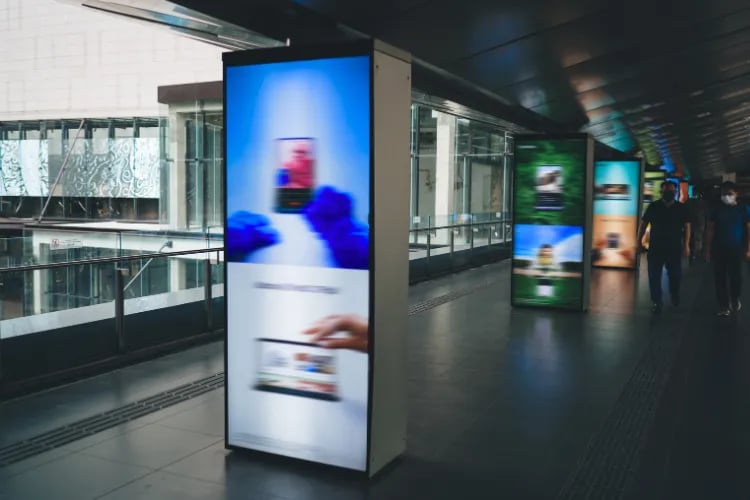
Digital displays and touchscreens for maps, agendas, and real-time updates that reduce reprint costs.
Social walls and UGC prompts that turn attendees into co-creators.
QR codes that link to session materials, menus, and surveys—placed at accessible heights and tested for scannability.
Creative Event Signage Ideas
Blend function with spectacle. The most effective event signage packages information as a visual experience—through materials, light, scale, and storytelling.
Unique Materials
Wood, brushed metal, acrylic, and fabric tension frames elevate perceived quality.
Reuse-friendly modular systems keep costs down over multiple shows and support sustainability goals.
Integrate natural elements—planters, moss walls, or florals—to soften spaces and create photo moments.
Illuminated Signs
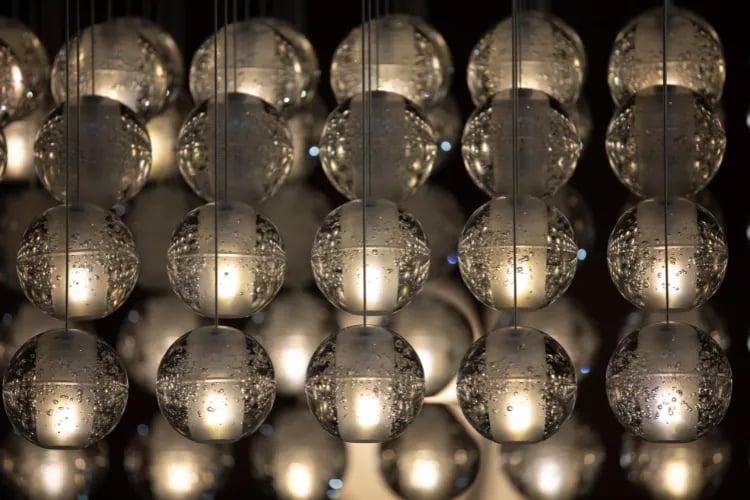
Use LED cubes, backlit lightboxes, and color‑wash panels to improve visibility in crowded environments. Neon or faux‑neon can add a playful, retro vibe to lounges and after-hours zones while still being legible.
Custom Shapes and Sizes
Die-cut logos, oversized brand marks, and towering wayfinding pylons attract attention and signal importance. Overscale elements also double as shareable backdrops for user-generated content.
Themed Signage
Let your theme drive the system. If your event centers on innovation, integrate kinetic lighting and sleek materials; for community or wellness themes, lean into warm textures, inclusive language, and calming palettes. Make sure every sign still performs its functional role.
“Make information the hero; spectacle is the frame.”
Incorporating Brand Elements
Consistency builds recognition. Align physical and digital touchpoints so attendees feel the same brand—on the website, in emails, and on every sign.
Consistent Branding
Use your core color palette, typography, icons, and tone across all signage.
Create a sign hierarchy (primary, secondary, tertiary) and document it in a one-page spec for vendors.
Brand Storytelling
Turn high-visibility surfaces into storytelling canvases: hero walls at entry, purpose statements along main corridors, and proof points near feature areas. This approach aligns with modern brand experience thinking that links brand and CX for stronger outcomes. See the perspective from Forrester for context on why the two should be connected.
Sponsor Integration
Give sponsors meaningful visibility without overpowering your identity. Use zones—like lounges, hydration stations, or learning theaters—“presented by” a sponsor, and stick to a consistent lockup system that places your logo first and sponsor second.
Practical Tips for Event Signage
Placement
Place directional signs at key decision points: entries, intersections, and transitions between floors or zones. Mount overhead or at eye level depending on context, and ensure there’s a clear line of sight from at least 20–30 feet in high-traffic areas.
Legibility
Use high-contrast, matte finishes and size type based on viewing distance. A helpful rule of thumb: approximately 1 inch of letter height for every 10 feet of viewing distance. Follow accessibility guidance for tactile signs and consistent placement.
For detailed specifications, consult the U.S. ADA Standards for Accessible Design (sections 216 and 703). Read the standard for mounting heights, character proportions, and contrast recommendations.
Durability
Choose substrates for the environment and lifespan: weatherproof coroplast or aluminum for outdoor, fabric frames for easy re-skinning, and modular hardware for repeated use. Document finish specs (e.g., anti-glare laminate) to keep execution consistent across vendors.
Accessibility
Plan for everyone, every time. Provide multilingual wayfinding where appropriate, include tactile/Braille where required, and position QR codes and interactive elements at accessible heights. Offer text alternatives near QR codes for those who can’t or prefer not to scan.
Case Studies: Successful Event Signage
Example 1: Music Festival—Creative Stage and Campus Signage
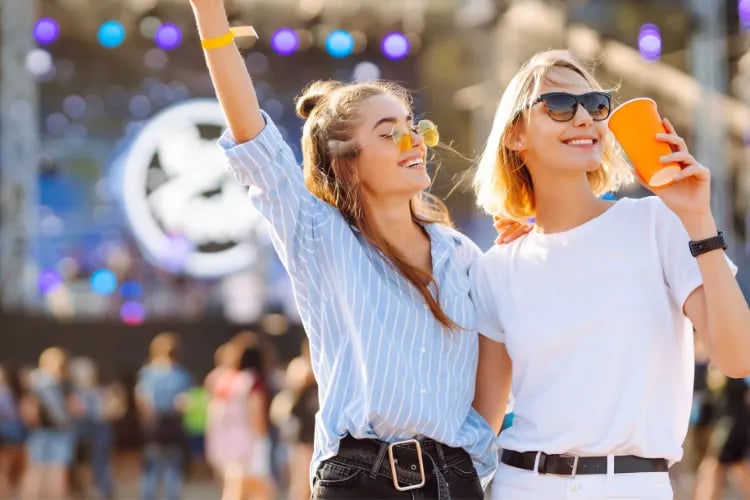
At leading music festivals, organizers pair iconic stage headers with campus-wide wayfinding and interactive layers. Oversized brand marks create shareable moments, LED environments boost visibility at night, and AR markers or QR codes unlock artist schedules and surprise sets. The result: faster navigation, stronger brand recall, and a flood of UGC.
Example 2: Corporate Conference—Informative, Branded, and Data-Rich
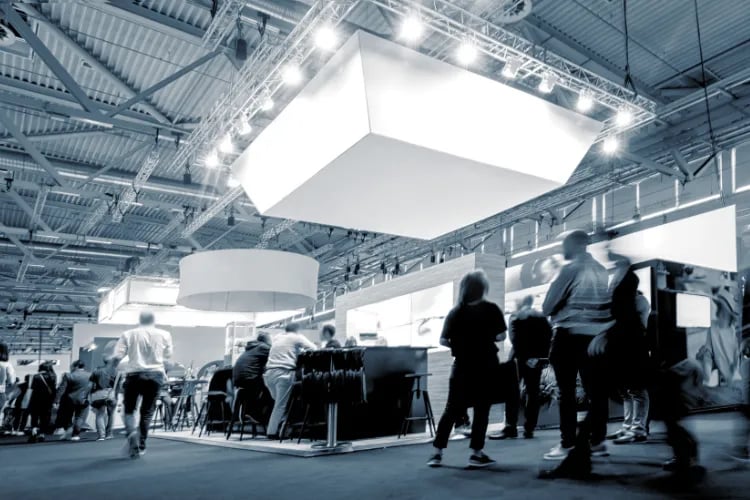
At large tech conferences, clean zoning and “scan for more” signage extend the experience beyond the booth. QR-linked exhibit placards deepen content without crowding the physical sign, and digital schedule boards keep agendas accurate in real time. Sponsors are acknowledged in context—like theaters “presented by” a partner—while the host brand remains the anchor.
Example 3: Charity Gala—Story-Driven Signage That Inspires Action
A nonprofit gala used a storytelling path from entry to ballroom: a hero wall sharing the mission, portrait panels featuring beneficiaries with short quotes, and a donor impact timeline near the silent auction. Each sign answered a question—why the cause matters and how to help—culminating in clear call-to-donate prompts with QR codes at every table. Donations increased year over year, and guests reported feeling more connected to the mission.
For more engagement ideas that pair perfectly with interactive signage, check out these activation concepts. See our engaging event activation ideas guide to spark your planning.
Trends in Event Signage
Digital and Real-Time
LED/video walls and dynamic wayfinding let you push schedule changes, rotate sponsors, and localize content per zone—without the waste of reprints. Pair them with mobile-first layers (QR, NFC) to personalize content by attendee interest.
Sustainable and Modular
Re-skinable frames, recycled substrates, and rental hardware reduce footprint and costs across your event portfolio. Track reuse rates and material choices as part of your sustainability reporting, and brief suppliers early so they can propose low‑impact options.
Experiential and Phygital
From AR scavenger hunts to real-time social walls, signage can be an interaction layer that bridges on-site and online communities. Tie prompts to program goals: discovery (“Find the hidden icon”), learning (“Scan to dive deeper”), or advocacy (“Post from the photo wall to support our cause”).
Need help promoting your experience once your signage is set? Explore Loopyah’s event promotion tools to build momentum pre-, during, and post-event.
Conclusion: Make a Lasting Impression
Memorable event signage sits at the intersection of wayfinding clarity, brand coherence, and participation. Start with accessibility and legibility standards, then dial up materials, light, and interactivity to express your brand. Measure what matters—navigation efficiency, dwell time, shares, and sponsor value—and refine your system each show.
Ready to make signage part of a frictionless plan? Download our comprehensive checklist to keep every detail on track.
Launch Your Next Event
Author: By the Loopyah Content Team
The Loopyah Content Team shares expert insights, practical guides, and industry updates to help event organizers create unforgettable experiences and stay ahead in the event planning world.