How to Build a Loyal Event Community — Not Just One-Timers
Selling out one event is nice. Having people rearrange their calendar every year because “your event is non‑negotiable” is a different game entirely.
A loyal event community doesn’t just buy tickets. They bring friends, create content, answer questions for new attendees, and defend your event when something goes wrong. They’re emotionally invested, not just financially invested.
That matters more than ever. Satisfaction alone isn’t saving loyalty anymore—global data shows trust, advocacy, and repeat intent are softening even when people say they’re “happy” with brands [Qualtrics XM Institute, 2025]. You need stronger glue: community, belonging, and shared identity.
In this guide, we’ll walk through how to build a loyal event community—step by step. Less theory, more tactics you can actually plug into your next event cycle.
Why a Loyal Event Community Matters
Let’s be blunt: if you’re rebuilding your audience from scratch every event, you’re burning time and budget.
More repeat attendance: in Loopyah’s 2025–2026 Event Attendee Study, 35.8% of ticket buyers attended 3–5 events in the last 12 months and 17.6% went to 6+ events. People are clearly willing to come back—if you give them a reason to make your event “their thing.”
Higher engagement and interaction: research from Freeman shows that immersive, hands‑on experiences and “peak moments” make attendees 85% more likely to return and more likely to engage deeply with your content [Freeman Trends Report, 2025].
Organic promotion: our study shows 56.4% of event goers discover events through word of mouth, and 65.0% through social posts or ads. Community members power both: they share, tag, and convince hesitant friends to hit “buy.”
Better feedback and faster improvement: a community doesn’t just complain; they co‑create. When they trust you, they’ll tell you what to fix and what to double down on.
95% of attendees say they trust brands more after participating in a live event—events are trust engines, not just ticket transactions. [Freeman/The Harris Poll, 2025]
At the same time, costs are rising. In our data, 37.2% of respondents say higher prices make them attend fewer events, and 21.2% choose cheaper ones. Loyalty is how you stay on their “must‑attend” list when they’re cutting back elsewhere.
Understanding Your Audience
You can’t build a loyal event community around a blurry idea of “our audience.” You need to know who they are, what they’re chasing, and what they hate wasting time on.
Loopyah’s attendee research shows what actually matters when people choose events:
67.0% say lineup, performers, or speakers are very important.
50.4% say ticket price is very important.
47.2% say location is very important.
32.6% say event reputation is very important—this is where community and word of mouth kick in.
Beyond that, people come for different reasons: to learn, to escape, to network, to feel part of a fandom, to close deals. Your community strategy should follow those goals, not your internal org chart.
How to actually get this data
Post‑event surveys and quick polls: keep them short and specific: “What was your main goal for attending?” “Did you achieve it?” “What would make this a 10/10 next time?” Use one question to tag people by primary motivation (learn / network / perform / have fun).
Feedback at key moments: don’t wait until the end. Run 1‑click polls in your app, or QR codes near exits: “Was this session worth your time?” “How was check‑in?”
Social media listening: watch what people post before, during, and after your event. What are they excited or annoyed about? Which formats get the most saves and shares?
Attendee interviews: talk to 10–20 people from different segments: superfans, first‑timers, people who stopped coming. Ask what role your event plays in their life or work. That’s where you’ll hear the raw truth.
When you collect data, keep it ethical and transparent. Recent research shows 64% of consumers want tailored experiences but are uneasy about brands using data without clear consent [Qualtrics, 2025]. Always explain what you’re collecting and how it benefits them.
If you’re just starting to formalize this, build a simple set of audience “jobs” or personas. Then design your program around helping them win. For more on shifting into this mindset, check out our guide on strategic event management. It’s basically the operating system behind a strong community.
Creating a Sense of Belonging
Belonging is the bridge between “I went to that event” and “I am part of that community.” Your job is to design everything—from visuals to run‑of‑show—to say: “People like you belong here.”
1. Consistent, recognizable branding
Community starts with familiarity. Your visuals, tone of voice, and promises should feel the same across:
Event site and ticketing pages
Emails and DMs
On‑site signage and stage design
Social content and community channels
You’re training people to recognize “their place” at a glance. Keep your promises consistent too: if you’re the “no‑BS, practical” event, don’t flood the stage with fluffy keynotes.
2. Design interactive experiences, not just content
Attendees don’t want to just sit in the dark and clap on cue. Freeman’s data shows interactivity and hands‑on formats are among the highest‑impact learning and engagement styles at in‑person events [PCMA / Freeman, 2024].
Translate that into experiences like:
Small‑group labs or roundtables instead of another panel.
Guided networking with prompts based on attendee goals.
Live co‑creation walls (challenges, ideas, wins) you photograph and send back post‑event.
Interactive demos instead of static booths.
These aren’t just “fun.” They’re the social glue that turns strangers into “people I see every year here.” For more inspiration on designing powerful small moments, dig into our guide on event micro‑moments and interactive events ideas.
3. Personalize communication like you actually know them
Community dies in generic email blasts. That attendee data you collected? Use it.
Segment by motivations and send relevant content (e.g., “networkers” get early invites to mentor meetups).
Reference their history: “You joined us last spring for X—here’s what’s new this year.”
Send content based on ticket behavior (e.g., upsell VIP only to high‑engagement regulars).
If you’re serious about this, plug in proper tooling. Start with a solid ticketing CRM and email stack—our deep dive on event email marketing strategy walks through the flows you should set up. Or explore how Loopyah’s own email tools for event attendees can automate some of this without losing the human tone.
4. Offer exclusive content and access
People don’t feel like a community member if they get the exact same thing as a random last‑minute buyer. Give your loyal crew a different layer of value:
Private Q&A livestreams or Ask‑Me‑Anything sessions with headliners.
Community‑only content drops (behind‑the‑scenes, unreleased sets, bonus workshops).
Early access to program announcements or limited‑capacity sessions.
Leveraging Social Media and Online Platforms
Social isn’t just promotion anymore. For a lot of your attendees, it’s the main place your community actually lives between events.
Loopyah’s attendee data backs this up:
65.0% discover events from social posts or ads.
52.8% say Facebook influences their decision to attend; 37.6% say Instagram, 30.6% say TikTok, and 39.2% say YouTube.
And it’s not just ads. New research shows social proof from real people—comments, reviews, and UGC—now beats influencer hype for trust in many purchase decisions [Sprout Social, 2025].
Pick a digital “home” for your community
You don’t need to be everywhere. You do need one or two consistent homes where members know they can show up and find their people. For example:
A Facebook Group for local recurring events.
A Discord server or Slack workspace for fandoms, gaming, tech, or niche professional communities.
A subreddit or private forum if your crowd hates mainstream social.
Instagram: Broadcasts, groups, Close Friends, and DMs are perfect for behind-the-scenes drops, early access links, and keeping your most loyal attendees warm.
Whatever you pick, set clear norms and moderation from day one. People won’t stick around in a group that’s just spammy promos or unmoderated drama.
Turn social into a two‑way community channel
Create recurring formats: weekly “Ask the Speaker,” “Fan Friday,” or “Show us your setup” posts build habits.
Use hashtags with an actual purpose: instead of just your event name, try prompts like #MyFirst[EventName] or #WhyIGoTo[EventName]. These pull out stories you can reshare.
Run contests that reward stories, not vanity: “Share your favorite memory from last year to win early entry” beats “Tag 5 friends for a chance at free tickets.”
Spotlight members more than your logo: feature attendees, speakers, volunteers, small vendors. Let them tell the story of the event.
We break down more ways to balance paid, organic, and community‑driven promotion in our playbook on event digital marketing strategies. Use it to align your social calendar with your community goals—not just ticket drops.
Rewarding Loyalty and Engagement
You can’t demand loyalty. You earn it—and then you reward it so people feel smart for sticking with you.
Good news: attendees are extremely responsive to smart incentives. In Loopyah’s study:
67.6% said early‑bird discounts would motivate them to buy earlier.
43.0% would buy now for an early‑bird bonus like merch or early entry.
36.4% would buy 2+ weeks earlier if tickets were fully refundable.
Build a simple, experiential loyalty program
Most loyalty programs fail because they’re too complex or too transactional. Deloitte’s research shows people value simplicity and financial rewards, but younger audiences also expect engaging, experience‑driven perks [Deloitte, 2024].
Keep tiers obvious: “Member, Insider, VIP” beats confusing point levels.
Reward behaviors that build community: referrals, volunteering, speaking, mentoring, UGC—not just ticket spend.
Tie perks to actual experiences: early access, reserved seating sections, backstage tours, community‑only meetups.
Use pricing and perks to lock in your biggest fans
A few levers to set your loyal community up for the win:
**Early‑bird access for members only.** Give your community a private on‑sale window with the best prices and seat options before the public rush.
**VIP experiences rather than endless discounts.** Over‑discounting can trash perceived value. Instead, bundle premium experiences—meet‑and‑greets, lounge access, exclusive merch.
**Transparent, stable pricing for members.** Research shows dynamic pricing makes many consumers feel taken advantage of [Gartner, 2024]. Protect your community from price volatility as much as you can.
If you want your most loyal people to actively promote you, formalize it with an event ambassador program. Give them clear perks, clear expectations, and content they can be proud to share.
Measuring and Analyzing Community Engagement
Community isn’t fluffy. You can and should measure whether it’s working—both financially and emotionally.
Key metrics to track
Repeat attendance rate: of everyone at this event, how many came last time? How many have attended 3+ times?
Average events per person per year: compare your attendee data against the market: in Loopyah’s study, 35.8% of respondents went to 3–5 events last year and 17.6% to 6+. Are your “regulars” trending above average?
Community growth and activity: track member counts in your core channels, but more importantly: monthly active members, posts per member, and peer‑to‑peer replies (not just brand posts).
UGC volume and quality: how many attendees create content about your event? Are comments positive, detailed, and recommending you—or just neutral photos?
Tools that make this easier
Google Analytics 4: track engaged sessions and engagement rate on your event and community pages to see if people stick around or bounce.
Social platform analytics: use native dashboards to track saves, shares, and comments—not just reach.
Event software and CRM: a good event CRM and ticketing platform will show you who attends what, how often, and how they buy (early‑bird vs last‑minute). If you want those insights built in, explore our event software features designed for community‑minded organizers.
Case Studies: Successful Event Communities
Let’s ground this with real events that have built serious community gravity—and what you can adopt from them in your events.
1. Creative Mornings: Turning a Simple Idea into the World’s Largest Creative Community
CreativeMornings didn’t start as a “global community strategy.” It started as free breakfast, one short talk, and an open door. Sixteen years later, it’s a worldwide ritual for creatives craving connection, purpose, and inspiration.
What they did right
Consistency that builds belonging: Same format, same vibe, same promise: one Friday morning a month, creatives gather. Simple beats flashy when your goal is habit-forming community.
A clear identity people proudly claim: Their manifesto (“Everyone is creative”) isn’t marketing fluff—it’s a shared belief system. Members don’t just attend events; they identify as CreativeMornings people.
Local chapters run by volunteers → global scale without dilution: Hosts are part cheerleader, part curator, part connector. They celebrate local talent while staying aligned to global themes, keeping the worldwide network cohesive but personal.
Frictionless accessibility: Free tickets, familiar format, welcoming environment. No gatekeeping. No intimidation. Just show up (if you’re fast—tickets go immediately). Scarcity without exclusion is a powerful community engine.
Year-round touchpoints beyond the monthly meetup: Virtual FieldTrips, newsletters, archives of talks, CreativeGuild job listings—plenty of ways to stay connected even when you’re not in the room.
What you can adopt
Design one repeatable ritual: A signature moment—morning coffee, a theme, a 20-minute talk—anchors community memory. Ritual builds return behavior.
Scale through empowered local champions: Give volunteers guardrails, brand assets, and trust. Let them shape the community through their city’s lens.
Keep the barrier to entry low, but the emotional reward high: You don’t need a huge production budget to create meaning. You need consistency, intention, and a philosophy that people want to gather around.
2. INBOUND by HubSpot: How to Turn a Conference Into a Career-Defining Pilgrimage
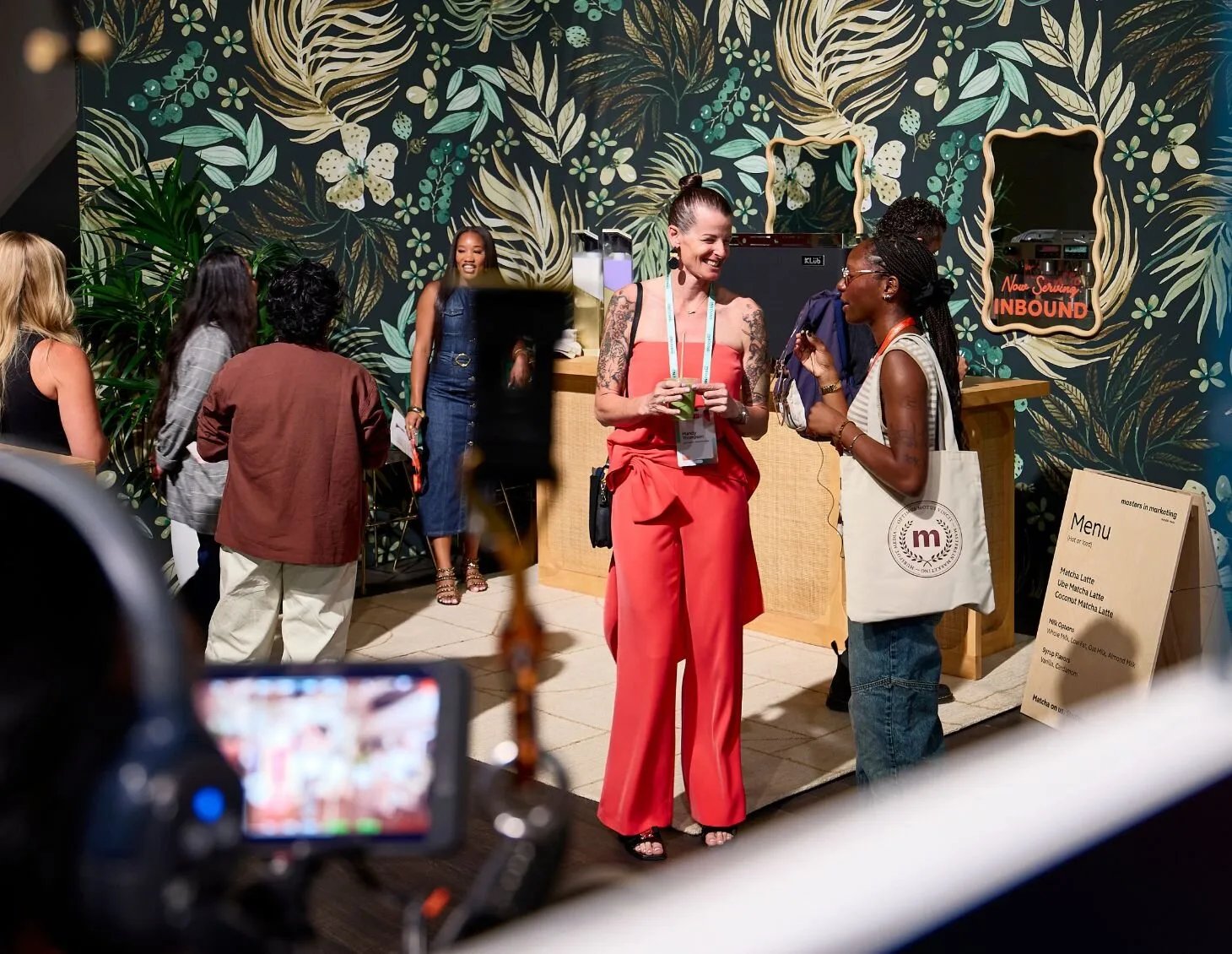
INBOUND isn’t “just another marketing conference.” It’s a three-day gravity field pulling in tens of thousands of growth-driven leaders who return year after year because the event gives them something most conferences don’t: clarity, connection, and a sense of momentum.
What they did right
A crystal-clear mission: better growth: INBOUND positions itself not as a content dump, but as the place where leaders sharpen their thinking and upgrade how they work. It’s a rallying point for people who want to build what’s next—an identity, not an agenda.
Stacked programming engineered for real-life impact: 350+ speakers, AI deep dives, tactical sessions, leadership frameworks, product-led growth insights—everything is built for professionals who need usable strategies, not vague inspiration. Attendees call out that they “learn more in three days than in months,” and those receipts matter.
A community that lives beyond the venue: On-demand sessions, YouTube rollouts, blogs, recaps, and an ever-active HubSpot ecosystem keep the INBOUND flame lit long after the last keynote. This turns a three-day event into a 365-day learning loop.
Tiered experiences that reward loyalty: From GA to VIP: early access, reserved seating, welcome parties, lounges, concierge hotel booking, and priority session reservations. Clear perks, zero confusion. Attendees know exactly what they’re getting for the upgrade.
Massive social proof and attendee storytelling: INBOUND floods its marketing with real attendee quotes—“helped us stay ahead,” “picked up actionable tips,” “I’m a better leader.” Not hype. Not influencers. Peer validation at scale.
Consistent emotional payoff: Growth, connection, inspiration. INBOUND hits the same three emotional rewards every single year. That's how you build a tradition.
What you can adopt
Define the transformation your attendees walk away with: Not “learn stuff.” Not “network.” A clear before → after. INBOUND promises better leaders and better operators. What does your event help people become?
Expand the event into a content ecosystem: On-demand sessions, recap blogs, ongoing education—these build year-round touchpoints and keep your community warm between ticket cycles.
Leverage attendee testimonials as your core marketing engine: Let participants describe how your event changed their work. Peer validation converts better than your best copywriter.
Use tiers to create belonging, not exclusivity: VIP isn’t a velvet rope; it’s a structured path for your most engaged attendees to go deeper. Make tiers aspirational, not alienating.
Common Pitfalls to Avoid
You don’t need to be perfect to build a loyal event community, but there are a few mistakes that will quietly kill momentum.
Ignoring feedback—or hiding from it: consumers are complaining less in surveys but cutting spend faster after bad experiences [Qualtrics, 2024]. Make it easy to give feedback, respond visibly, and close the loop.
Showing up only at launch time: if your community hears from you only when you’re selling tickets, it’s not a relationship—it’s a campaign. Stay present between events.
Over‑relying on discounts and volatile pricing: Flash sales and aggressive dynamic pricing might spike revenue once, but they erode trust long‑term. Reserve your best deals and most stable prices for your community members.
Complicated, points‑heavy loyalty programs: If members have to do math to understand the benefits, you’ve lost them. Tie perks to clear milestones and visible behaviors instead.
Designing for organizer ego, not attendee outcomes: It’s tempting to chase big‑name headliners or flashy installations that look good in photos but don’t serve attendee goals. Remember: people return for how your event helps them feel and what it helps them achieve.
If you want a checklist to keep operations clean while you focus on community, our guide to event operations is a good sanity check.
Conclusion: Start Building Your Loyal Event Community Now
Attention is getting more expensive, and loyalty is getting softer. That’s exactly why now is the moment to stop thinking in single events and start thinking in communities.
To recap, building a loyal event community means you:
Know your audience’s real goals and design around them.
Engineer belonging with consistent branding, interactive formats, and insider‑only experiences.
Use social and online platforms as community homes, not just ad channels.
Reward loyalty and participation with simple, experiential perks—not just race‑to‑the‑bottom discounts.
Measure repeat attendance, community health, and Return on Relationships—not just ticket revenue.
You don’t need a massive budget or global brand to start. You need clarity, consistency, and a willingness to treat attendees as partners, not line items.
If you want software that actually supports this way of working—transparent fees, community‑friendly features, and built‑in tools for repeat attendance—Loopyah was built for you.
Start growing your event communityBuild an event people attend once, and you win for a night. Build a community they’re proud to belong to, and you win for years.

Author: By the Loopyah Content Team
The Loopyah Content Team shares expert insights, practical guides, and industry updates to help event organizers create unforgettable experiences and stay ahead in the event planning world.