· 28 min read
15 Trade Show Games That Attract Crowds and Generate Quality Leads
Your exhibitors can finish a show with hundreds of badge scans and still struggle to explain why they should book again. A busy booth looks encouraging. What matters afterwards is whether the team met people who have a reason to buy and agreed on something useful to do next.
Trade show games can help start those conversations. A short quiz, a product challenge or a simple prize game gives a visitor an easy reason to stop. Choose the format around the conversation you want exhibitors to have, then plan the staff, space and follow-up before ordering prizes.
For operators running a paid expo, this is part of protecting exhibitor value and next year's bookings. For exhibitors, it's a way to make better use of an expensive day on the floor. This guide covers 15 games, how each works, where each can disappoint, and how to judge results without confusing a crowd with customer interest.
The same caution applies to industry recovery headlines. CEIR's Q2 2025 exhibition index is historical context for the sector, rather than a forecast of your next show's attendance or exhibitor results. Source. Your audience, programme and exhibitor mix still determine what a worthwhile conversation looks like.
Why use games at trade shows?
Walking into a booth can feel like agreeing to a sales pitch before you've decided whether you need the product. A game changes that first interaction. Someone can answer a question, try something or watch another person play while deciding whether the exhibitor is relevant.
That doesn't make every game effective. A 2023 Frontiers meta-analysis examined gamification in educational settings and found positive effects on student learning outcomes. Read the study. It wasn't a study of exhibition buyers, so it doesn't establish that a wheel or quiz generates sales. Treat it as background on learning through game mechanics, then test your own format at your own show.
As the organiser, you can help exhibitors choose activities that explain something relevant to your visitors. Ask what happens after someone plays. If the only answer is "we scan their badge", the plan needs more work. The visitor should leave with an answer, an experience of the product or a useful next step.
Before you start, decide what a useful result looks like
The first thing you want to do is agree on the visitor the exhibitor hopes to meet. "Anyone with a badge" is too broad. A supplier selling equipment to independent venues needs a different conversation from a training provider looking for owners opening their first location.
Write a short brief that the whole booth team can use:
Who should stop, described by their job and the problem they are trying to solve.
What they should understand or try during the game.
What the team needs to learn before suggesting a follow-up.
Which next step the visitor can choose, such as a demonstration, a comparison sheet or a booked conversation.
Who will act on that choice after the show.
Keep the questions proportionate. "What are you hoping to improve this year?" often tells the team more than a long form of company details. If a visitor wants to browse without sharing contact information, leave that option open. Someone's refusal to join a mailing list doesn't make their questions less useful.
Use our event planning checklist to put the activity into the wider plan for staffing, access, signage and communications. For an expo operator, the exhibitor briefing should also explain what the organiser will measure and what each exhibitor must record themselves. Don't promise sales reporting that your event systems don't provide.
Match the game to the time visitors have
Think about the visitor's day before choosing the mechanic. Someone walking between booked appointments has a different amount of time from someone exploring during a long break. A game can be simple enough to start quickly and still take too long once you include the explanation, contact details, prize collection and reset.
For a busy technical show, I'd start with a short quiz or demonstration challenge. The visitor learns something relevant and the exhibitor can see which questions need explanation. A wheel or raffle is easier to run when the product conversation happens separately, but staff need a clear way to invite it. Physical games need the most scrutiny because they use space even when nobody is playing.
Consider who might avoid the activity. Some people dislike public competition or having their name on a screen. Others cannot use the equipment or comfortably hear a spoken instruction over the exhibition noise. Offer a comparable way to join where practical, and keep the product demonstration available to visitors who skip the game entirely.
The prize also changes who stops. A valuable general gadget can draw a wider audience than a relevant professional resource, which may suit an awareness activity but leave a sales team with lots of unrelated conversations. Decide which outcome you want before choosing the reward. Don't ask booth staff to compensate for an attraction designed for everyone by interrogating every person who approaches.
15 trade show game ideas
1. Spin the wheel or Plinko
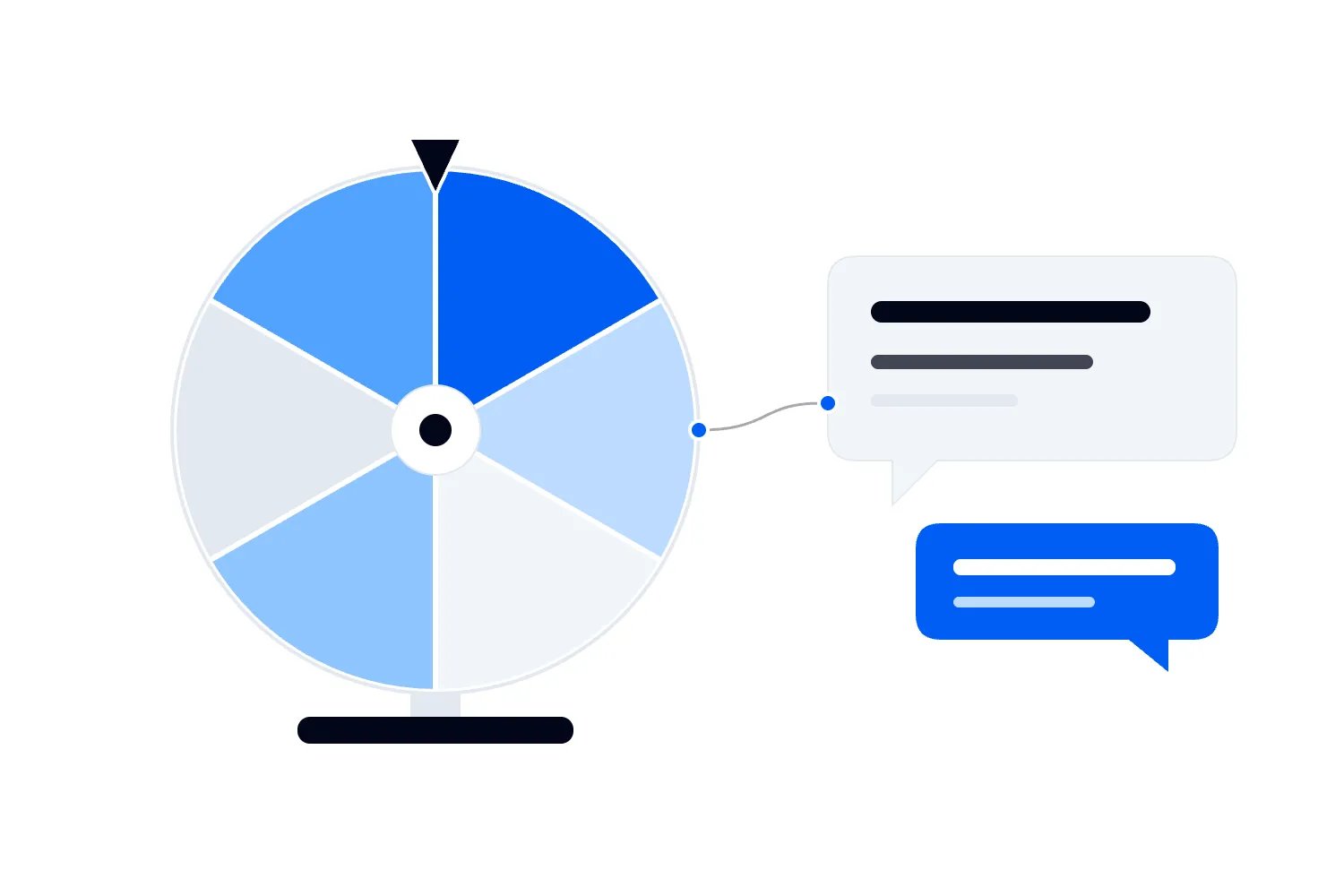
A wheel is easy to understand while walking past. Someone sees a turn begin, a result appear and a prize handed over. That makes it useful when the exhibitor's main problem is getting relevant visitors comfortable enough to start talking.
Keep the visible instruction simple. A venue supplier might ask, "What's hardest about getting guests through your doors?" Visitors can answer with a card or tell a member of staff before taking a turn. The answer starts a conversation. It shouldn't determine whether the person deserves a prize, and it shouldn't silently enrol them in marketing.
Small, useful prizes are easier to explain and distribute than a complicated wall of rewards. If you include a larger prize, set out the actual rules and availability. Avoid putting "book a sales meeting" on a wheel as though a meeting were something the visitor has won.
The weakness is obvious once you watch it. The game can attract people who only want another turn. Agree how repeat play works, and position a staff member where they can invite interested visitors to continue without blocking the next player. Choose this format when you have room for a contained waiting area and someone dedicated to running it.
2. Business card raffle
A raffle needs little equipment, but a bowl of cards tells you almost nothing about the people entering. If exhibitors want useful conversations, staff still need to ask what brought the visitor to the show and whether there's anything worth discussing afterwards.
A paper entry slip can be clearer than a business card because it can explain the draw and request only the details needed to contact a winner. A digital version should do the same. Keep any optional marketing choice separate. Don't assume that entering a draw gives permission for an ongoing email sequence.
Choose a prize connected to the audience. At an exhibition for venue operators, relevant training or industry equipment may make more sense than a general luxury gadget. Check that the prize is actually usable by the people attending. A pass requiring expensive travel can disappoint someone who cannot take it up.
Publish when entries close, how the winner will be selected and contacted, and how long they'll have to respond. Have the organiser or appropriate adviser check the promotion for the place it runs. Rules about draws, eligibility and entry differ, so a familiar phrase copied from another country isn't a complete plan.
3. Trivia challenge
Trivia works best when the question is interesting even if the visitor never becomes a customer. Use a real decision from their working day. A question about which part of a venue opening plan is missing invites a better discussion than asking people to guess your company's founding year.
Run a short round and explain each answer. If the question relies on data, display the source and date. If it's a scenario with several reasonable choices, say what assumptions make your preferred answer sensible. Don't turn an opinion about the industry into a supposedly correct answer.
A host can invite visitors to explain their choice before revealing the result. That gives the exhibitor something useful to respond to. Someone who says staffing is their biggest concern needs a different conversation from someone worried about equipment downtime.
Use nicknames on a public leaderboard and let people keep their score private. Avoid relying on fast button presses if speed isn't the skill you're trying to test. Written questions, readable screens and a spoken explanation help more visitors take part. This format suits an exhibitor with a knowledgeable host who enjoys explaining the answer, rather than simply reading a sales script.
4. Prize grab, claw machine or grab box
A prize grab is familiar and easy to watch. A tabletop box may do the job with less space, power and delivery cost than a full machine. Choose the equipment after you understand the booth layout and venue rules.
Use tokens or clearly explained turns so the team can manage demand. Prize slips can include a useful resource address, but the prize should remain available under the advertised rules. Don't announce a win and then reveal that collecting it requires a sales meeting.
For a more relevant conversation, let visitors choose between labelled categories before they play. An equipment exhibitor could offer cards about maintenance, staffing or replacement planning. Staff can ask why the visitor chose that topic and offer a related demonstration if wanted.
The practical problem is that a machine can consume the attention of the whole booth. Someone must explain turns, restock prizes and resolve faults while another person handles product questions. Test how that works before opening. If a fault would leave visitors waiting while the only salesperson searches for a key, a simpler grab box is probably the better choice.
5. Photo booth
A photo activity suits a show where visitors want a professional portrait, a useful team photo or an image linked to the event. It has a clearer purpose when the photograph is something they would actually keep.
Describe the process before taking the picture. Visitors should know whether they'll receive a print, a download link or a message. Collect only what you need for that delivery, and present any marketing opt-in separately. Receiving a photograph and agreeing to promotional emails are different choices.
Ask separately before publishing an identifiable person's image in your own marketing. Explain the proposed use in plain language and make it possible to participate without appearing on the event's public social feed. Keep props and branding appropriate to the audience rather than covering a useful portrait with promotional graphics.
The exhibitor can use the wait for a print to answer a visitor's question, provided the visitor is comfortable continuing. A photograph doesn't demonstrate buying interest on its own. Record a product conversation only when one happens. As an organiser, also check camera placement and the waiting area so people can reach neighbouring stands without walking through the shot.
6. Digital scratch card or instant win
A digital scratch card can work in a small area because the action happens on a screen. It needs a reliable device, clear instructions and an honest explanation of the promotion. The appeal disappears quickly if visitors have to troubleshoot a form before playing.
Keep the game inside the stand rather than pushing tablets into the aisle. Visitors should be able to read the rules and understand the prize process before entering. Review how rewards are allocated with the provider and whoever checks your promotion terms. Don't claim that the screen shows odds or availability accurately until you've confirmed how it works.
A useful version lets a visitor choose a relevant topic and then reveals a small reward with a related resource. The resource can be available immediately. If the person requests an email copy, make that request specific and separate from a mailing-list subscription.
Prepare for a connection failure and for stock running out. Staff need an agreed response for each, including when to pause the activity. Don't keep inviting people to win a physical prize once it's unavailable. If the software makes those basic controls difficult, choose a paper game with rules you can administer reliably.
7. Turn a short form into a game
A progress bar can make a short questionnaire easier to follow, but it doesn't make an intrusive form enjoyable. Start by removing questions the exhibitor won't use. Then show how the visitor's answers lead to a useful result.
For example, an exhibitor helping venues plan refurbishments could ask about the space, the main constraint and the visitor's preferred next step. The result might be a short planning checklist. Someone researching options can take the checklist. Someone ready to discuss a project can request an appointment.
Use clear field labels and tell people what happens when they submit. W3C's guidance on labelling form controls explains why labels matter, including for people using assistive technology. Don't rely on placeholder text that disappears as someone types or on colour alone to show an error.
Test the form on the actual device and with the connection available at the venue. Include the final screen in the test. A completed form that leaves the visitor wondering whether anything happened wastes the useful part of the interaction. Show the result, confirm any requested delivery and let the person decide whether to keep talking.
8. Social media contest
A social contest can spread an activity beyond the booth, but a public post is a bigger request than a game turn. Choose a prompt people would be comfortable sharing with colleagues. A useful lesson or a favourite demonstration is more credible than a required statement praising an exhibitor they have just met.
Explain how entry works and what judging will consider. If the winner is chosen for a response rather than at random, say what makes a good response. Keep the judging manageable for the person who will actually read the entries.
Check the platform's current promotion rules before launching. In the US, the FTC's social media disclosure guidance explains that a chance to win a prize can create a relationship that should be disclosed in an endorsement. Your entry instructions should make any relevant disclosure easy to understand. Other markets have their own requirements.
Don't treat the hashtag feed as a ready-made marketing contact list. Ask separately if you want to reuse a participant's image or contact them for a different purpose. For the organiser, assess whether the posts help potential visitors understand the show. A flood of identical competition entries can produce activity without explaining why next year's ticket is worth buying.
9. Product demo challenge or passport
This is often the strongest option when the exhibitor needs visitors to understand a product before they can judge it. The game asks people to complete a small, relevant task, with staff helping them explore the result.
Keep the task close to the product's actual use. An equipment supplier could ask visitors to identify the right setting for a particular job. A service provider could help someone work through a planning decision. Avoid creating a pretend speed contest around work that normally needs care.
A passport can divide the demonstration into steps. Use one coherent example so the visitor doesn't have to learn a new scenario at every station. Let people stop after a step and still receive the promised explanation or resource. A person with a session starting soon may be interested but unable to complete the full route.
Ask permission before recording identifiable progress, and explain who can see it. If several exhibitors share a passport, be explicit about whether information goes to each stand or only to the organiser. Completion shows that someone tried the activity. The follow-up should refer to what they did and what they asked, rather than treating every completed passport as a request for a sales call.
10. Interactive quiz with a useful recommendation
Unlike trivia, this quiz doesn't need a right answer. It helps a visitor describe their situation and receive a relevant suggestion. That's useful when an exhibitor offers several services and people struggle to know where to begin.
Write the result before writing the questions. If all answers lead to the same sales pitch, the quiz is wasting the visitor's time. Each route should explain a different starting point and the reason for it. Keep the recommendation modest when the quiz only has a little information.
For example, a supplier serving event venues might separate people planning a new opening from people replacing equipment in an operating site. The advice should change because their constraints differ. Someone with an operating site may need phased work; someone opening a venue may need to check dependencies before committing dates.
Show the result without demanding an email address first. Offer a copy if useful, followed by a separate invitation to discuss it. Staff can ask, "Does that describe what's happening at your venue?" The answer lets the visitor correct the quiz and starts a more honest conversation than a label automatically applied to their contact record.
11. Jigsaw puzzle
A small puzzle can slow the interaction enough for someone to ask a question. It works best when the finished image explains something, such as the stages of setting up a venue or the parts of a service.
Choose a manageable number of pieces and test them on the table you'll use. Tiny text and fiddly pieces can make the activity frustrating. Offer a version where visitors point to the next piece or discuss the order rather than needing to handle every part themselves.
The host can ask which stage usually causes trouble while the visitor assembles it. That question connects the game to the exhibitor's work. Once complete, explain the image and offer a relevant next step. Don't make the person sit through a full presentation to finish the activity.
A cooperative puzzle may suit a technical or educational show better than a timed leaderboard. Visitors can join briefly and contribute without publicly competing. Keep replacement pieces available and check the surface between turns. If the image only shows a logo, reconsider the effort. An explanatory drawing or a product sample may start the same conversation with less fuss.
12. Mini golf with a single hole
Mini golf is recognisable, but a putting area takes more space than the equipment itself suggests. You need room for the player, the club, waiting visitors and someone returning the ball. That whole activity has to stay within the approved stand area.
Use a contained putting surface and suitable barriers, subject to venue approval. Aim away from walkways, doors and neighbouring stands. Staff should retrieve balls while play is stopped, and visitors need a clear place to wait without crossing the putting line.
Keep the product connection light. A host can ask about the visitor's work while setting up the next turn, then offer to continue the discussion afterwards. Requiring a string of qualification questions for extra putts makes a simple game feel like a negotiation.
Have an equivalent way to join for someone who cannot or doesn't want to putt, and make the reward rules fair across the options. Skip this format if you only have a narrow stand. A tabletop accuracy game can use the same idea with a smaller area, provided it's contained and approved. The plan above shows the areas to allow for, not a complete safe layout to copy.
13. Bean bag toss or cornhole
Bean bag toss can work in an approved activity area with enough separation between throwing and walking. It isn't automatically a compact booth game. The distance between player and target, plus the space for waiting and retrieval, determines whether it fits.
Use a contained setup with soft equipment and a staff member controlling turns. Stop throwing before anyone collects bags. Don't aim towards an aisle or use passing visitors as the boundary of the activity. Get the venue and organiser to approve the proposed arrangement before bringing equipment.
A short turn is easier to manage than an extended contest. Explain the scoring visibly and offer a non-throwing alternative. Avoid linking the size of a sales offer to physical ability, and don't assume the highest scorer is the most relevant buyer.
This game suits a show where the audience and venue make informal physical activities appropriate. For a smaller technical exhibition, it may take space away from the demonstrations visitors paid to see. As an organiser, judge that trade-off across the floor. One stand's entertainment shouldn't prevent a neighbouring exhibitor from explaining a product or receiving a scheduled appointment.
14. Ladder toss
Ladder toss needs particular care because the equipment travels through the air and can bounce or swing after landing. A tall target doesn't mean the game is suitable for a narrow stand. Count the full throwing and retrieval area when reviewing it.
Use only venue-approved equipment and a contained arrangement away from walkways. Keep spectators behind the throwing point, control one turn at a time and stop play before retrieving pieces. If you cannot provide an approved separated area, choose another game.
The scoring can introduce a conversation without becoming a lecture. An exhibitor might label rungs with common project priorities and ask the visitor which matters most to them after the turn. Their answer should guide the conversation, rather than the points deciding which service they supposedly need.
For many ordinary booths, a tabletop alternative is the better choice. You can still ask someone to choose a priority or complete an accuracy task without a full throwing lane. Don't rent a larger activity because it looks impressive in a supplier's photograph. Work backwards from the space and staff you actually have on the show floor.
15. Ring toss
A contained tabletop ring toss can be easy to run, although it still needs enough room to keep rings away from passersby. Use stable, appropriate targets rather than fragile display bottles, and test what happens when a ring misses.
Explain the number of turns and prize rules before play begins. Keep the same rules for visitors who do and don't request a follow-up. Offering a better chance of winning in exchange for a marketing opt-in pressures people into a decision unrelated to their interest in the exhibitor.
You can label targets with relevant topics and ask which one the visitor would like to discuss afterwards. A venue supplier could use installation, maintenance and training. Don't imply that the target someone happens to hit is an assessment of their business.
Ring toss is a reasonable choice when an exhibitor wants a low-cost activity with a short explanation. It becomes less useful when the team spends the whole day counting turns and handing out prizes. Rehearse who will run the game and who can continue a promising conversation. If both jobs fall to one person, pause the game when that person needs to answer a visitor properly.
How to run the game without disrupting the show
Before you approve an activity, draw the whole arrangement on the stand plan. Include the game, staff positions, waiting visitors, storage and a place for product conversations. Don't approve it by looking only at the supplier's equipment dimensions.
Queues need particular attention. A line can hide a neighbouring stand, obstruct access or make visitors abandon a demonstration they wanted to see. HSE's guidance on assessing crowd safety risks covers hazards including congestion and the movement of people. Use the venue's requirements and your event's assessment to decide where an activity can run and when it must pause.
Our Event Attendee Insights survey gives a useful reminder of why this matters. Among 500 US respondents surveyed through Pollfish on 11 November 2025, 313 selected overcrowding and 285 selected long lines or waiting times when asked what frustrated them most at events. These are raw counts from question 16 of the Event Attendee Insights Report.
| Label | Respondents |
|---|---|
| Overcrowding | 313 |
| Long queues | 285 |
| Safety concerns | 70 |
| Unclear information | 55 |
Respondents could select up to three answers, so the categories overlap. The chart shows four selected answers rather than the full question. Its shortened labels 'Long queues' and 'Unclear information' refer to 'Long lines / waiting times' and 'Poor communication / unclear info'. This was a broad sample, including people who reported no live-event attendance in the previous year, not a survey of trade-show visitors. It doesn't measure whether games cause or solve these problems. It does make a sensible planning point: visible activity isn't an excuse to make the event harder to move around.
Agree a stopping rule with exhibitors before opening. When the approved waiting area fills, stop new turns or offer a later session. If equipment fails, pause the activity and explain what's happening. A short pause is easier to handle than a growing queue around a broken game.
Assign staff by the jobs that must happen at the same time. Someone running a physical game cannot also give an attentive product demonstration while watching the throwing area. On a small stand, that may mean alternating game sessions and demonstrations rather than trying to keep both going continuously.
Rehearse before visitors arrive
Run a complete turn with someone who hasn't helped design the activity. Let them read the sign, ask questions, play, collect a reward and decide whether to continue talking. Watch where they hesitate. If the rules need a long spoken explanation, simplify them before making the sign larger.
Then try the situations staff would rather avoid. What happens when a visitor challenges the result, the prize drawer is empty or the person handling demonstrations is already occupied? Agree who makes a decision so staff don't improvise different rules throughout the day.
You also need a workable version for a quieter period. A competitive leaderboard may feel awkward when one person is playing alone. A host can switch to explaining the scenario and discussing the answer, provided the published prize rules still apply. The exhibitor should be able to welcome a visitor without needing a crowd first.
After the opening session, ask the team what slowed them down. Fix a confusing instruction or a missing staff handoff promptly. If changing the game would affect existing entries or prize terms, pause and have the change checked before restarting. Improving the operation shouldn't mean moving the rules halfway through a competition.
Turn conversations into useful follow-up
The handoff after the game deserves as much rehearsal as the game itself. Staff should be able to move naturally from "how did you find that?" to a relevant question about the visitor's work. They also need to recognise when the visitor wants to leave.
A practical record says what the person asked, what the exhibitor promised and who will respond. "Interested visitor" is too vague. "Asked whether equipment can be installed while the venue remains open; requested a phased installation example" gives the next person enough context to write a useful message.
Keep contact records accurate and distinguish separate purposes. Information needed to administer a prize doesn't automatically become permission for promotional email. A badge scan doesn't settle that question either. The UK's ICO guidance on direct marketing using electronic mail explains how requirements depend on the recipient and circumstances. Check the rules that apply to your audience and location rather than treating one consent sentence as universal.
Send the thing the visitor requested before expanding the conversation. If they asked for an installation example, the first message should contain that example and refer to their question. If they requested a meeting, confirm who is attending and what you'll cover. Don't make them explain the whole situation again because the booth team recorded only a score.
Organisers have a separate communication job. You may want to tell ticket holders when demonstrations take place or invite feedback after the exhibition. Loopyah's attendee email tools let you build and send attendee communications with audience selection. Use that for relevant event messages; it doesn't replace an exhibitor's responsibility to handle its own game entries and follow-up appropriately.
Promote the activity with a reason to visit
Before the show, explain what visitors will learn or try and when the activity runs. An exhibitor invitation that says "try the setup and ask our engineer about your venue" is more useful than a vague announcement about amazing prizes.
Use the show's own channels selectively. Our creative event promotion ideas can help you connect the invitation with a relevant audience. Keep the game in proportion to the programme people are buying a ticket for. A competition can support the visit without becoming the main promise of the event.
On site, signs should answer what the activity is, whether a session is happening now and where people should wait. Make instructions readable before someone joins. Avoid sound levels, flashing displays or signage positions that prevent neighbouring stands from working normally. Ask participants before adding their name or image to a public winner announcement.
If a sponsor funds the activity, agree exactly what they receive. A logo placement, a named session and a report of participation are different promises from receiving personal contact information. Loopyah's event sponsorship tools let operators offer priced sponsorship packages and describe the included benefits. Write those benefits precisely and sell only what your team can deliver.
Measure whether the game was worth running
Ask exhibitors to record participation separately from relevant conversations and requested next steps. Those counts answer different questions. Lots of plays with few conversations may mean the activity attracts the wrong audience, takes too long or leaves staff too busy to talk.
Include the full cost when comparing options. Equipment hire, shipping, prizes, device rental and staff time all belong in the decision. A cheap game can become expensive if it takes the whole booth team away from demonstrations.
Decide how to count repeat visitors before the show. Someone returning for another turn shouldn't inflate the number of people reached, while a second conversation about a real project may deserve its own note. Staff need a definition they can apply during a busy session. Keep the reporting simple enough that they can record it without leaving visitors waiting.
If you're comparing two formats, note when and where each ran. A lunchtime game near a popular session may meet a different audience from an early morning game at the back of the hall. A difference in results doesn't establish that the game caused it. Use the comparison to choose what to test next, and explain the limits when reporting to exhibitors or sponsors.
Here's a hypothetical comparison to show the calculation. An exhibitor spends $1,200 on an activity and records 20 conversations that match its agreed visitor criteria. That's $60 per relevant conversation. A different $600 activity produces 15 such conversations, or $40 each. These are example inputs, not benchmarks or predicted results. The cheaper conversation still needs to lead to something worthwhile, and a more expensive activity may be reasonable if it helps explain a more complex product.
Review the notes after the show. How many requested meetings took place? Did the follow-up answer the questions people asked? Were there complaints, inaccessible steps or repeated queue problems? Ask exhibitors what they'd change before asking whether they want the same activity again.
For the organiser, connect that review to the next exhibition. Share what your team observed about traffic and operations, and invite exhibitors to explain their own results. You won't know their sales simply because you know how many people attended. A useful rebooking discussion acknowledges that limit and helps them plan a better stand next time.
Choose one game, rehearse a complete visitor interaction and check that the person running it can explain the next step without a script. If the visitor understands the exhibitor better and the team can follow through on a specific request, the activity has a job worth testing at your show.

Author: By the Loopyah Content Team
The Loopyah Content Team shares expert insights, practical guides, and industry updates to help event organizers create unforgettable experiences and stay ahead in the event planning world.